
Bjelašnica
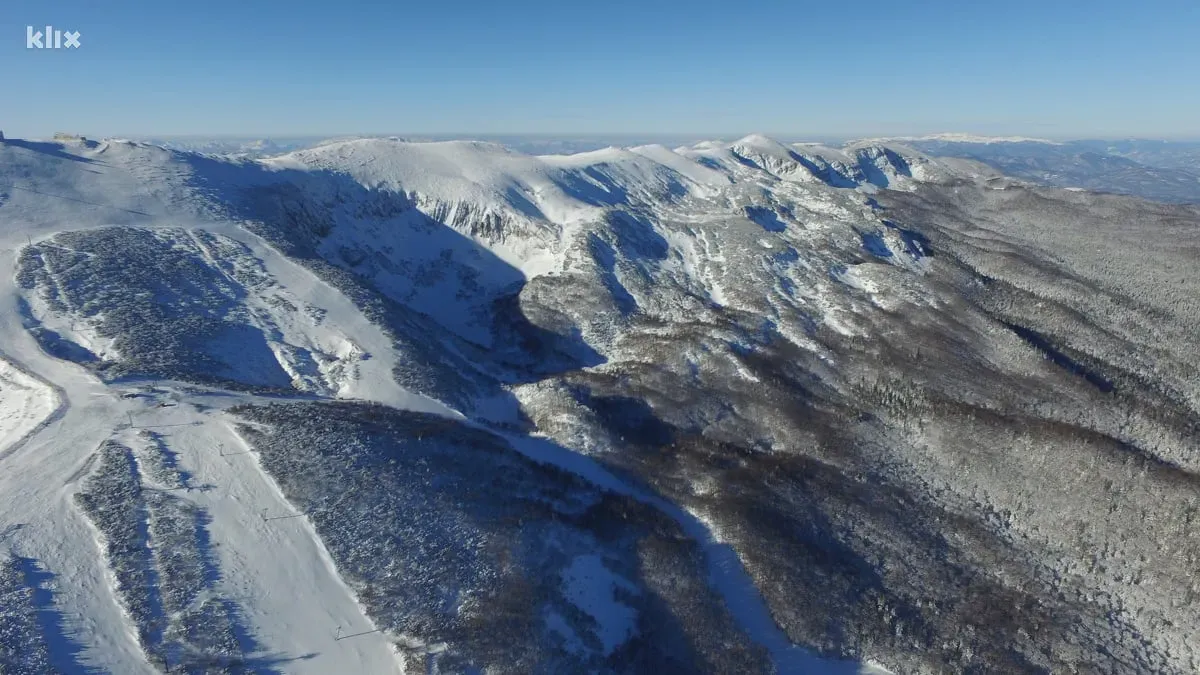
Bjelašnica was the unforgiving "men’s mountain" of the 1984 Winter Olympics, hosting the high-speed drama of the men’s alpine skiing events under notoriously changeable weather conditions. But the Olympic venue did not emerge from an empty landscape. Long before Sarajevo 1984, Bjelašnica was already a mountain of villages, herding routes, mountaineering huts, and a summit observatory that made it one of the most distinctive peaks in Bosnia and Herzegovina. The Games transformed that older mountain world into an international alpine venue; the decades since have layered that Olympic legacy with war damage, reconstruction, and intense overbuilding at the mountain's base.
Fast facts
- Location: About 25 km southwest of Sarajevo, in the Dinaric mountain range.
- Role in '84: Host of Men’s Alpine Skiing (Downhill, Giant Slalom, Slalom).
- Olympic mountain: Higher, steeper, and more exposed than nearby Jahorina, which staged the women’s races.
- Summit elevation: 2,067 m (6,781 ft), site of the historic meteorological observatory.
- Early tourism milestones: First permanent summit observatory (1894), first major mountain hut (1923), first skis reached the mountain (1957).
- Snow and weather: The mountain is known for heavy snowfall, rime, and rapid weather changes caused by the collision of Mediterranean and continental climatic influences.
- Post-1984: Heavily damaged during the 1992–1995 war; summit communications structures, hotels, and lift infrastructure were destroyed.
- Legacy today: A modernised ski centre with preserved Olympic topography, contrasted by a heavily urbanised base area at Babin Do.
Before the Games: Science, Villages, and Early Skiers
Bjelašnica stands in central Bosnia and Herzegovina, connected geographically to nearby Igman. Snow commonly covers the mountain from November to May. The summit’s exposed position and the meeting of Mediterranean and continental air masses give Bjelašnica its severe weather: sudden fog, gale-force winds, heavy snow, and dense rime are all part of the mountain’s character.
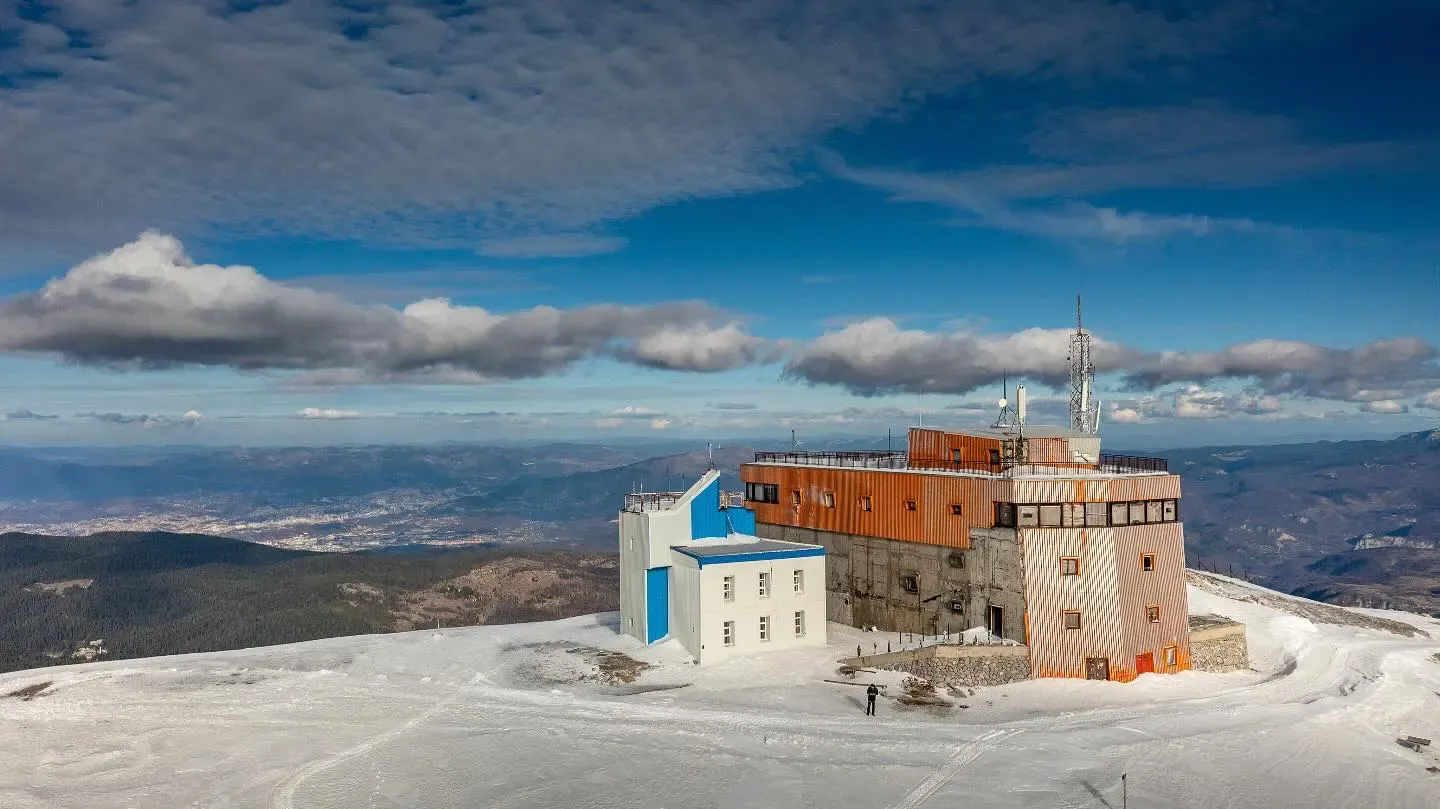
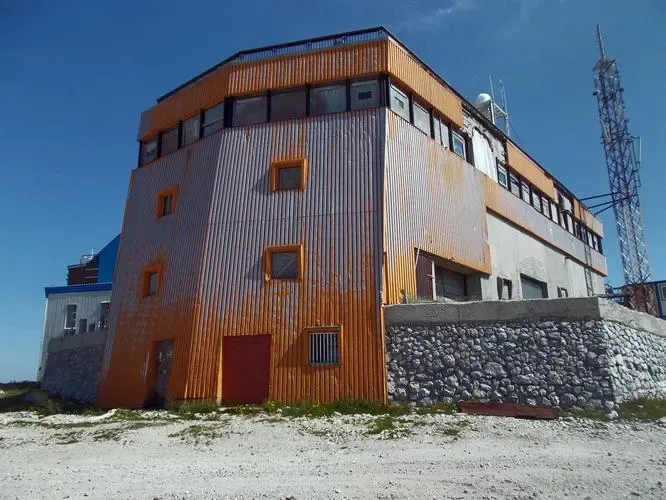
Beneath the summit lie ten historical villages whose livelihoods depended on livestock and agriculture. The best known is Lukomir (1,495 m) on the southern slopes, often described as the highest inhabited village in the country. Its stone houses and steep timber roofs reflect an architecture shaped directly by wind and snow. The earliest modern intervention on the summit came under Austro-Hungarian rule with the opening of a permanent stone meteorological observatory in 1894. Because of the unique climatic collision, Bjelašnica offered exceptional conditions for weather observation. The observers lived in near isolation, turning the peak into a permanently inhabited scientific outpost.
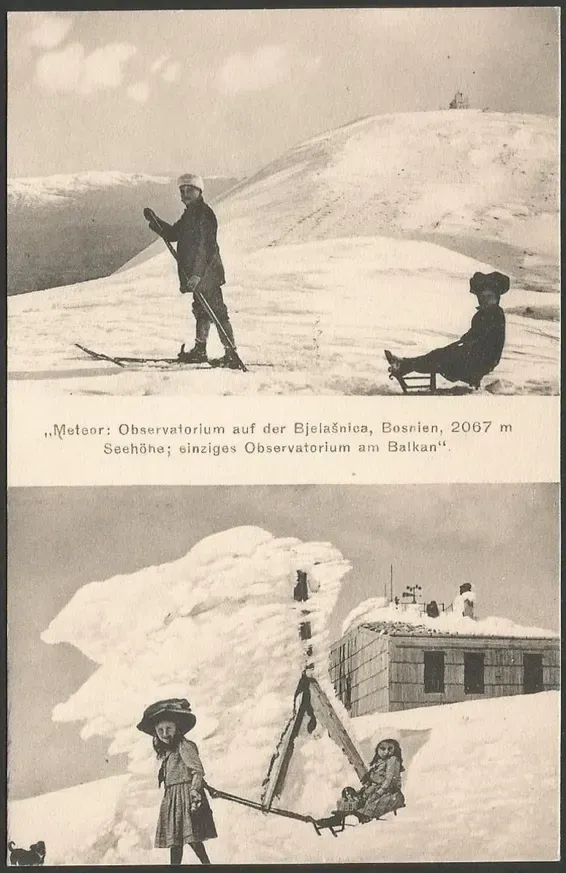
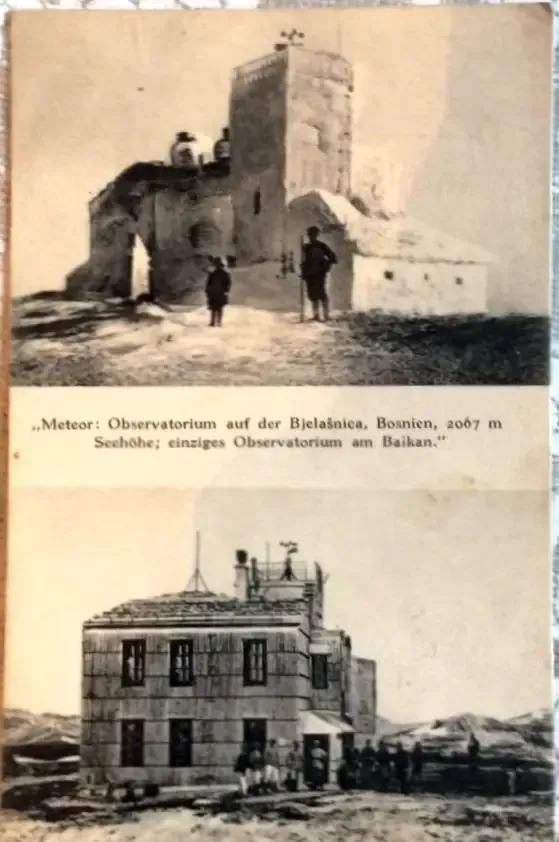
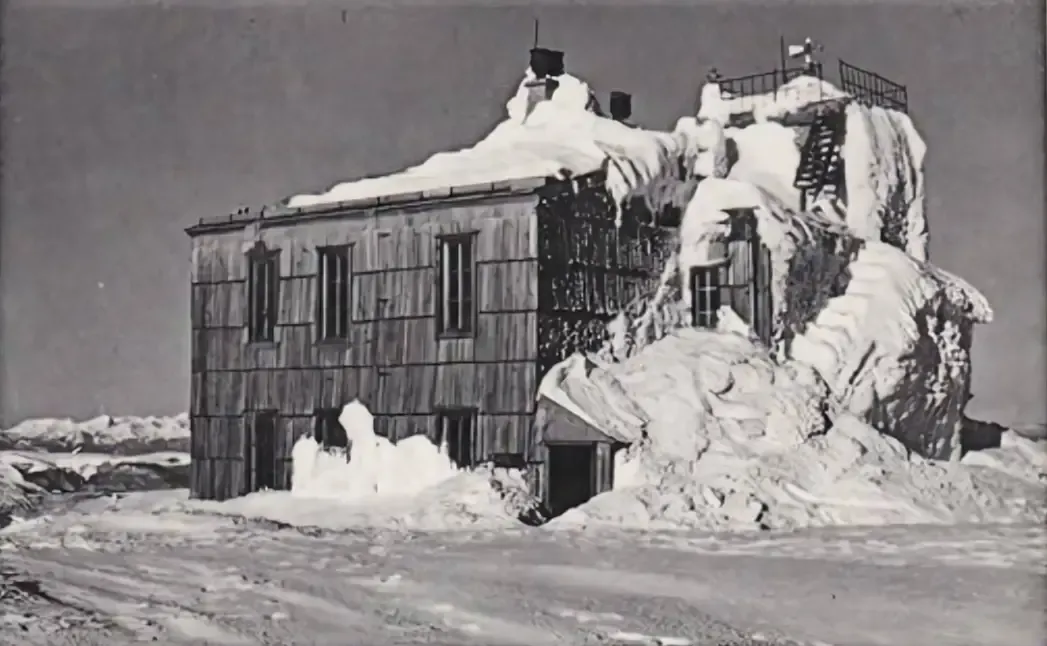
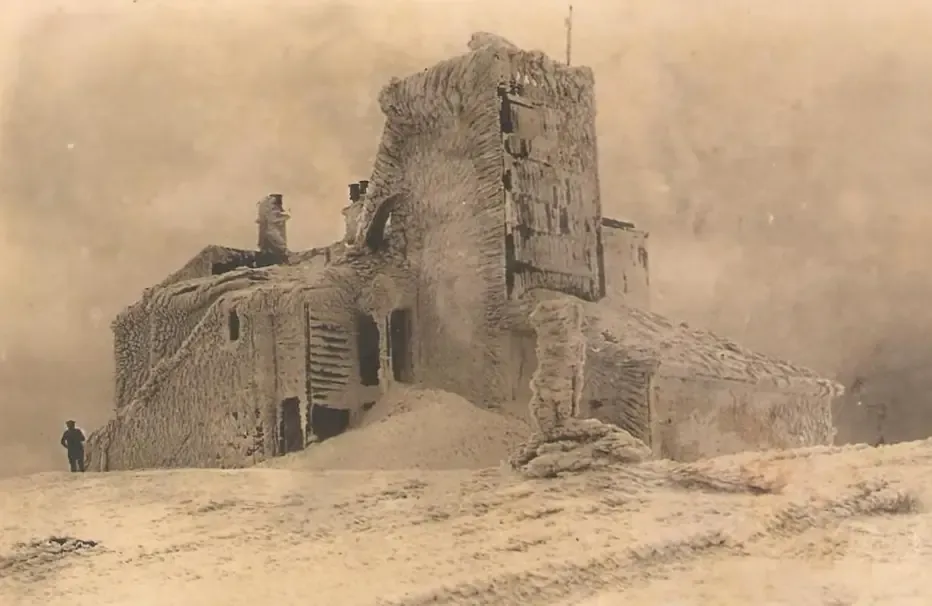
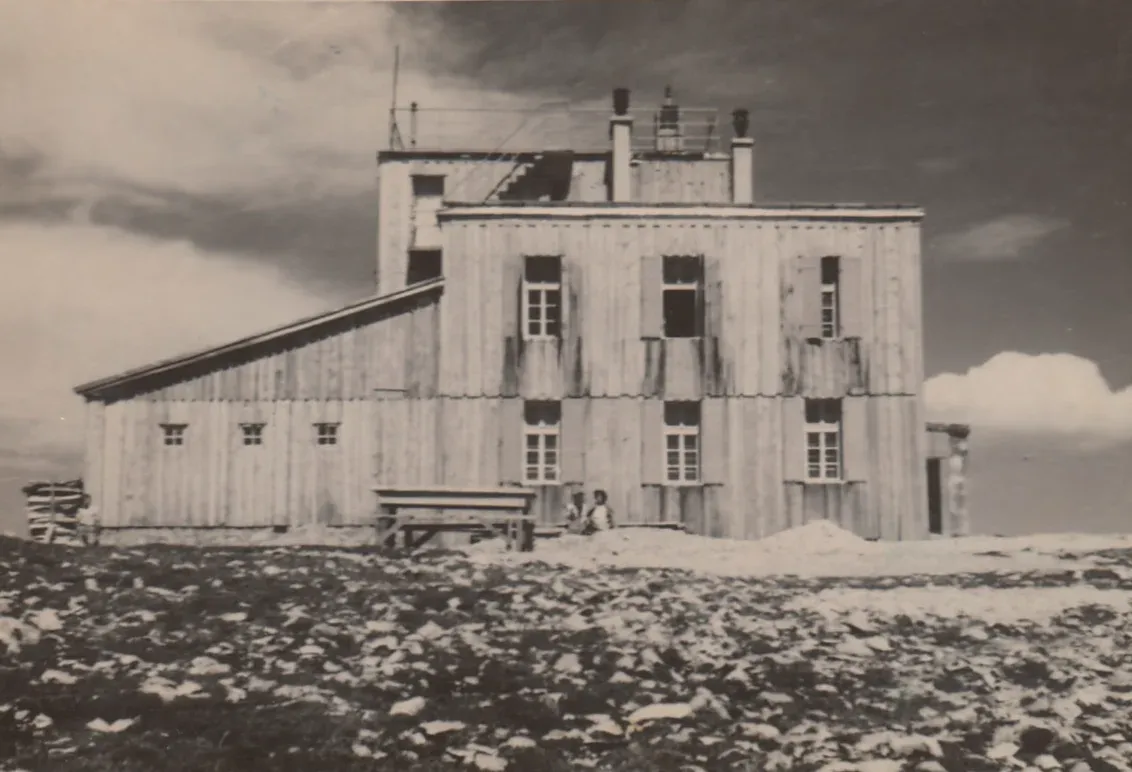
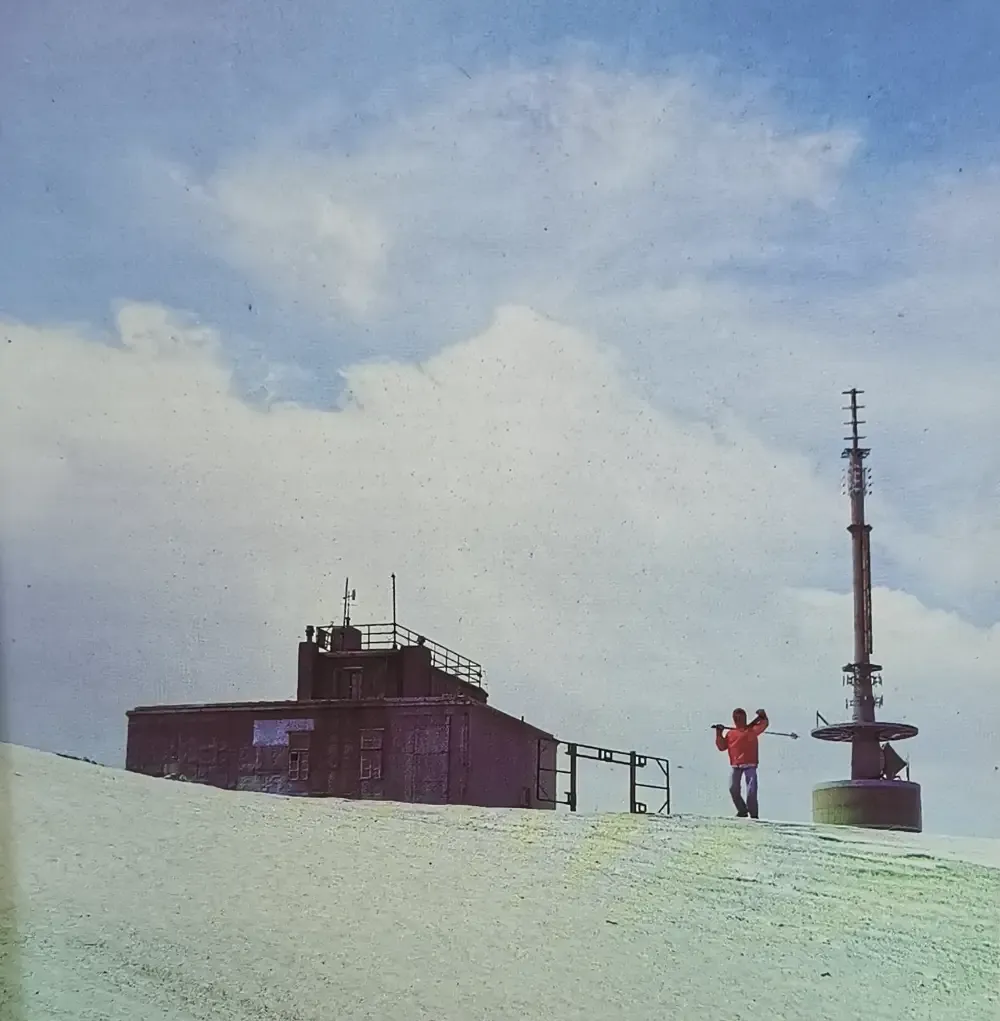
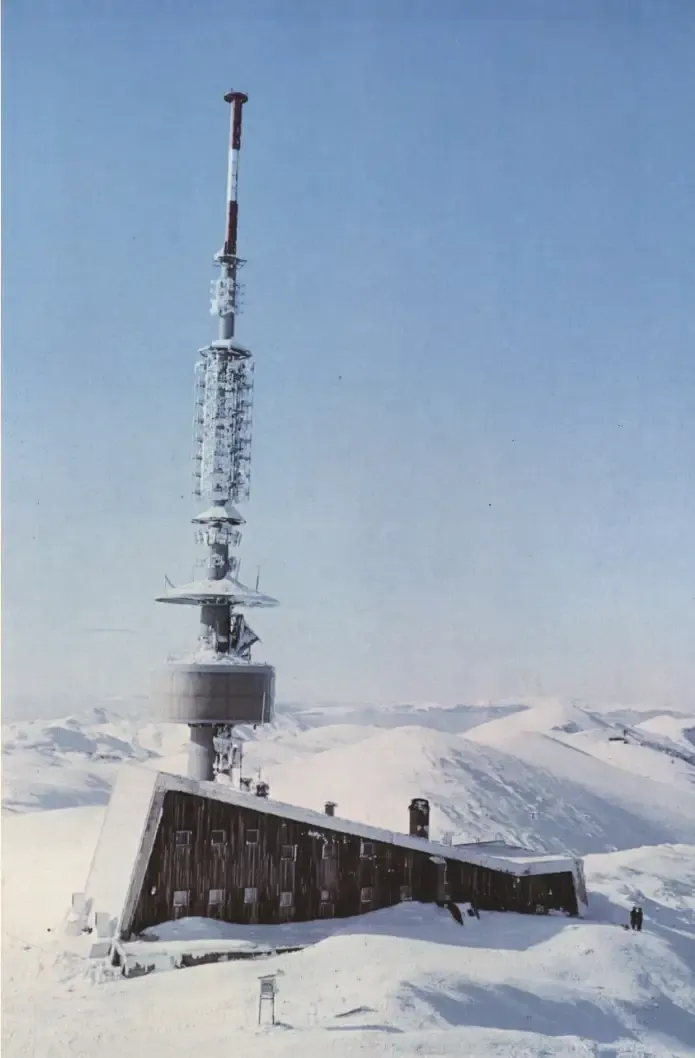
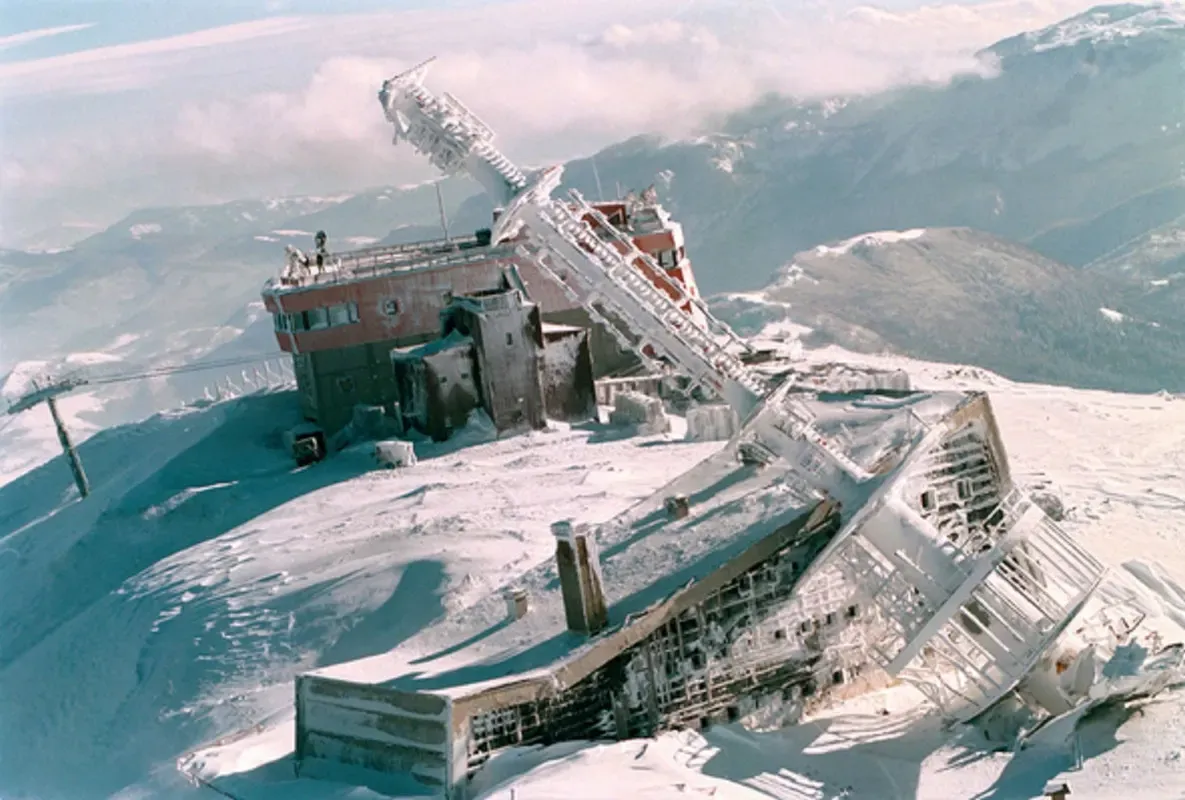
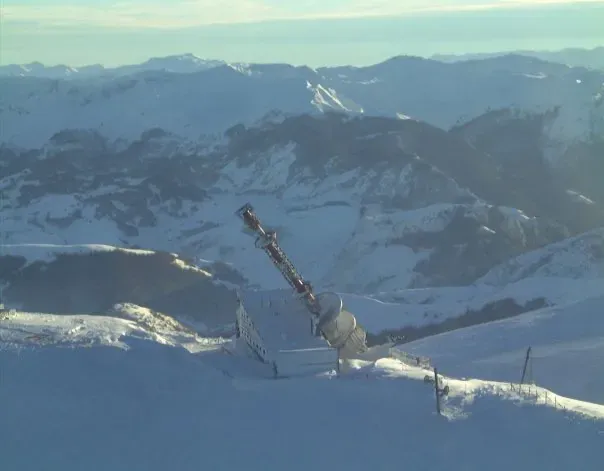
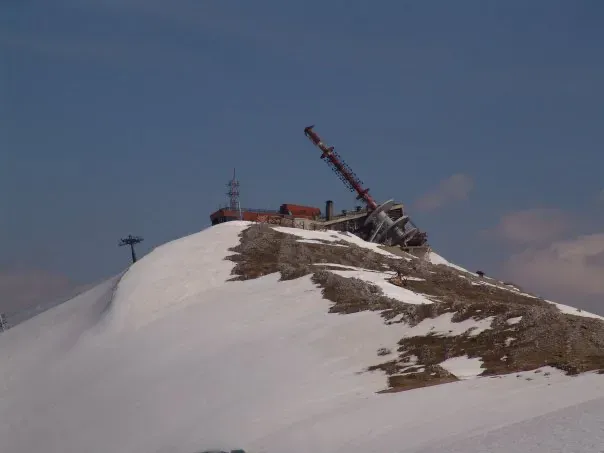
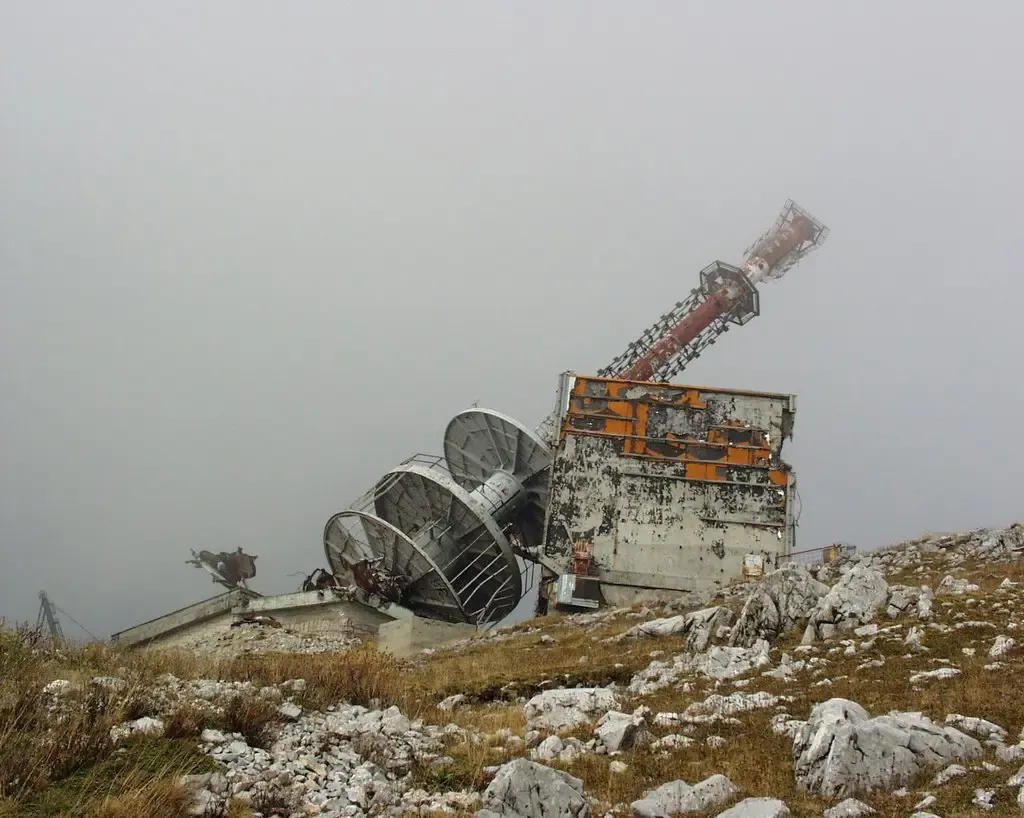
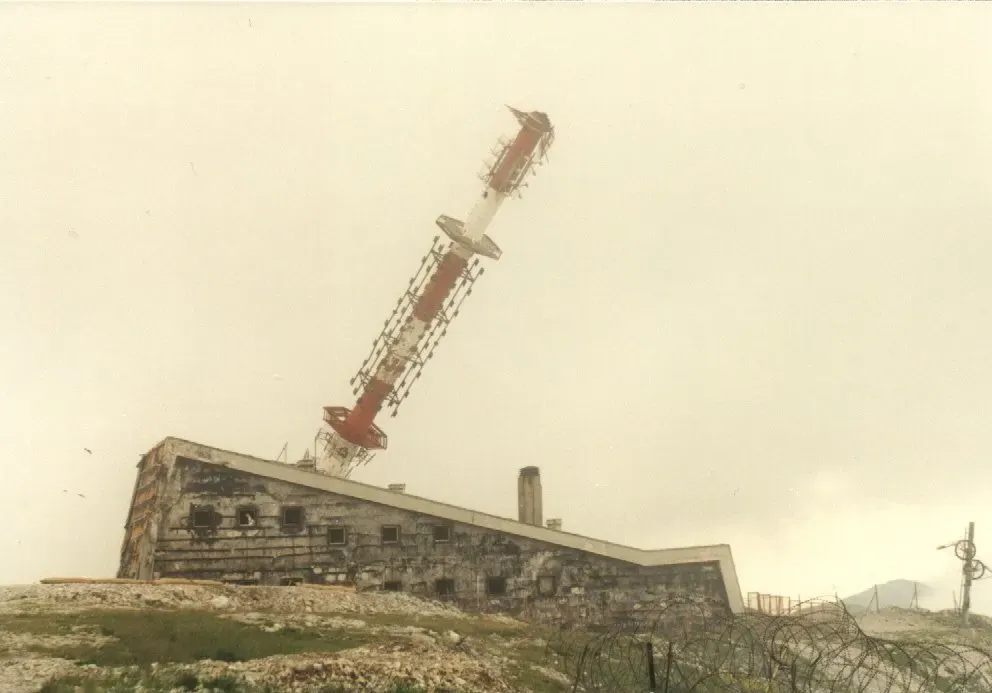
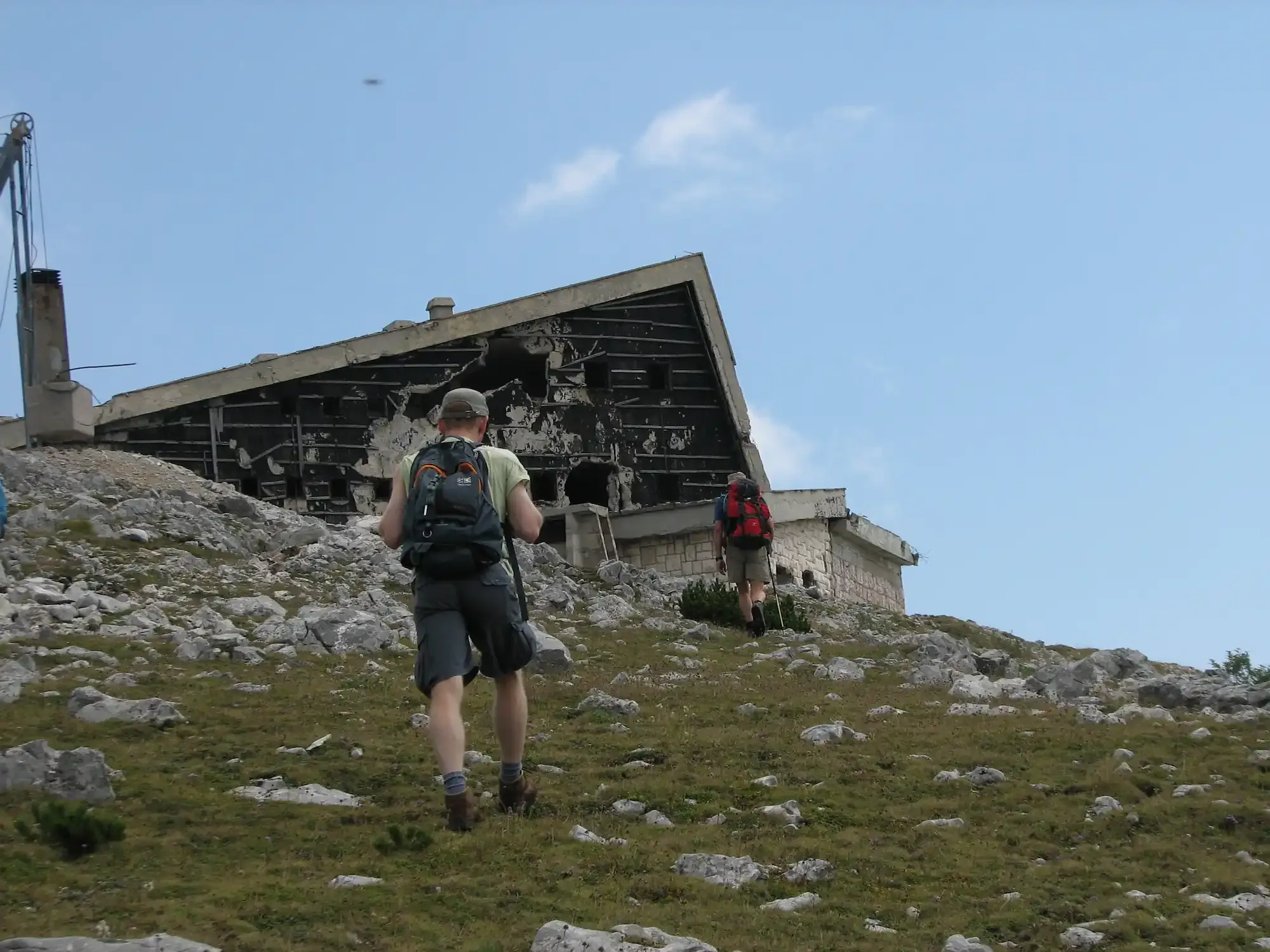
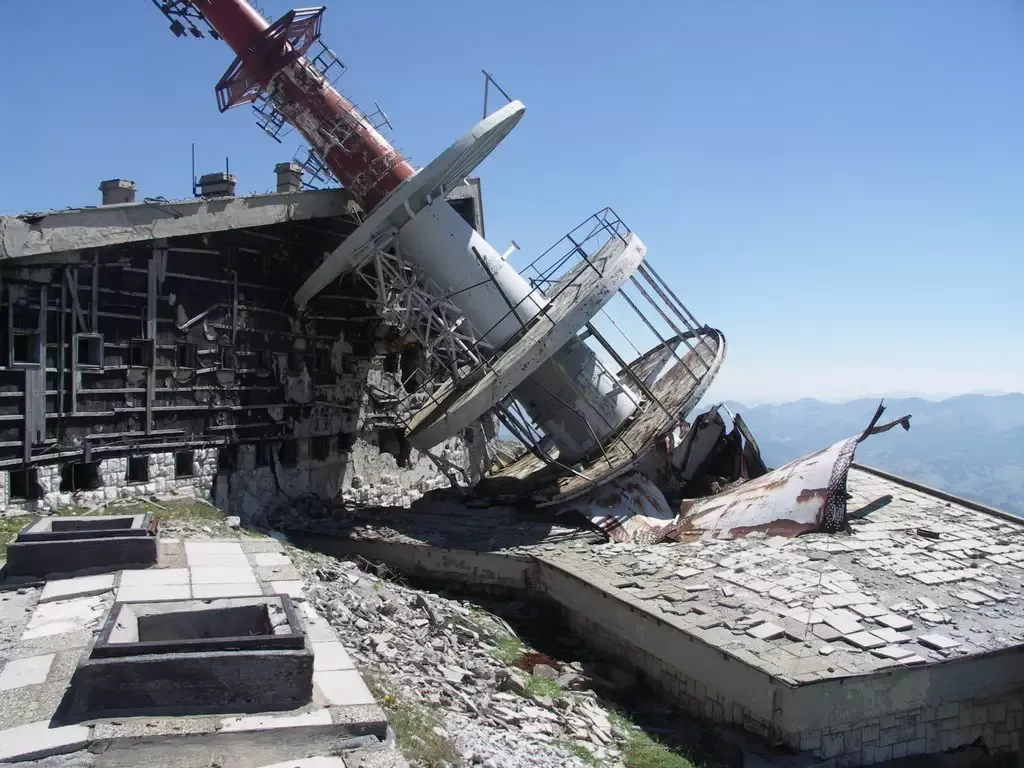
Tourism developed gradually around this scientific landmark. In 1923, the sports club Slavija built a 15-bed mountain hut, but it wasn't until 1957 that the first skis reportedly arrived on the mountain. In 1960, the mountain’s technological footprint expanded with the construction of a massive Radio-Television (RTV) communications tower next to the observatory, designed to withstand the summit's brutal 200 km/h winds. It included a self-sustaining complex with apartments, generators, and a water cistern. Yet, heading into the late 1970s, Bjelašnica remained a relatively modest destination.
Forging the Olympic Venue (1978–1983)
Everything changed when Sarajevo was selected in 1978 to host the 1984 Winter Olympics. Bjelašnica was chosen for the men’s alpine races because it was the higher, steeper, and more demanding mount than Jahorina.
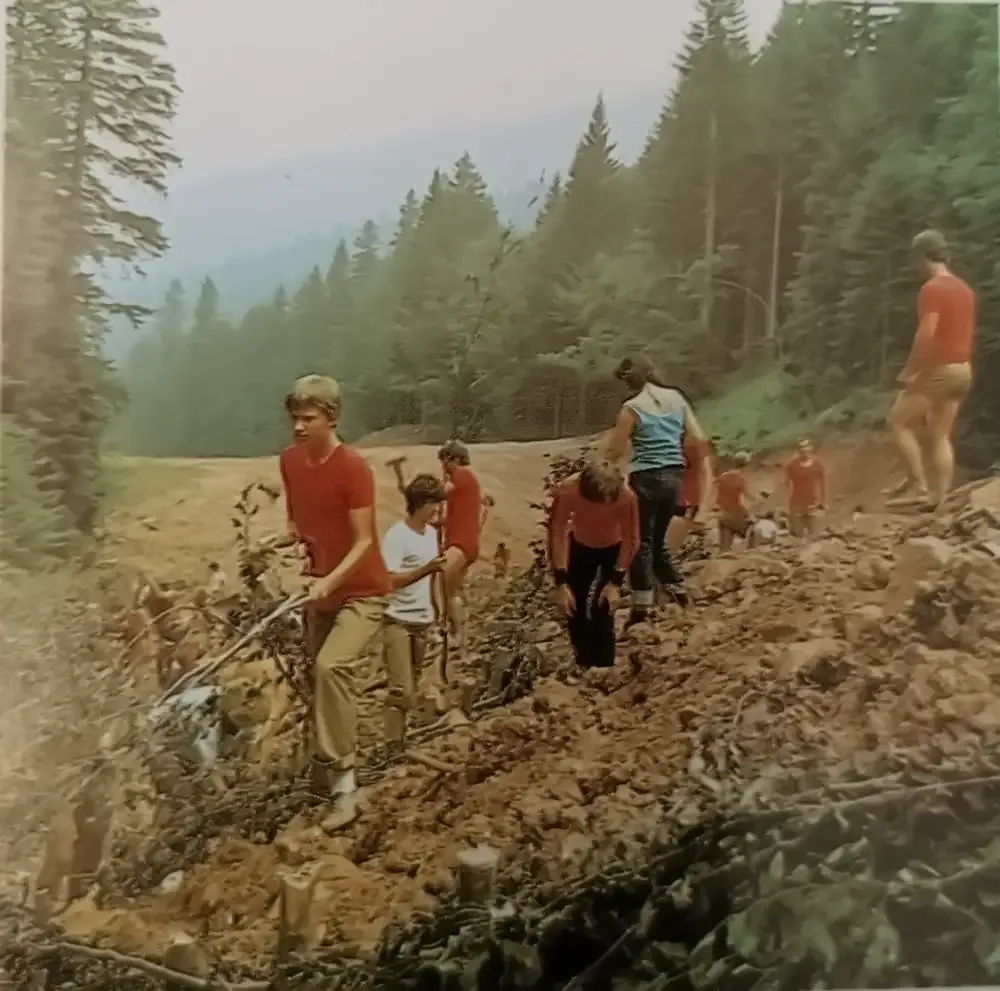
The practical transformation began in 1979. A massive workforce, including thousands of volunteers from the Youth Work Actions (Omladinske radne akcije), spent their summers clearing dense coniferous forests, blasting rock, and digging trenches for cables.
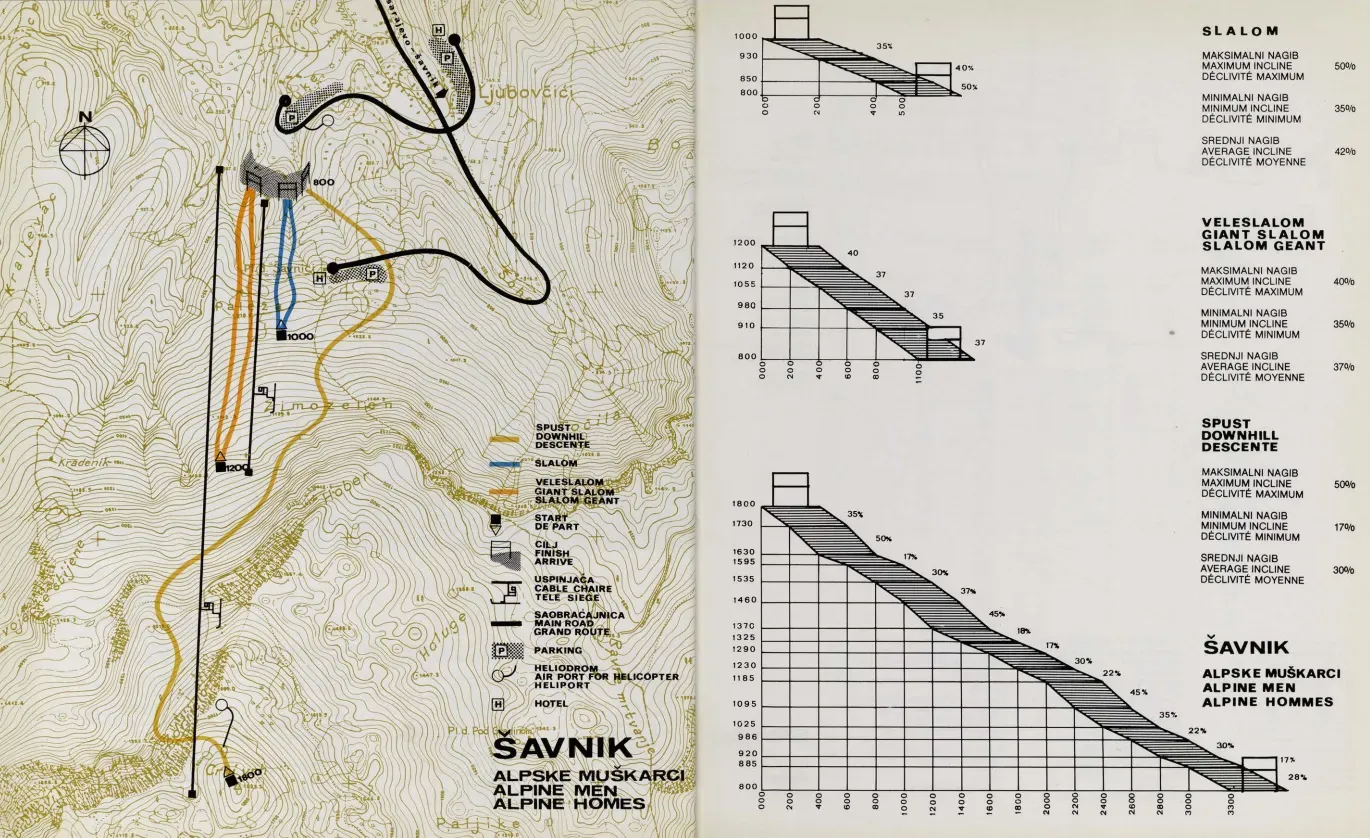
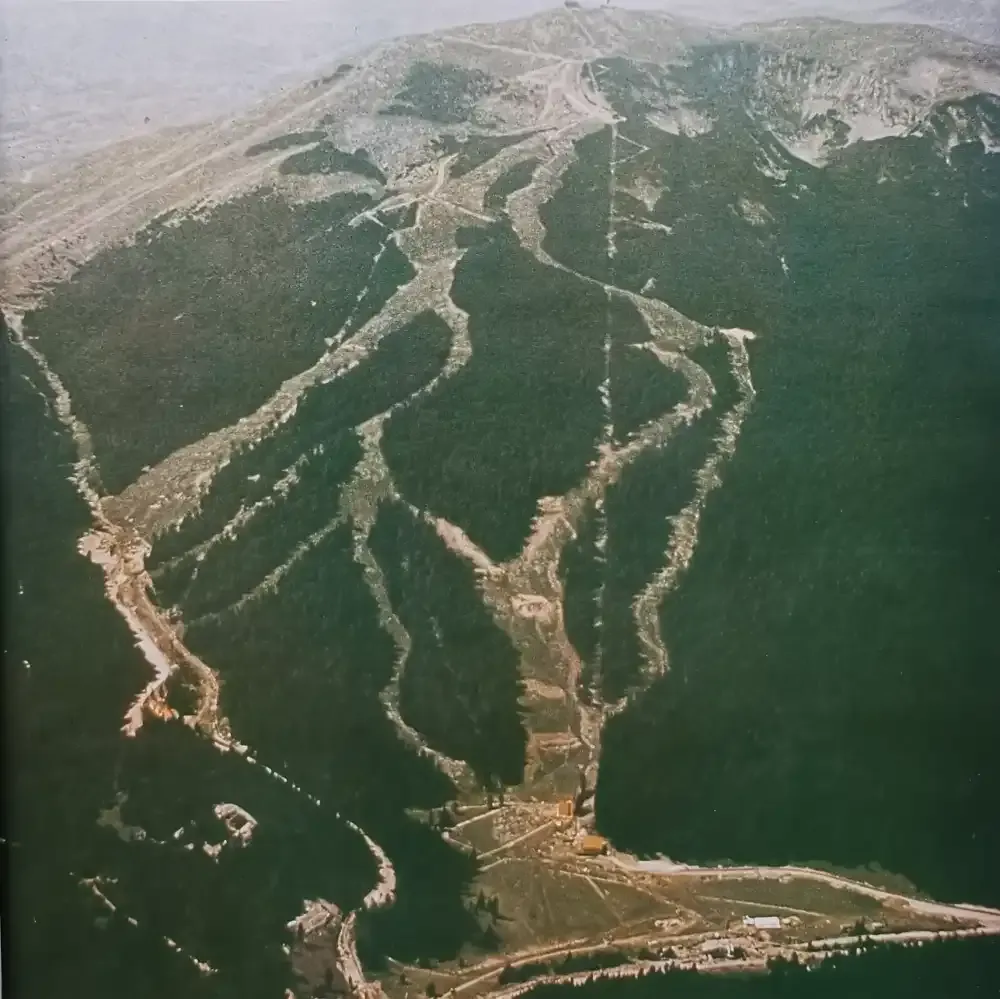
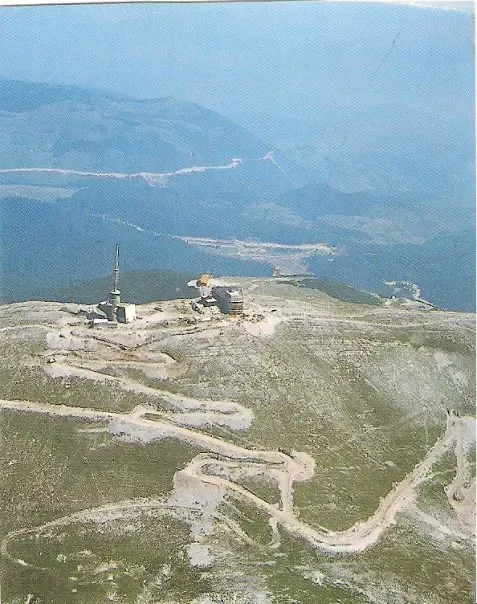
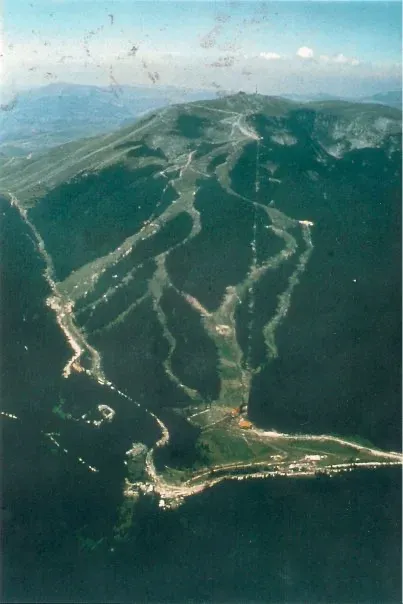
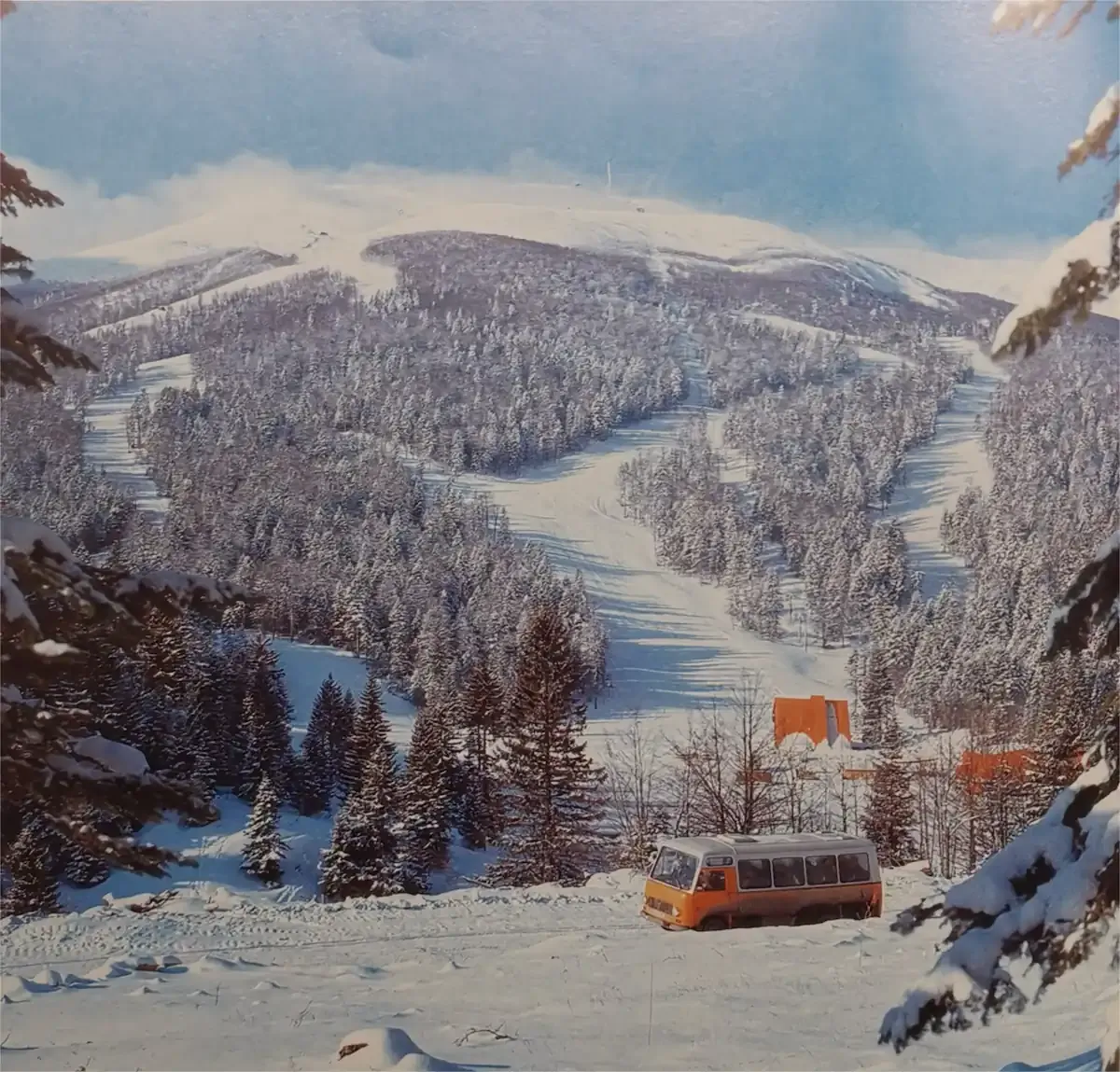
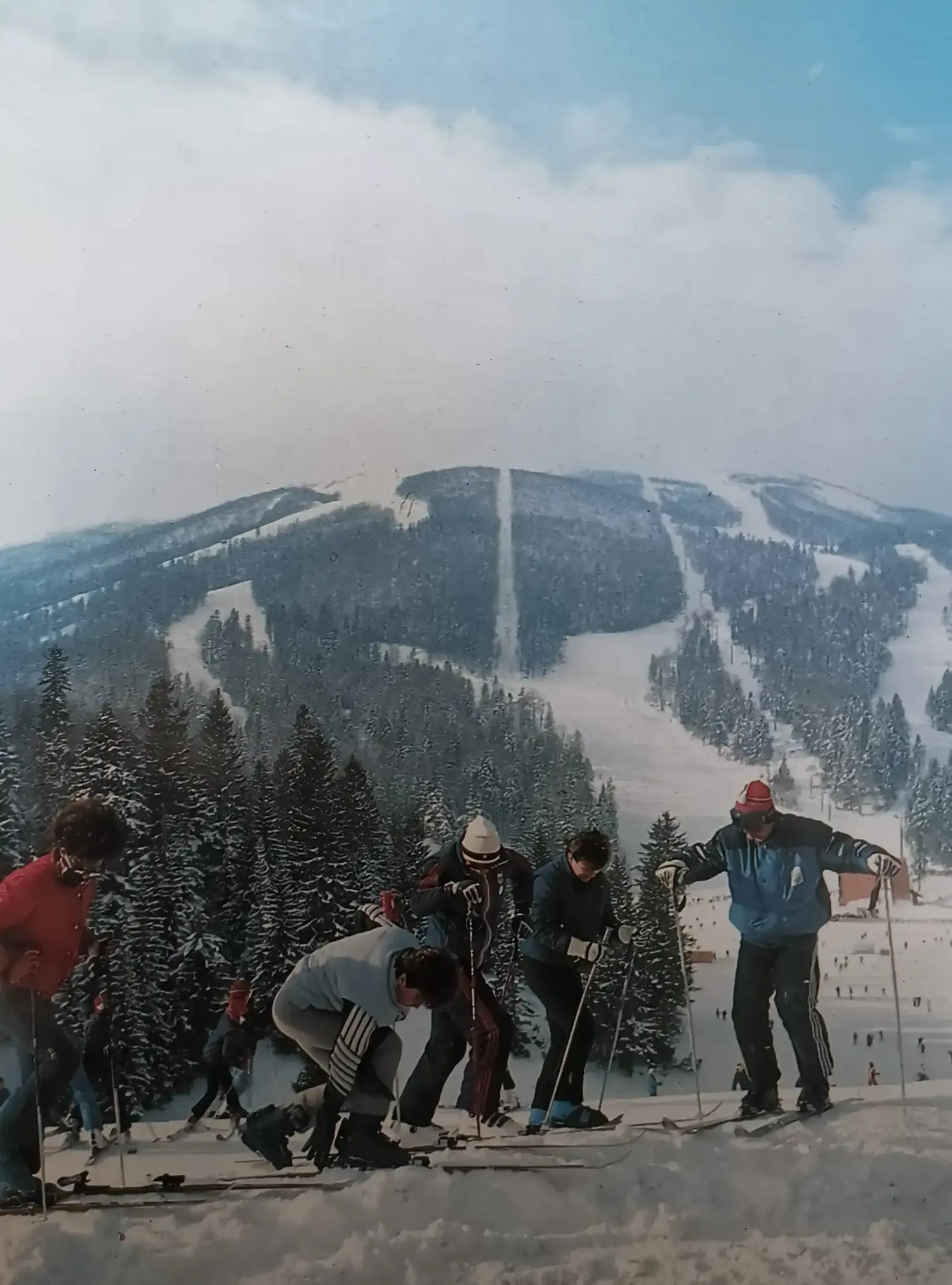
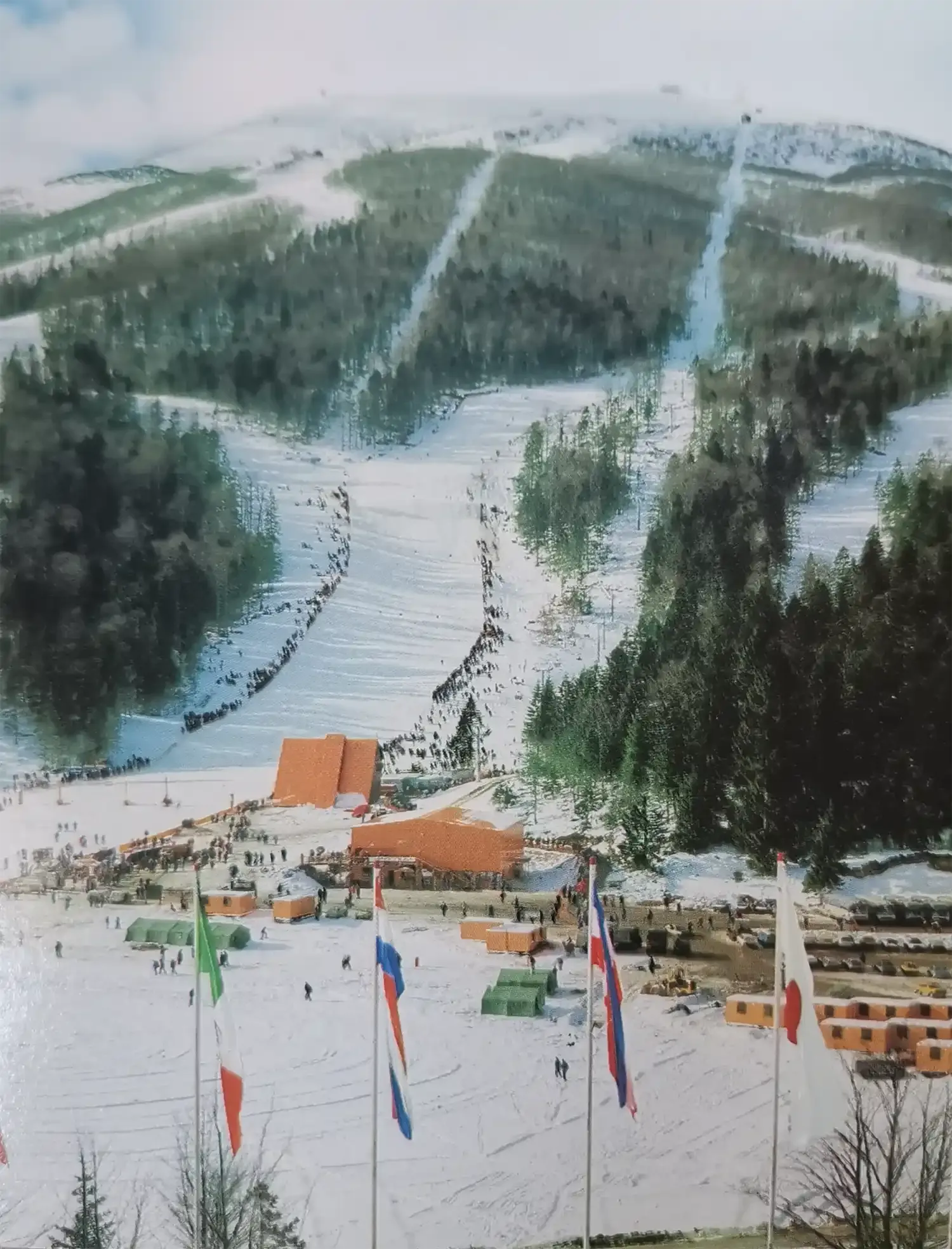
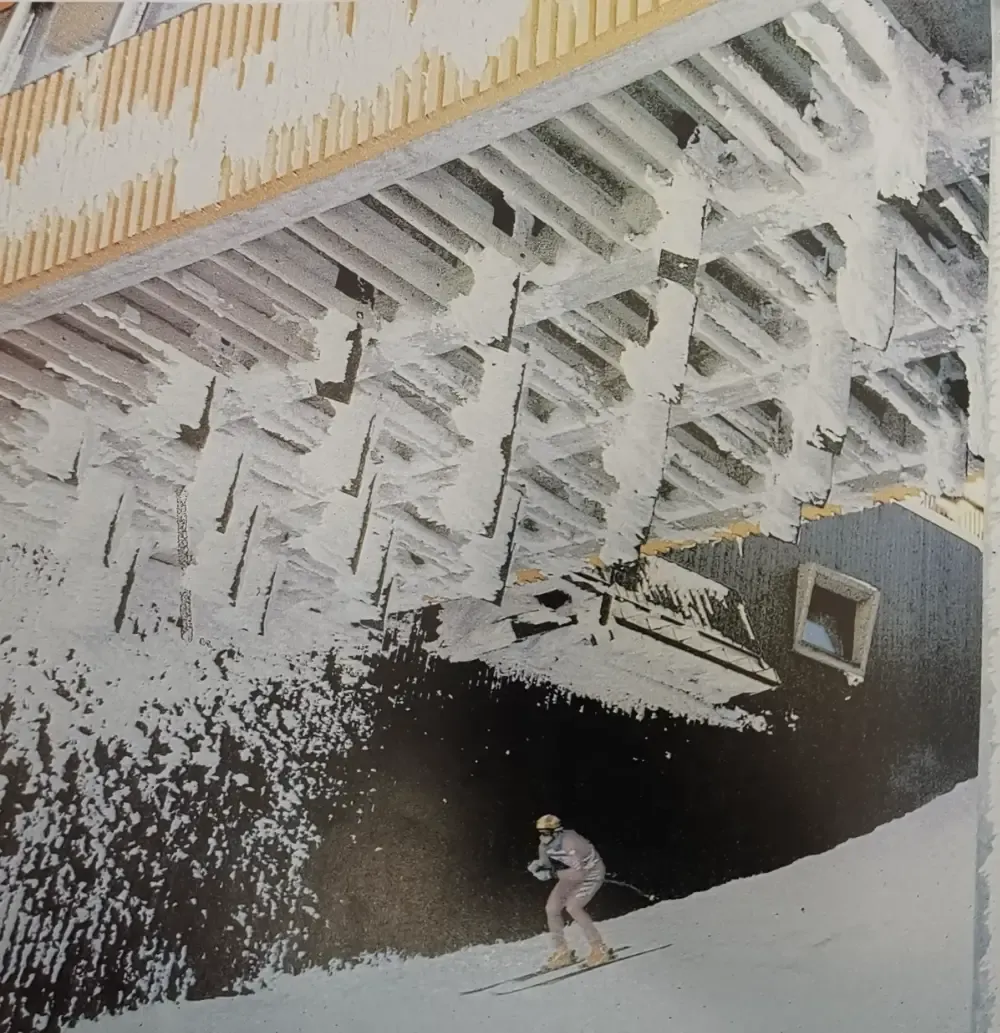
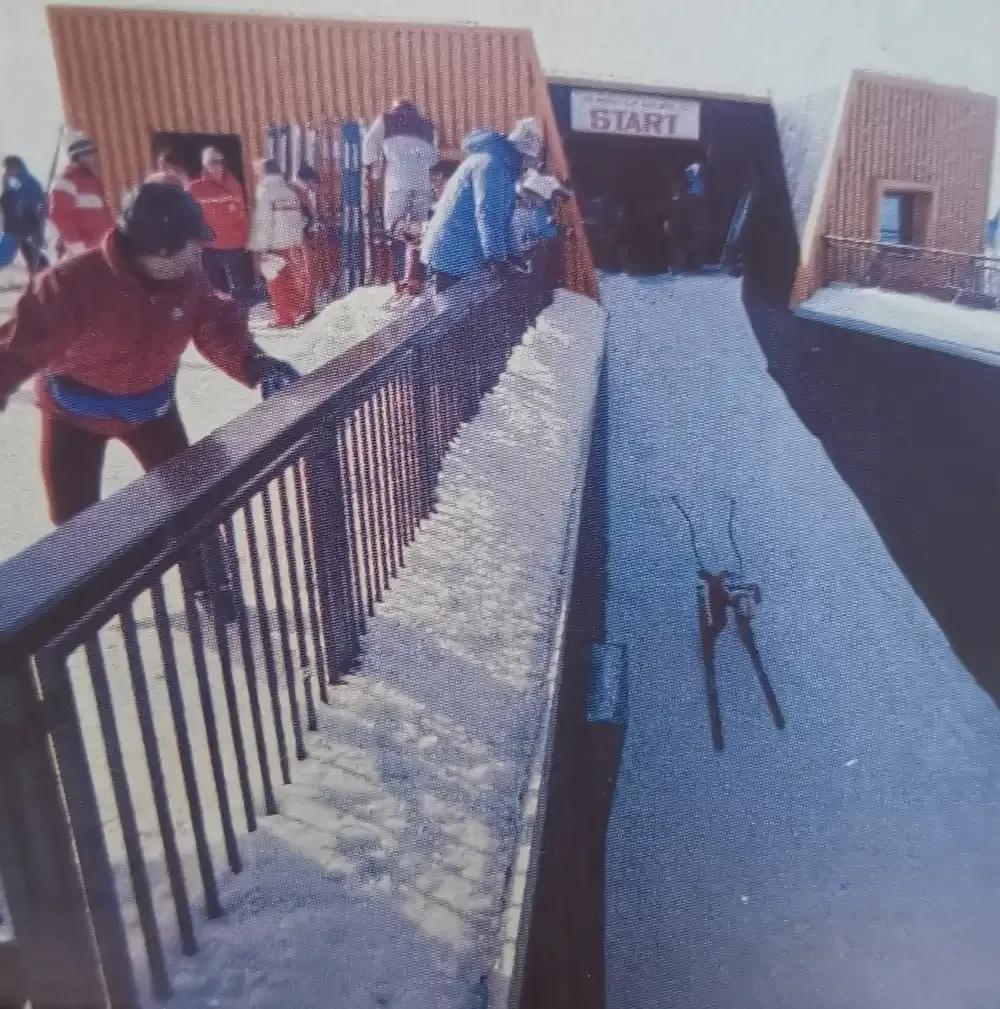
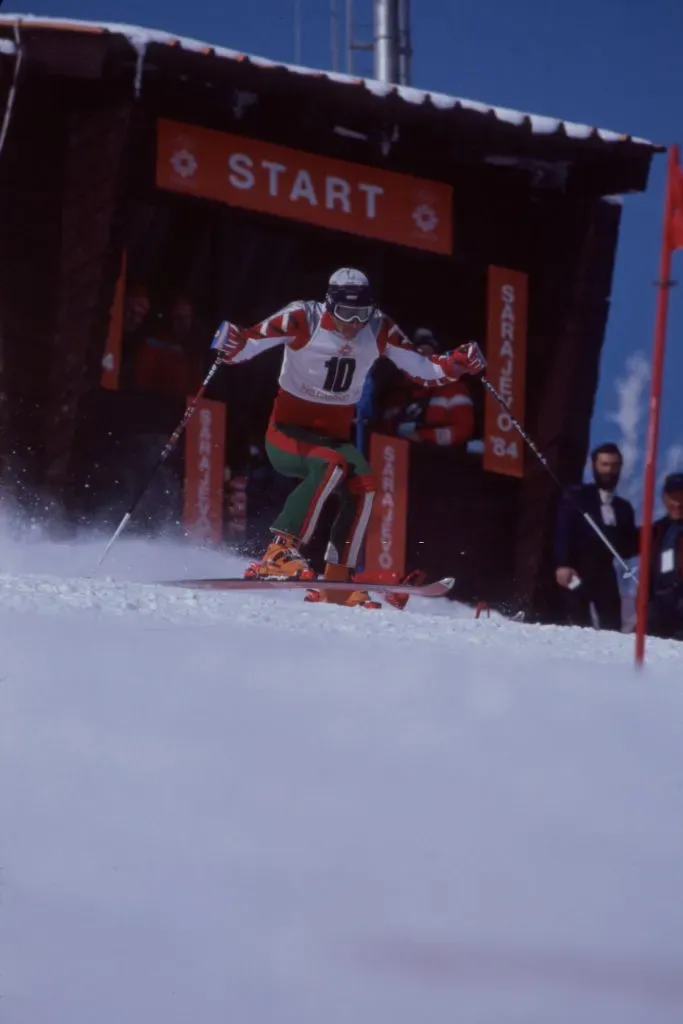
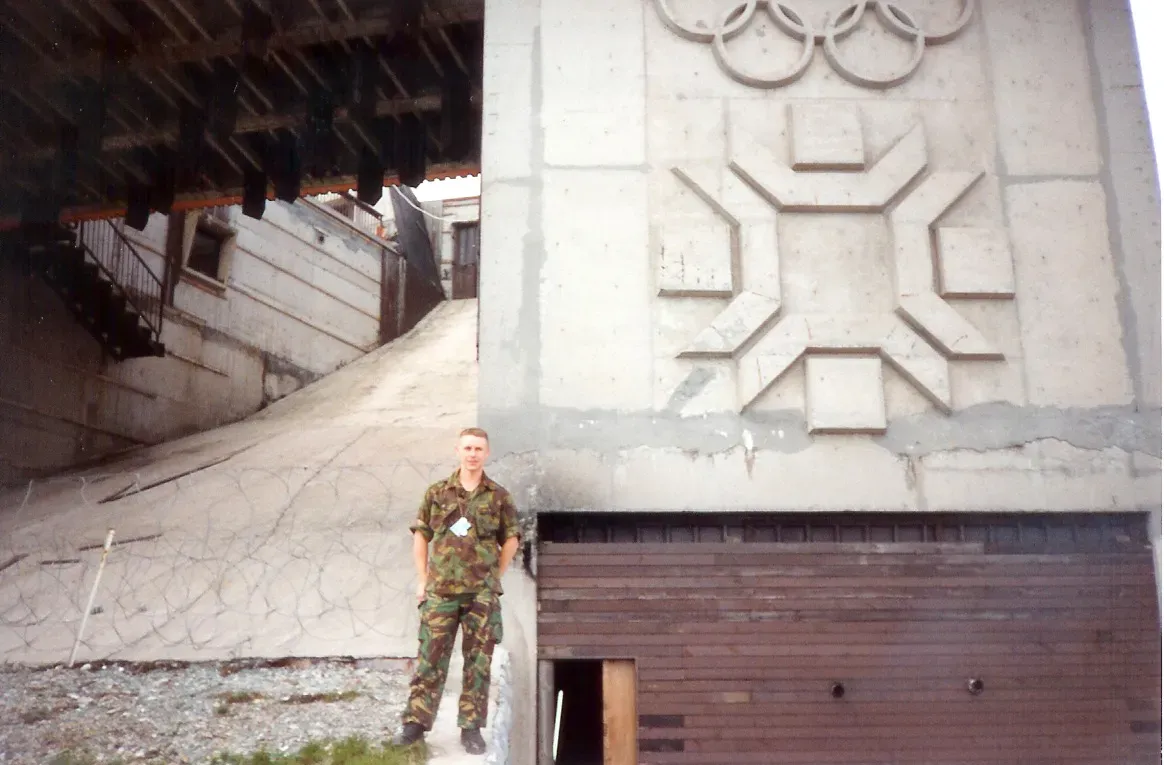
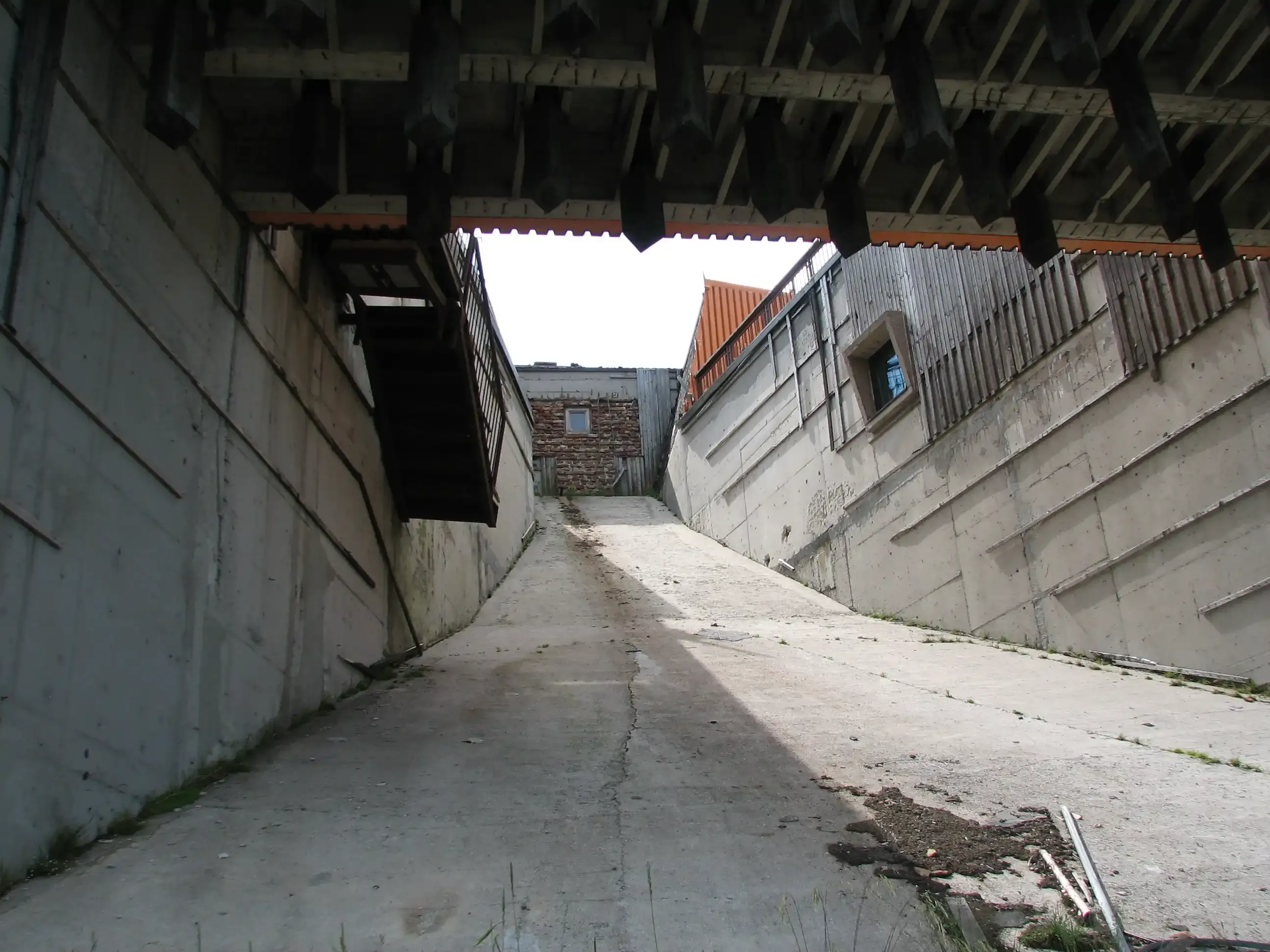
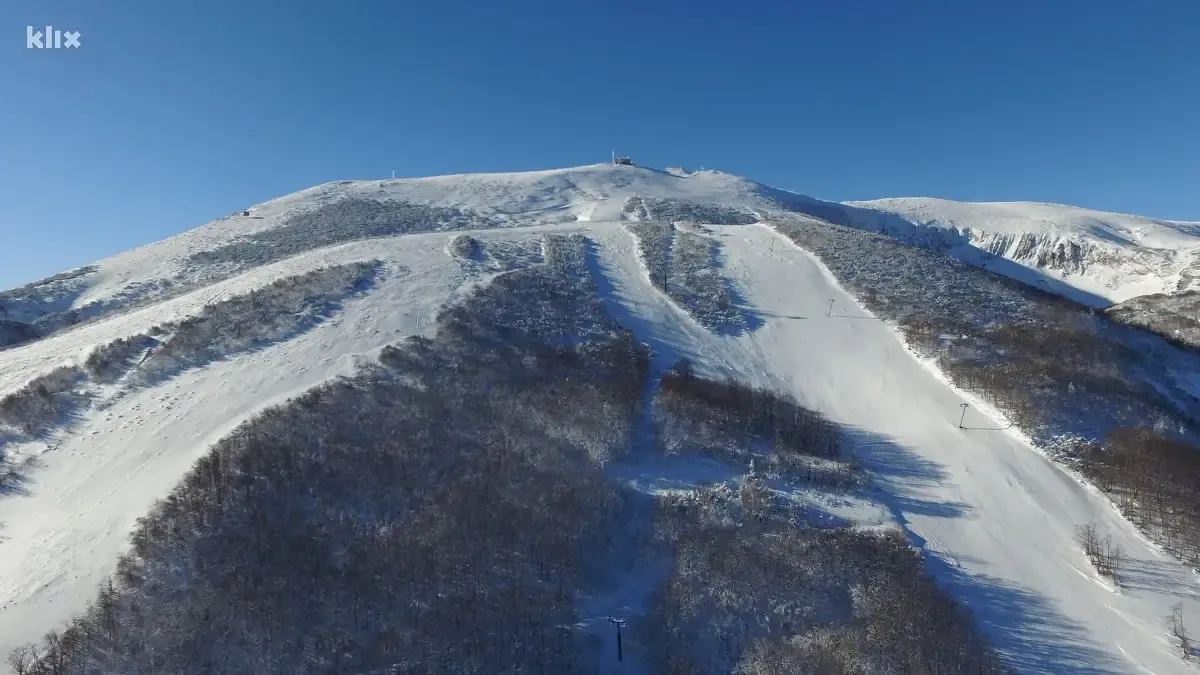
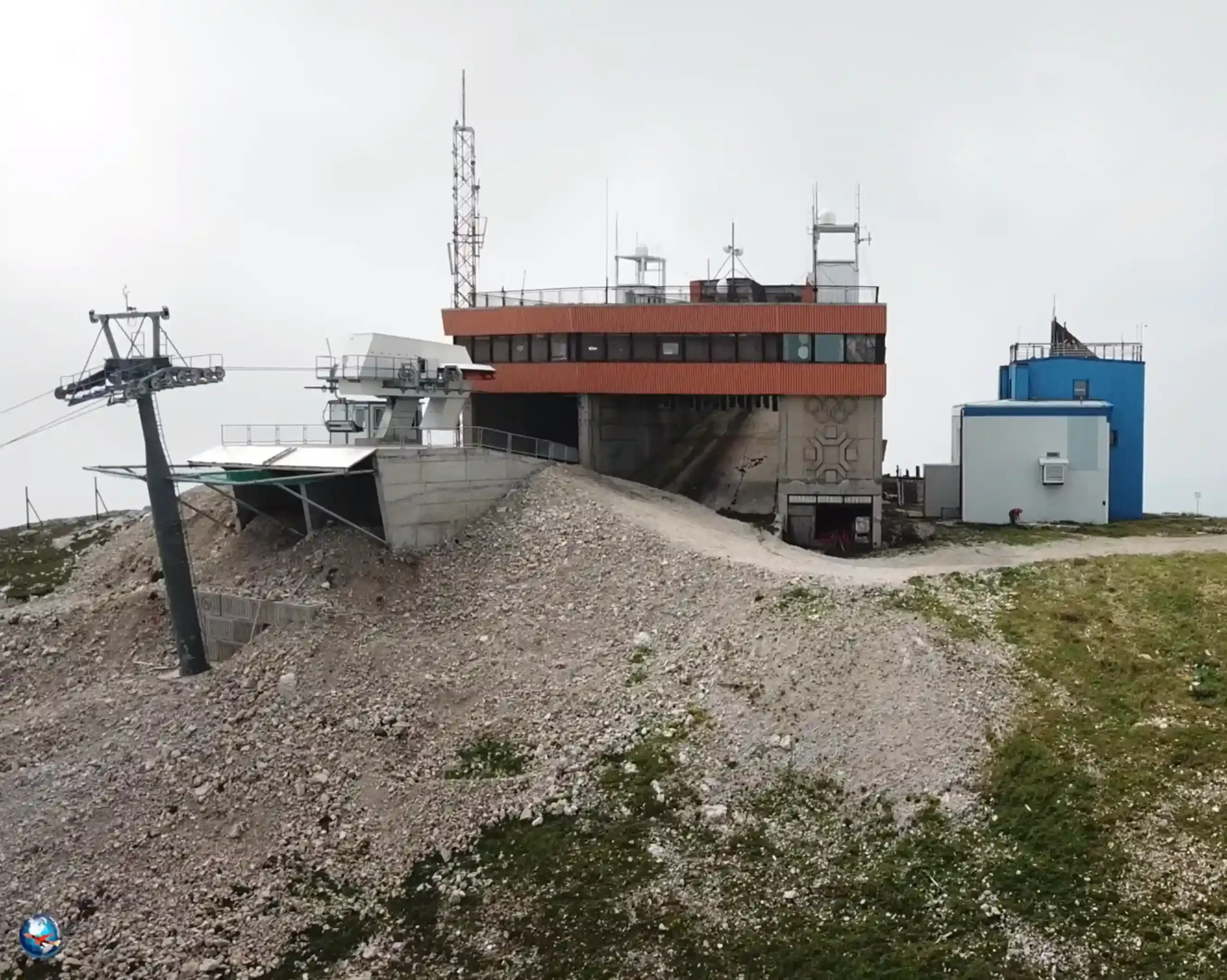
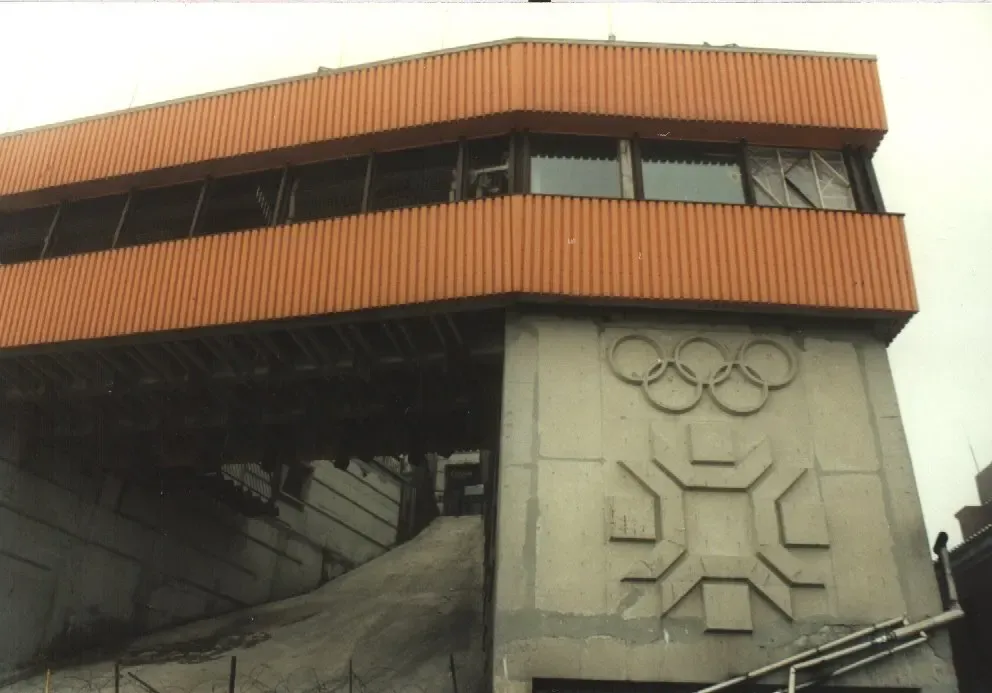
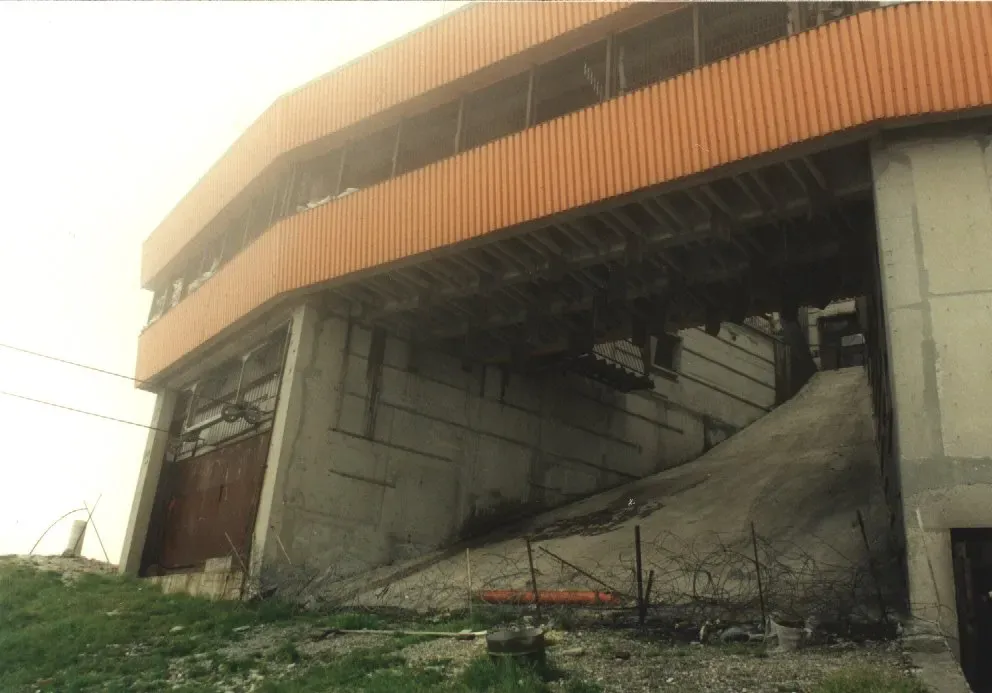
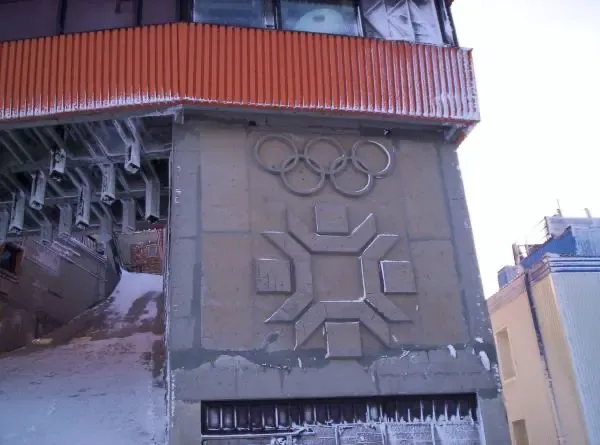
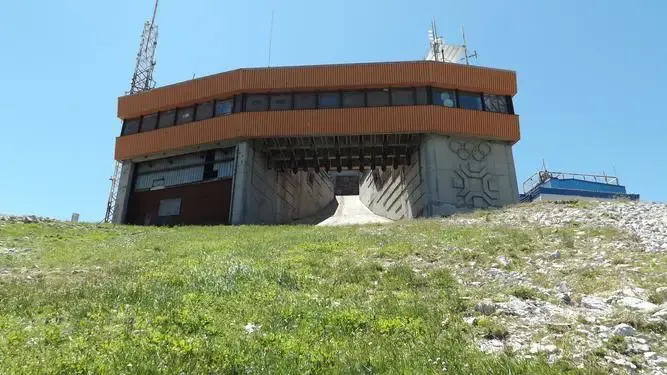
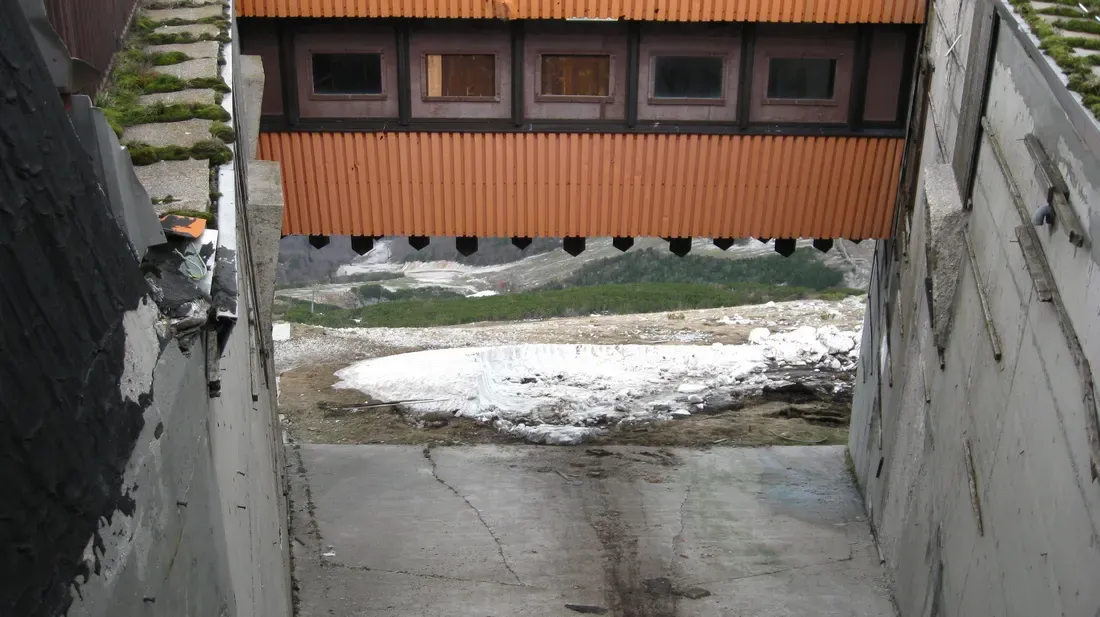
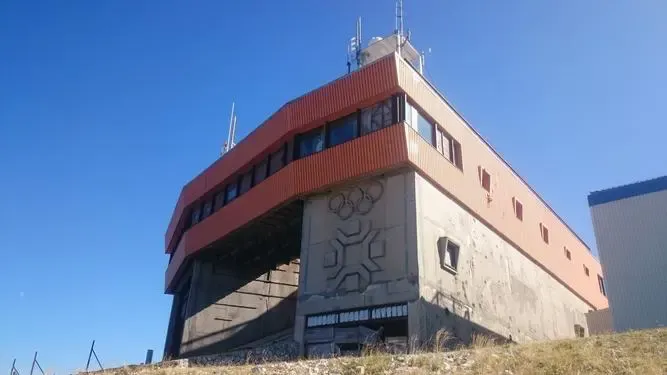
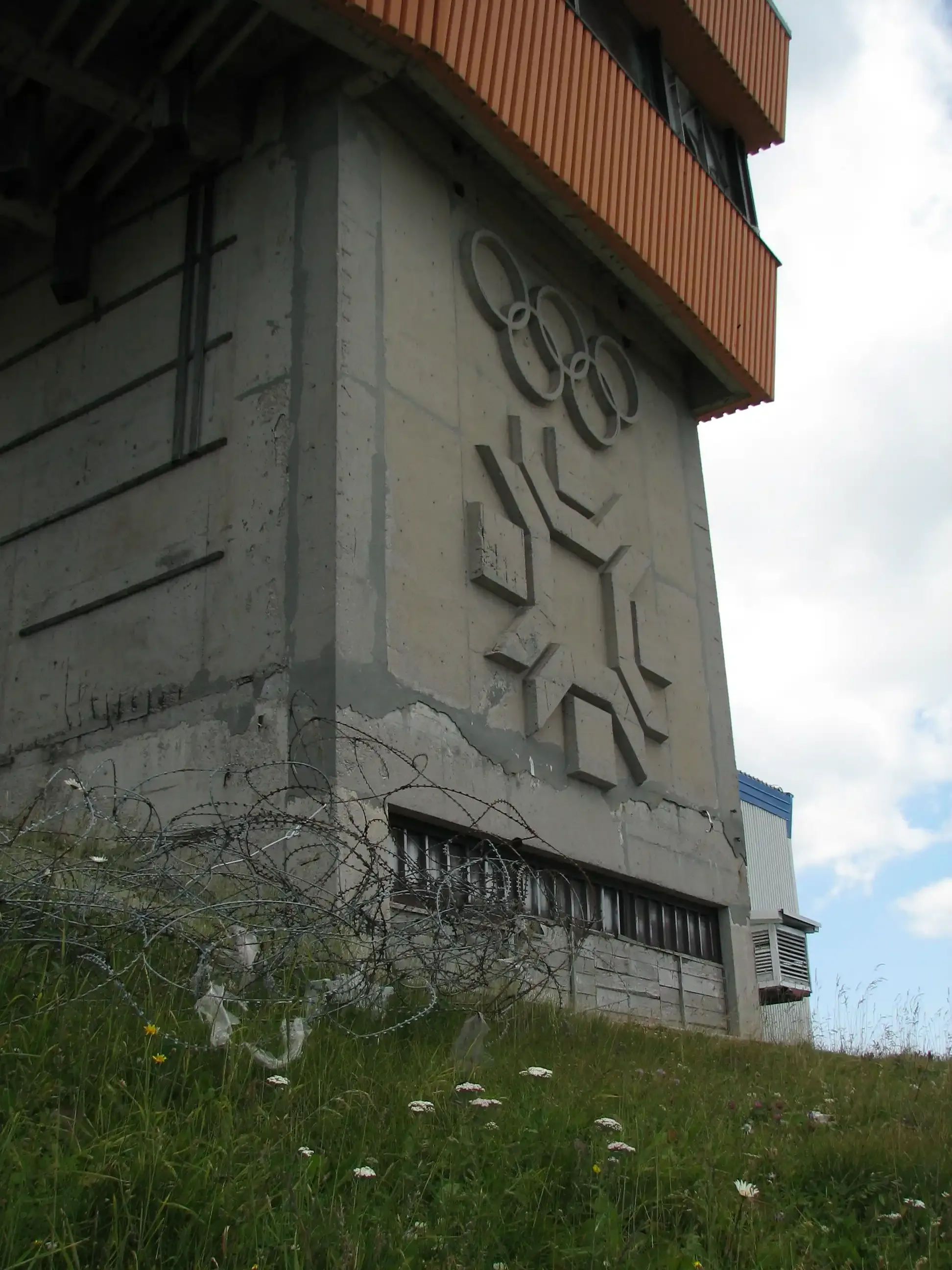
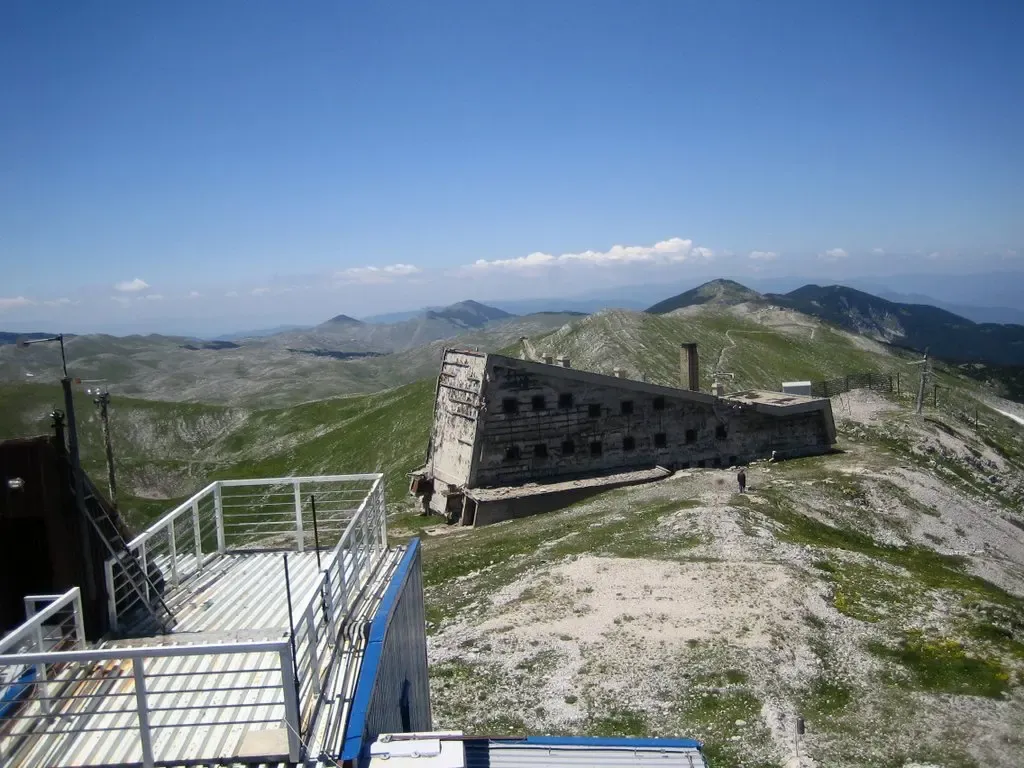
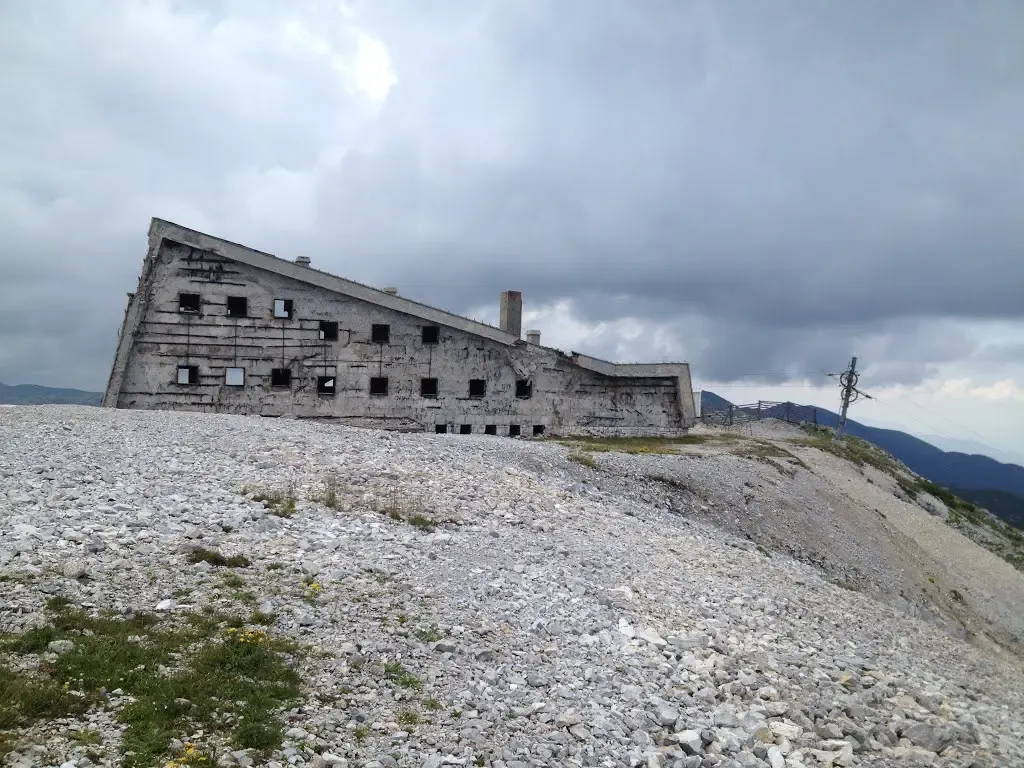
A critical engineering challenge nearly derailed the Men's Downhill. FIS rules required a vertical drop of exactly 800 metres, but the natural slopes of Bjelašnica were a few metres short. The solution was as bold as it was functional: organizers built a starting ramp directly atop the roof of a newly constructed summit restaurant. Launching from this 51-degree artificial drop, competitors would roar down the mountain at over 100 km/h.
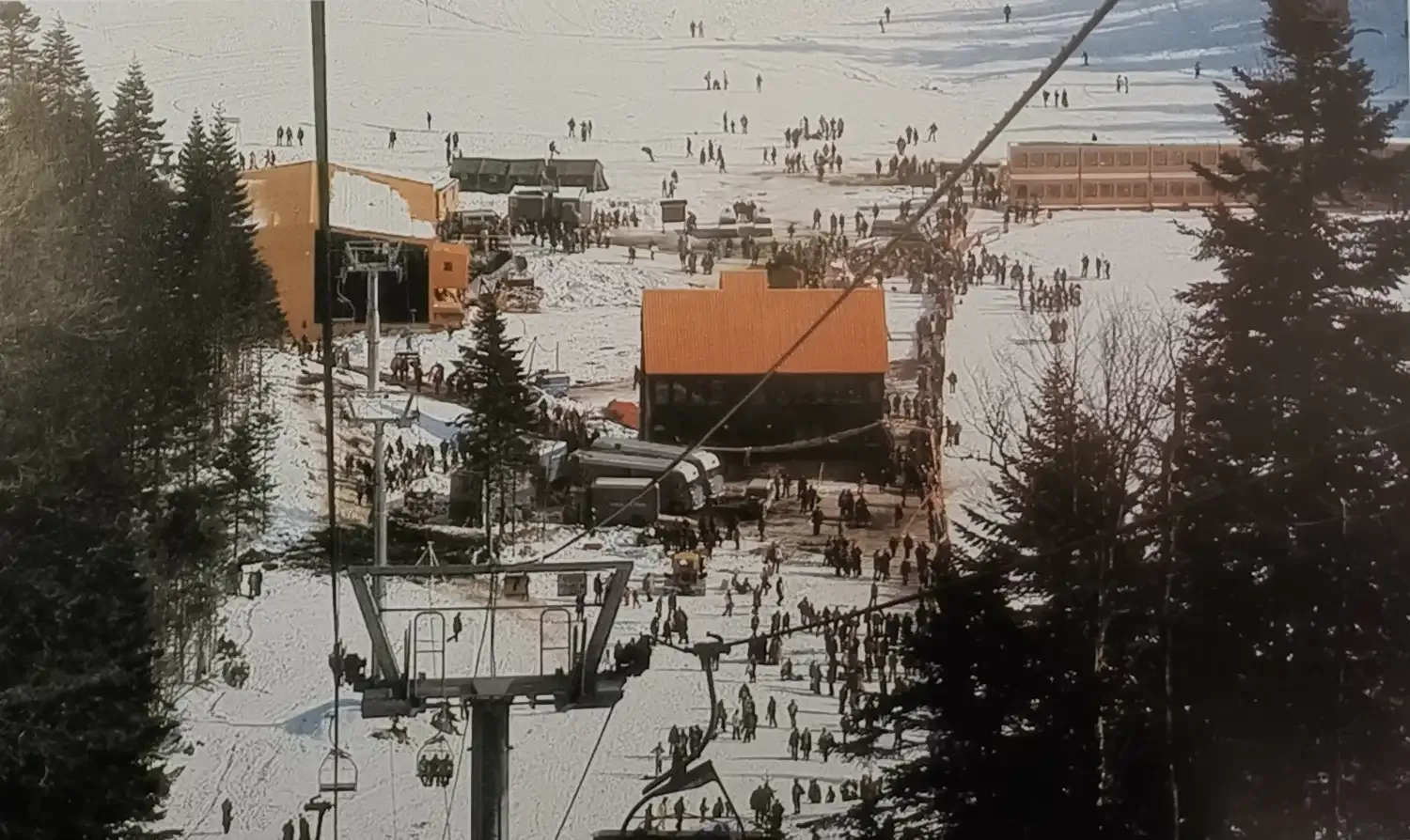
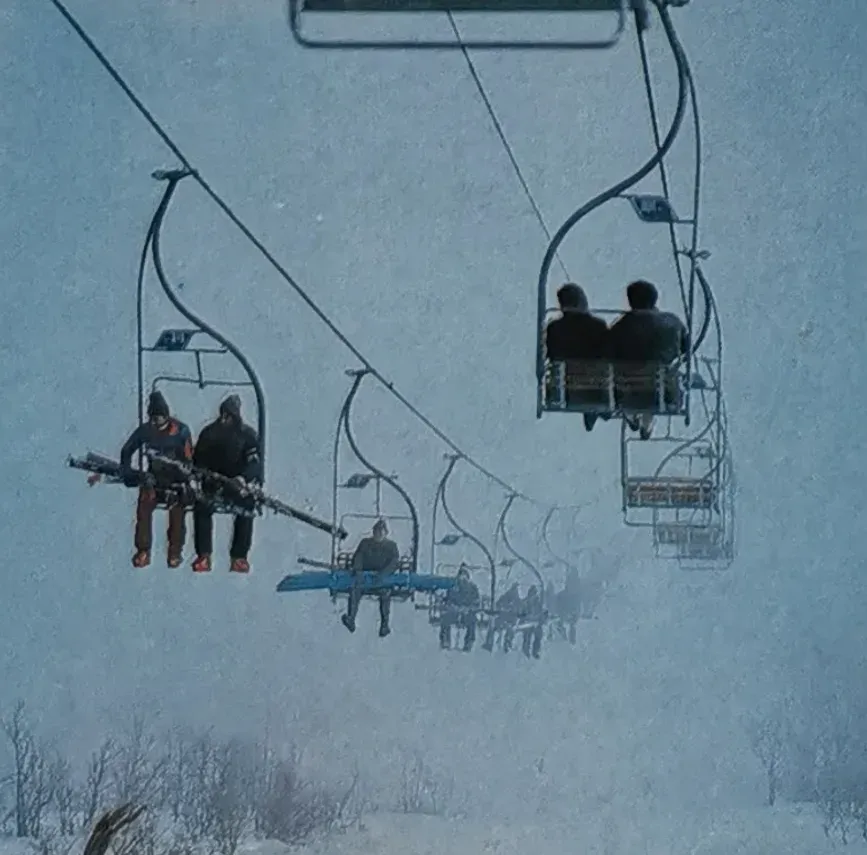
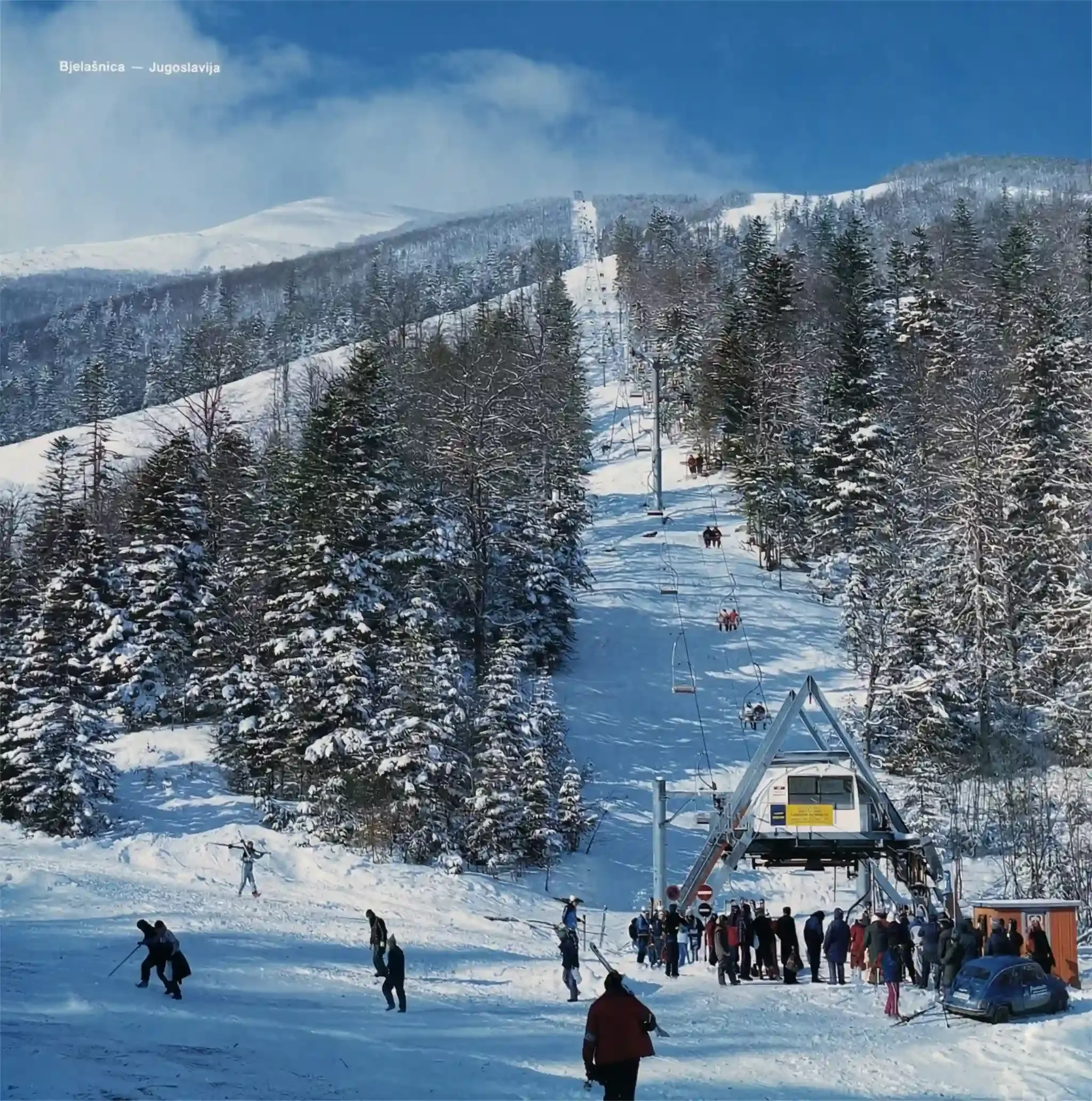
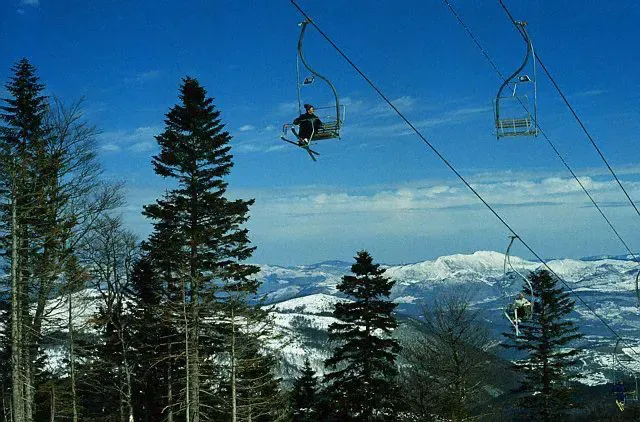
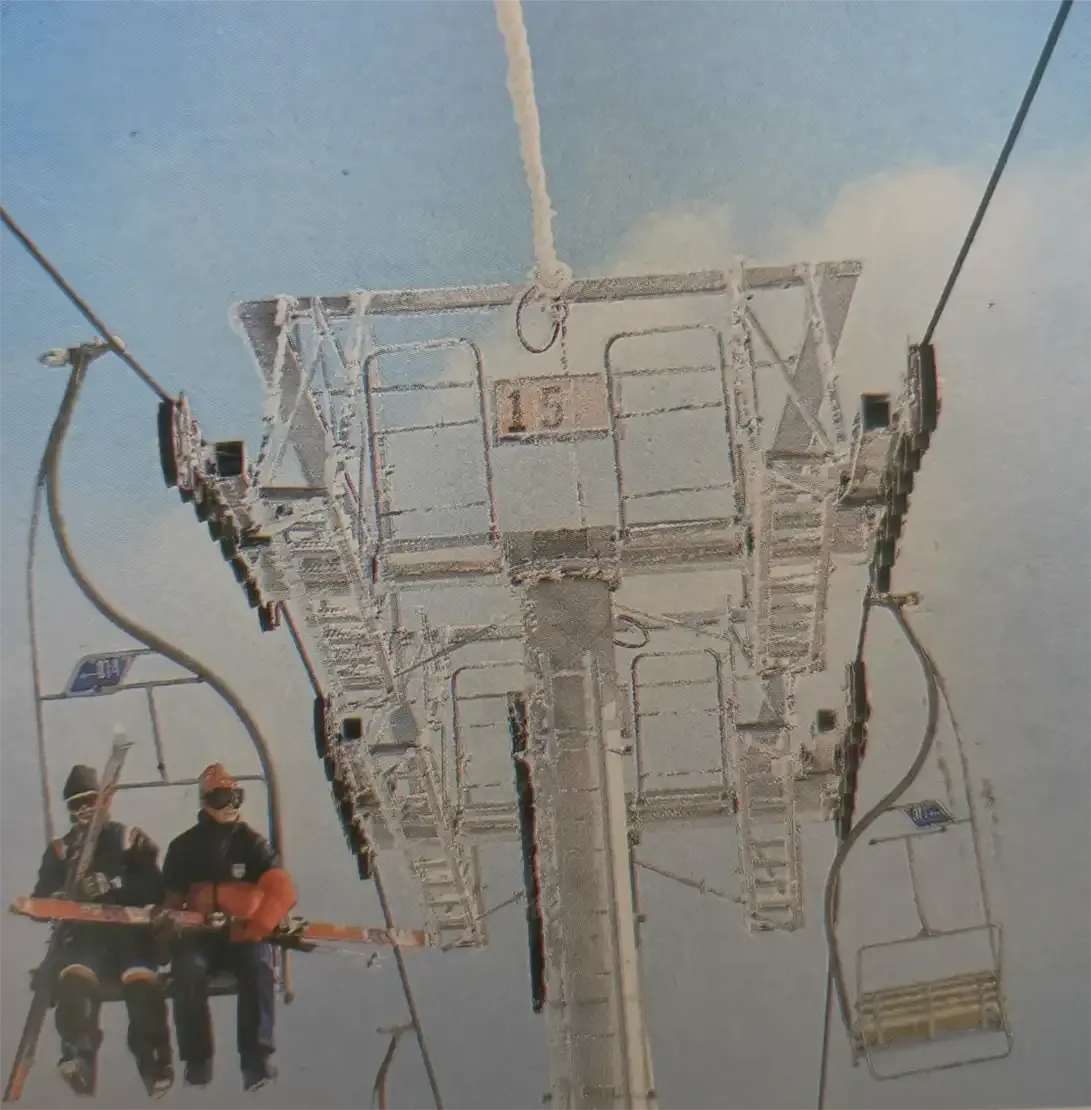
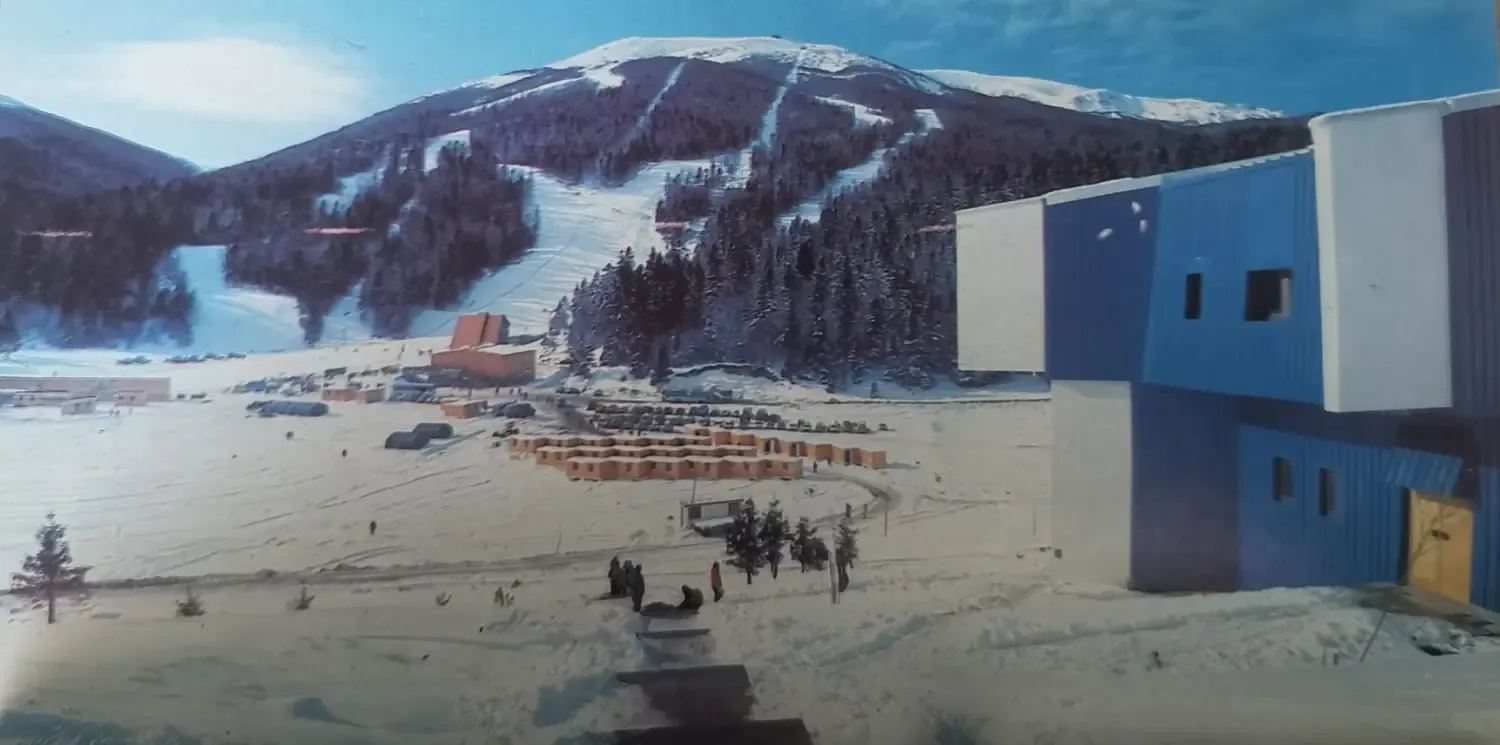
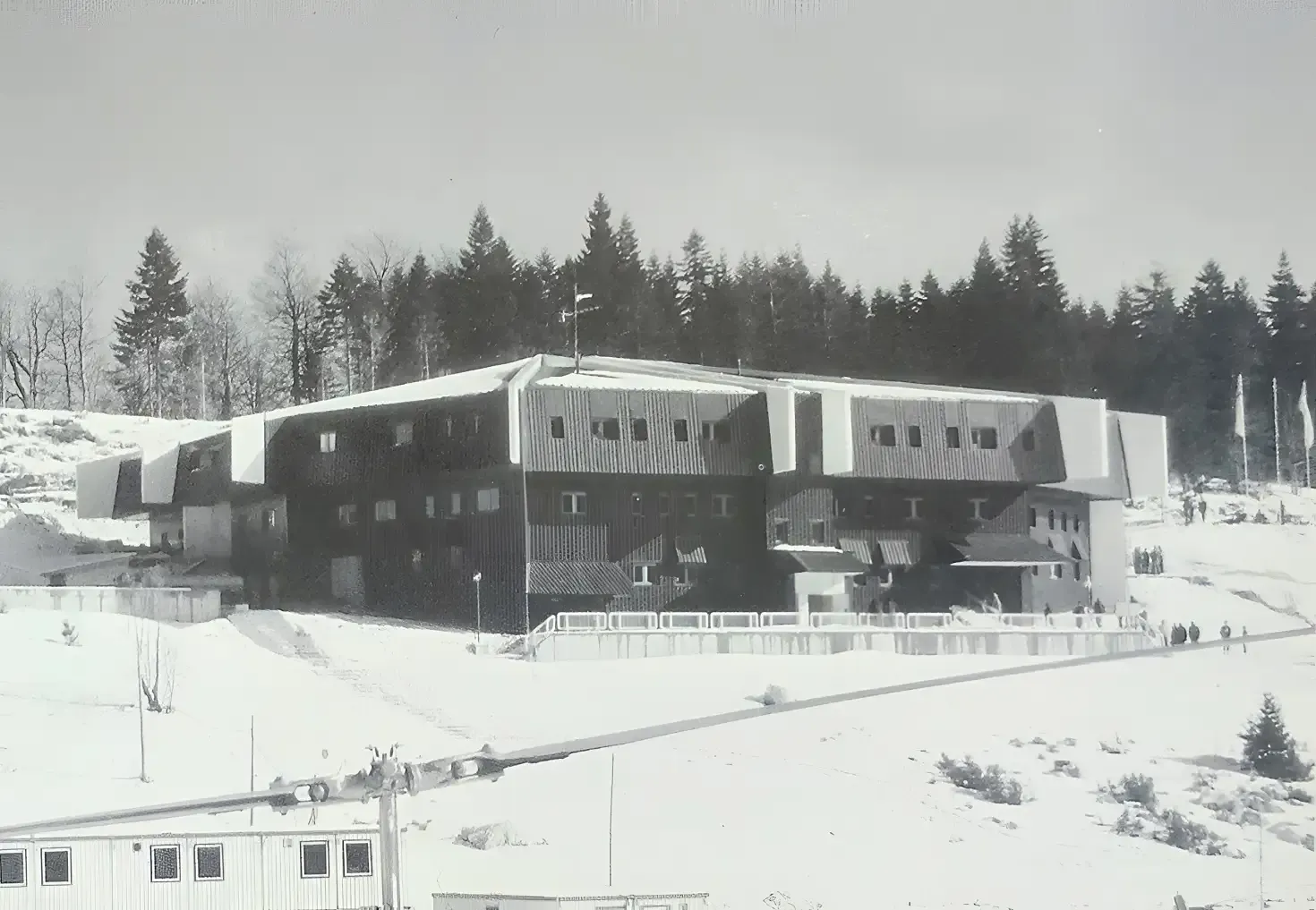
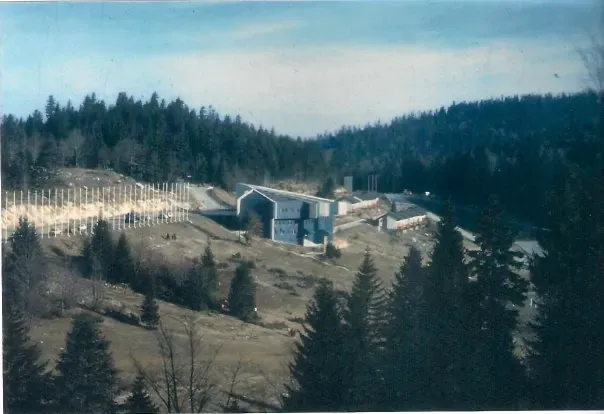
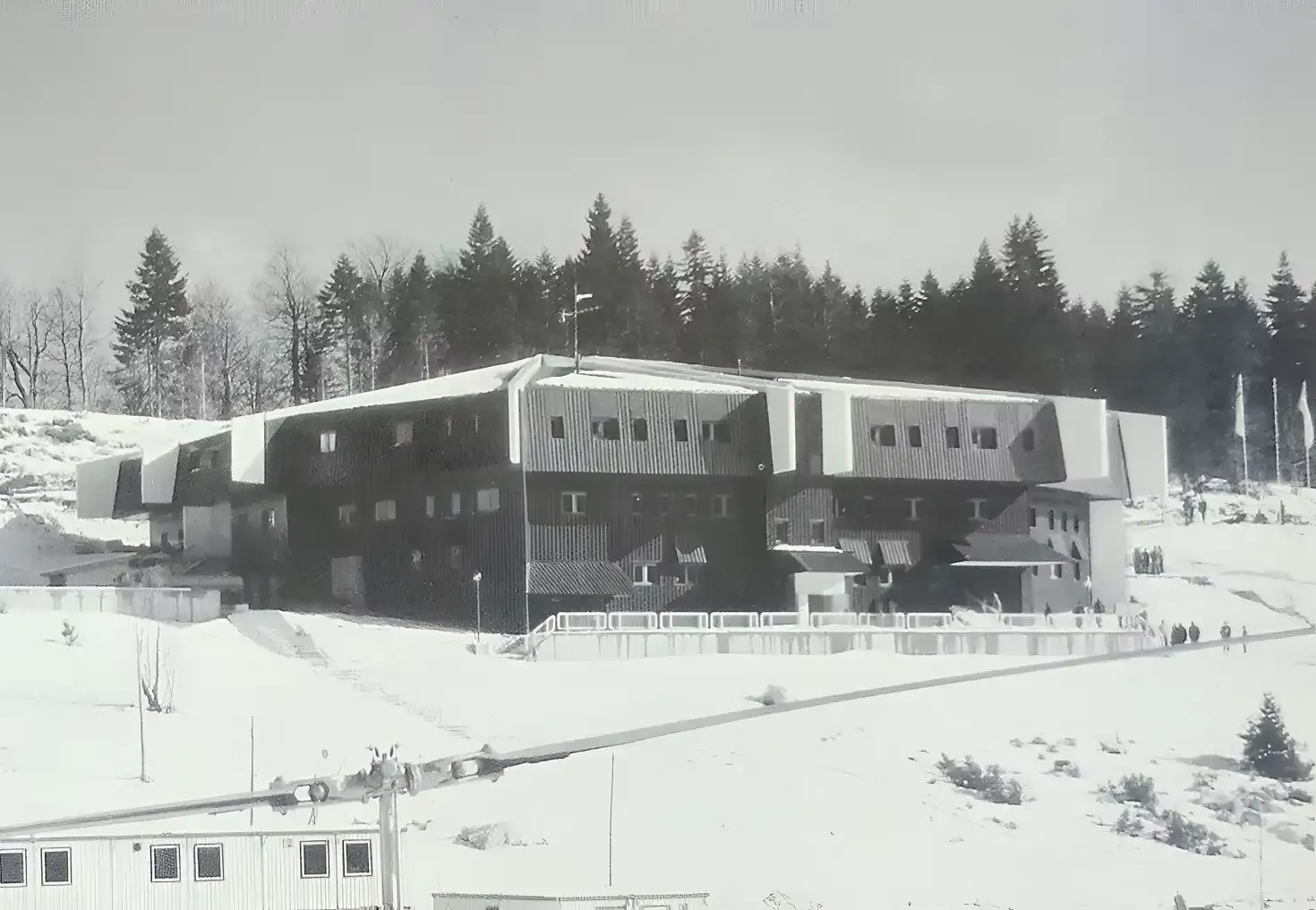
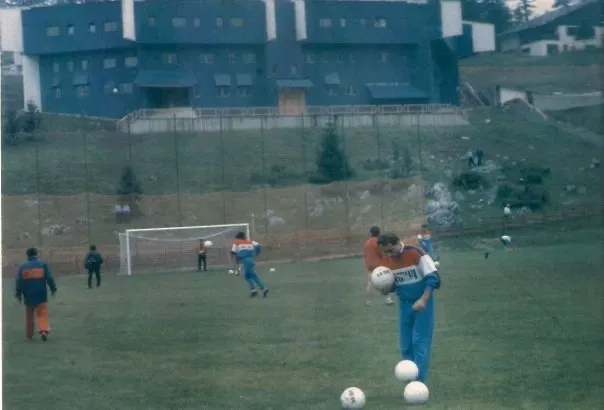
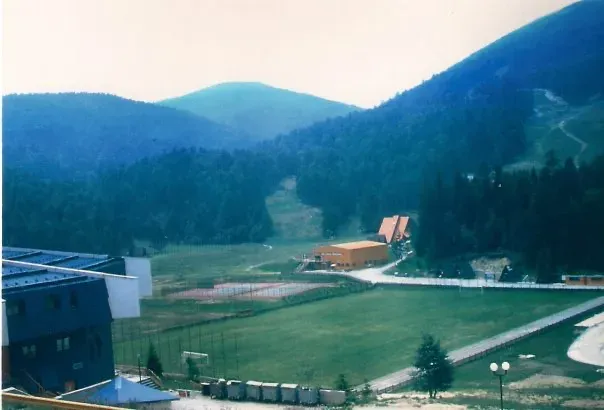
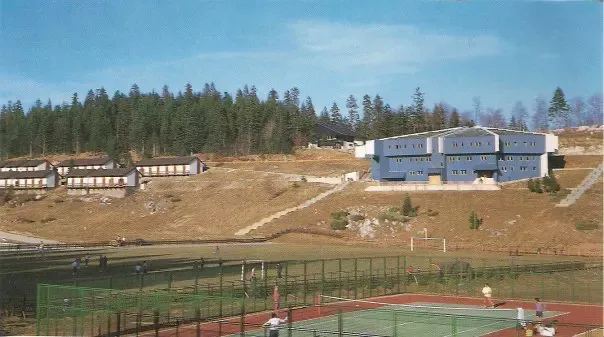
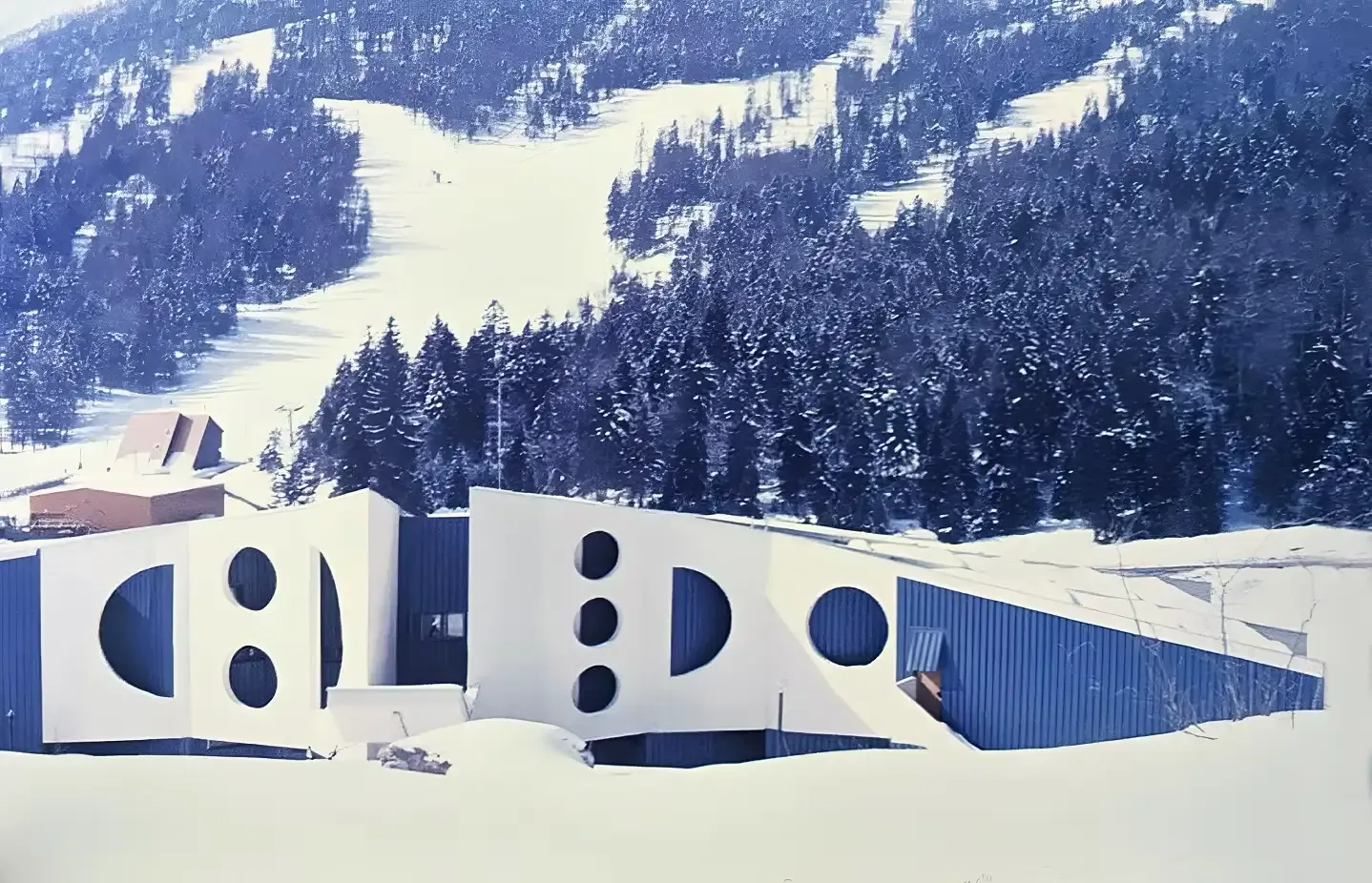
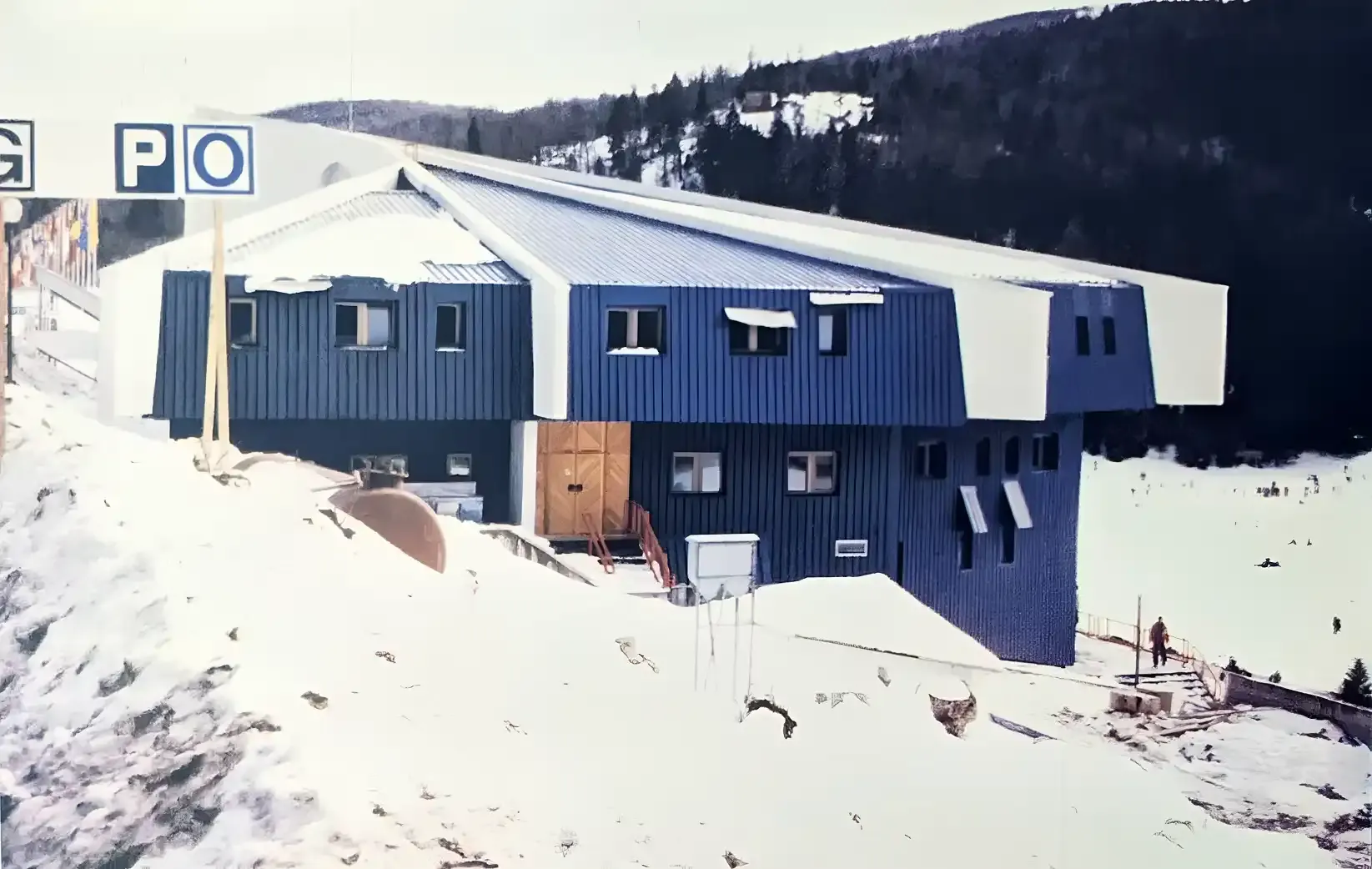
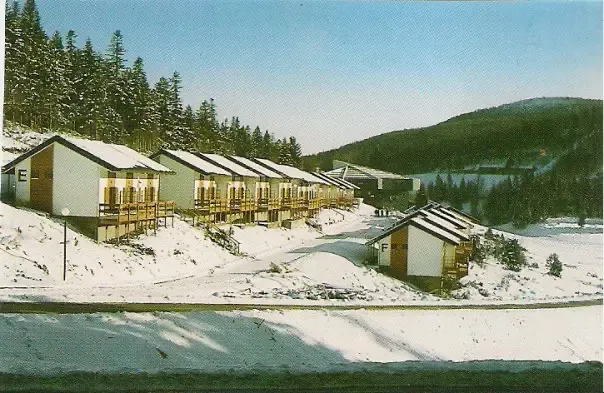
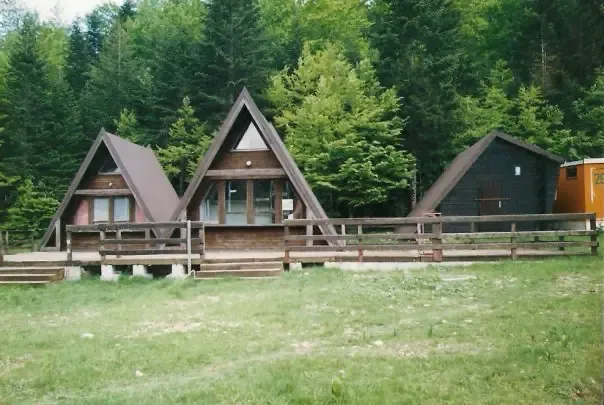
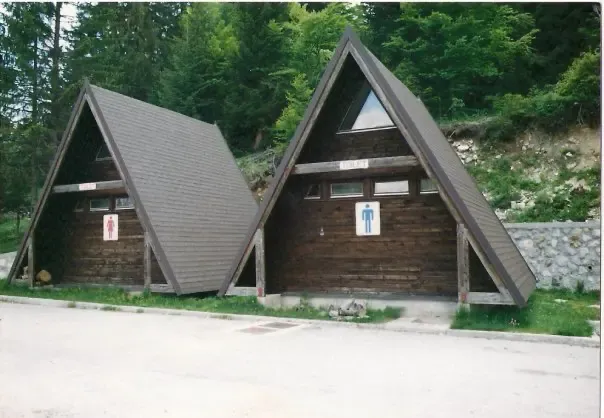
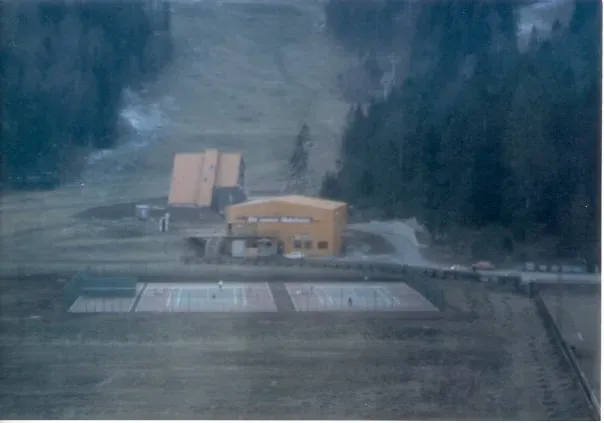
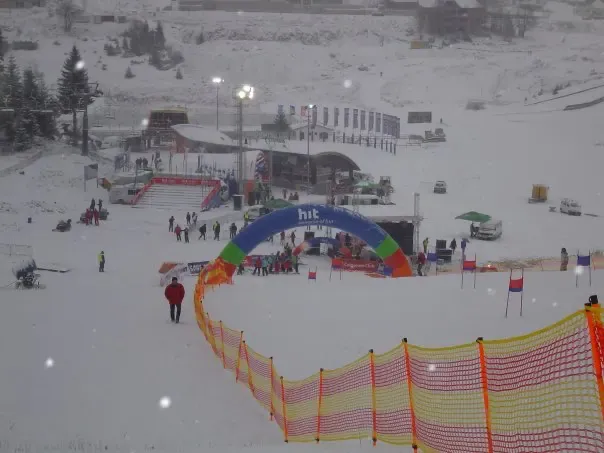
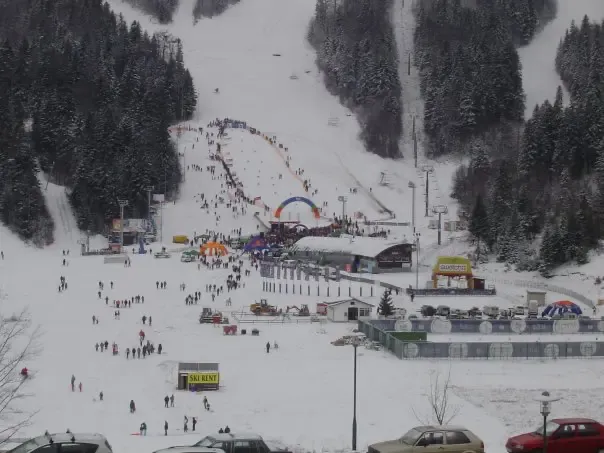
The Olympic site stretched from the summit down to the Babin Do plateau at 1,266 m. The base area was transformed into a complete venue featuring the Hotel Famos, Hotel Smuk, and a visually striking, late-modernist Press Centre clad in blue composite panels by renowned Bosnian architect Ivan Štraus.
The 1984 Winter Olympics: Delays, Winds, and Gold
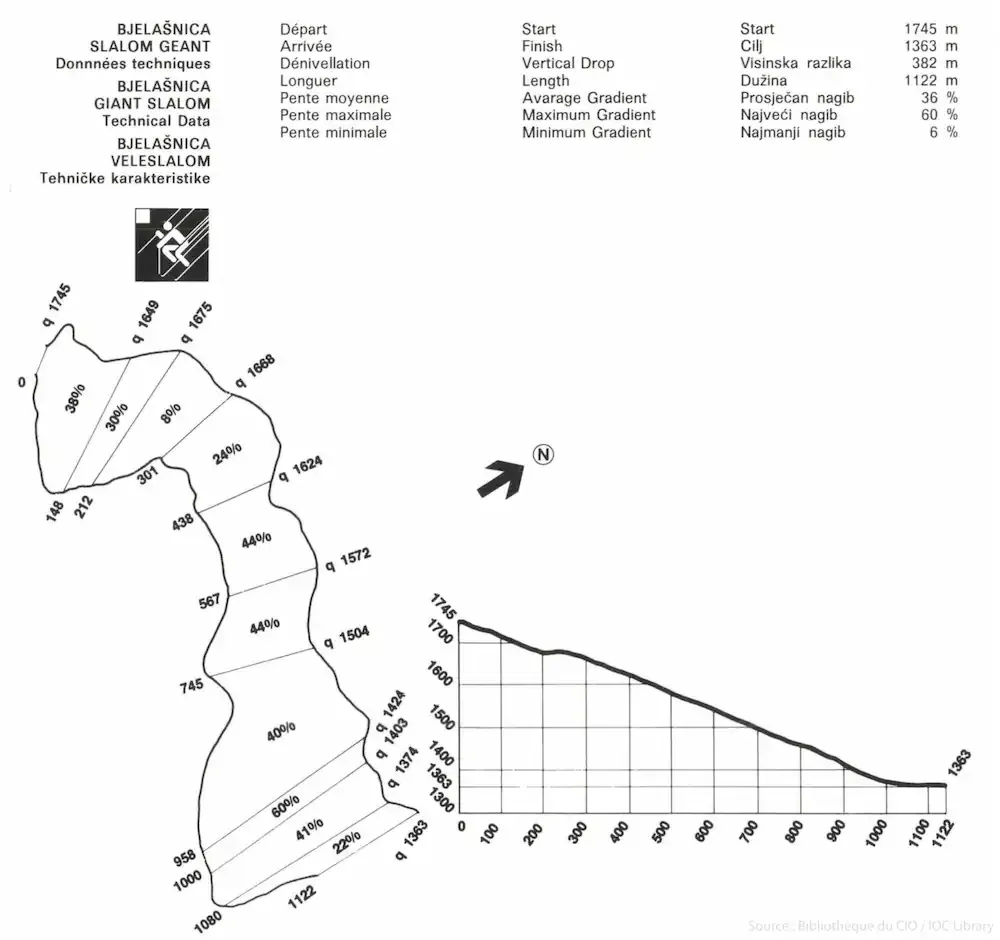
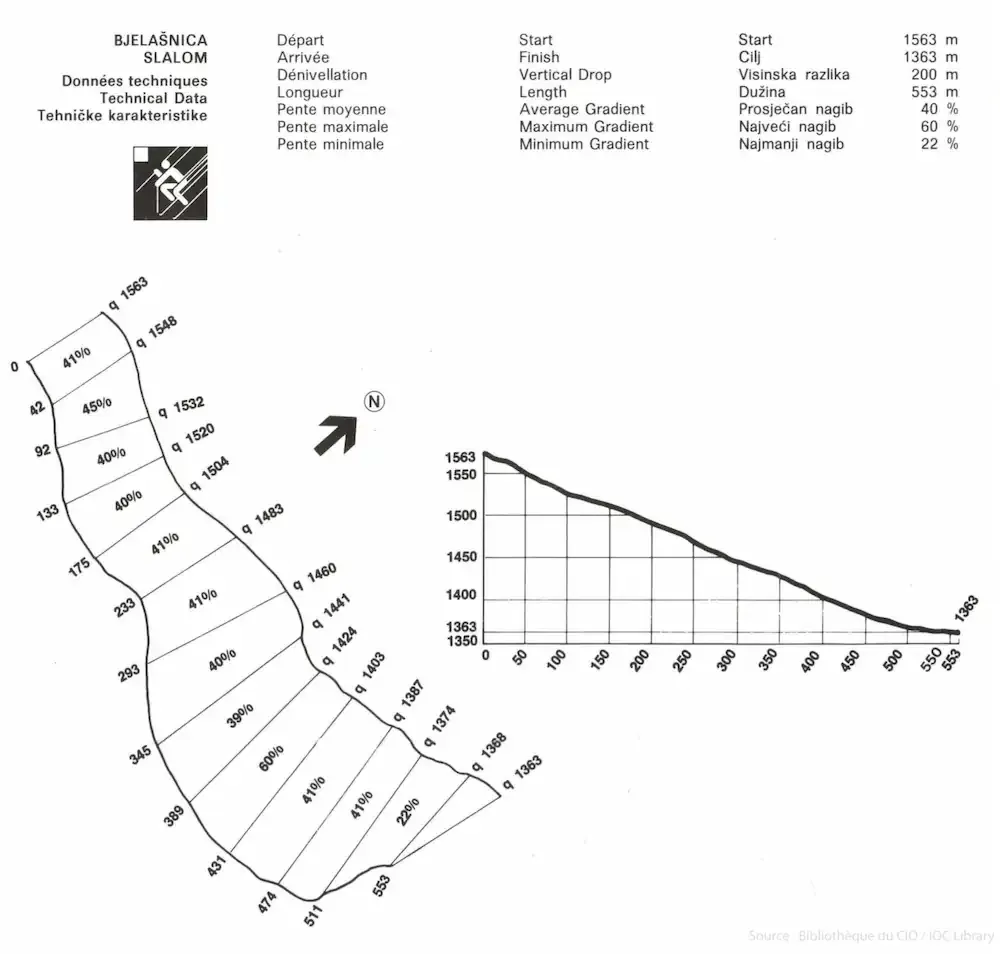
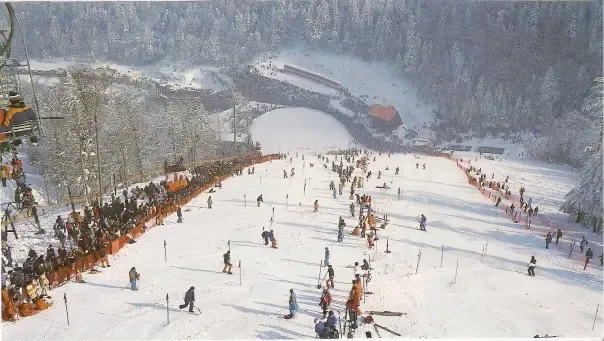
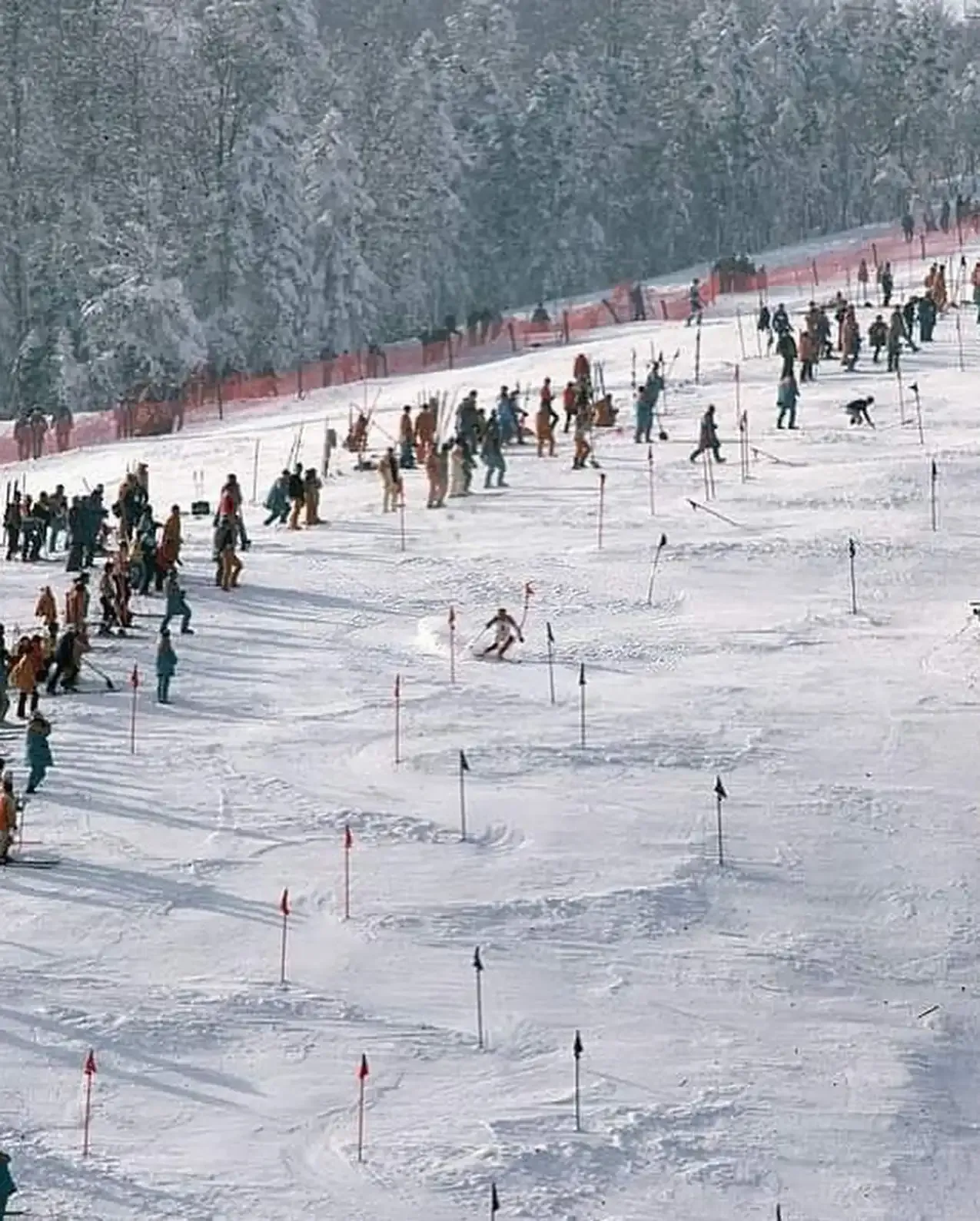
By February 1984, Bjelašnica was a fully engineered competitive arena. The technical profile of the new courses pushed athletes to their limits:
| Downhill | Giant Slalom | Slalom | |
|---|---|---|---|
| Start | 2,076 m | 1,745 m | 1,563 m |
| Finish | 1,273 m | 1,363 m | 1,363 m |
| Vertical Drop | 803 m | 382 m | 200 m |
| Length | 3,070 m | 1,122 m | 553 m |
| Average Gradient | 28% | 36% | 40% |
| Maximum Gradient | 60% | 60% | 60% |
| Minimum Gradient | 5% | 6% | 22% |
| Average Speed | 104.26 km/h | 50.08 km/h | 41.58 km/h |
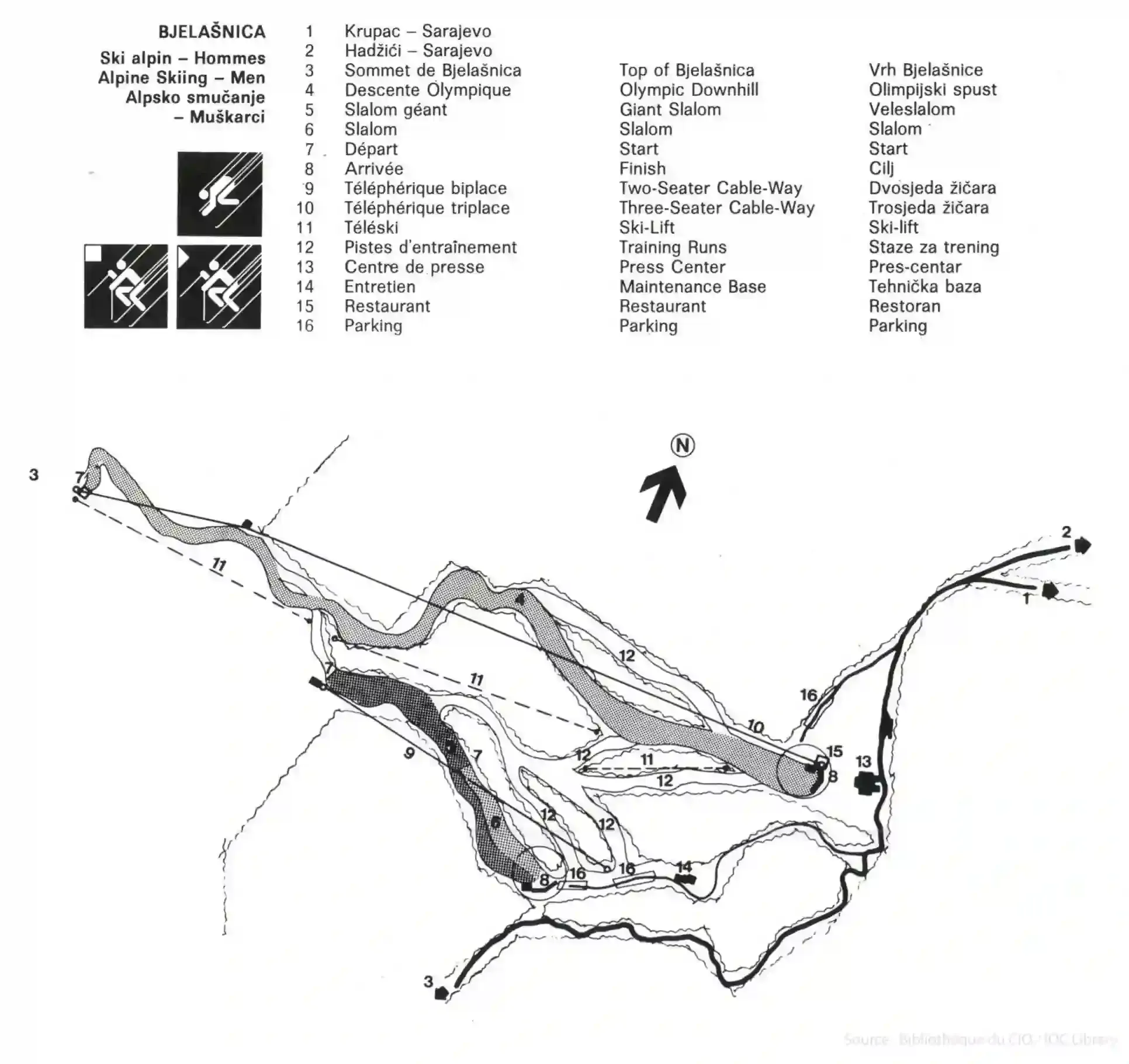
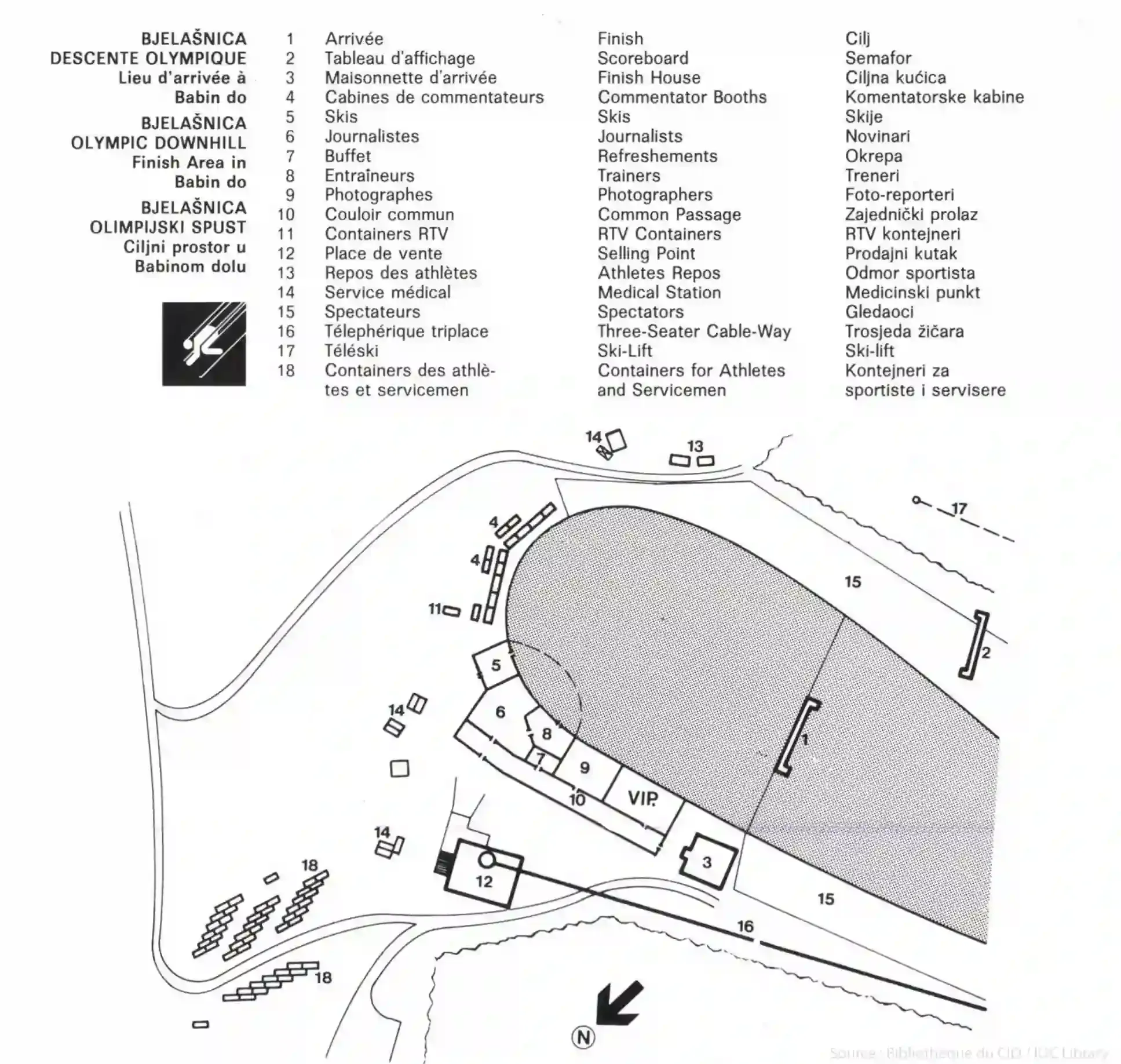
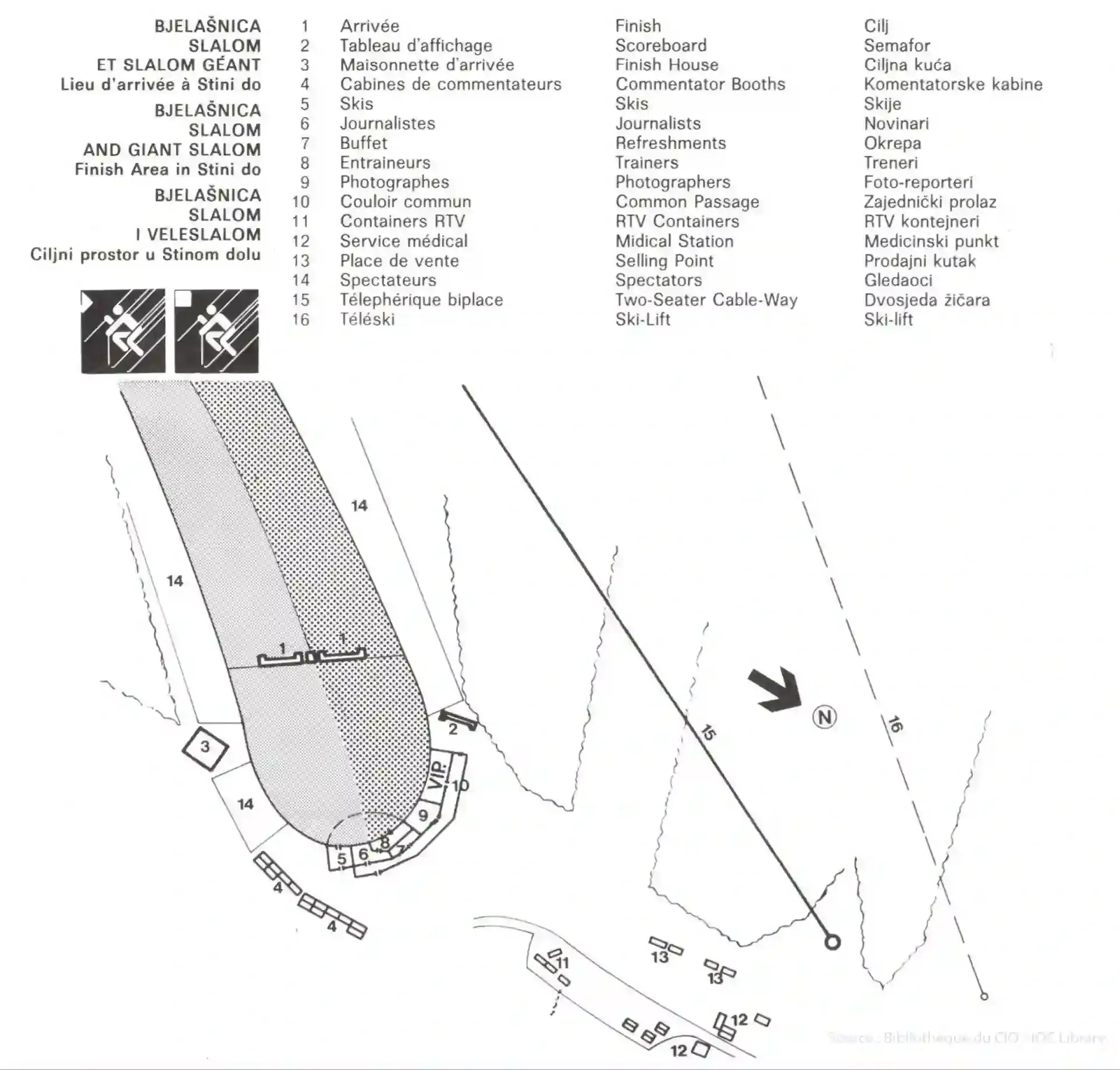
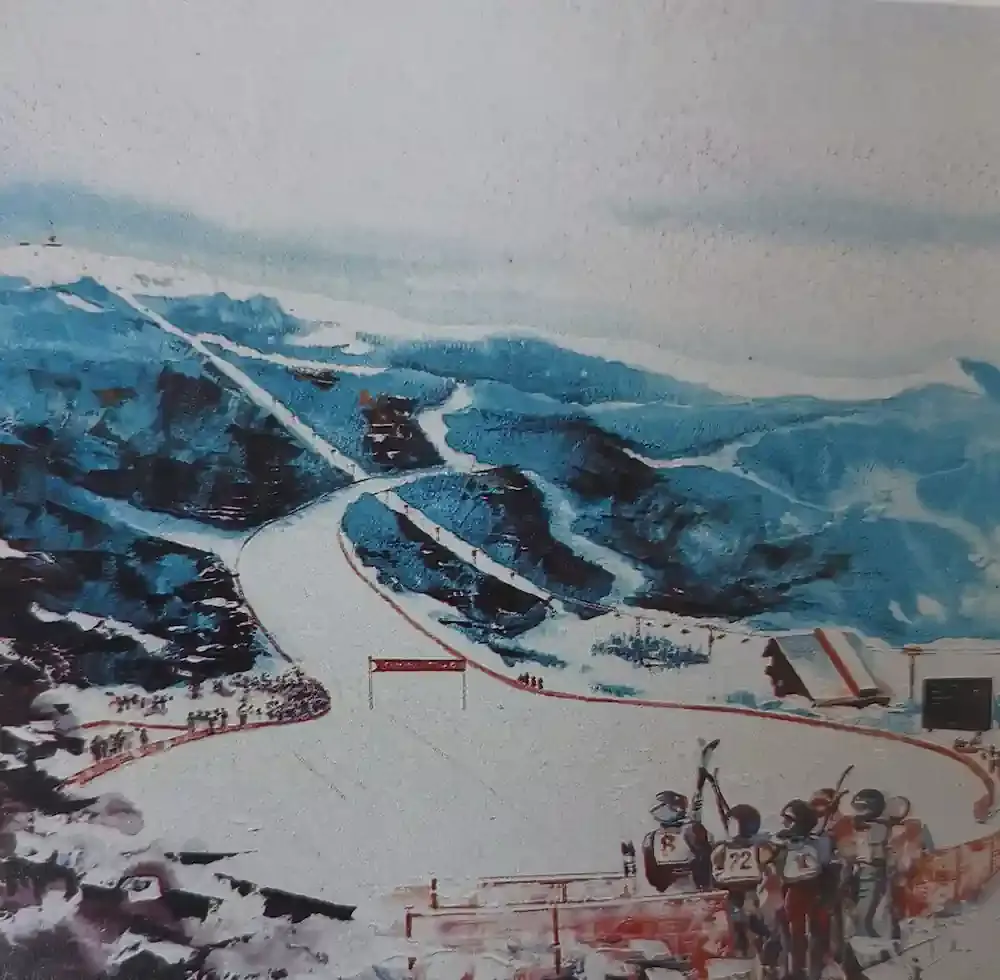
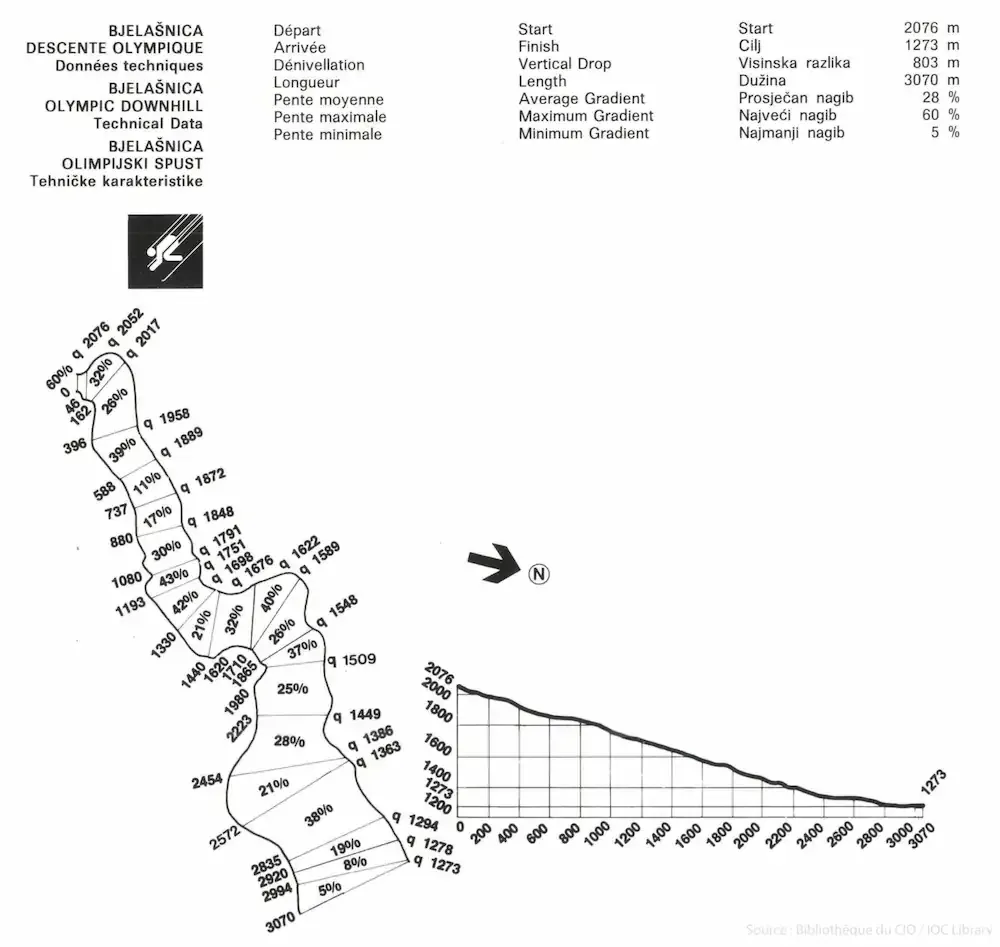
However, the schedule was immediately dictated by the mountain’s notoriously fickle weather. Battered by high winds and heavy snow, the prestigious Men's Downhill faced repeated postponements.
The course was even better prepared this winter. In fact, I have never seen such a perfect course. Otherwise, everything in Sarajevo is outstanding, the food, accommodation... Never better. All of us in the Olympic Village are satisfied. It's truly fantastic here. — Peter Müller, Swiss Silver Medalist
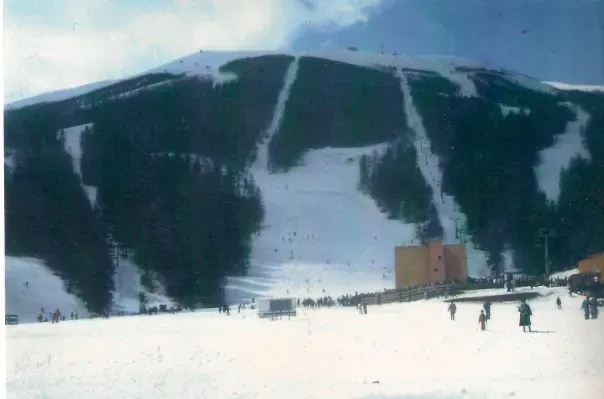
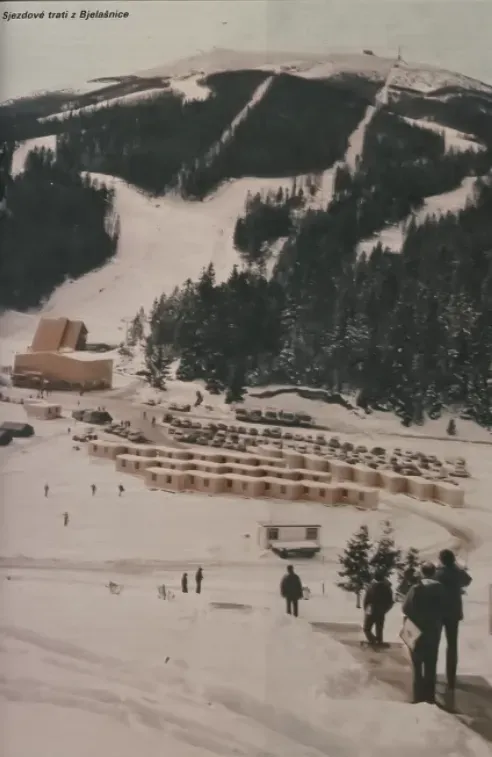
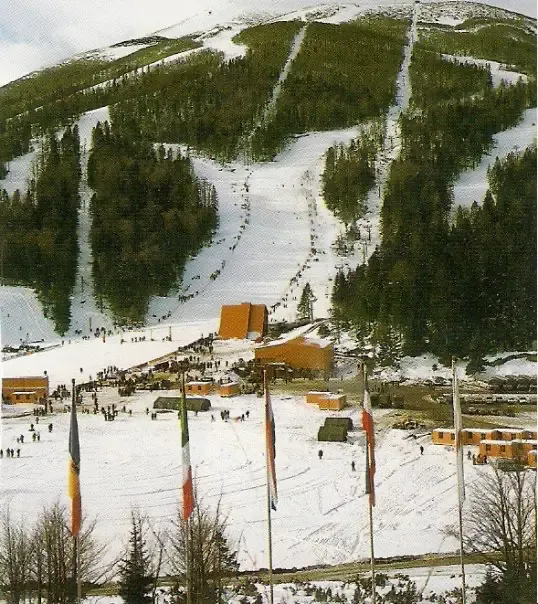
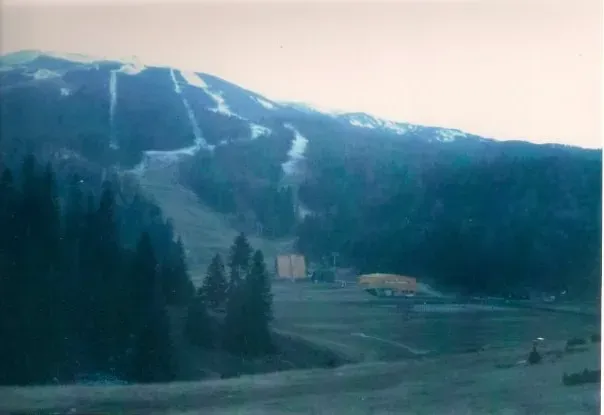
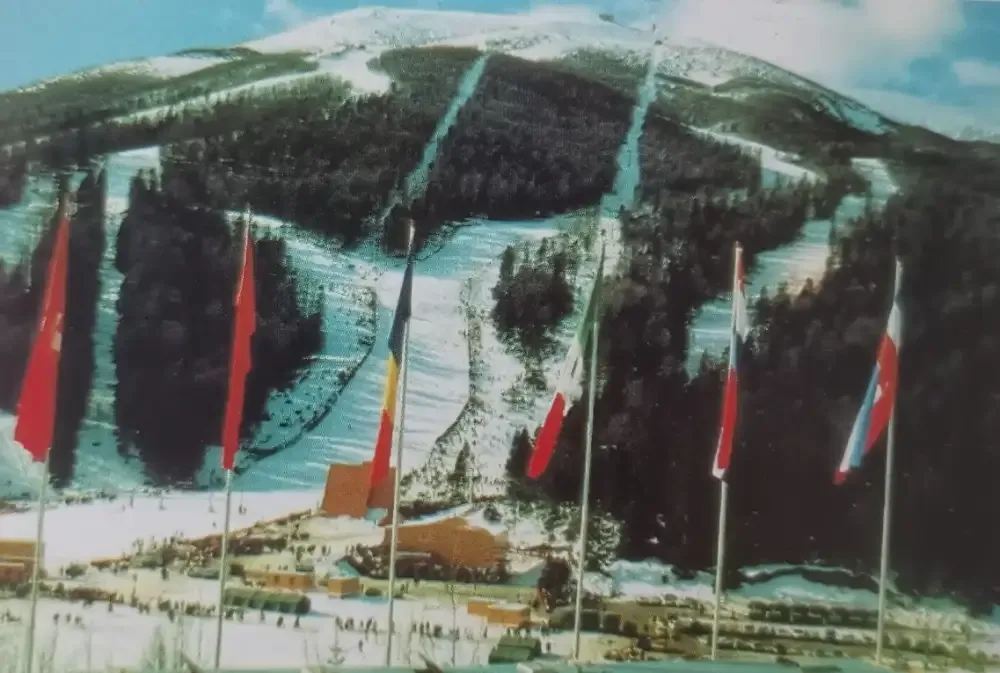
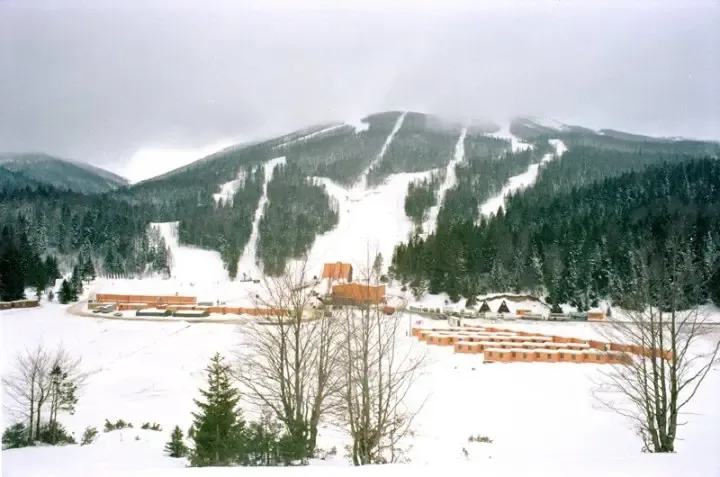
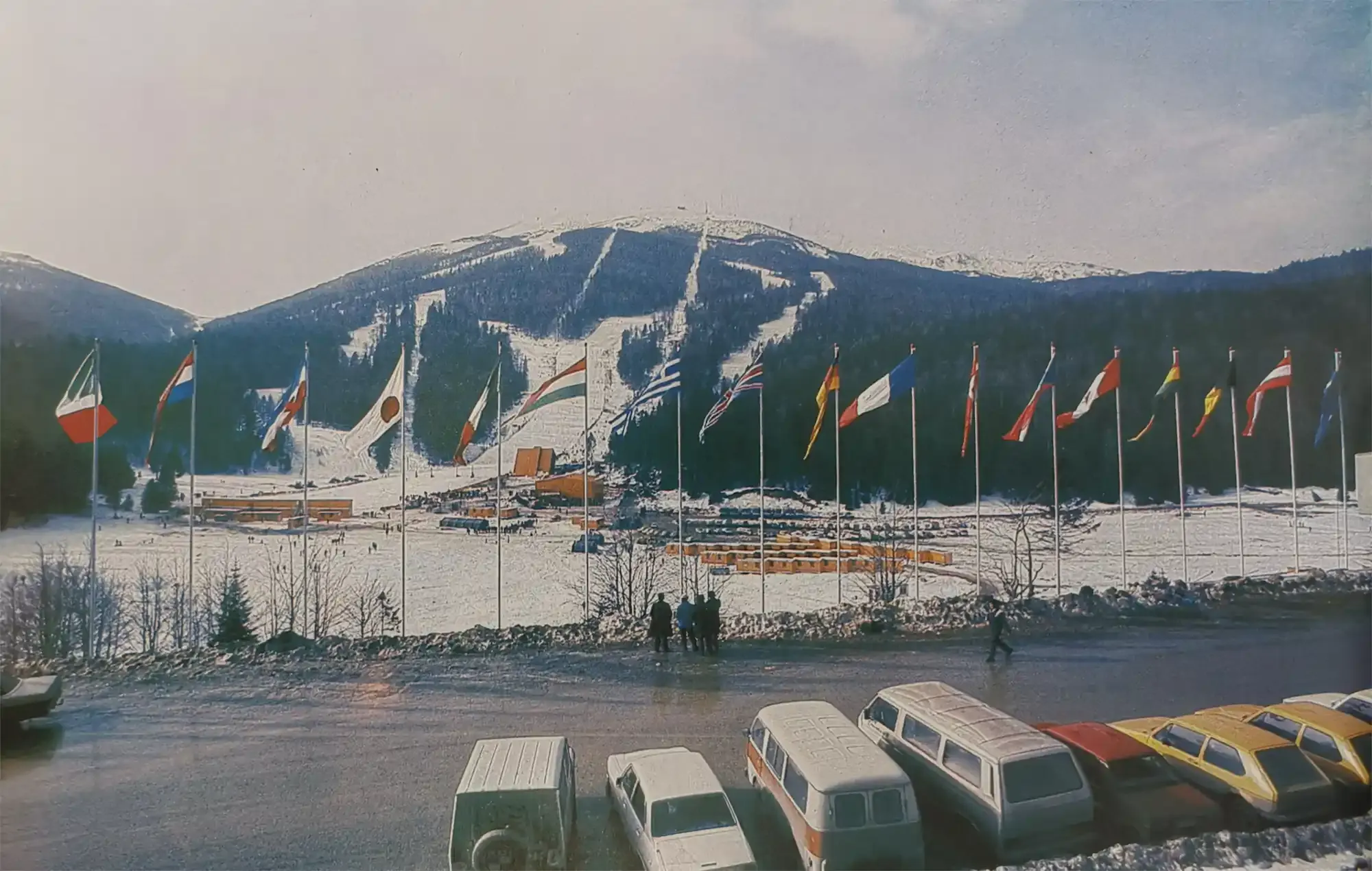
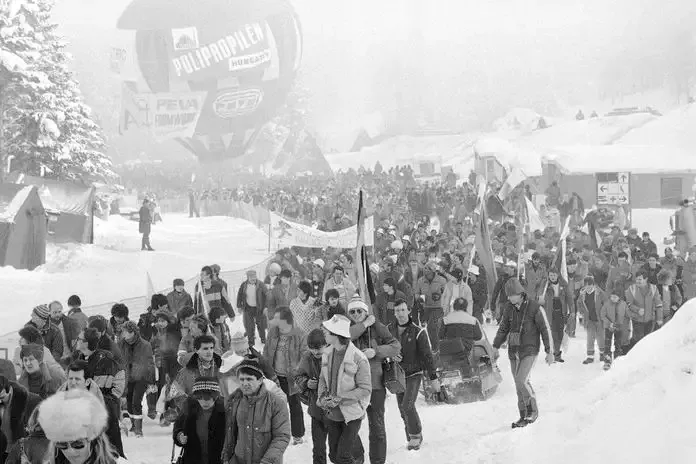
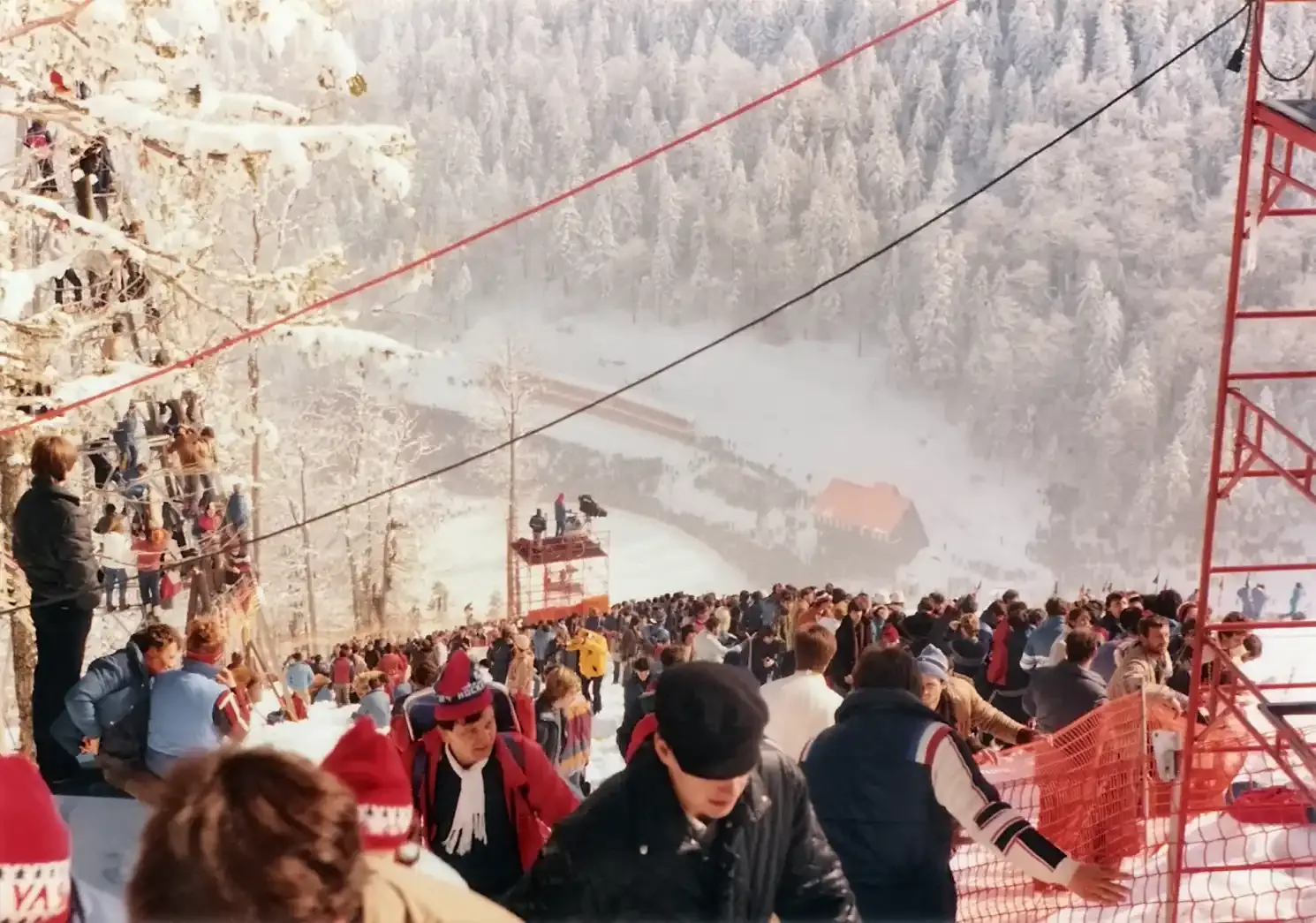
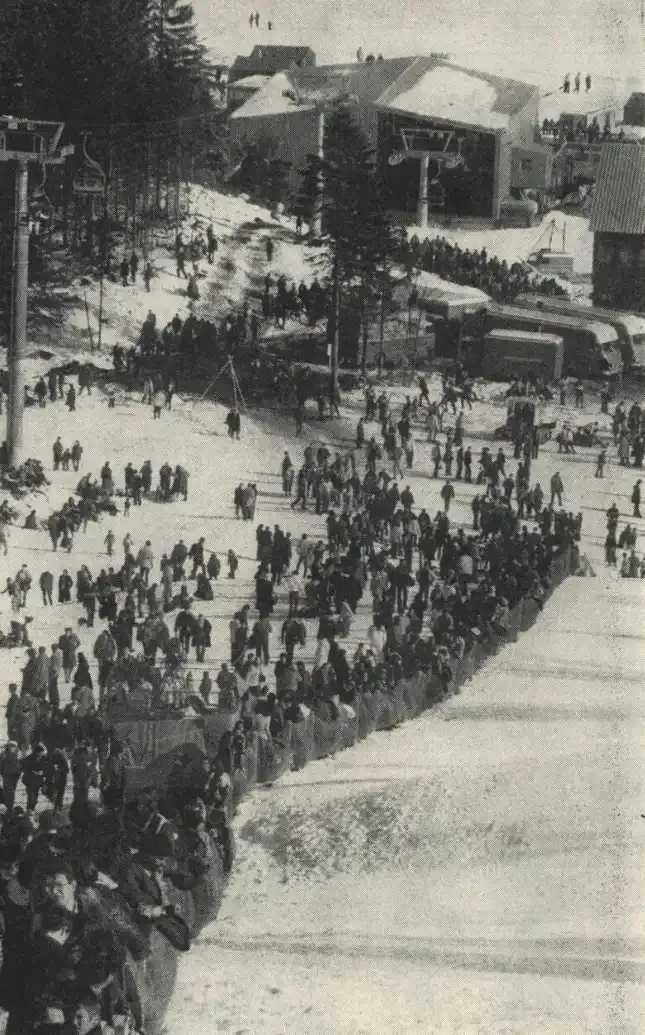
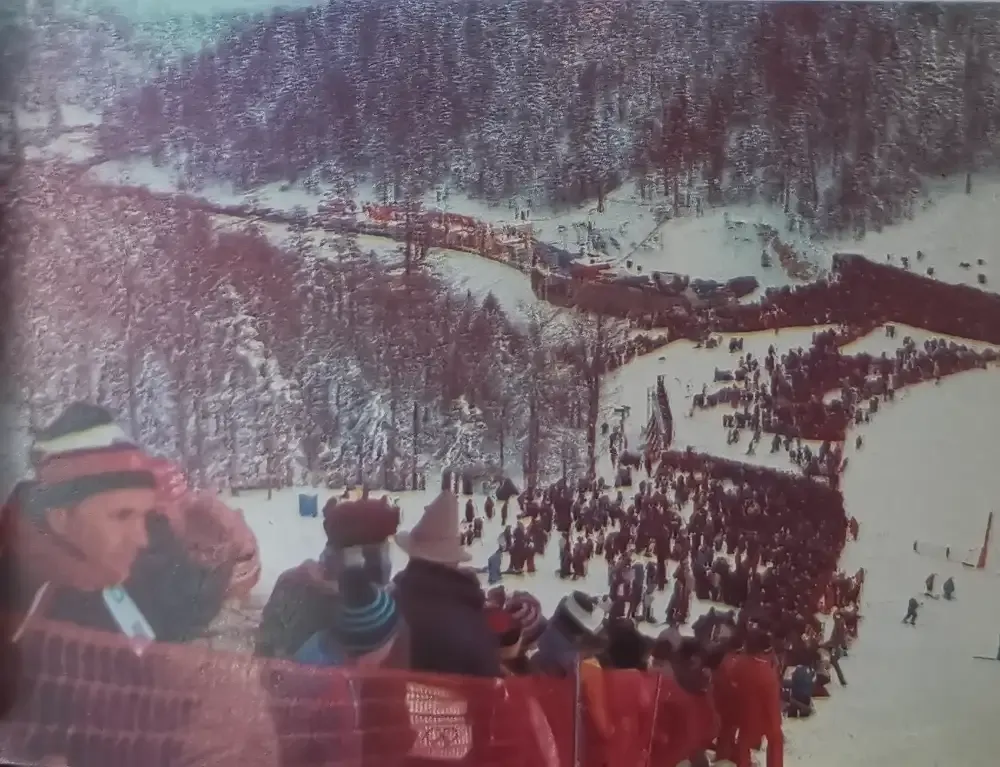
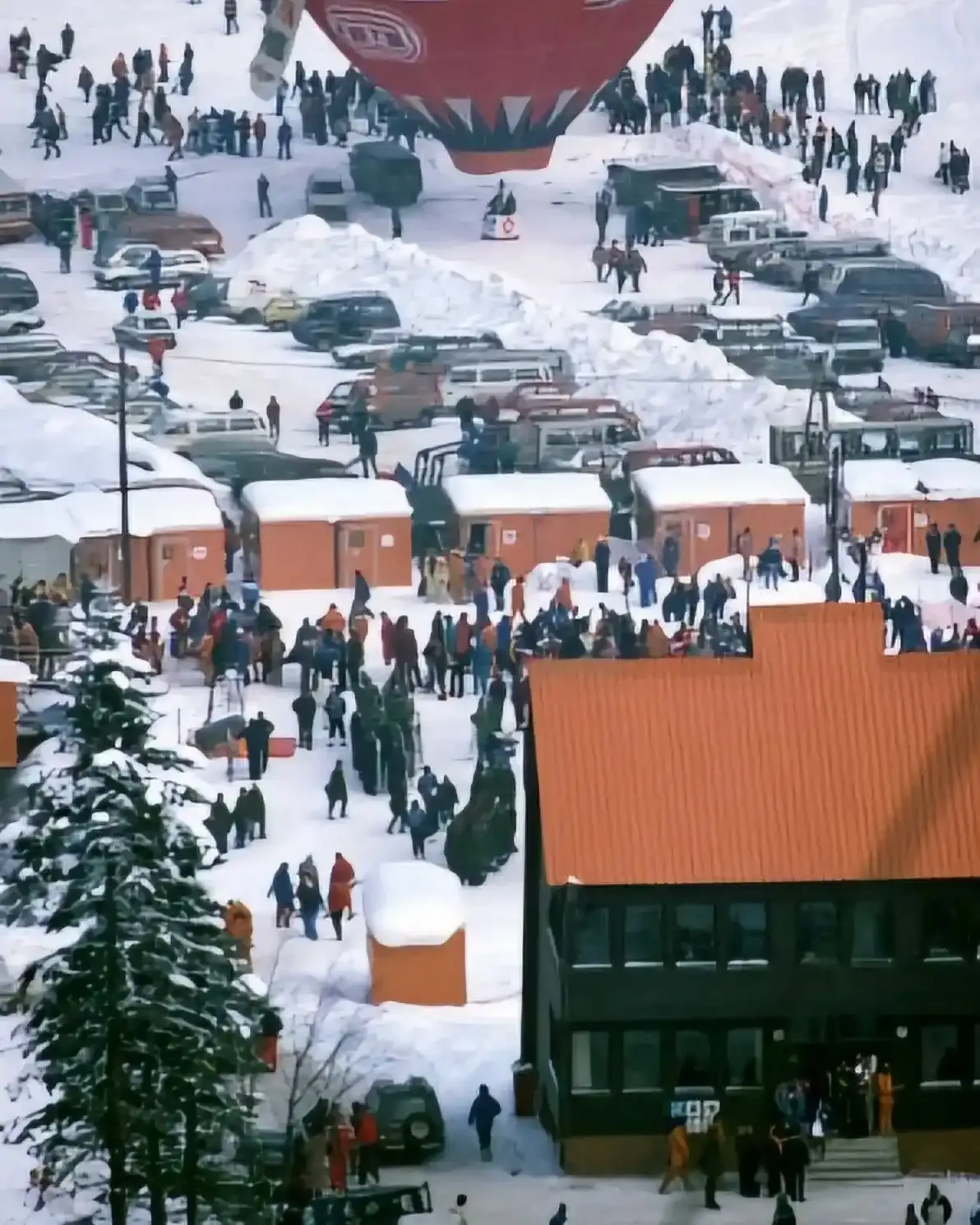
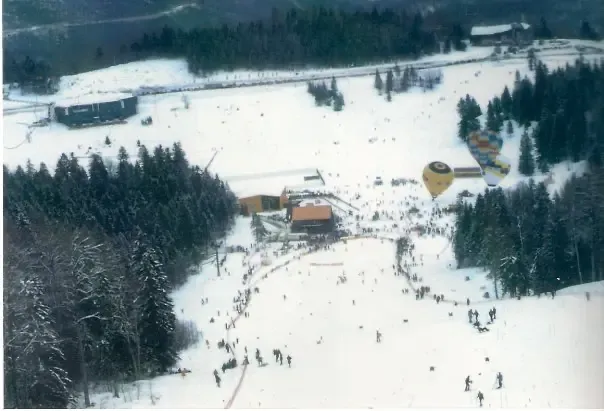
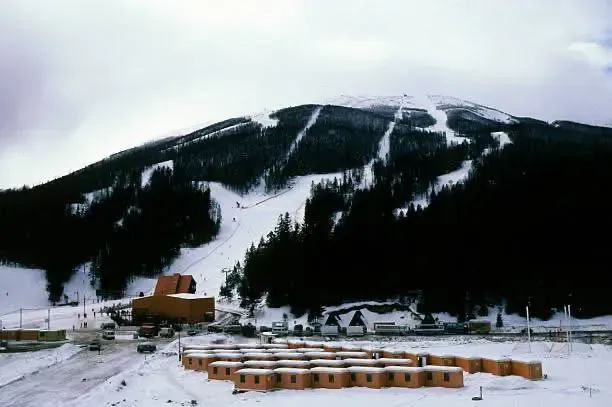
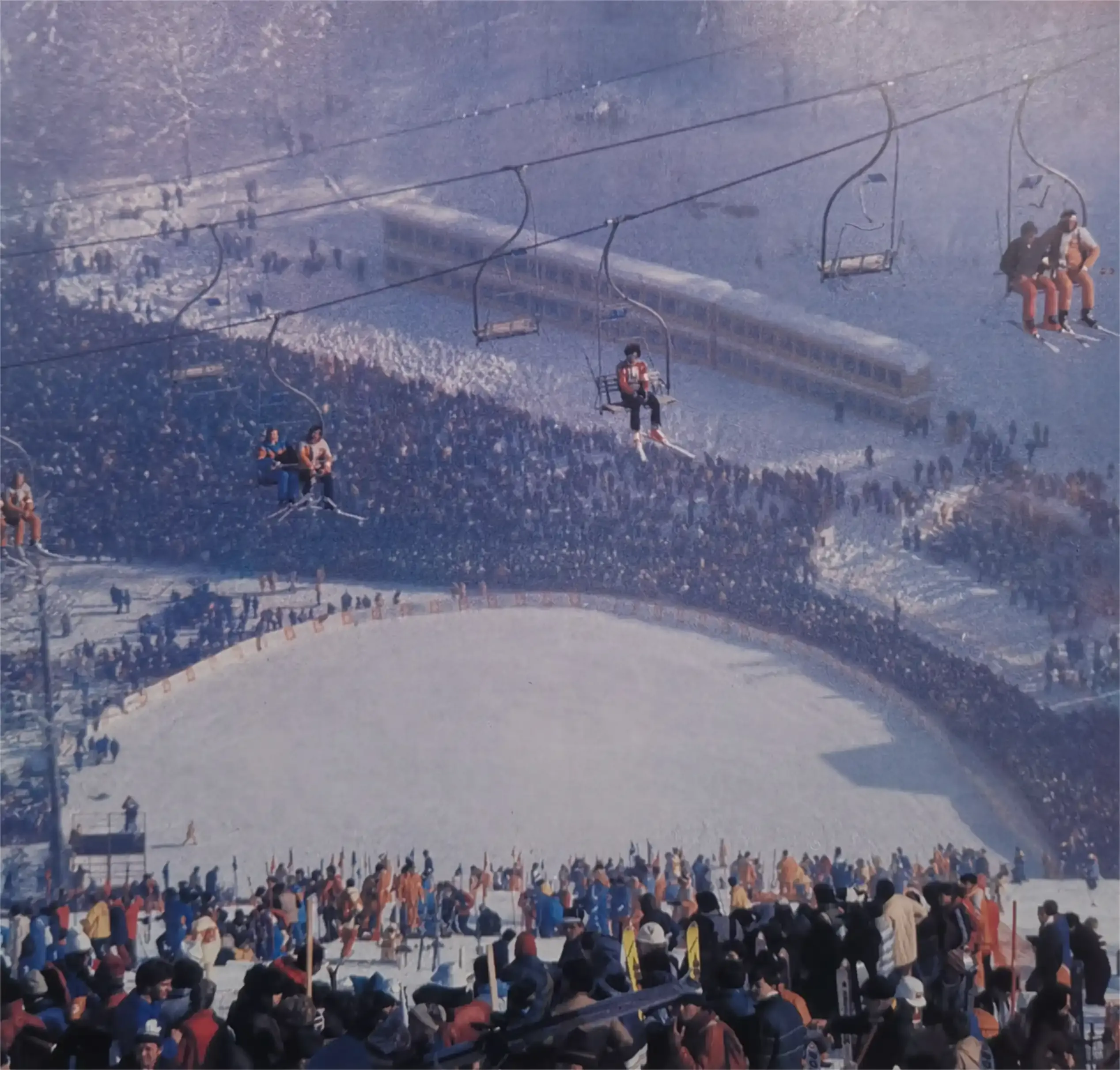
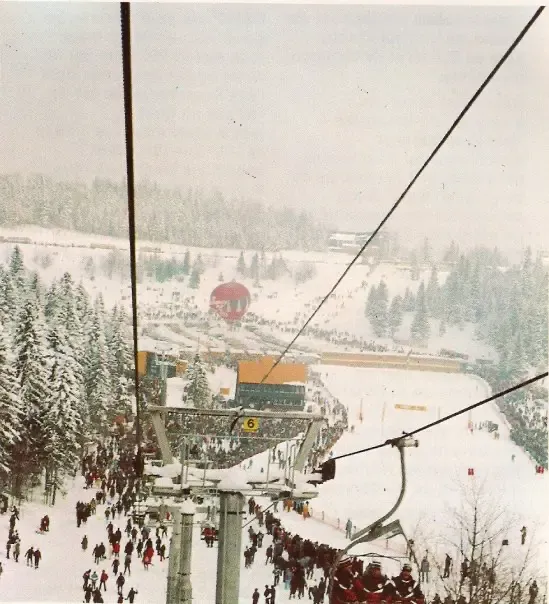
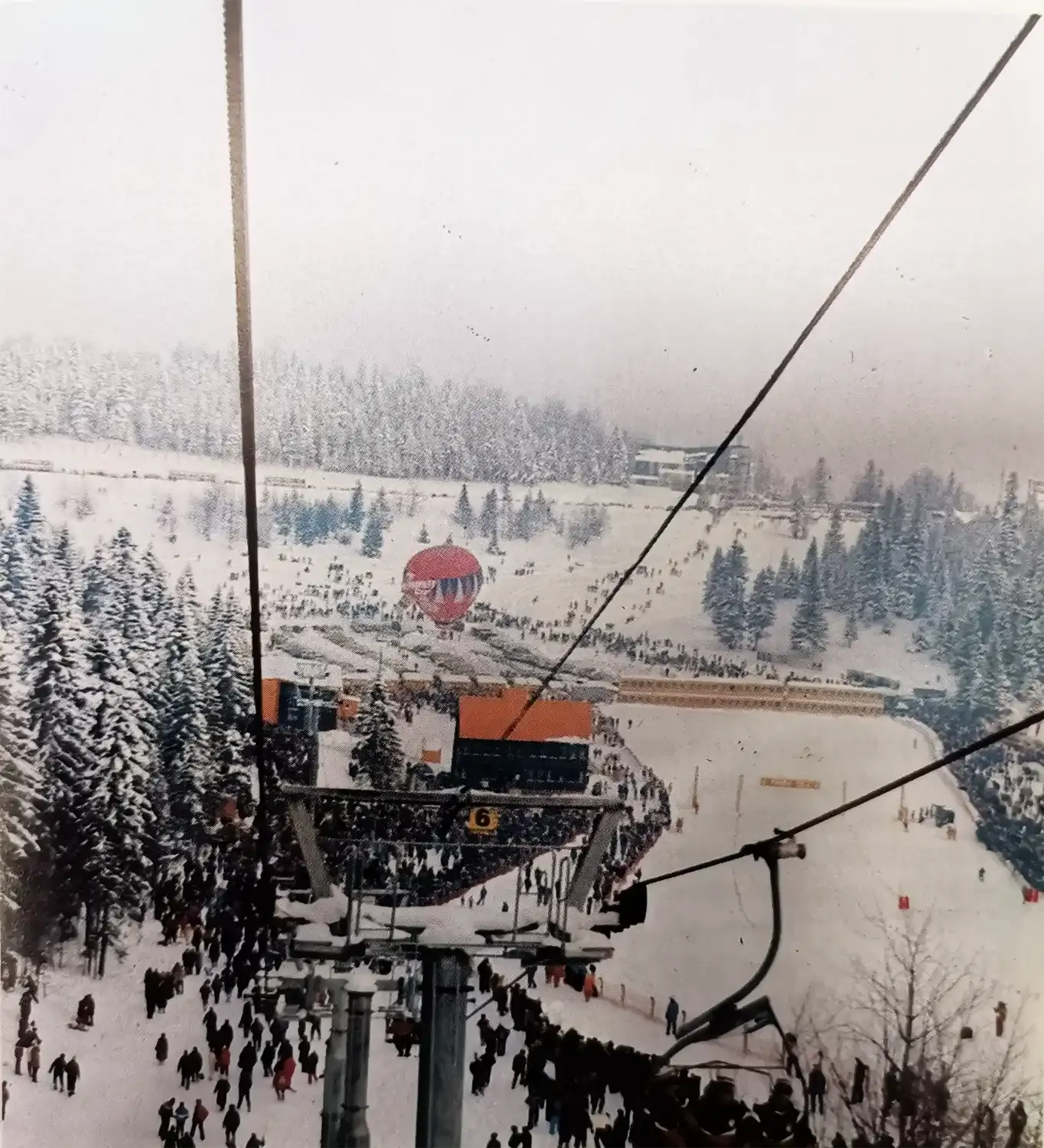
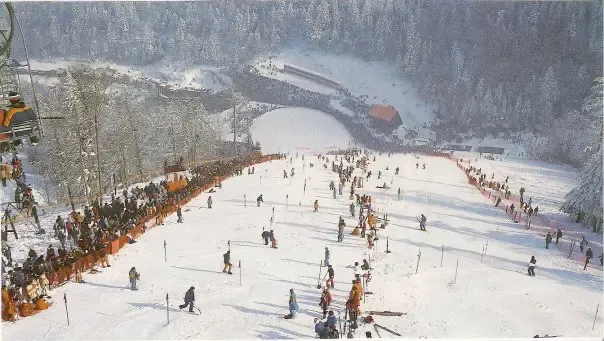
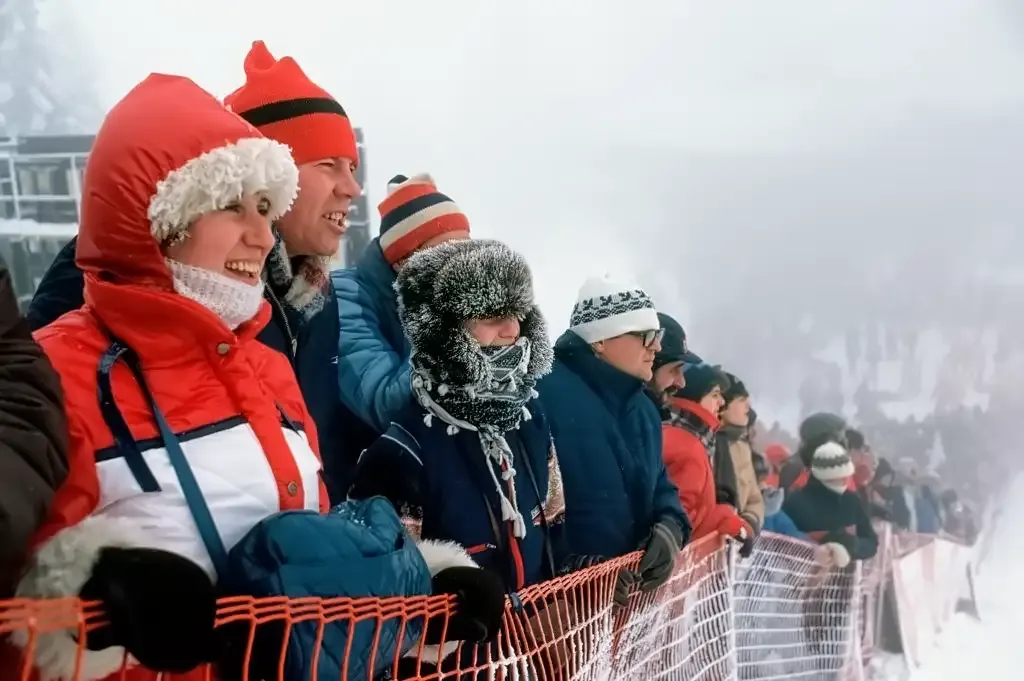
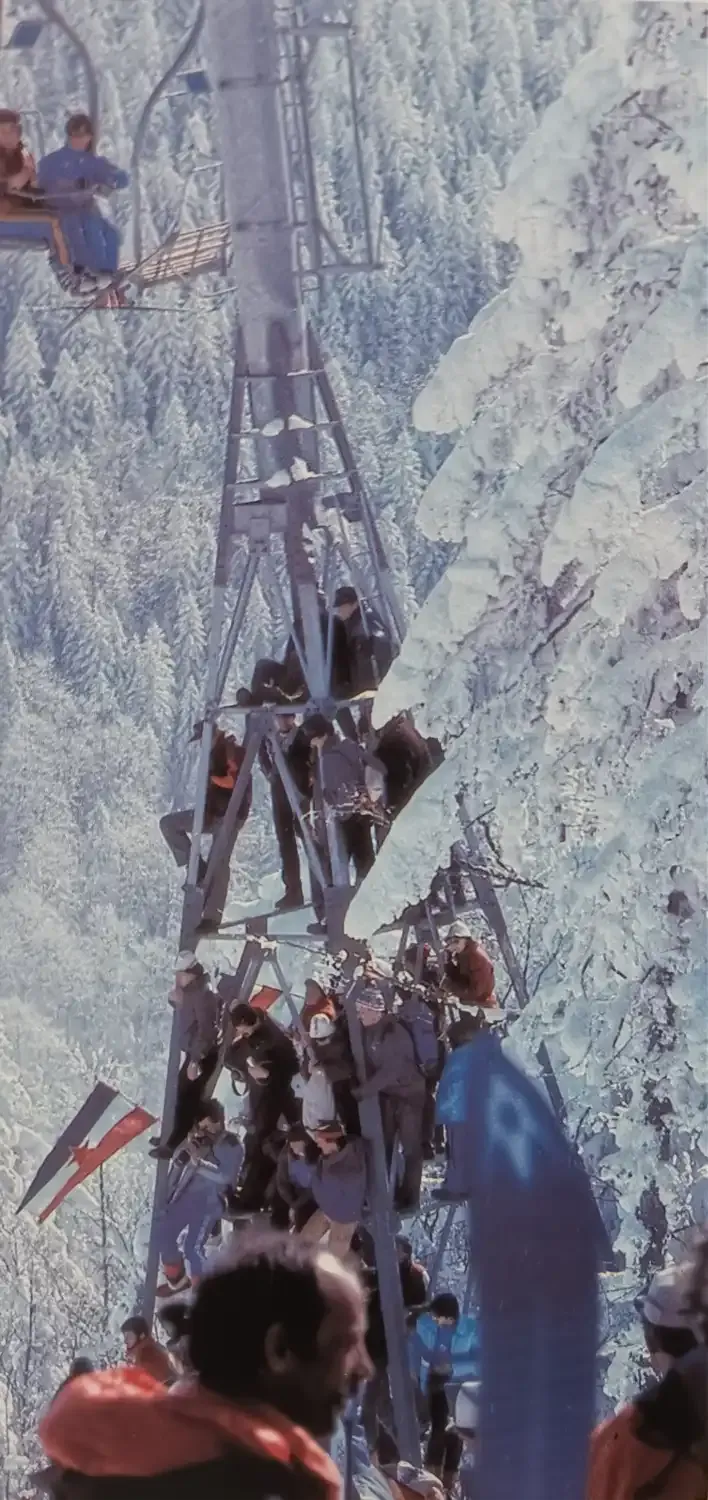
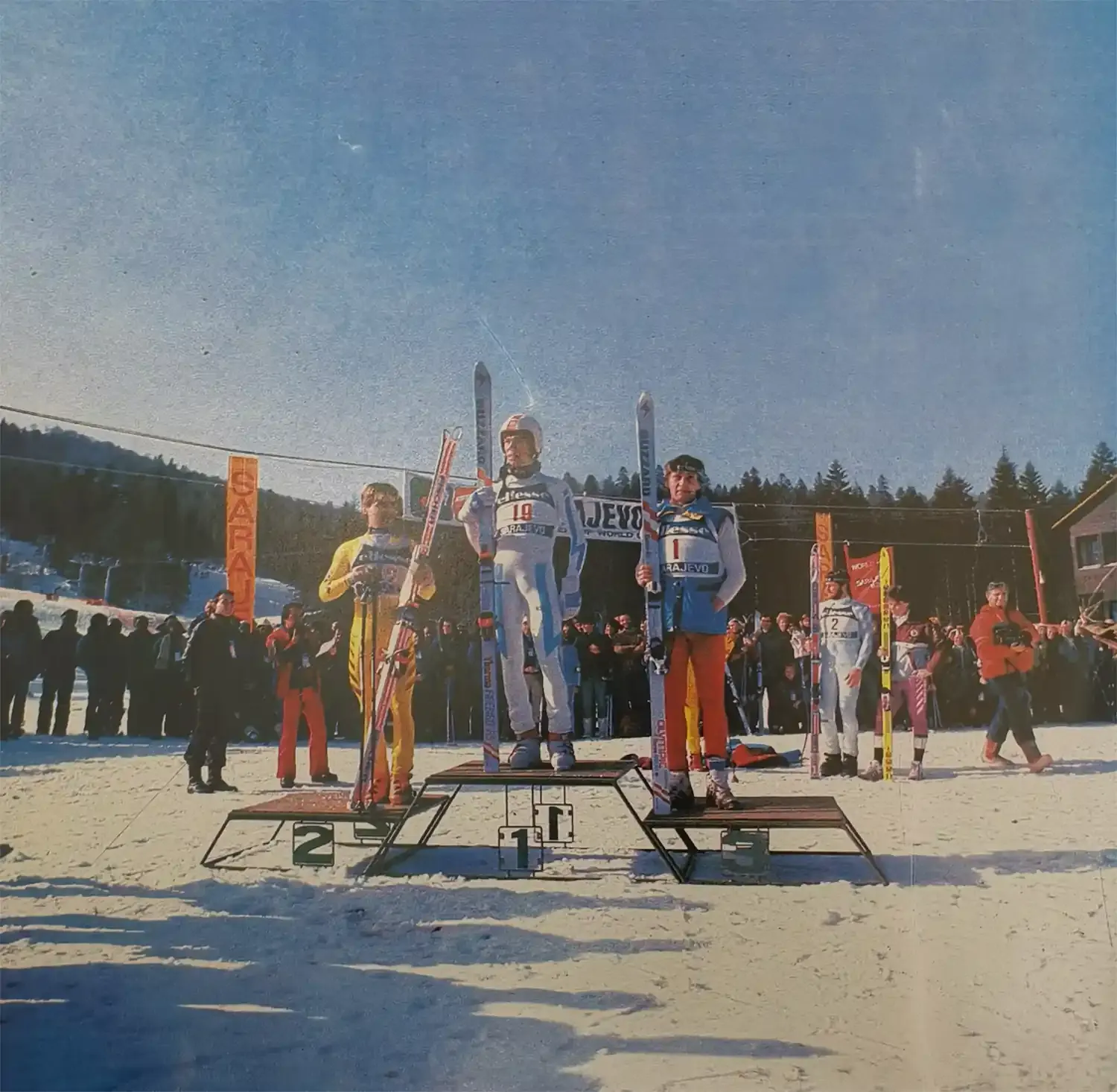
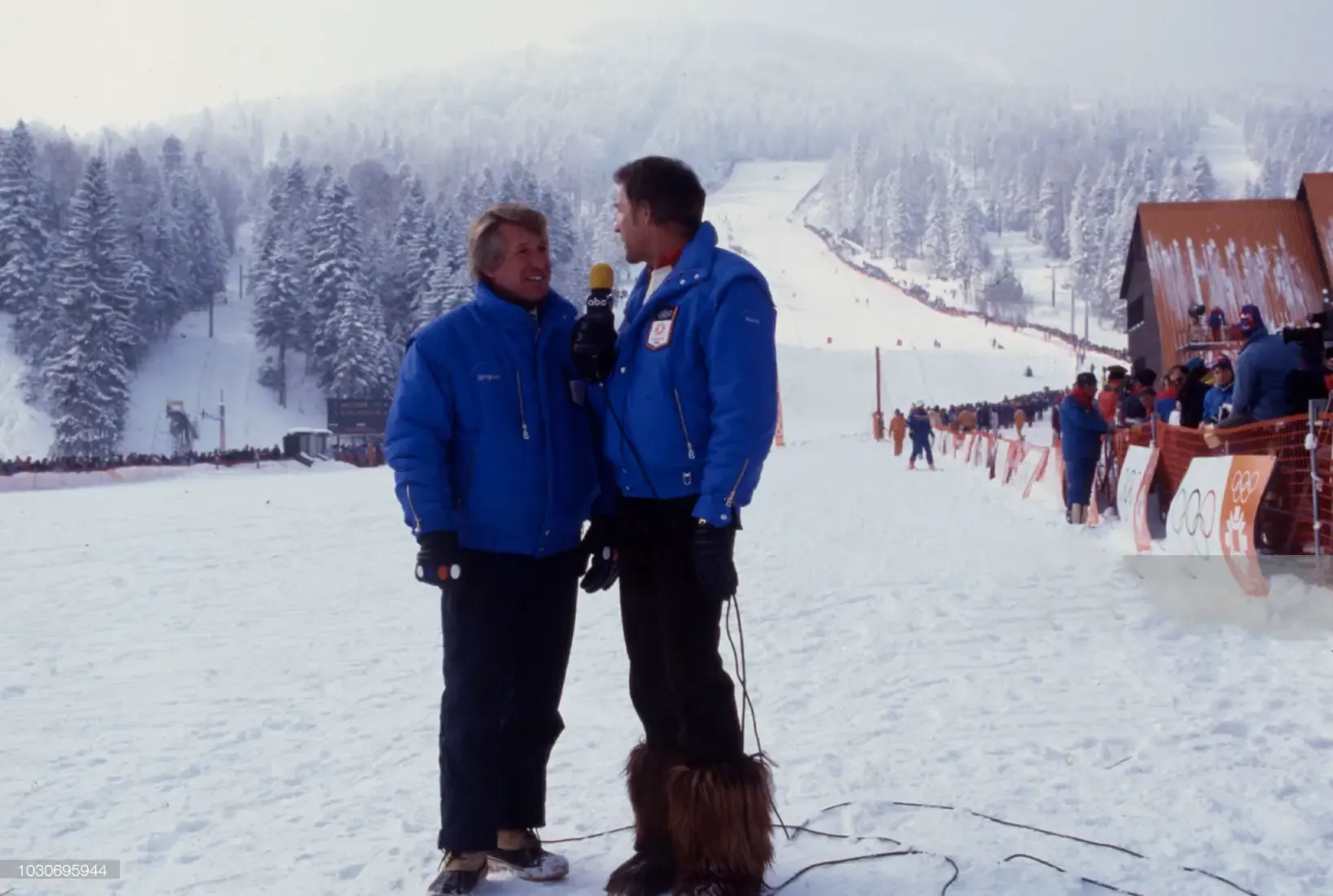
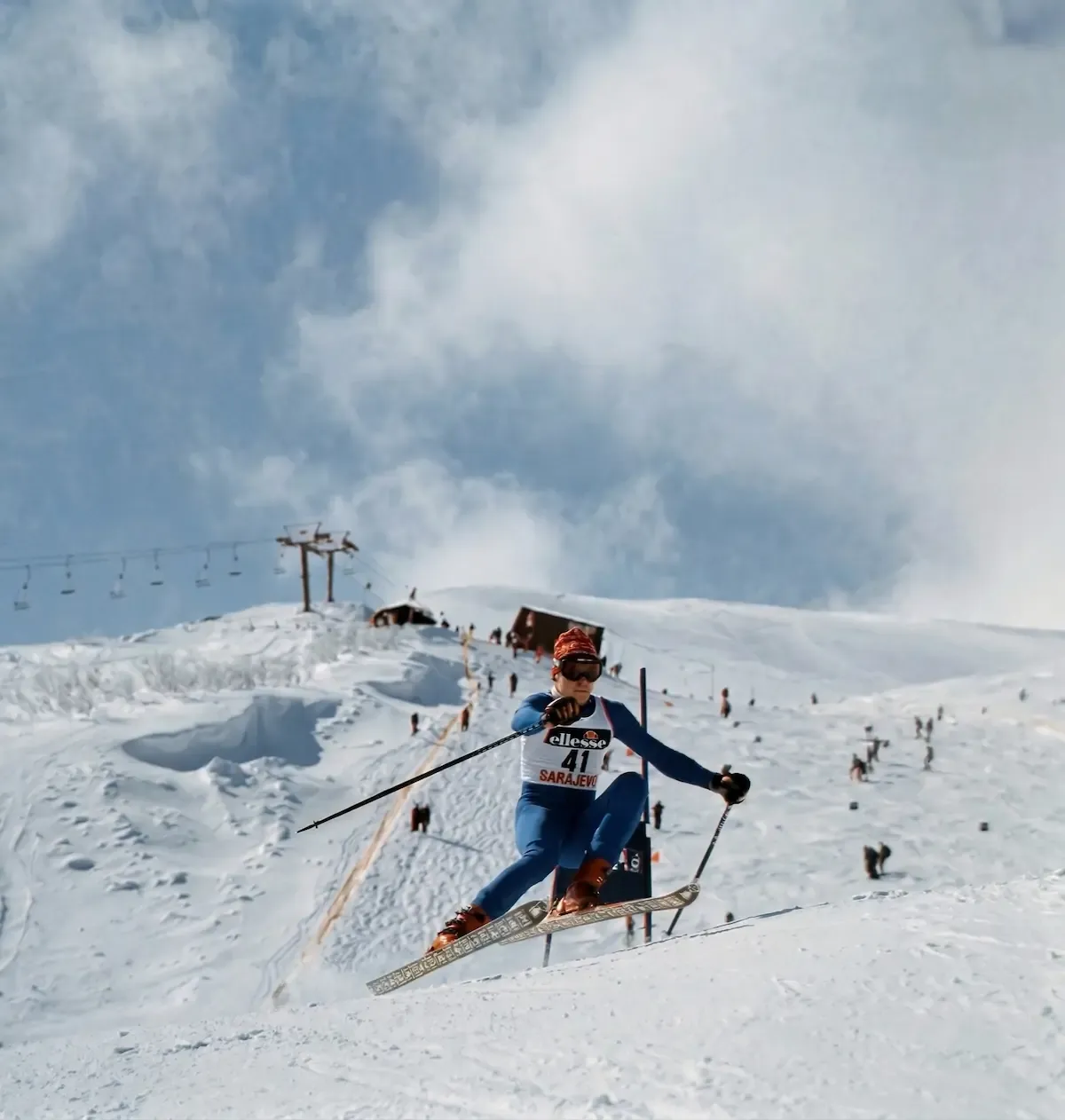
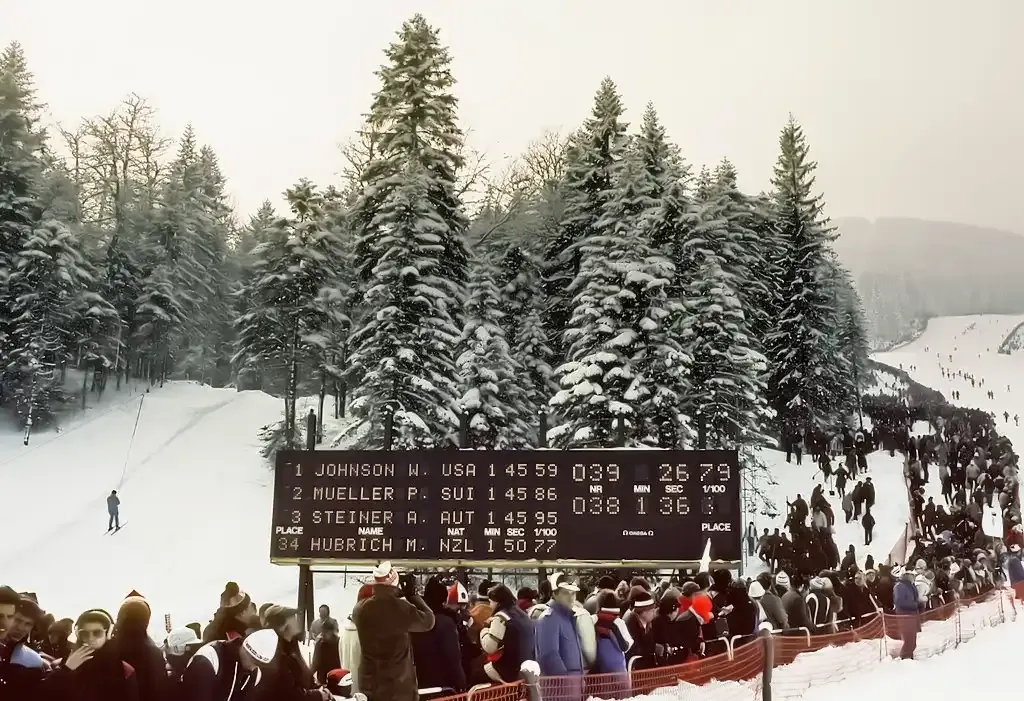
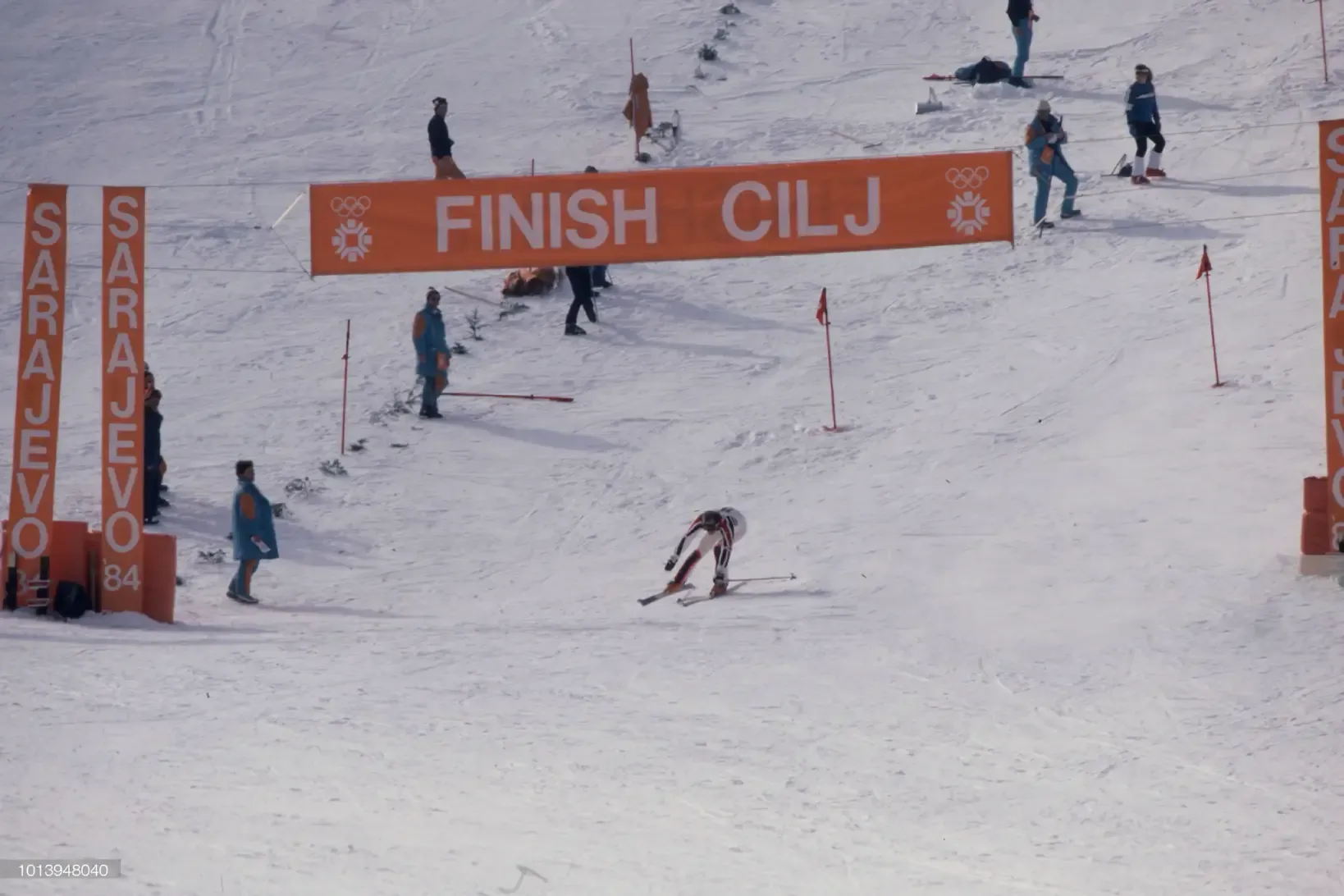
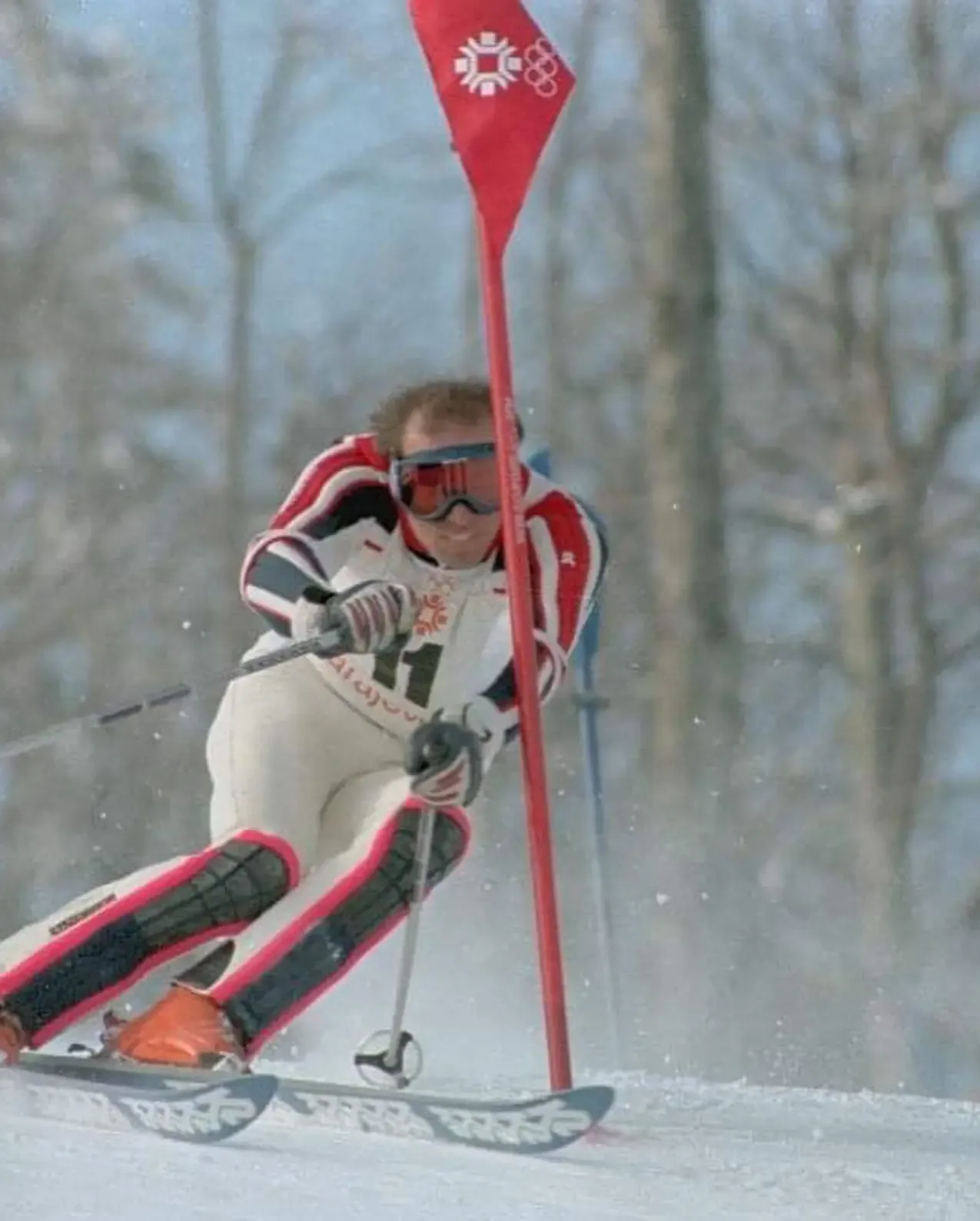
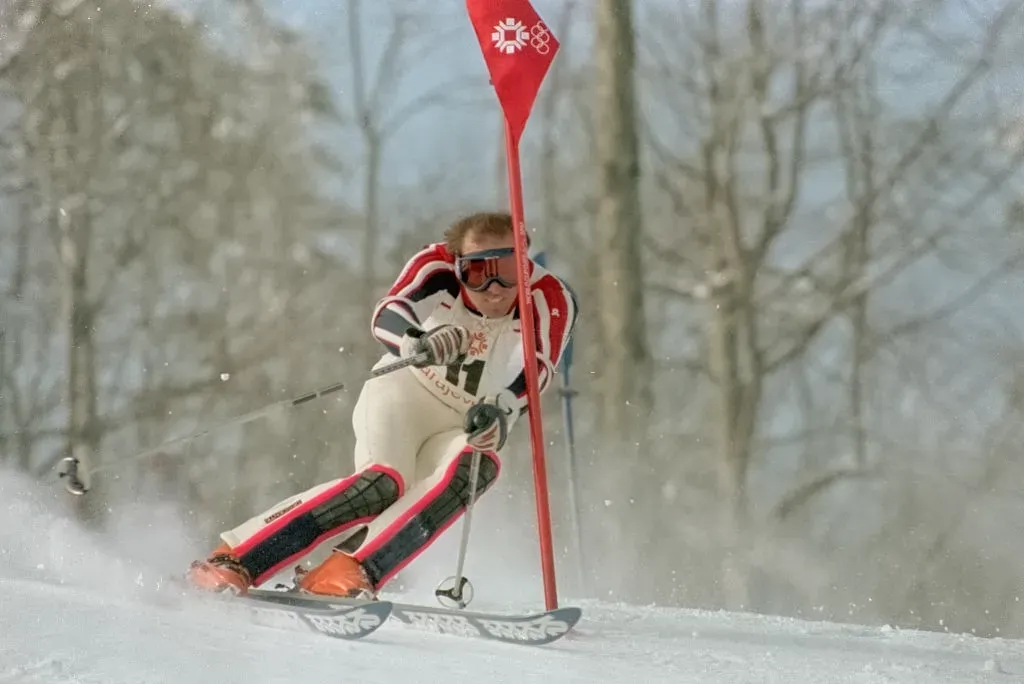
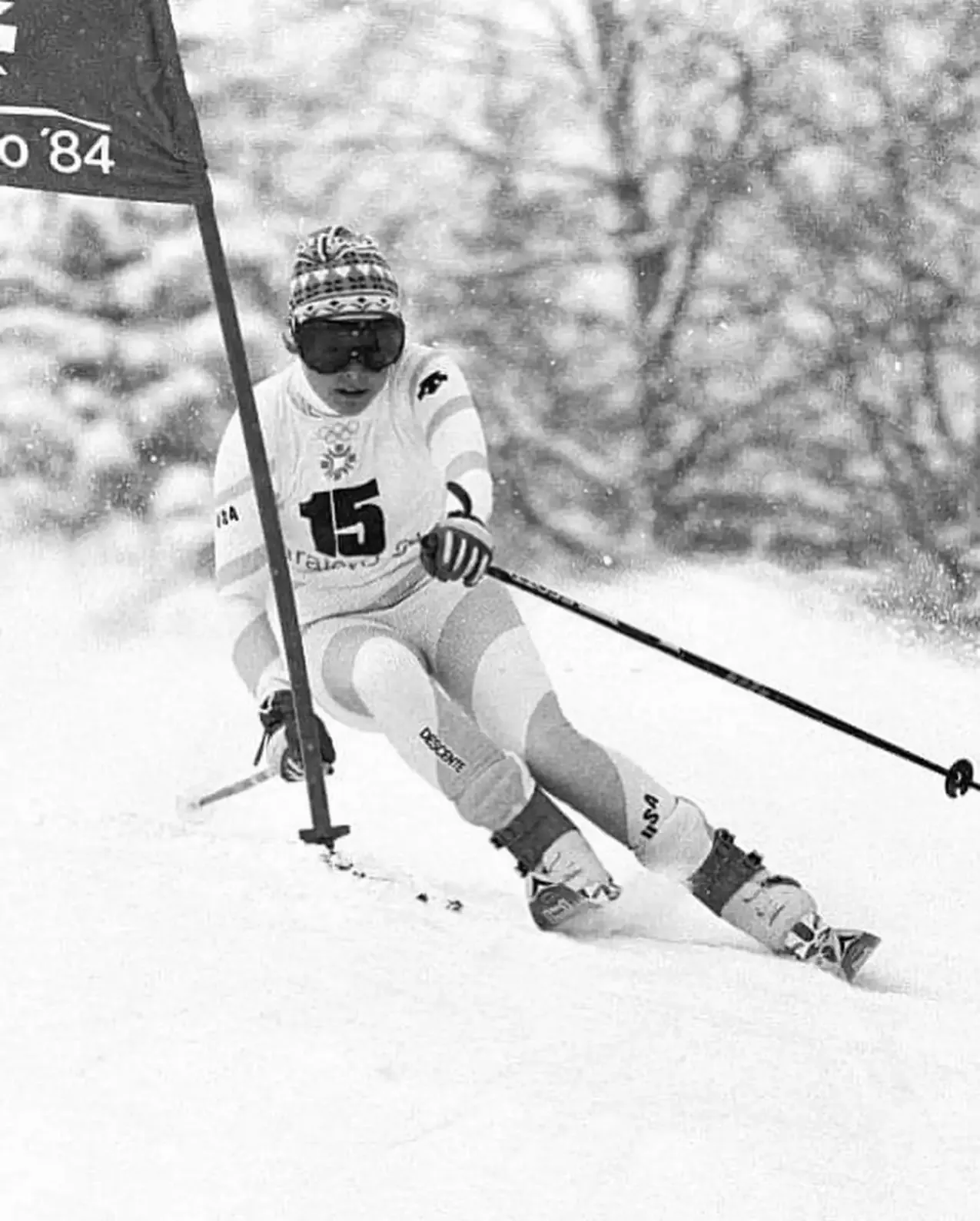
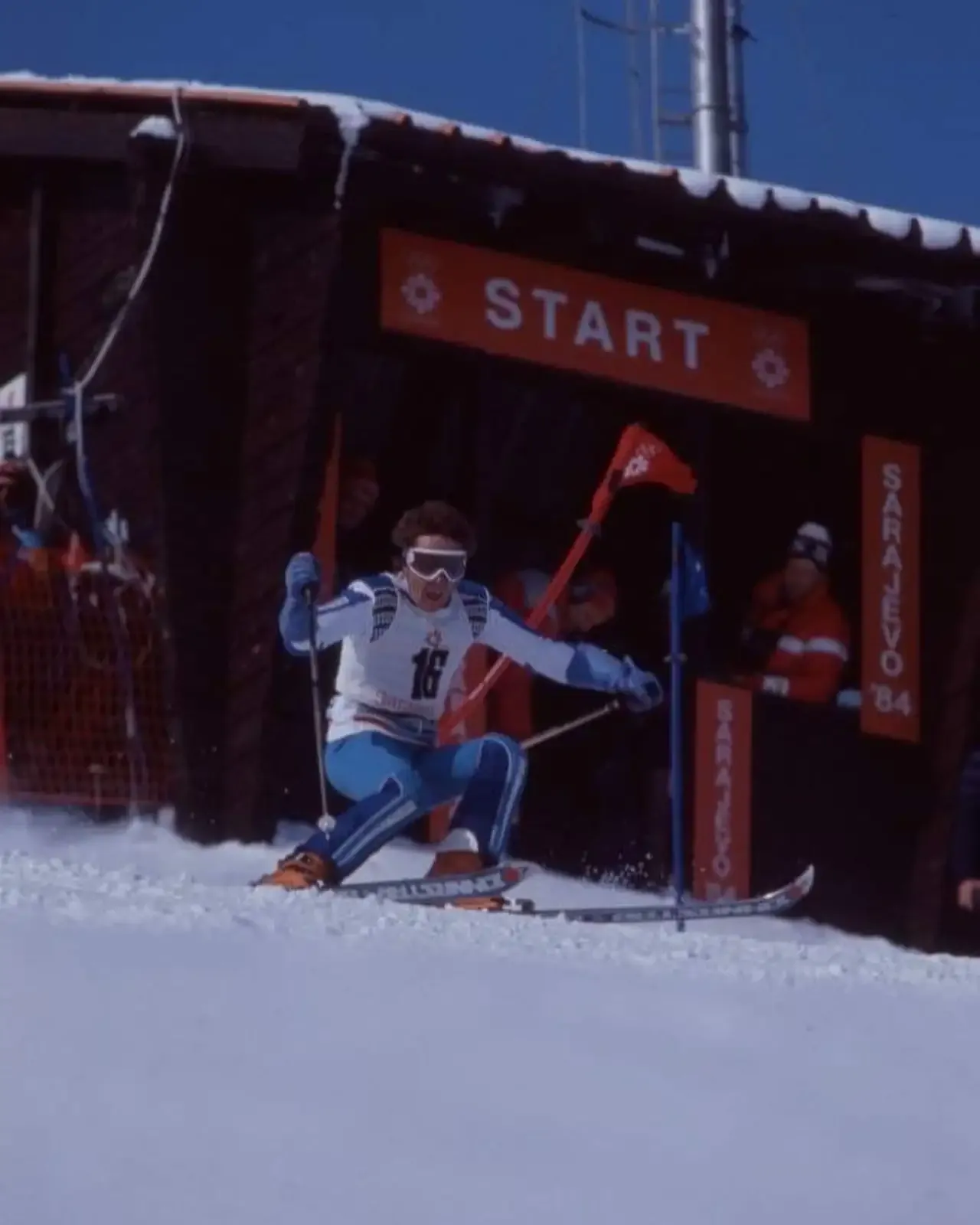
The delays created a unique "Super Thursday" on February 16, 1984, with both the Men's and Women's Downhills running on the same day. Under clear skies, American skier Bill Johnson made history. Predicting his own victory, Johnson charged down the 3,066-metre course to claim the first-ever U.S. gold medal in men's Olympic downhill, finishing with a time of 1:45.59.
I don't know why the other guys bothered to show up. I'll blow them away. I don't care who I race against. Everybody knows this is my kind of course, and it's fairly given that if I get through those turns with any amount of speed, then I'm gonna clean up. — Bill Johnson, USA Gold Medalist
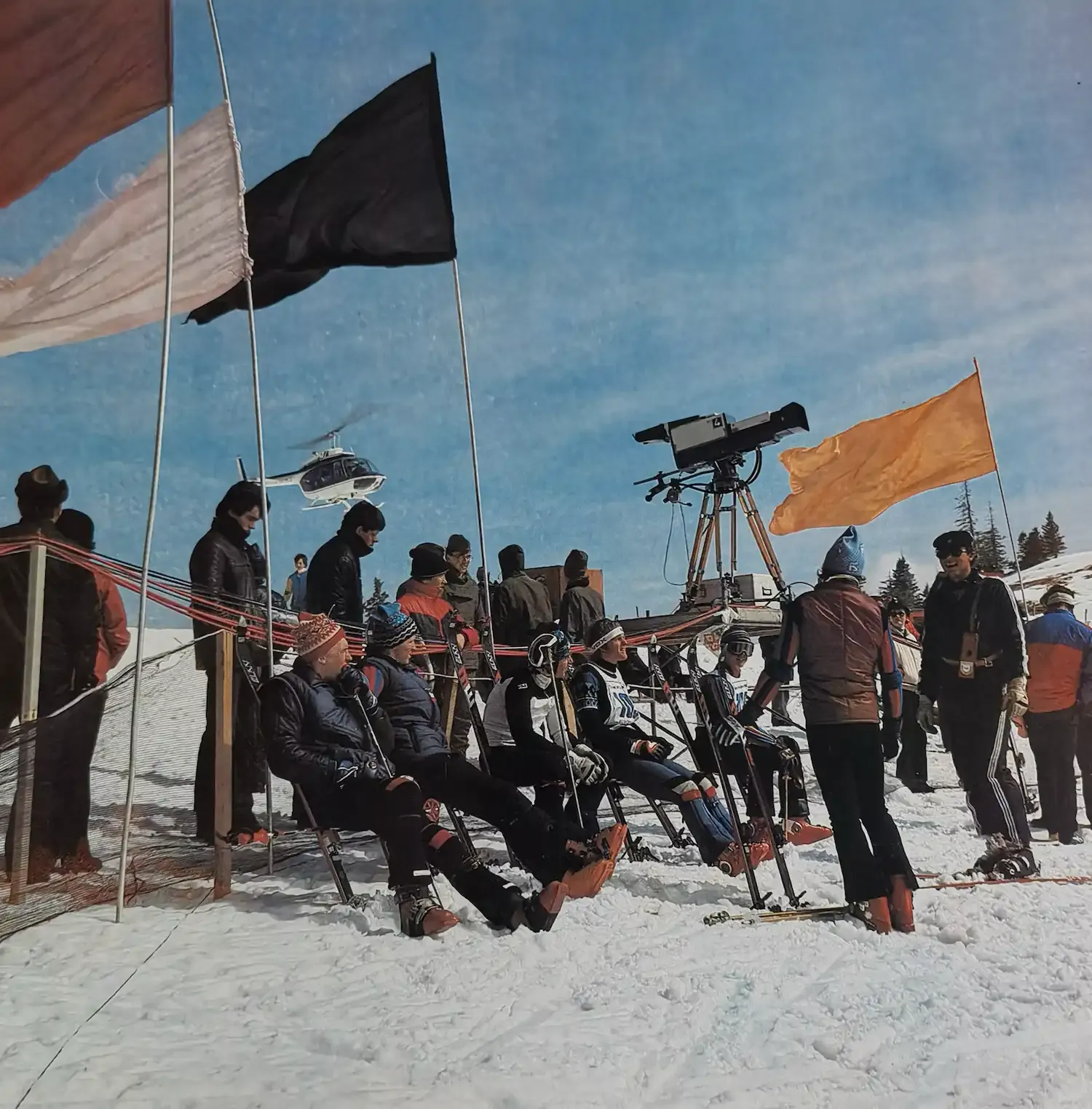
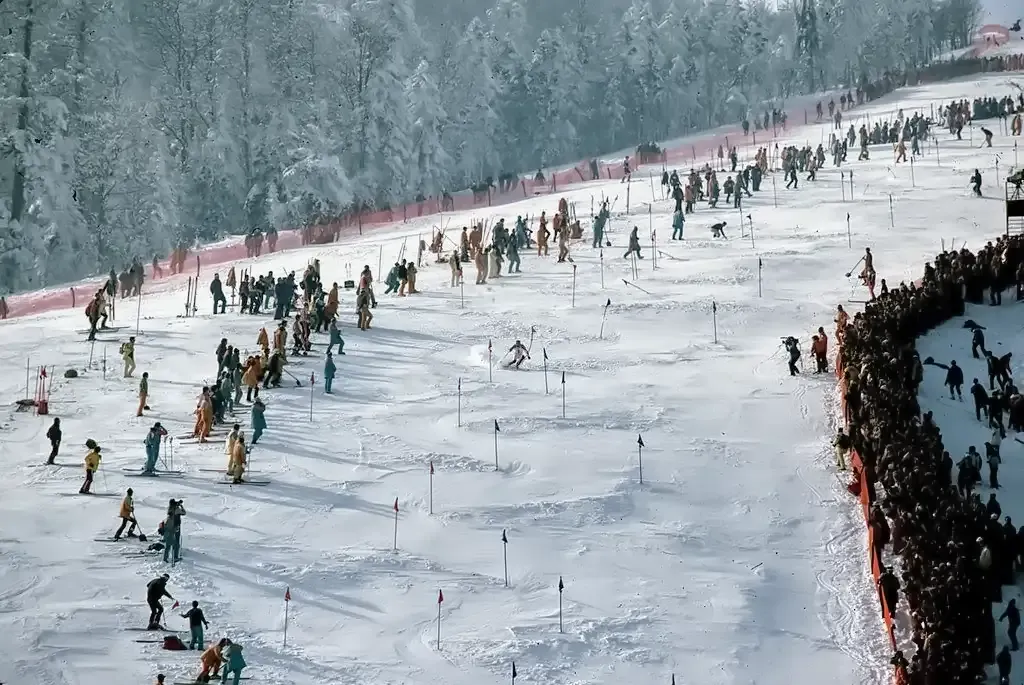
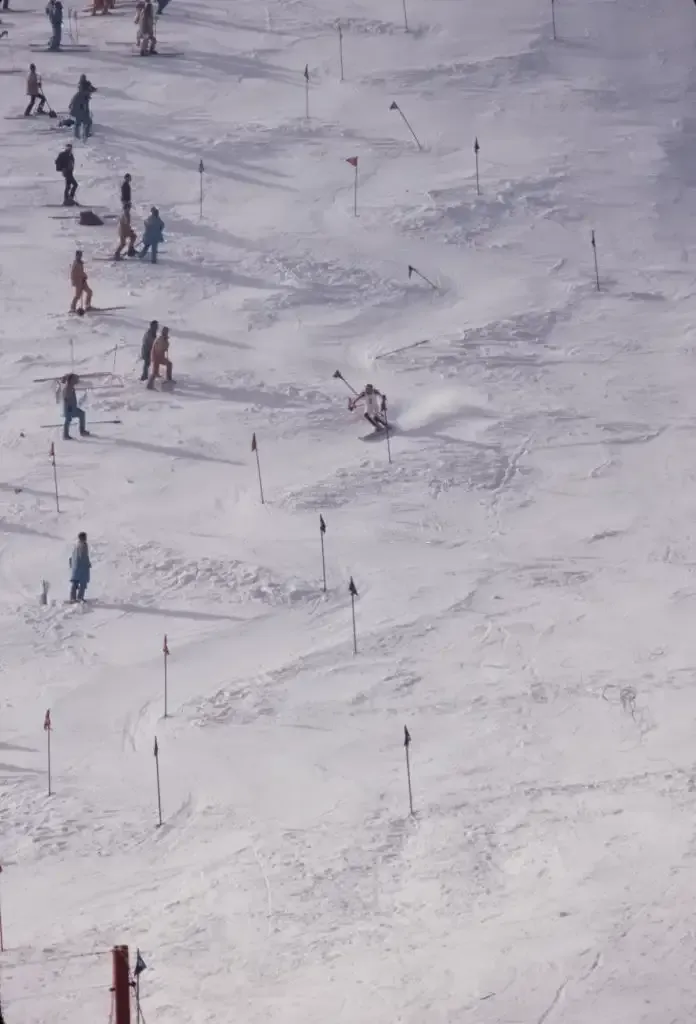
Later in the Games, the mountain successfully staged the Giant Slalom (won by Switzerland's Max Julen) and the Slalom (won by America's Phil Mahre).
1992–1995: The Siege and Destruction
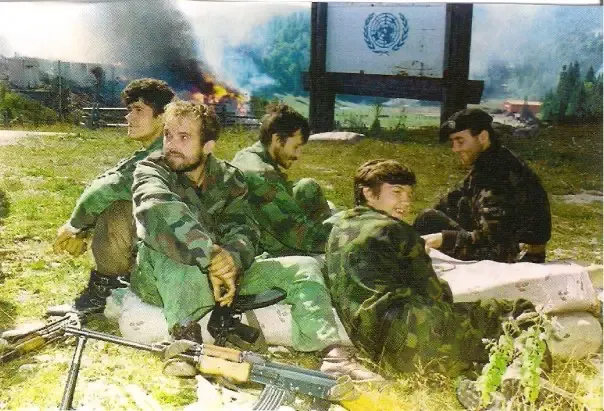
Less than a decade after the Games, the "men's mountain" became a strategic military prize during the Siege of Sarajevo. The same elevation that made the peak ideal for weather observation and television transmission also made it militarily vital.
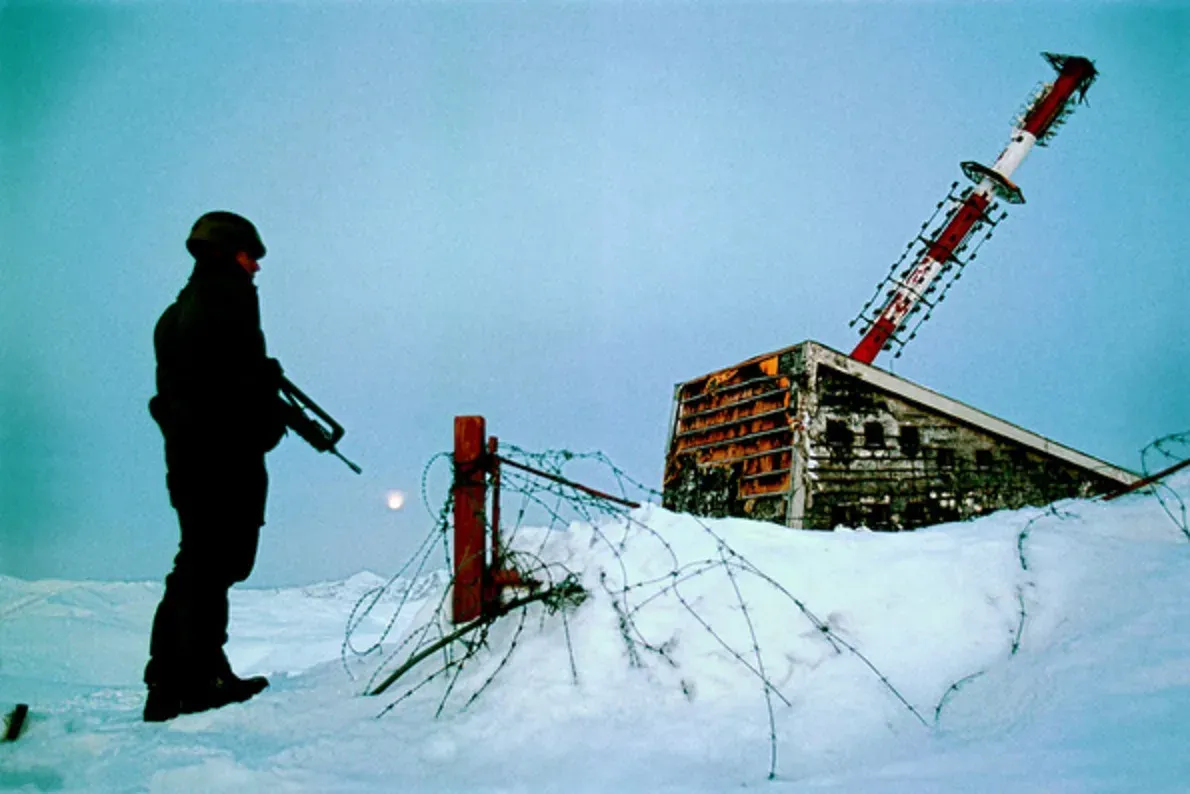
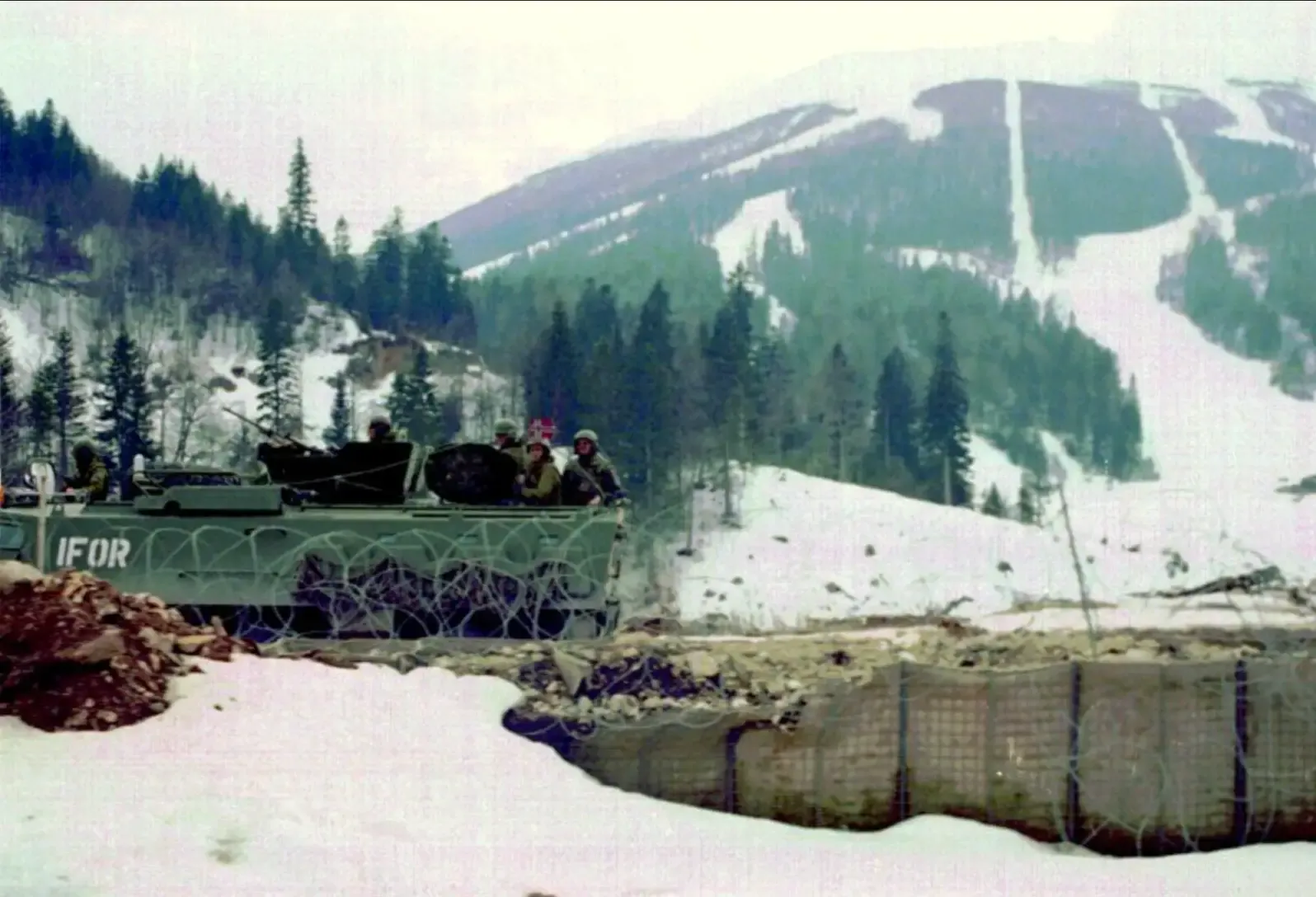
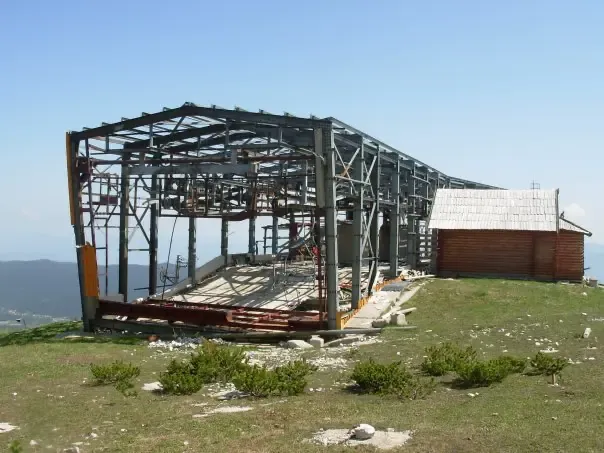
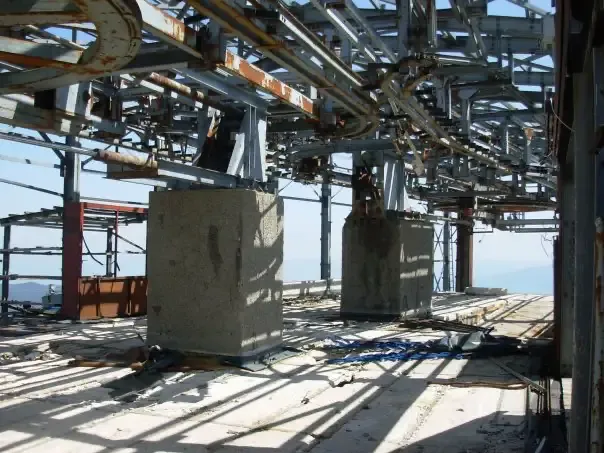
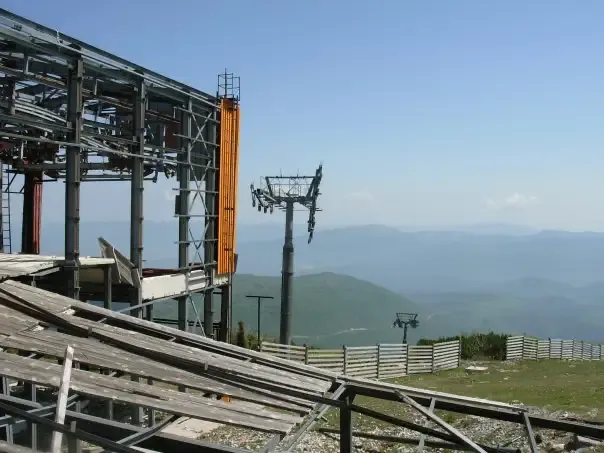
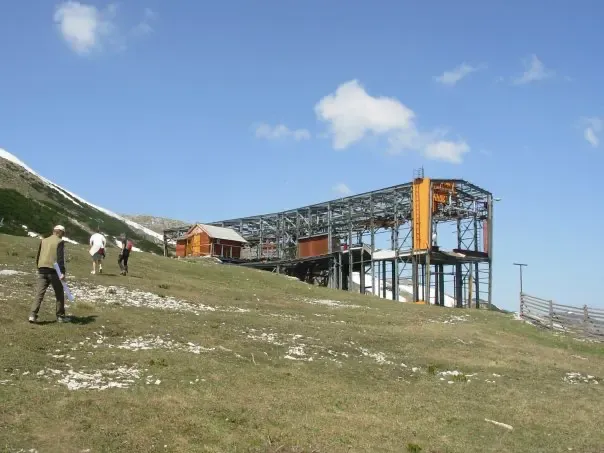
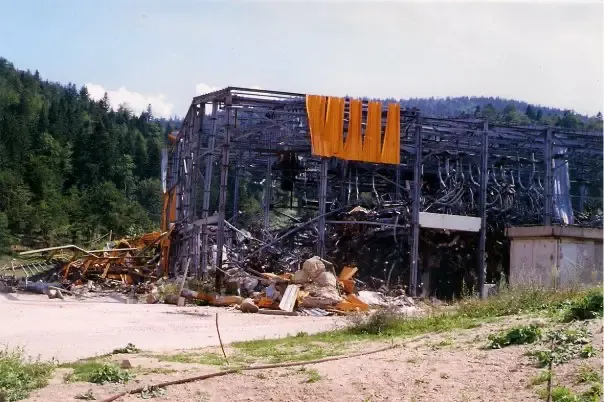
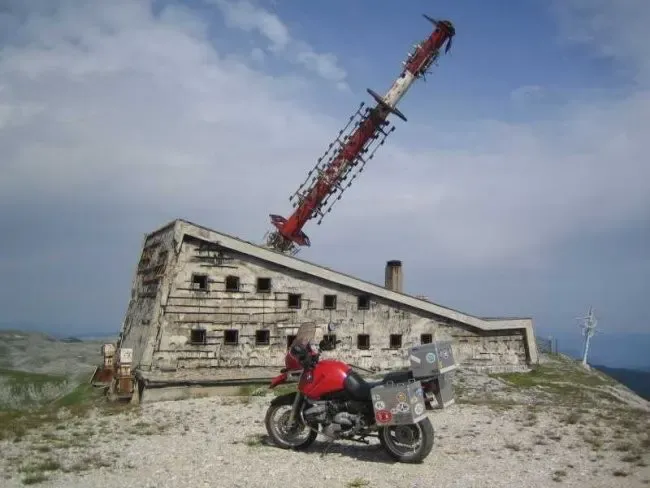
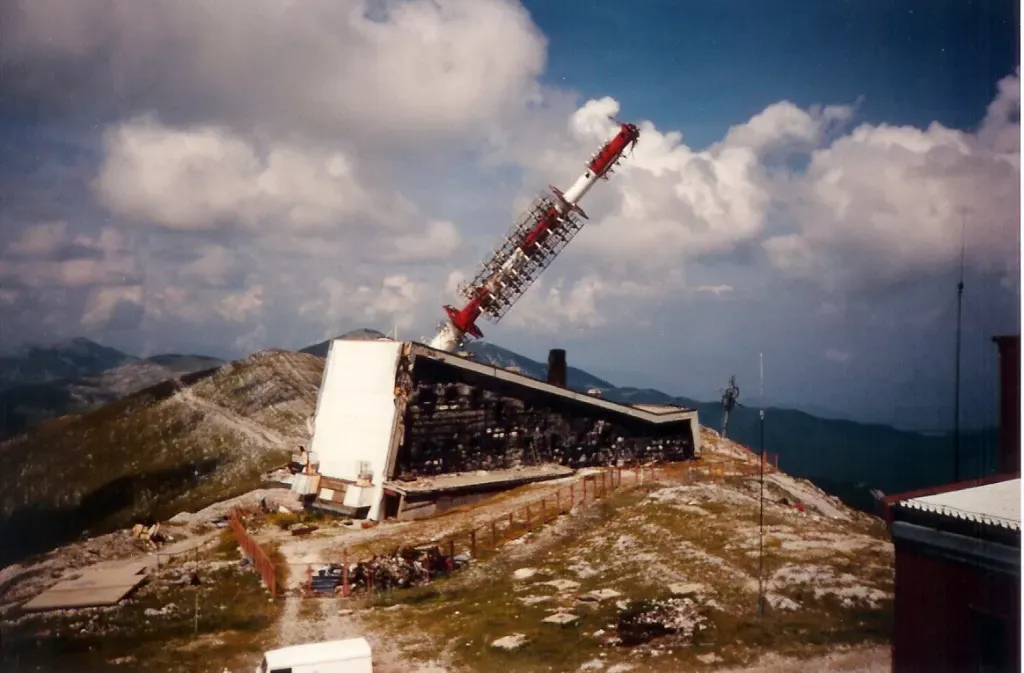
The mountain saw intense combat. In August 1993, the Army of Republika Srpska (VRS) captured the peak and the plateau. Following the threat of NATO airstrikes, the area was designated a Demilitarized Zone (DMZ) and handed over to UNPROFOR peacekeepers. By the end of the conflict, the venue was devastated. The summit RTV tower was destroyed to disrupt communications, the lift network was rendered inoperable, and the slopes were heavily littered with landmines and unexploded ordnance.
The Immediate Aftermath: Scars and Early Recovery
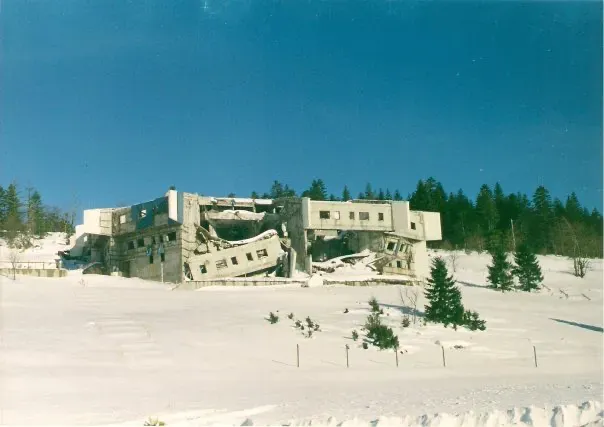
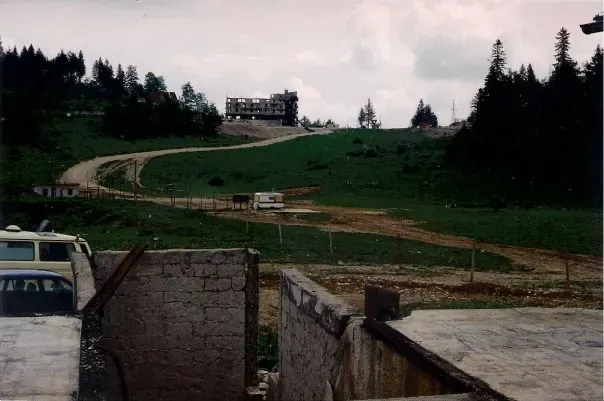
Following the war, the transition of Bjelašnica back into a functional mountain was a slow, dangerous process. The venue had sustained an estimated $50 million in damage. Hotel Famos was reduced to a windowless, sagging concrete ruin, and the area lacked basic utilities like running water.
The first symbolic steps toward recovery were international. In January 1997, the city of Innsbruck (host of the 1976 Games) donated two rope tows, a snowcat, and over 100 pairs of skis. Yet, opening a ski area on a former front line required immense caution. While the main slopes were painstakingly cleared of explosives, the dense pine forests bordering the runs retained a lingering psychological threat of landmines for years.
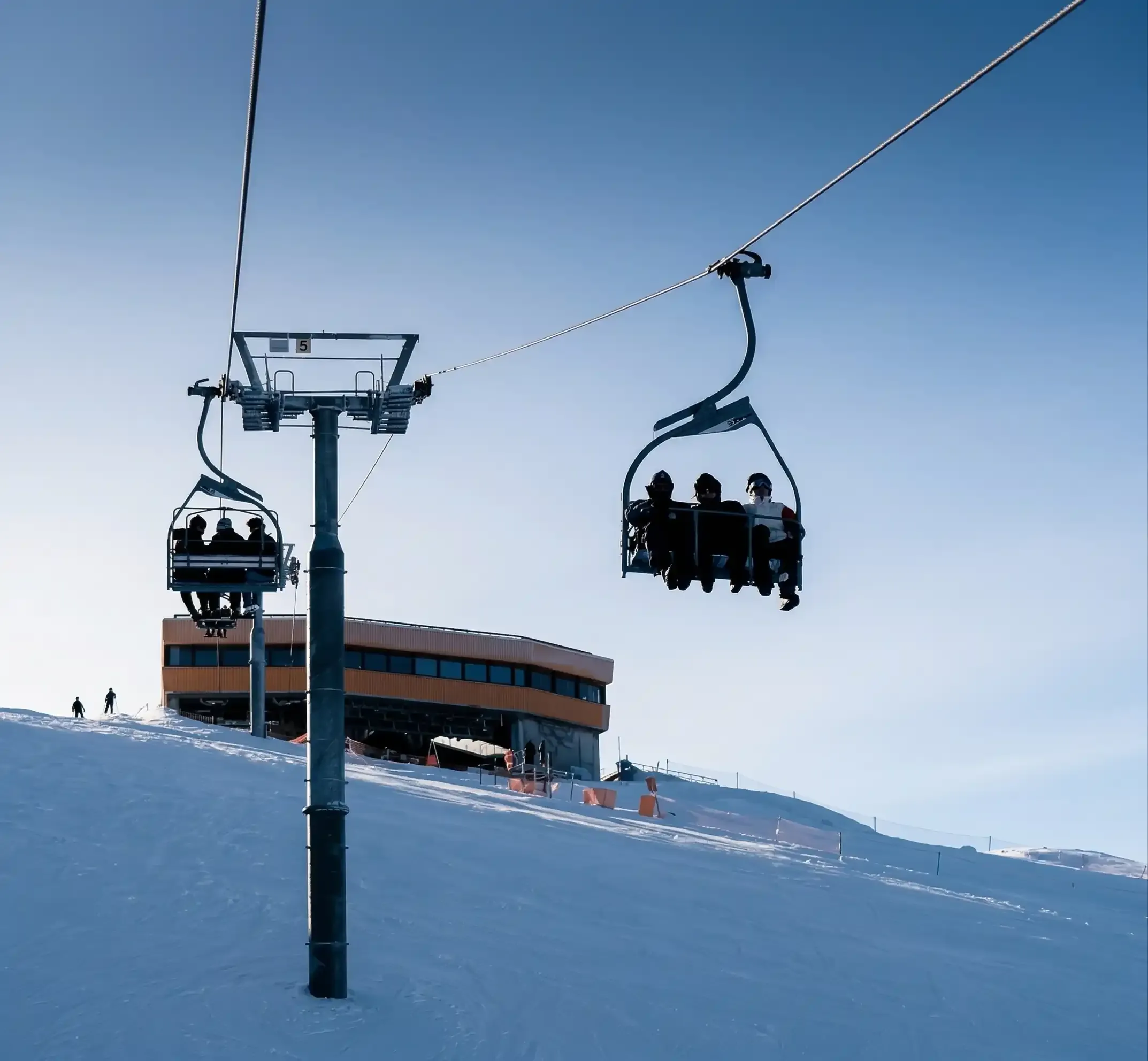
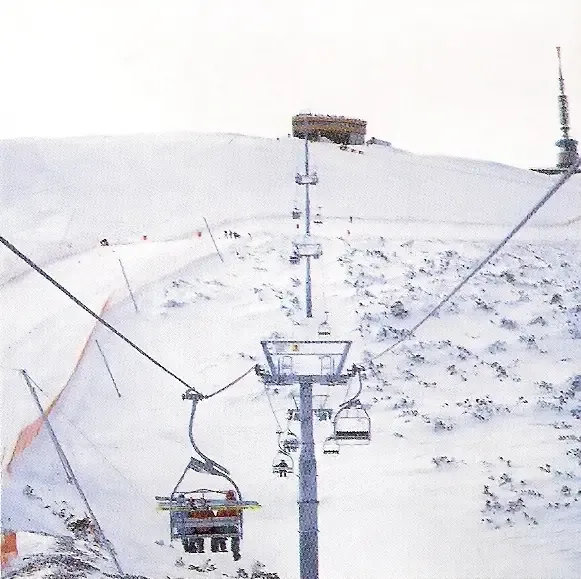
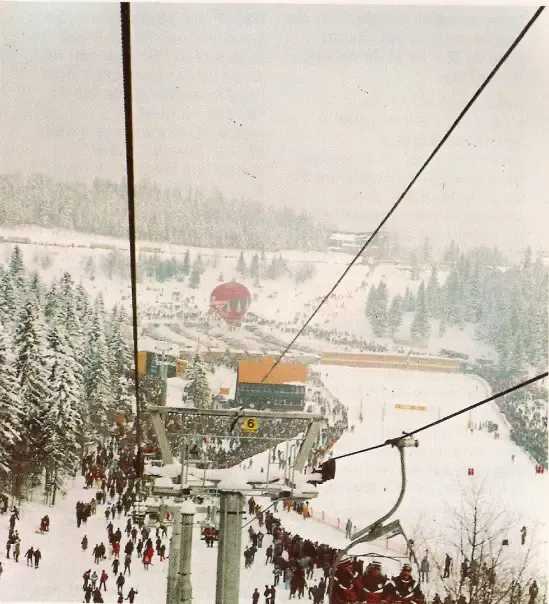
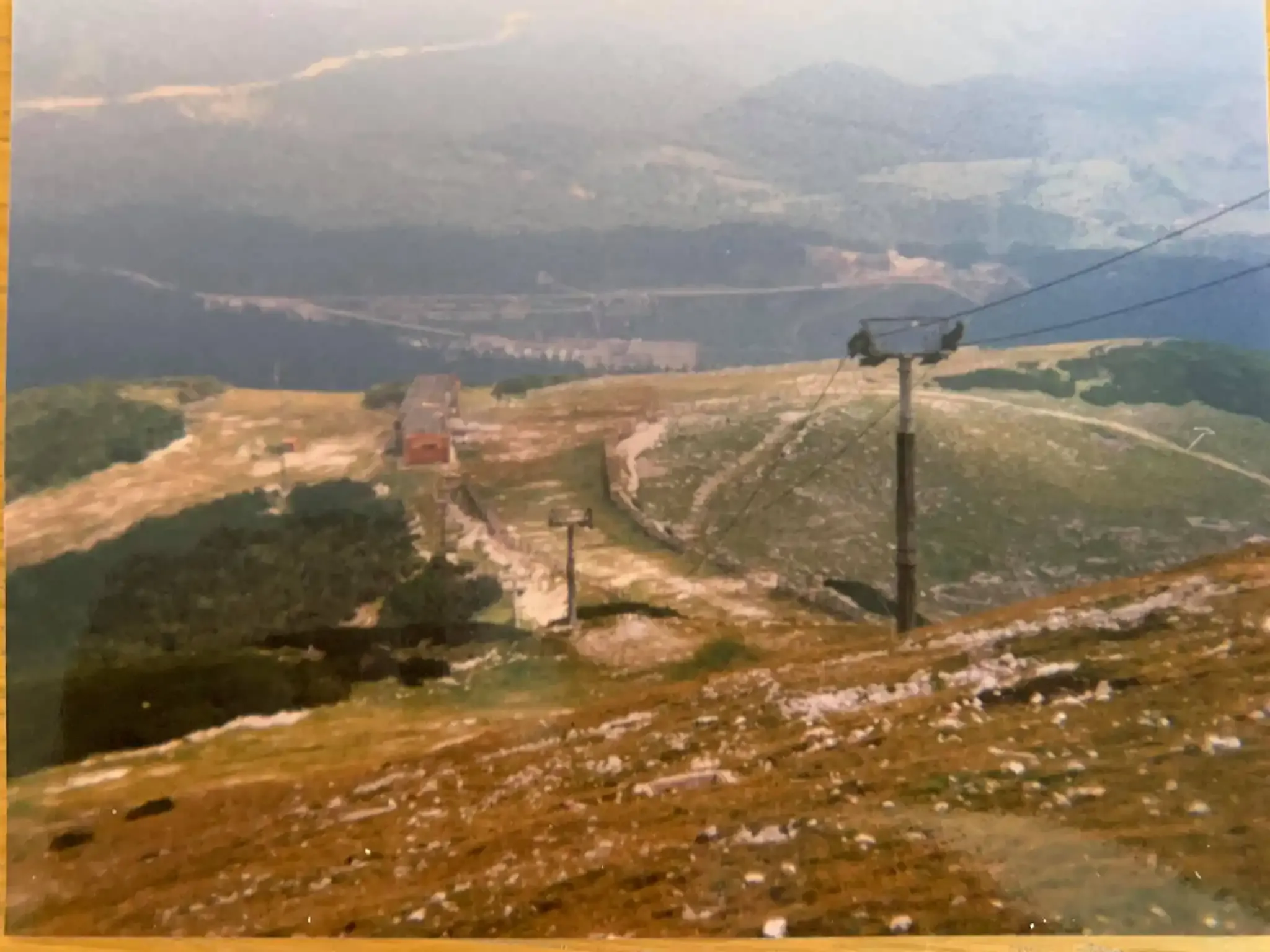
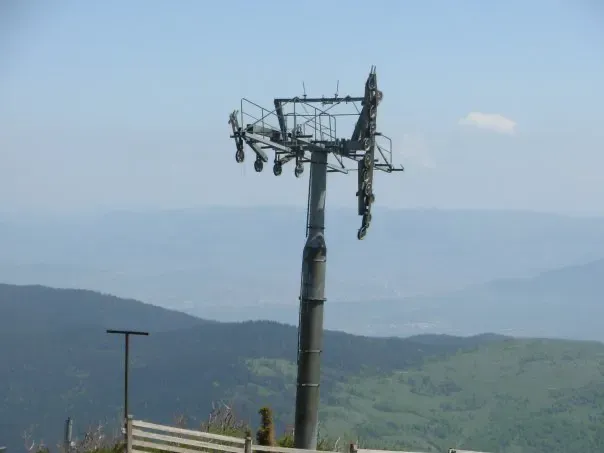
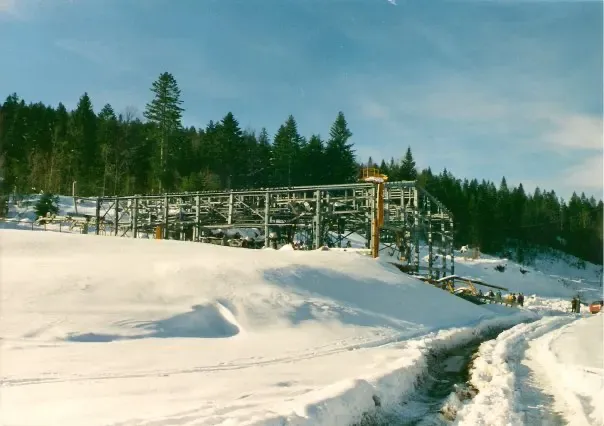
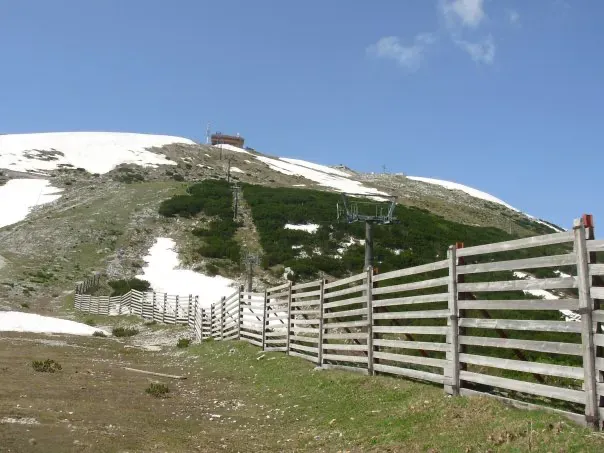
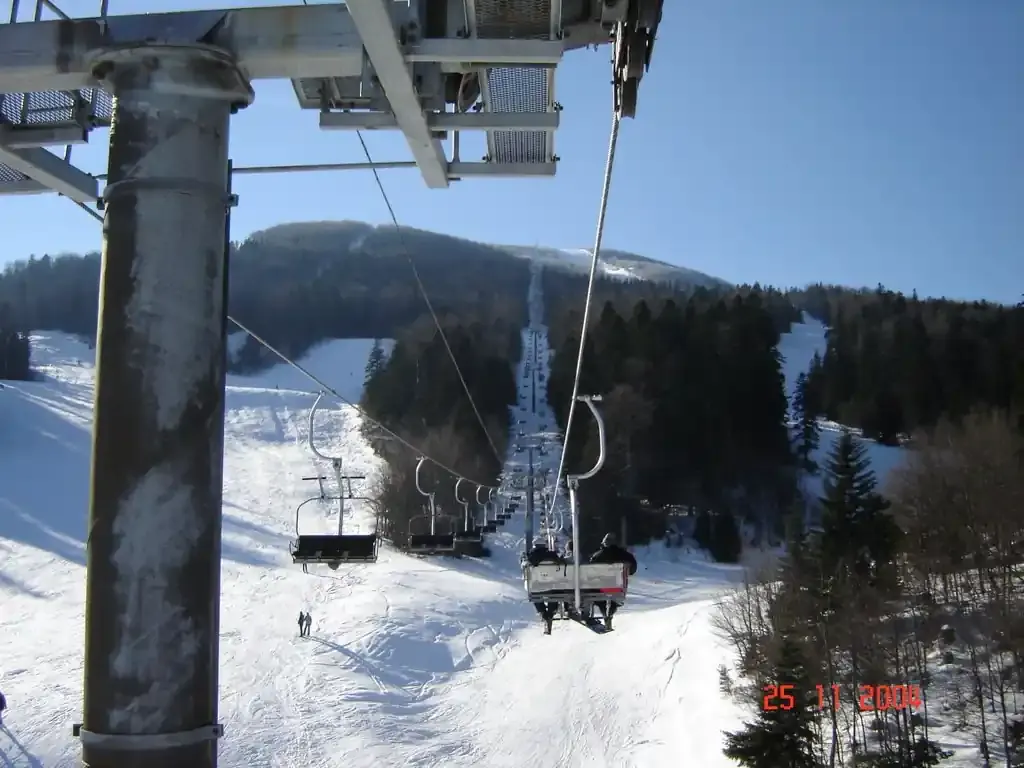
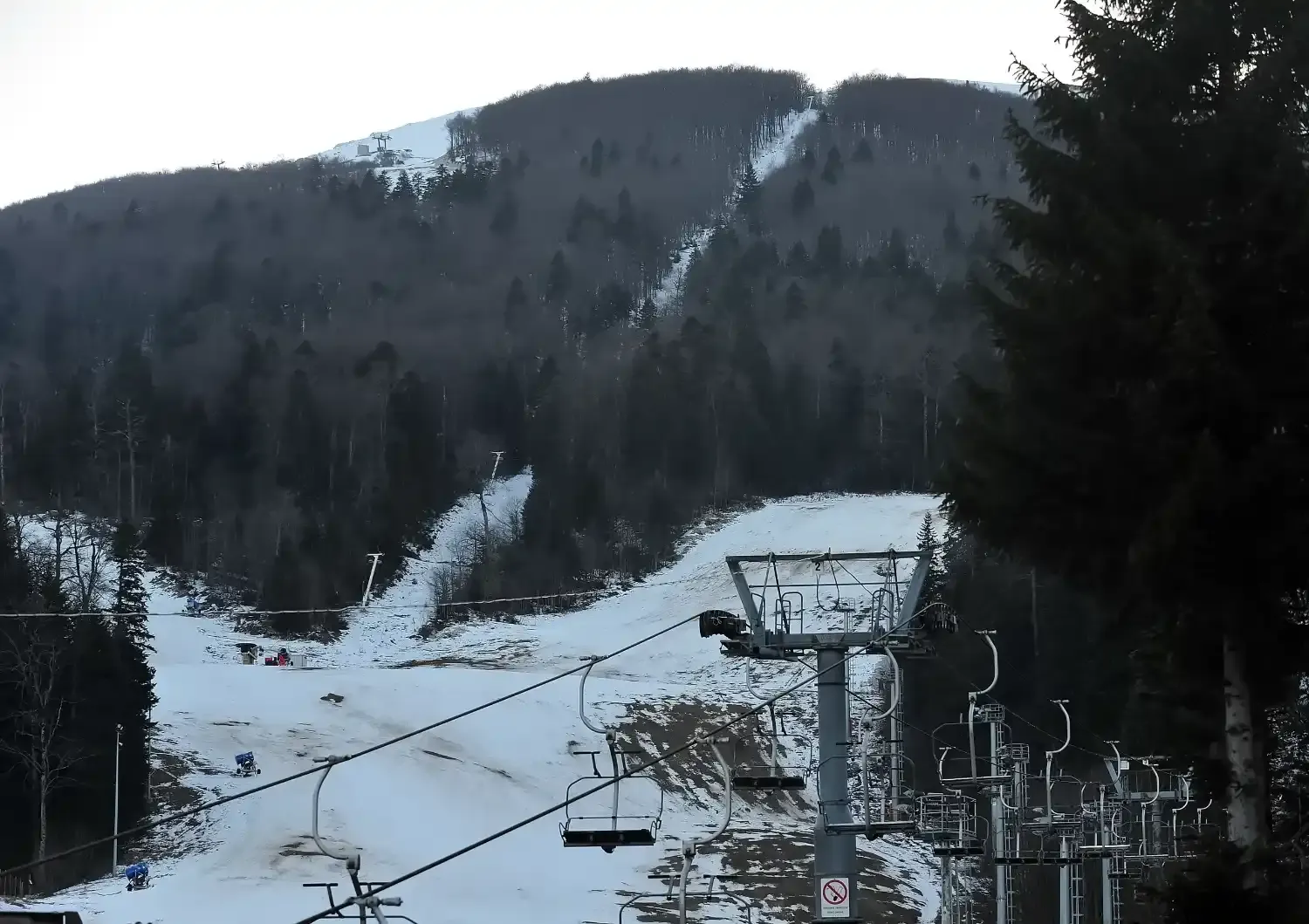
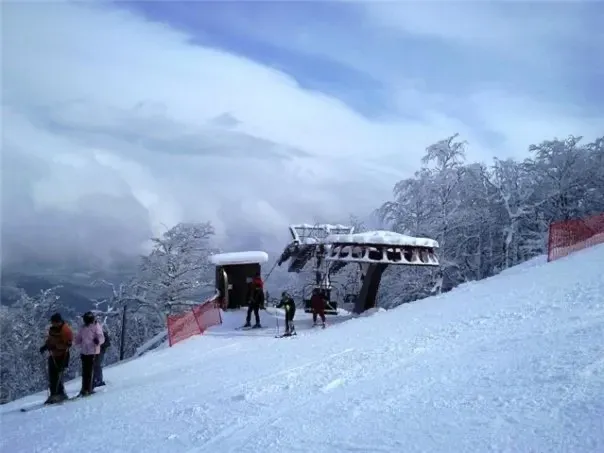
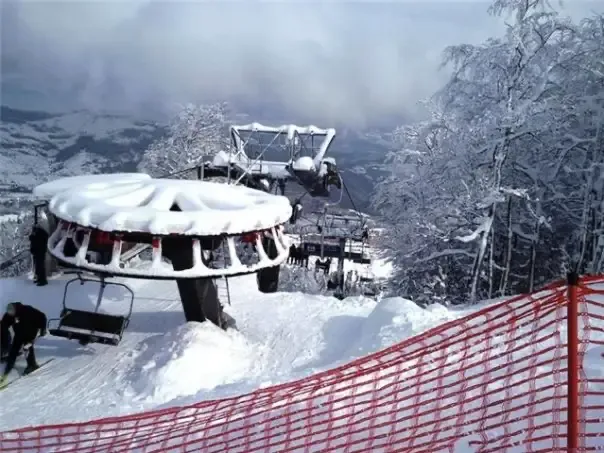
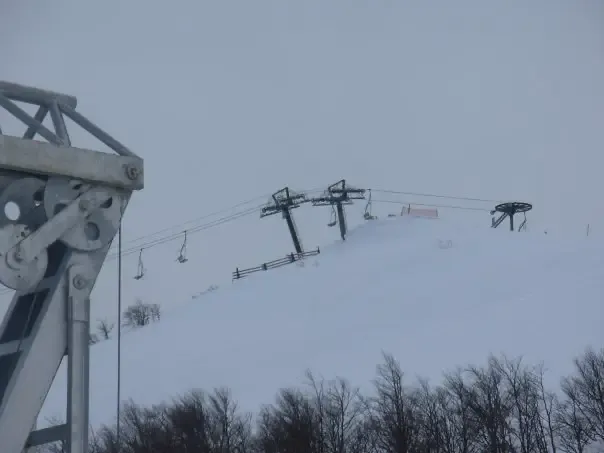
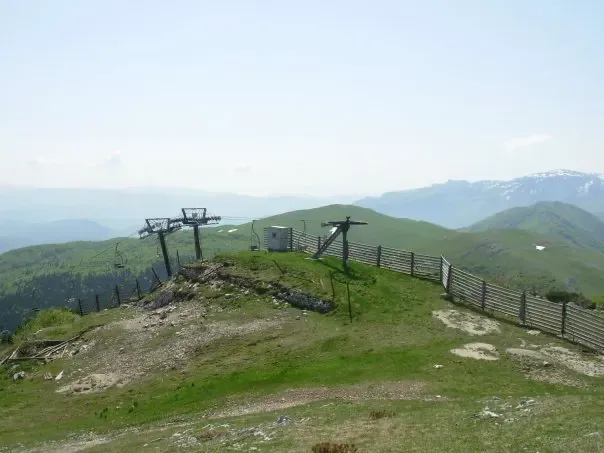
It wasn't until the early 2000s that the original three-seater chairlift was finally repaired, but its route was drastically shortened to terminate at the Heliodrom (1,640 m). The remaining skeletal pylons and the ravaged middle station were left standing for years, serving as ghostly, rusted reminders leading up to the summit. Meanwhile, the mountain's oldest institution, the meteorological observatory, symbolically resumed operations in 1999.
The "Concrete Reality": Urbanisation vs. Stagnation
Post-war reconstruction restored skiing to Bjelašnica, but the deeper legacy of the mountain over the last two decades is a story of extreme, uneven development.
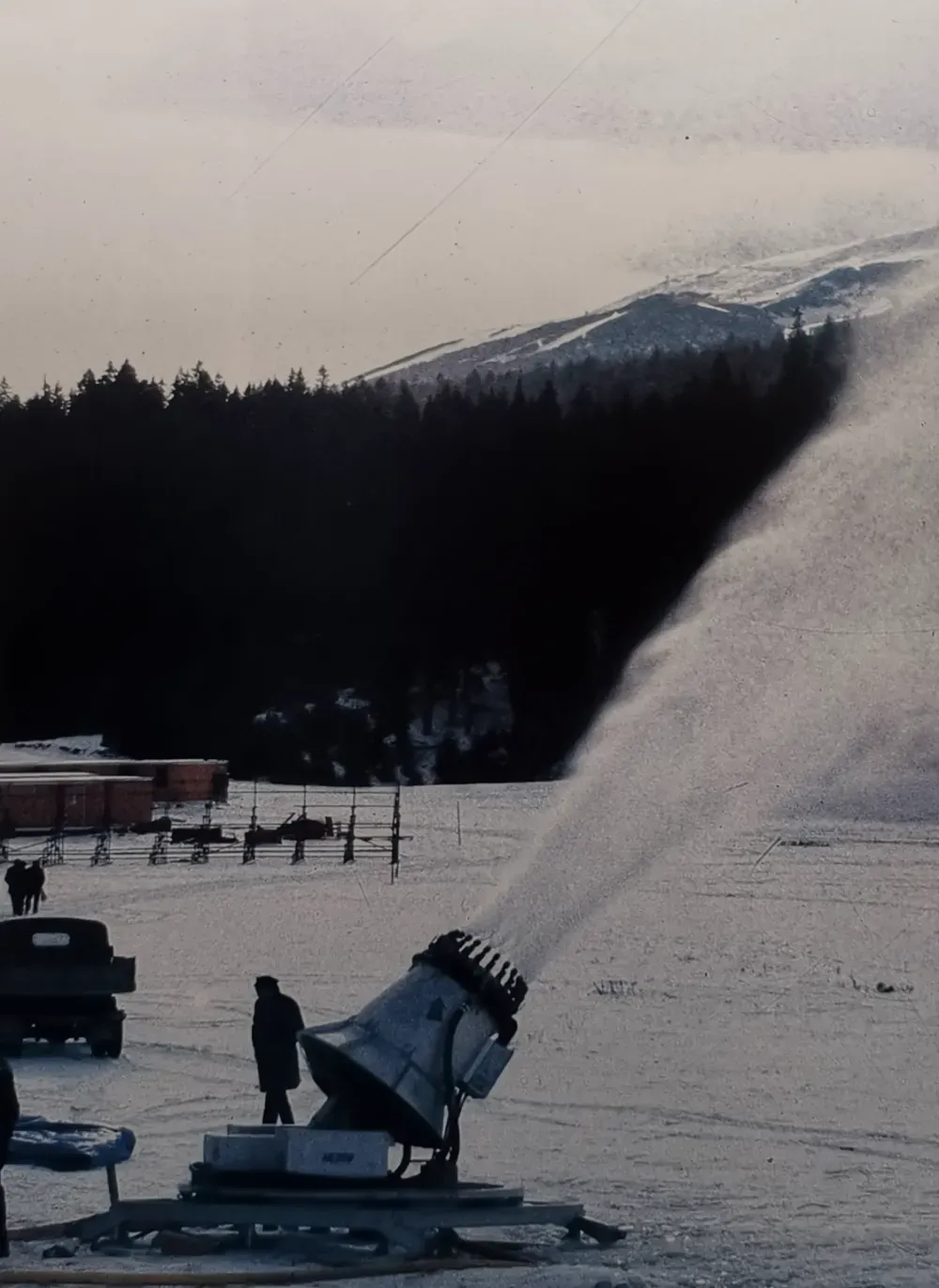
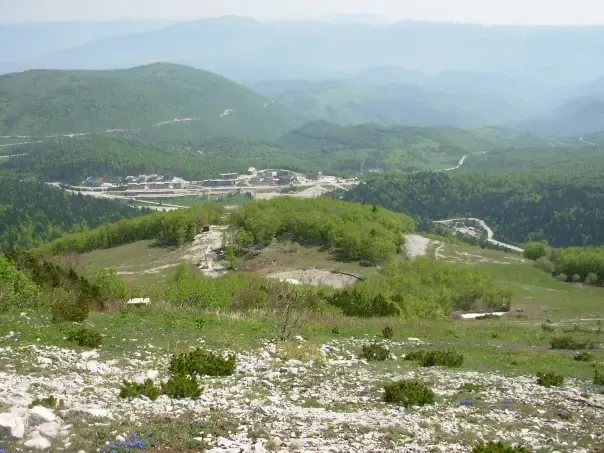
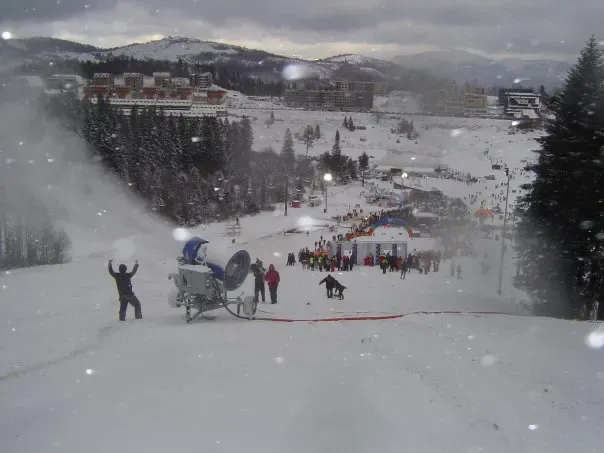
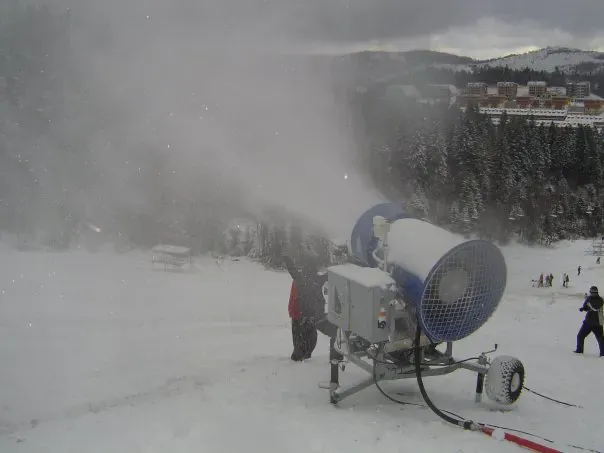
In the early 2000s, attention focused on basic tourist infrastructure. In 2009, a major step toward modernisation was taken with the introduction of artificial snowmaking, which included the construction of a new reservoir lake. However, while the resort management slowly chipped away at upgrading the slopes, the base area at Babin Do underwent a rapid, almost aggressive transformation.
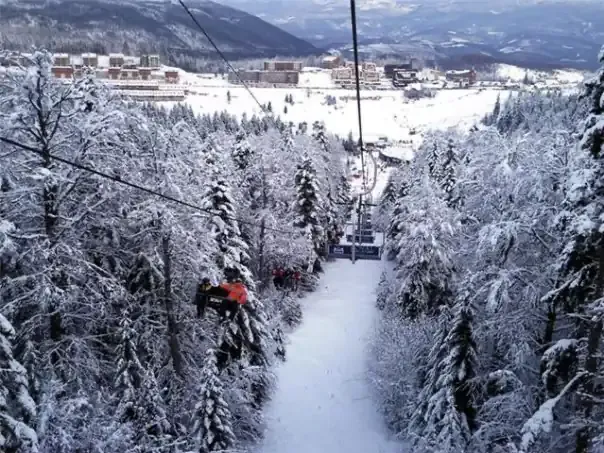
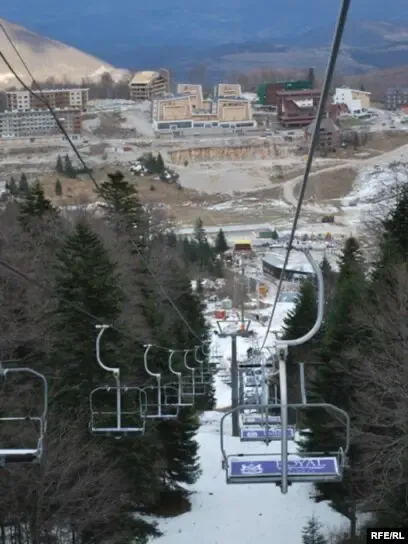
Instead of growing through a coordinated design vision, the valley developed through a mix of private investment, intense apartment construction, and ad hoc zoning decisions. Socialist-era Olympic development on the Sarajevo mountains had attempted to balance modern forms with regional identity; the later construction boom at Babin Do largely abandoned that ambition. A formal urban planning initiative was launched in 2016, and an extensive Master Plan was developed by the Austrian firm Input Projekt in 2018 (envisioning a 20-kilometre expansion connecting to Igman), but neither was meaningfully implemented due to complex jurisdictional disputes.
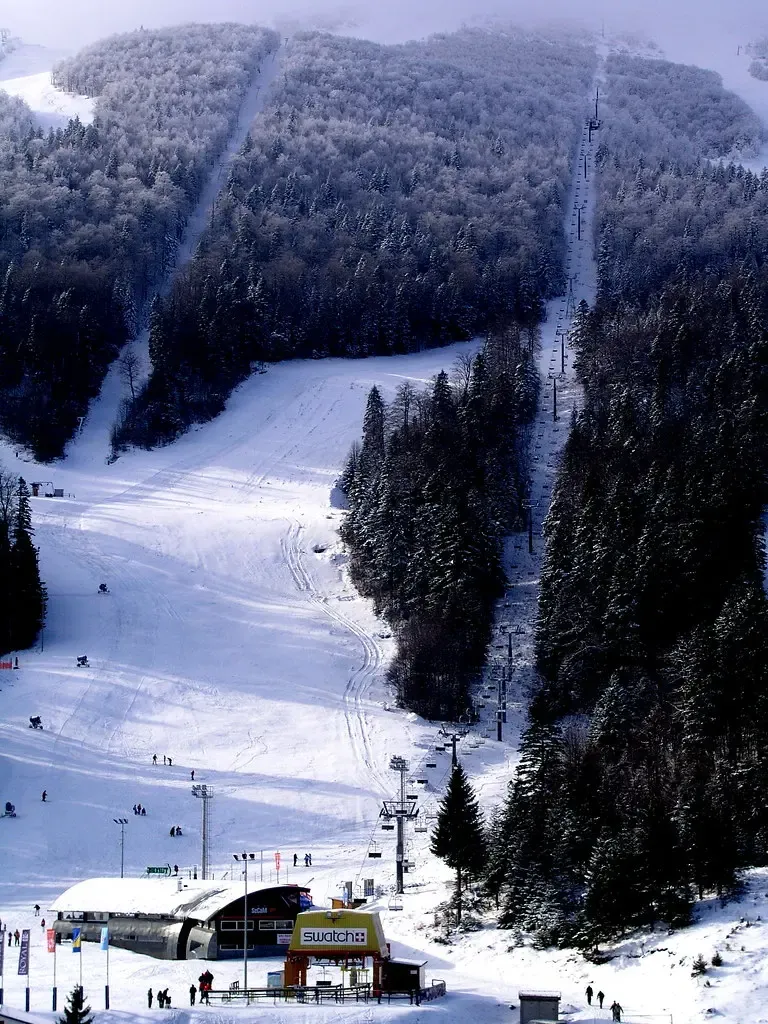
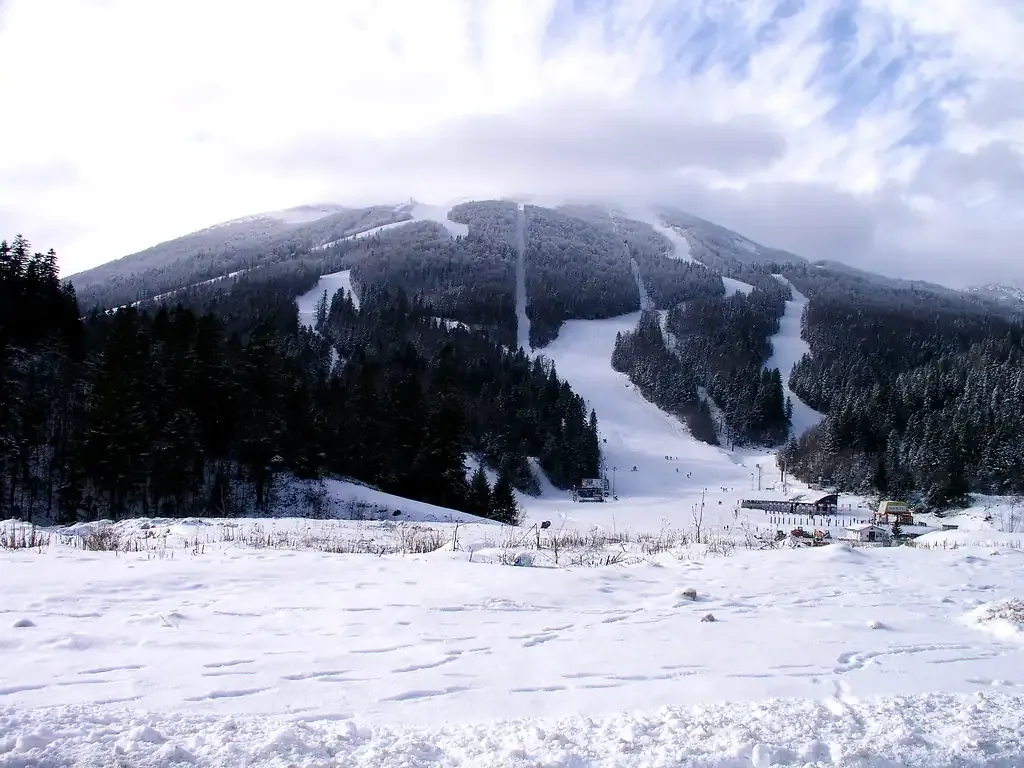
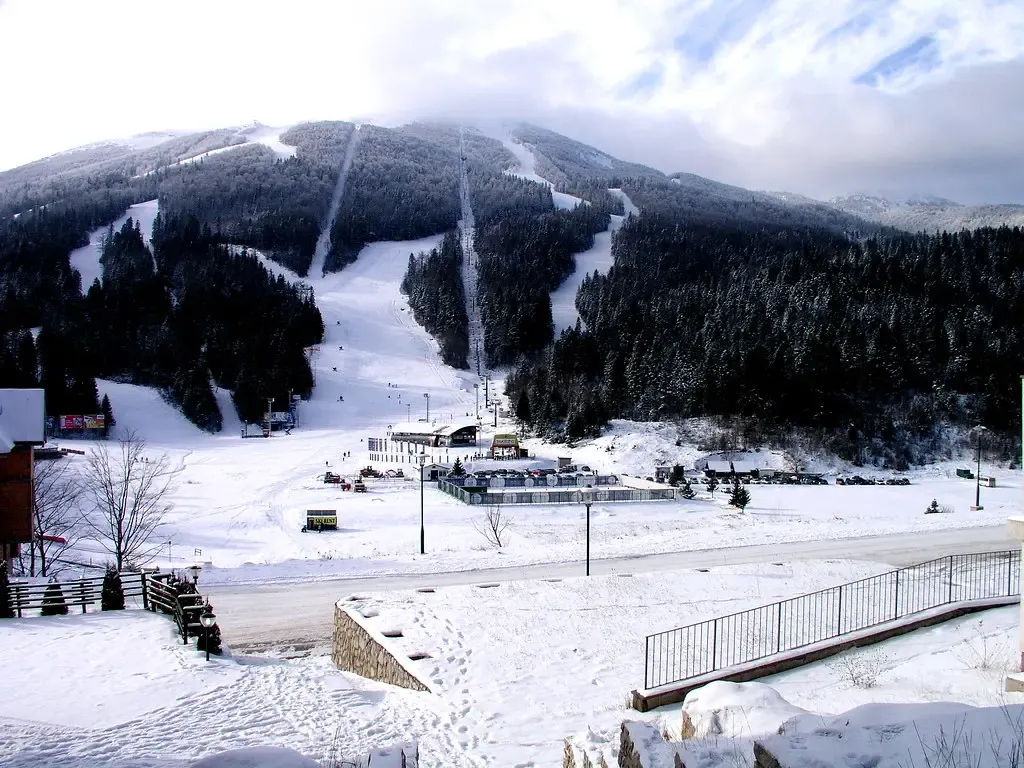
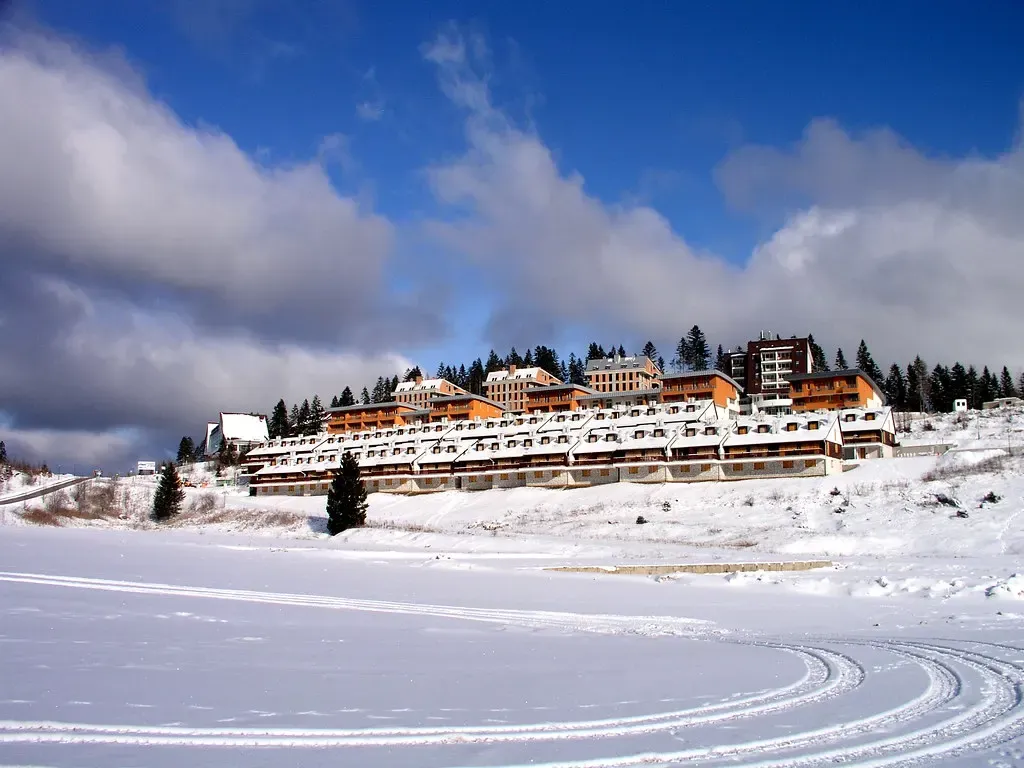
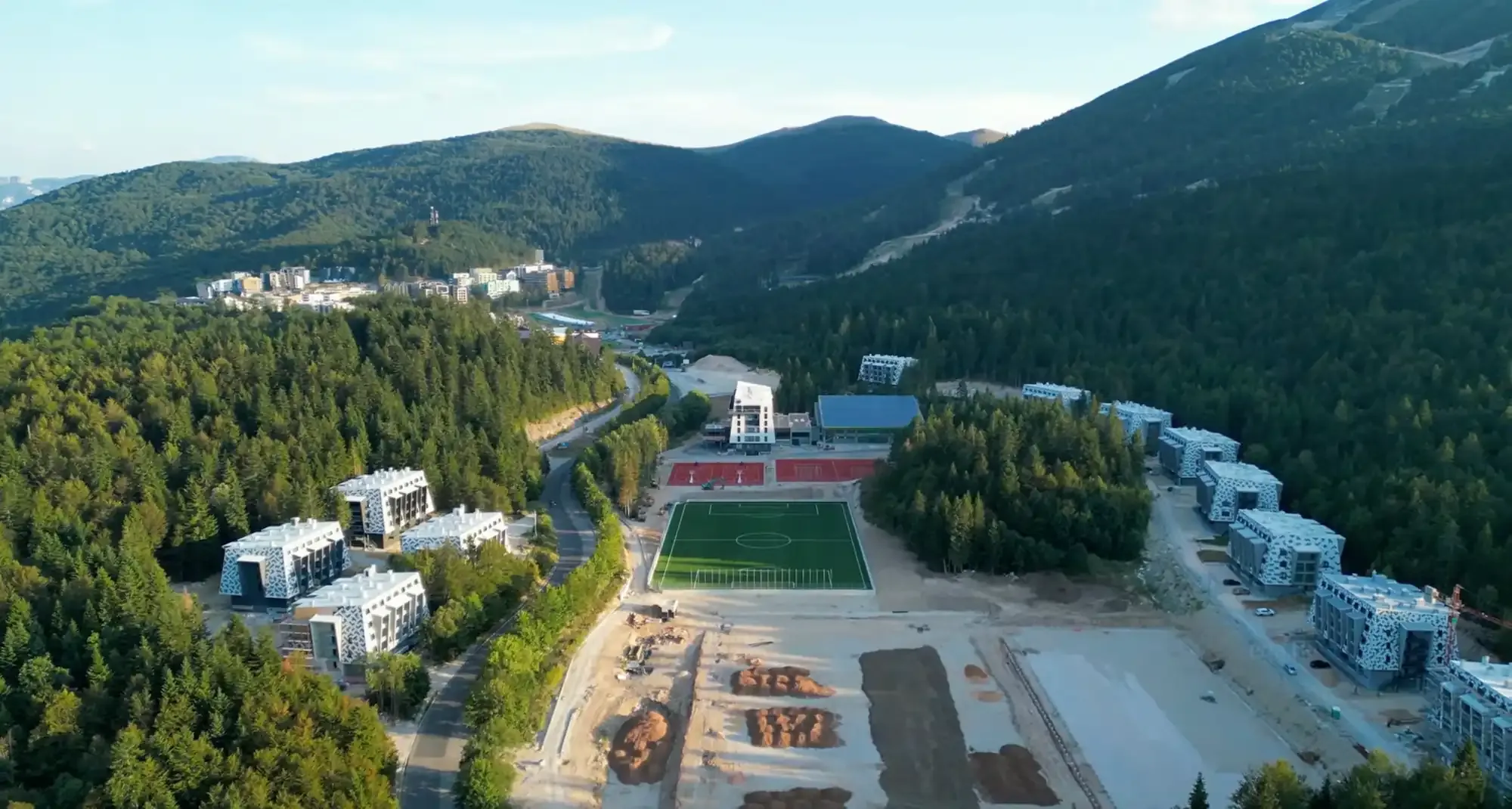
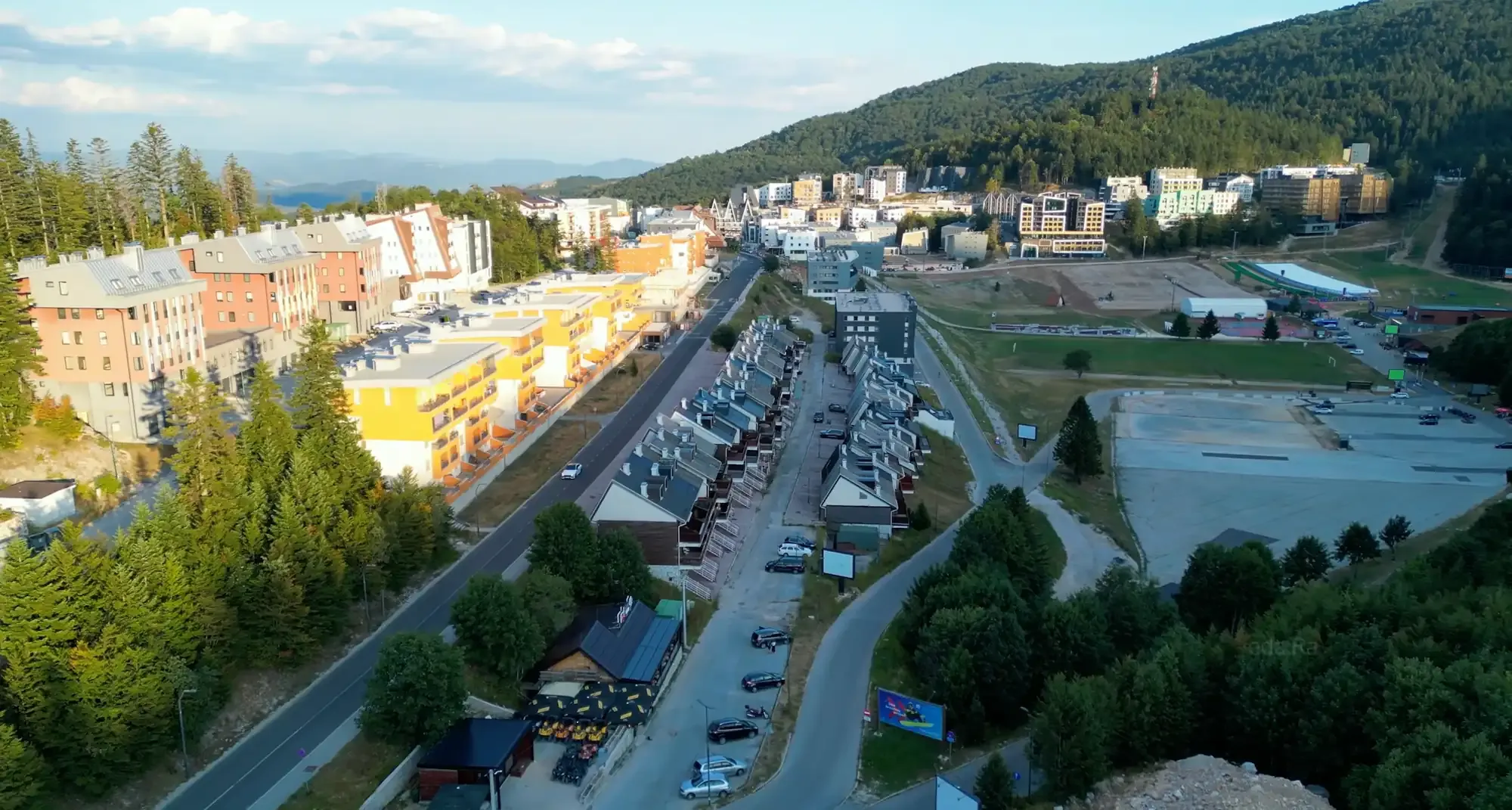
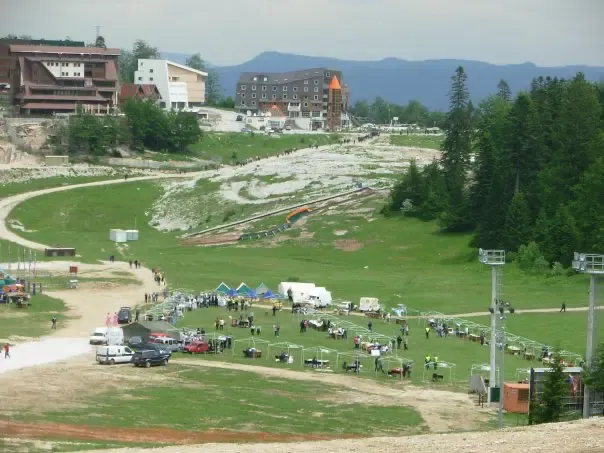
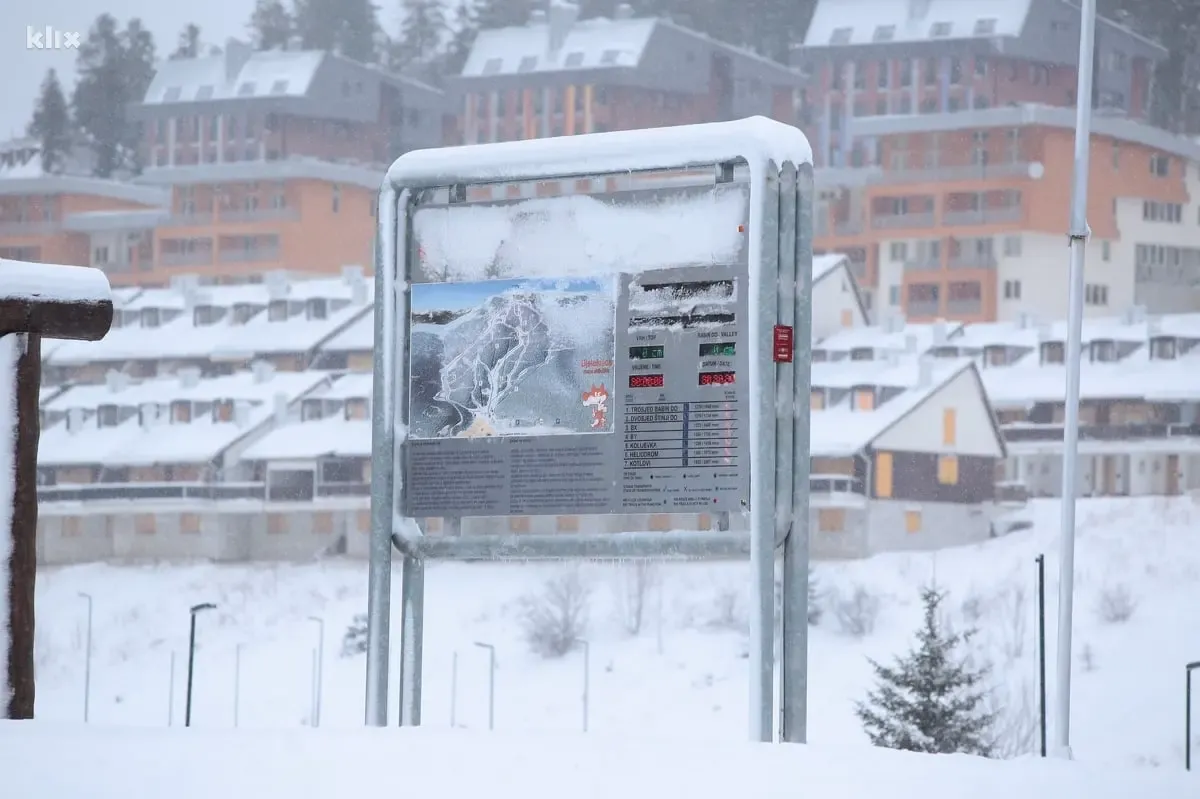
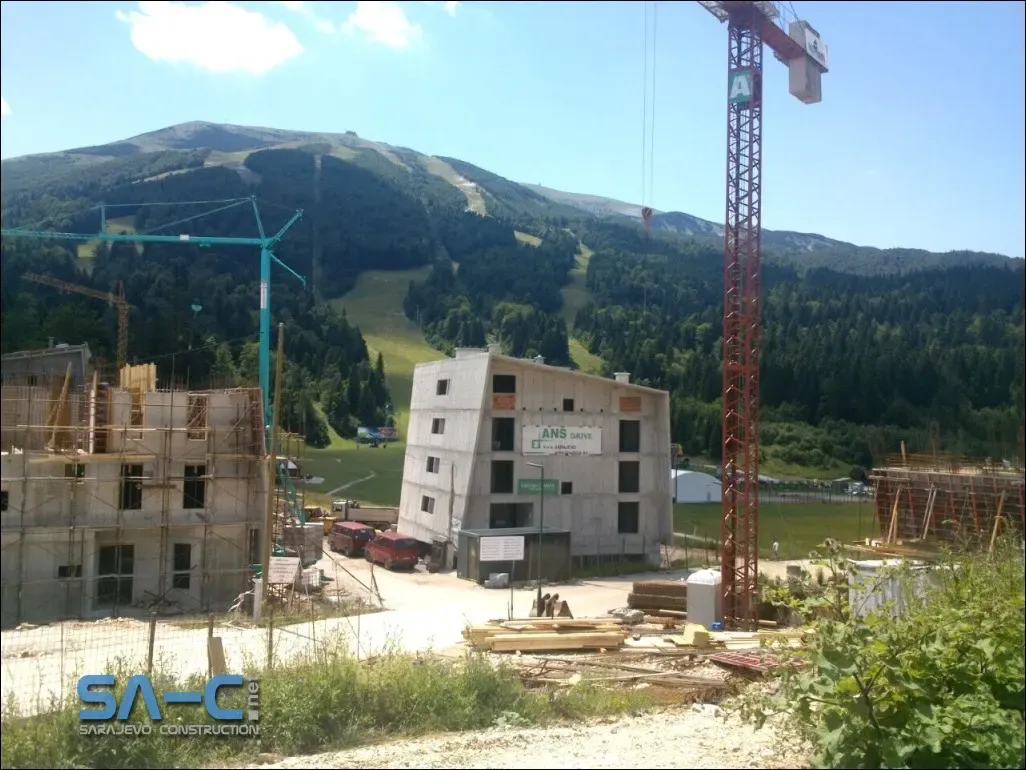
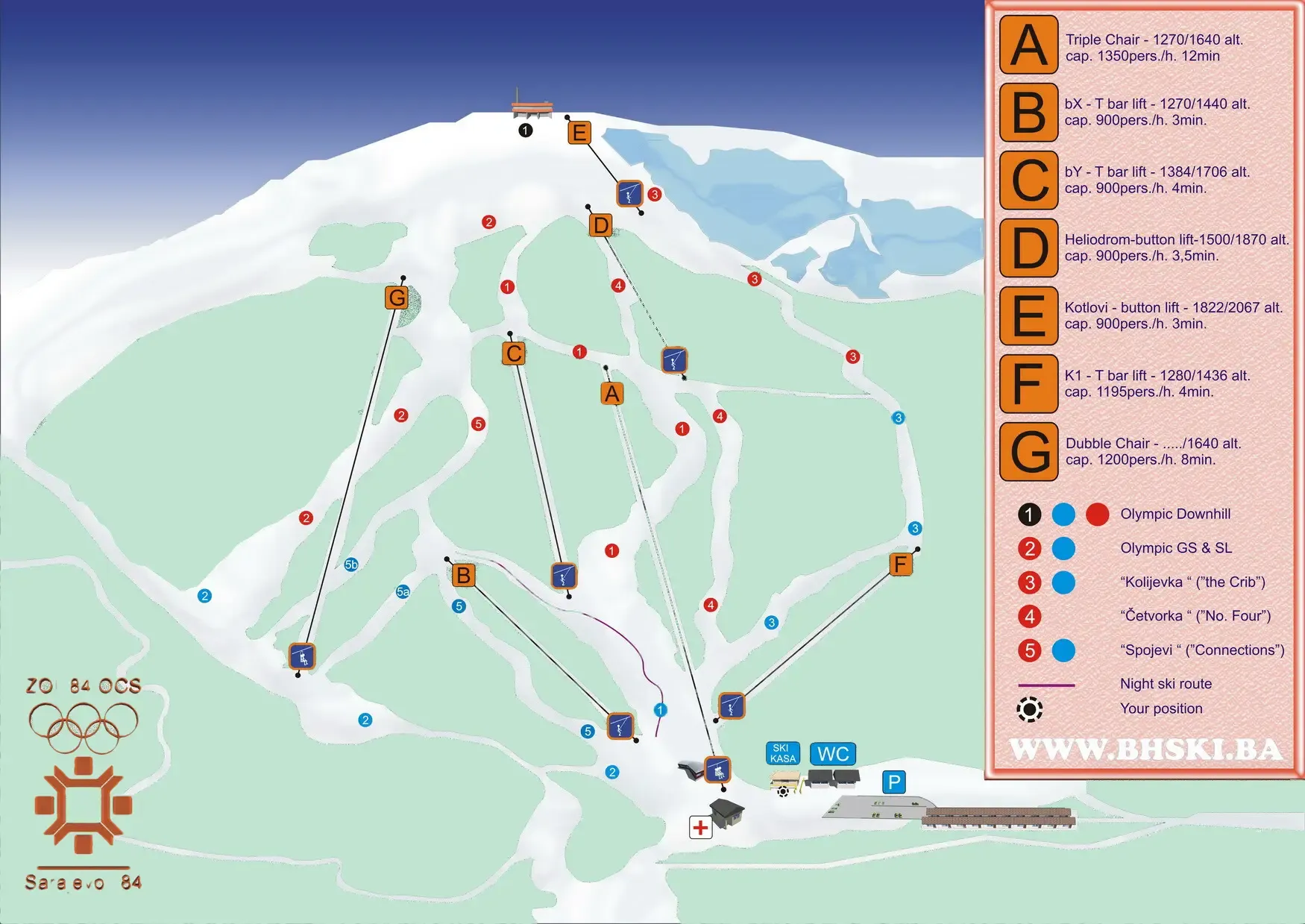
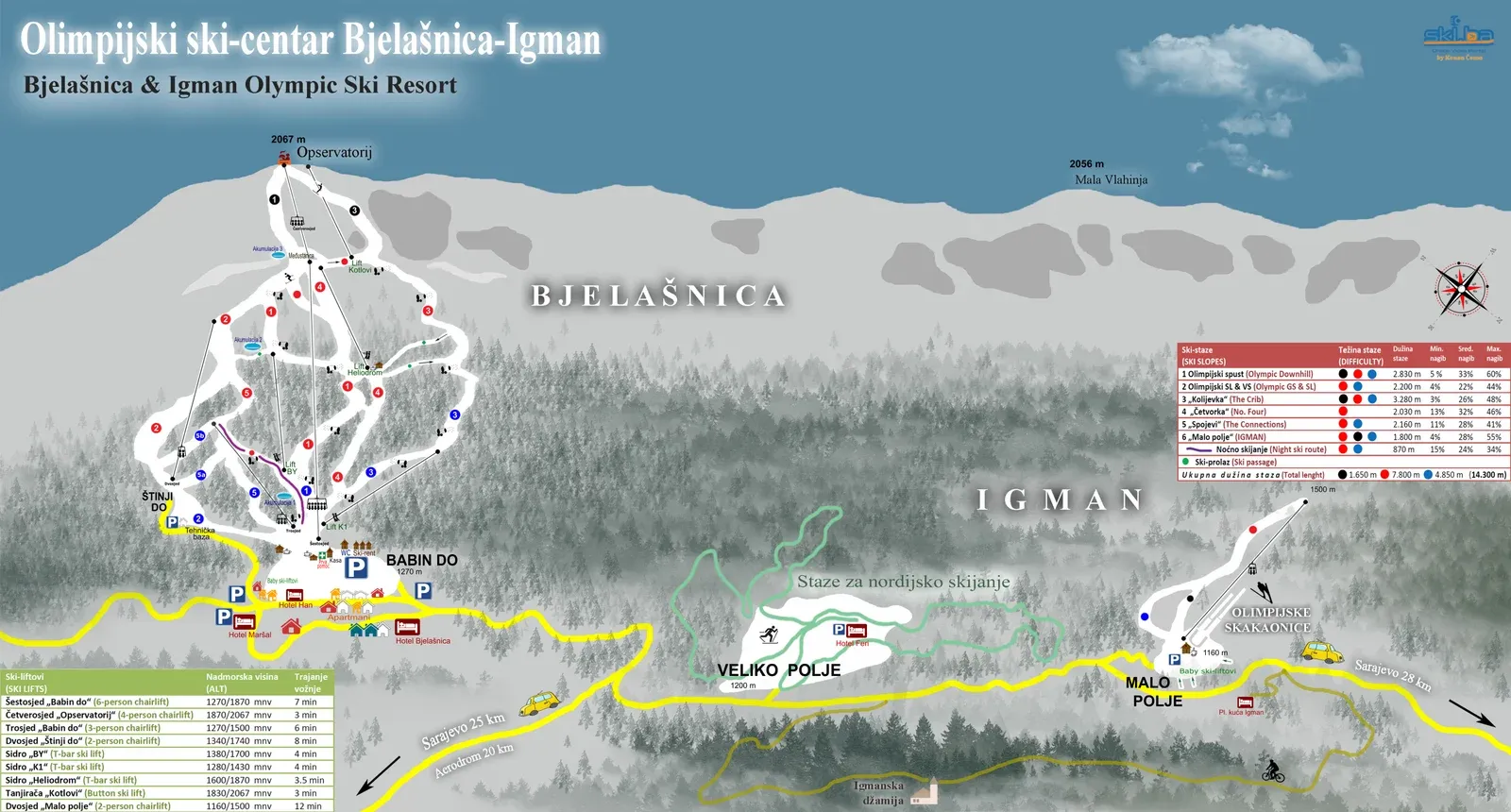
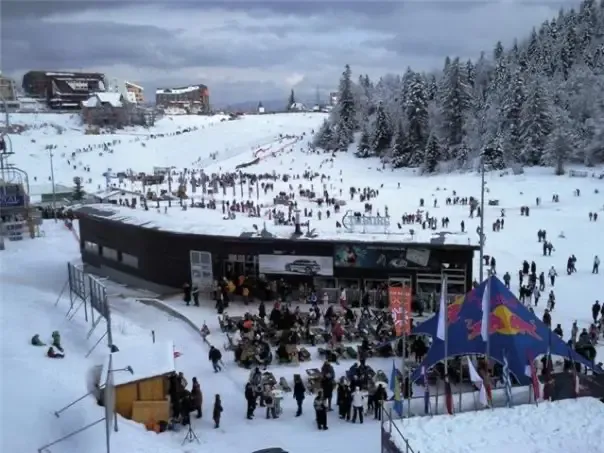
The result today is a mountain of stark dualities. The accommodation capacity at the base has skyrocketed into the thousands, creating a dense urban resort zone, yet the actual skiable terrain remains roughly the same size as it was during the 1984 Olympics. The accommodation boom simply outpaced the spatial vision and public infrastructure needed to support it.
Timeline of Ski Infrastructure Modernisation
To address the growing crowds at the base, the resort's "vertical transport" has undergone a complex and sometimes troubled modernisation process.
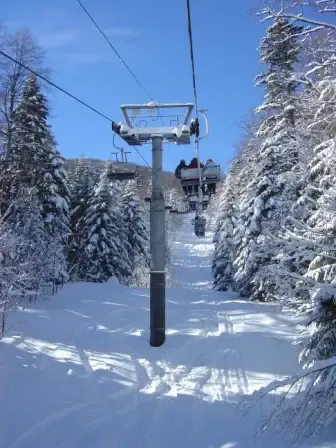
- Early 2000s: The original Olympic three-seater chairlift is partially repaired, but its route is significantly shortened to end at the Heliodrom (1,640 m).
- 2009: A modern artificial snowmaking system is introduced, complete with a newly constructed reservoir lake.
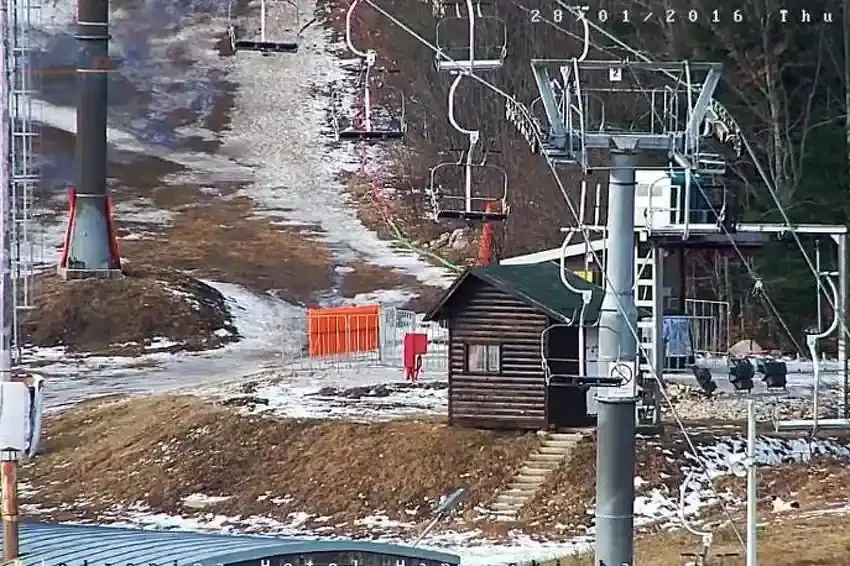
- 2010: The Štinji Do two-seater chairlift is renovated and returned to function.
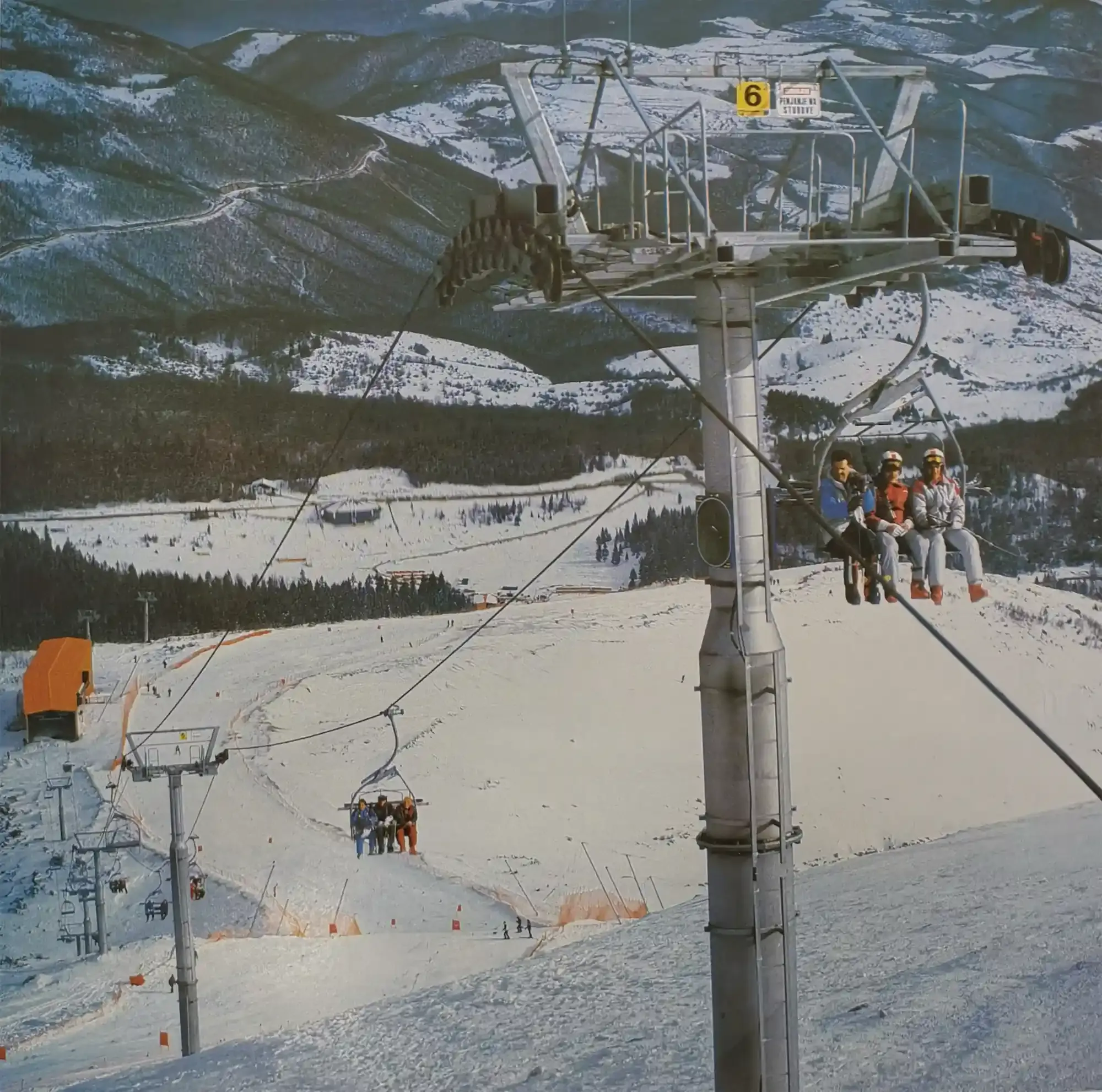
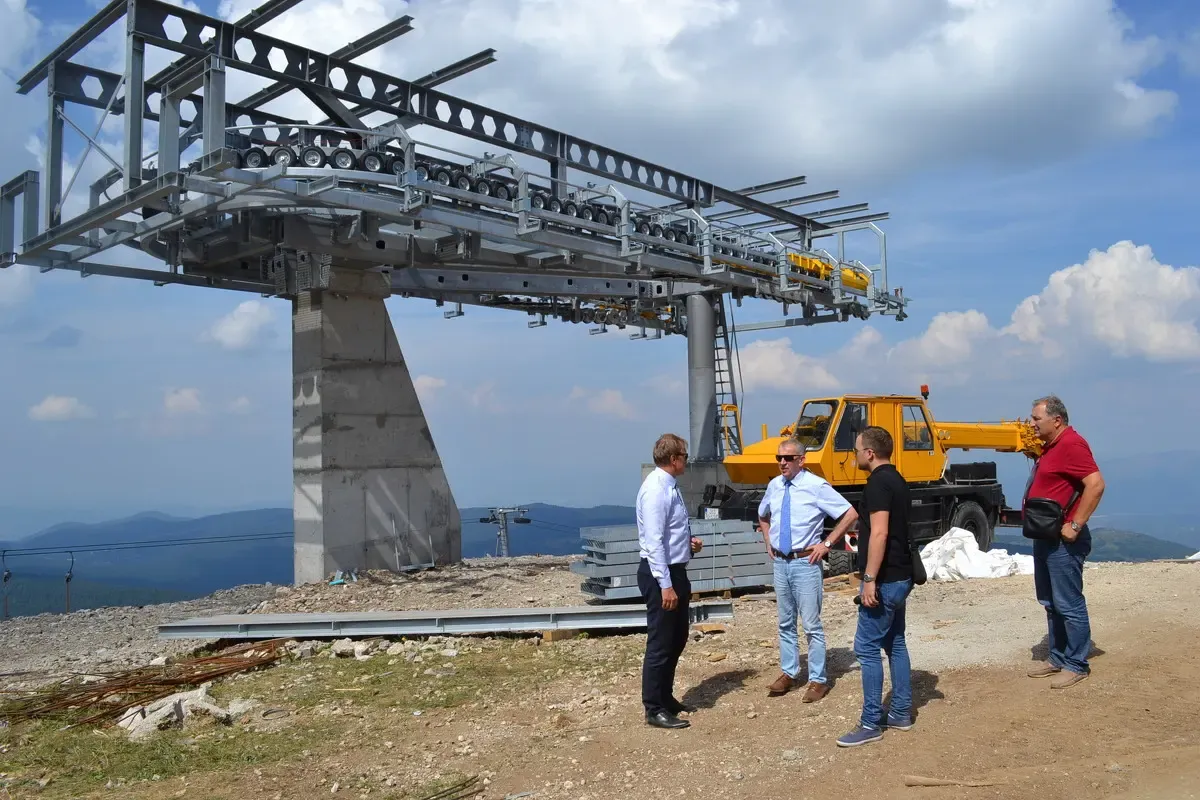
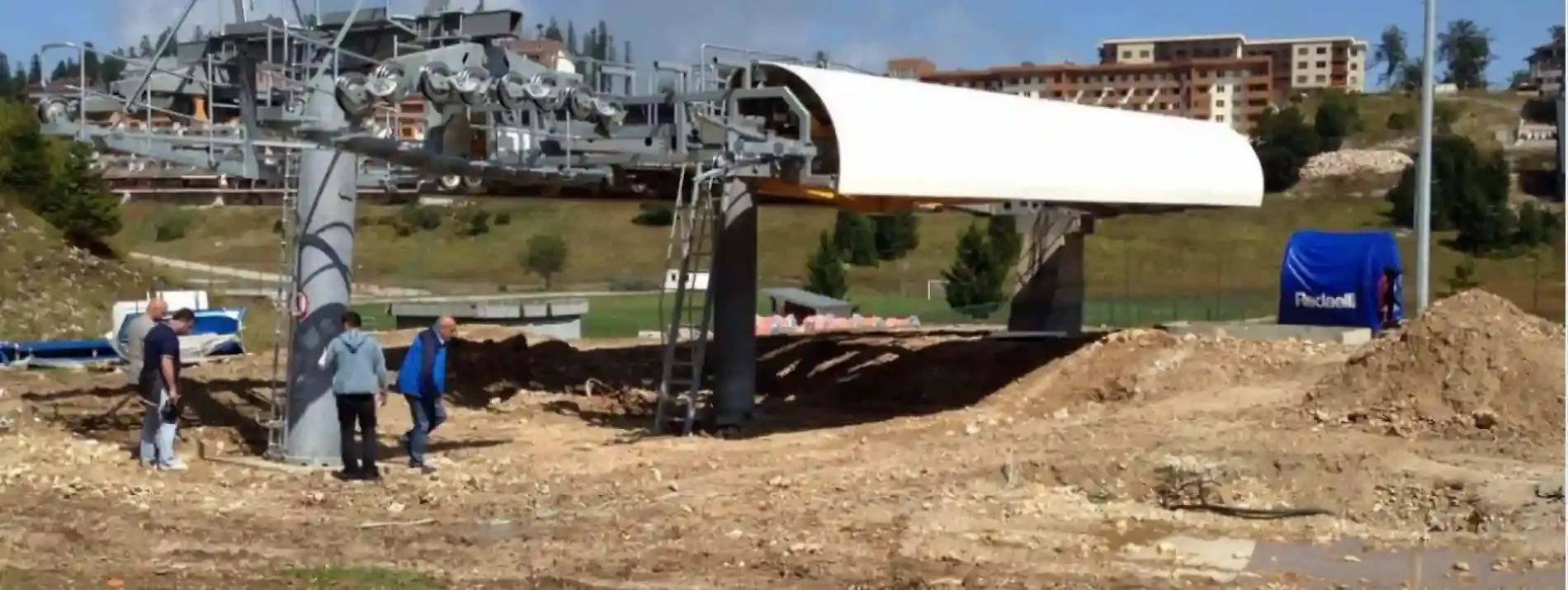
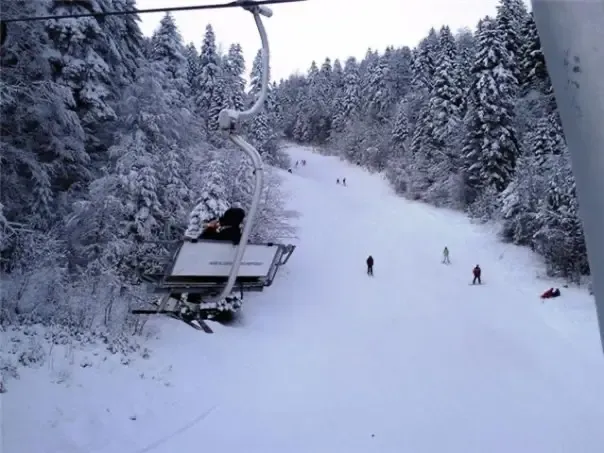
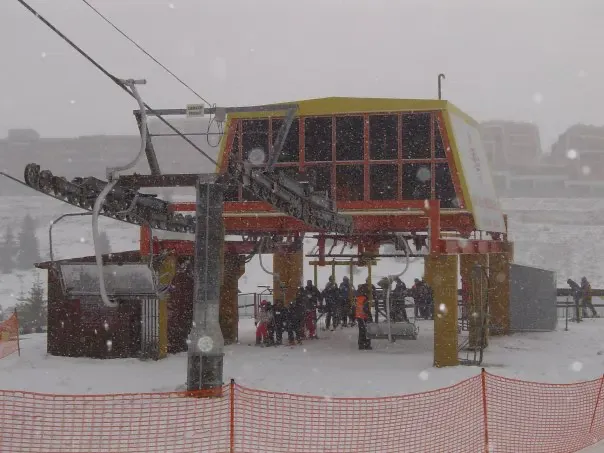
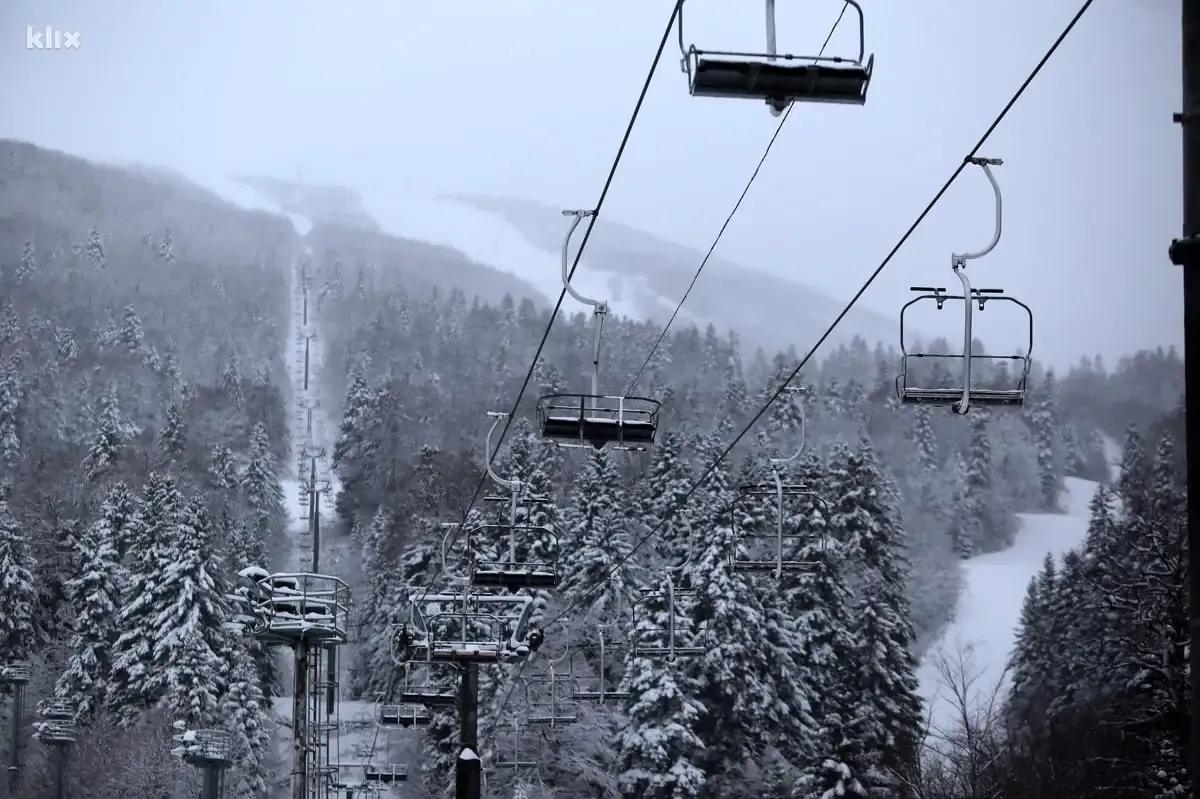
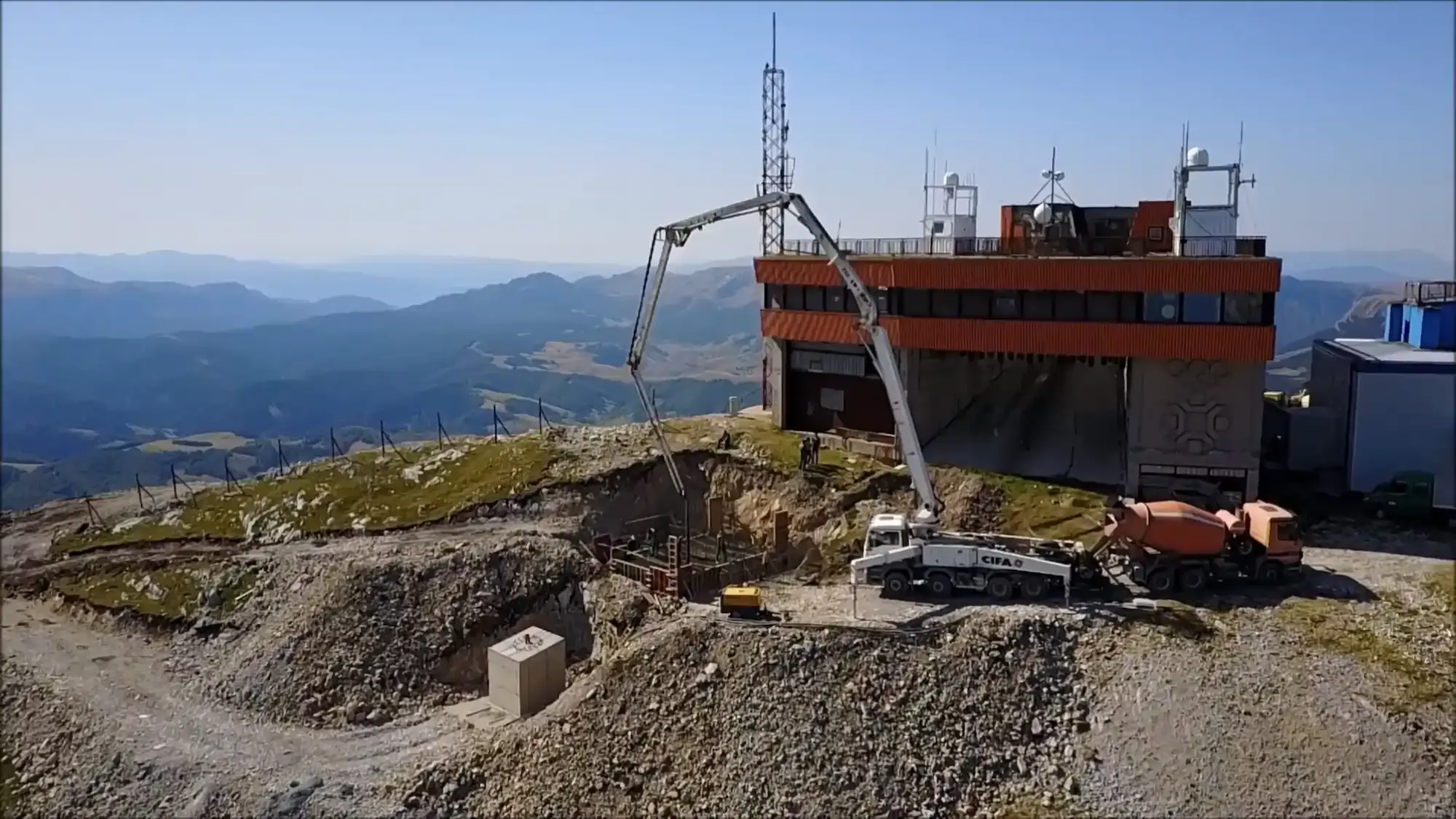
- 2017: A major 16 million KM overhaul by Swiss manufacturer Bartholet replaces the old three-seater with a high-speed six-seater chairlift, cutting base-to-mid-station travel time to just 5.5 minutes. However, the second phase—a new four-seater summit lift—suffers immediate logistical failure. Planners underestimated the extreme summit winds, leaving the lift inoperable for six years.
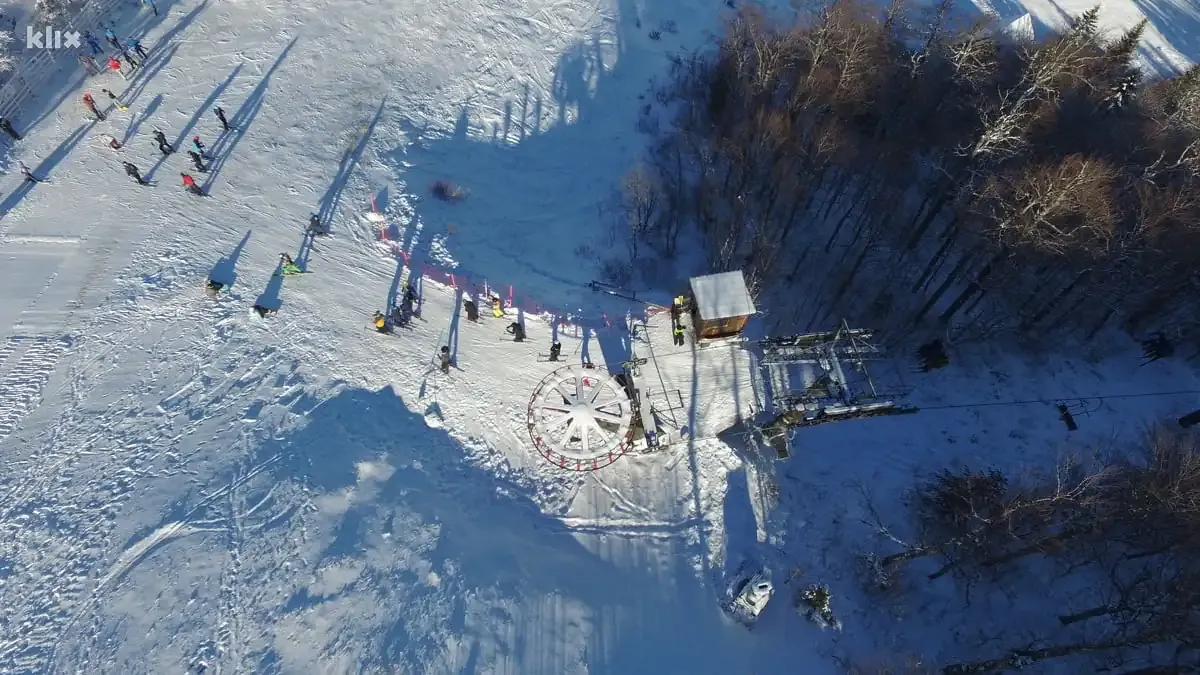
- 2021: The critical surface lift at the beginner plateau is replaced by Doppelmayr with a Double BX lift, increasing capacity to 2,250 skiers per hour.
- 2022–2023: Recognizing the failure of the summit four-seater, management dismantles and relocates it lower down the mountain to the steep central "BY" line. It reopens in 2023, finally securing reliable access to the upper race slopes. In February 2023, these upgraded slopes successfully host the FIS Europa Cup in Super-G.
- 2024: Conceding to the mountain's harsh climate, the resort returns to wind-resistant surface lift technology for the summit, launching a 3.3 million KM project to build the new Kotlovi lift.
Then and Now: Traces of 1984 (and Lost Landmarks)
Visitors searching for the Bjelašnica of 1984 will still find the mountain’s Olympic topography written into the landscape, even if the architecture has radically changed.
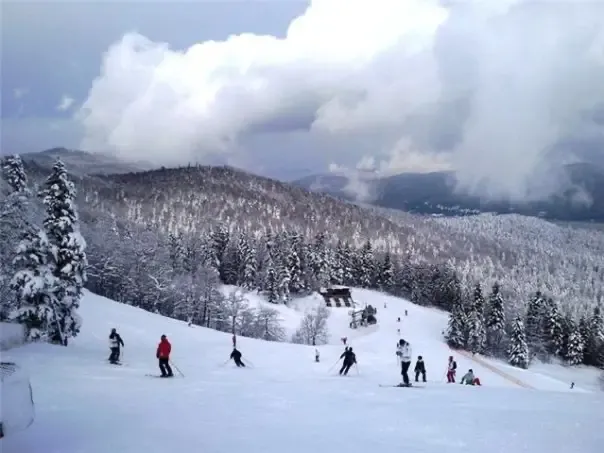
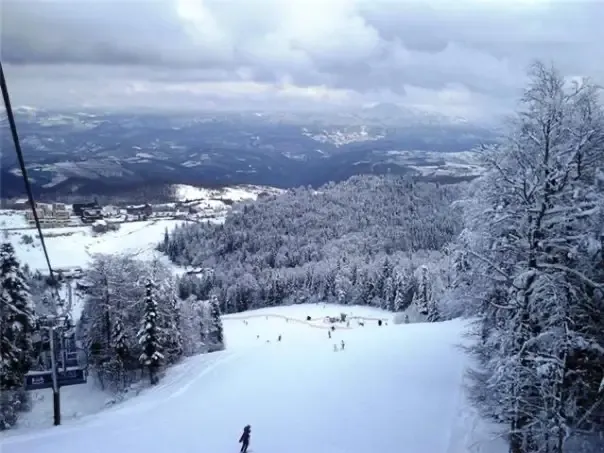
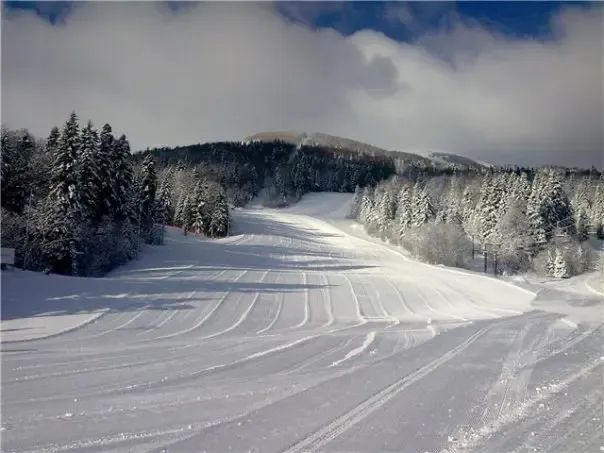
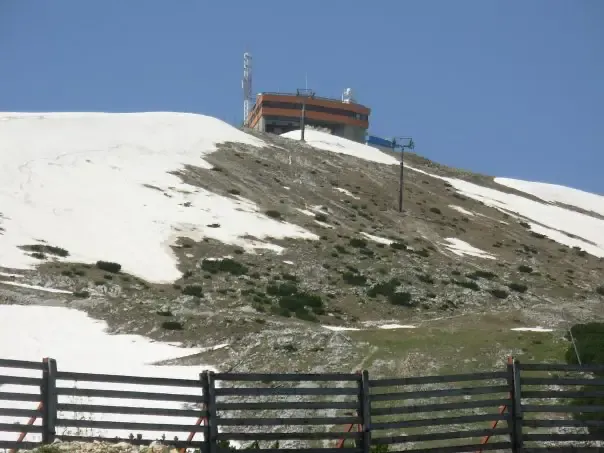
The most enduring landmark remains the summit observatory. Rebuilt after the war, it links the Olympic mountain to its 1894 scientific roots. The ski corridors themselves preserve the original venue's layout; the Men’s Downhill line and the finish bowl are fully intact and actively skied today.
However, the built environment of the Games has largely been erased. The iconic Olympic Press Center at Babin Do—the striking hexagonal building with a blue metal facade designed by Ivan Štraus—survived the war as a ruin but was demolished around 2005 for new hotels. The Hotel Famos was used as UNPROFOR's base and later reopened as Hotel Maršal. Currently, it is closed and deteriorating.
How to Visit Bjelašnica
Access
Bjelašnica lies about 25 kilometres southwest of Sarajevo. The main road leads to the Babin Do base area at roughly 1,266 m, and the journey from the city usually takes around 40 minutes by car, depending on conditions. Seasonal public transport also links the mountain with Sarajevo.
Winter
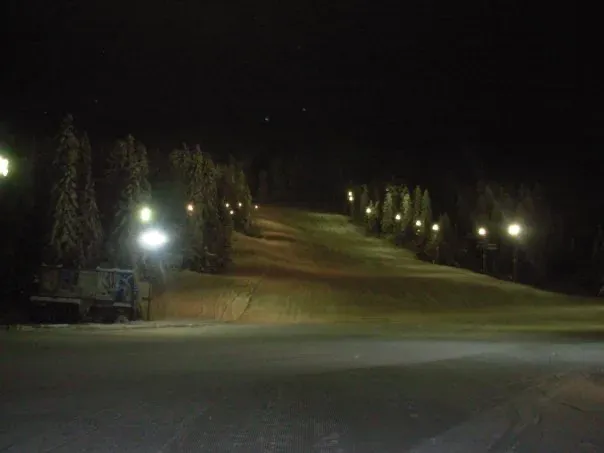
The ski season generally runs from December to March. Visitors can ski the original Olympic Men’s Downhill route, now serviced by the modern six-seater lift. Lift passes are purchased at the base in Babin Do. Night skiing is also available on select evenings on the lower illuminated slopes.
Summer
In summer, the mountain transforms into a hiking destination. The trek to the summit (2,067 m) offers panoramic views of the Dinaric Alps. For those interested in vernacular heritage, the remote village of Lukomir (1,495 m) is accessible via hiking trails or a gravel road from the back of the mountain, offering a glimpse into the traditional life that existed long before the Olympic development.


