Olympic Village Mojmilo
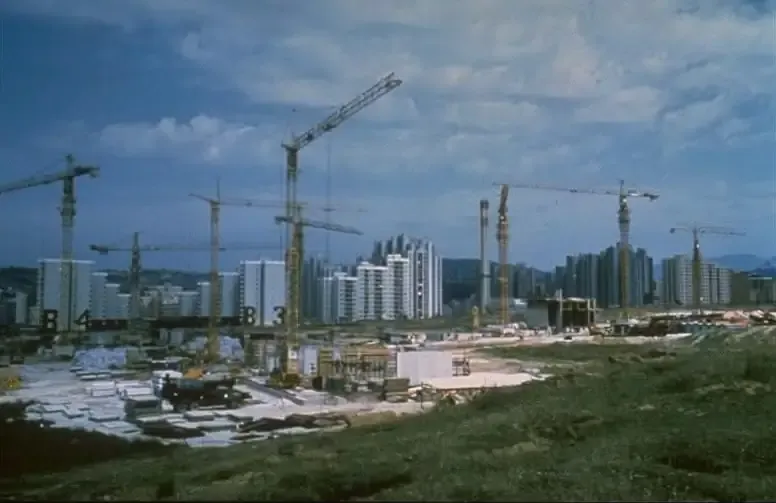
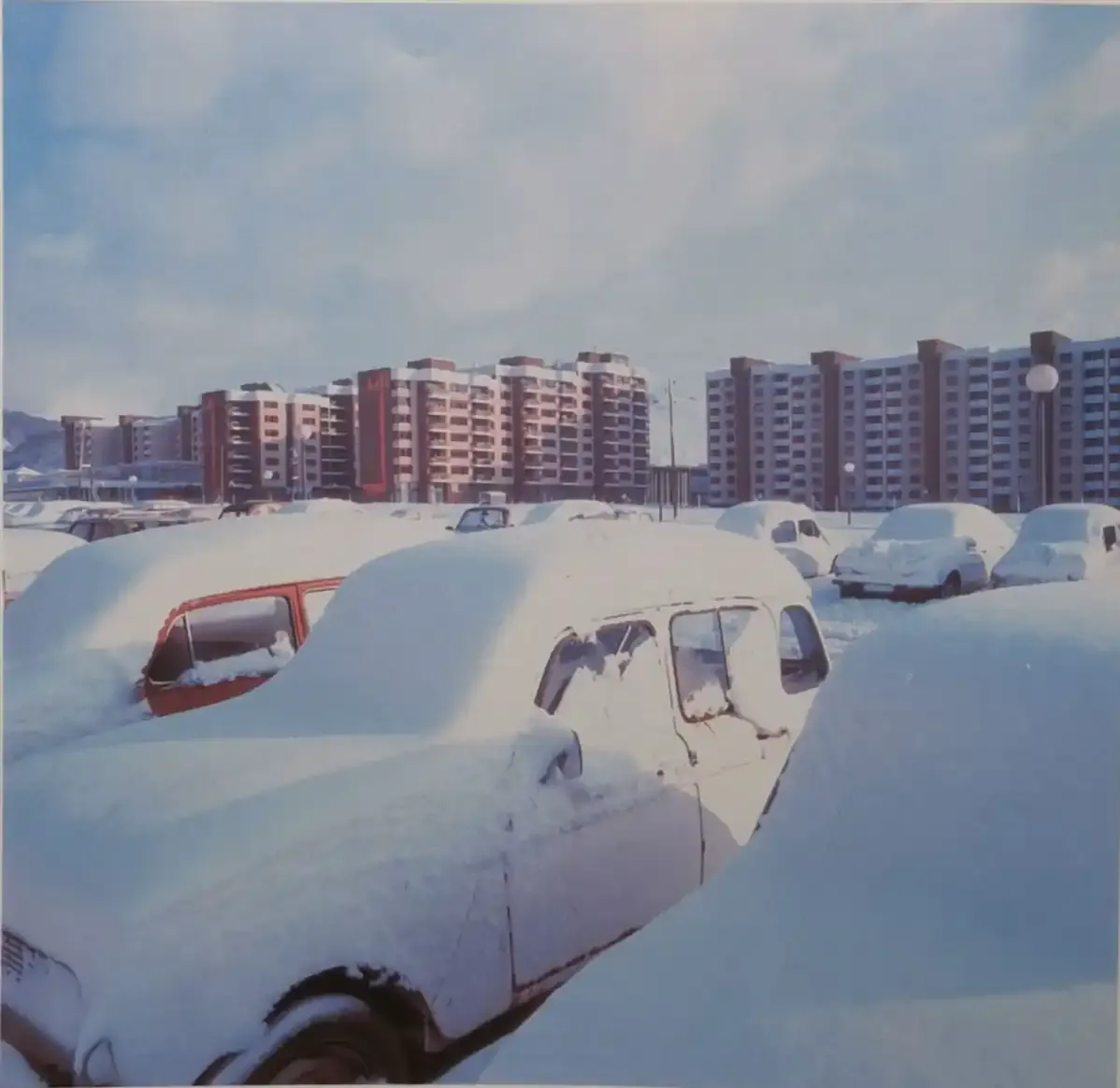
Olympic Village A Mojmilo stands as one of the most successful examples of "proactive" Olympic urbanism. Unlike many mega-event venues that struggle for purpose after the closing ceremony, Mojmilo was designed from its first blueprint to serve the citizens of Sarajevo. Completed in a remarkable 20-month sprint between 1982 and 1983, it transformed 12 hectares of western Sarajevo into a modern "city-within-a-city" that briefly hosted the world’s elite winter athletes before becoming a permanent home for thousands.
Fast Facts
- Lead Architect: Milan Medić
- Construction Period: July 1982 – September 1983 (20 months)
- Surface Area: 12 hectares
- Capacity: ~2,250 athletes and officials
- Total Apartments: 639 units across 24 buildings
- Residential Rows: 5 distinct blocks (M I to M V)
- Dining Capacity: 800-seat self-service restaurant; 9,000 meals per day capacity
- Medical Facilities: Specialized polyclinic and 24-hour outpatient department
- Post-Games Use: Residential public housing
- Key Reconstruction: 1996–1999 (supported by the City of Barcelona)
The "Olympic Life Style": Mojmilo’s Strategic Role in 1984
The decision to build Mojmilo was a pivot born of necessity and ambition. Initially, the Organising Committee (OC) planned to house athletes in the Nedžarići University student dormitories, where a new 1,000-bed facility had already been constructed. However, as notifications of participation grew, it became clear that Nedžarići would be insufficient in both bed count and space for essential support services.
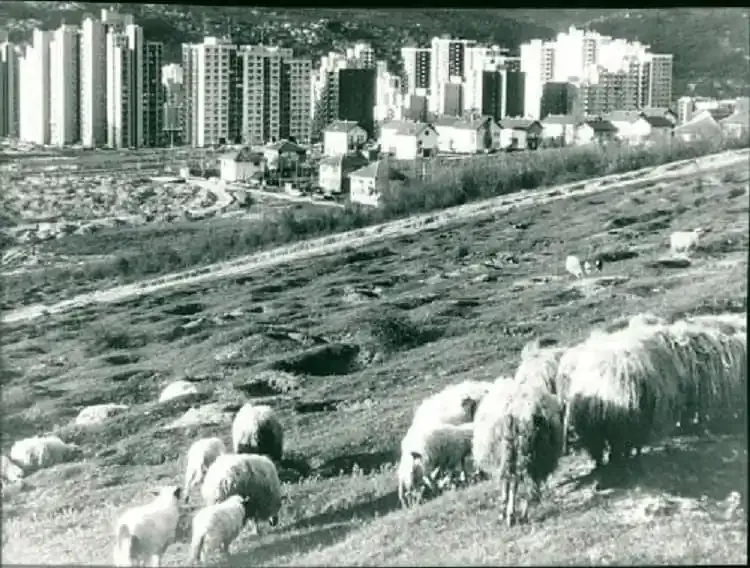
In 1982, the OC decided to construct an entirely new village at Mojmilo, roughly 5 km west of the city center. This shift was motivated by a desire to provide a more comfortable environment that reflected the "Olympic spirit" and a new "Olympic life style." By choosing a site intended for future city expansion, Sarajevo ensured that the massive investment would yield a permanent residential district.
A Global Neighborhood: Who Lived in the Village
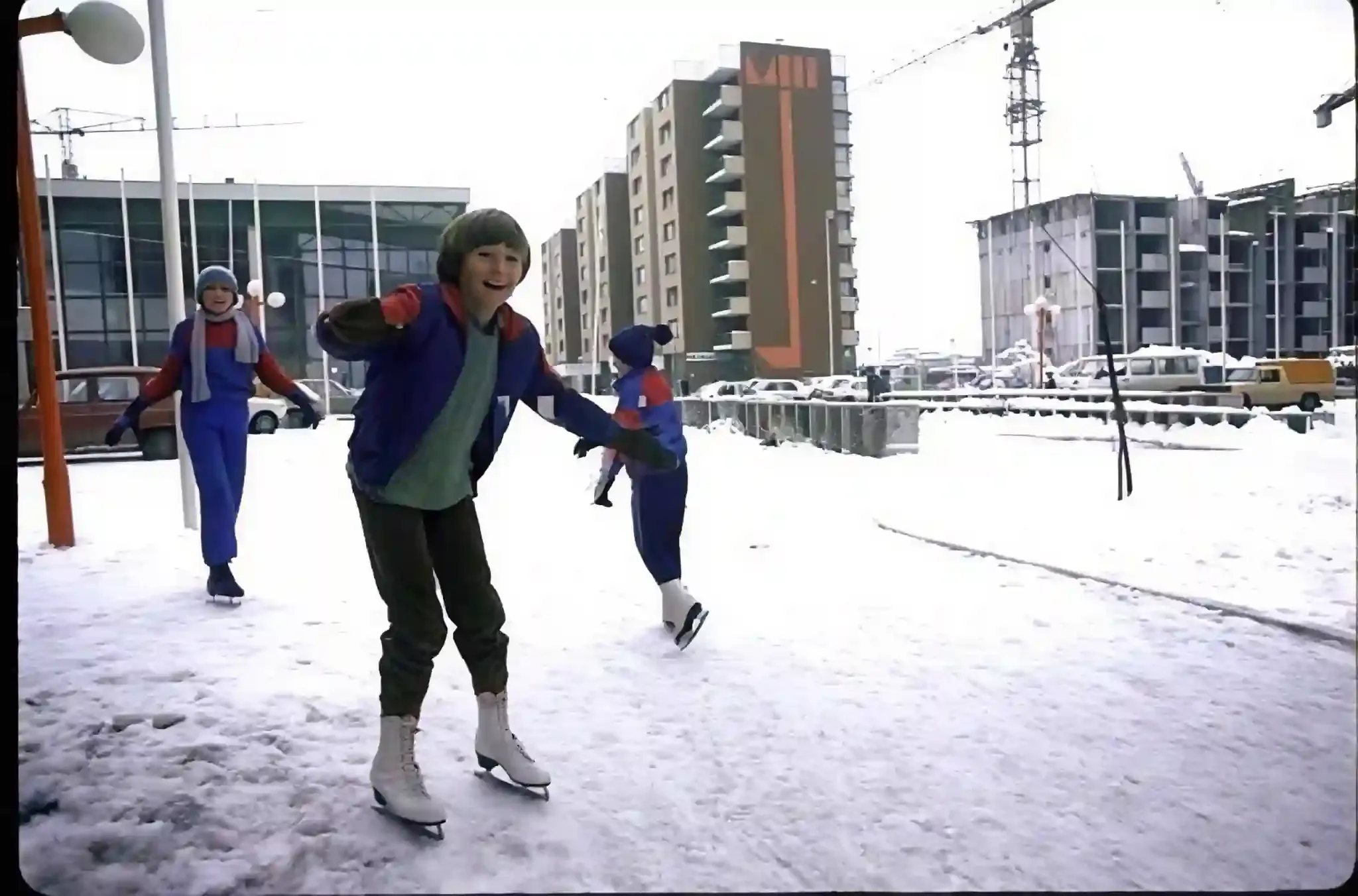
During the 12 days of competition in February 1984, Mojmilo was the beating heart of the Games. Approximately 1,950 to 2,250 athletes and officials from 49 nations called these apartments home. Because Yugoslavia was a leader in the Non-Aligned Movement, Mojmilo served as a rare neutral ground where athletes from both Eastern and Western blocs lived side-by-side without the boycotts that had marred previous Games.
The Village also hosted high-profile visitors. The Swedish royal couple and the President of the Yugoslav Presidency, Mika Špiljak, were among those who toured the central "Youth Forum." Even Hollywood royalty made an appearance; actor Kirk Douglas was a documented visitor to the village, adding a touch of international glamour to the athletes' daily routines.
A City-Within-a-City: Daily Operations and Logistics
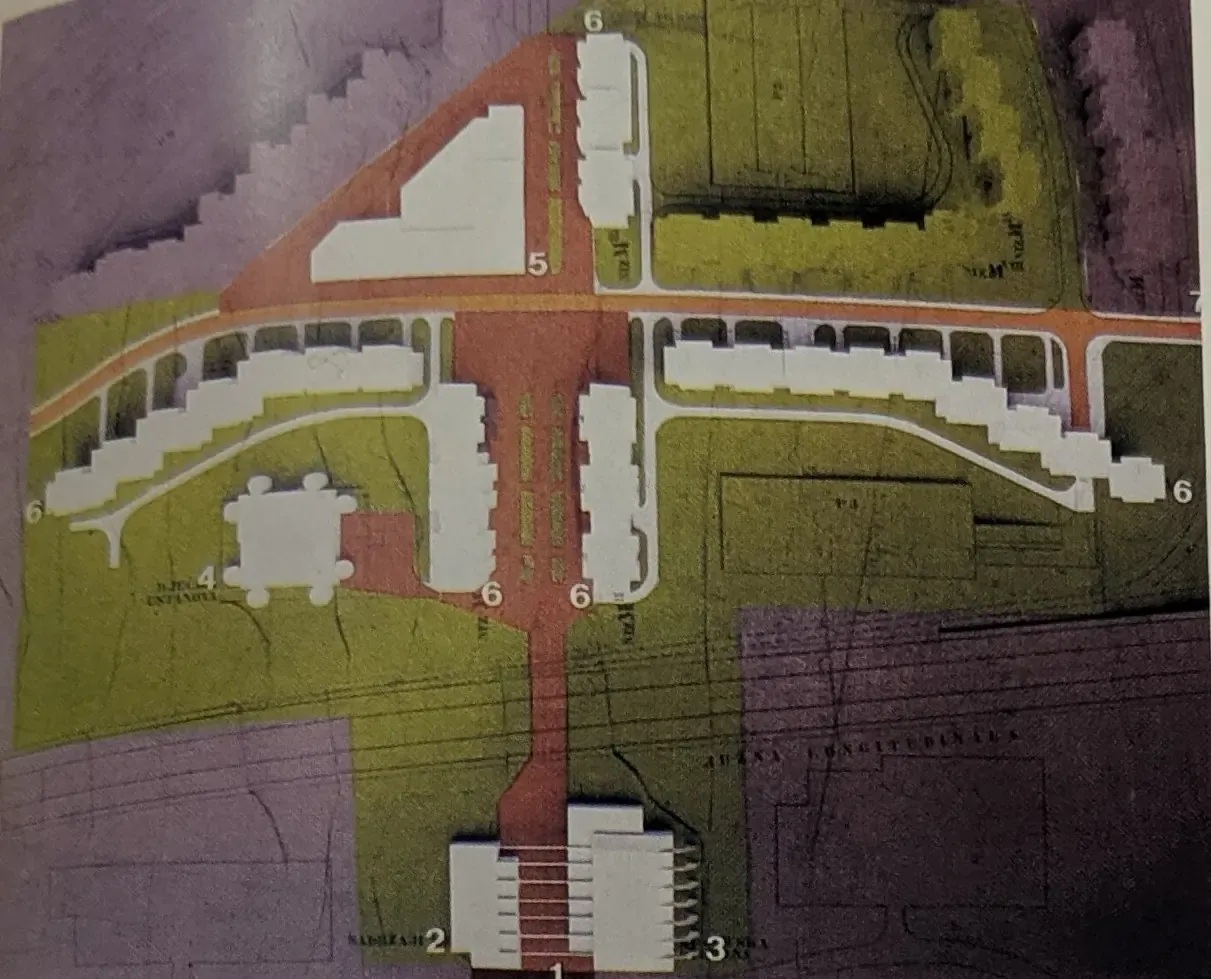
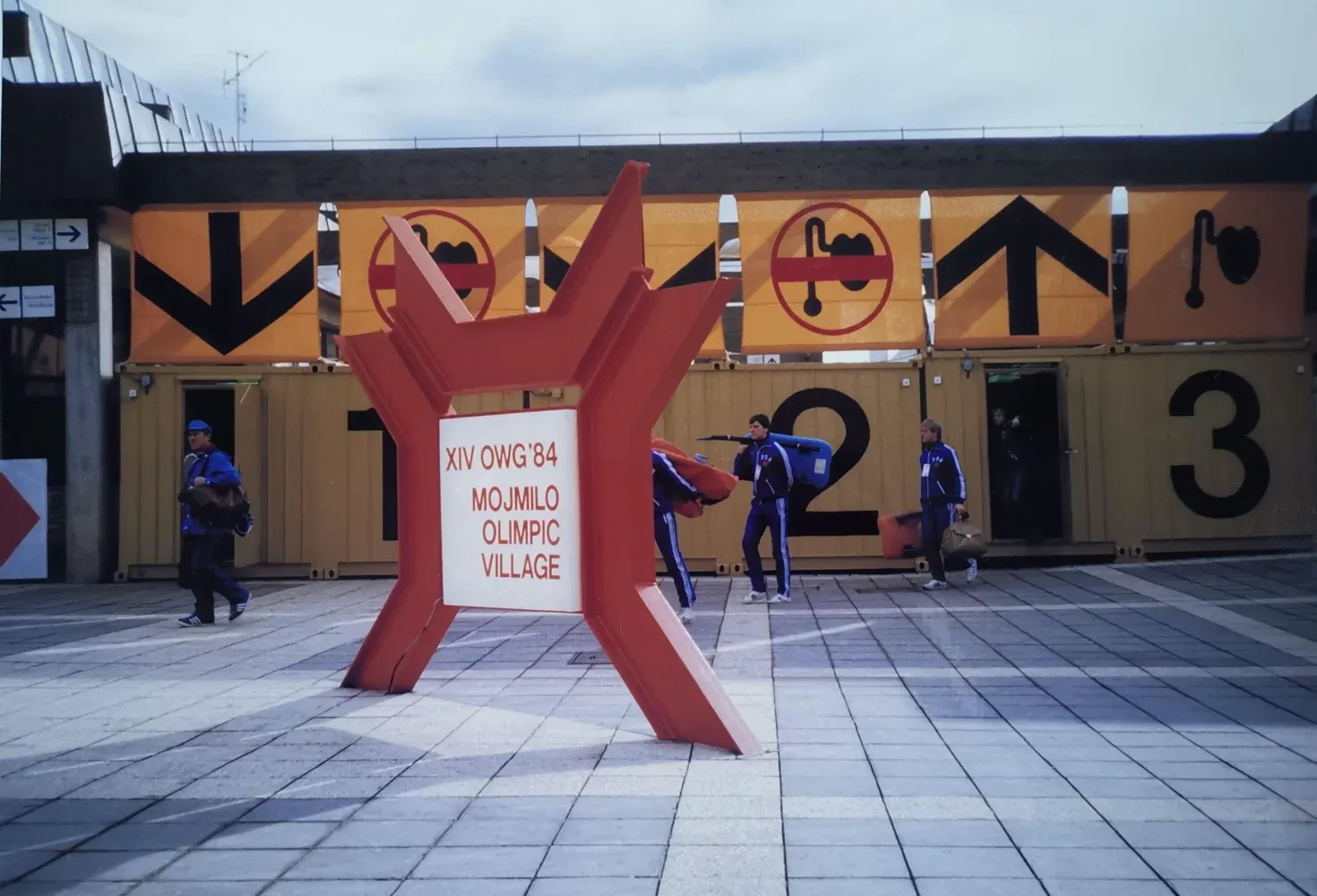
Mojmilo was designed to be entirely self-contained, divided into a Residential Zone and an International Zone. The Residential Zone housed the national delegations, while the International Zone was a hub for social exchange, open to athletes, journalists, and authorized visitors.
- Dining: An 800-seat self-service restaurant covering 3,600 m² served as the primary dining hall. The kitchen, managed in consultation with the American company ARA to handle mass provisions, was capable of producing 9,000 meals daily. Over the course of the Games, it is estimated that 100,000 meals were served here.
- Transport: A dedicated fleet of coaches, minibuses, and cars operated on strict schedules to ferry athletes to competition venues and training sites.
- Entertainment: The "Free Activity Home" was the center of Village social life. It featured a disco, a cinema, a concert hall, and even video games. Cultural programming included performances by Yugoslav pop and folk stars, with notable appearances by Josipa Lisac and Ibrica Jusić.
Concrete and Connectivity: The Design and Technical Profile
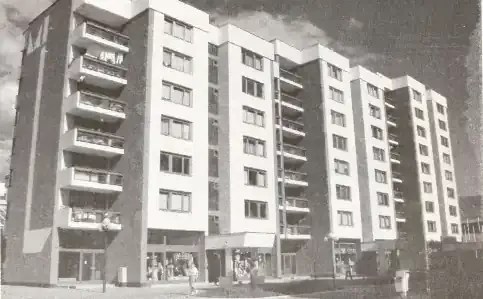
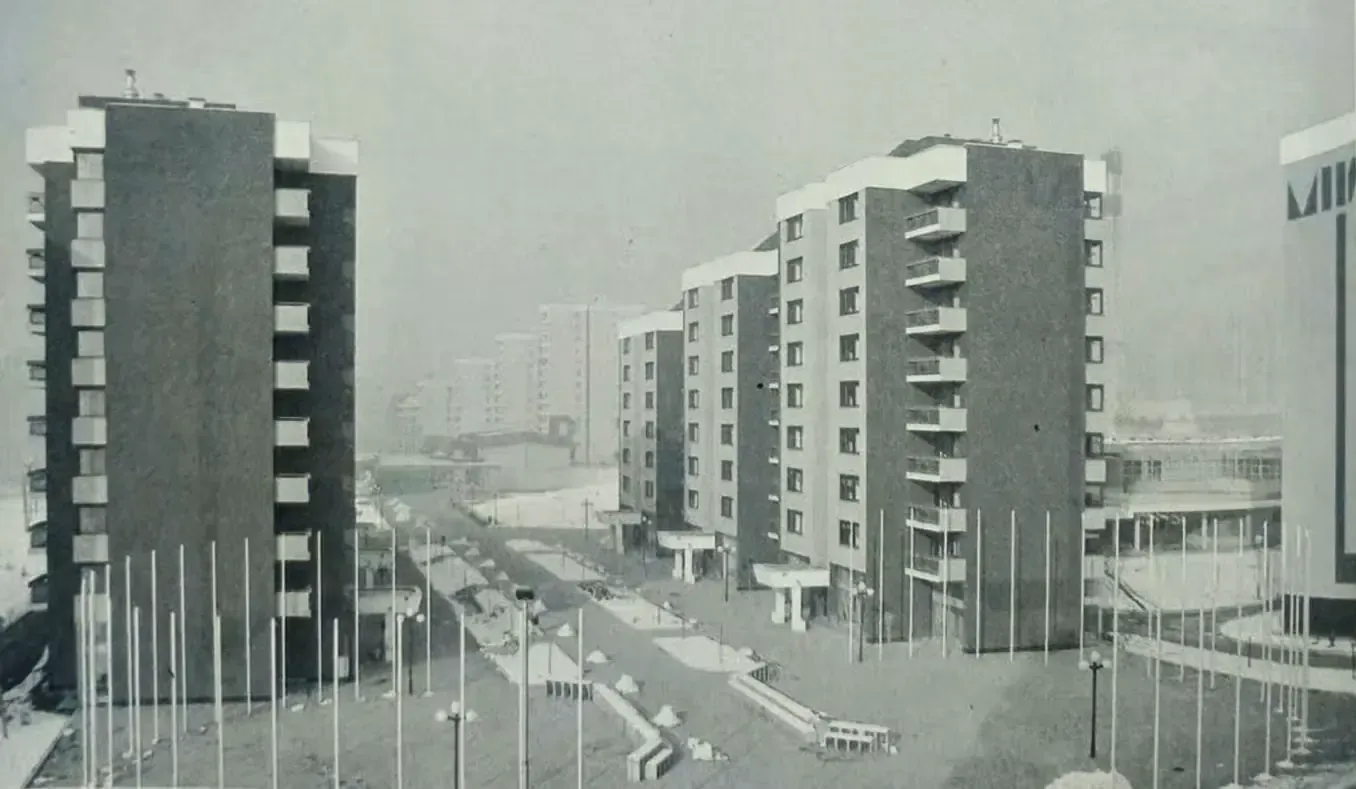
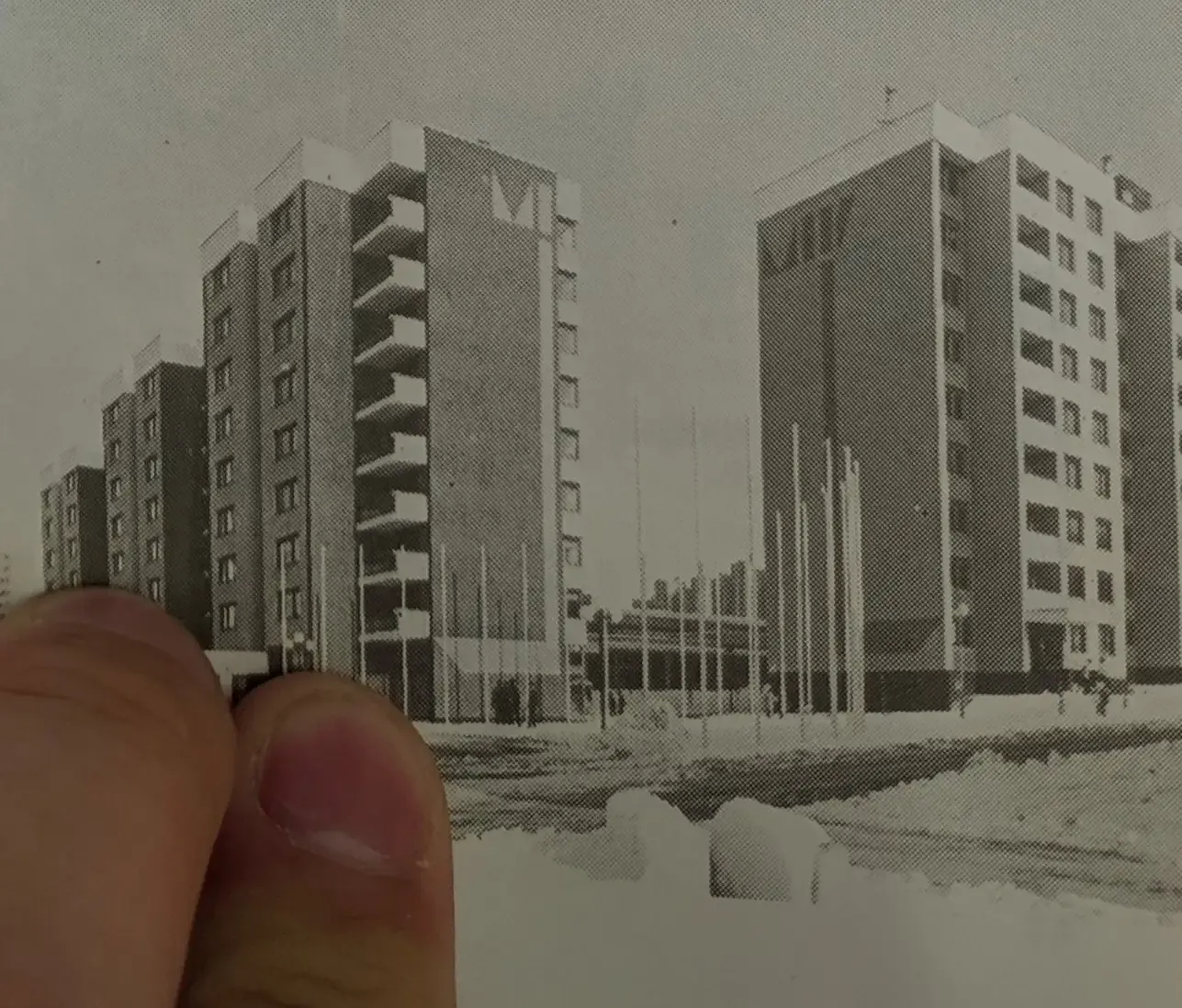
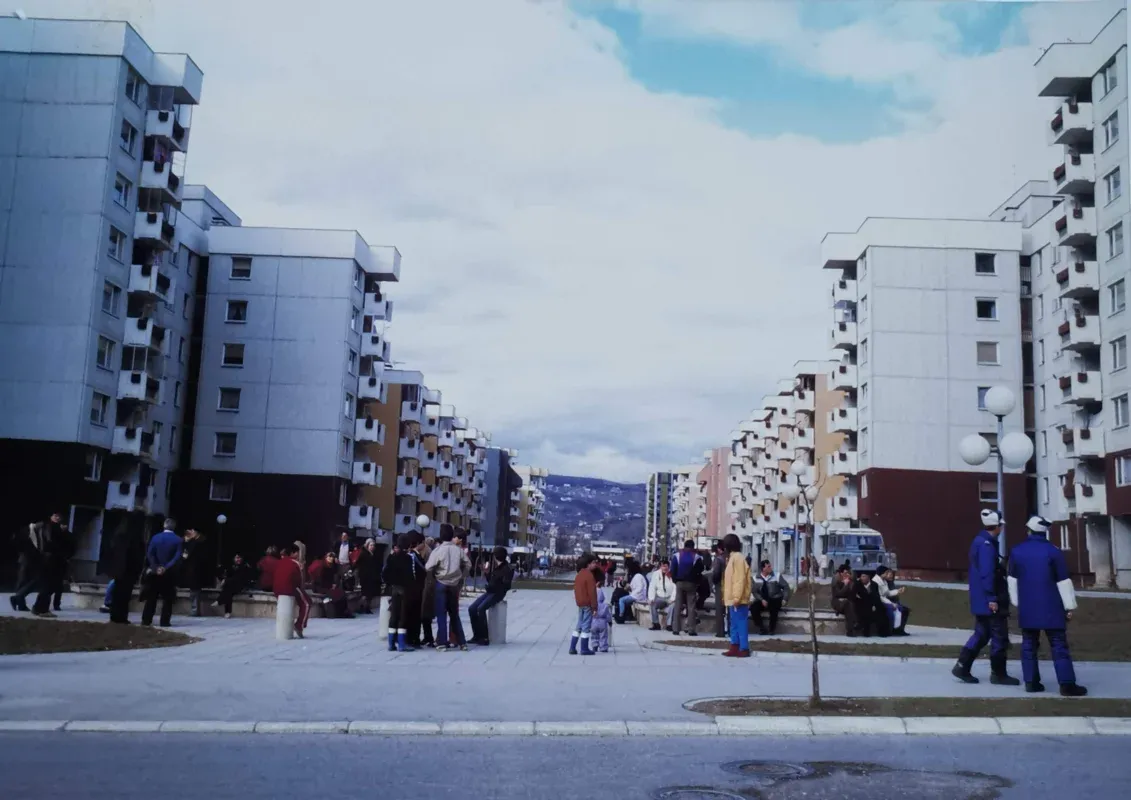
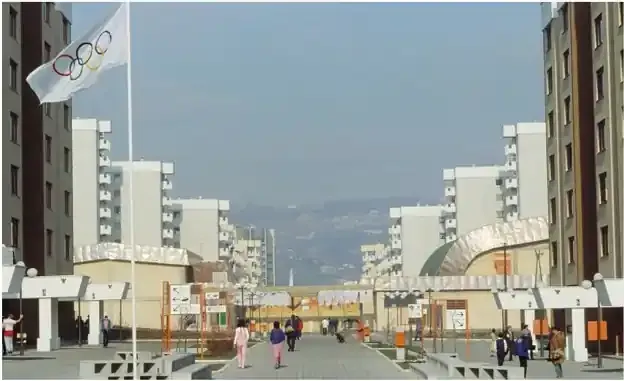
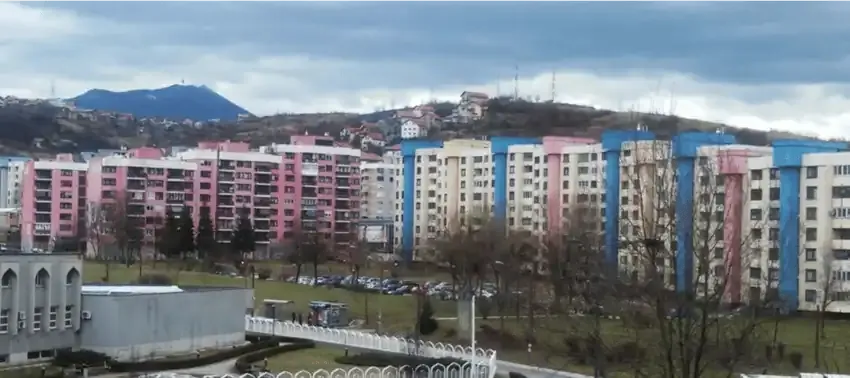
Architect Milan Medić engineered Mojmilo with an aesthetic of "efficient modernism." The layout consisted of long, connected rows of concrete housing towers radiating from a central plaza.
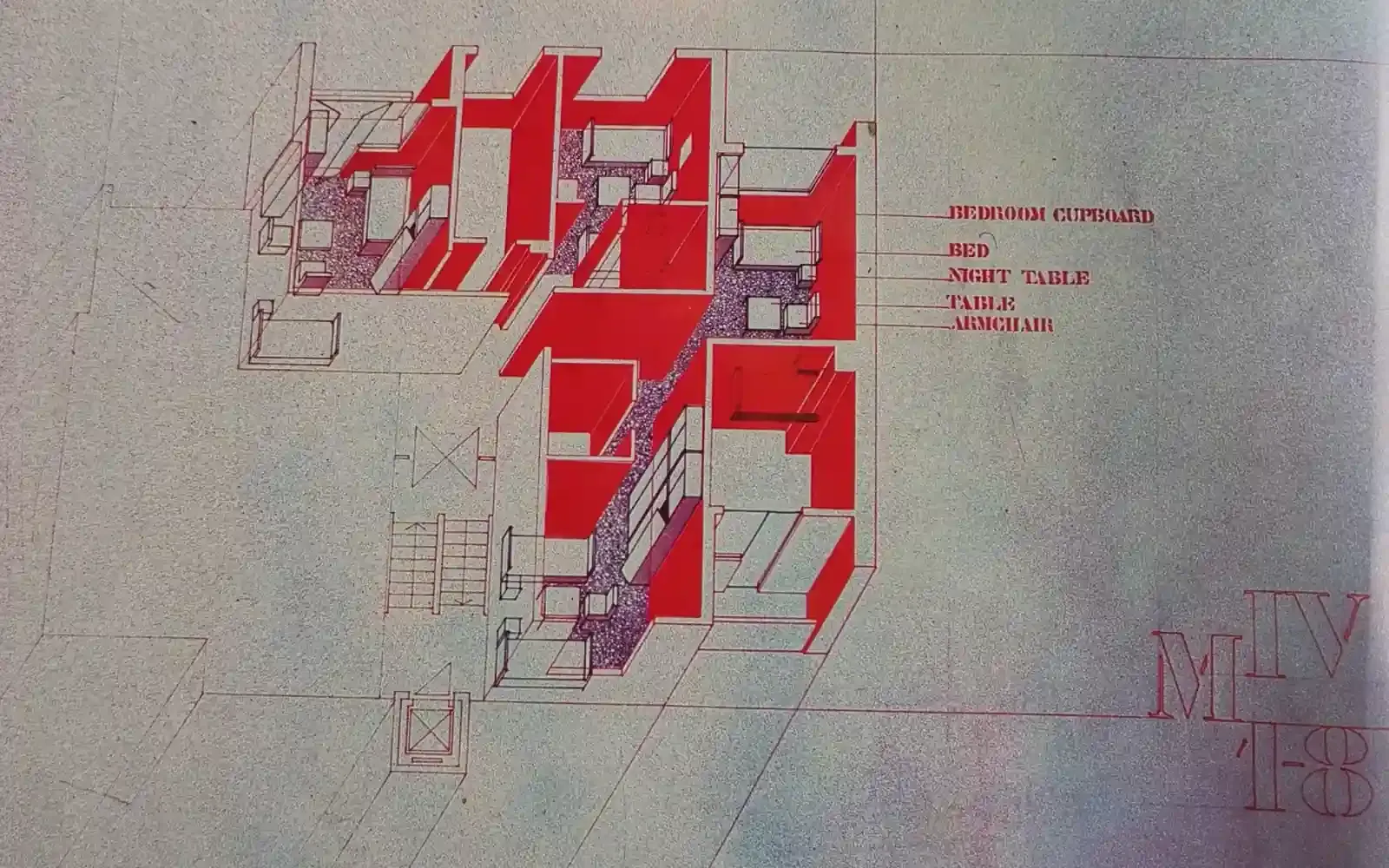
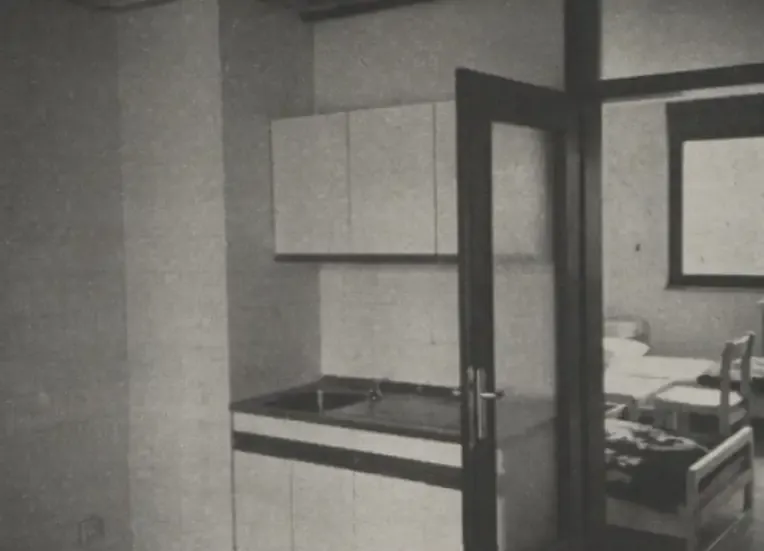
The village offered 639 apartments of varying sizes:
- 127 one-room apartments (2 athletes per unit)
- 387 two-room apartments (4 athletes per unit)
- 126 two-and-a-half-room apartments (5 athletes per unit)
The urban composition was centered on the "Youth Forum," a multipurpose square that acted as a pedestrian extension of the neighboring Alipašino polje district. This design emphasized "unity in diversity," creating a space that encouraged social participation through a network of streets and squares rather than isolated towers.
Beyond the Arena: Medical Care and Athletic Training
Mojmilo was equipped with professional-grade sports and health infrastructure to ensure the world-class performance of its residents.
- Training: A 1,750 m² Sports Hall was located within the village for indoor training and "small sports." Additionally, athletes had access to 10 other sports halls in the vicinity of the village, operating from 07:30 to 21:00.
- Recovery: The complex included two saunas and a dedicated physiotherapy service. Basements in the residential buildings provided 3,000 m² of space for equipment storage and workshops specifically for ski maintenance.
- Health: A specialized polyclinic in Row M IV provided 24-hour care. During the Games, approximately 250 healthcare workers were on duty daily across the various Olympic points. While most visits were for minor colds or contusions, the village clinic was equipped for surgical and internal medicine diagnostics.
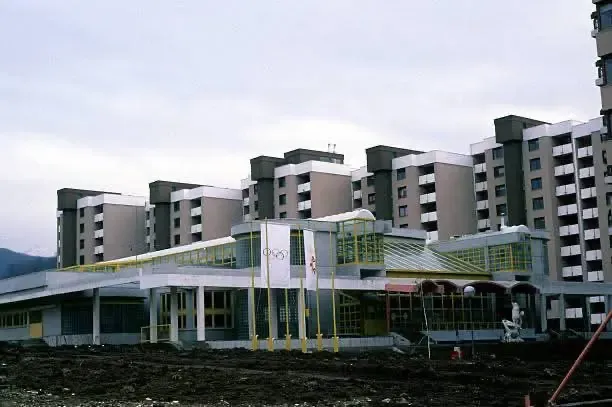
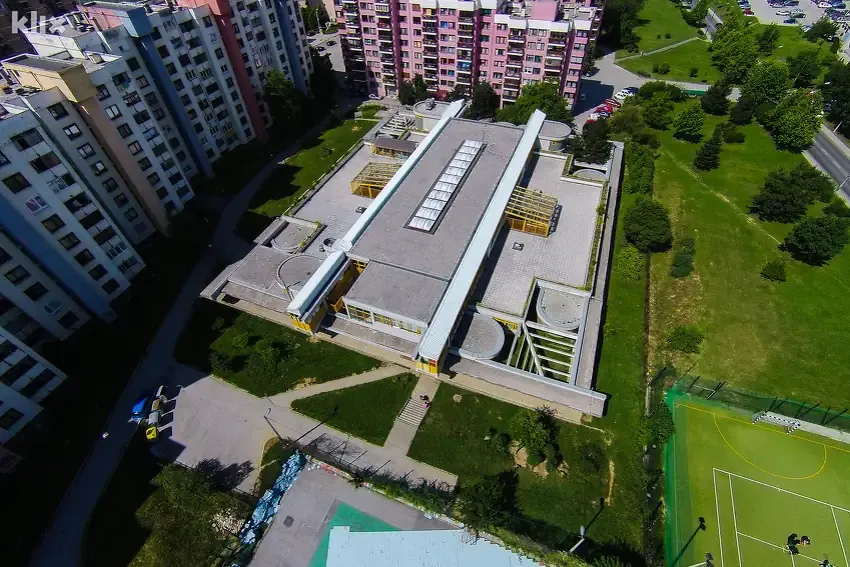
The Gift of Housing: The Immediate Post-Games Handover
Mojmilo was never intended to be a temporary settlement. In cooperation with the city of Sarajevo, the Organising Committee planned for the village to transition into a permanent residential district immediately following the Games. This dual-functionality was a core tenet of the project's "long-term added value."
The conversion of the site was meticulously pre-planned:
- The 800-seat Olympic restaurant was slated to become a local grocery store.
- The accreditation room was redesigned to be repurposed as a cinema for the neighborhood.
- The leisure center, once home to the village disco and theatre, was designated to become a children’s crèche and nursery.
This handover provided a significant boost to Sarajevo’s housing stock, offering modern, functional apartments to a growing population. For several years, Mojmilo flourished as a vibrant suburb, symbolizing the city's successful modernization and the enduring legacy of the "12 days of glory."
From Frontline to Rebirth: The War Impact and the Barcelona Partnership
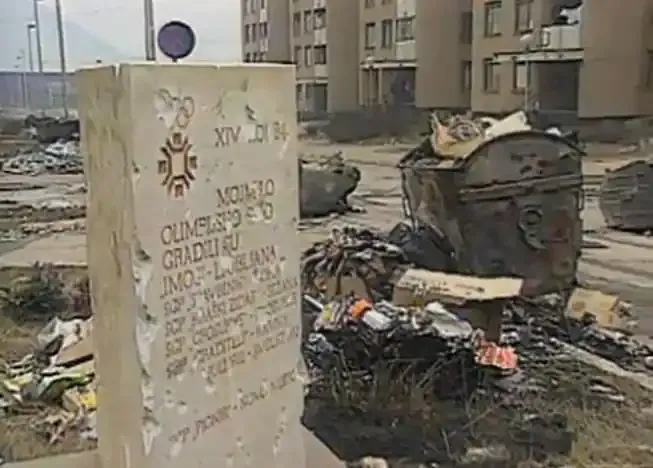
The spirit of unity that defined Mojmilo in 1984 was violently interrupted in the early 1990s. During the Siege of Sarajevo (1992–1996), the village’s location near the hills and the airport placed it on the frontlines of the conflict. The neighborhood suffered severe artillery shelling and sniper fire from VRS forces positioned on adjacent hills.
The physical destruction was immense:
- The Sports Hall was burned and destroyed.
- Large sections of the residential rows were reduced to ruins or heavily damaged.
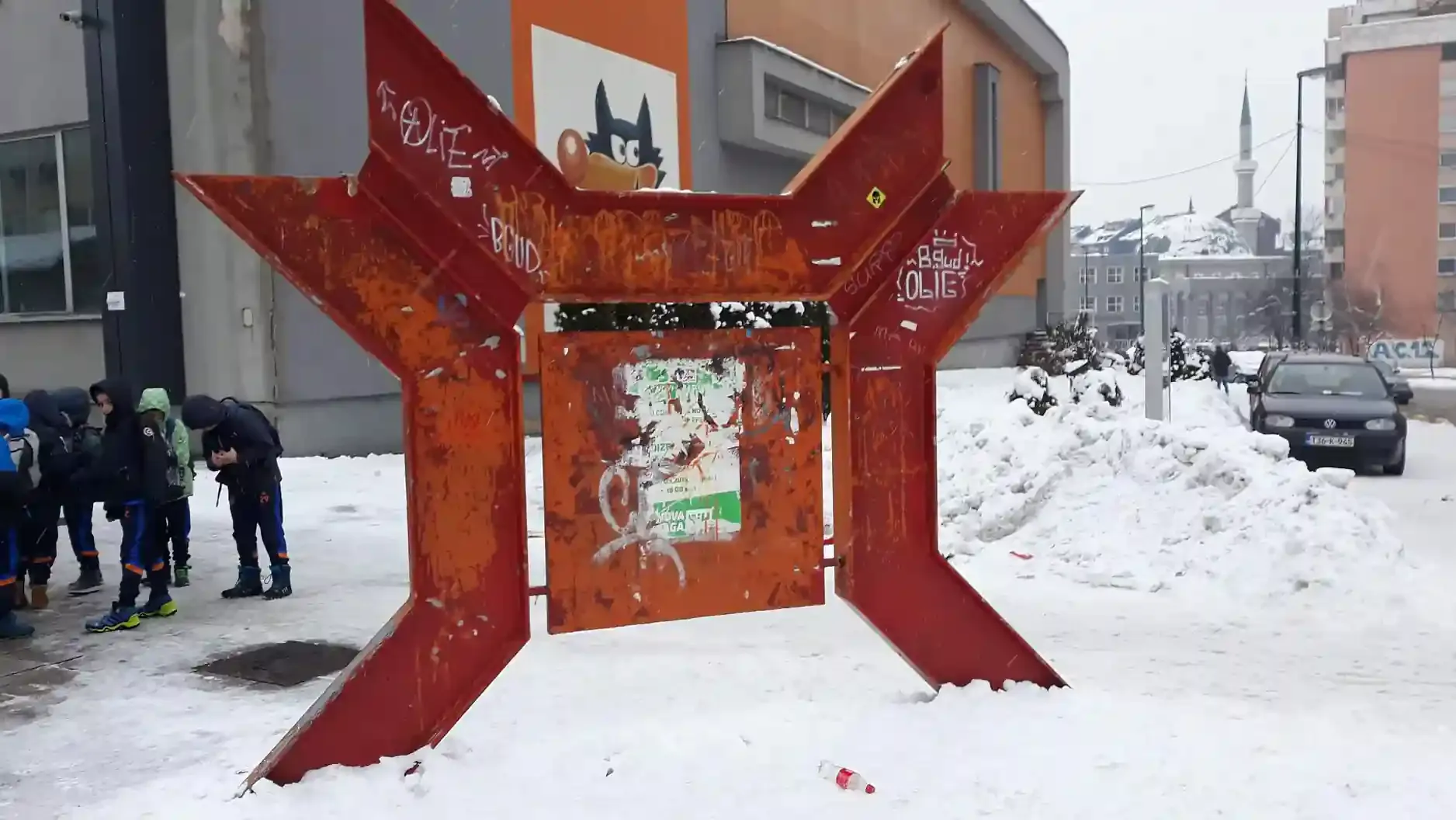
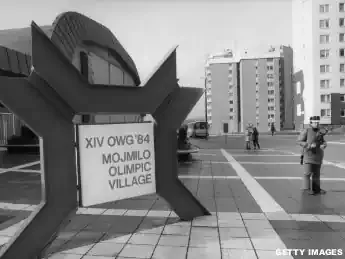
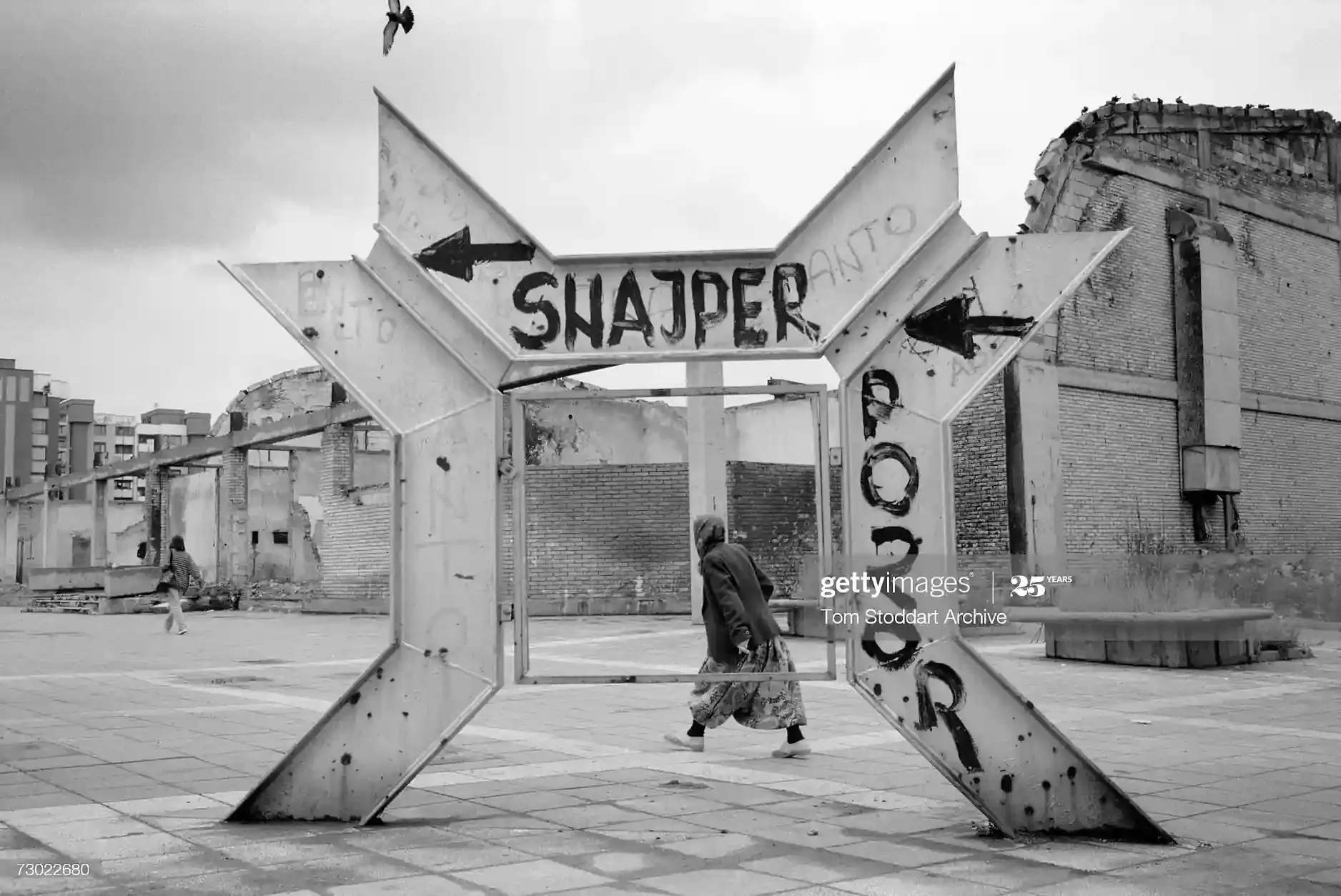
- The iconic Olympic welcome sign was famously painted with the warning "Snajper pozor" (Beware of the Sniper), with an arrow pointing toward the hills.
Frontline marker and wartime warning
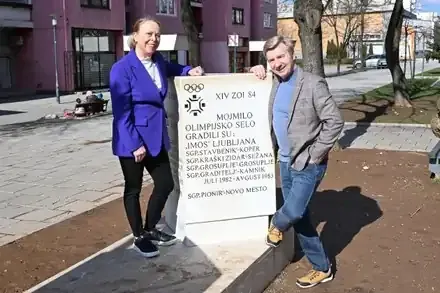
In 1996, a powerful act of international solidarity began. The city of Barcelona, which had hosted the Summer Olympics in 1992, took charge of the reconstruction of Mojmilo. This renovation phase, supported by the International Olympic Committee, lasted until 1999 and became a symbol of the "resistance and survival" of the city.
Barcelona Square: Mojmilo’s Status Today
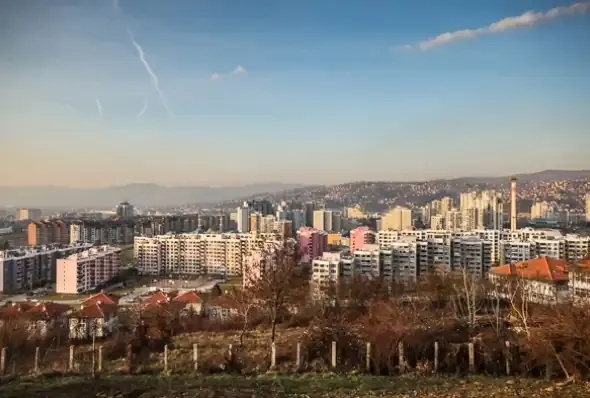
Today, Mojmilo has been fully reclaimed by the citizens of Sarajevo. While scars from the conflict can still be seen on some facades, the neighborhood has returned to its original purpose as a thriving residential area. The central plaza has been renamed "Barcelona Square" to honor the partnership that brought the village back to life.
The former Olympic Sports Hall was also rebuilt and renamed the "Ramiz Salčin Sports Hall." It remains a centerpiece of the community, hosting sporting events and local gatherings, much as it did in 1984. The village is now an integral part of the Novi Grad municipality, housing a portion of the neighborhood’s 40,000 residents.
How to Visit: Finding the Olympic Spirit in Mojmilo
For visitors seeking the legacy of the 1984 Games, Mojmilo offers a poignant and authentic experience. Unlike the glossy tourist centers of the city, this is a "living monument" where Olympic history meets everyday life.
- The Welcome Sign: In front of the Ramiz Salčin Sports Hall, the tattered remains of the original large metal Olympic logo still stand. It serves as a dual monument to the 1984 Olympics and the subsequent war.
- Barcelona Square: The central plaza remains the heart of the village and is easily accessible by public transport from the city center.
- Olympic Murals: Nearby in the connected Dobrinja district, murals of the mascot Vučko can still be found, part of local efforts to preserve the area's heritage.