
Press Village Dobrinja
Purpose-built as a "reporters’ city," Dobrinja served as the primary living environment for the international media corps during the XIV Winter Olympic Games. Situated on Sarajevo's western outskirts, this ambitious residential grid transitioned from a high-speed construction site to a vibrant logistical hub, housing thousands of journalists who broadcast Sarajevo’s "12 days of glory" to the world.
Fast Facts
- Architect: Milan Medić.
- Construction Timeline: July 1, 1982, to September 1, 1983.
- Capacity: 2,154 flats providing 8,500 beds.
- Total Accommodations: 98,000 night-stays registered during the Games.
- Dining Infrastructure: 12 restaurants with a total of 4,500 seats.
- Proximity: Located 2 km from Sarajevo International Airport and 9 km from the Skenderija Main Press Center.
- Units: Apartments ranged from efficiency units (2 beds) to four-bedroom flats (8 beds).
- Technical Facilities: Included a dedicated PTT (Post, Telegraph, and Telephone) center and a photo material shop.
- Transport Hub: Served as the terminus for six dedicated Olympic bus lines (E1–E6).
- Post-Olympic Population: Designed to eventually host a community of 60,000 residents.
Strategic Foundations: Dobrinja’s Role in the ’84 Media Plan
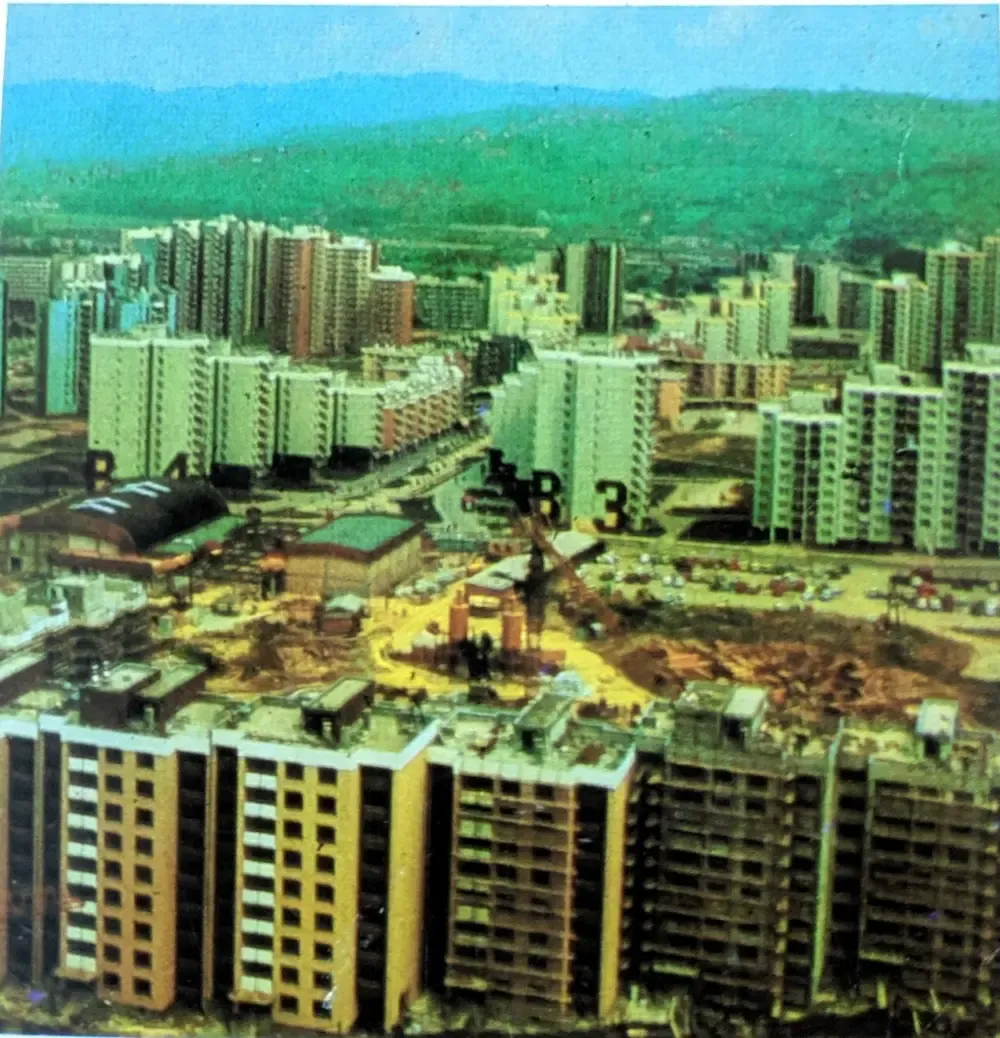
The construction of Press Village Dobrinja was a cornerstone of Sarajevo’s long-term urbanistic vision. Strategically located near the international airport, the project was part of a wider Olympic intervention intended to serve the city’s development well beyond 1984. While the Olympic Village at Mojmilo was designed for athletes, the Organizing Committee (OC) required a separate, massive "microregional unit" to handle the most heterogeneous operative group at the Games: the international press.
Architect Milan Medić designed Dobrinja as a settlement of high-rise towers and apartment blocks spread across 250 hectares. Unlike earlier 1970s projects like Grbavica, Dobrinja was characterized by a spacious grid system with ample green space at the center of each block. According to official planning documents, this "city within a city" was intended to improve the existing housing stock while providing the specialized services required by thousands of media representatives.
The Global Press Corps: Who Lived in the Village?
By February 1984, Dobrinja became a temporary home to over 5,000 members of the international press corps. On February 18, 1984, records showed 5,237 journalists residing in the village, of whom 3,728 were foreign representatives. This population included writers, photographers, and technicians from radio and television networks worldwide.
While the majority of the press stayed in Dobrinja, accommodation was flexible. Approximately 350 representatives of international TV networks, specifically ABC, were housed in hotels at Ilidža, though some were also stationed at Dobrinja. The village also provided housing for 2,050 technical organizers and collaborators, ensuring that those responsible for the Games' daily operations were positioned close to the media infrastructure.
Shuttles and Deadlines: Daily Operations and Transport
The daily rhythm of the village was dictated by competition schedules and filing deadlines. To move the press between the village and the various venues, the OC established a robust transportation network. Six primary bus lines, designated E1 through E6, connected Dobrinja to the city’s main hubs and the mountains.
- Line E1: Ran 24 hours a day, linking Dobrinja to Mojmilo, the International RTV Center, Skenderija, and Zetra.
- The Airport Connection: Specialized JAT bus services transferred passengers from the nearby airport to the village, with 19 drivers assigned specifically to the Dobrinja neighborhood.
A new trolleybus line was also completed to link the settlement directly with the city center. For journalists traveling to the mountains, the commute was significant: 22.1 km to the men’s alpine site at Bjelašnica and 34.1 km to the ski jumps at Igman. Despite these distances, the system was noted for its efficiency, operating at intervals of 10 to 30 minutes.
Technical Profile: A Modern Grid of Communications
Dobrinja was engineered to be a "functionalist" achievement, with its internal infrastructure prioritized over aesthetic flourish, a style described by author Jason Vuic as "bland yet functional". The technical profile was sophisticated for the era; for instance, rooms with more than two beds were provided with two external telephone lines to facilitate filing stories.
The village core included:
- A dedicated PTT Center: Providing teleprinters, facsimile machines, and telephoto equipment.
- Information Services: Each of the 18 "small hotels" (apartment rows) featured its own reception desk and an Olympic Information Service.
- Support Facilities: On-site services included banks, exchange offices, and specialized shops for photo materials and winter equipment.
Medical services were also localized, with a clinic established within the village to provide 24-hour care for the media residents. This concentration of services allowed journalists to work, eat, and sleep within a single, secure environment, minimizing the logistical friction of reporting on a multi-venue event.
February 1984: Moments and Memories from the Village
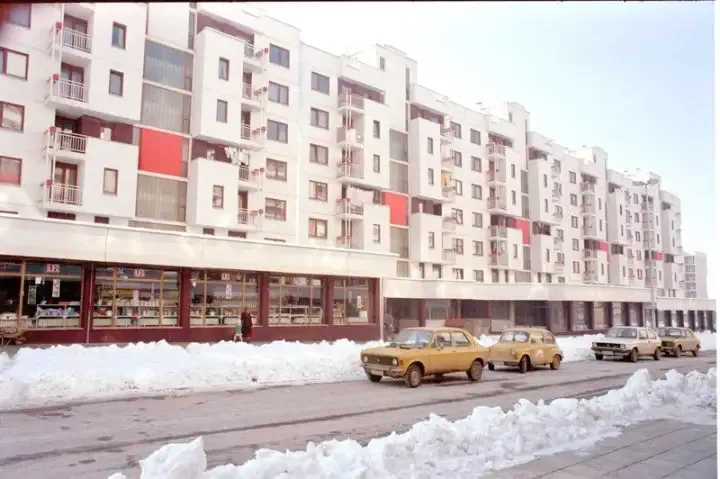
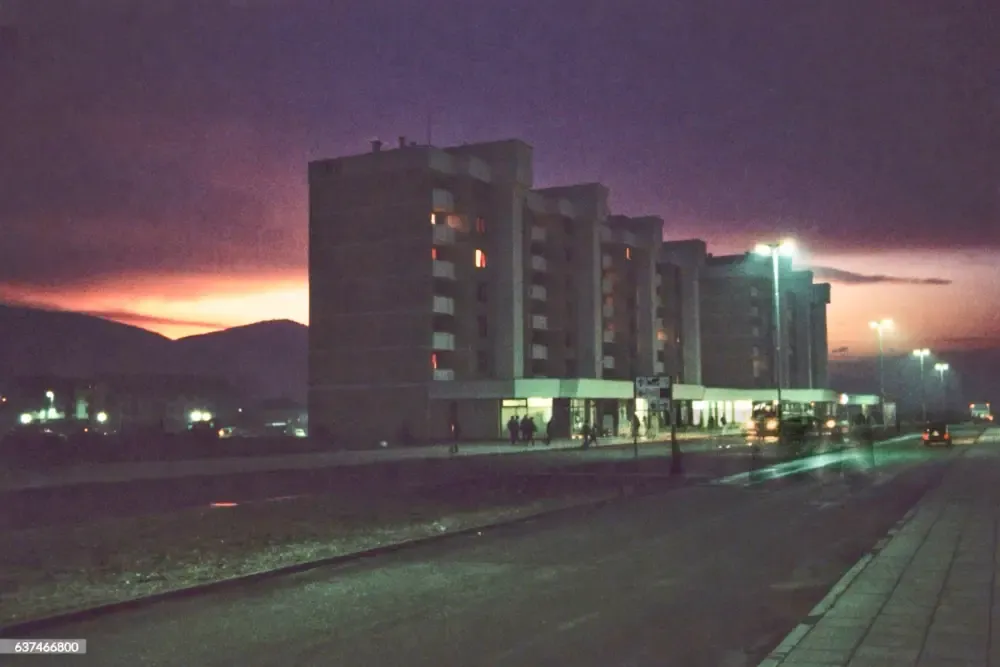
During the Games, the atmosphere in Dobrinja was defined by a mix of high-stakes journalism and local hospitality. Journalists from the era frequently expressed joy at the city’s efforts to be accommodating, noting the warmth and hospitality of the staff. Approximately 1,000 craftsmen and service workers were employed within the village to ensure daily operations remained seamless.
However, the experience was also marked by the "cramped" reality of high-density living. Some residents, like those from the Christian Science Monitor, remembered the cinder-block apartments as "dark and cramped," yet they were also the first to inhabit these brand-new units. Despite the functionalist aesthetic, the Organizing Committee curated a "youth forum" and organized nightly concerts featuring Yugoslav folk, rock, and pop stars to provide entertainment after the filing of stories.
The Post-Games Handover: Transition to Residential Life
As planned from the project's inception in 1982, Press Village Dobrinja was not a temporary settlement. Once the 98,000 night-accommodations were concluded, the village was handed over to the city of Sarajevo to address its growing population. The units were intended to become "upscale housing for Sarajevo's young urban professionals," and by the end of the 1980s, the neighborhood had grown into a thriving, ethnically-mixed community of approximately 40,000 residents.
The conversion was comprehensive:
- The accreditation hall was transformed into a cinema.
- The athletes' and press restaurants were converted into supermarkets and stores.
- The leisure centers became nurseries and crèches for the new families moving in.
Then and Now: From Olympic Hub to Frontline and Rebirth
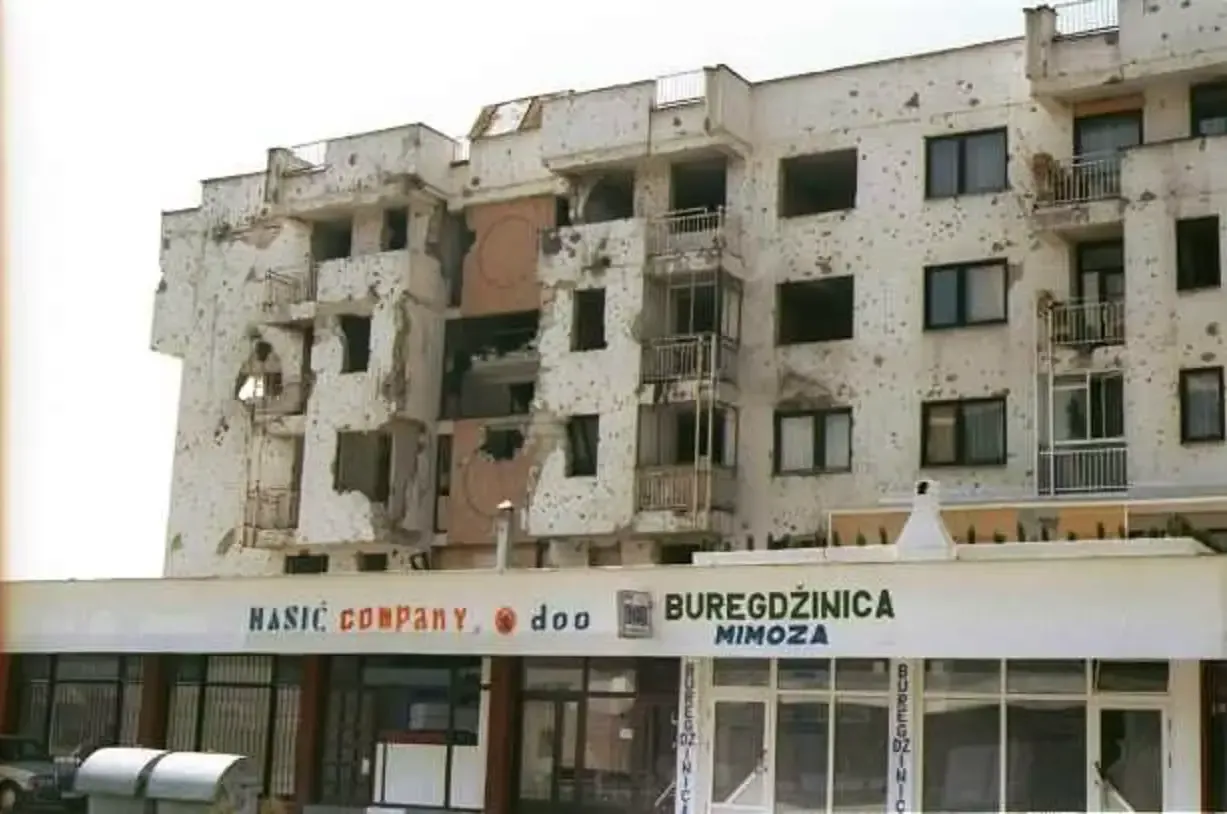
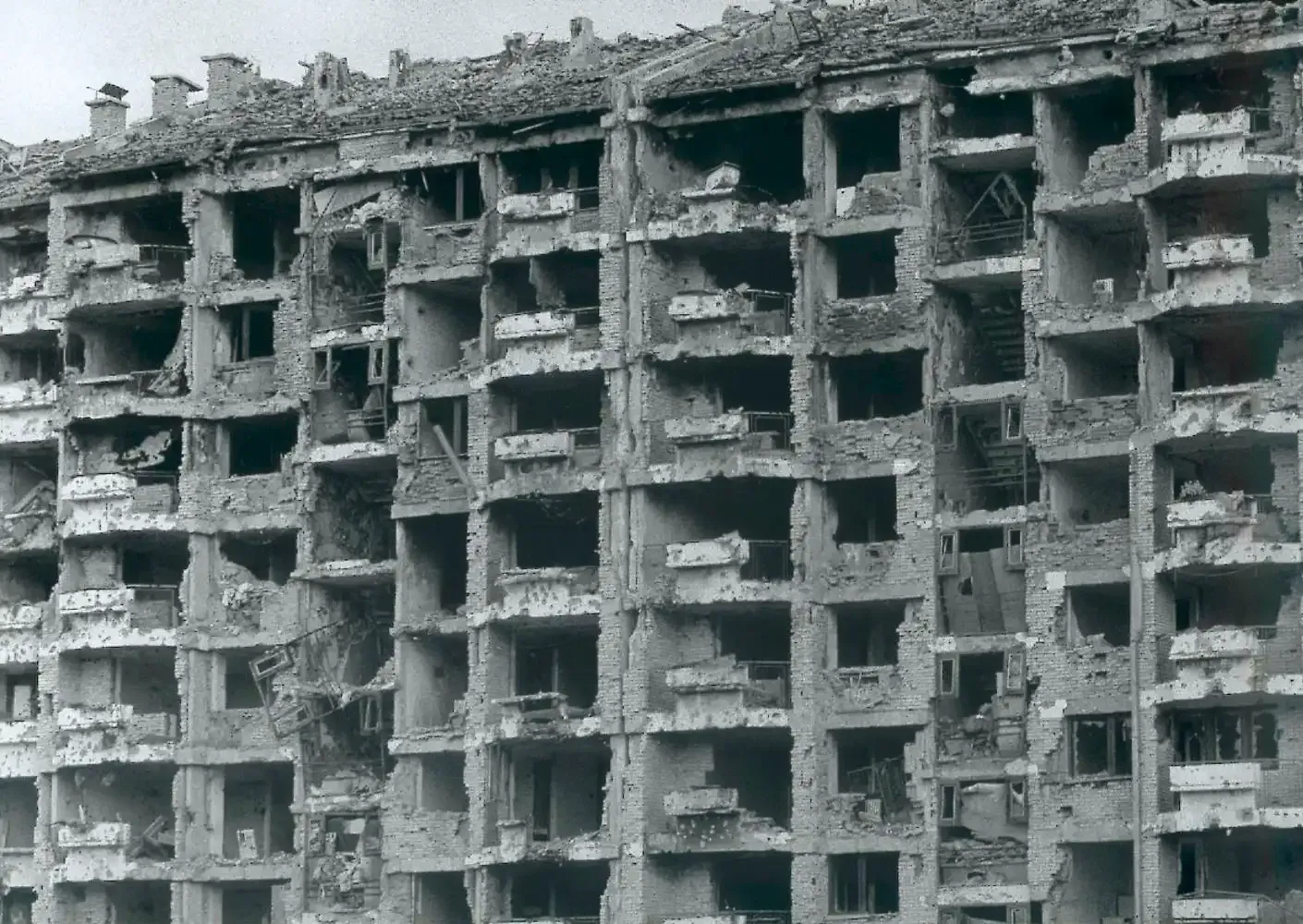
The "Olympic spirit" of Dobrinja faced its most severe test just eight years after the Games. During the Bosnian War (1992–1995), the neighborhood’s proximity to the airport made it a strategic frontline. It became a "siege within a siege," surrounded by VRS forces for over ten weeks in 1992.
The "yuppie suburb" Dan Rather reported from in 1984 was transformed into a combat zone where residents lived without water or electricity. Inhabitants famously survived by growing vegetables in knee-high plots between the apartment blocks, an area locals grimly dubbed "Death Alley". Today, the neighborhood is divided by the Inter-Entity Boundary Line, with the majority of the village in the Federation of Bosnia and Herzegovina and the eastern sections (Dobrinja IV) in the Republika Srpska.
Dobrinja Today: Current Status and Visiting the Heritage
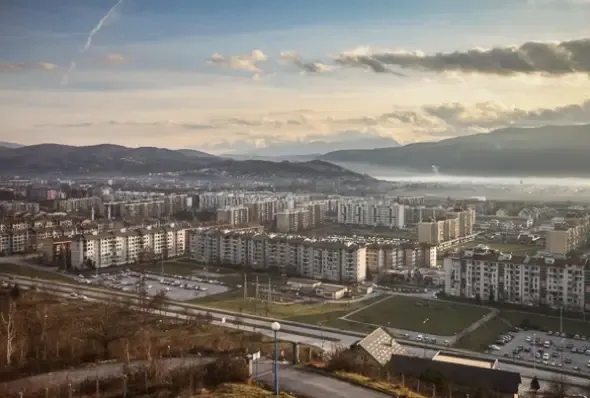
Despite the heavy scarring from the 1990s, Dobrinja has been largely rebuilt and is once again a vibrant, beautiful neighborhood. The geometric and "playful" architecture designed by Milan Medić remains a visible landmark of the city's western expansion.
For visitors looking to trace the Olympic legacy:
- Vučko Mural: In 2014, the municipality restored a large mural of the Olympic mascot, Vučko, to commemorate the area's heritage.
- Architecture Walk: The grid system and unique facades of the 1983 construction can still be explored, with lingering war scars still visible on the upper floors of some buildings as a testament to their history.
- Olympic Infrastructure: While many mountain facilities like the Bjelašnica Press Center were destroyed, the residential blocks of Dobrinja remain one of the most significant "living" legacies of the 1984 Games.