
Koševo Stadium
Koševo Stadium stood as the symbolic heart of the XIV Olympic Winter Games, serving as the grand stage for the Opening Ceremony on 8 February 1984. A historic "natural" arena renovated for the modern era, it welcomed the world to Sarajevo with a display of unity and spectacular pageantry.
Fast Facts
- Location: Koševo neighborhood, Sarajevo
- Role in ’84: Opening Ceremony venue; Olympic Flame site
- Capacity: 35,000 (current); approx. 50,000 during 1984 Olympics
- Original Construction: 1947 (Vaso Todorović & Anatolij Kirjakov)
- Renovation Architects: 1980-1981 (Lidumil Alikalfić & Dušan Đapa)
- Status Today: Active; home to FK Sarajevo and the Bosnia and Herzegovina national team
- Official Name Today: Asim Ferhatović-Hase Stadium
Koševo’s Role in the 1984 Games
Koševo Stadium was selected as the centerpiece of Sarajevo’s "compact Games" plan, providing a massive outdoor venue situated within the city's administrative limits. It was the anchor of the Zetra Sports Complex, a northern axis of Olympic activity that also included the Zetra Olympic Hall and the speed skating track.
The stadium’s history predates the Olympics by decades. Originally conceived in 1947, it was designed by Vaso Todorović and Anatolij Kirjakov as a "natural" stadium, engineered to fit seamlessly into the hilly, amphitheater-like landscape of the Koševo neighborhood. Local citizens provided much of the voluntary labor for its original construction, which took place on the site of a former man-made lake.
To meet the rigorous standards of the International Olympic Committee (IOC) for 1984, the venue underwent a massive reconstruction between February 1981 and August 1981. Overseen by architects Lidumil Alikalfić and Dušan Đapa, the renovation modernized the "natural" bowl, adding essential infrastructure while expanding its capacity to accommodate the tens of thousands of spectators expected for the Games' official start.
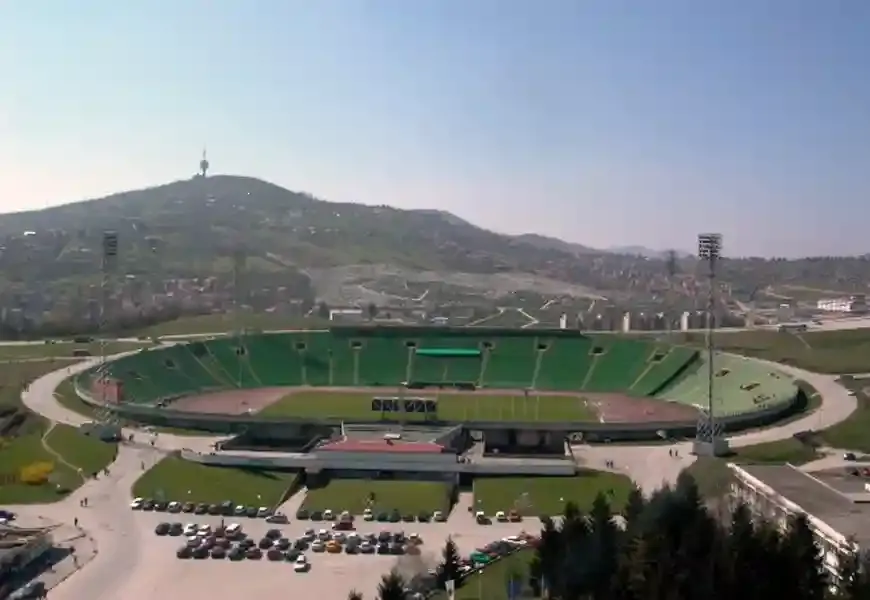
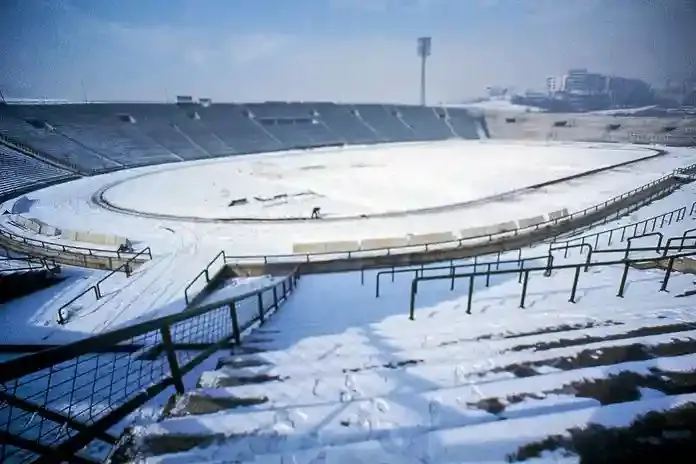
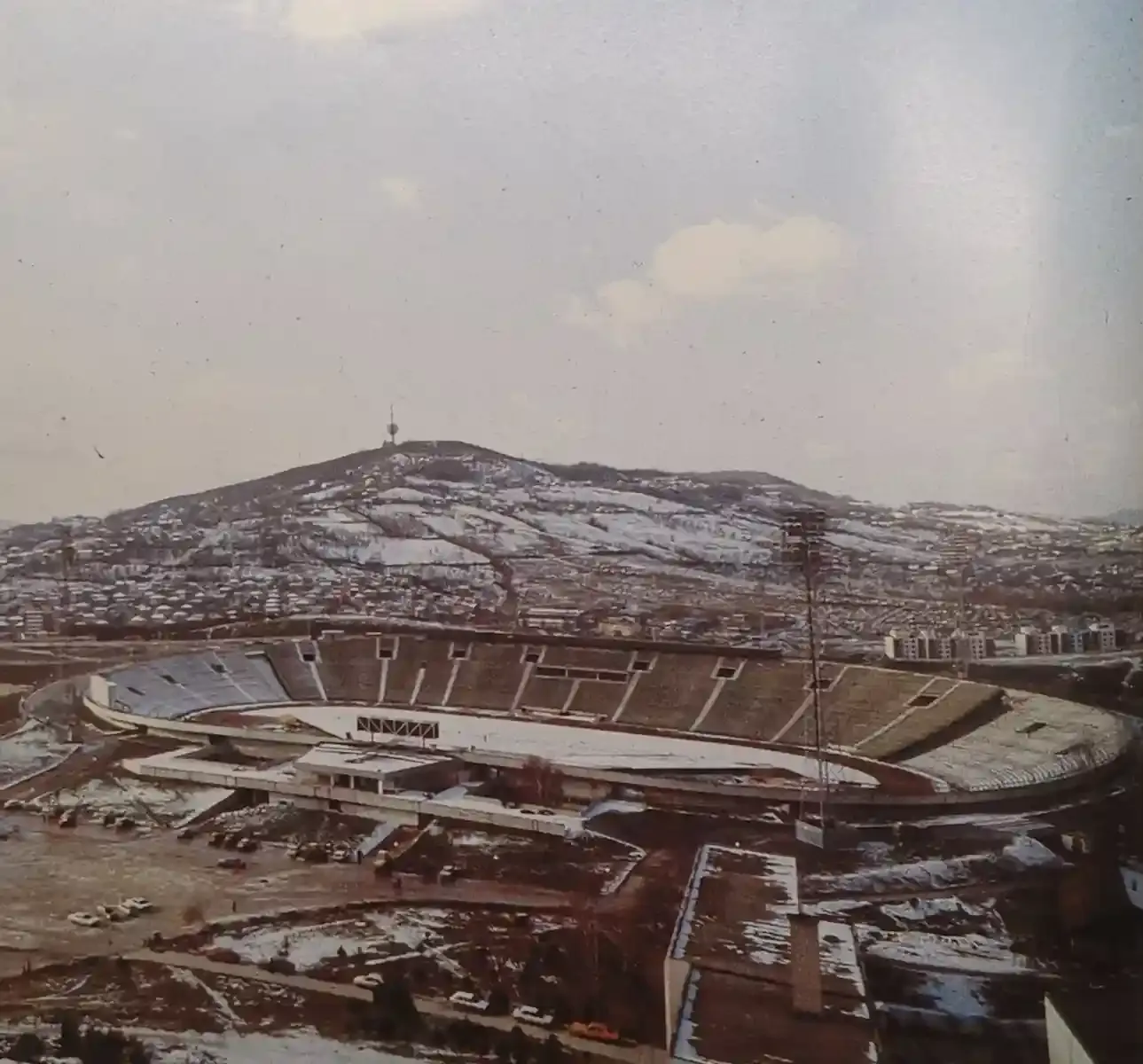
Stadium form and urban setting
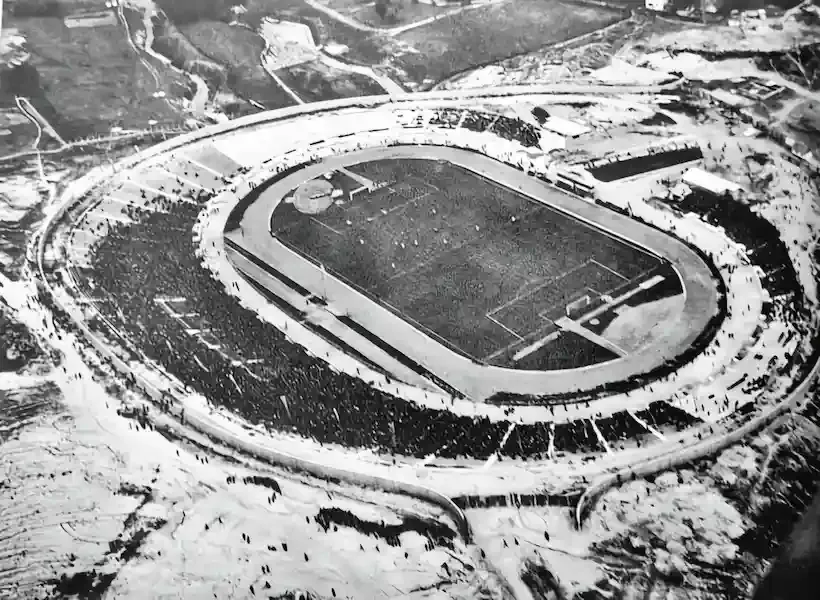
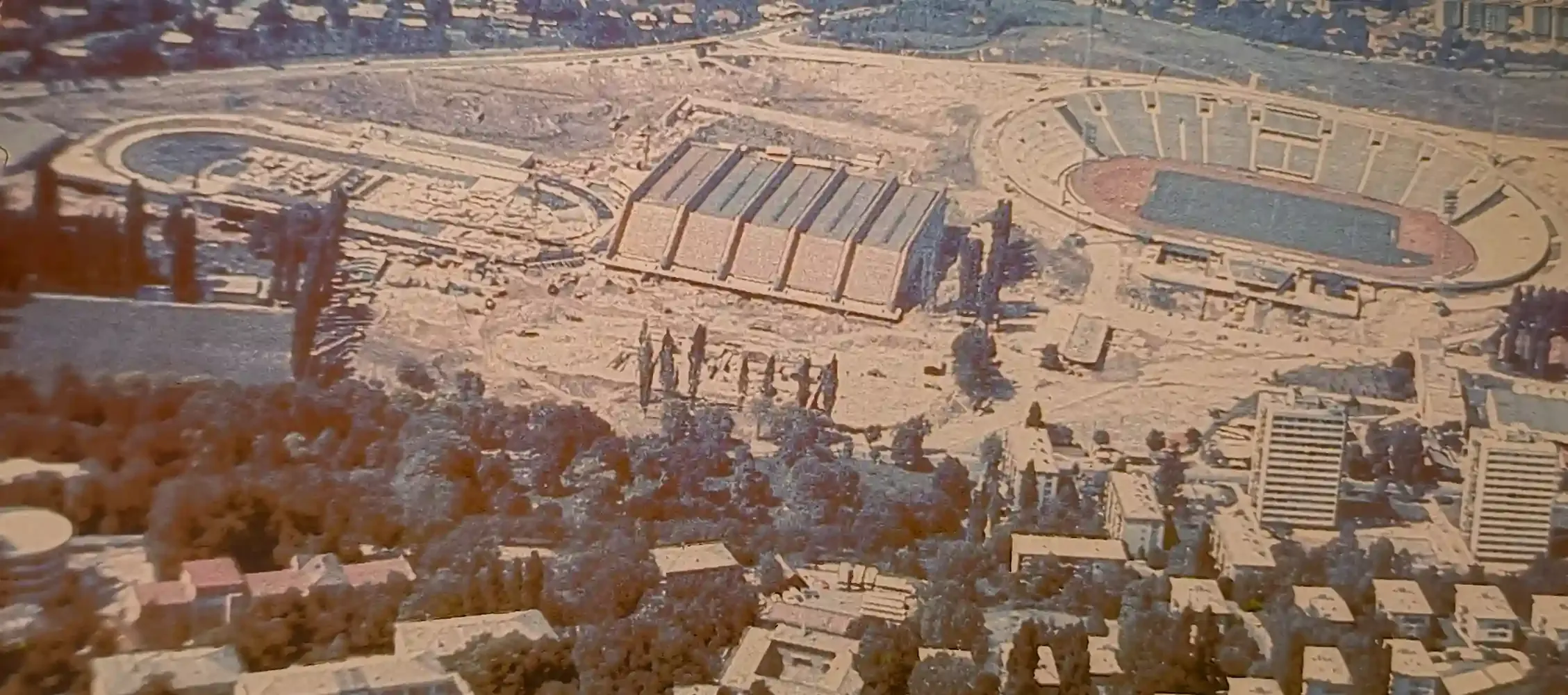
A black-and-white aerial view shows Koševo as a natural bowl embedded in the city fabric before Olympic upgrades.
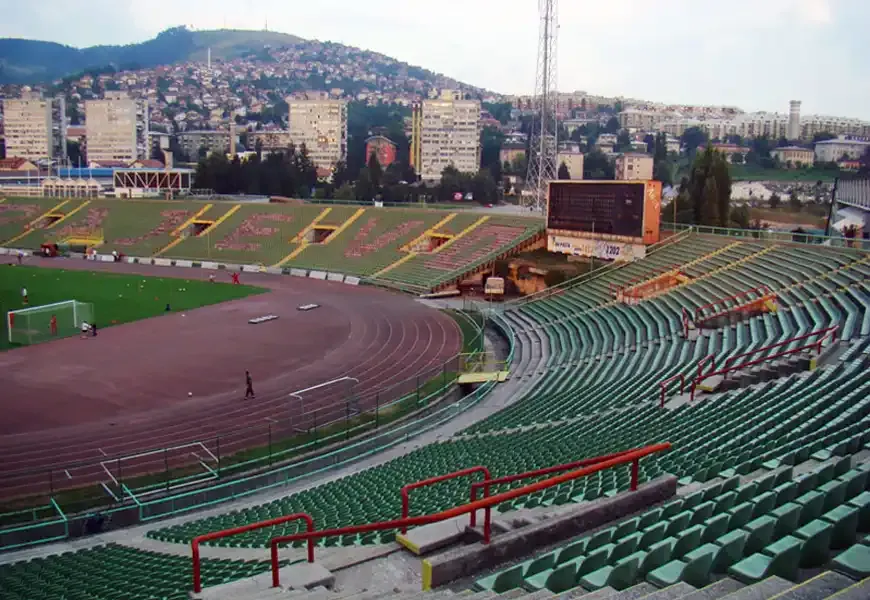
This post-renovation view presents the completed stadium bowl with modernized seating and athletics track.
A winter pre-Games shot captures the stadium under snow with the Olympic season approaching.
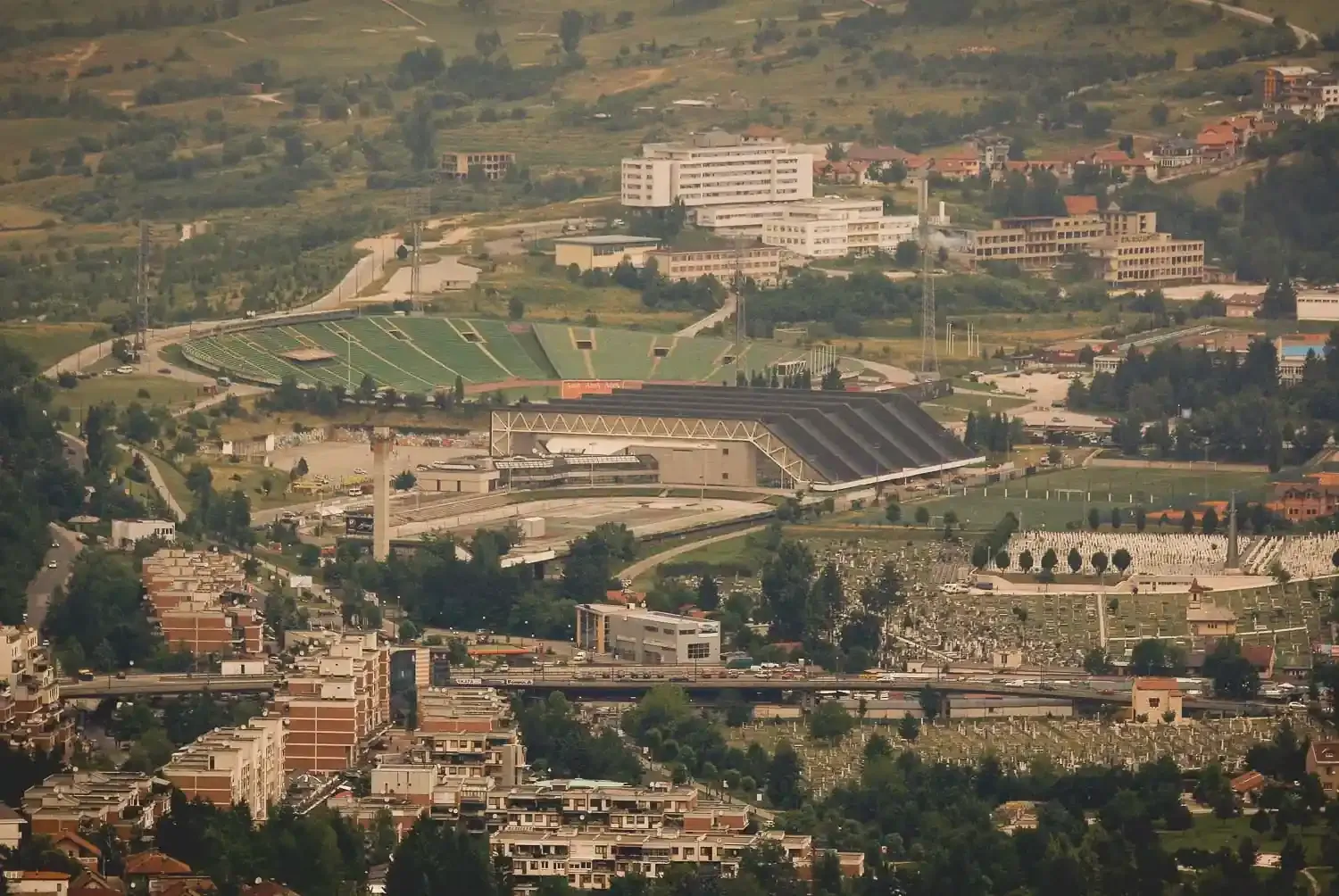
An elevated angle frames the stadium against the Koševo hillside and surrounding urban blocks.
This aerial image links Koševo to the neighboring Zetra complex during the final Olympic preparation phase.
A later interior panorama shows the retained oval form and track layout in everyday use.
A modern aerial perspective situates Koševo within the wider northern sports axis of Sarajevo.
Reconstruction works before Sarajevo '84
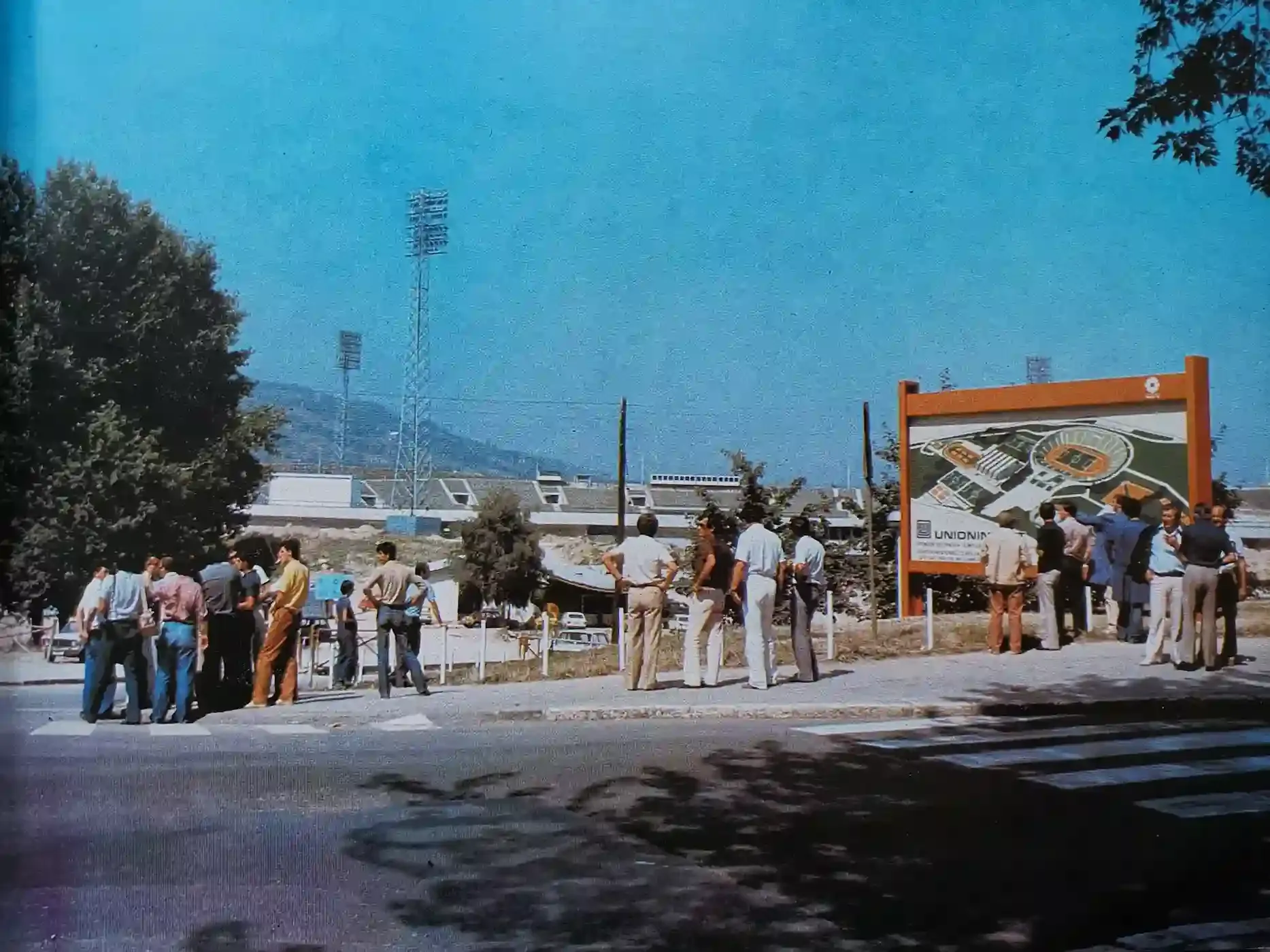
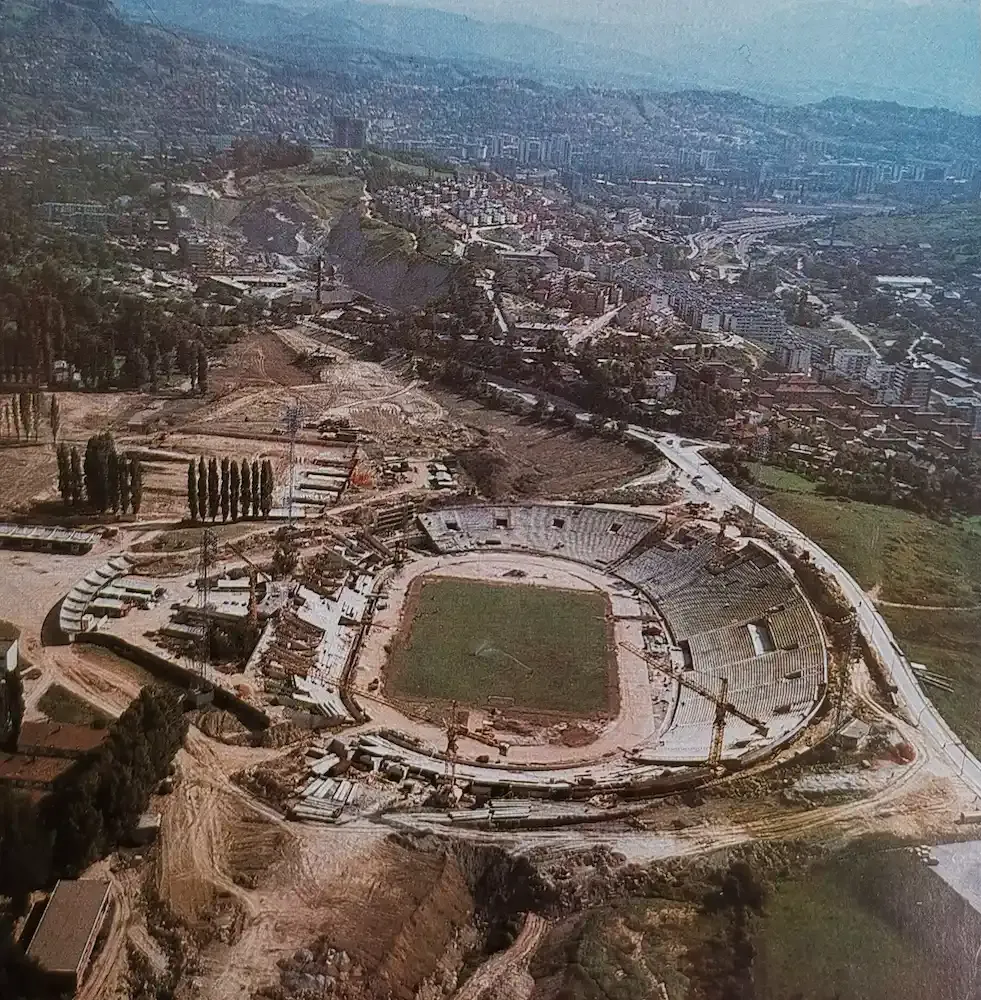
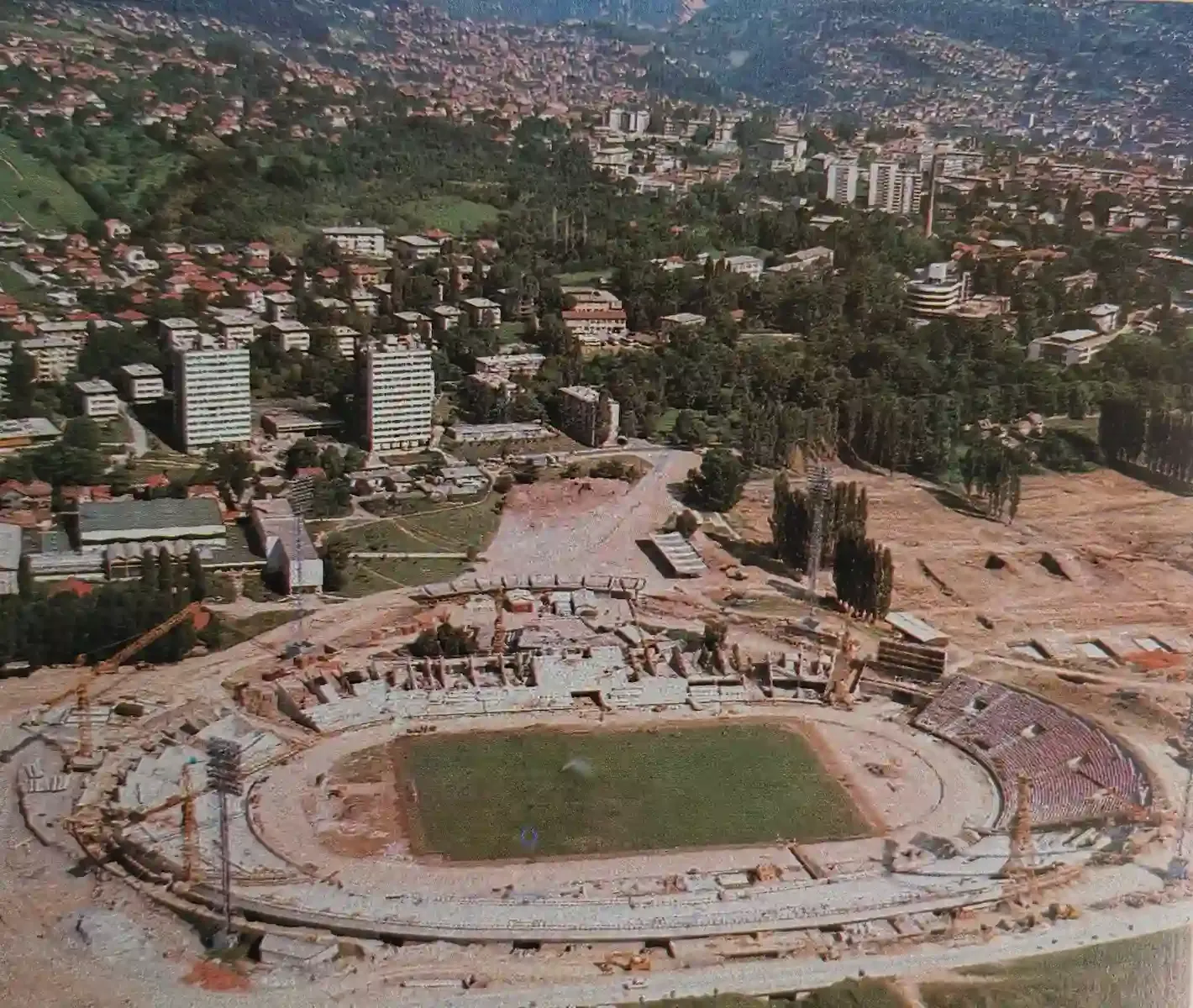
Site preparation and staging areas are visible during the large-scale works that rebuilt the stadium.
This street-level scene documents public-facing Olympic site planning and access works around Koševo.
An aerial construction phase shows the bowl, track, and service zones mid-transformation.
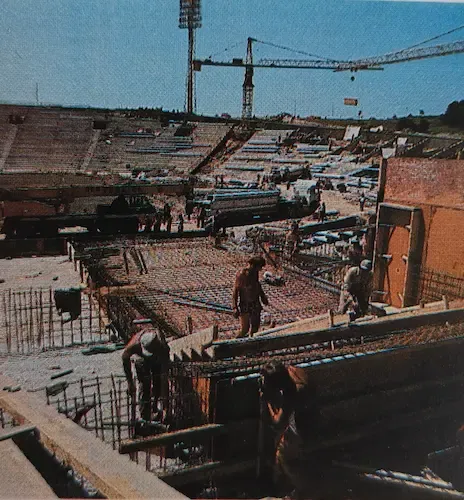
Workers and cranes on the terraces illustrate the intense pace of structural upgrades before 1984.
The 1984 Opening Ceremony: A Global Spectacle
On 8 February 1984, at 14:30 local time, Koševo Stadium hosted the official commencement of the XIV Winter Olympic Games. The ceremony served as a double celebration, marking the 60th anniversary of the first Winter Olympics in Chamonix. The program was designed to showcase the "Yugoslav folk mosaic" through a massive music-choreographic display featuring 3,500 young performers, 1,200 of whom were dancers whose movements symbolized the aspirations of world youth for peace and friendship.
The traditional parade of participants saw 1,437 competitors from 49 National Olympic Committees enter the arena, a record for the Winter Games at that time. Following the entry of the delegations, the Games were officially declared open by Mika Špiljak, the President of the Presidency of the Socialist Federal Republic of Yugoslavia. The Olympic Flag was hoisted to the sound of a cannon salvo and the Olympic Anthem, carried by Yugoslav athletes Boris Strel and Boris Vujadinović.
The ceremony reached its emotional peak with the arrival of the Olympic Flame. After traveling through Yugoslavia, the torch was carried into the stadium by Yugoslav figure skating champion Sanda Dubravčić. Cheered on by a capacity crowd, she completed a lap of honor before ascending a specially constructed, architecturally brilliant pyramid-like platform to light the Olympic cauldron. This flame remained burning at Koševo for the duration of the twelve-day event, visible as a symbol of the Games' continuity.
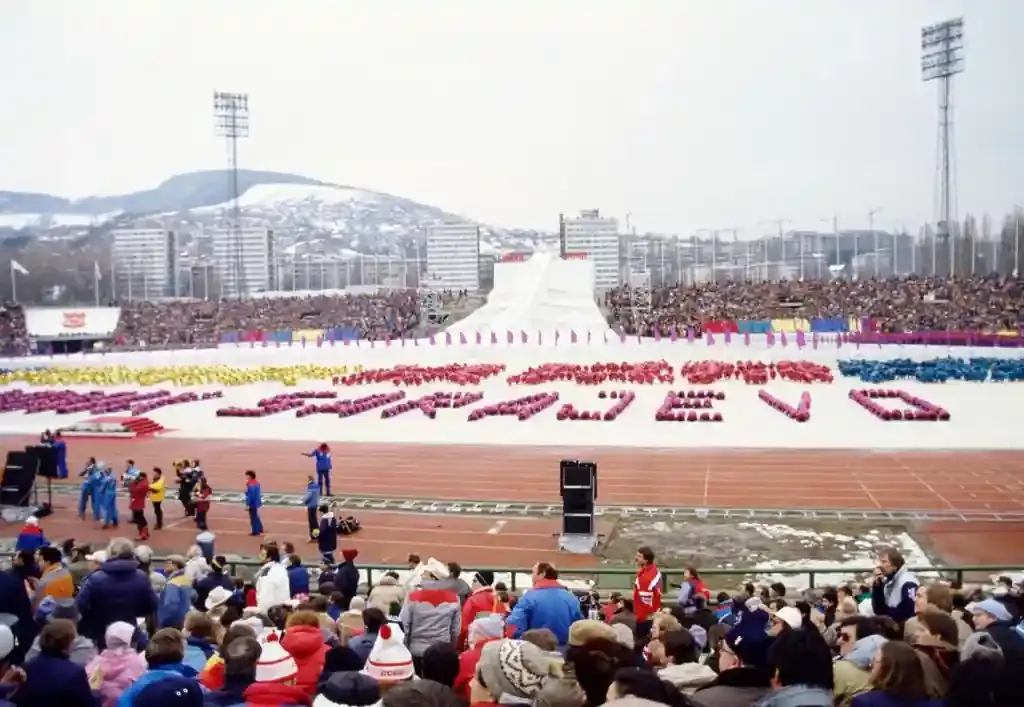
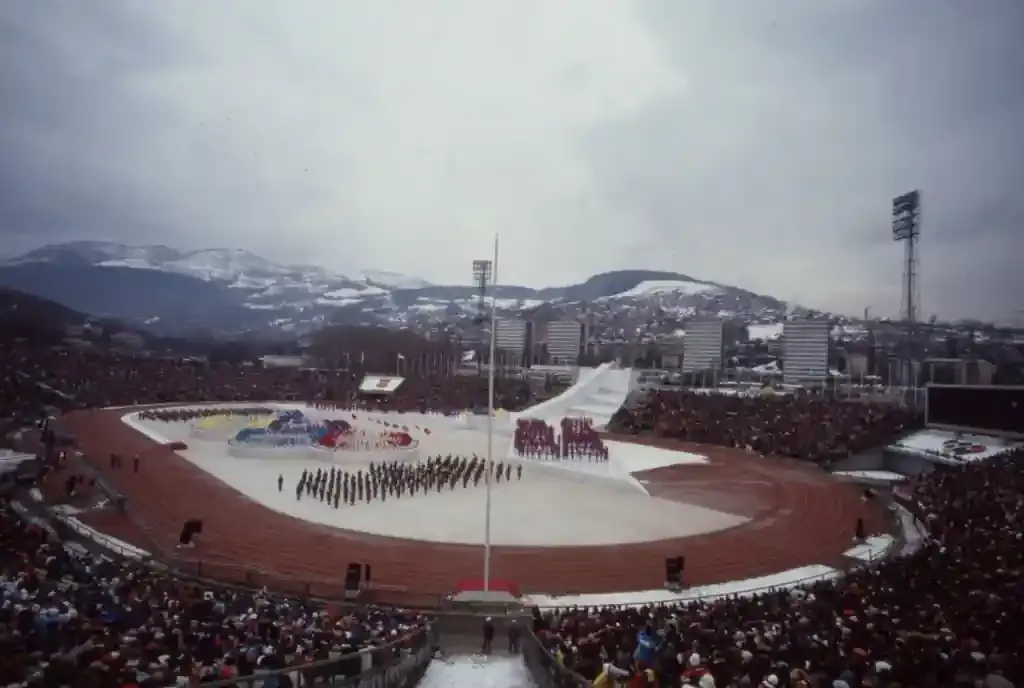
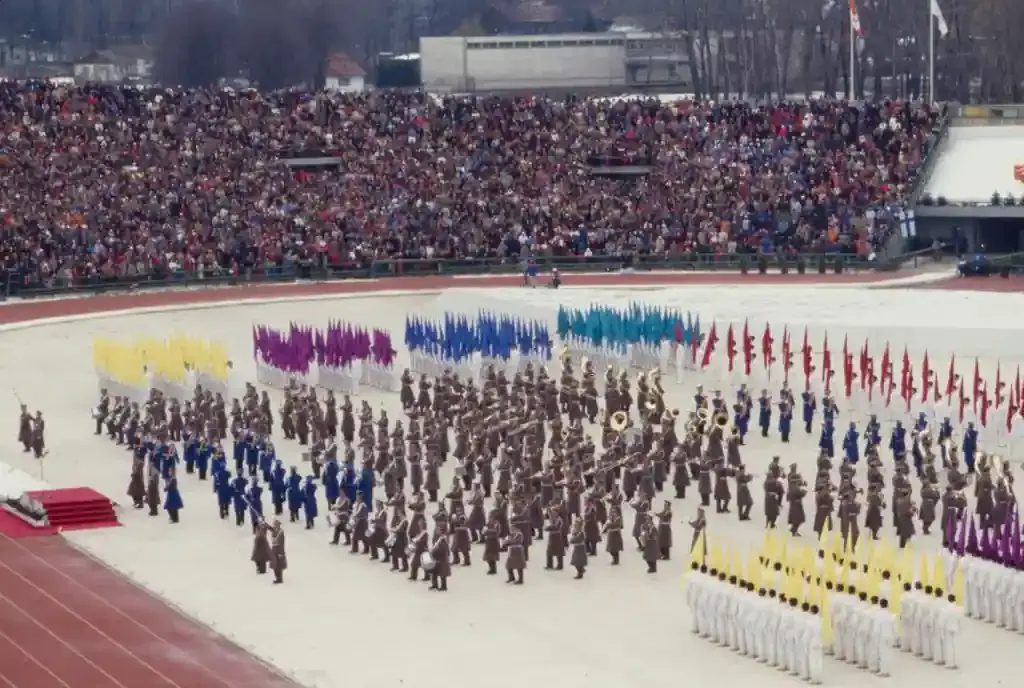
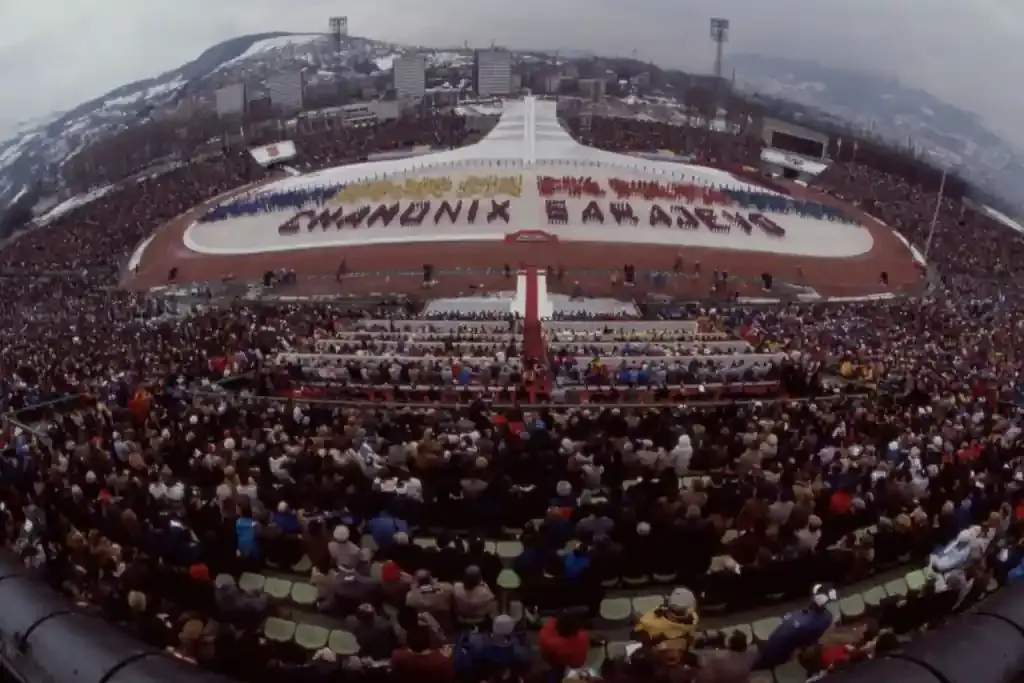
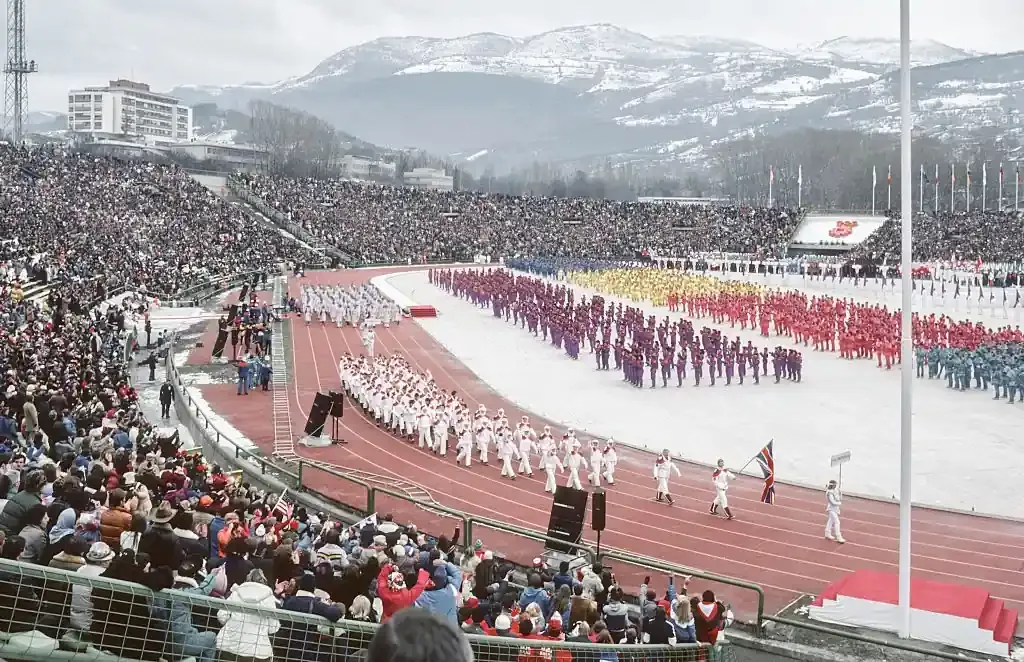
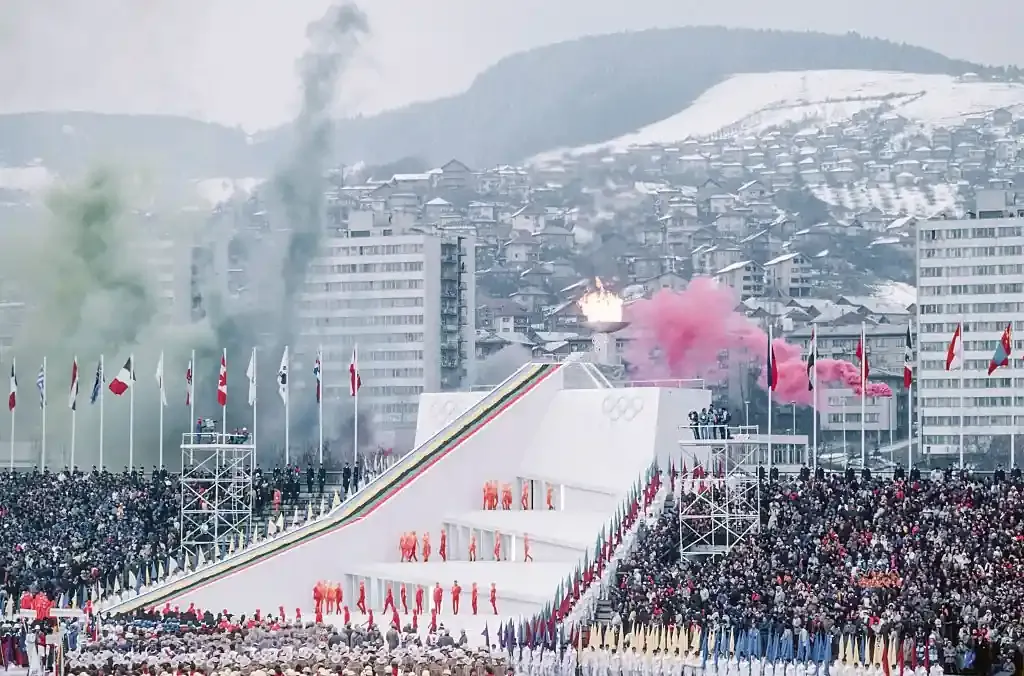
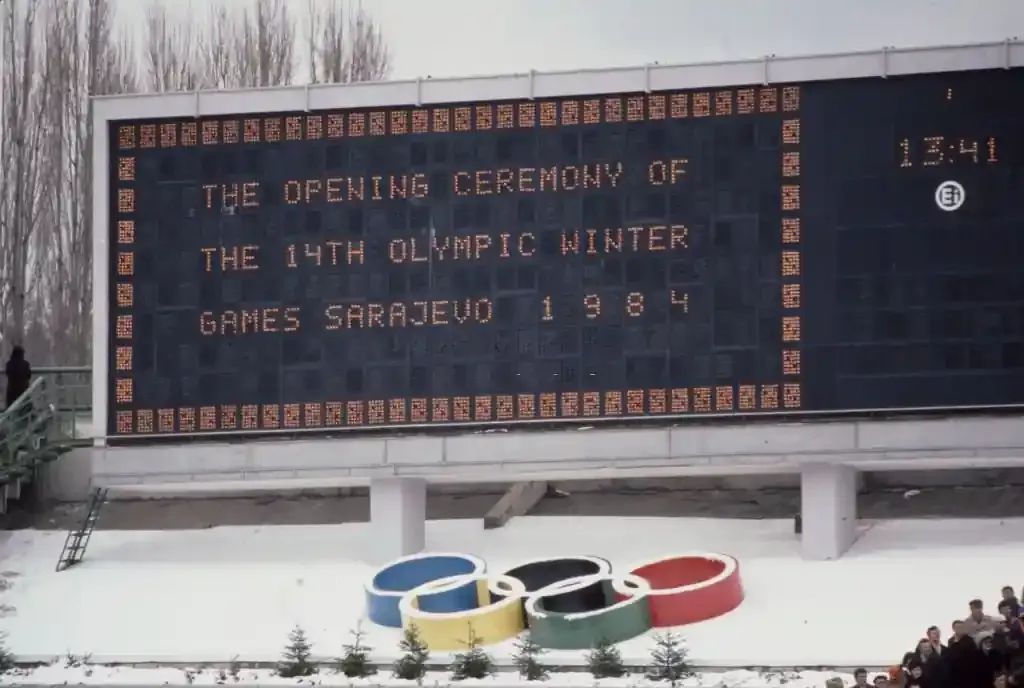
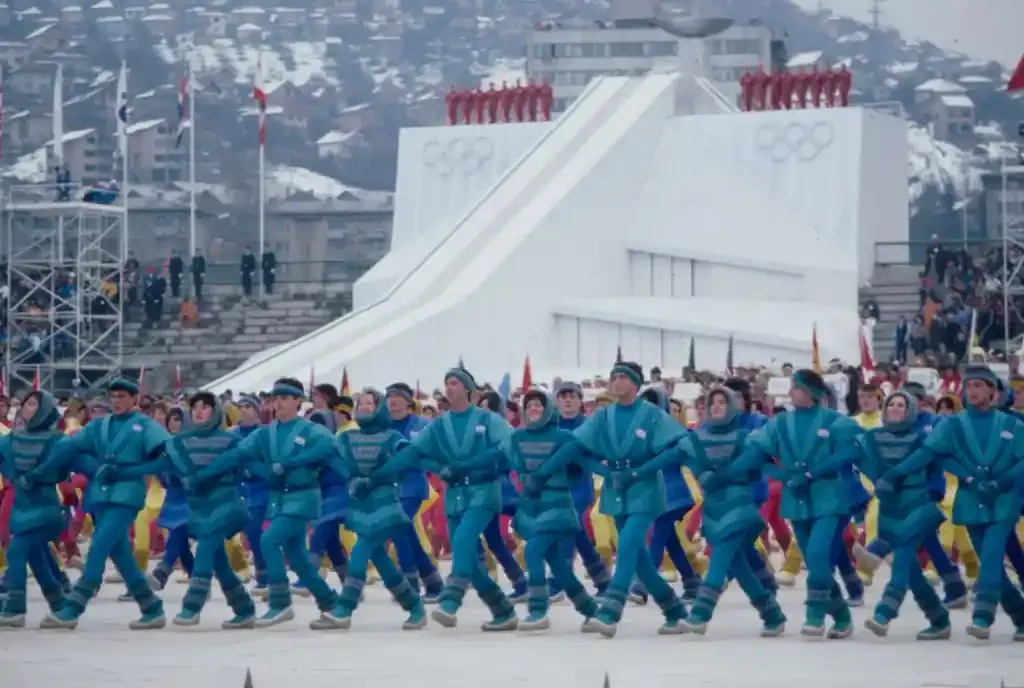
A packed stadium and choreographed field display mark the official opening spectacle at Koševo.
This wide ceremonial overview shows the central stage geometry framed by full grandstands.
National delegations enter in formation as the parade of athletes fills the infield and track.
A panoramic crowd view captures commemorative field lettering for the Winter Olympic anniversary.
Performers and athletes circulate around the track in a dense program of music and choreography.
The cauldron platform with smoke effects dominates this moment from the flame-lighting sequence.
The scoreboard announces the opening of the XIV Olympic Winter Games Sarajevo 1984.
Uniformed performers cross the infield in a synchronized segment of the opening program.
The press noted the high emotional stakes of the day. Reports from Olympic Review described the stadium stands spreading out "like a flower in the winter sun." Even years later, the moment Sandra Dubravčić ascended the stairs to light the flame remains etched in the collective memory as the crowning achievement of the city, a "shining moment" where Sarajevo successfully projected its image to the world as a modern, fraternalized capital.
Technical Profile: Preparing the Arena
The transformation of Koševo from a regional soccer ground into an Olympic-standard stadium required intense structural and technological upgrades. Between 1980 and 1981, the facility was entirely reconstructed in a period of only seven months to meet the "cutting-edge" requirements of the Organizing Committee.
Key technical specifications of the 1984 Olympic setup included:
- Capacity: The stadium was configured to hold between 45,000 and 55,000 spectators for the ceremonies. Official reports indicate that while 45,000 tickets were sold for the Opening Ceremony, the interest far exceeded the available seating.
- The Olympic Platform: A centerpiece of the 1984 setup was the imaginative, "stunning" architectural pyramid built opposite the official stand, serving as the base for the Olympic cauldron.
- Modernized Facilities: The renovation added a new athletics track, modernized floodlights, a restaurant, and updated security and access infrastructure.
- Broadcast Infrastructure: To reach an estimated two billion global TV viewers, Radio-Television (RTV) Sarajevo deployed two outside broadcast (OB) vans and a nine-camera setup specifically for the Opening Ceremony.
- Staging and Flow: The design facilitated the flow of thousands of performers and athletes, with specialized areas for the "sceno-choreography" and the traditional presentation of the Olympic flag by the delegation from Lake Placid.
A Dramatic Transformation: From Olympics to Conflict
The glory of 1984 stood in stark contrast to the stadium’s fate less than a decade later. During the Bosnian War and the protracted Siege of Sarajevo (1992–1996), the Koševo neighborhood found itself on the front lines. While the stadium remained in territory controlled by the Army of the Republic of Bosnia and Herzegovina (ARBiH), it became a frequent target for shelling and sniper fire.
Despite the constant threat of violence, the stadium’s role as a symbol of resilience continued. Sources relate that football matches were played at Koševo even during the most tumultuous periods of the siege. However, the surrounding auxiliary sports fields underwent a grim transformation; because traditional cemeteries were inaccessible or full, these areas were repurposed as improvised graveyards for the thousands of citizens killed during the conflict.
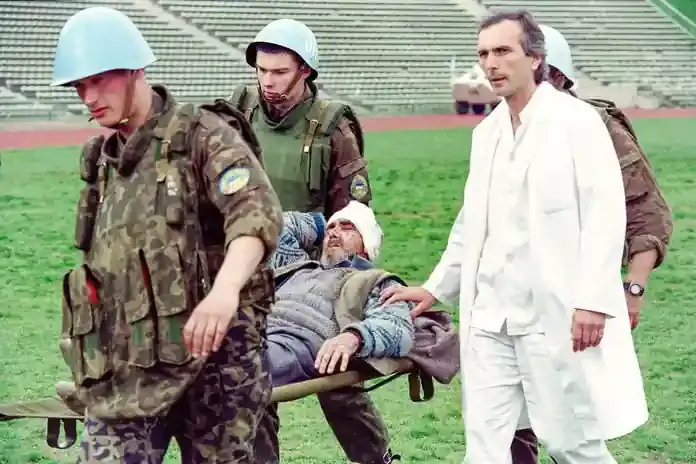
Medical teams carry a wounded civilian across the pitch in a stark image of Koševo during the siege years.
By the end of the war, the stadium was in a state of extreme dilapidation. The structural damage was extensive, with the pitch and stands scarred by years of bombardment. The once-bright Olympic arena had become a monument to the city’s survival under "severe conditions," its transition from a site of international celebration to a zone of conflict marking one of the most dramatic chapters in Olympic history.
Restoration and Legacy: Asim Ferhatović-Hase Stadium Today
The recovery of Koševo Stadium began almost immediately after the conflict ended. In 1996, the stadium was renovated with the help of the International Association of Athletics Federations (IAAF) and the International Olympic Committee (IOC) to host the "IAAF Sarajevo 1996 Athletics Meeting of Solidarity", the first major international sporting event in post-war Bosnia.
Further upgrades were completed in preparation for two symbolically important events that marked the city's recovery: a visit by Pope John Paul II in April 1997 and a concert by U2 later that year. These events signaled Sarajevo's return to the world stage, transforming the site from a zone of conflict back into a place of celebration.
Post-war return and contemporary use
In 2004, the stadium was officially renamed Olimpijski stadion Asim Ferhatović - Hase to honor the legendary FK Sarajevo striker of the 1950s and '60s. Known as a "humble man of the people," Ferhatović remains a beloved figure in Bosnian sporting history, and a monument in his honor now stands before the stadium bowl.
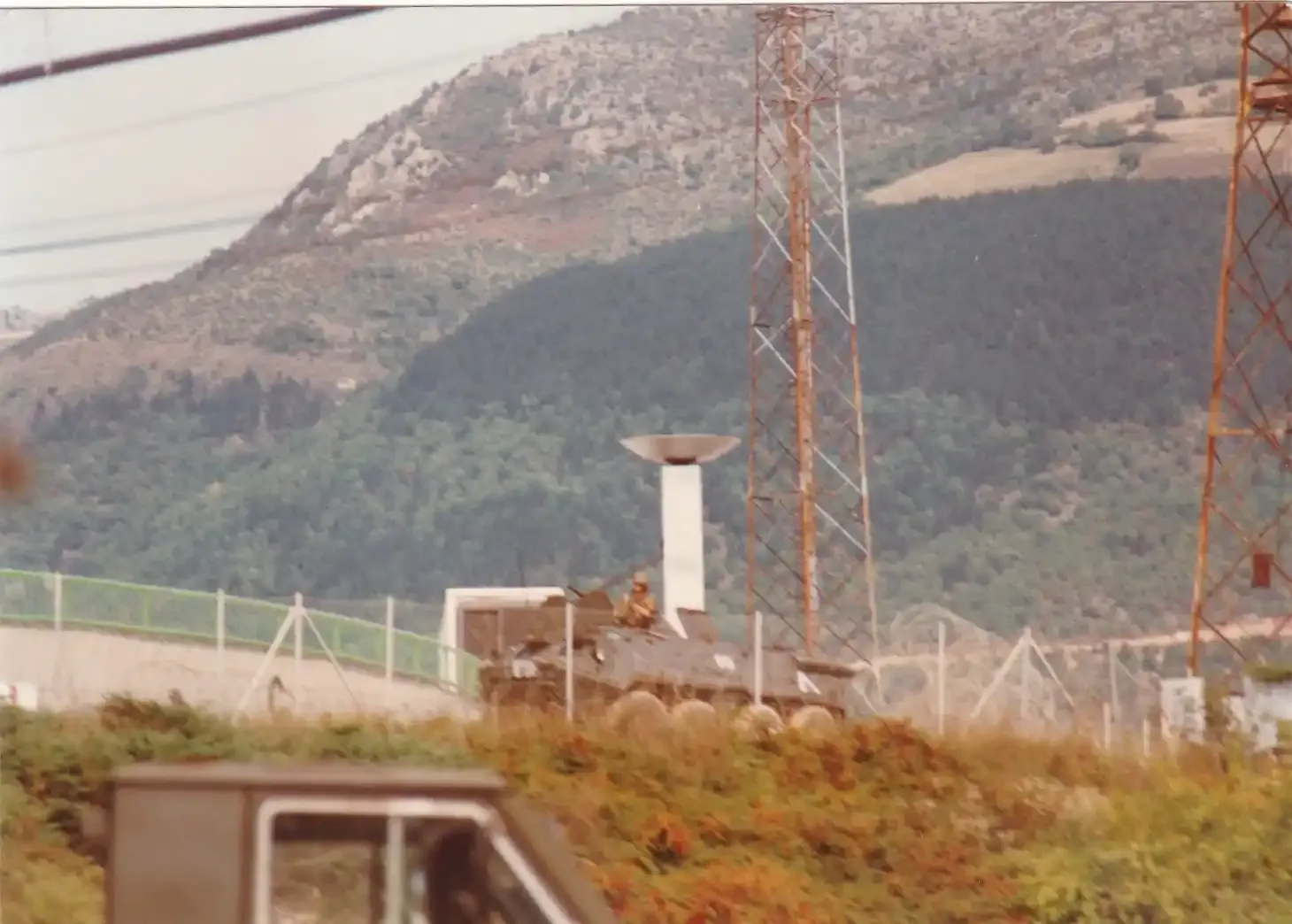
The Olympic flame installation at Koševo during the post-war period.
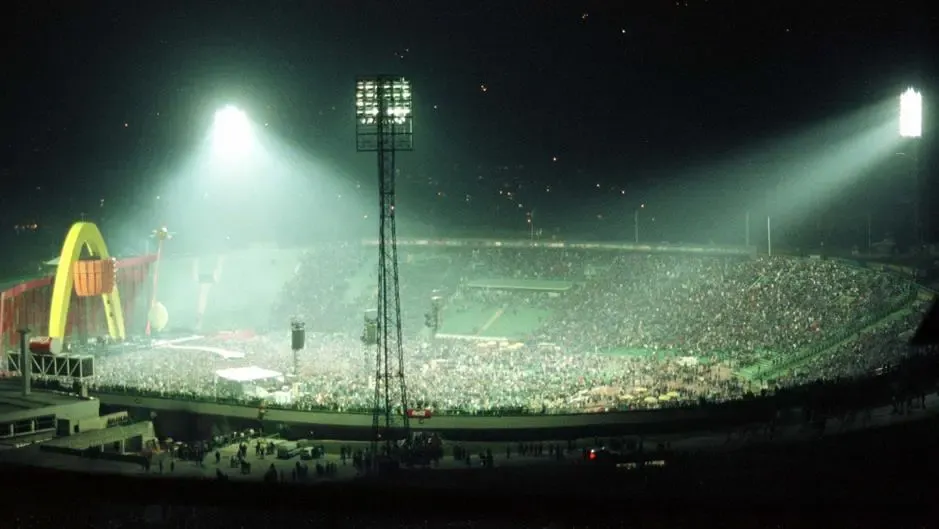
A night view from the U2 PopMart concert shows the stadium's role in Sarajevo's cultural recovery.
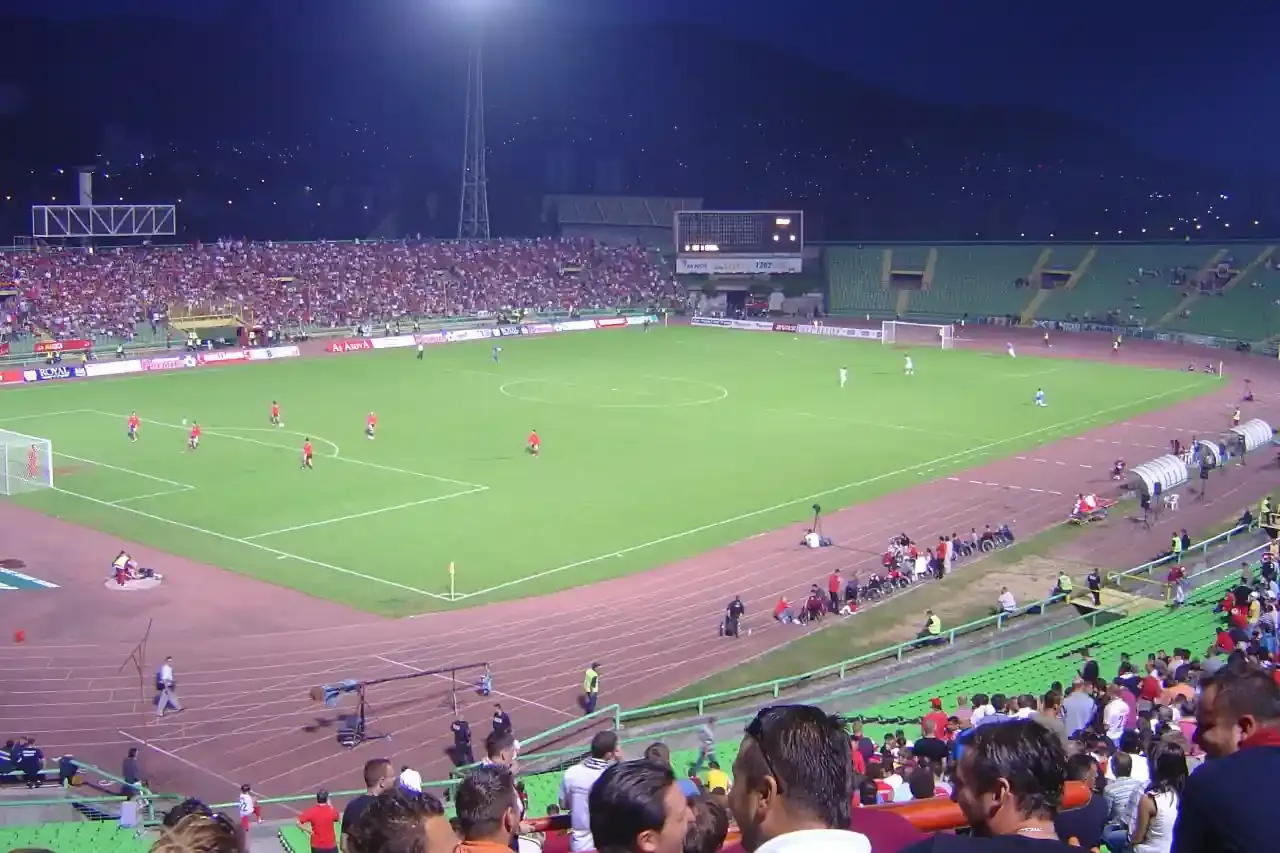
This football match scene confirms Koševo's ongoing role as a major national sports venue.
In February 2019, the stadium once again celebrated the Olympic Spirit by hosting the Opening Ceremony of the 14th Winter European Youth Olympic Festival (EYOF). The event was attended by 38,000 people, marking a symbolic revival of the city's winter sports heritage 35 years after the 1984 Games.
The venue has since reclaimed its status as a premier cultural and sporting hub:
- Sporting Home: It serves as the official home ground for FK Sarajevo and the Bosnia and Herzegovina national football team, while also hosting local and national track and field, football, and rugby events.
- Cultural Milestone: In 1997, it famously hosted the British rock band U2 during their "PopMart" tour, a landmark event for the city’s post-war cultural revival.
- High-Profile Visits: The stadium has hosted two papal visits: Pope John Paul II in 1997 and Pope Francis in 2015.
Currently, the venue is awaiting refurbishment to bring it into line with UEFA’s latest stadium access requirements.