
Zetra Hall
Constructed as the crown jewel of the 1984 Winter Olympics, the Zetra complex was a groundbreaking feat of Yugoslav engineering and the "heart" of the Games' ice events. Situated in the Koševo neighborhood, it combined an ultramodern indoor arena with an outdoor speed skating oval to create one of Europe's most advanced winter sports centers. Today, it stands as a powerful symbol of Sarajevo’s resilience, having been meticulously rebuilt after its destruction during the 1990s conflict.
Fast Facts
- Location: Koševo neighborhood, North Sarajevo (approximately 1,500m from the city center).
- Role in ’84: Primary venue for ice hockey, figure skating, speed skating (on the outside rink) and the Closing Ceremony.
- Capacity: ~8,500 (Olympic seating); up to 14,000 for modern multipurpose events.
- Key Dates: Officially opened February 14, 1982; Olympic events held February 8–19, 1984.
- Architects: Lidumil Alikalfić, Dušan Đapa, and Osman Morankić.
- Status Today: Fully operational; hosts ice sports, concerts, and houses the Olympic Museum.
The Green Transversal: Planning the Zetra Complex
The development of Zetra, an abbreviation of Zelena Transverzala (the Green Transversal), was the most ambitious and expensive project of the 1984 Games. While the hall was built in the early 1980s, the conceptual roots of the site date back to the post-WWII era. Architect Juraj Neidhardt originally envisioned the Koševo Valley as the "green lungs" of Sarajevo. He conceived the "Green Transversal" as a visionary urban link between nature and the city, prioritizing social space and recreation.
Architecture of the "Ice Palace"
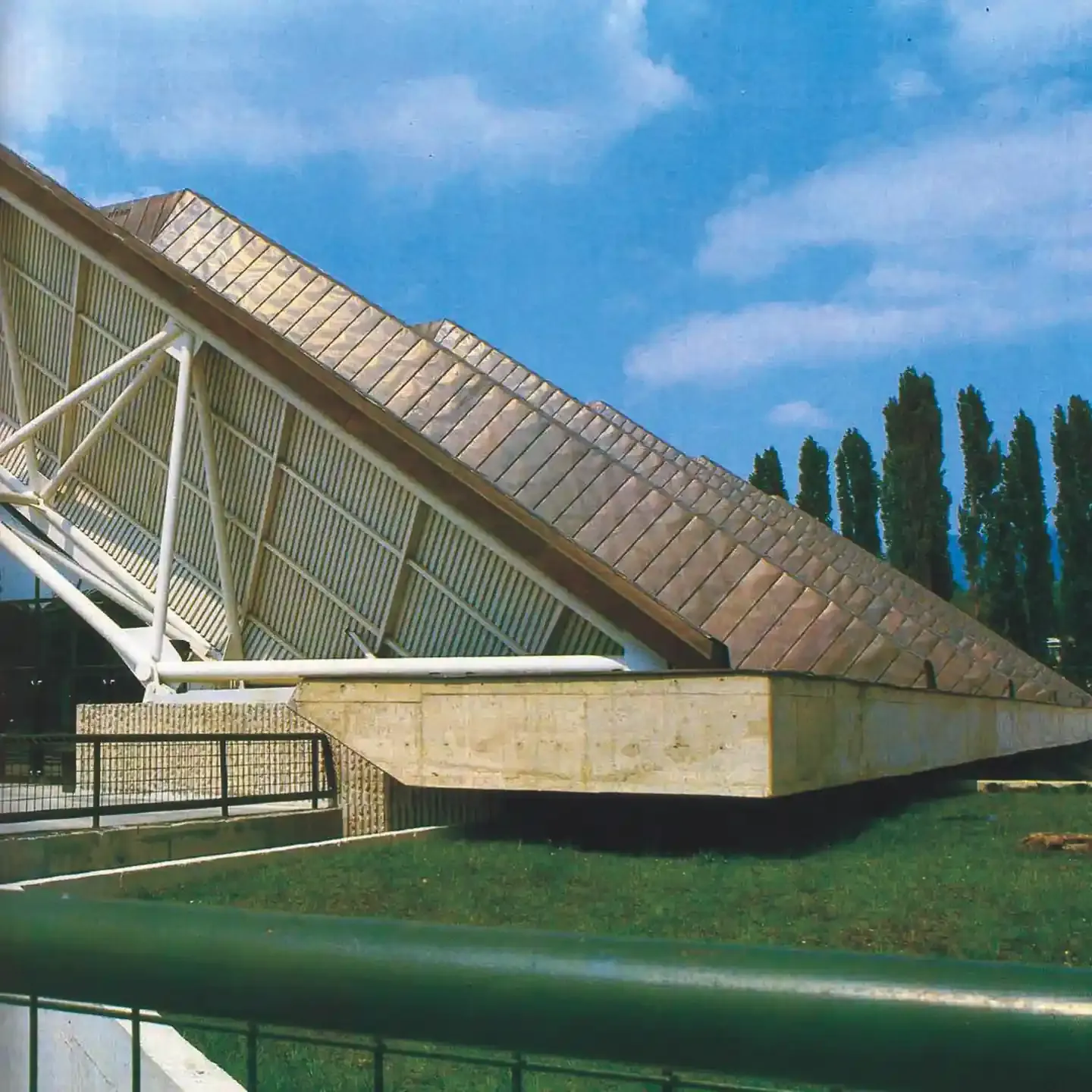
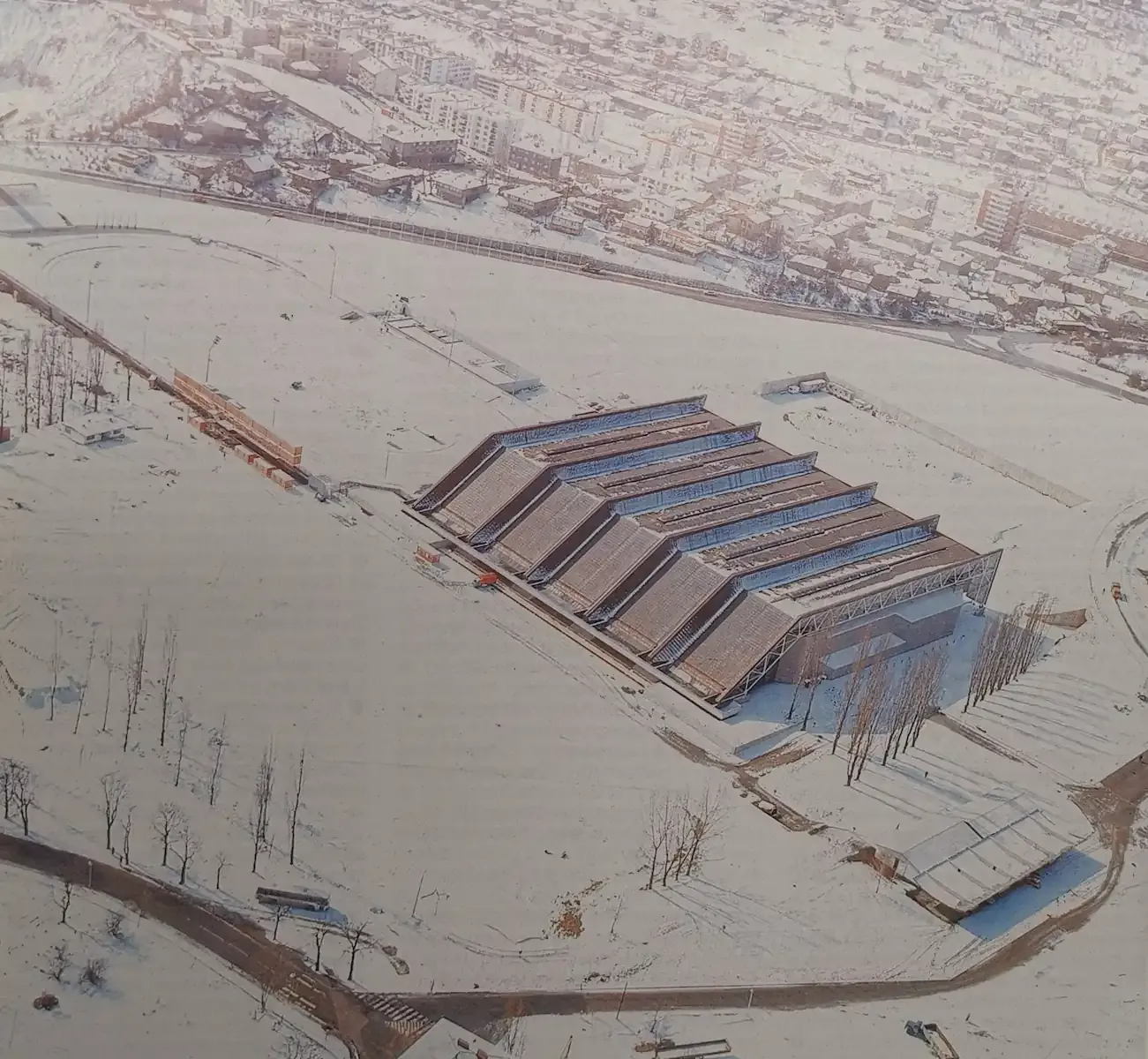
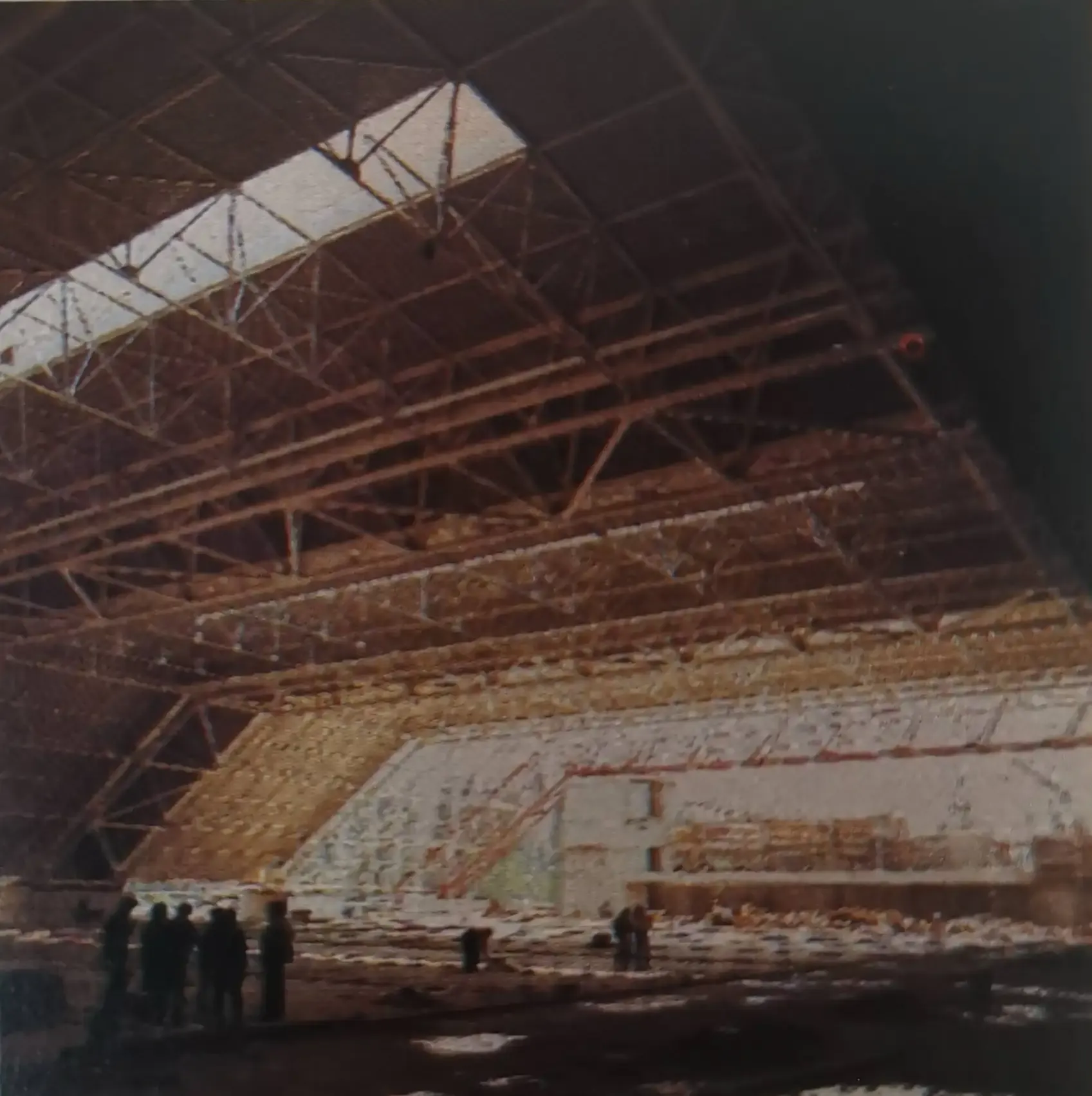
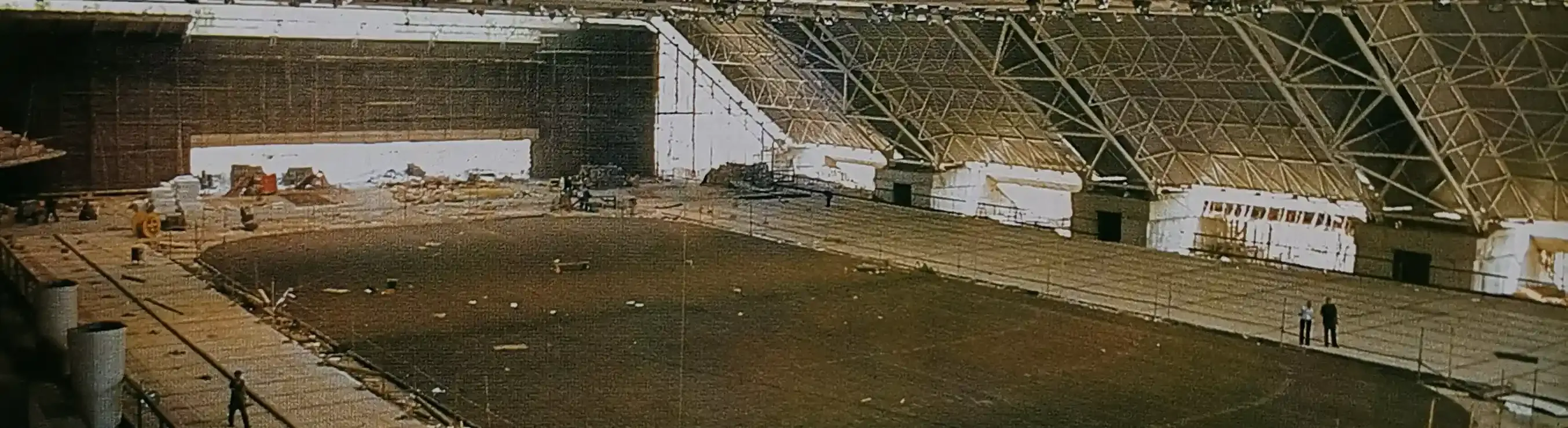
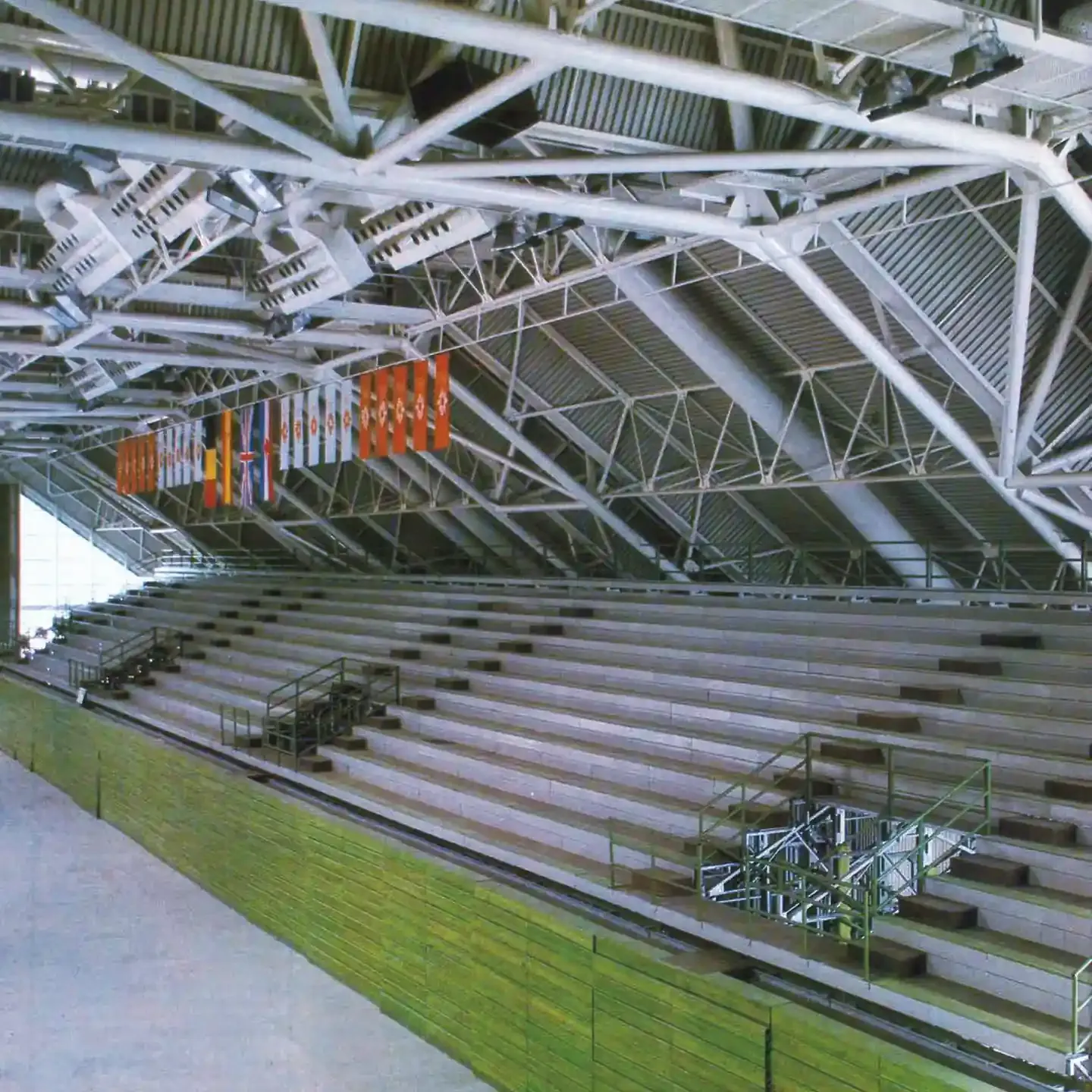
Lead architects Lidumil Alikalfić and Dušan Đapa, alongside engineer Osman Morankić, realized Neidhardt’s vision by designing an "ultramodern, angular edifice" that appeared to float within the green landscape. The Hall's most notable feature was its 96-meter (315-foot) span, supported by six massive steel lattice girders without any external physical supports. Originally covered in copper panels, the roof was designed to blend dynamically into the surrounding topography.
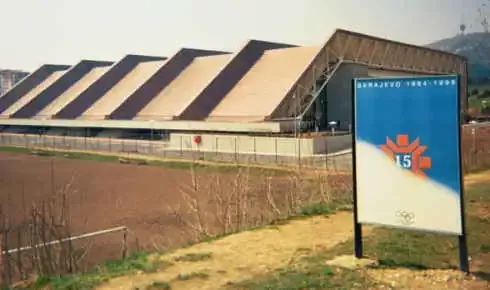
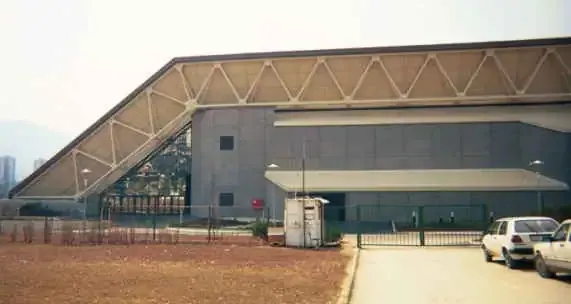
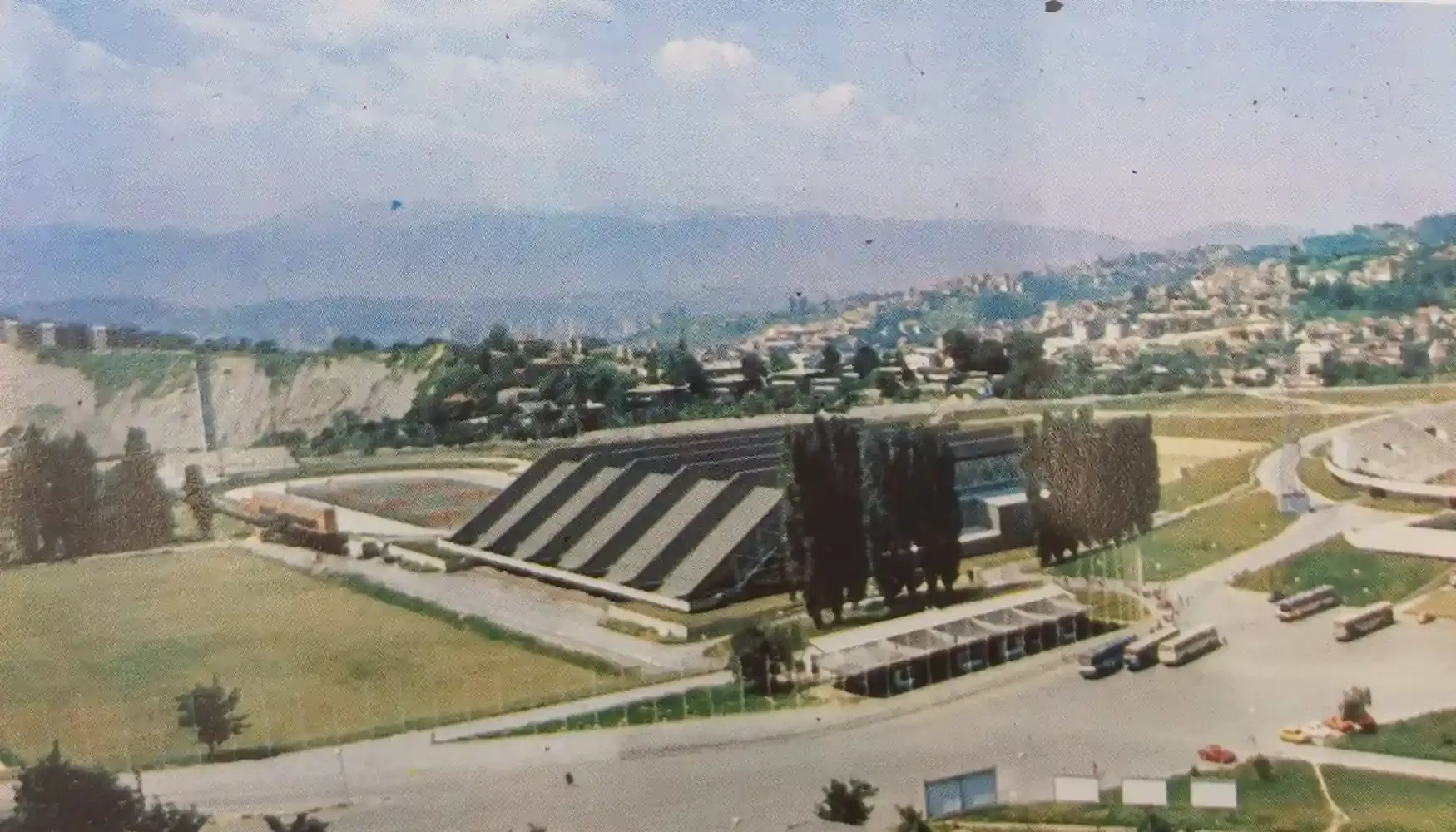
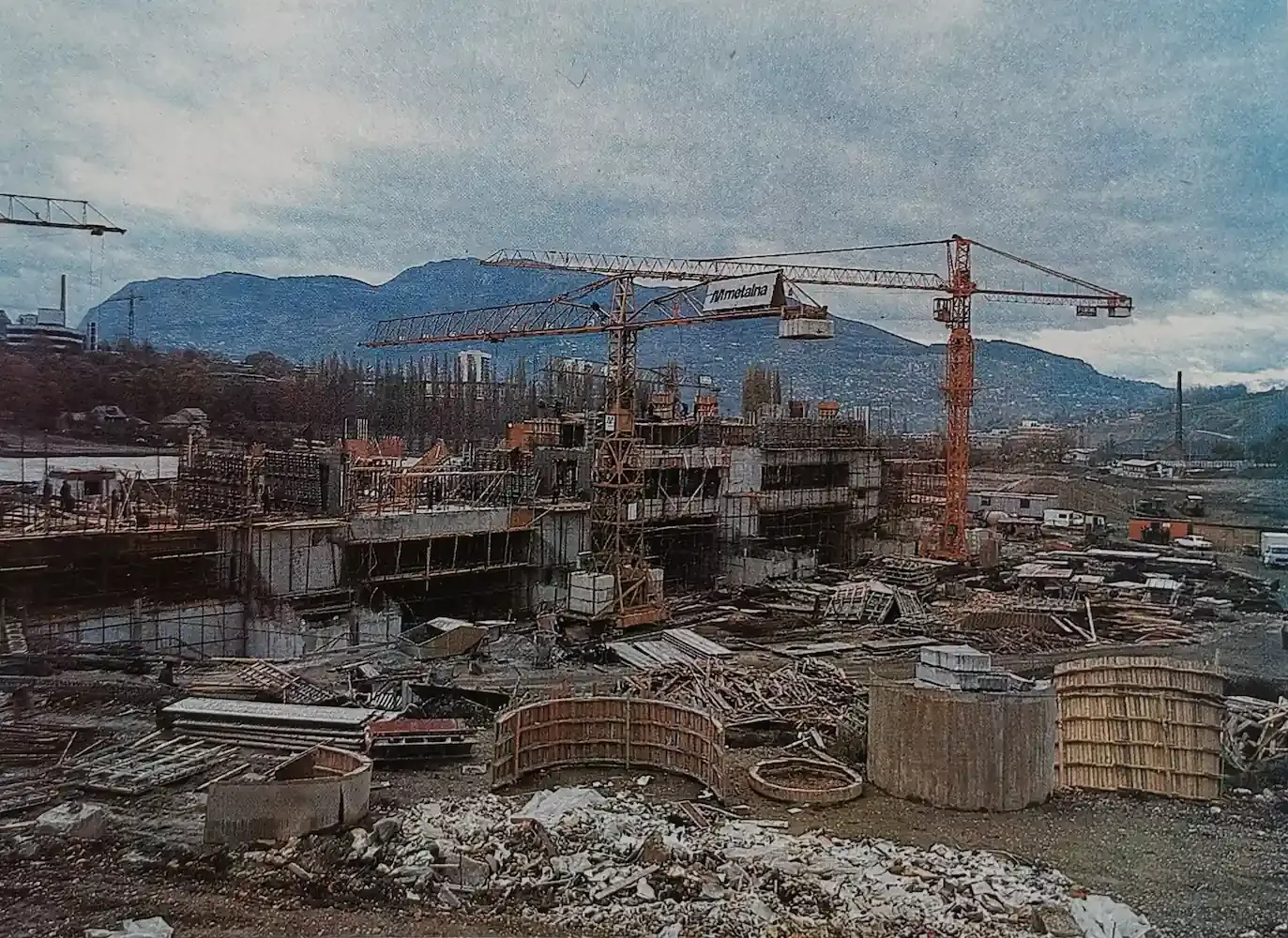
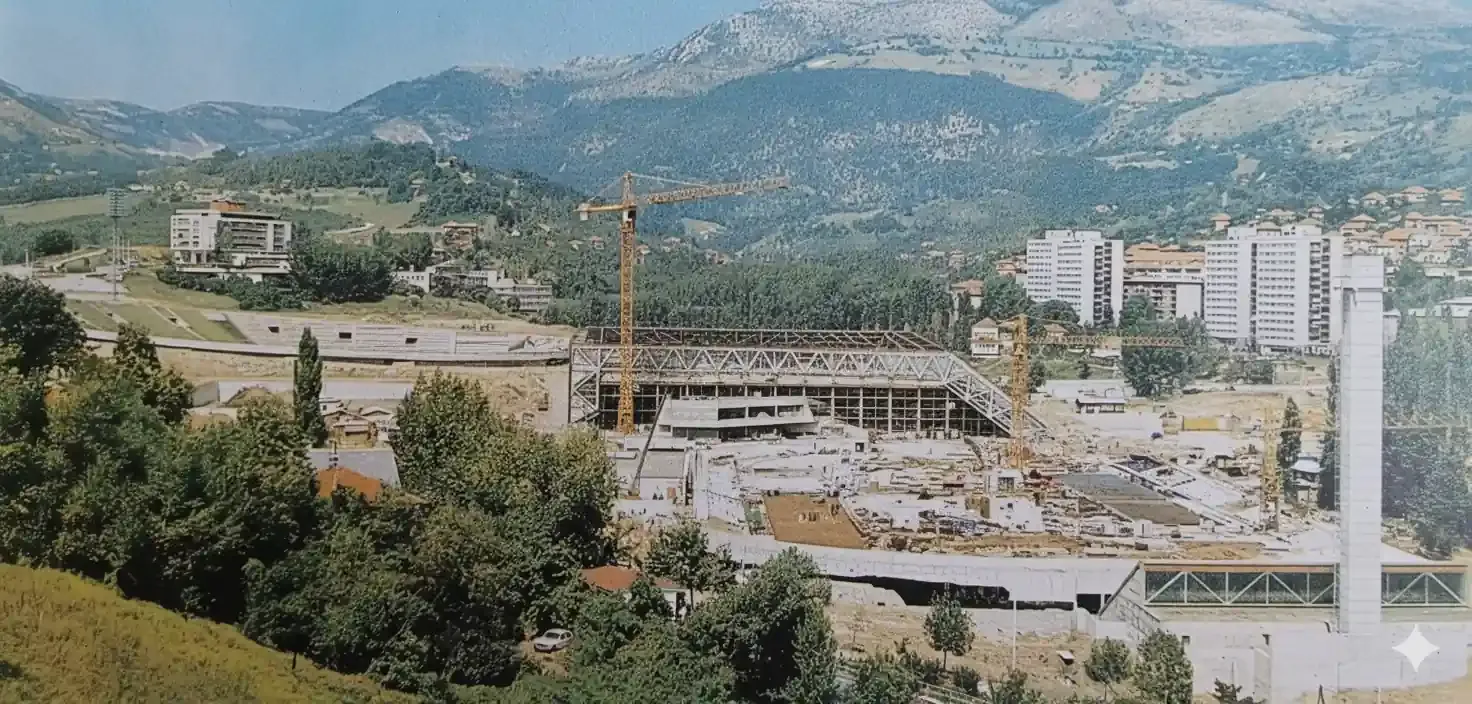
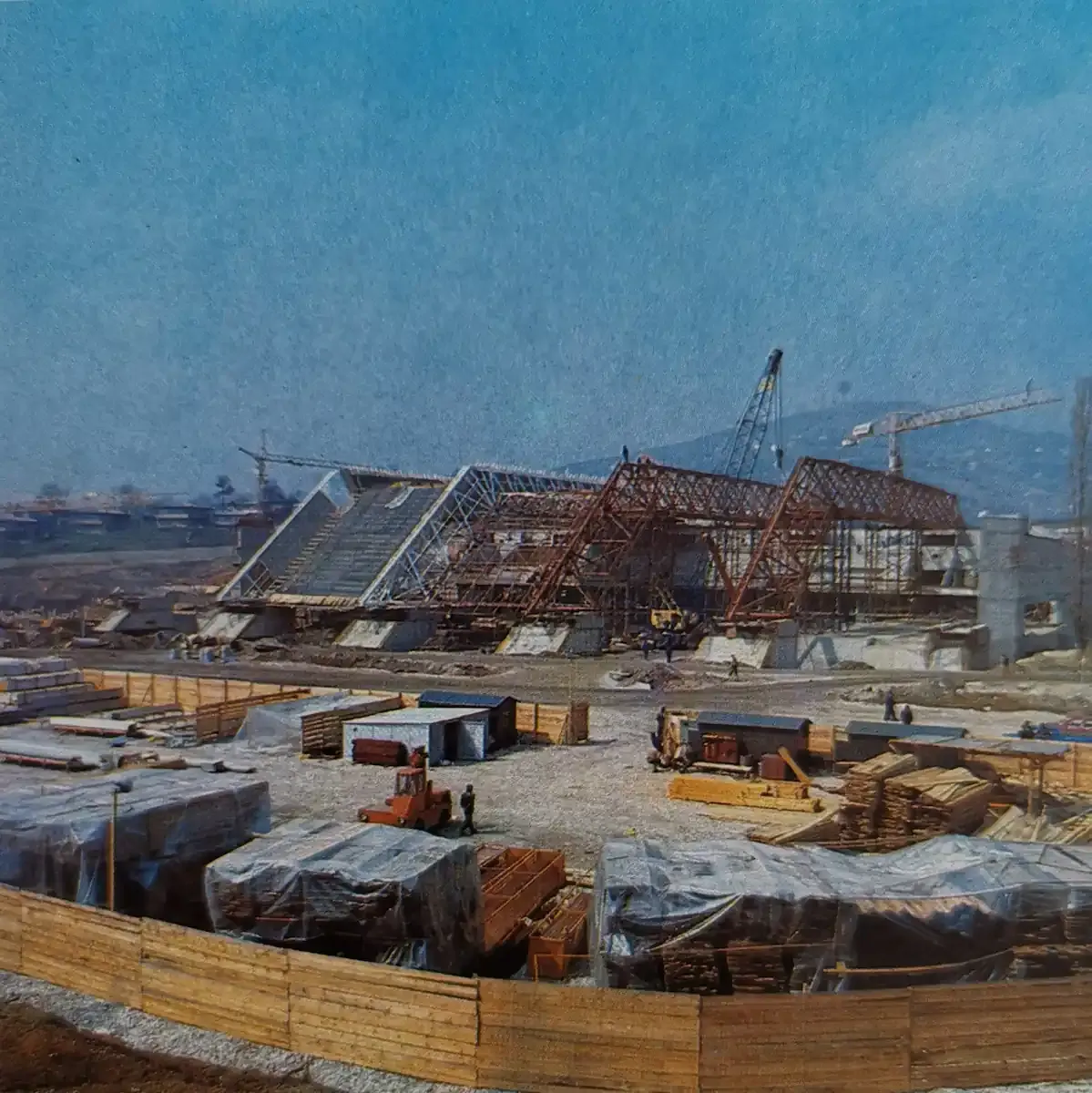
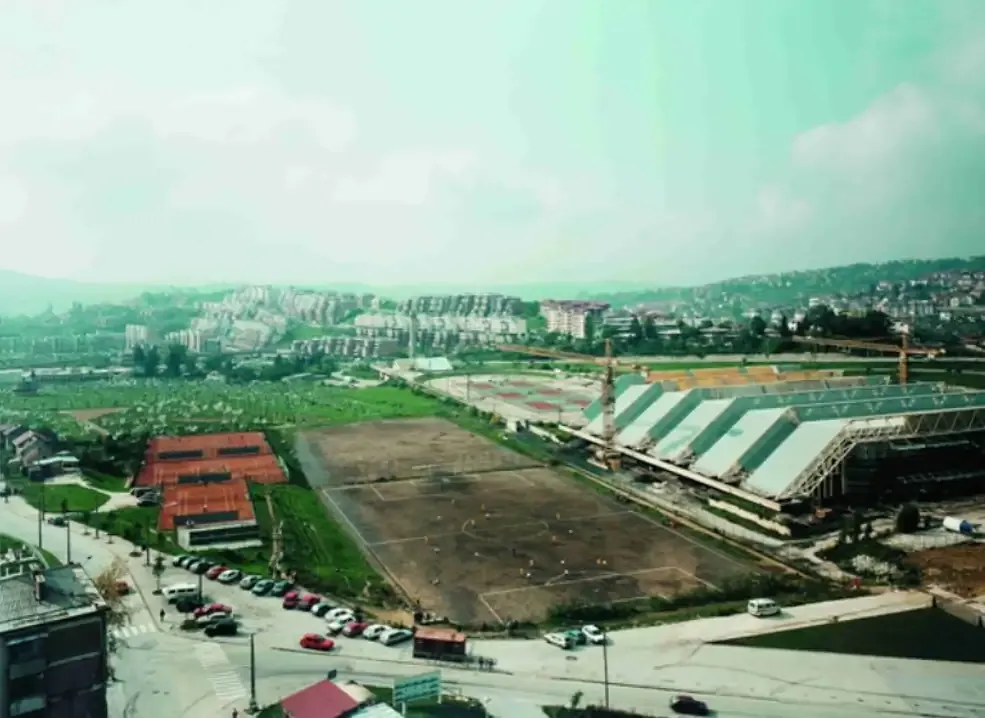
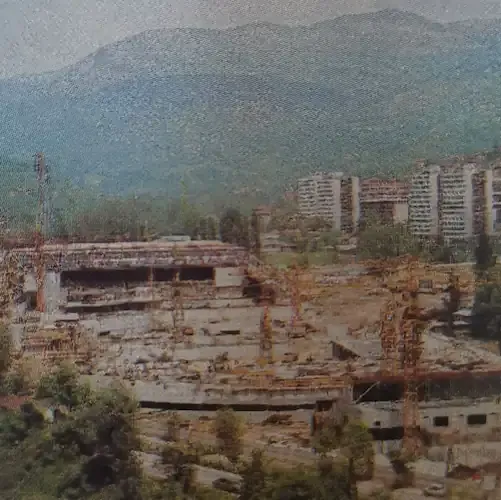
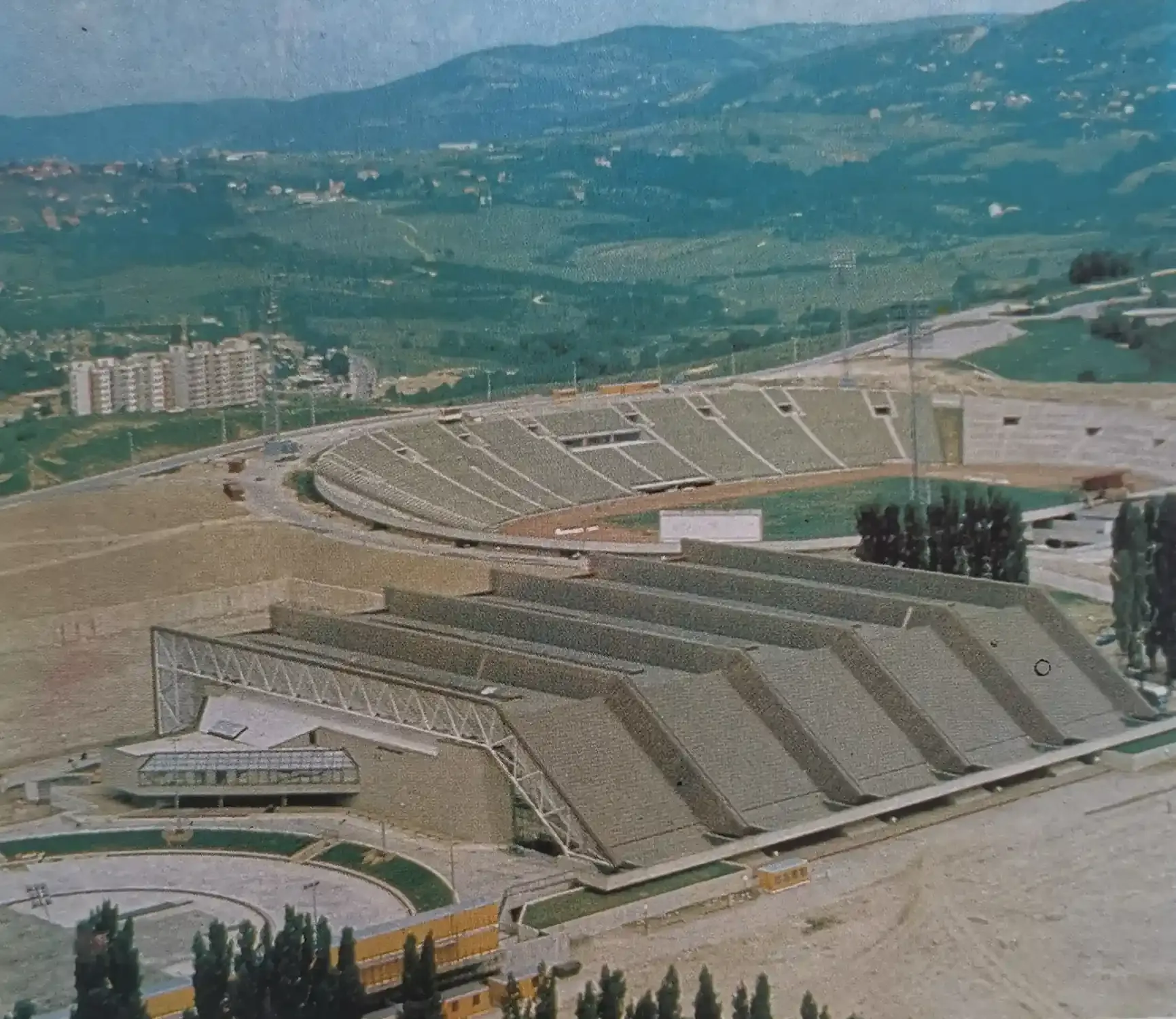
A 1982 view shows the near-complete hall as Zetra prepared for test events.
A 1982 view shows the near-complete hall as Zetra prepared for test events.
A 1982 view shows the near-complete hall as Zetra prepared for test events.
A 1982 view shows the near-complete hall as Zetra prepared for test events.
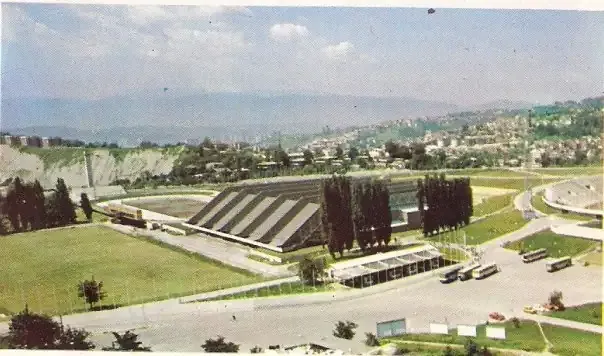
This 1983 perspective presents the finished complex one season before the Games.
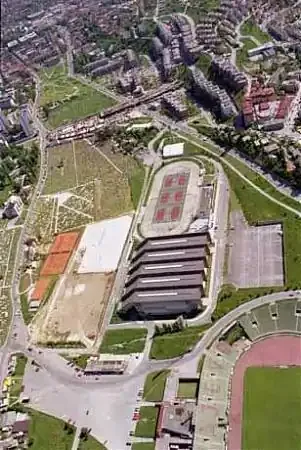
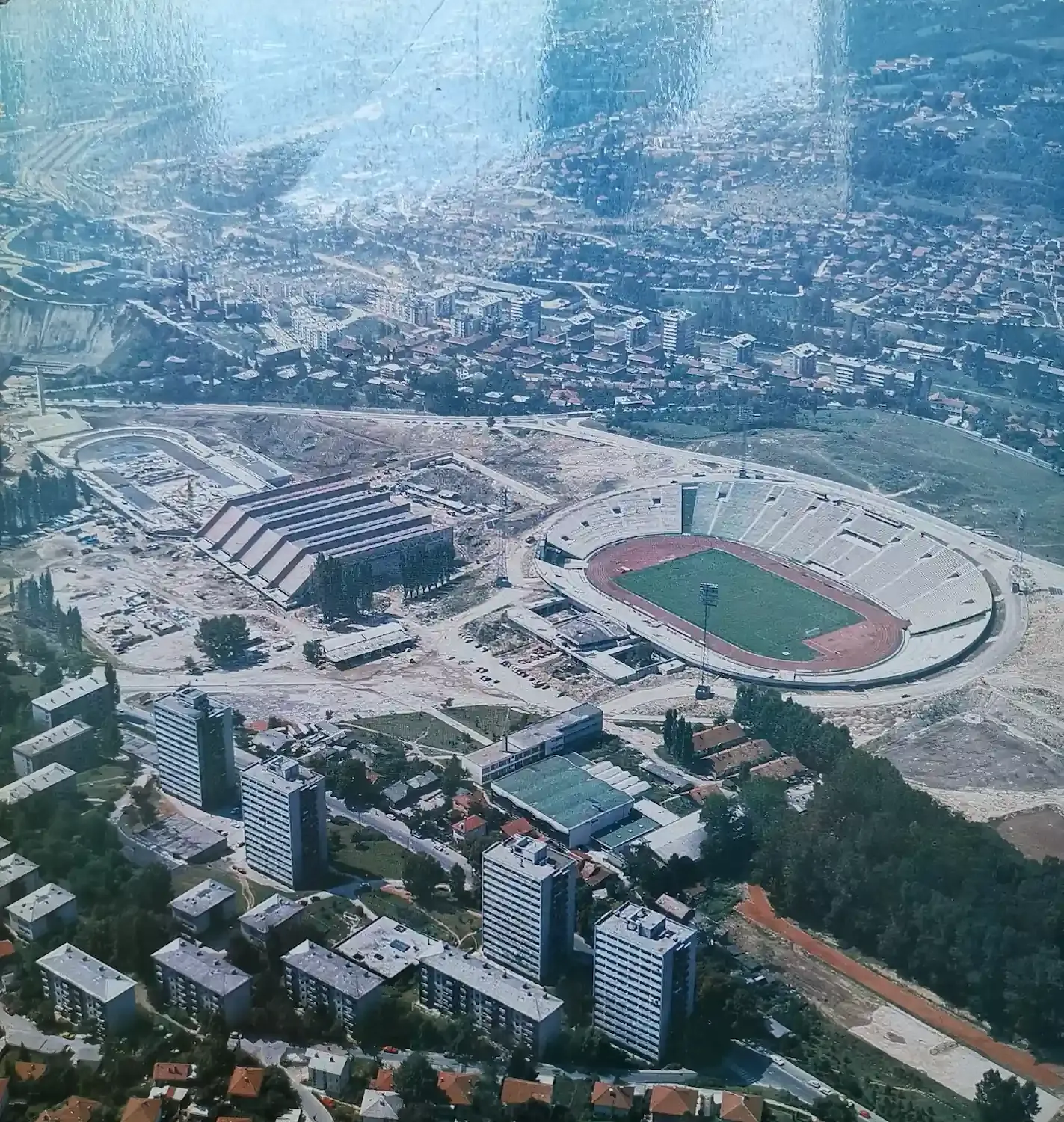
An aerial 1984 image situates Zetra within the wider Koševo sports landscape.
An aerial 1984 image situates Zetra within the wider Koševo sports landscape.
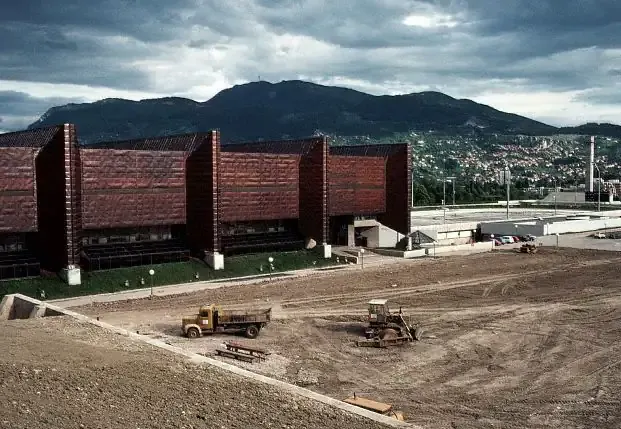
A construction-phase photograph captures structural assembly during the pre-Olympic build.
A construction-phase photograph captures structural assembly during the pre-Olympic build.
A construction-phase photograph captures structural assembly during the pre-Olympic build.
An early 1981 site image documents foundation and frame works at the future arena.
A construction-phase photograph captures structural assembly during the pre-Olympic build.
A construction-phase photograph captures structural assembly during the pre-Olympic build.
A construction-phase photograph captures structural assembly during the pre-Olympic build.
A construction-phase photograph captures structural assembly during the pre-Olympic build.
A construction-phase photograph captures structural assembly during the pre-Olympic build.
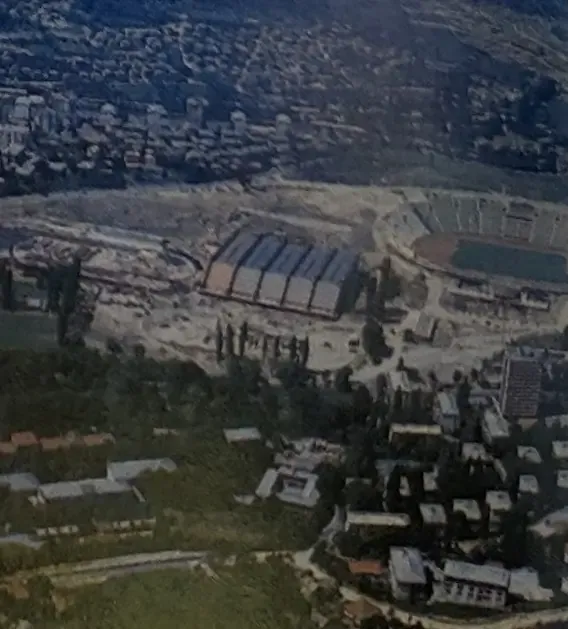
An aerial construction view records Zetra's rapid build-out within the Koševo valley.
Interior construction work reveals the large steel roof system before enclosure.
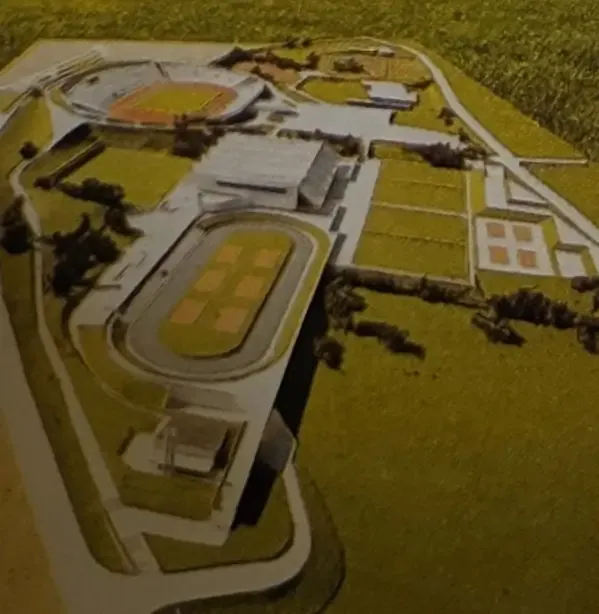
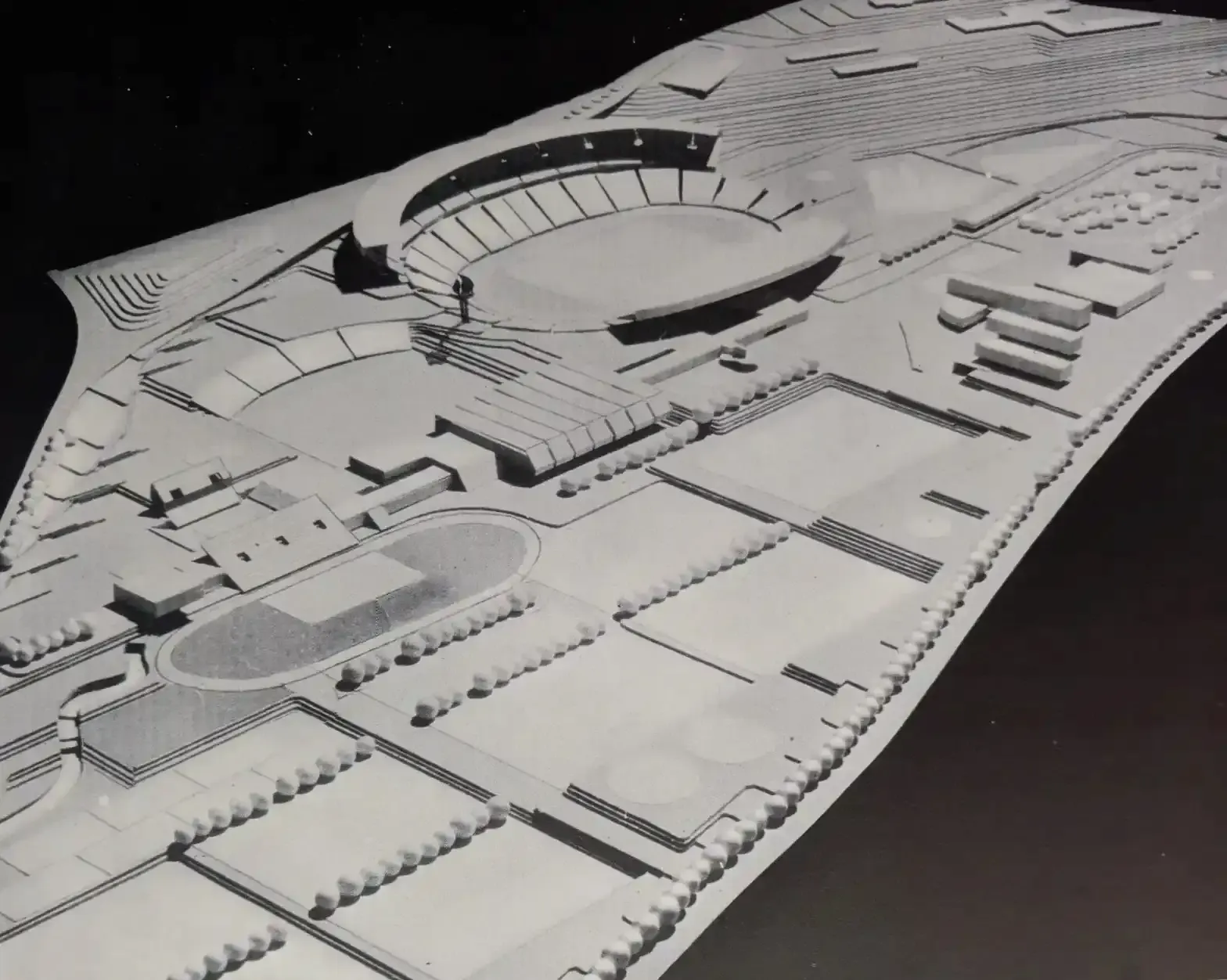
A scale model presents the integrated hall-and-oval composition of the Zetra complex.
A scale model presents the integrated hall-and-oval composition of the Zetra complex.
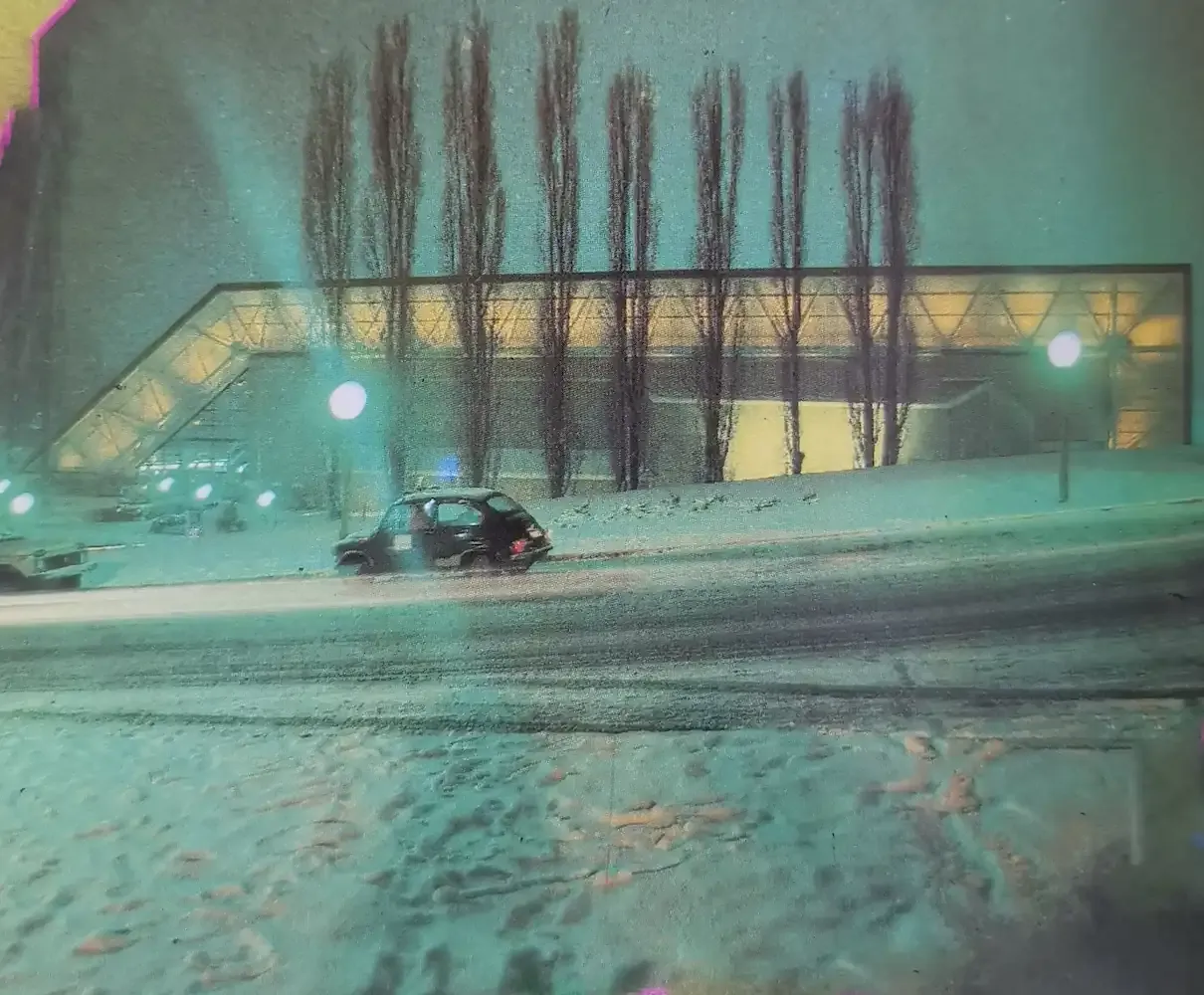
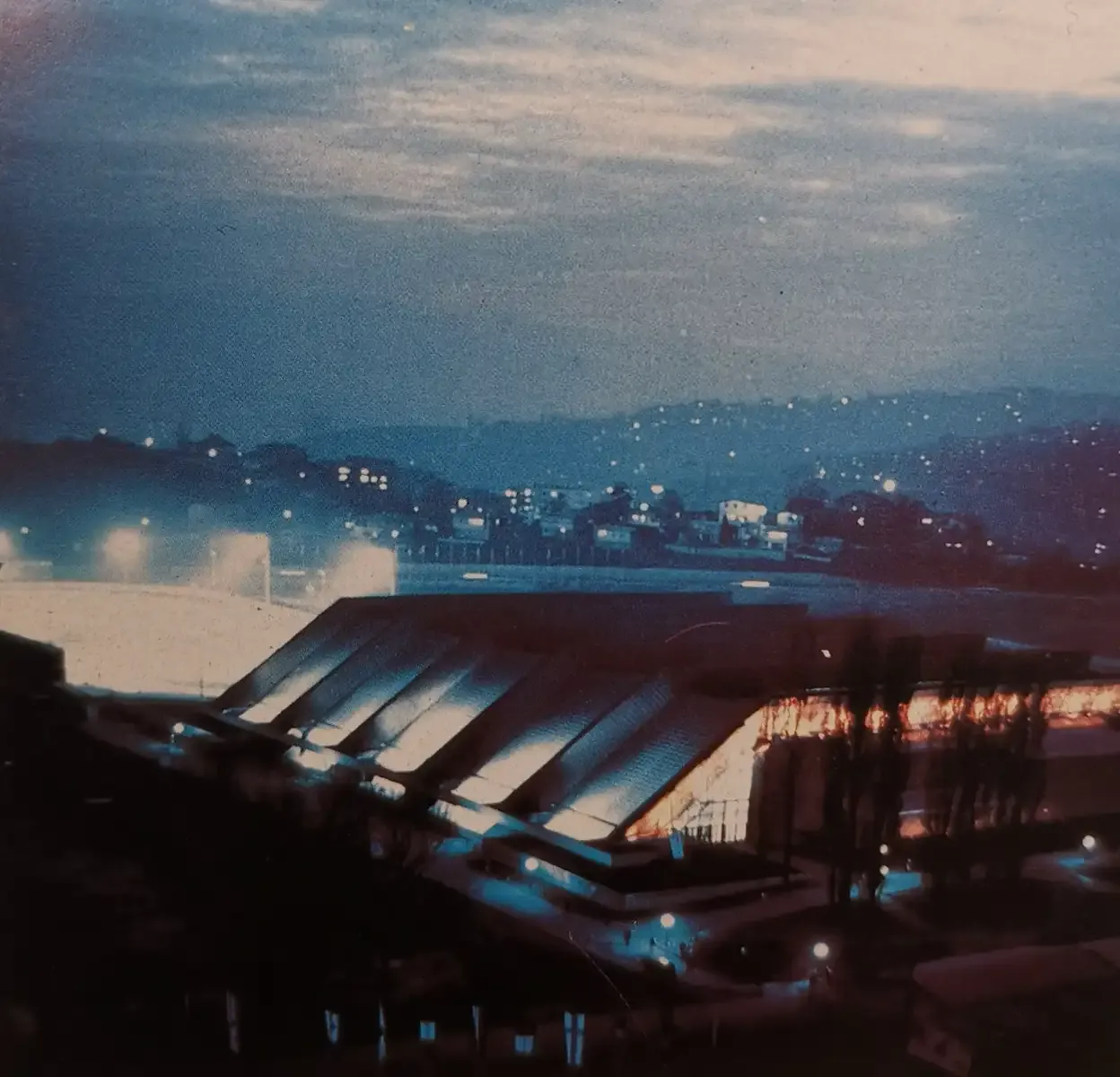
A night-time pre-Games view highlights Zetra's illuminated roofline and modern silhouette.
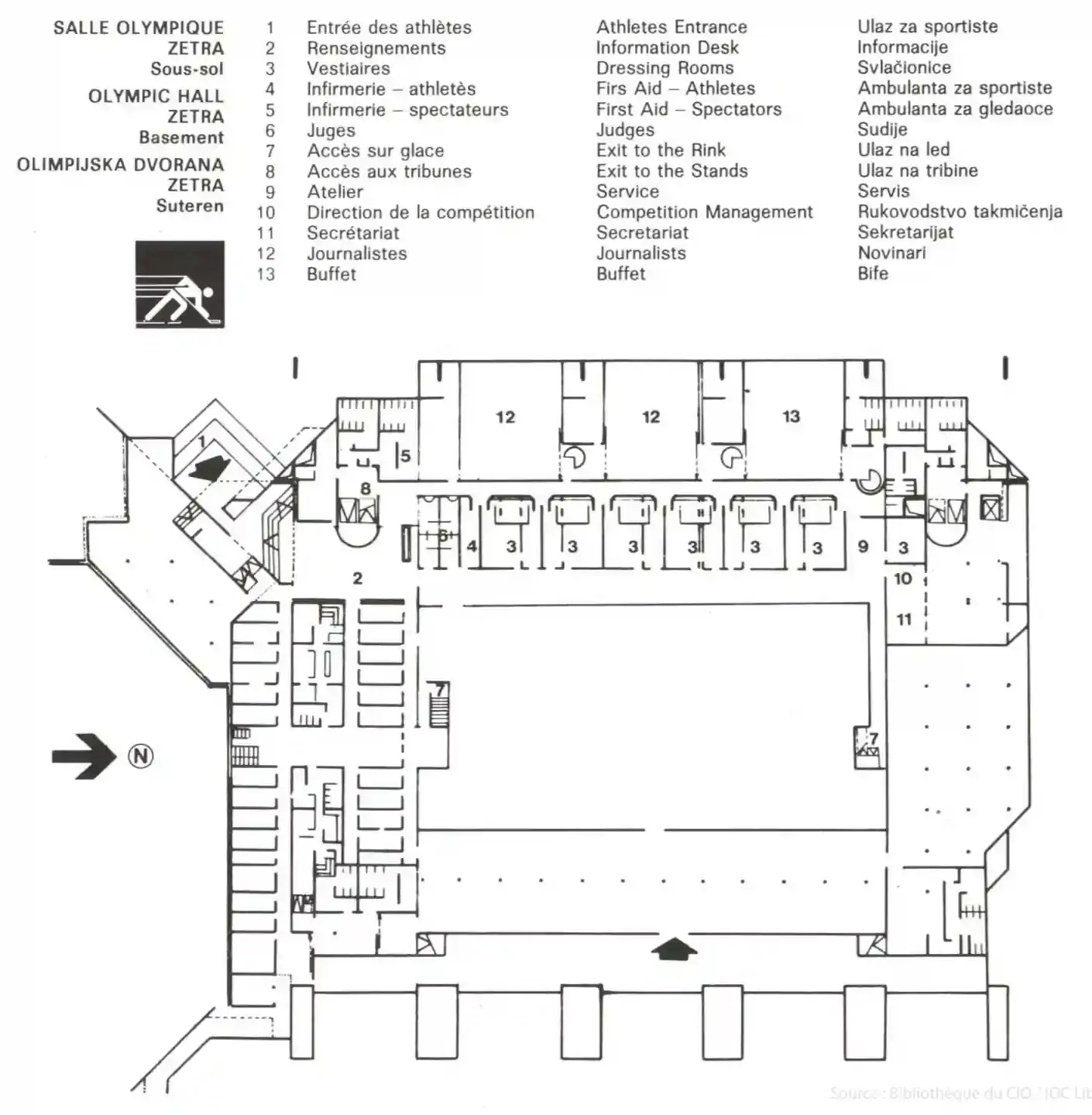
This basement plan shows service rooms and technical infrastructure beneath the main arena.
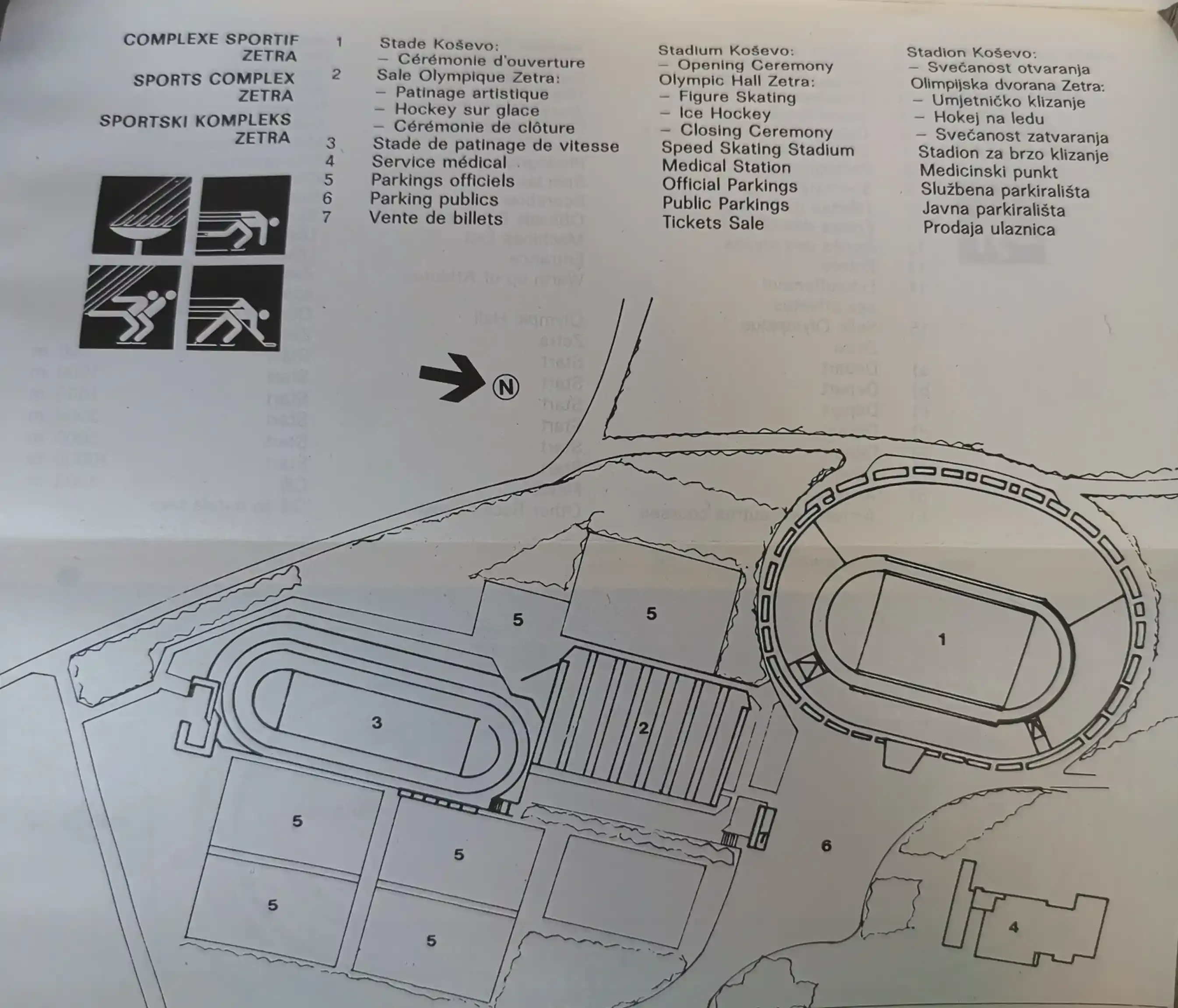
A site plan maps the hall, speed-skating oval, and surrounding access zones of the complex.
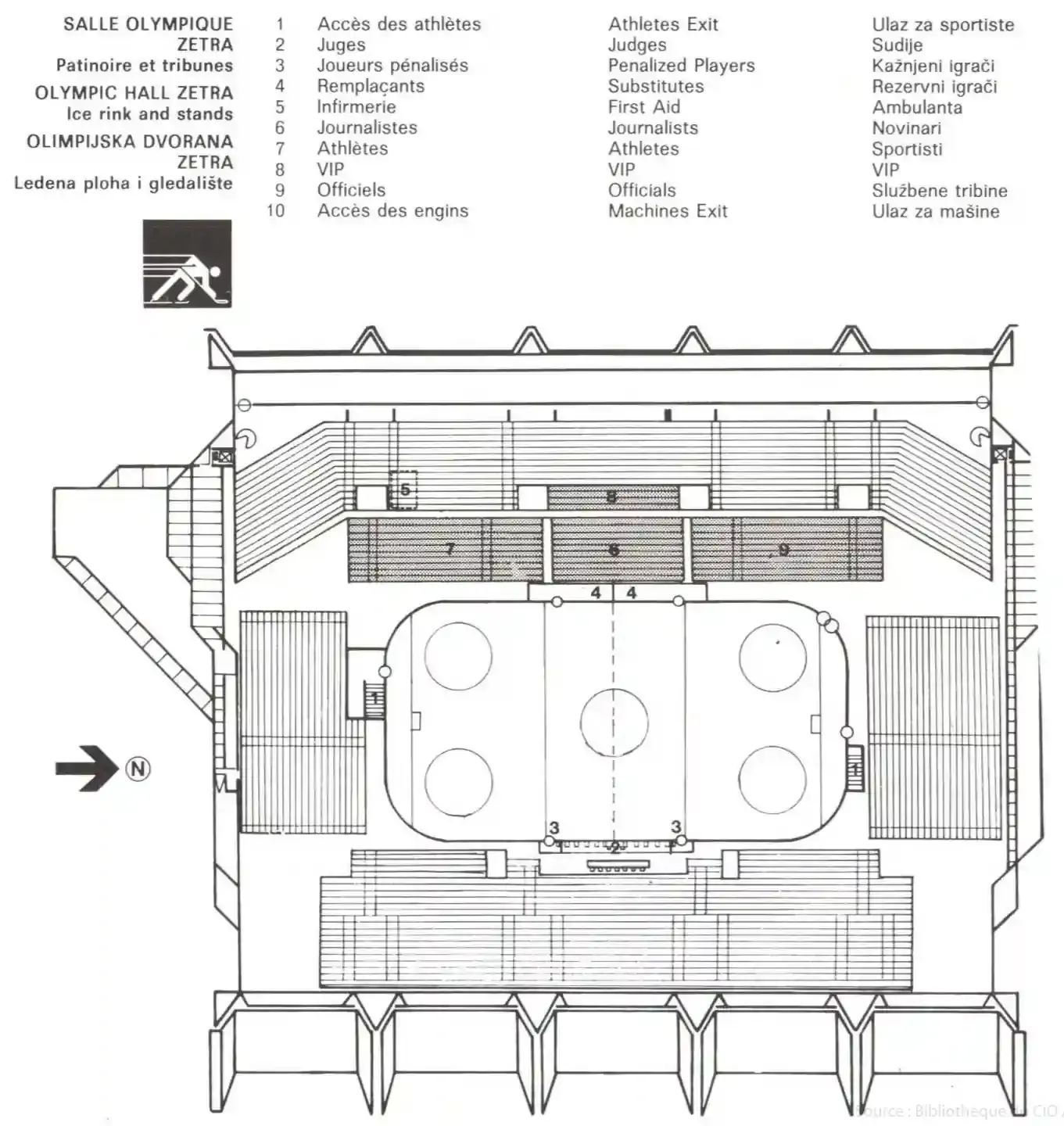
A sectional drawing details seating geometry and structural spans inside the Olympic hall.
Zetra was completed 14 months ahead of the Games, a feat that "surprised and delighted" international sports authorities. The project utilized cutting-edge technology, including "Nilcon" type ceiling elements installed without external support to speed up construction and reduce costs. Upon its official opening on February 14, 1982, IOC President Juan Antonio Samaranch described it as a "magnificent indoor sports hall" and noted that it was uncommon to see such facilities ready so far in advance.
International observers, including the mayor of Innsbruck, praised the complex as being more advanced in construction and technical equipment than previous Olympic venues, labeling it the most modern sports facility in Europe. The design was so successful that the architects were awarded the "Borba" prize for the most successful Yugoslav architectural achievement of 1982.
The Heart of the Games: February 1984 at Zetra
During the twelve days of competition, Zetra served as the "heart" of the Sarajevo Olympics, drawing over 145,000 spectators to its various arenas.
Figure Skating: Perfection and the "Dance of the Gods"
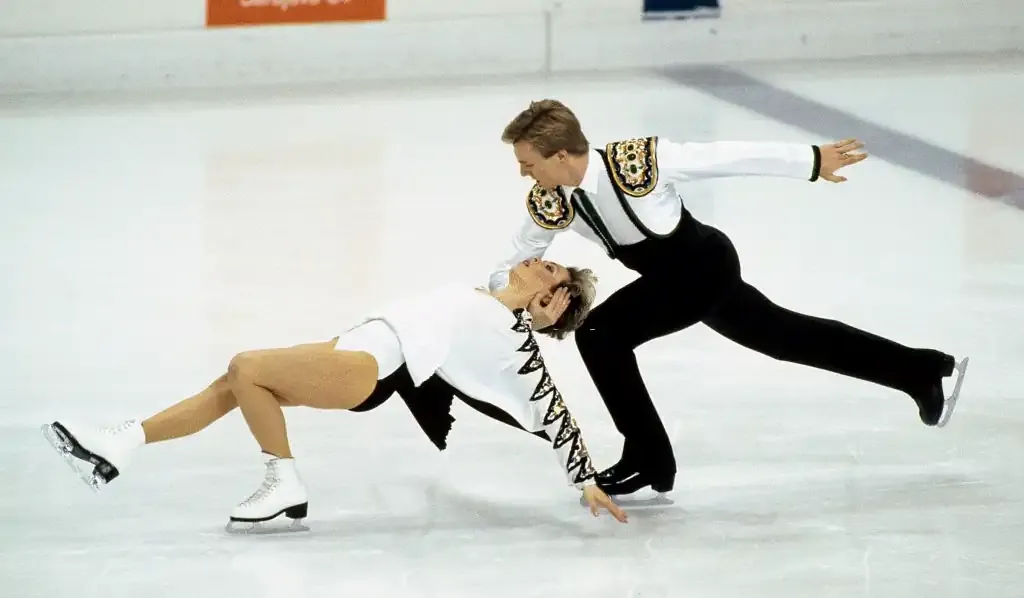
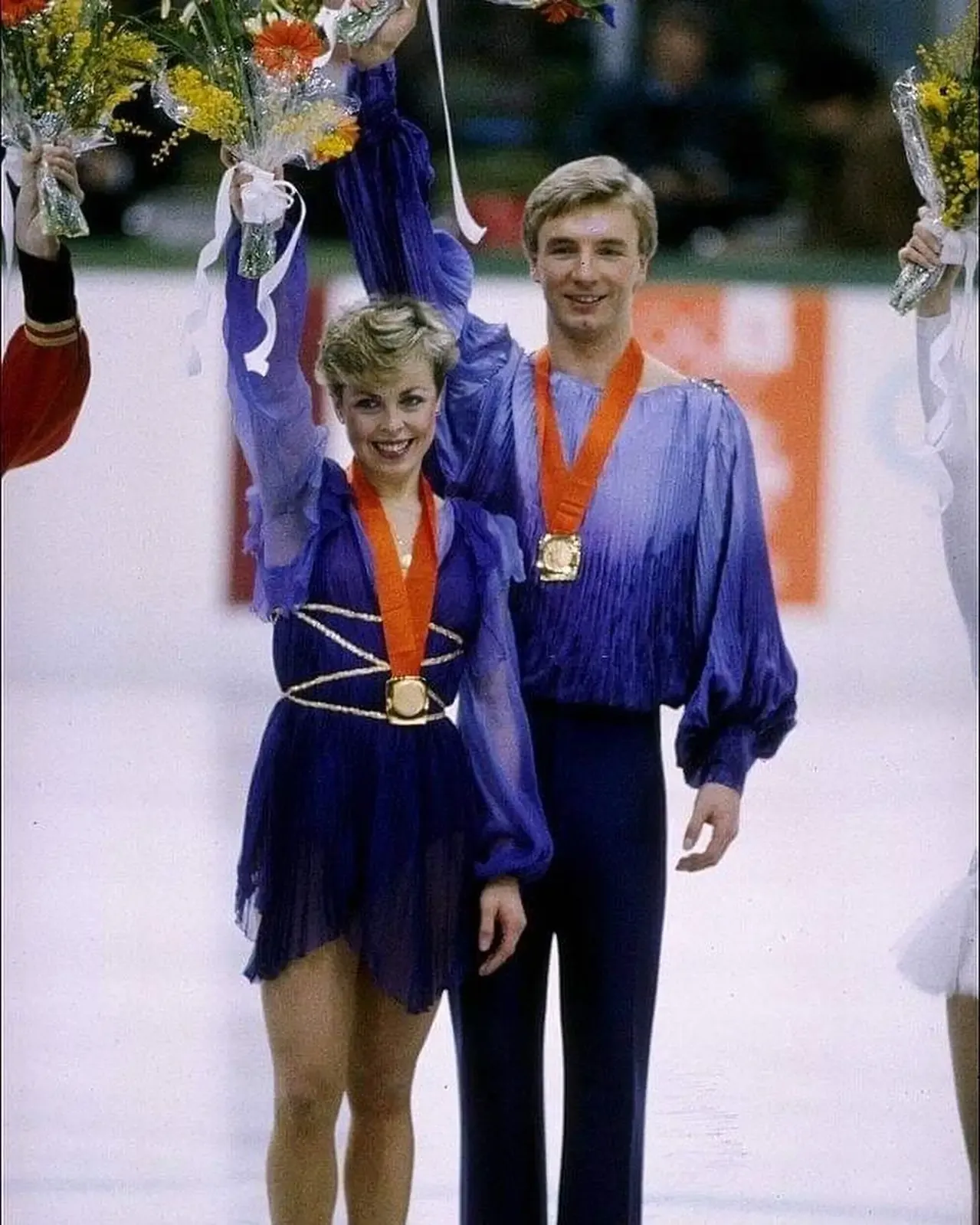
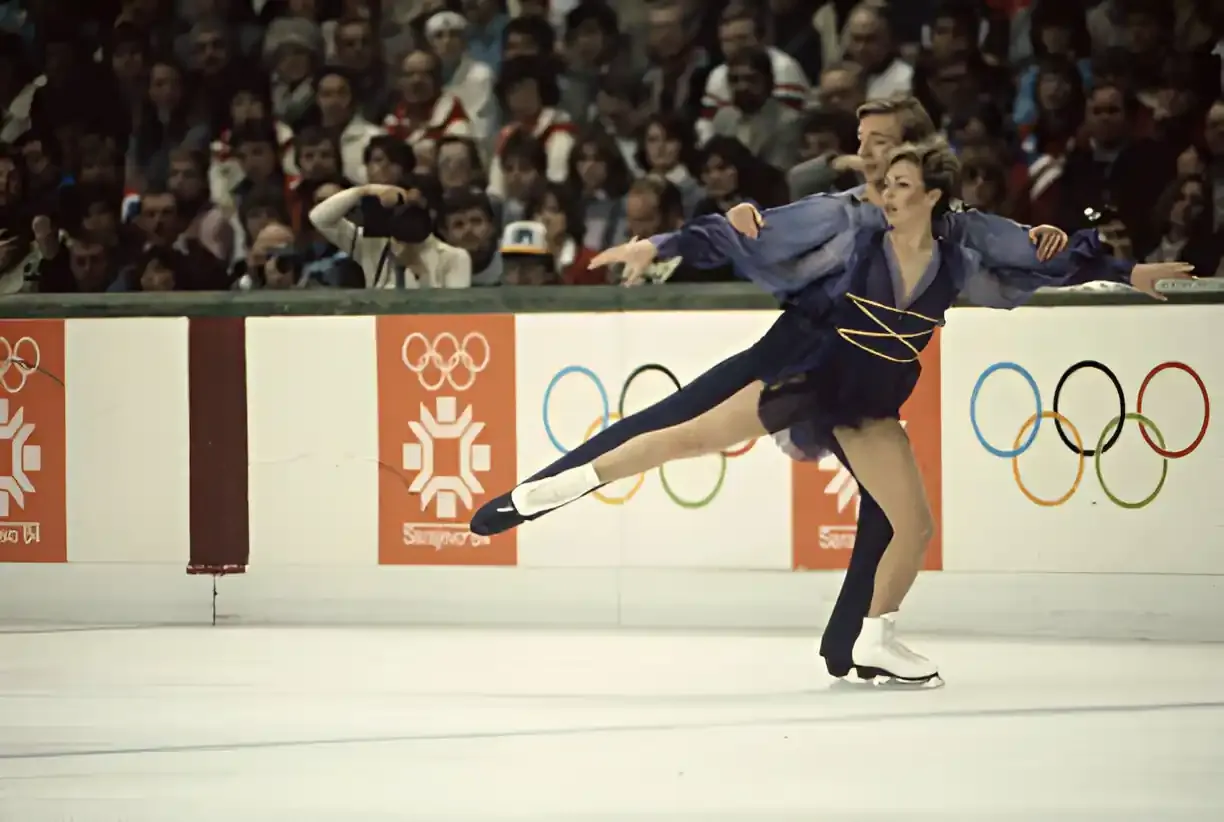
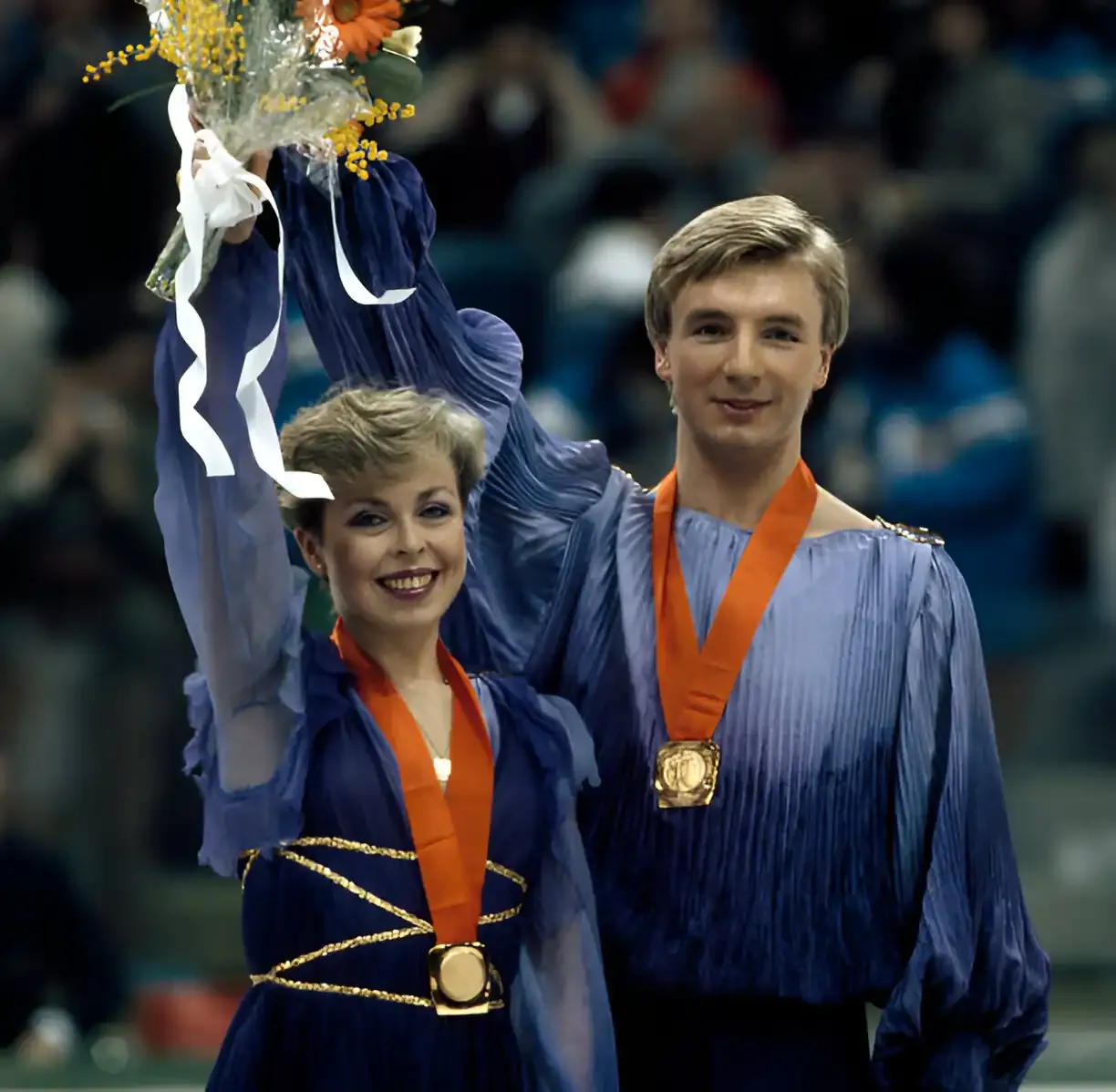
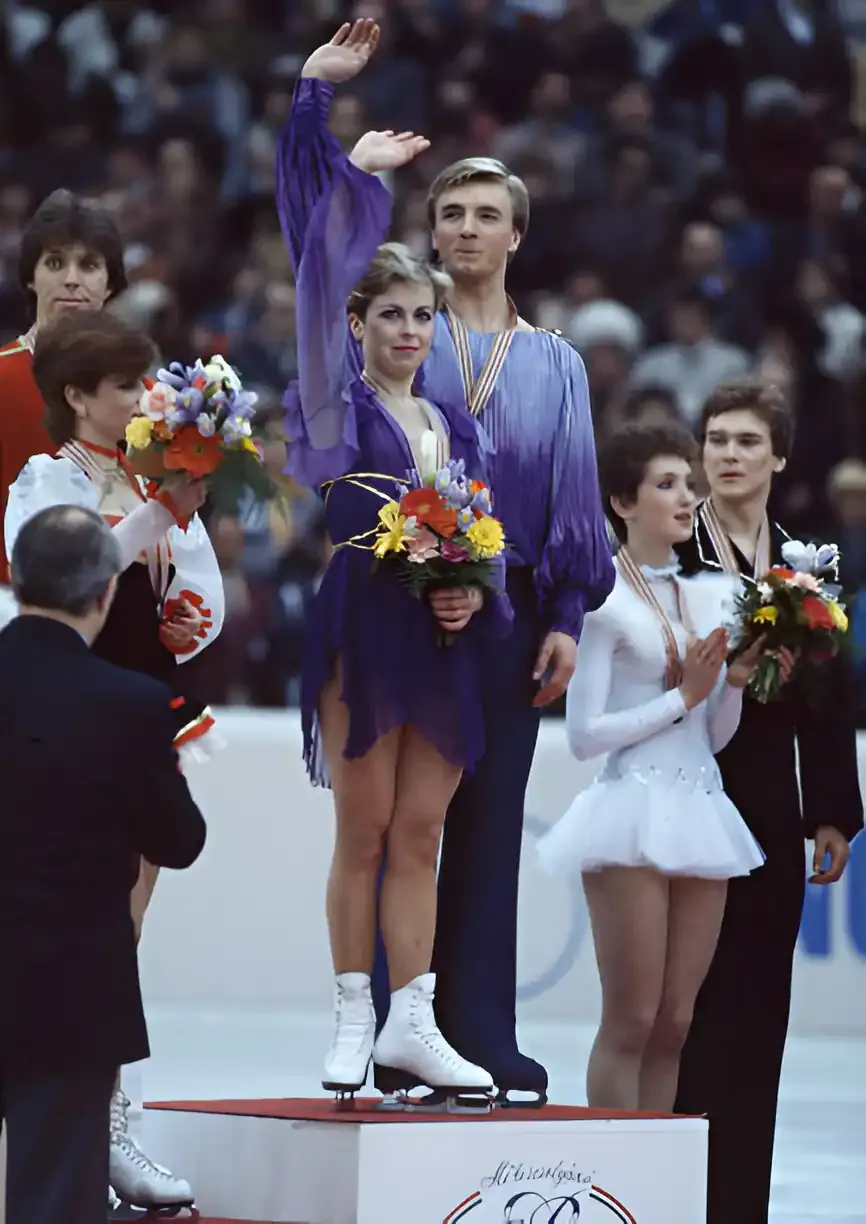
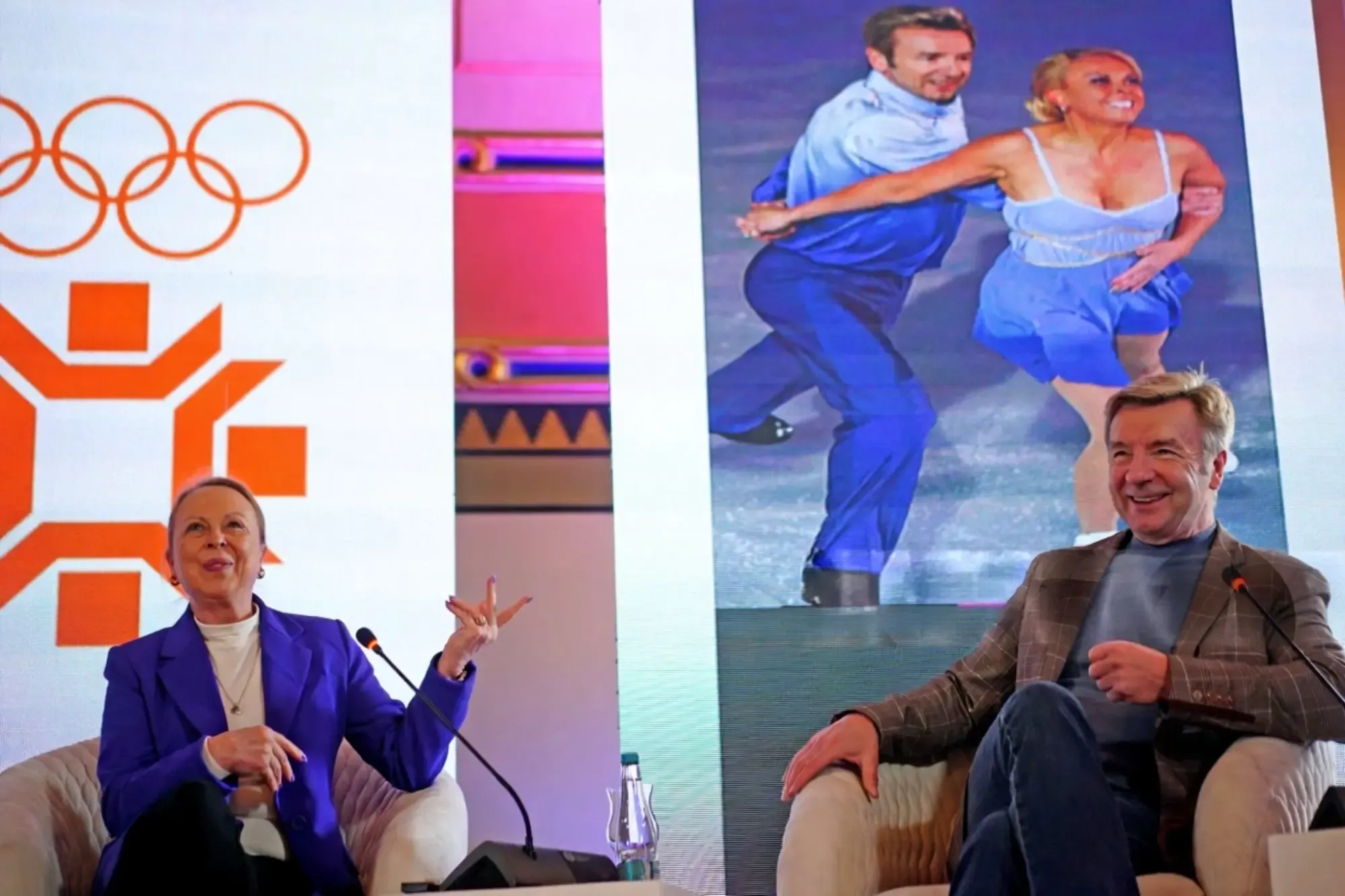
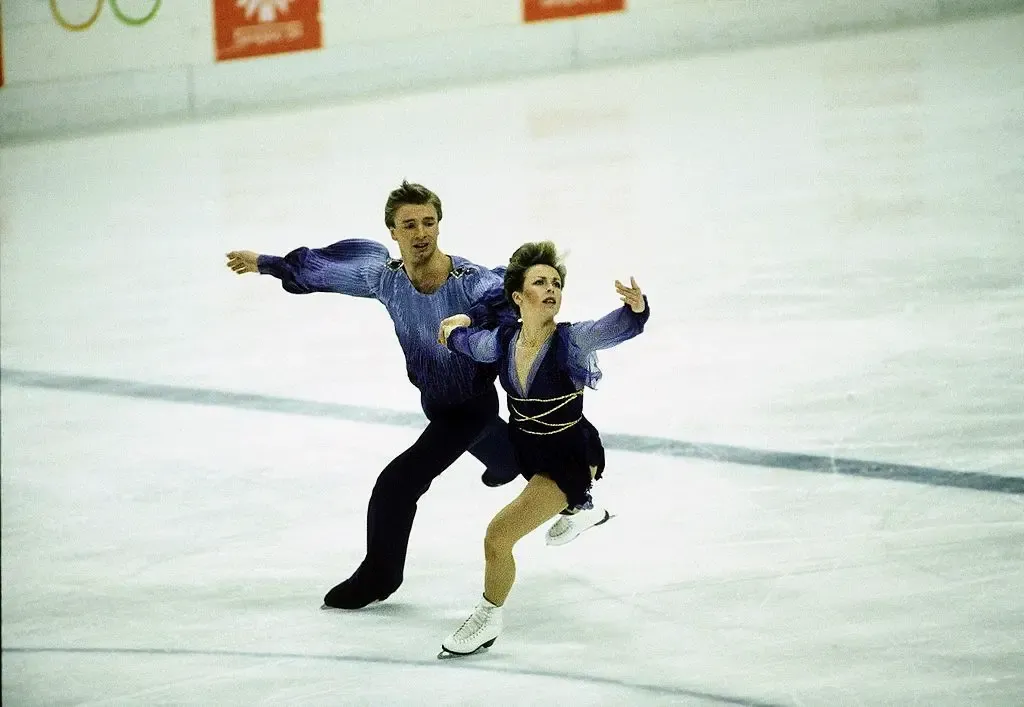
The hall became the site of one of the most famous moments in Olympic history on Valentine’s Day, 1984. British ice dancers Jayne Torvill and Christopher Dean performed their free dance to Maurice Ravel’s Boléro, a routine that began with the pair on their knees to circumvent timing rules. Their performance was so flawless that they received a row of perfect 6.0 scores for artistic impression, an unprecedented feat. Press reports described the atmosphere as a "rare spectacle," with the pair receiving thunderous applause from a packed house.
Zetra also hosted the women's singles competition, where East German skater Katarina Witt secured the gold medal in a narrow victory over American Rosalynn Sumners. In the men’s event, American Scott Hamilton claimed the gold, despite a strong push from Canada’s Brian Orser, who won both the short and free programs but trailed Hamilton in the compulsory figures.
Ice Hockey: A Tournament of Giants
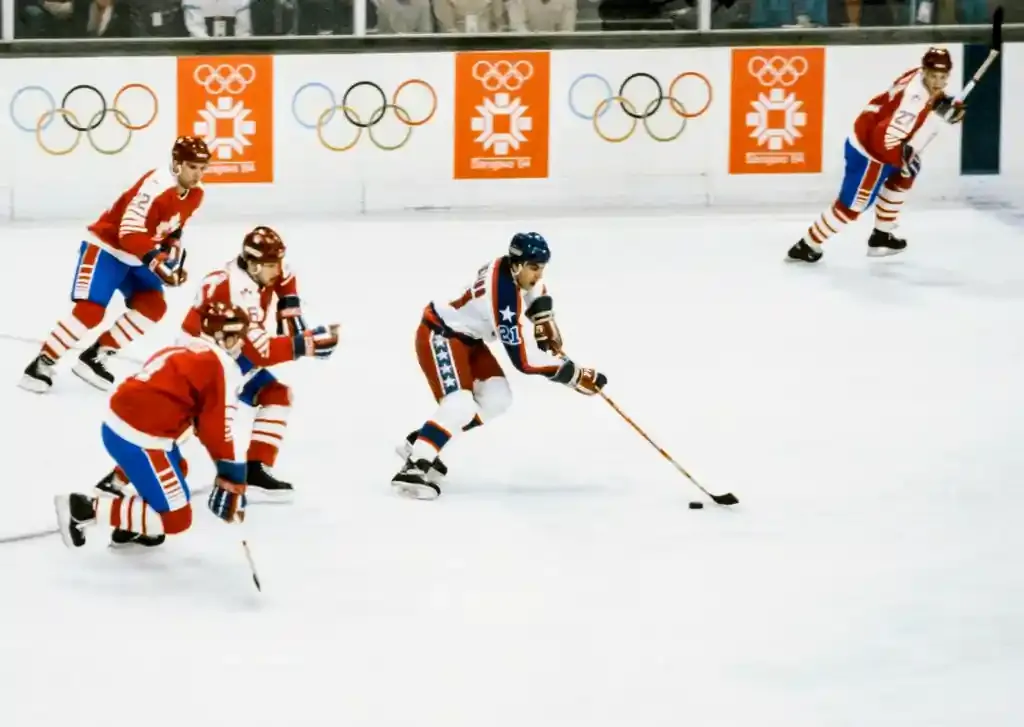
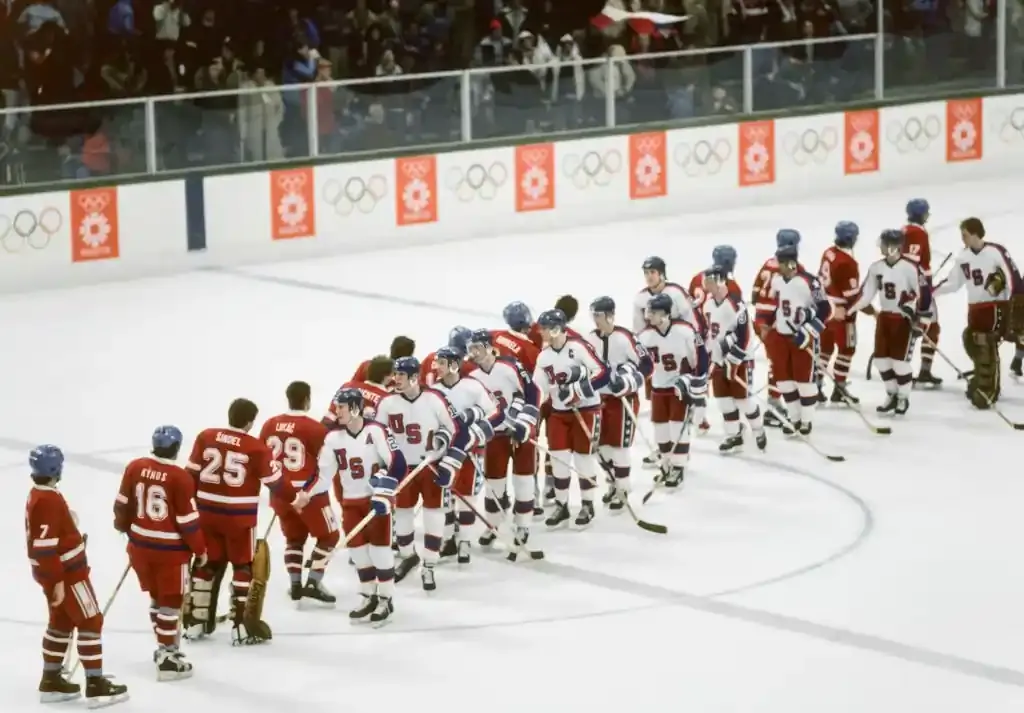
The Olympic Hall echoed with the cheers of over 100,000 hockey fans throughout the tournament. The premier event was the final-day matchup between the Soviet Union and Czechoslovakia. The vaunted Soviet team emerged victorious, securing the gold medal and cementing their dominance with a seven-game winning streak that became etched in the memories of all who witnessed it.
Speed Skating: Records on the Outdoor Oval
Just outside the main hall, the 400-meter speed skating oval, the first of its kind in the Balkans, hosted 139 competitors from 24 countries. This event marked the Olympic debut for speed skaters from Yugoslavia and the British Virgin Islands. East Germany dominated the oval, winning 11 medals. Karin Enke became the standout individual athlete, winning two gold and two silver medals.
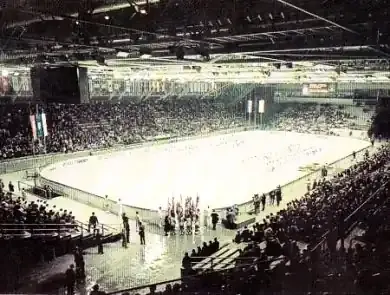
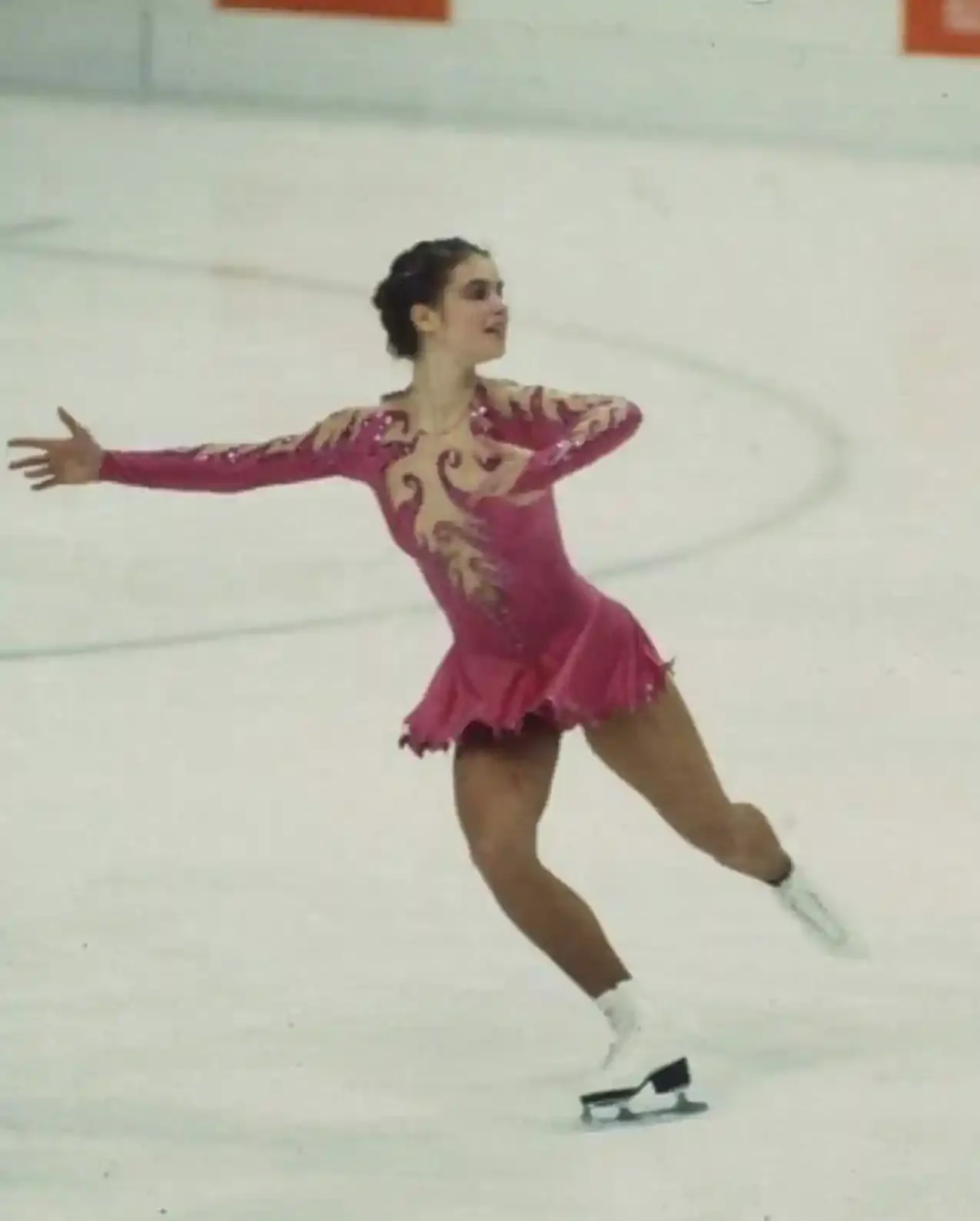
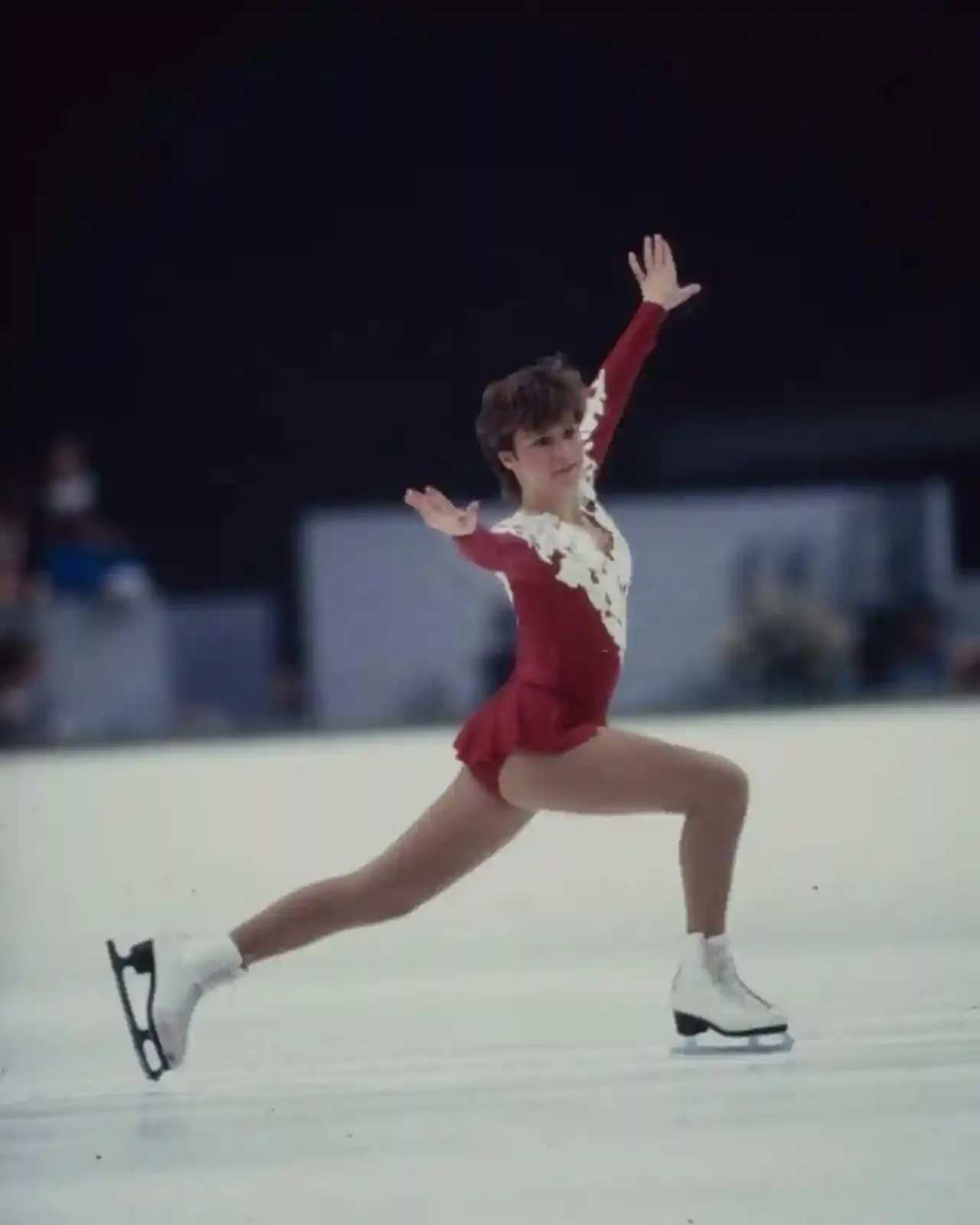
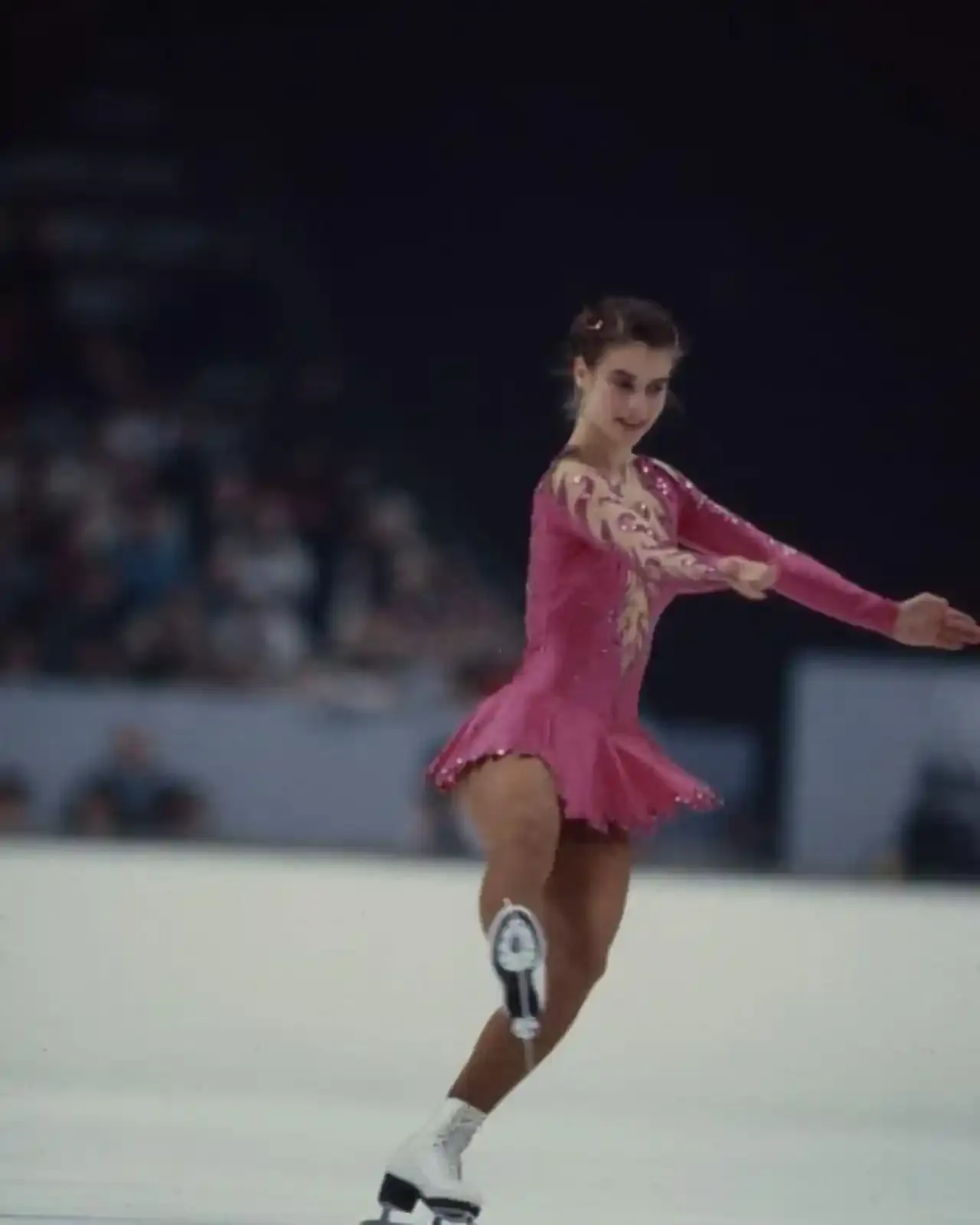
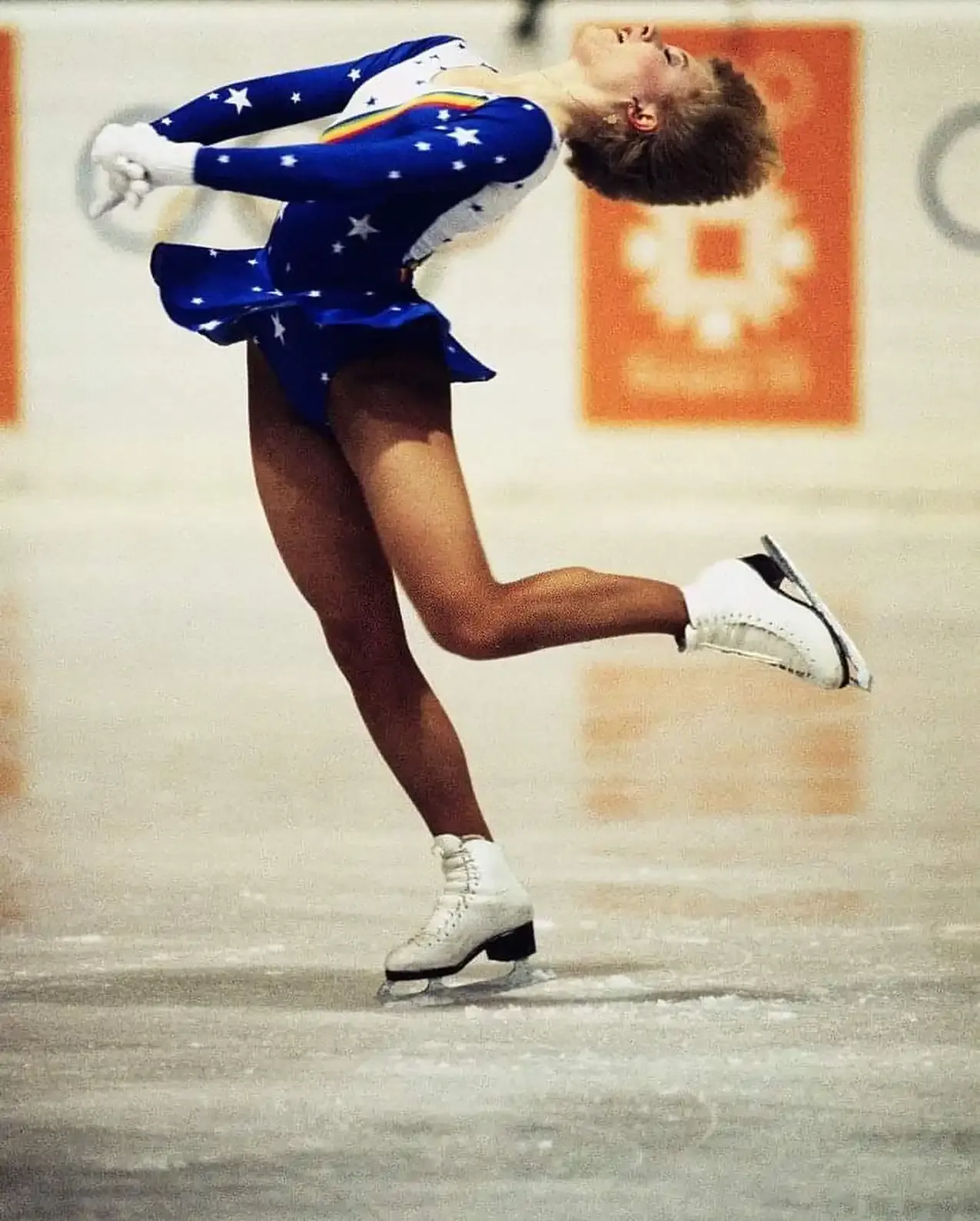
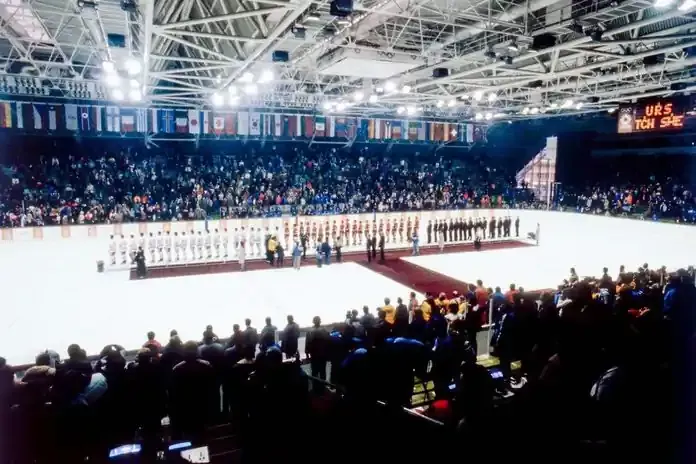
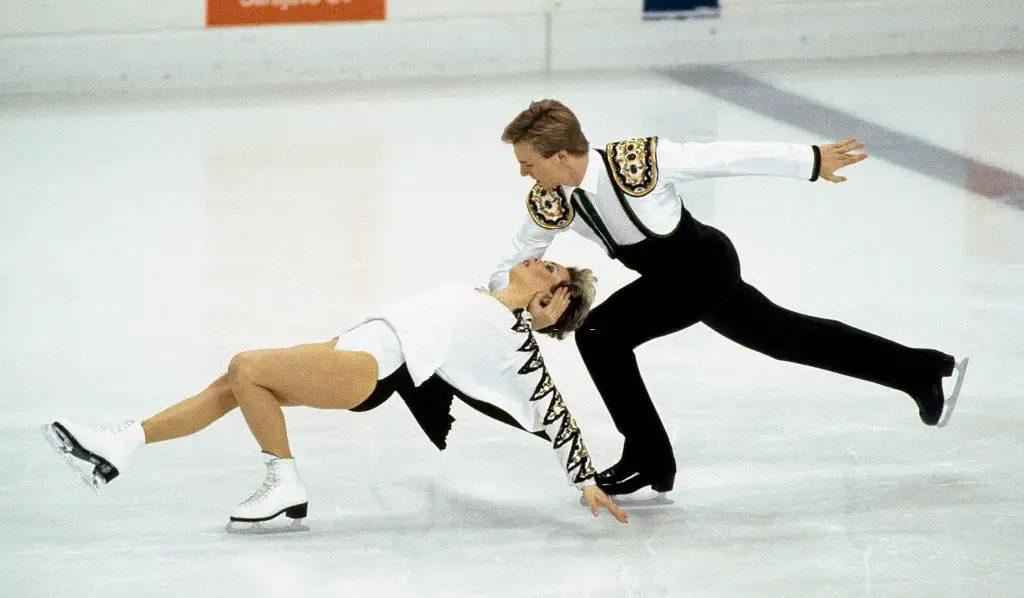
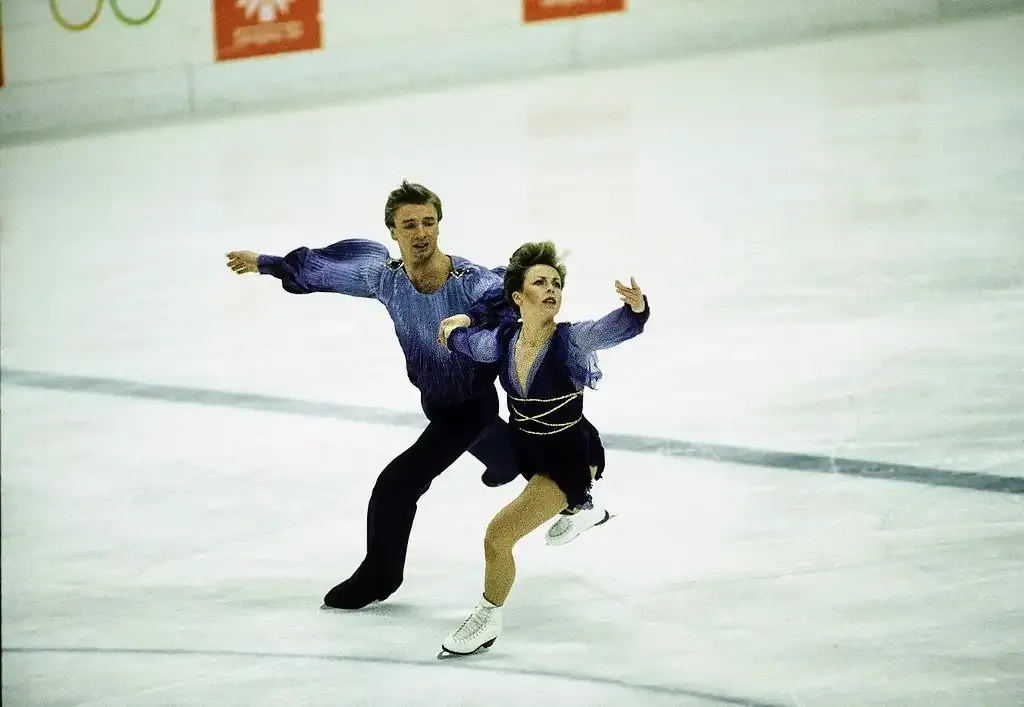
A packed Olympic ice scene captures Zetra at full capacity during the 1984 program.
Figure skaters are shown in competition sequences from Zetra's Olympic program.
Figure skaters are shown in competition sequences from Zetra's Olympic program.
Figure skaters are shown in competition sequences from Zetra's Olympic program.
Figure skaters are shown in competition sequences from Zetra's Olympic program.
Figure skaters are shown in competition sequences from Zetra's Olympic program.
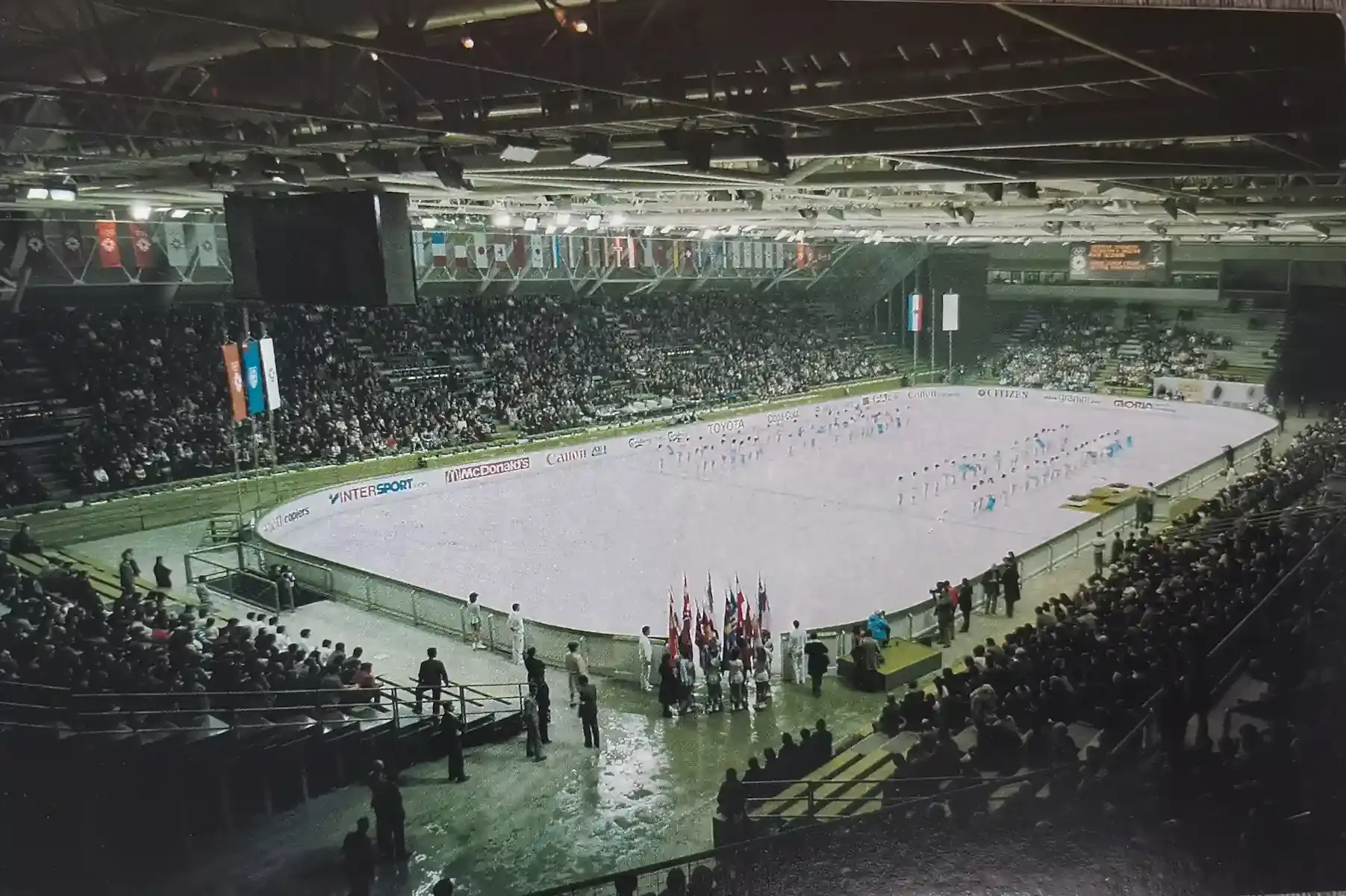
The closing ceremony fills the arena floor with athletes at the end of Sarajevo 1984.
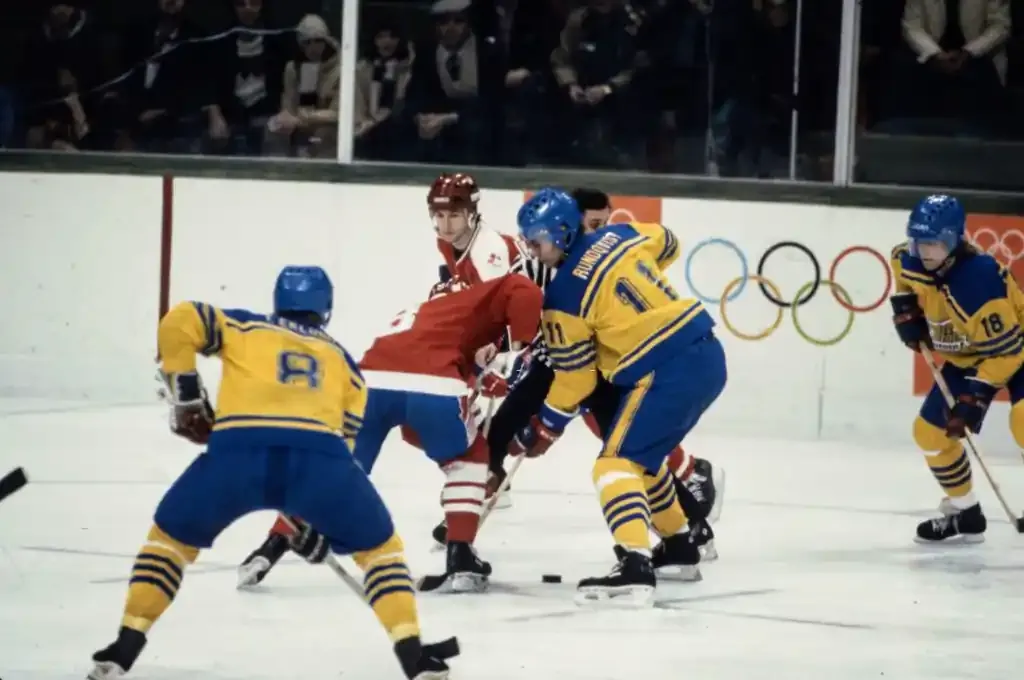
Olympic hockey action unfolds on Zetra's main rink before a full crowd.
A hockey medal-ceremony moment shows teams assembled on the ice beneath Olympic marks.
This game frame documents a high-profile USA versus Czechoslovakia Olympic hockey matchup.
Olympic hockey action unfolds on Zetra's main rink before a full crowd.
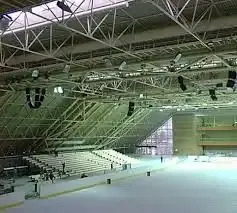
An interior arena view shows seating, lighting, and ice-surface configuration during the Games.
An interior arena view shows seating, lighting, and ice-surface configuration during the Games.
Under evening lights, the hall appears in active Olympic operation during the Games.
Torvill and Dean perform at Zetra in the iconic ice-dance sequences of Sarajevo 1984.
Torvill and Dean perform at Zetra in the iconic ice-dance sequences of Sarajevo 1984.
Torvill and Dean perform at Zetra in the iconic ice-dance sequences of Sarajevo 1984.
Torvill and Dean perform at Zetra in the iconic ice-dance sequences of Sarajevo 1984.
Torvill and Dean perform at Zetra in the iconic ice-dance sequences of Sarajevo 1984.
Torvill and Dean perform at Zetra in the iconic ice-dance sequences of Sarajevo 1984.
Torvill and Dean perform at Zetra in the iconic ice-dance sequences of Sarajevo 1984.
Torvill and Dean perform at Zetra in the iconic ice-dance sequences of Sarajevo 1984.
The 1984 Closing Ceremony
On the evening of February 19, 1984, Zetra Hall hosted the Games' final act. Before a capacity crowd of 8,500 people, athletes from 49 nations gathered on the ice for a thirty-minute ceremony. In a departure from the grand scale of the opening at Koševo Stadium, the closing was intimate; due to the arena's size, each country was limited to six representatives on the floor. Following a figure skating exhibition, Juan Antonio Samaranch declared the Games "the best ever" before the Olympic flame was extinguished, accompanied by the traditional farewell: "Doviđenja, drago Sarajevo" (Goodbye, dear Sarajevo).
Maintaining the "Prettiest Sports Complex"
Beyond its architectural flair, Zetra was a triumph of industrial operation, covering a total area of 42 hectares (103 acres) when including the surrounding recreation zones.
Technical Operations and Ice Management
To maintain world-class surfaces for both the indoor hall and the outdoor oval, Zetra utilized a centralized 2 MW power plant. This facility housed seven compressors and three thermal pumps to regulate the ice across different environments. The outdoor speed skating rink, covering 4,800 square meters, required precise temperature control to withstand the variable Balkan winter. To move people and equipment efficiently, the hall was equipped with "David Pajić" personal and cargo lifts. In a stroke of rational planning, the authors dedicated the 16,000-square-meter basement level to storage for the city’s public utilities.
Atmosphere and the Spectator Experience
Spectators and athletes benefited from 43 dressing rooms equipped with showers and saunas located below the venue. The hall provided the first top-level conditions in Yugoslavia for indoor athletics. When not used for ice, the oval was designed to host six tennis courts.
Spectators described the venue as a "veritable palace of sports" where the acoustics and modern lighting systems created a theater-like intensity. One of the seven Olympic press centers was located on-site, specifically equipped to handle the high-speed demands of ice hockey and skating journalists. The integration of modern technology was a point of pride; Zetra featured state-of-the-art electronic scoreboards and was a primary node for the Games' Teletext magazine, which provided real-time results and news in both English and Serbo-Croat to TVs around the world.
Technical Profile (1984 Configuration)
- Total Construction Area (Hall): 14,680 square meters.
- Total Complex Area: 42 hectares.
- Indoor Span: 96 meters (six lattice girders).
- Indoor Seating: 8,500 (Olympic); up to 14,000 (Multipurpose).
- Outdoor Seating: 10,000 (Speed skating stadium).
- Ice Surface (Hall): 60 x 30 meters.
- Speed Skating Track: 400 meters long (6,000 square meter area).
- Cooling System: 2 MW power plant with 7 compressors and 3 thermal pumps.
- Media Facilities: On-site Press Center with TV information systems and Teletext decoders.
- Secondary Uses: Hall equipped with infrastructure for basketball, volleyball, handball, and athletics.
- Athlete Facilities: 43 dressing rooms with showers and saunas; 3,000 square meters of working area.
- Elevators: Personal and cargo lifts by "David Pajić."
- Basement Storage: 16,000 square meters.
From Olympic Glory to War Damage
The transition from a world-class sporting venue to a theater of conflict was swift and devastating. In the six years following the Games, Zetra remained a vibrant center for ice sports and culture. Its last major moment of unity occurred in 1991, when it hosted the "YUTEL za mir" (YUTEL for Peace) concert, an anti-war event attended by tens of thousands of young people from across Yugoslavia.

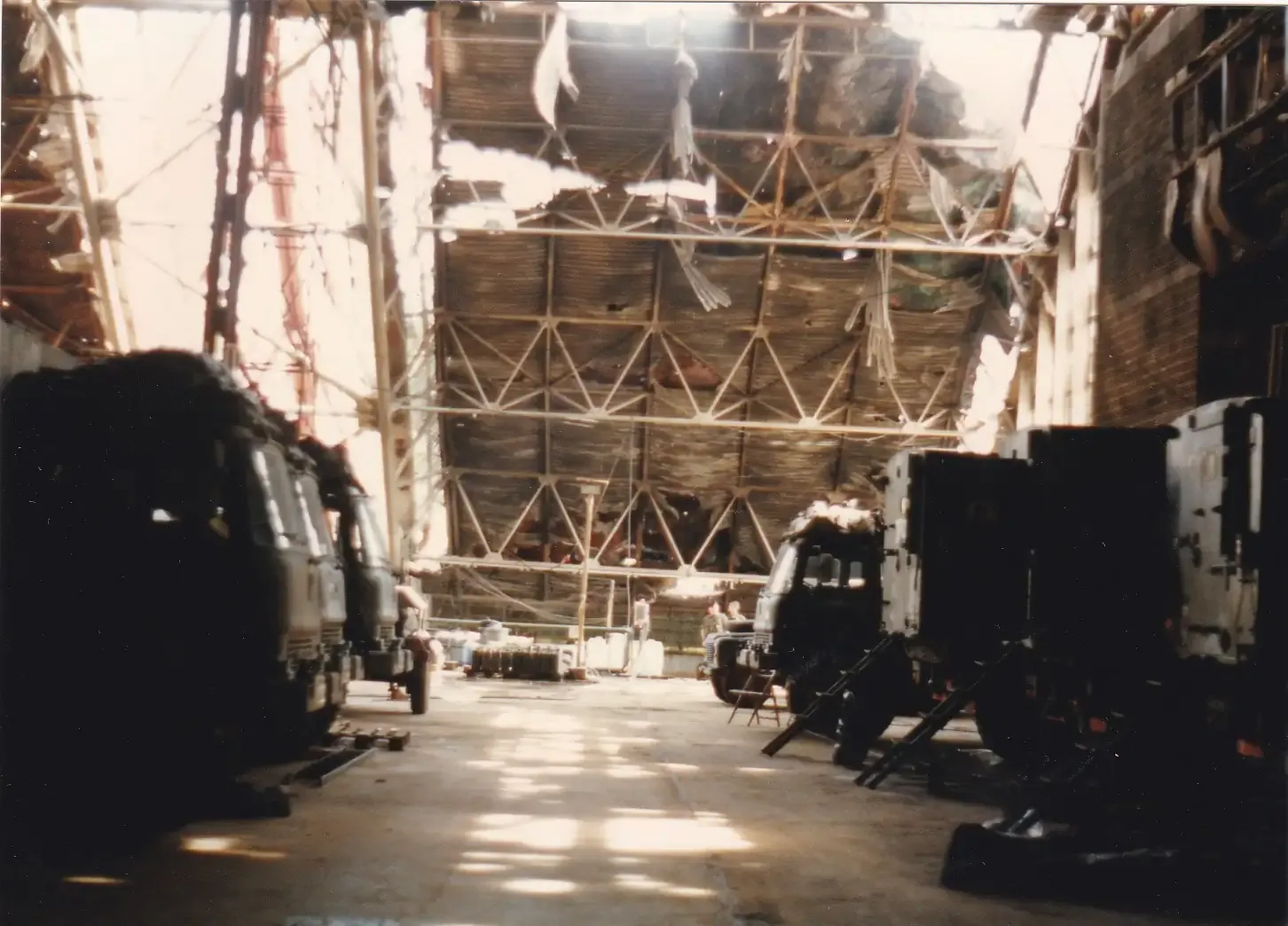
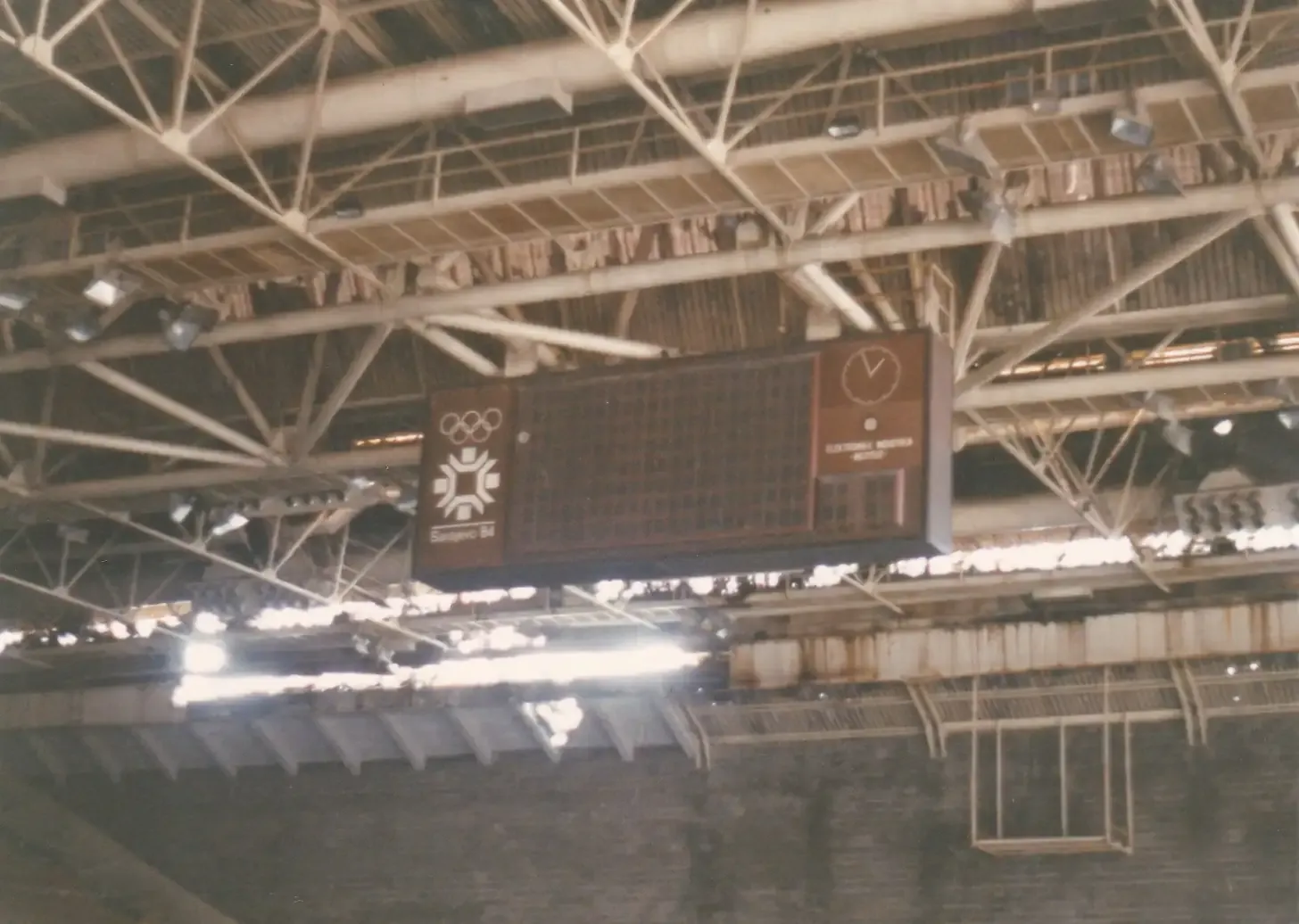
By May 1992, the complex was targeted by Serb forces. On May 25, 1992, the arena suffered catastrophic damage from shelling and phosphorus bombs, which ignited the wooden interior and the legendary copper roof. While firefighters managed to save portions of the shell, the arena was left a "fire-streaked shell" with a gaping hole in the ceiling and wires dangling over an exposed floor.
A Shelter and a Cemetery
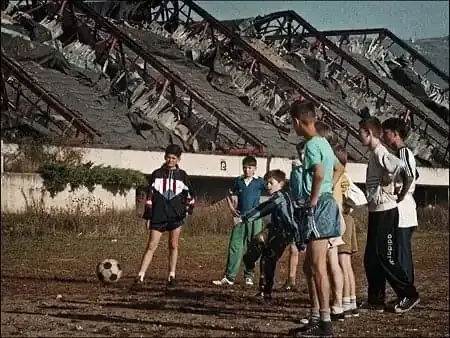
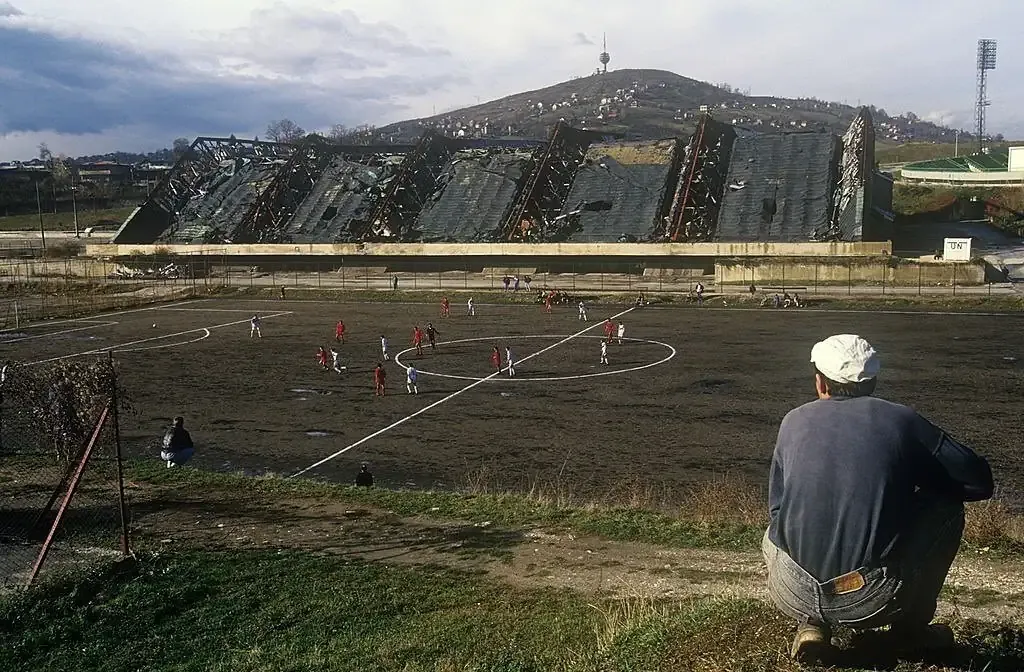
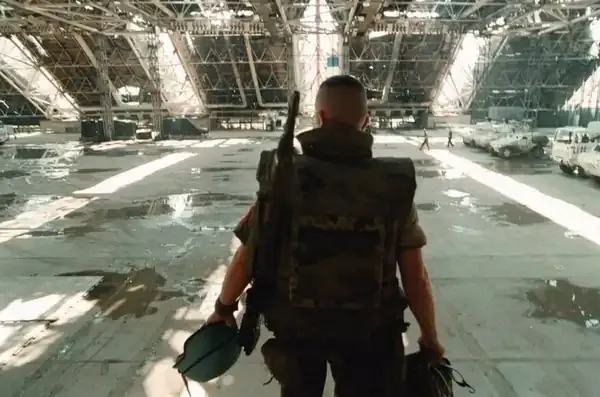
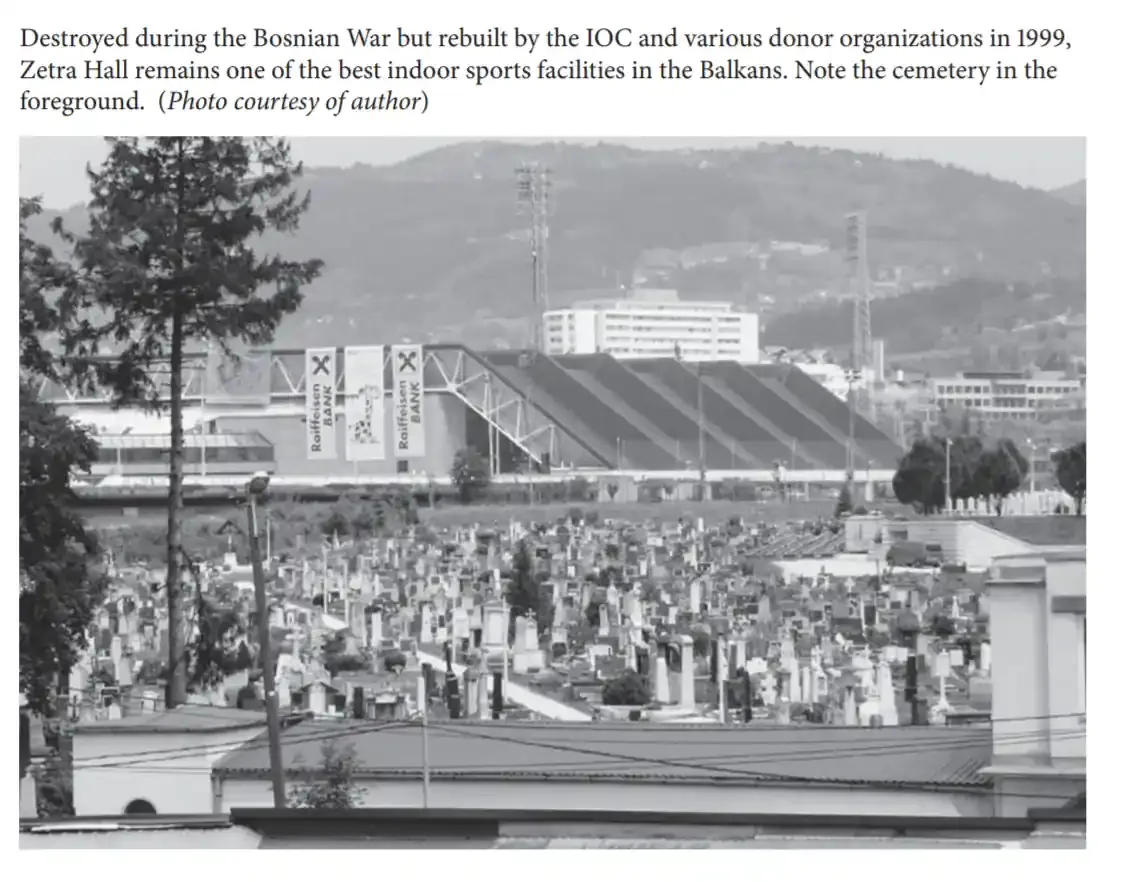
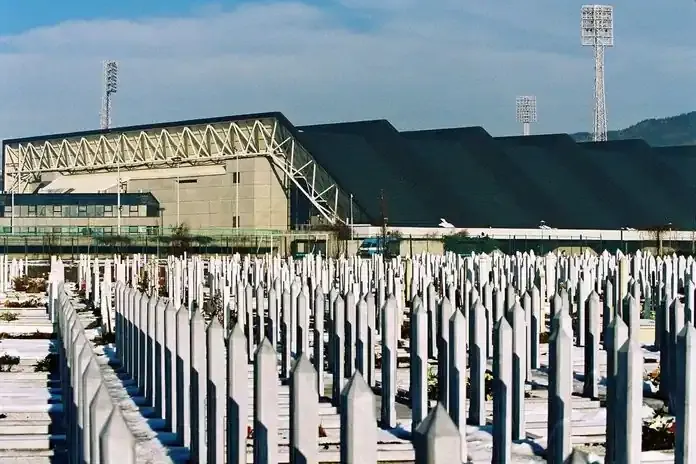
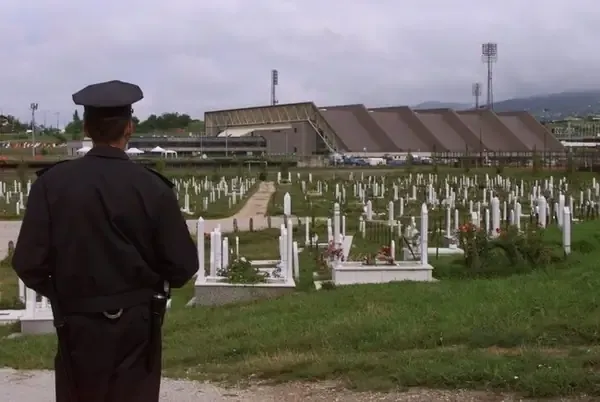
During the Siege of Sarajevo, the ruined Zetra complex was repurposed for survival. The deep basements and main hall were used by the United Nations and French peacekeepers as a staging area for equipment and a morgue for victims of the conflict. In a grim reversal of its Olympic purpose, the wooden seats that once held cheering fans were dismantled and used as raw material for coffins. Because the city's traditional cemeteries were often under sniper fire, the training fields and the soccer pitch adjacent to the speed skating oval were converted into an improvised graveyard, where neat rows of white headstones remain today as a testament to the thousands who perished.
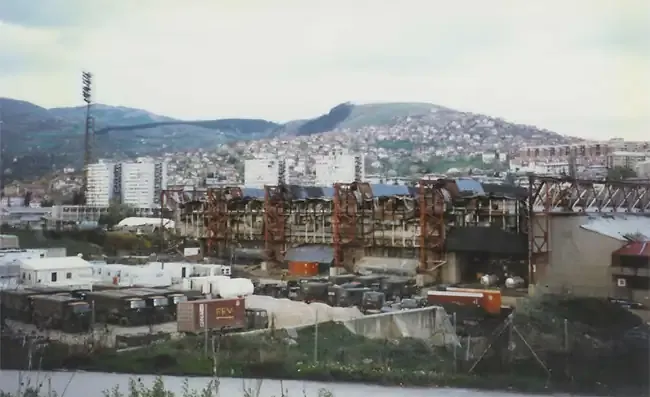
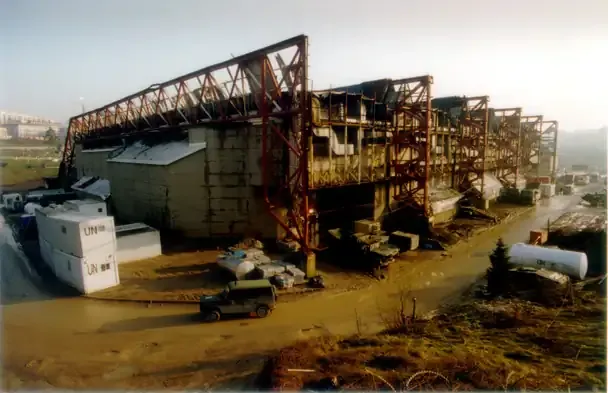
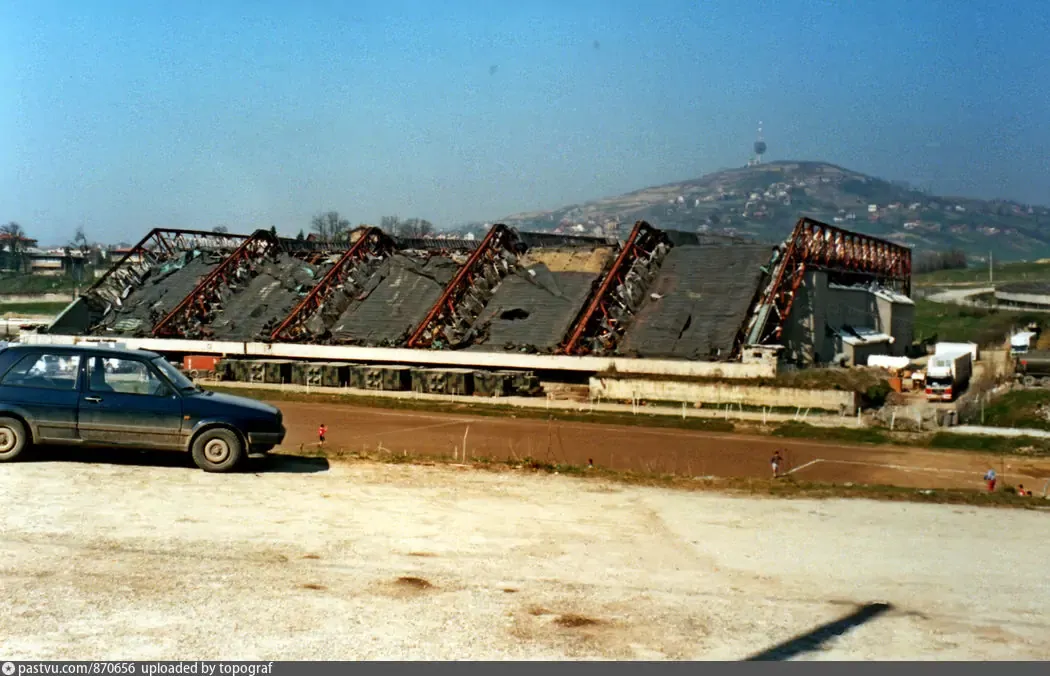
War-damaged Zetra appears as a burned and stripped shell during the siege period.
War-damaged Zetra appears as a burned and stripped shell during the siege period.
An early post-war view shows the complex before full reconstruction was completed.
Children playing by the ruins symbolize everyday life returning around the damaged venue.
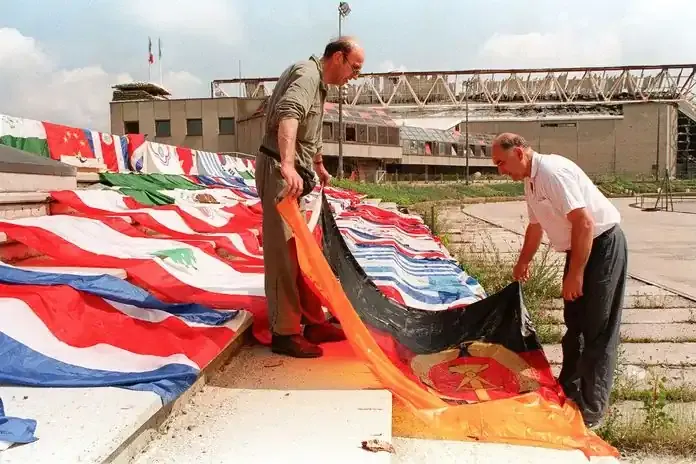
Saved ceremonial flags are dried and prepared during the reconstruction-era recovery phase.
A football match on the grounds illustrates provisional civic reuse in the immediate post-war years.
The ruined interior documents fire damage and collapsed finishes before rebuilding.
The ruined interior documents fire damage and collapsed finishes before rebuilding.
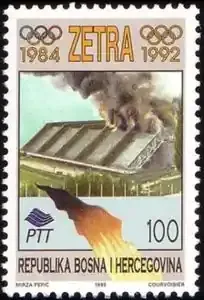
A commemorative postage-stamp design memorializes the wartime burning of Zetra.
A UN soldier stands near the damaged complex, reflecting its wartime repurposing.
The 1999 Reconstruction
In February 1994, Juan Antonio Samaranch returned to the besieged city and stood at center ice in the ruined hall where he had closed the Games ten years earlier. Visibly moved, he promised the International Olympic Committee would lead the reconstruction.
Work began in September 1997. The project cost $20 million, with the IOC contributing $11.5 million. Additional funding was provided by the European Union, the City of Barcelona, and various international skating and humanitarian groups. The reconstruction followed the original designs where possible, successfully restoring the hall to its status as the premier sports facility in the Balkans by March 1999.
Zetra Today: The Juan Antonio Samaranch Olympic Hall
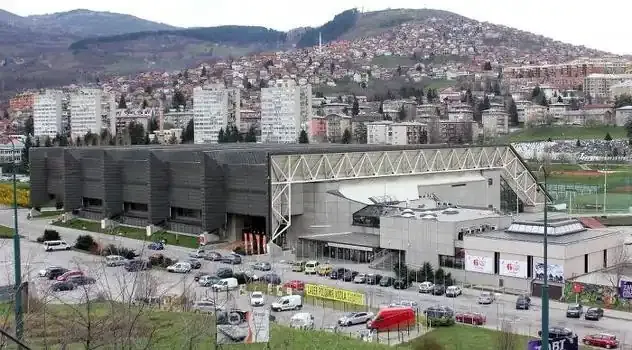
In 2010, following the death of the former IOC president, the venue was officially renamed the Juan Antonio Samaranch Olympic Hall to honor his role in the building's resurrection. The "new" Zetra remains a cornerstone of Sarajevo’s social and sporting life.
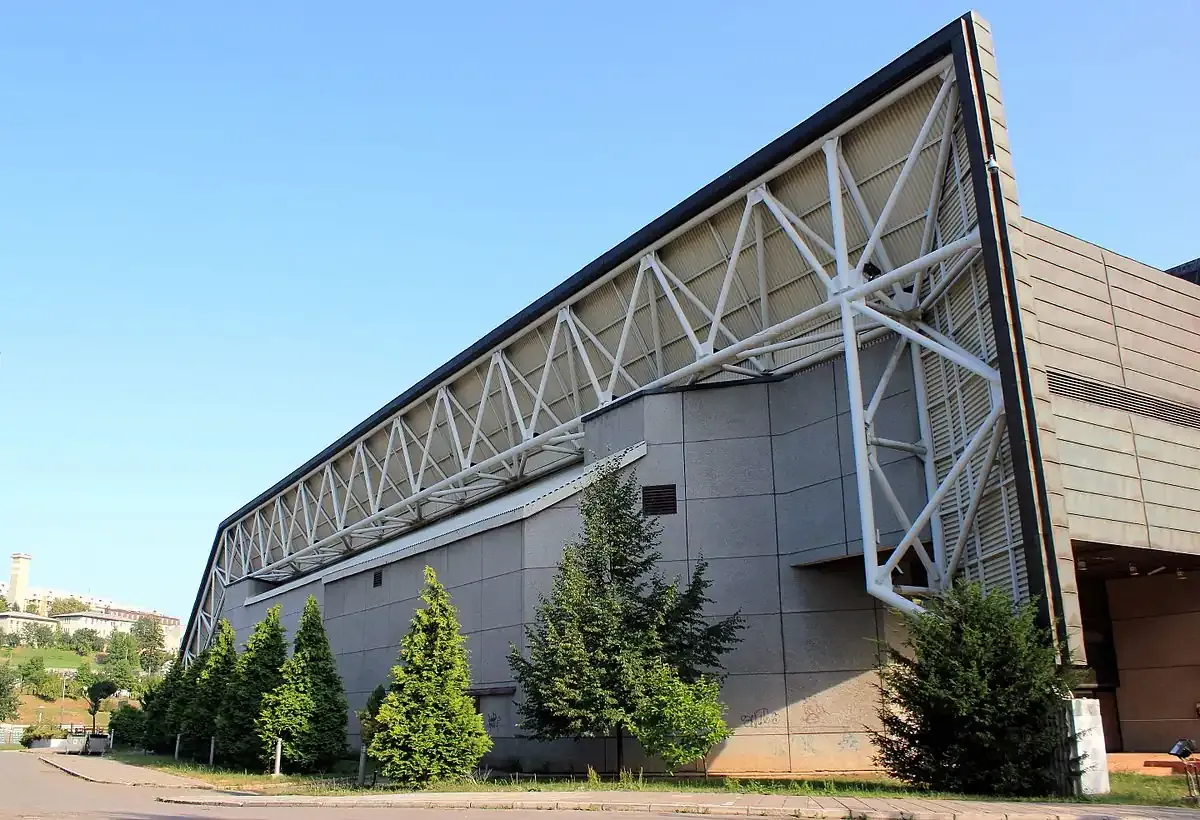
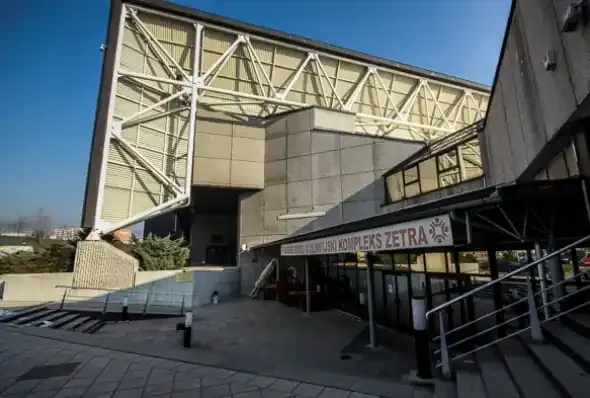
A post-reconstruction view tracks Zetra's return as a functioning civic and sports landmark.
A post-reconstruction view tracks Zetra's return as a functioning civic and sports landmark.
A post-reconstruction view tracks Zetra's return as a functioning civic and sports landmark.
A post-reconstruction view tracks Zetra's return as a functioning civic and sports landmark.
A post-reconstruction view tracks Zetra's return as a functioning civic and sports landmark.
The modern entrance facade shows the rebuilt complex in regular public use.
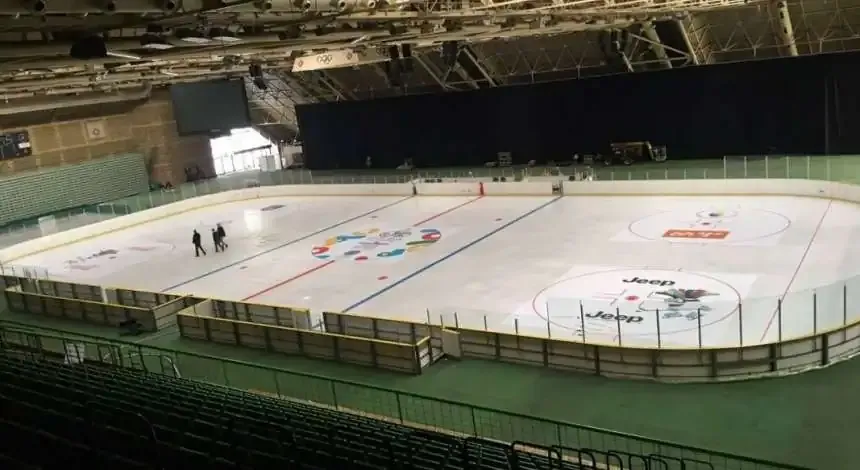
EYOF 2019 activity confirms Zetra's renewed role in international youth competition.
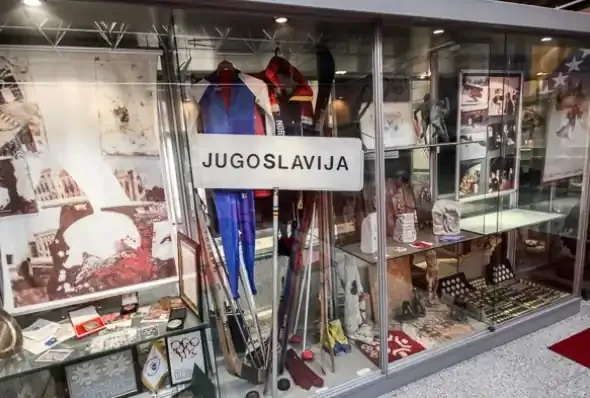
Museum displays preserve Sarajevo 1984 artifacts within the revived Zetra complex.
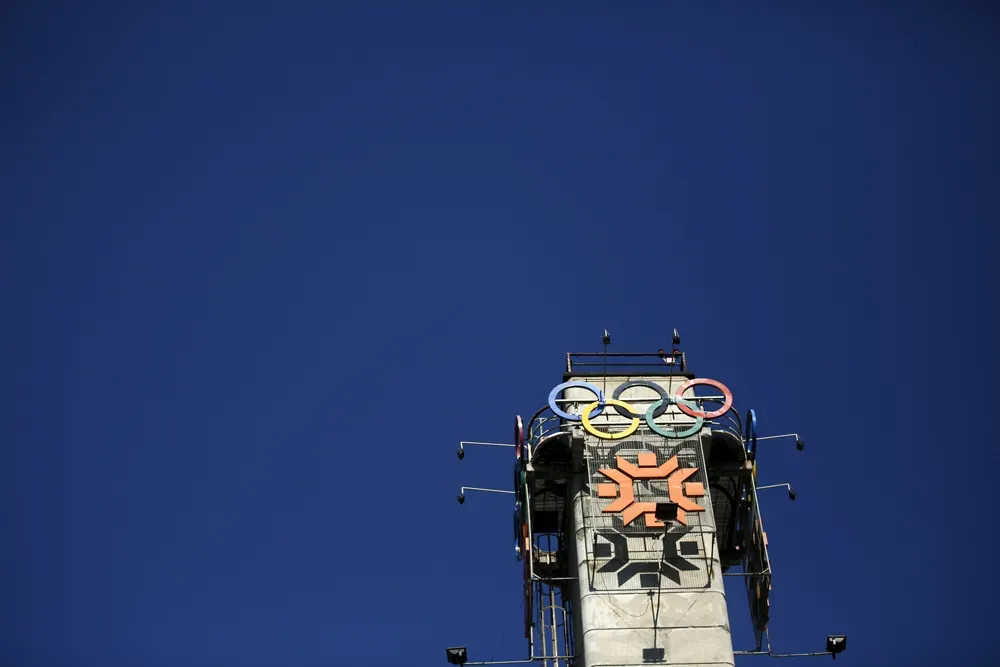
The Olympic tower detail marks continuity between the 1984 legacy and current site identity.
Legacy and Current Use
Today, the complex serves a wide variety of functions beyond its primary ice rink. The arena regularly hosts international sporting events (such as the 2019 European Youth Olympic Winter Festival) as well as major concerts, trade fairs, and political conferences. Despite the surrounding memorials, the hall is once again a place of "new signs of life," reclaiming its role as a regional hub for youth and athletics.
Visiting Zetra
Located in the Koševo district, the hall is easily accessible by public transport or a 20-minute walk from the city center.
During winter months, the rink is often open for public skating sessions, continuing the legacy of "mass sports and recreation" intended by its 1980s planners.