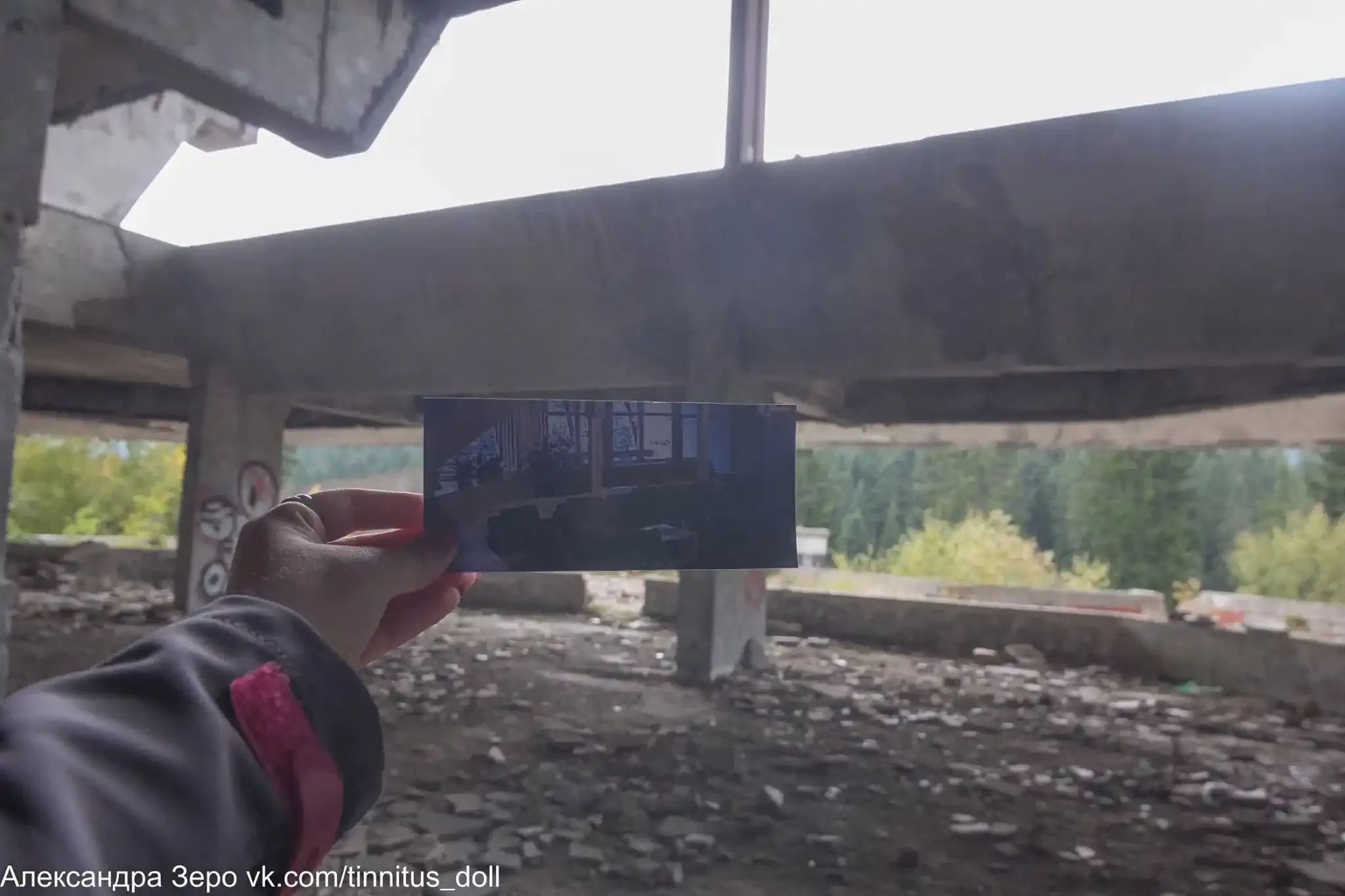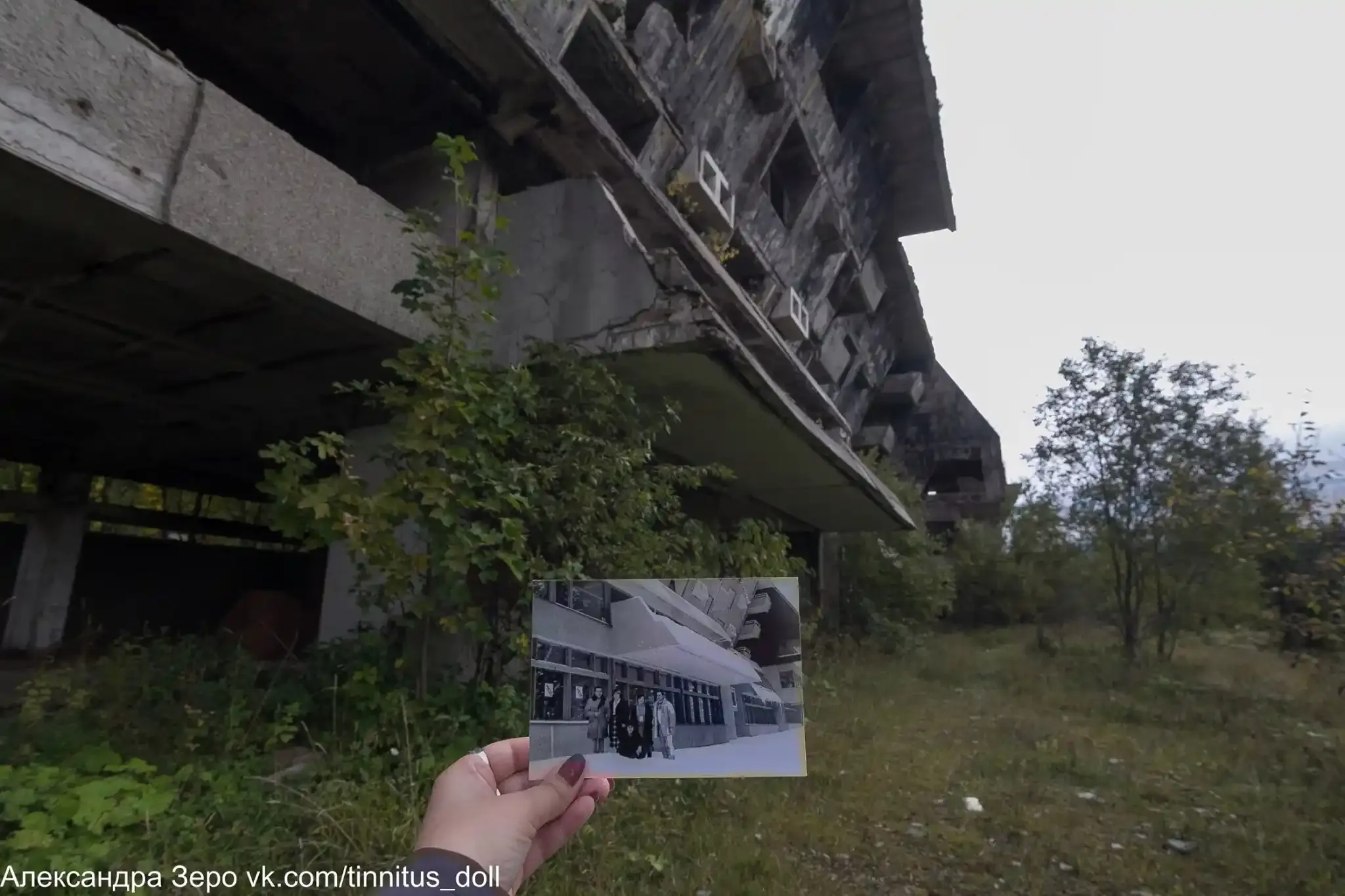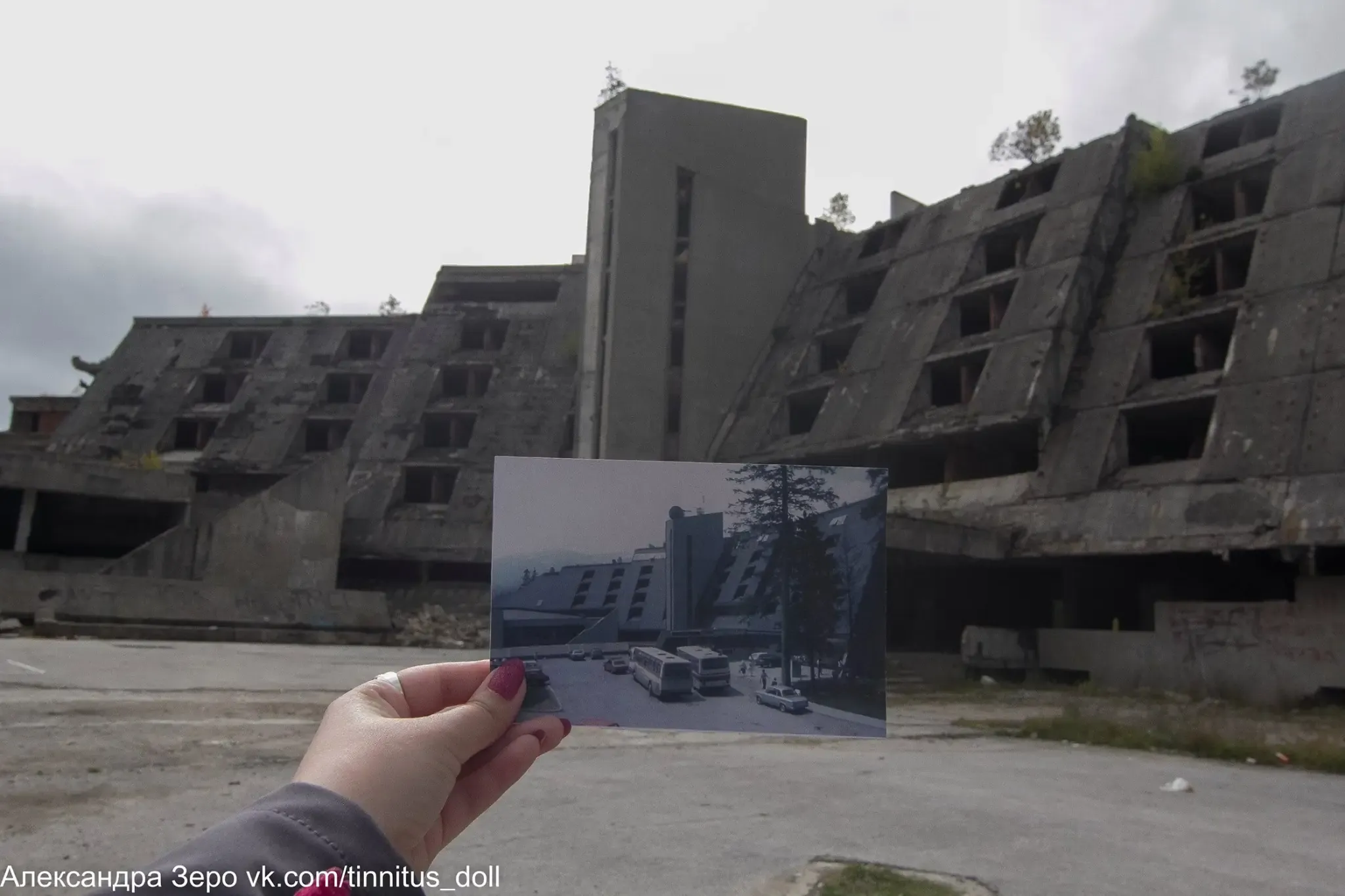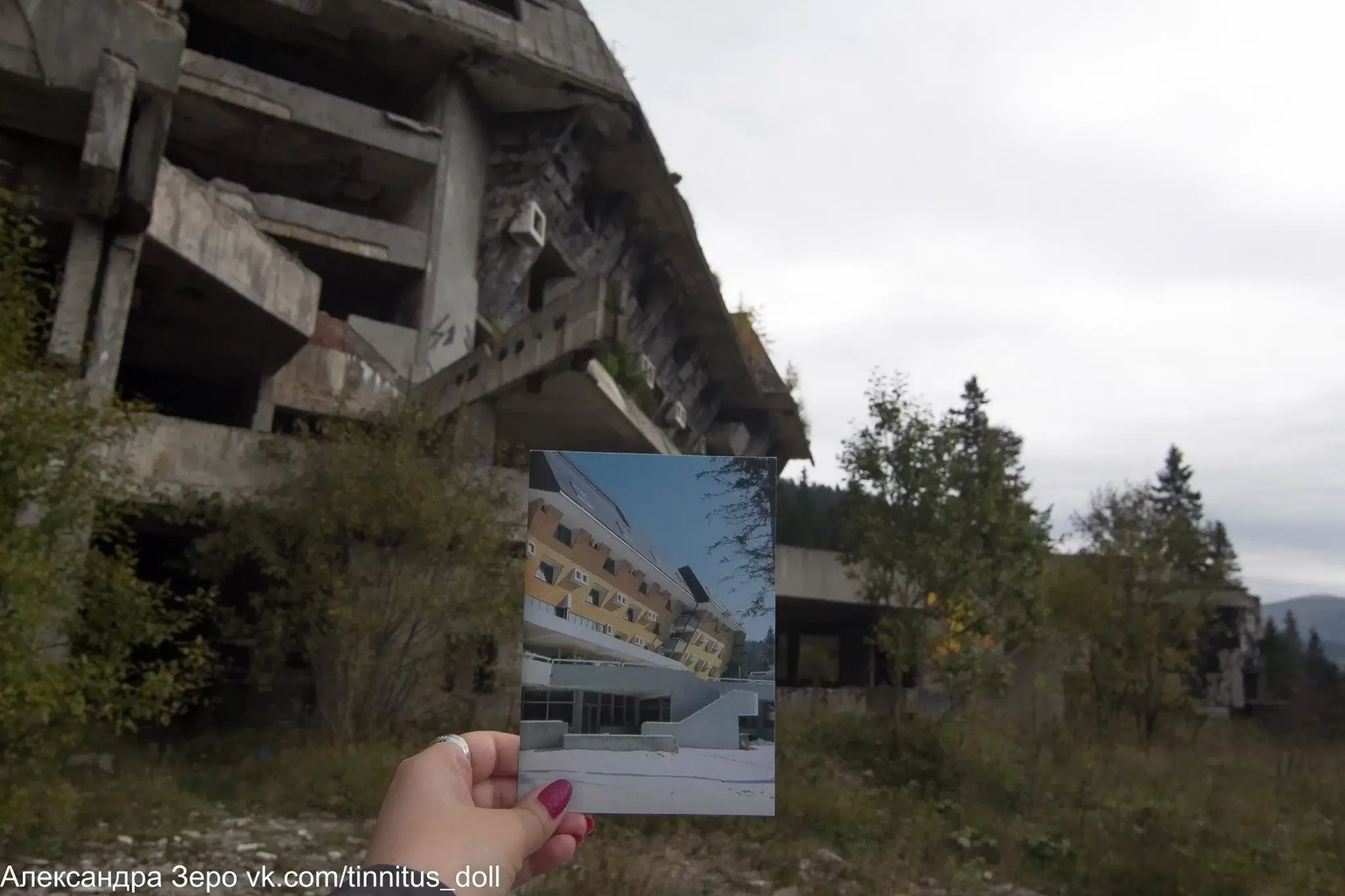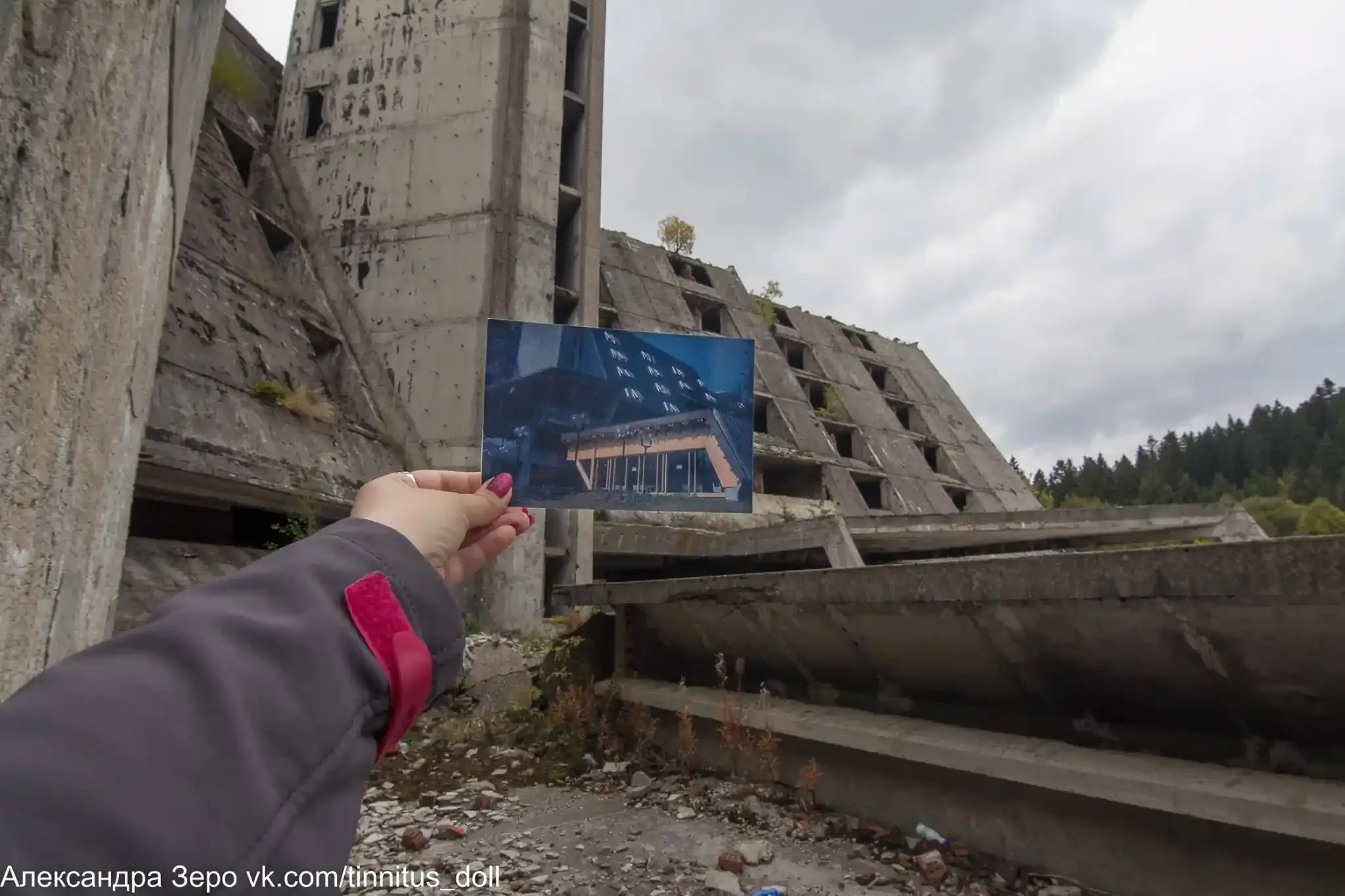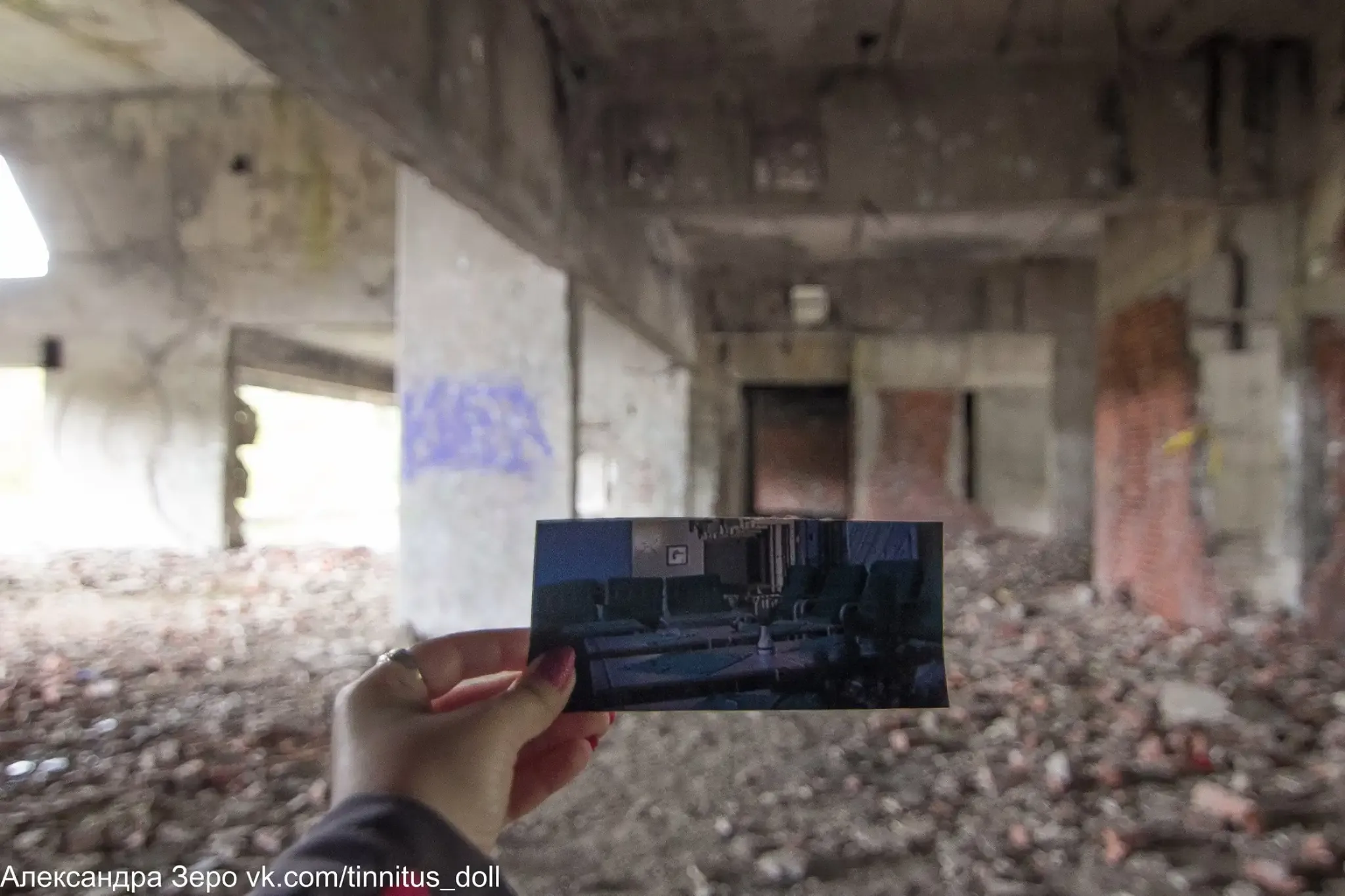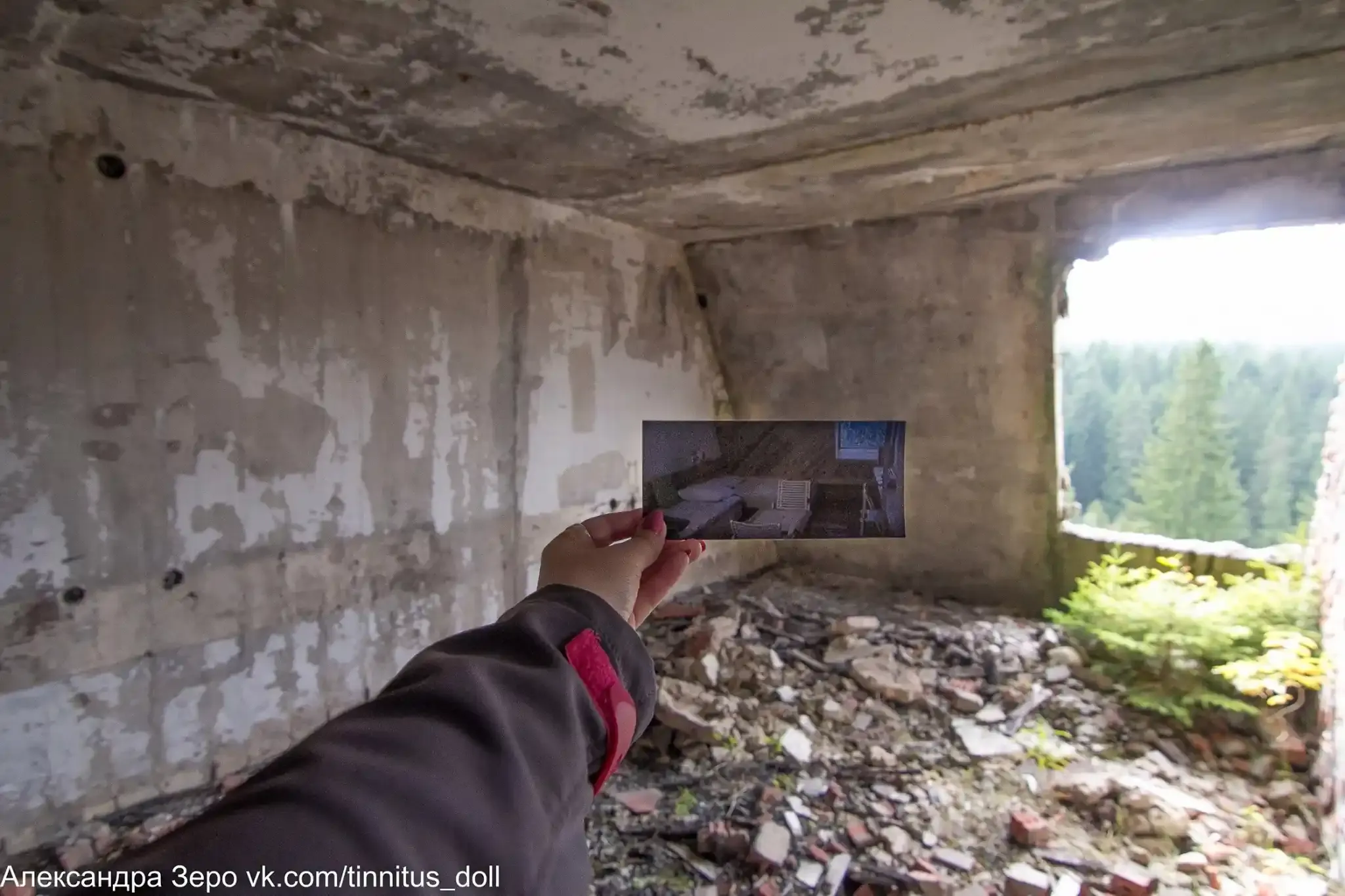
Olympic Village Igman
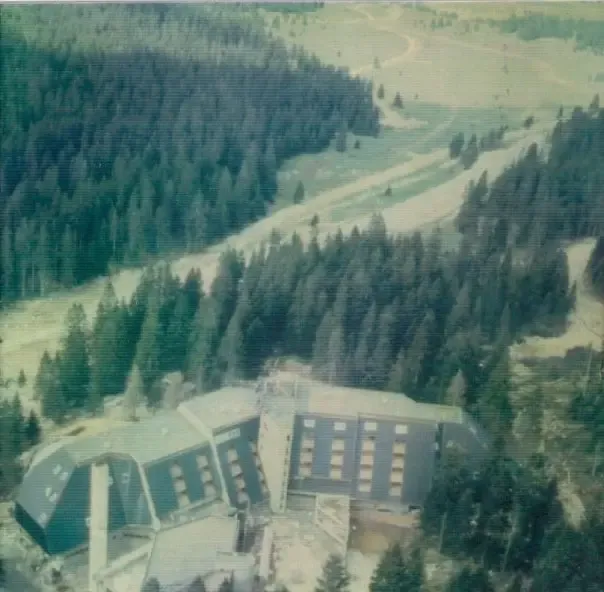
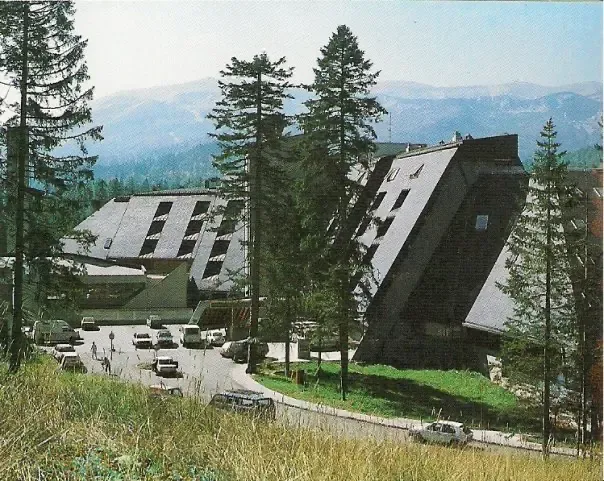
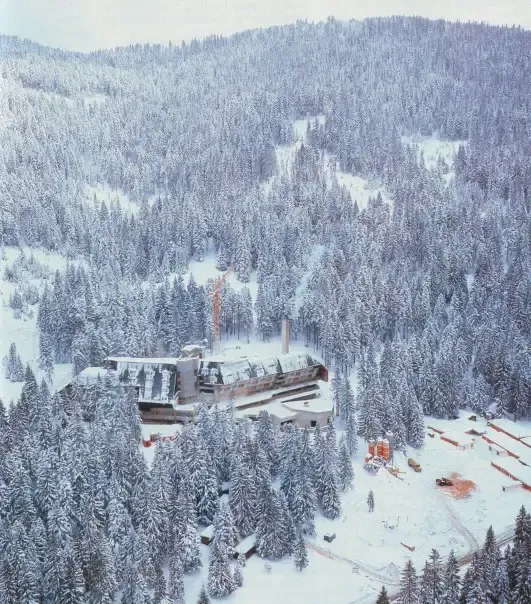
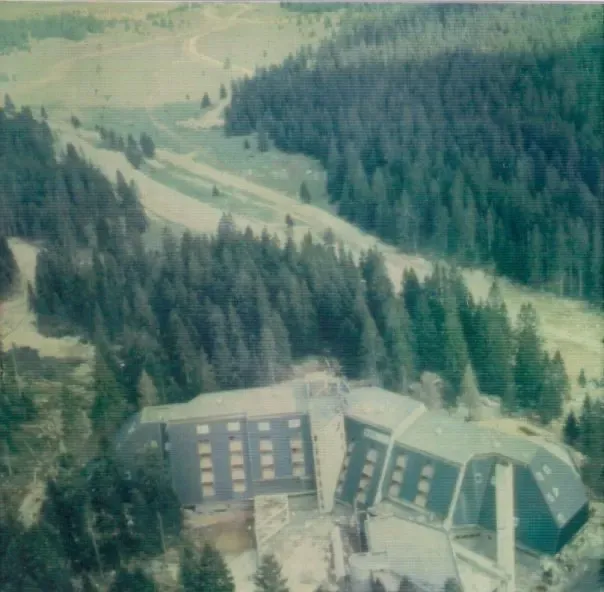
While the main Olympic Village at Mojmilo hummed with the energy of over 2,000 athletes, a specialized, more intimate enclave existed high above the city. Olympic Village B, nestled on the slopes of Mt. Igman, served as the primary base for the Nordic competitors. Architect Ahmed Džuvić’s geometric masterpiece was not merely a hotel; it was a high-altitude stronghold designed to keep biathletes and cross-country skiers in peak condition just steps from the snow.
Fast Facts
- Official Name: Olympic Village B (categorized as a "B-category" village-hotel).
- Location: Mt. Igman (Veliko Polje), approximately 25km from Sarajevo city centre.
- Elevation: 1,220m above sea level.
- Lead Architect: Ahmed Džuvić.
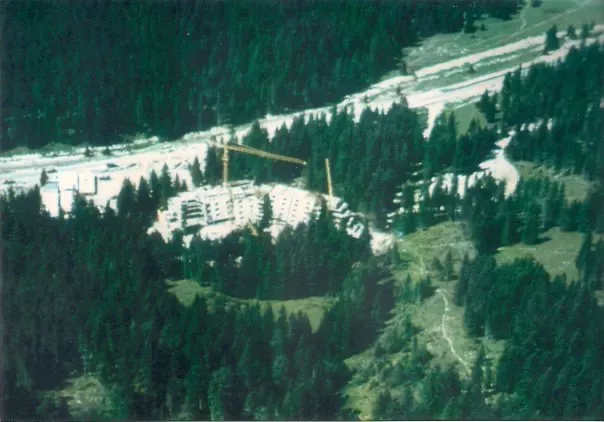
- Construction Period: January 1981 – January 1983.
- Total Capacity: 502 beds across 164 rooms and apartments.
- Total Floor Space: Over 16,000 sq m.
- Primary Residents: Competitors in cross-country skiing, Nordic combined, and biathlon.
- Key Amenities: 360-seat restaurant, polyclinic, equipment workshops, weapon storage, and a discothèque.
- Current Condition: Ruins (destroyed during the 1992–1995 war).
The logic of the satellite: Why a second Olympic village was required
The decision to build a second, mountain-based village was not an afterthought but a technical necessity. One of the fundamental stipulations for Sarajevo to host the Games was the provision of a facility that allowed athletes to acclimate and train at high altitudes.
Planners realized that transporting Nordic athletes from the city-level Mojmilo Village to the Igman plateaus daily would compromise their training regimes. By positioning Village B at the edge of the Veliko Polje (Great Field), the Organizing Committee ensured that competitors lived in the immediate vicinity of their venues. This "satellite" logic optimized training conditions and satisfied the strict requirements of the International Sports Federations, who demanded elite-level proximity for the endurance-heavy Nordic events.
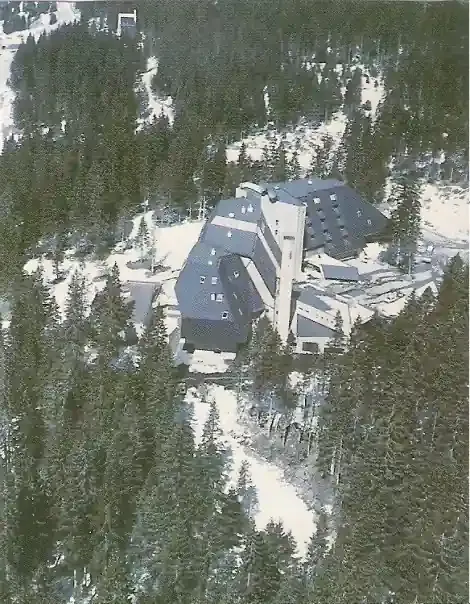
Residents of the mountain: Athletes and the Nordic competition link
Olympic Village B was the exclusive domain of the endurance athlete. It housed 502 competitors and accompanying personnel specifically for cross-country skiing, Nordic combined, and biathlon.
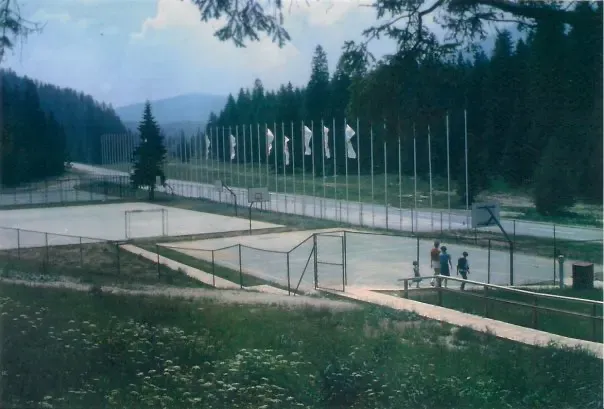
The location was strategically chosen for its connectivity. Residents were situated directly in front of the competition trails at Veliko Polje and within 4km of the Malo Polje (Little Meadow) site, home to the 70m and 90m ski jumps designed by the Gorišek brothers. This proximity allowed for a "seamless flow of movement" between rest and competition, a luxury rarely afforded to athletes in more sprawling Olympic layouts.
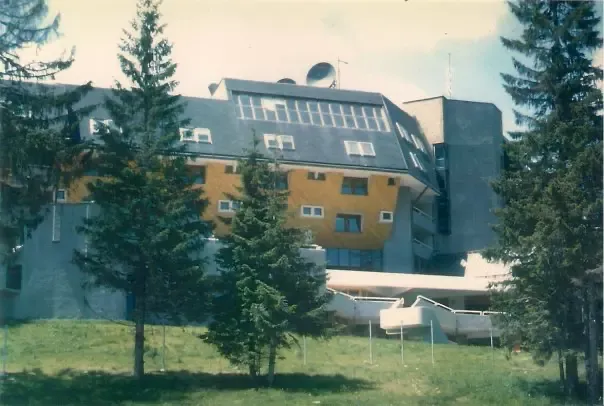
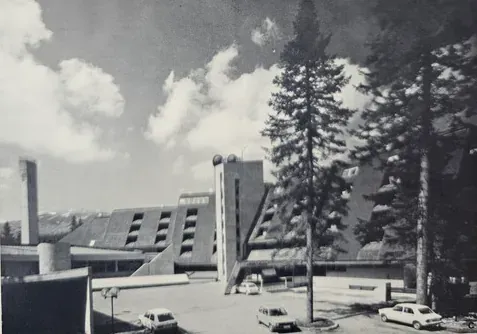
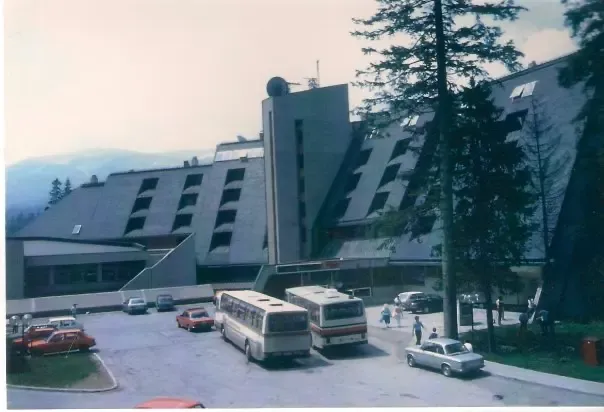
Dinaric tradition meets Scandinavian modernism: The architectural profile
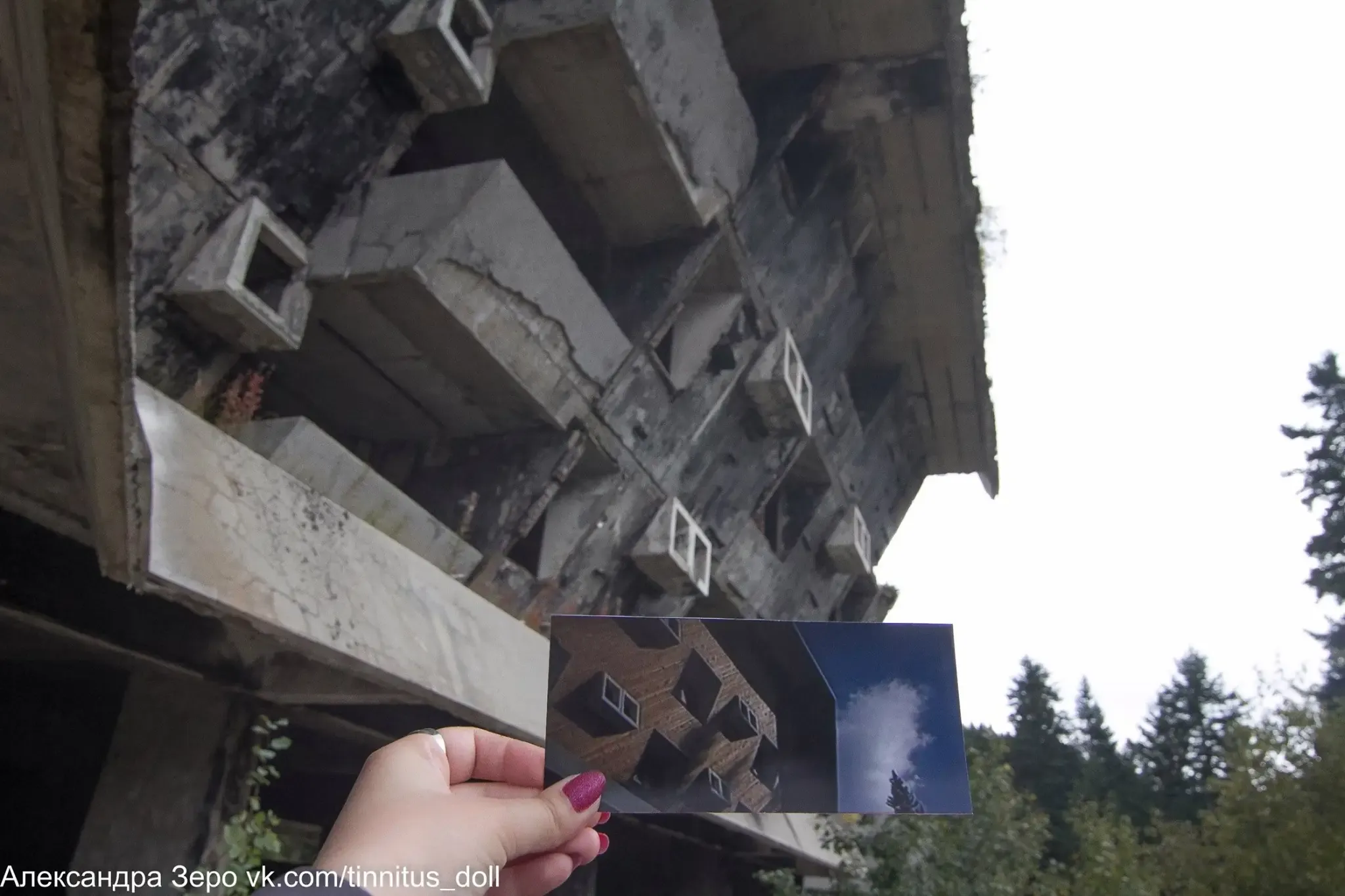
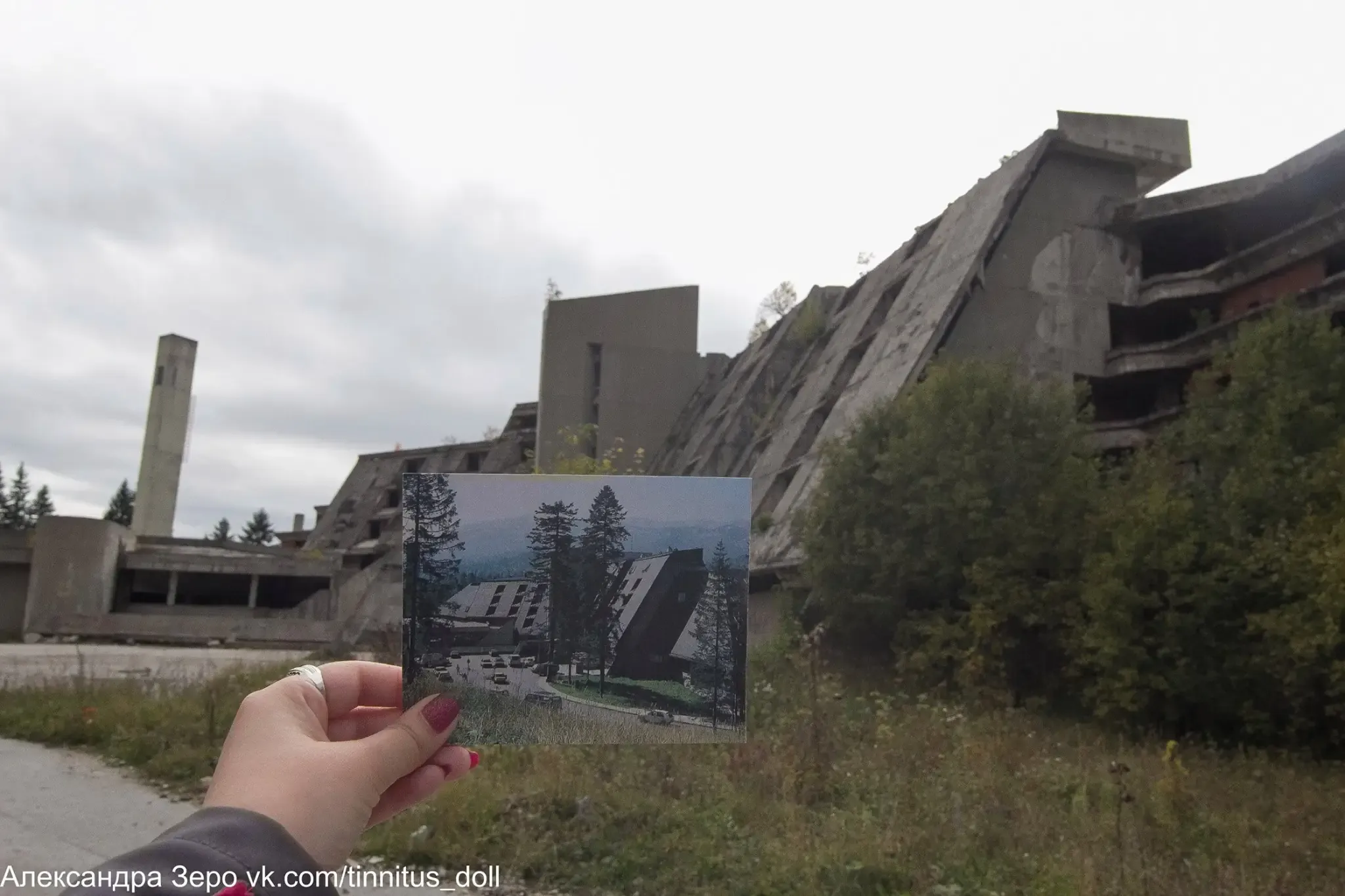
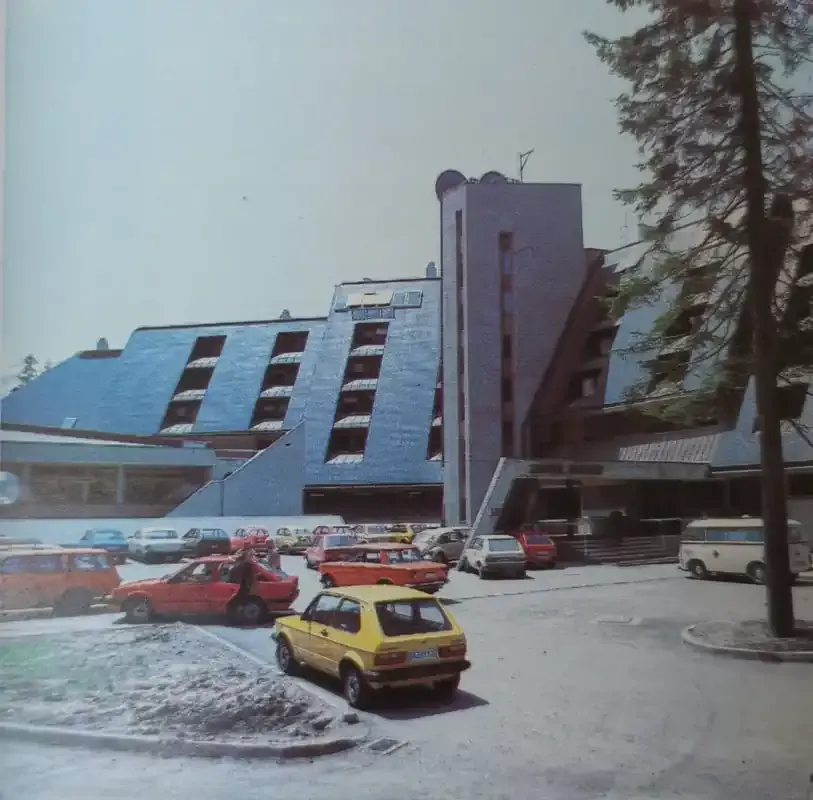
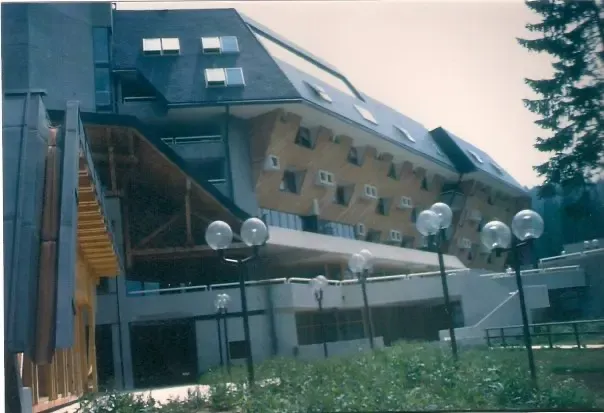
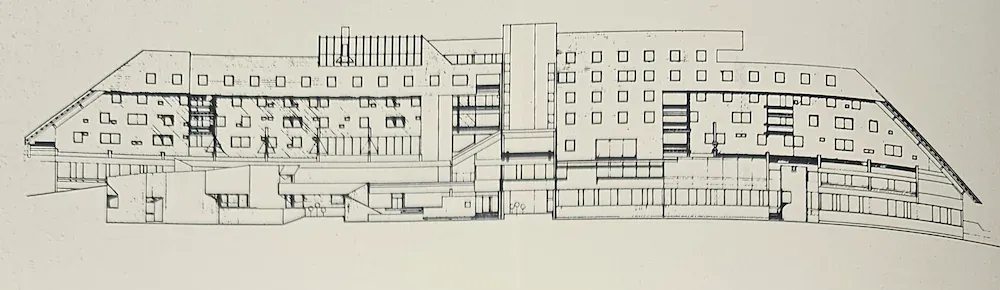
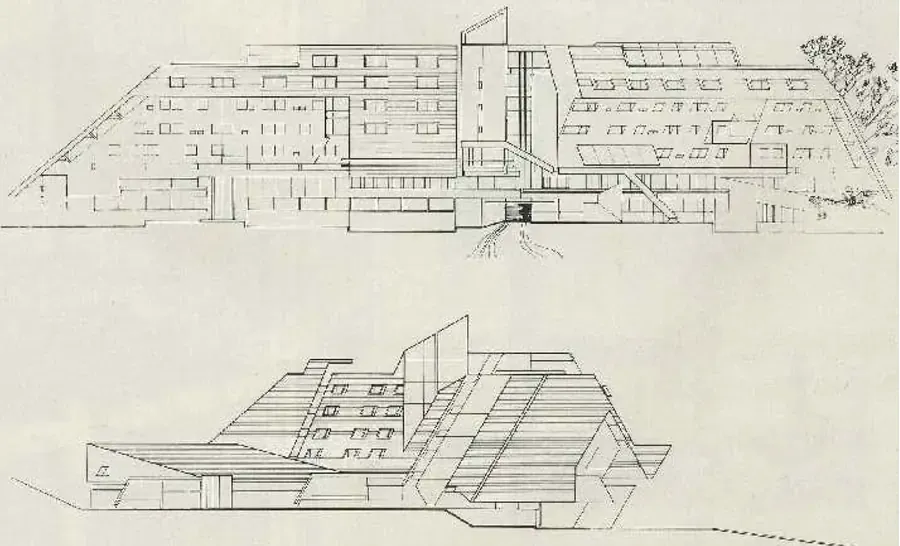
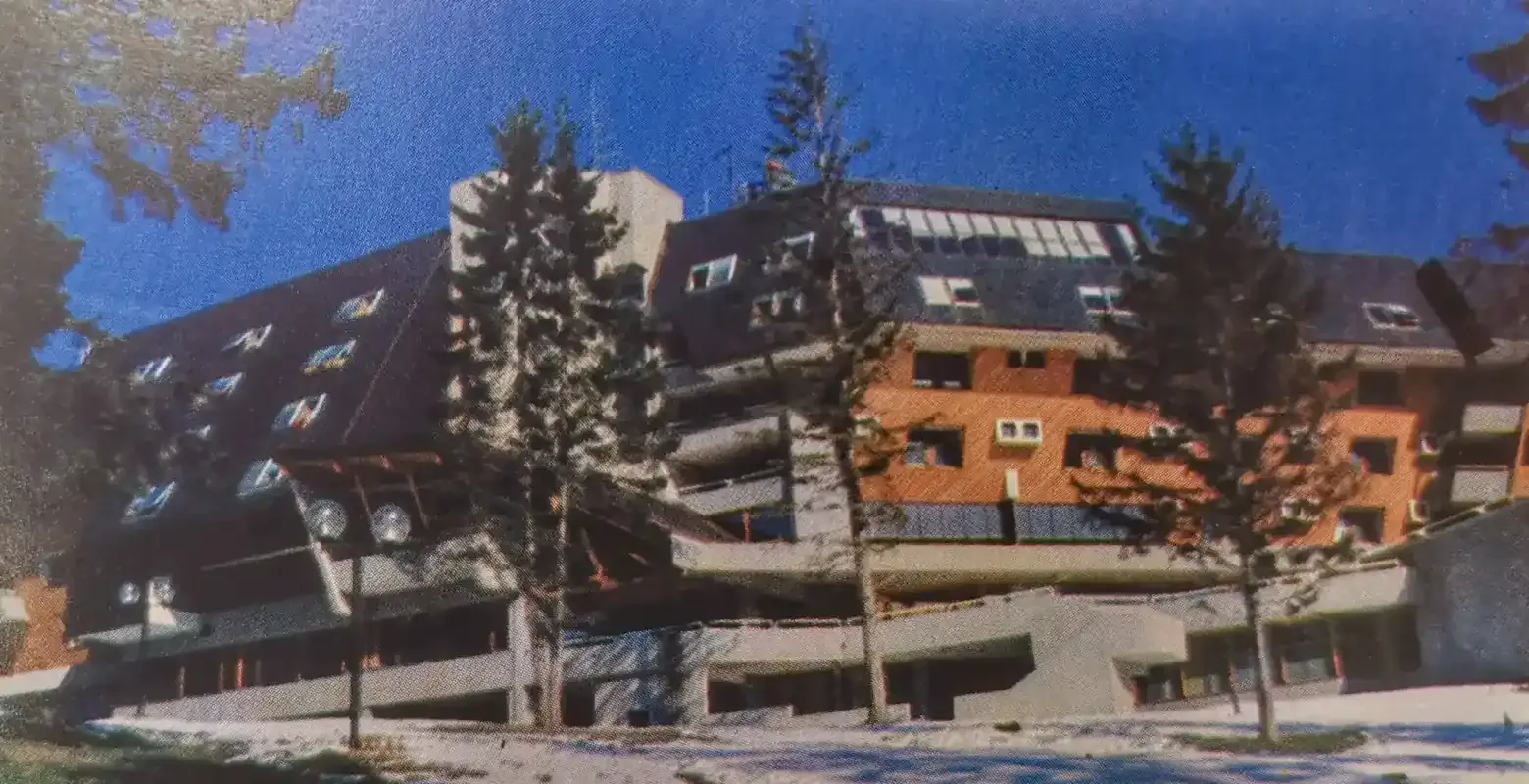
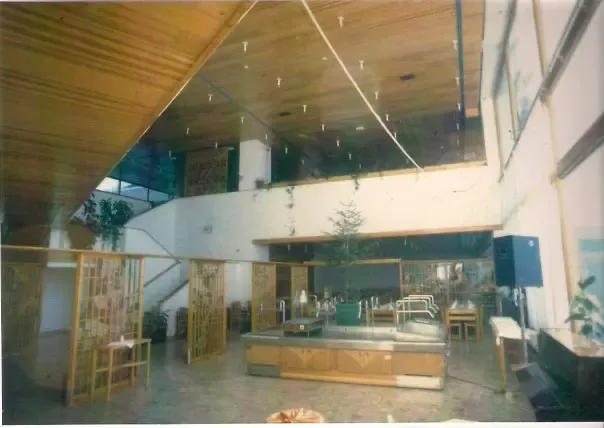
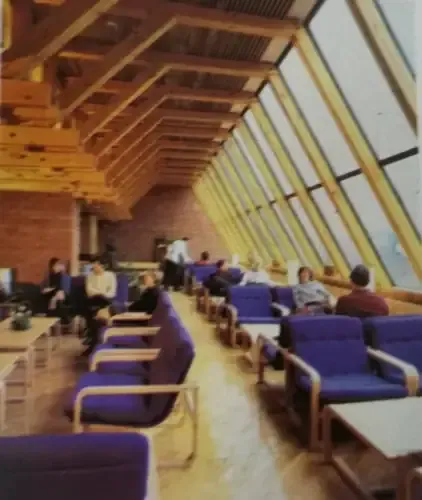
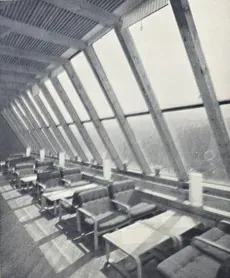
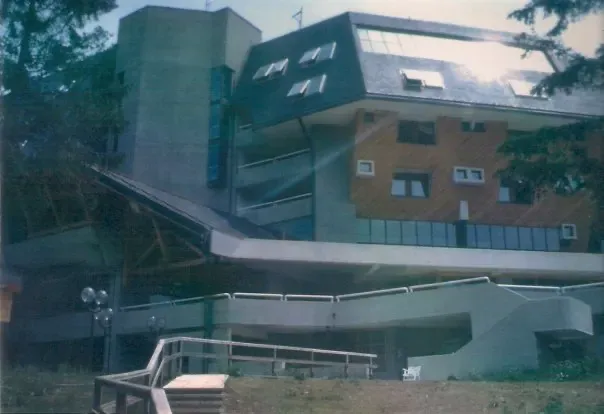
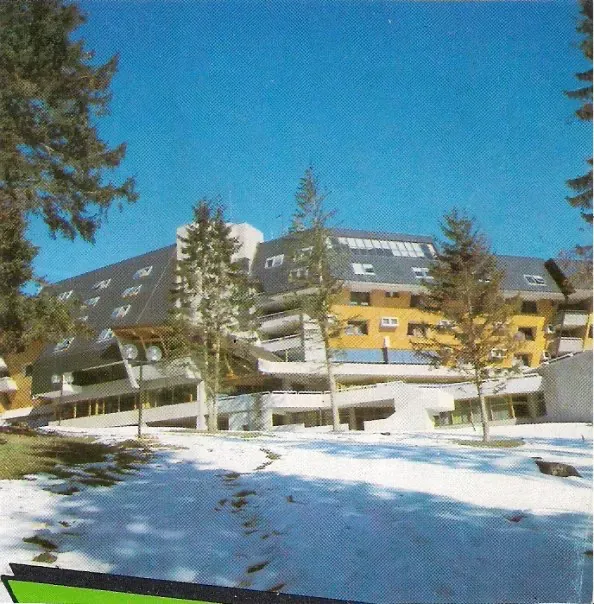
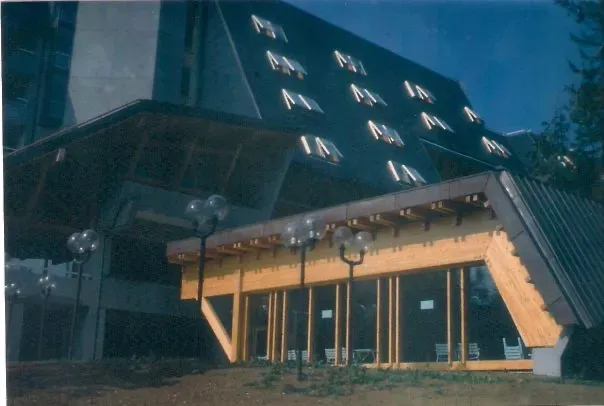
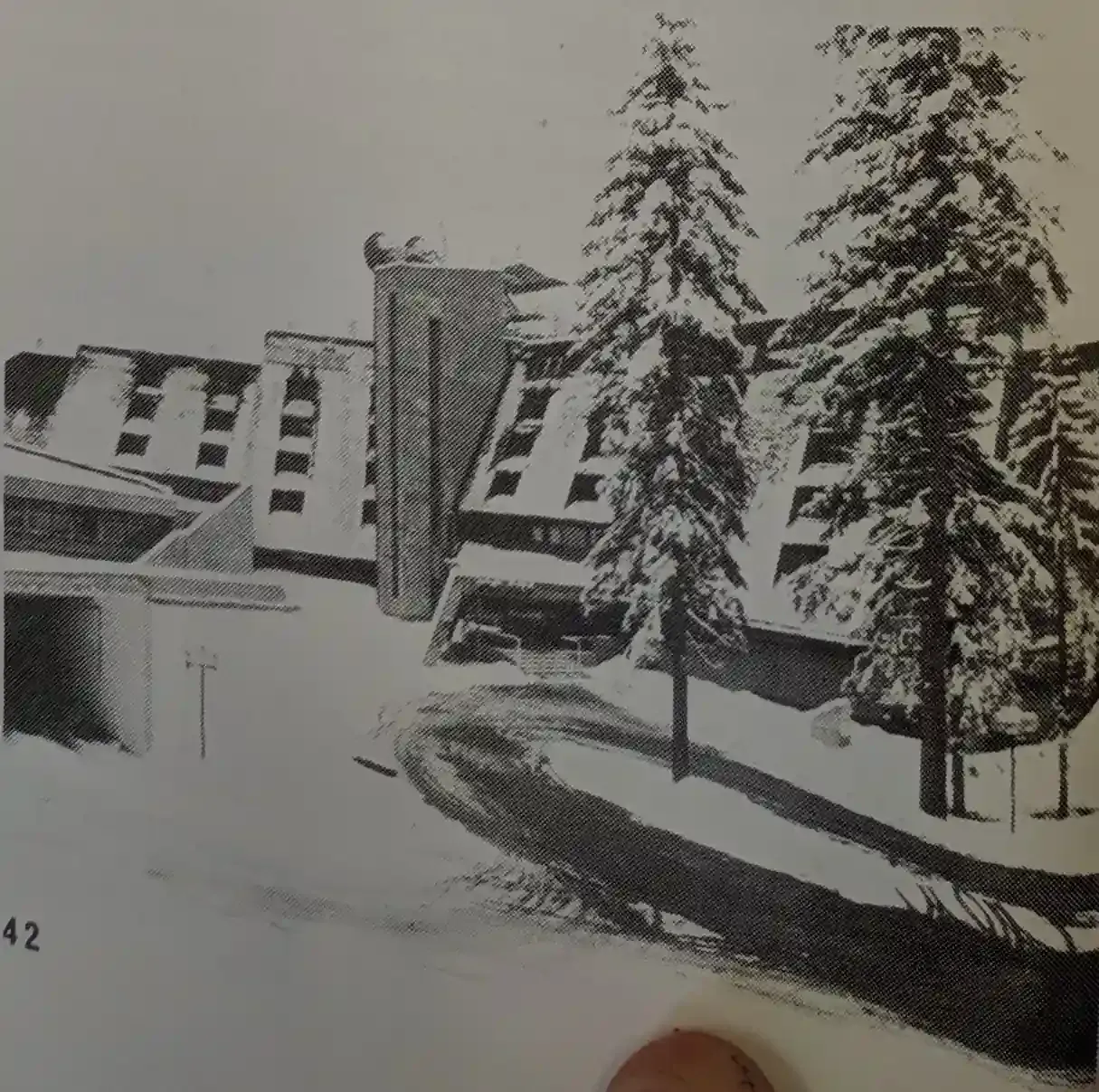
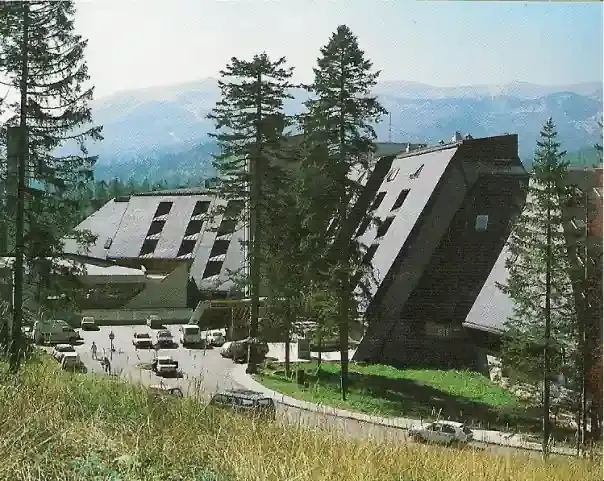
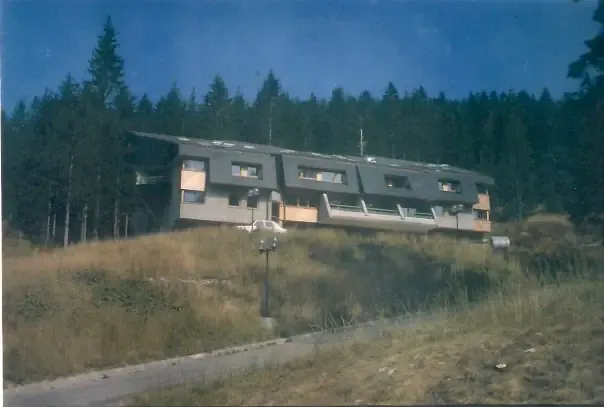
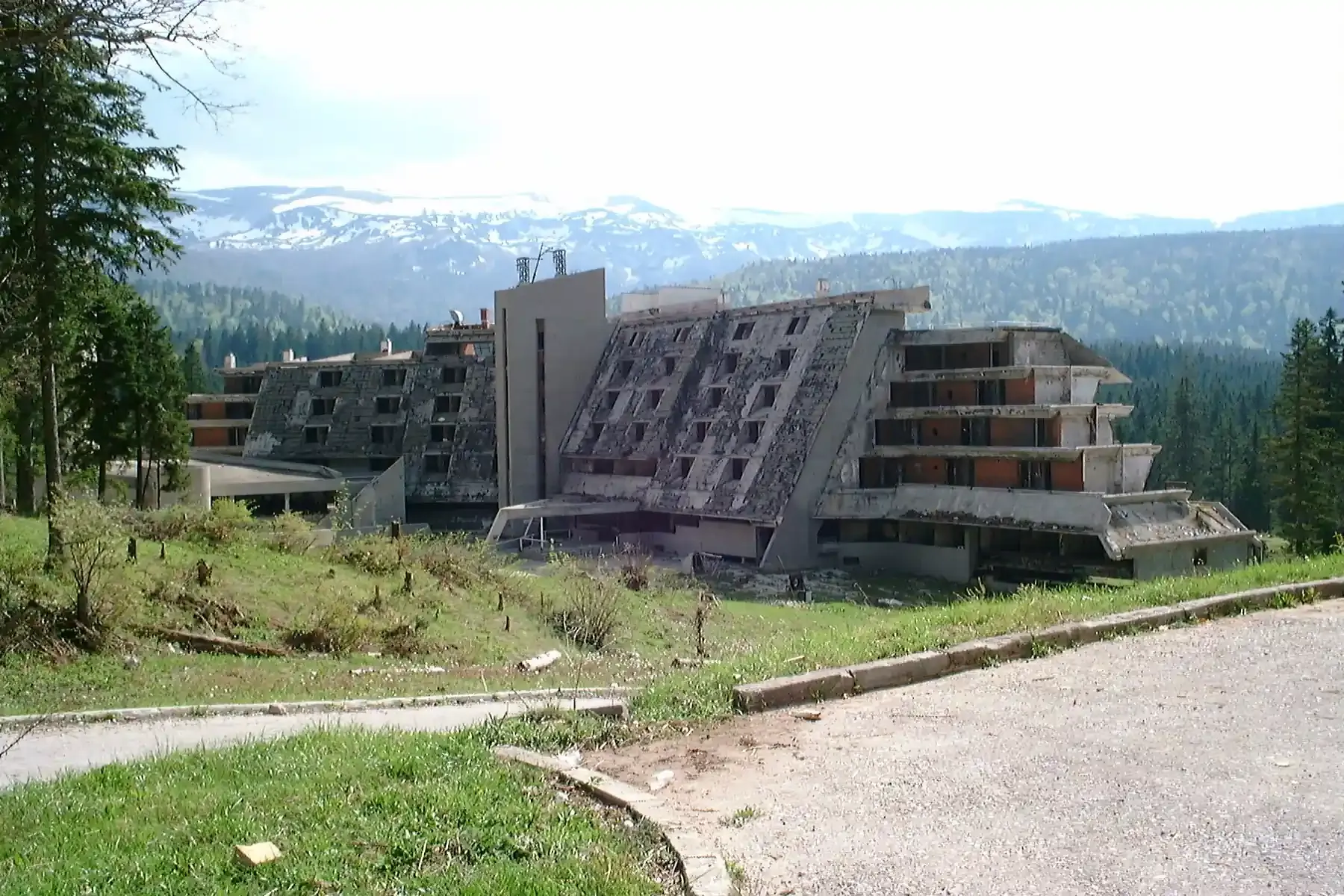
Architect Ahmed Džuvić faced a daunting task: creating a 16,000 sq m structure that didn't overwhelm the pristine forestry of Crnogorica. His solution was a "skillful game of opposing roof and wall slopes." The hotel’s form was a modernist interpretation of the traditional Dinaric Alpine house, clearly identifiable through its three-part division: a solid ground floor base, a central mass, and a steep, dramatic sloping roof designed to shed Igman's heavy snow.
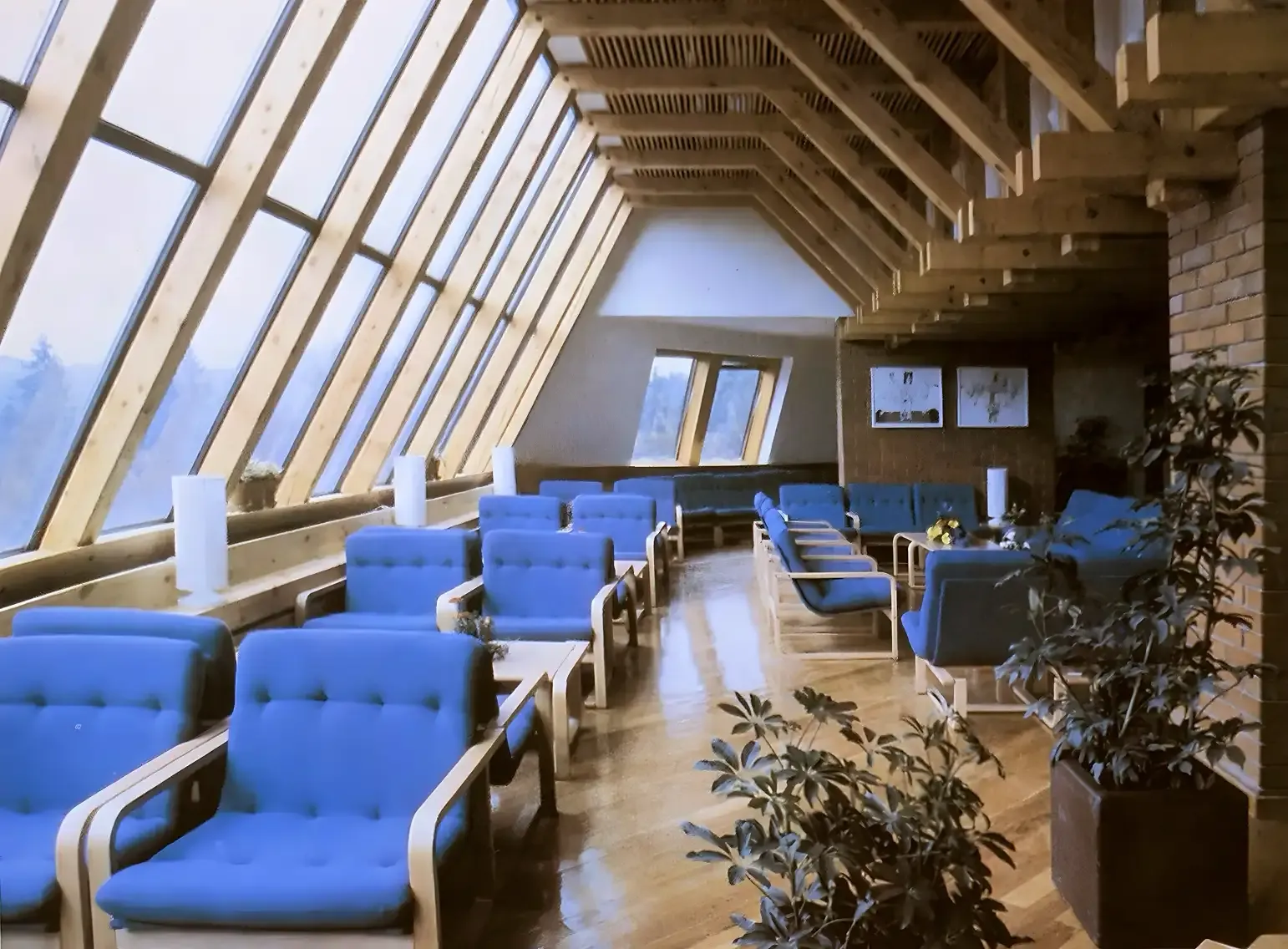
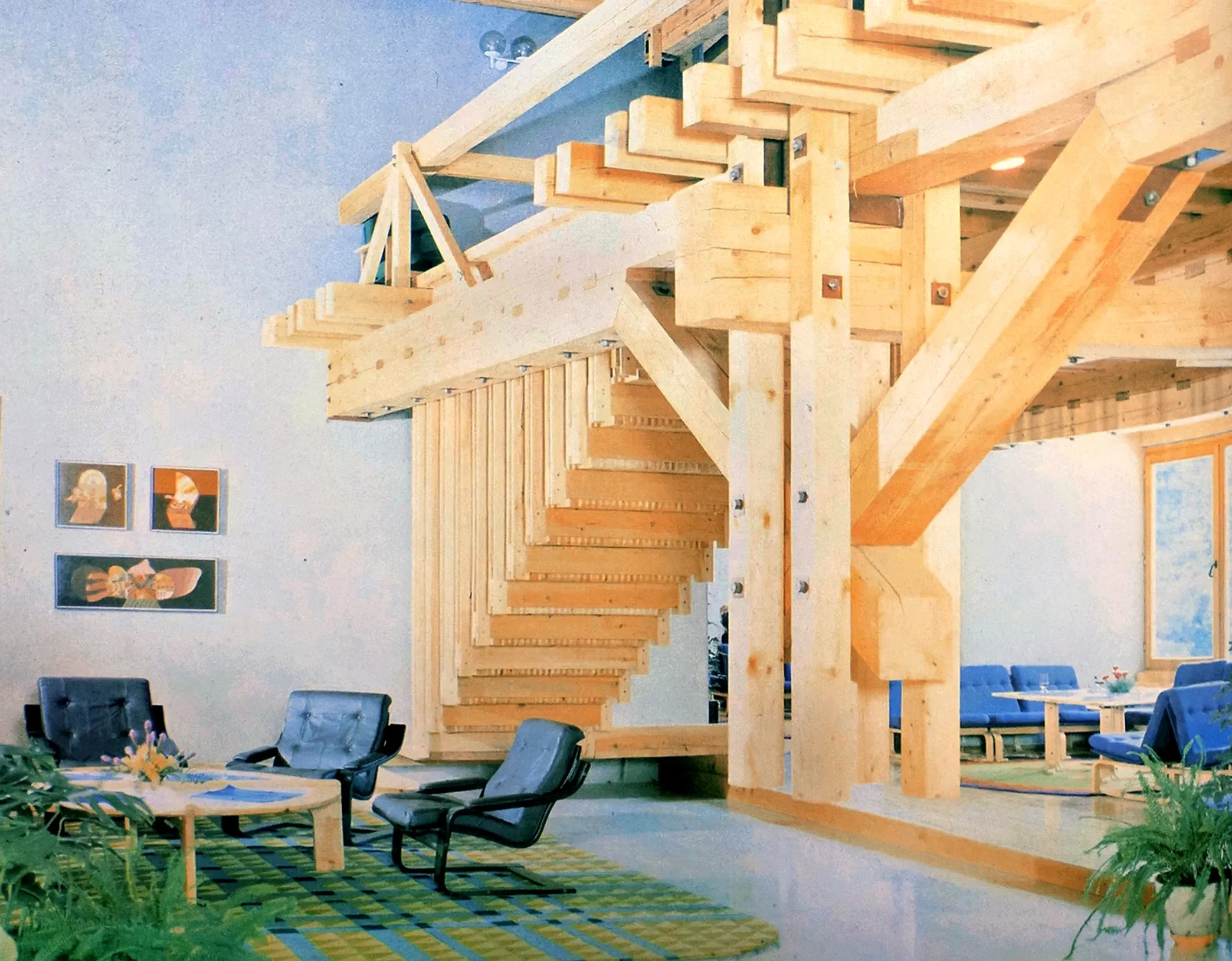
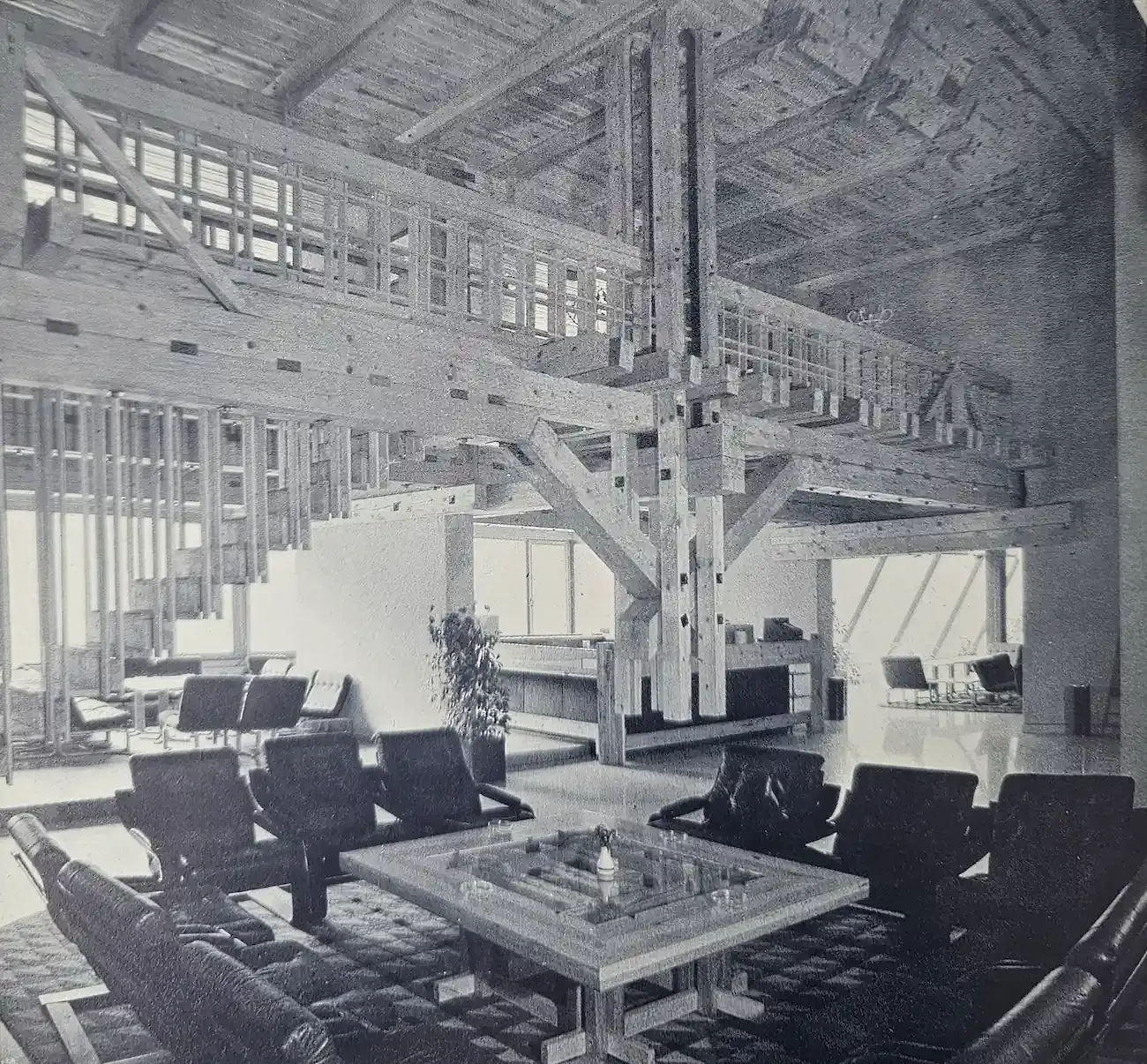
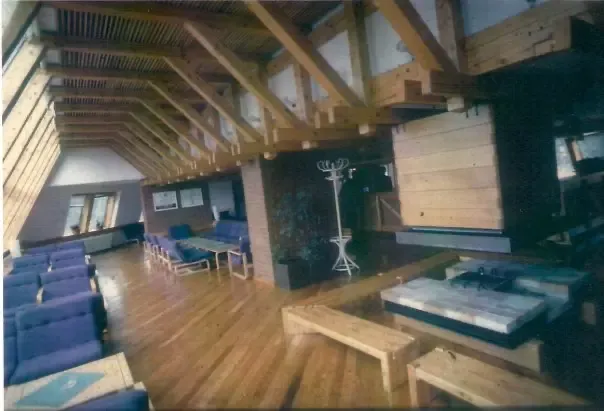
While the exterior silhouette mimicked the mountain’s topography, the material palette was deeply rooted in local craft. Džuvić utilized diagonal pine wood cladding and intricate joinery to bring warmth to the vast geometric spaces. Interestingly, contemporary critics in the journal Arhitektura i Urbanizam noted that while the "Genius Loci" was local, the fundamentals were rooted in Scandinavian architecture, which prioritizes climate-specific functionality and natural materials.
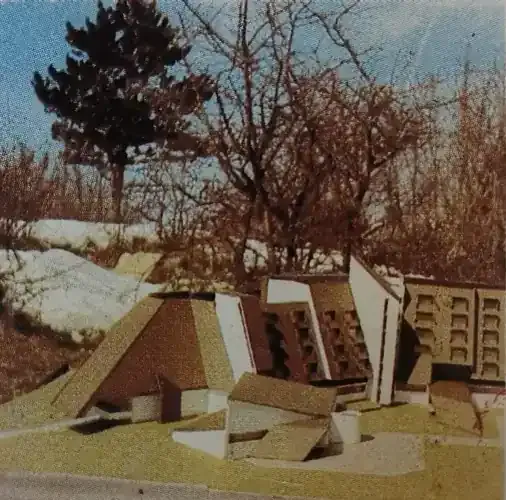
Technical layout: A self-contained community at 1,220 metres
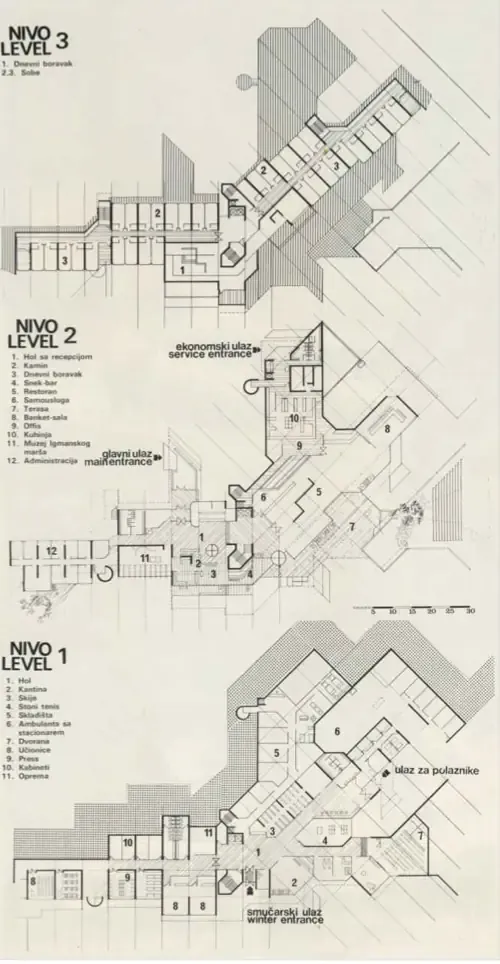
Despite its remote location, Village B was a fully autonomous urban implantation. The residential zone spanned the first to fifth floors, offering rooms ranging from one to four beds. To ensure the athletes wanted for nothing, the basement and ground levels were packed with urban infrastructure.
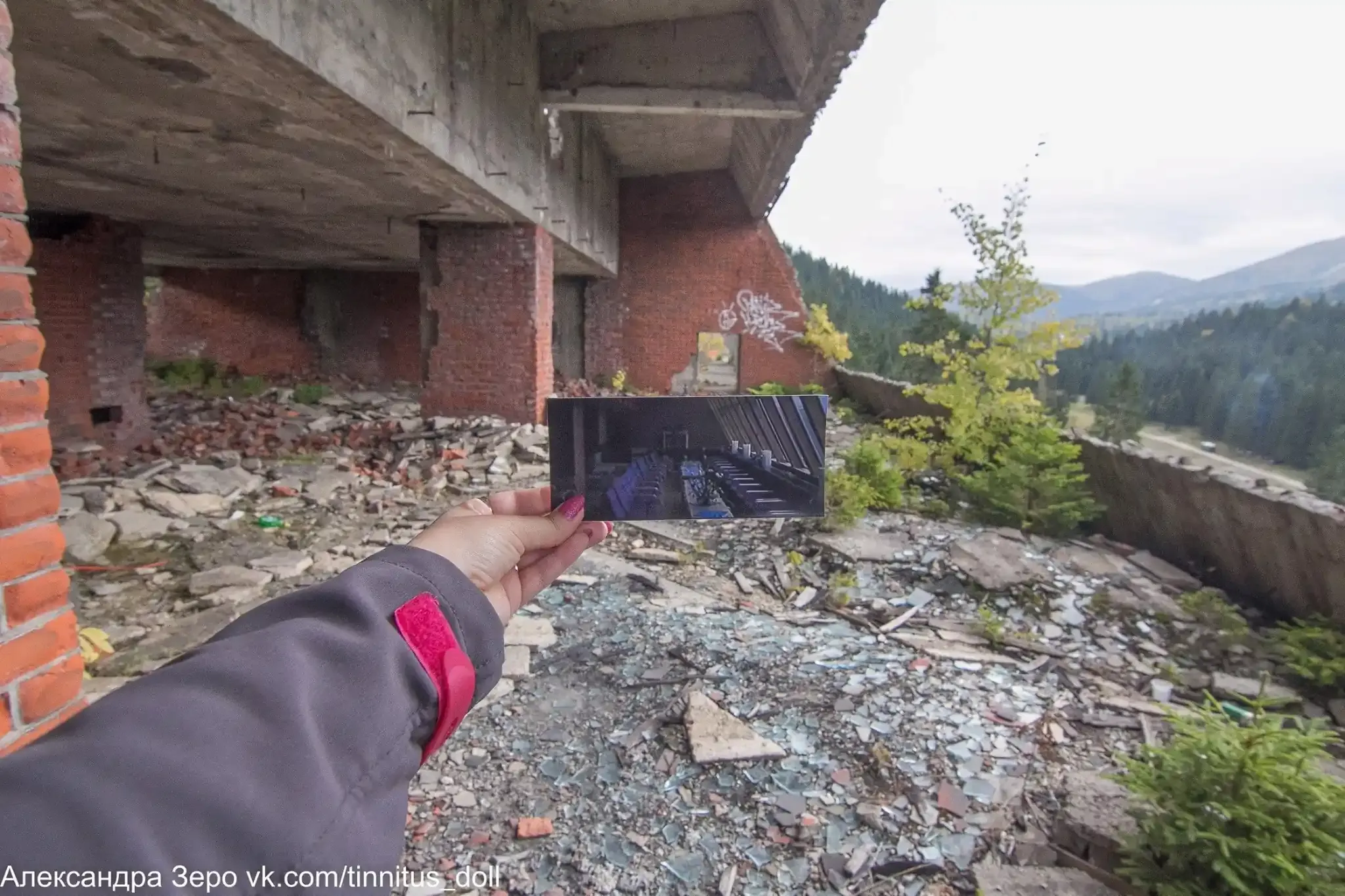
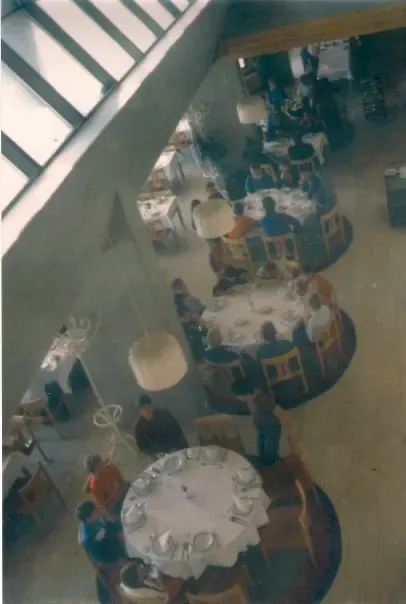
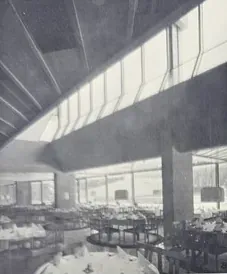
The complex included a 360-seat self-service restaurant, a bank, a post office, and a souvenir shop. For the specific needs of the Nordic disciplines, the ground floor featured specialized premises for storing and servicing skis, alongside a high-security area for weapon and ammunition storage for biathletes. This technical density allowed the village to function as a "city-within-a-building," providing everything from equipment workshops to social lounges without requiring athletes to leave the mountain air.
Daily operations: Services, security, and mountain medical support
Life in Village B was defined by a mix of "Spartan" athletic focus and high-end hospitality. The Polyclinic was a standout feature, offering an outpatient department, internal medicine, and surgical services. While more complex cases could be sent to Sarajevo, the Igman facility was equipped with its own pharmacy and aid station to handle training injuries on-site.
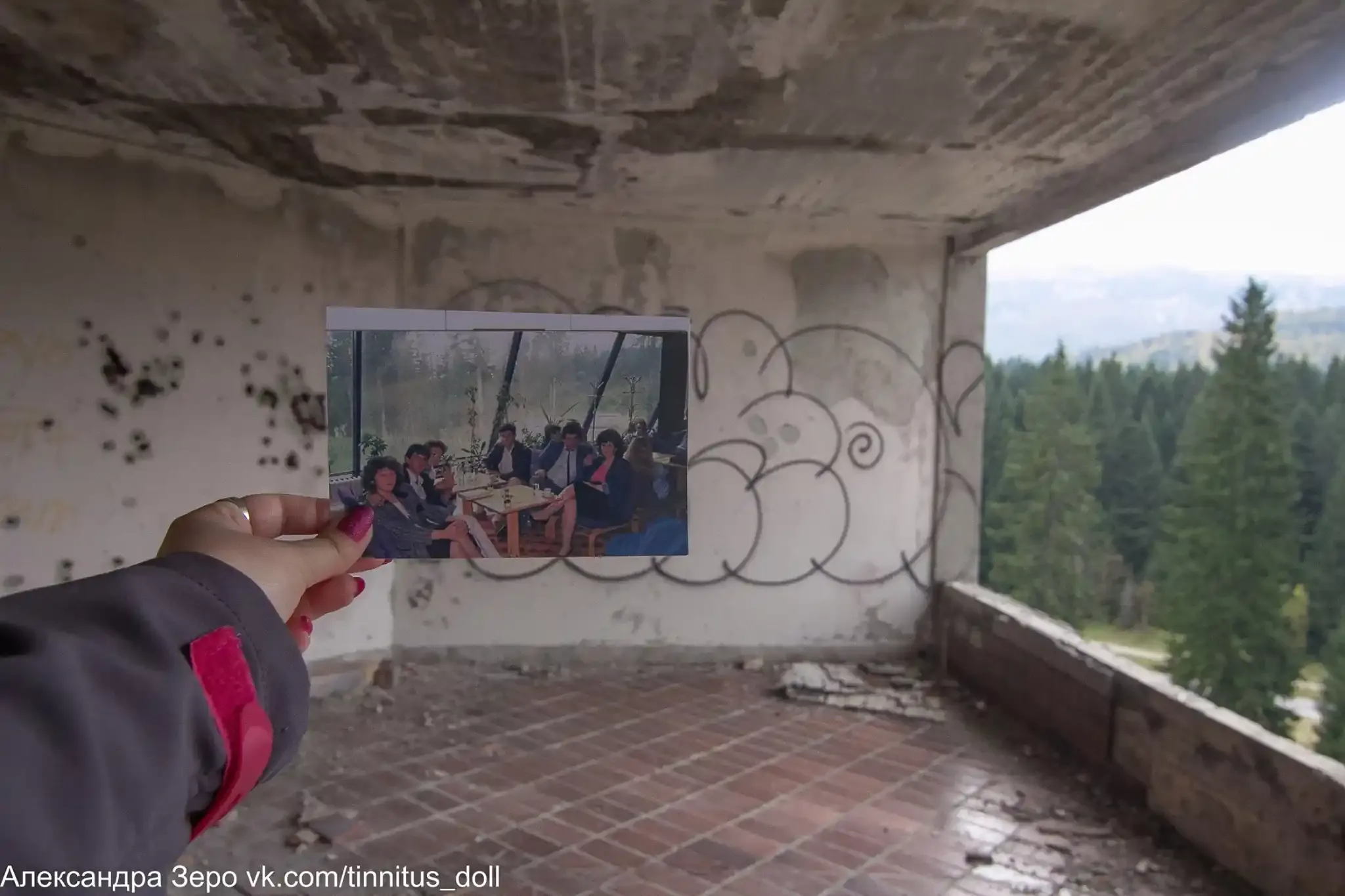
Security was a quiet but constant presence. Following the 1972 Munich tragedy, the Organizing Committee took no chances; guards were frequently posted at the entrance to protect the "Olympic family." Between training sessions, athletes could find reprieve in the Athletes’ Club on the fifth floor or the ground-floor discothèque. Food service was a massive undertaking, with the restaurant operating on a 24-hour cycle to accommodate varying race times, though the official report notes that, unlike Village A, Village B lacked long-term food storage facilities, necessitating a constant logistics chain from the city.



February 1984 moments: Weather contingencies and transport logistics
The weather on Mt. Igman in February 1984 was a study in extremes. Official meteorological records from February 14 show a snow depth of 75 cm at Veliko Polje, with temperatures dropping to -9.5°C. Such conditions necessitated a robust logistics network. A dedicated system of coaches, minibuses, and cars operated constantly to ferry athletes between the village and nearby training areas.
The most famous weather event of the Games occurred on the eve of the opening ceremony. After days of worrying lack of snow, a massive blizzard deposited over a metre of fresh powder overnight. While this "miracle" saved the competitions, it required a massive mobilization of locals and organizers to clear transport routes to the mountain village, ensuring that the games of short distances remained accessible despite the heavy drifts.
A dual monument: The integration of the Igman March Museum
Architect Ahmed Džuvić did not just design a hotel; he designed a site of remembrance. Interpolated into the complex was the Igman March Museum, a memorial space dedicated to a pivotal local WWII event. On January 27, 1942, a Partisan unit performed a legendary forced march across the frozen mountain to escape fascist forces, a feat of endurance that ended less than 800m from where the village was later built.
The museum was designed with its own independent access and functional integrity, allowing it to operate alongside the athletic village. By including this memorial, the facility functioned as a "sort of monument itself," linking the modern physical endurance of Olympic athletes with the historic resilience of the region's people.
Post-Games evolution: The transition to the prestigious Hotel Igman
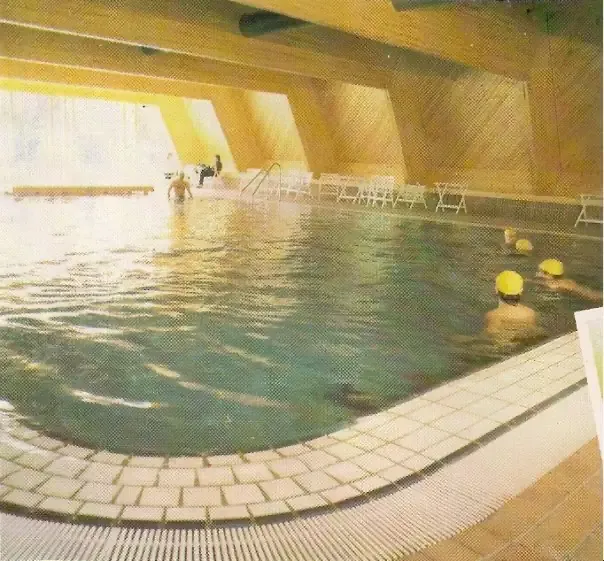
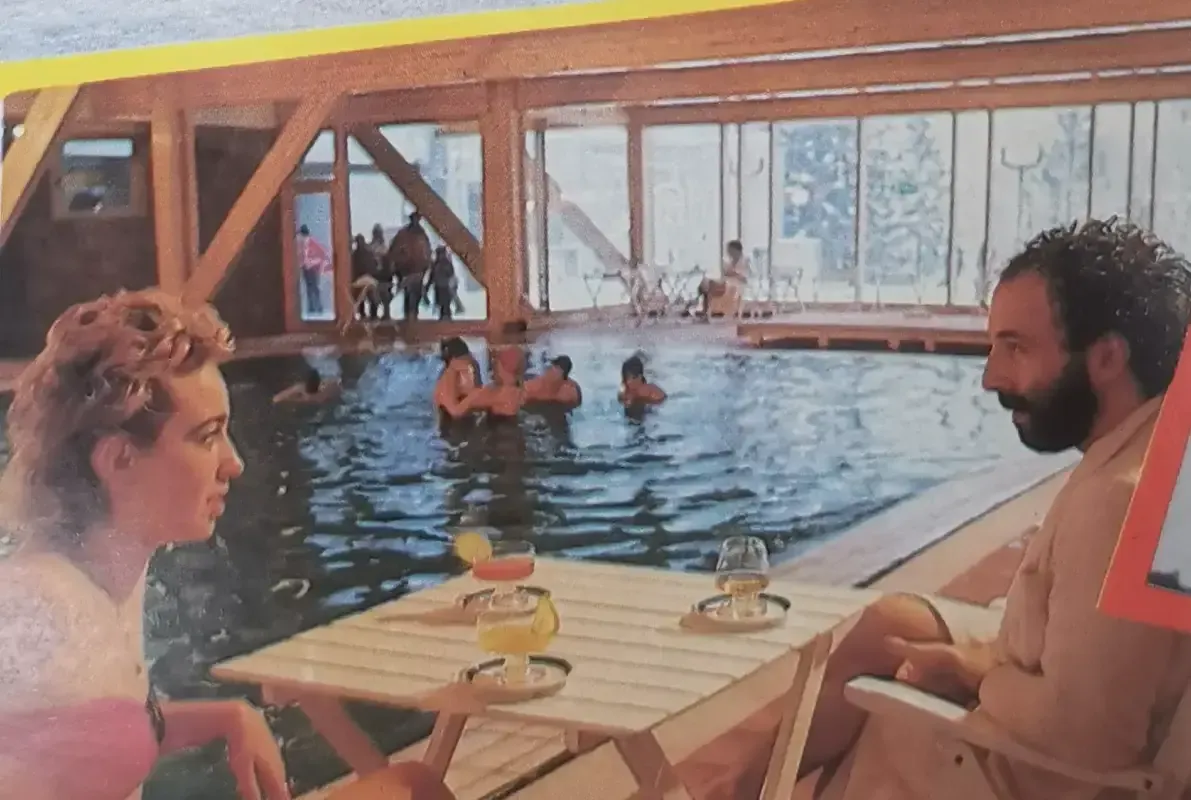
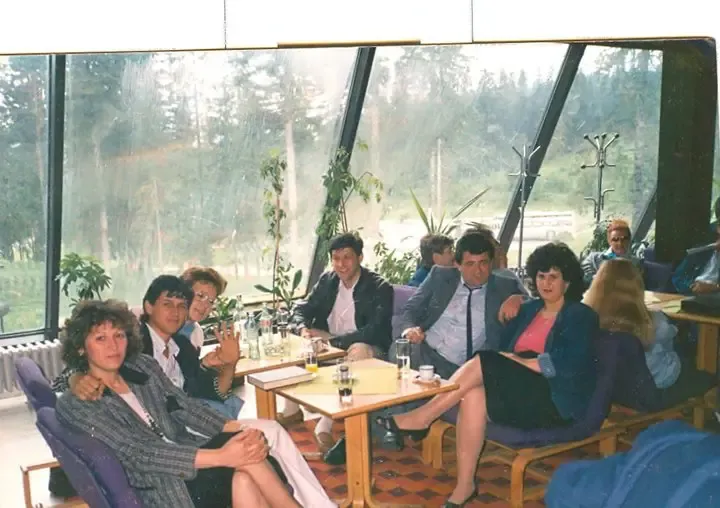
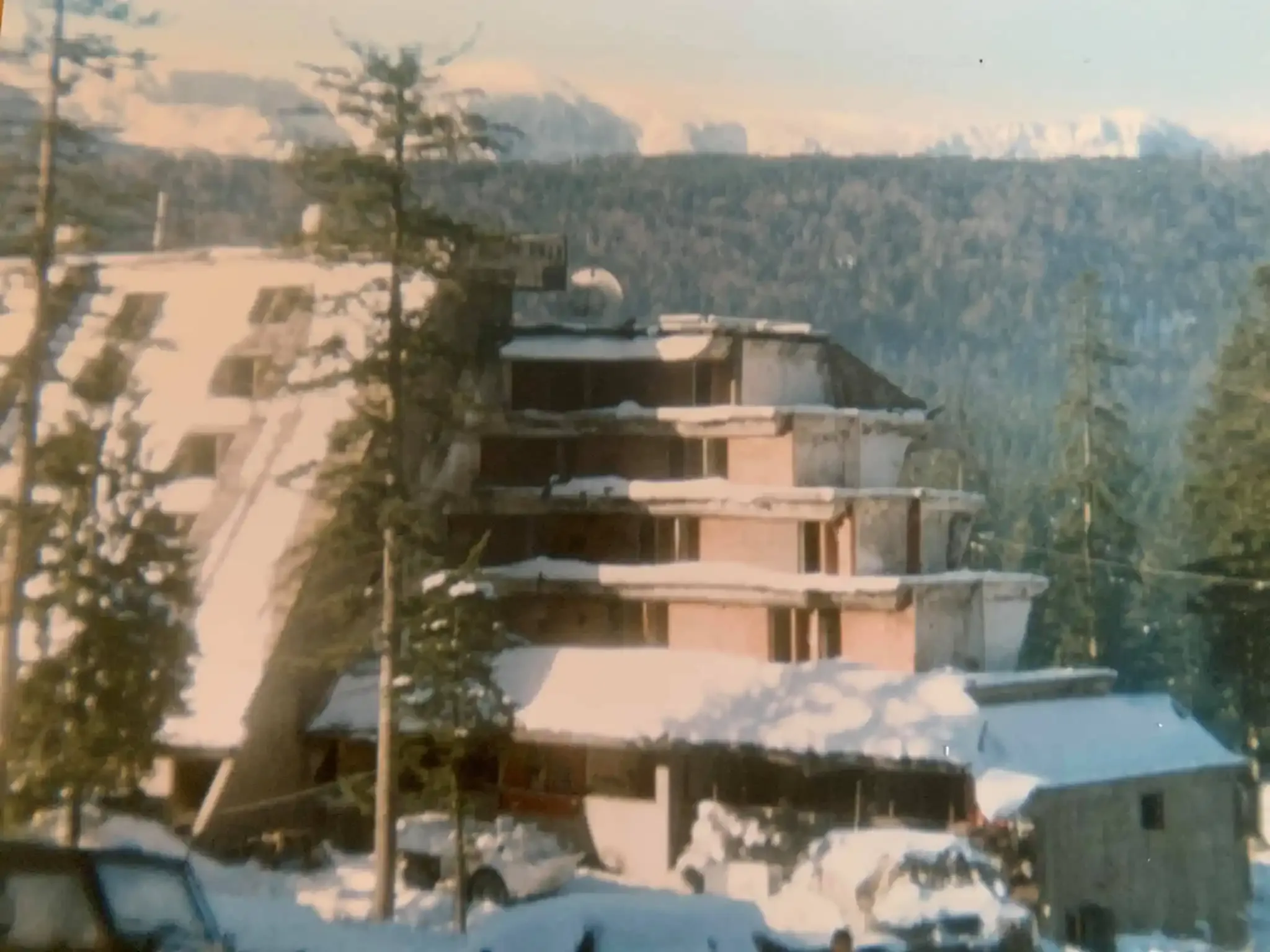
Following the closing ceremonies, the village underwent its planned transformation into the Hotel Igman. The transition capitalized on the site's Olympic prestige, turning it into one of the most popular alpine destinations in Yugoslavia. The specialized facilities were repurposed for the public: the athlete's accreditation room became a cinema, and the leisure centre was intended for use as a nursery.
For six years, the hotel operated as a high-end "B-category" resort, attracting skiing enthusiasts from across Europe. It was a period of optimism where the "Genius Loci" of the mountain, once reserved for elite competitors, became a cornerstone of Sarajevo’s burgeoning winter tourism industry.
Scars of conflict: The frontline and the site’s wartime destruction
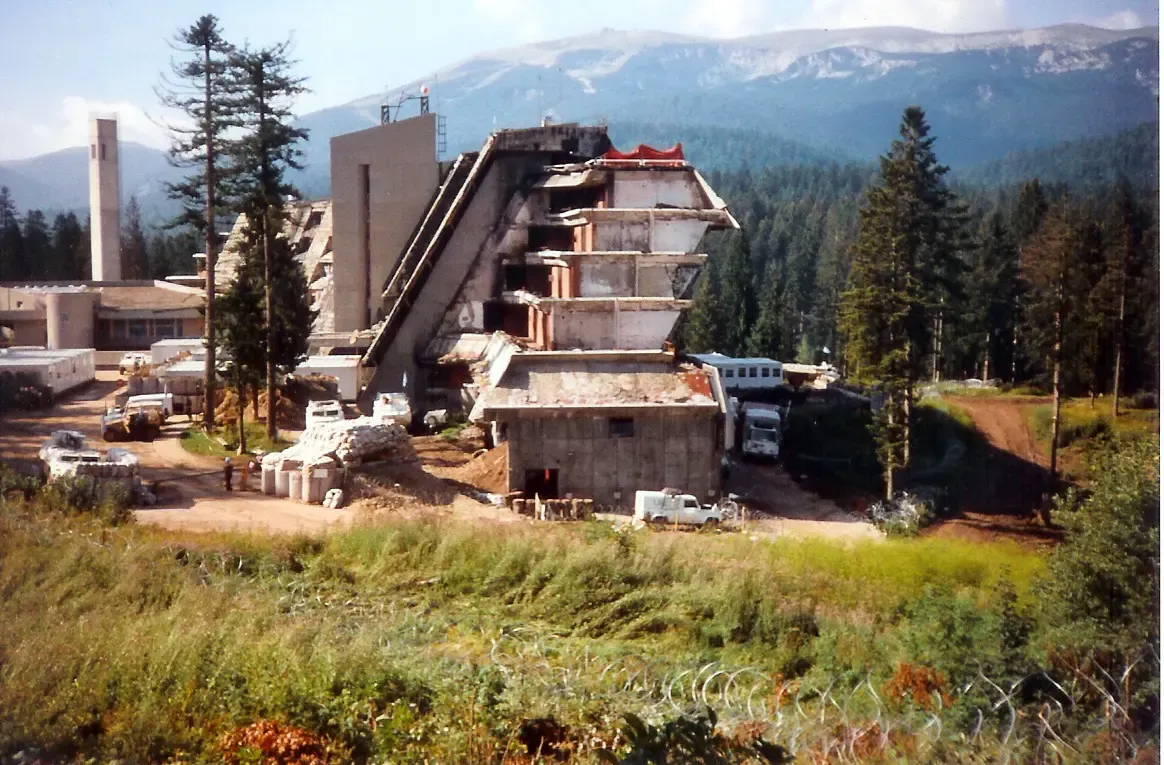
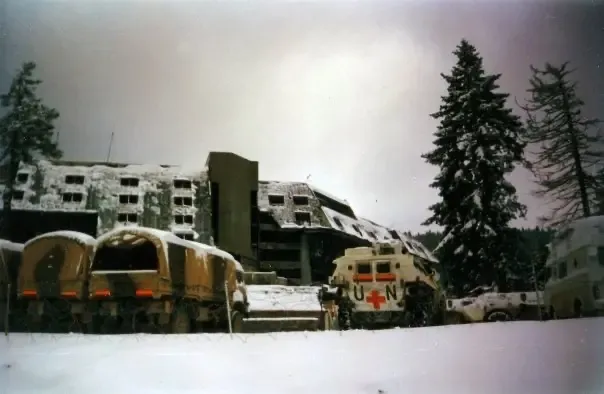
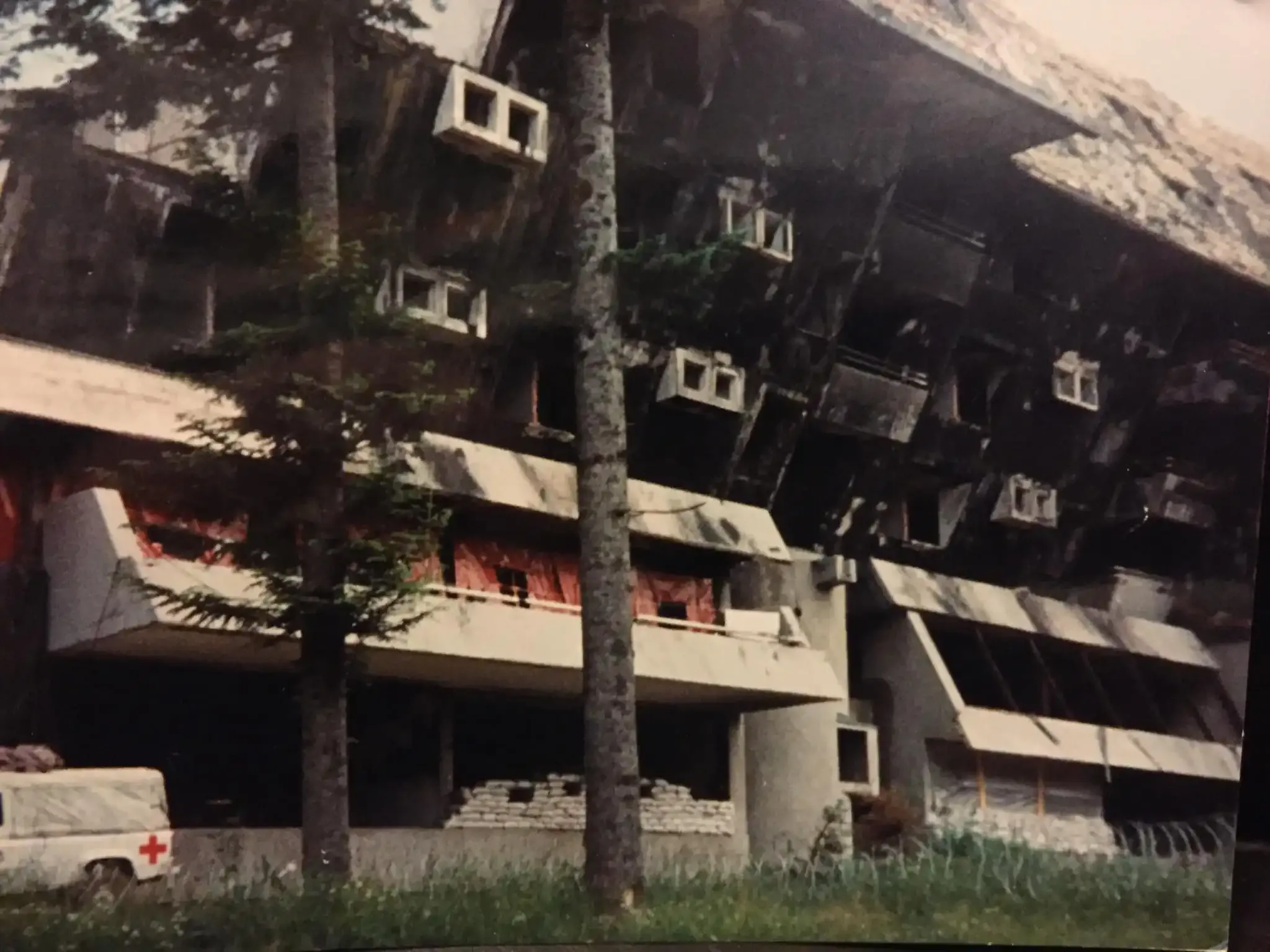
The transition from Olympic glory to wartime devastation was abrupt. As the Bosnian War began in 1992, the Mt. Igman plateau became a strategic frontline. The hotel’s position overlooking the fields made it a valuable military asset; it was initially held by Bosnian Serb (VRS) forces.
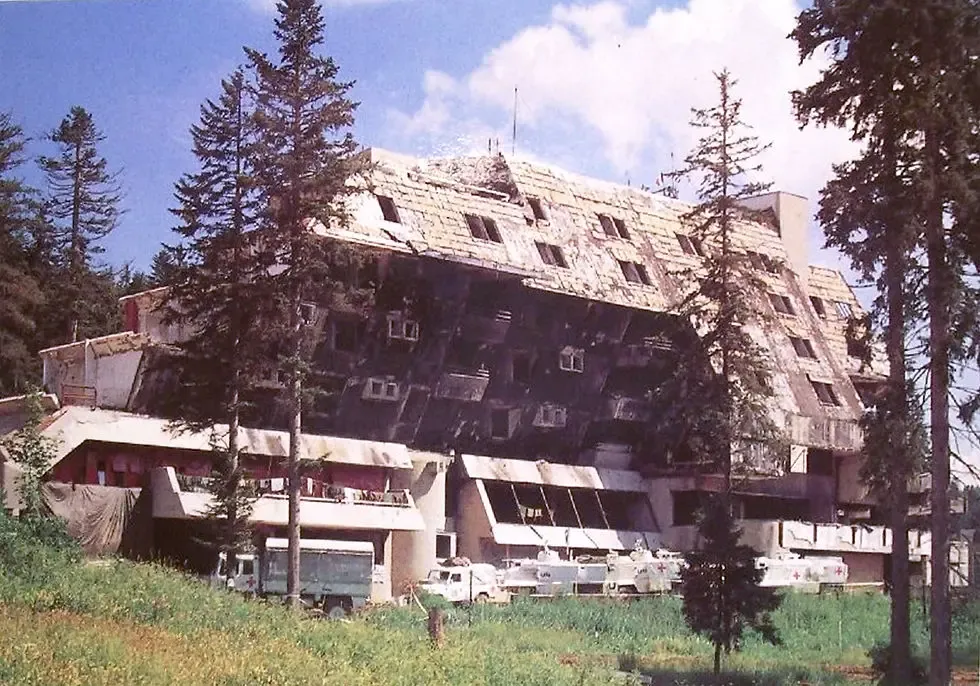
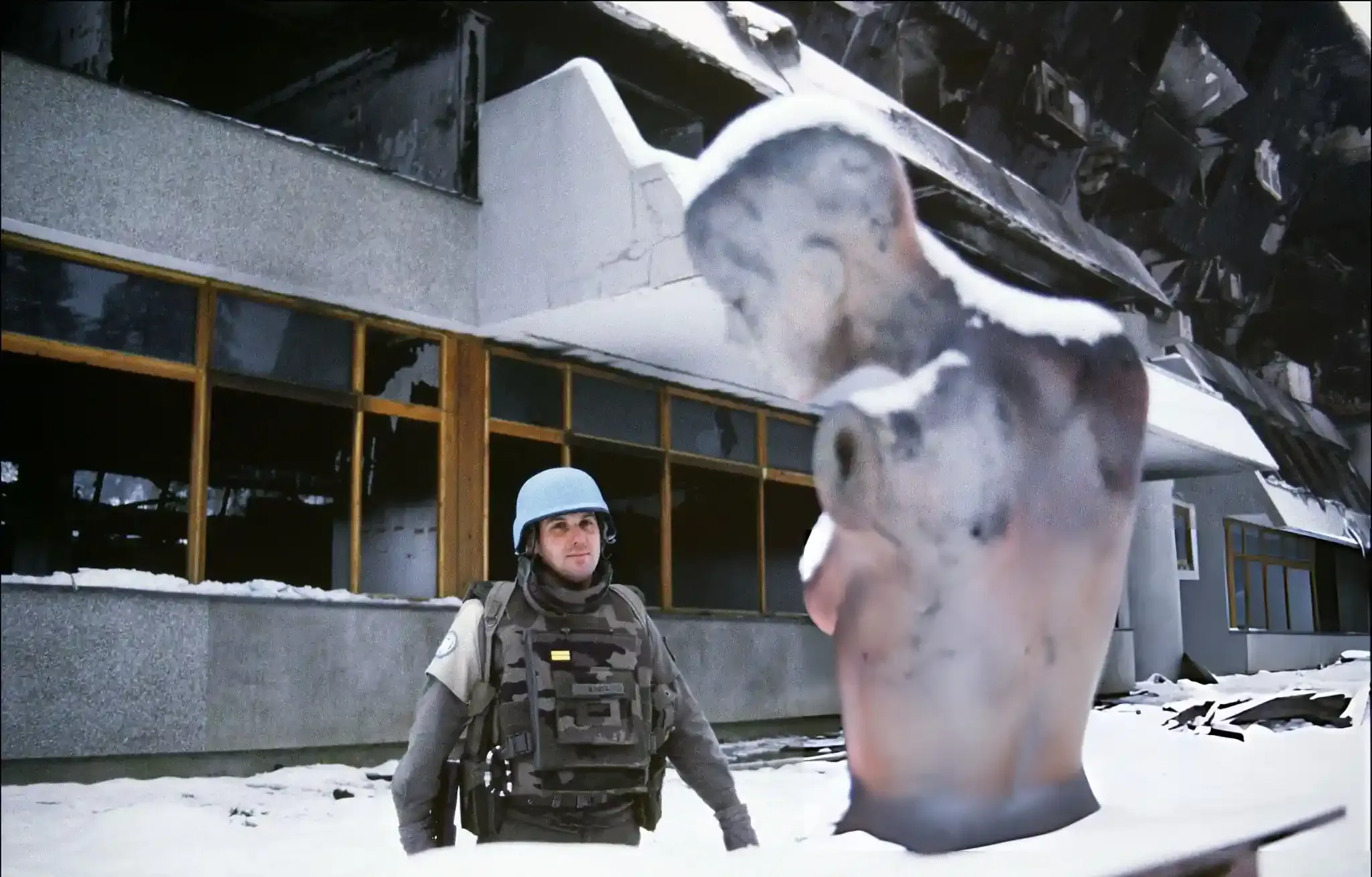
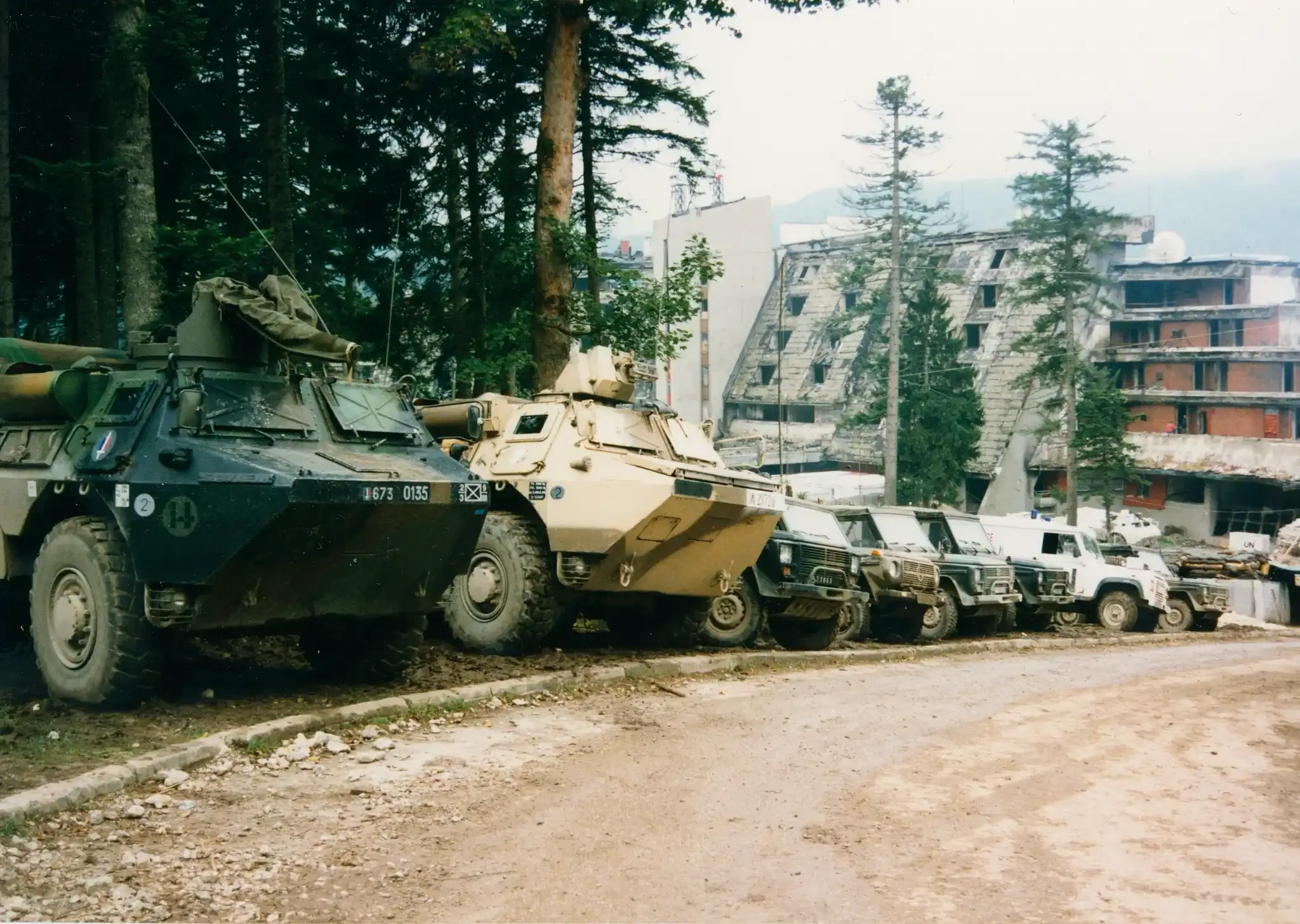
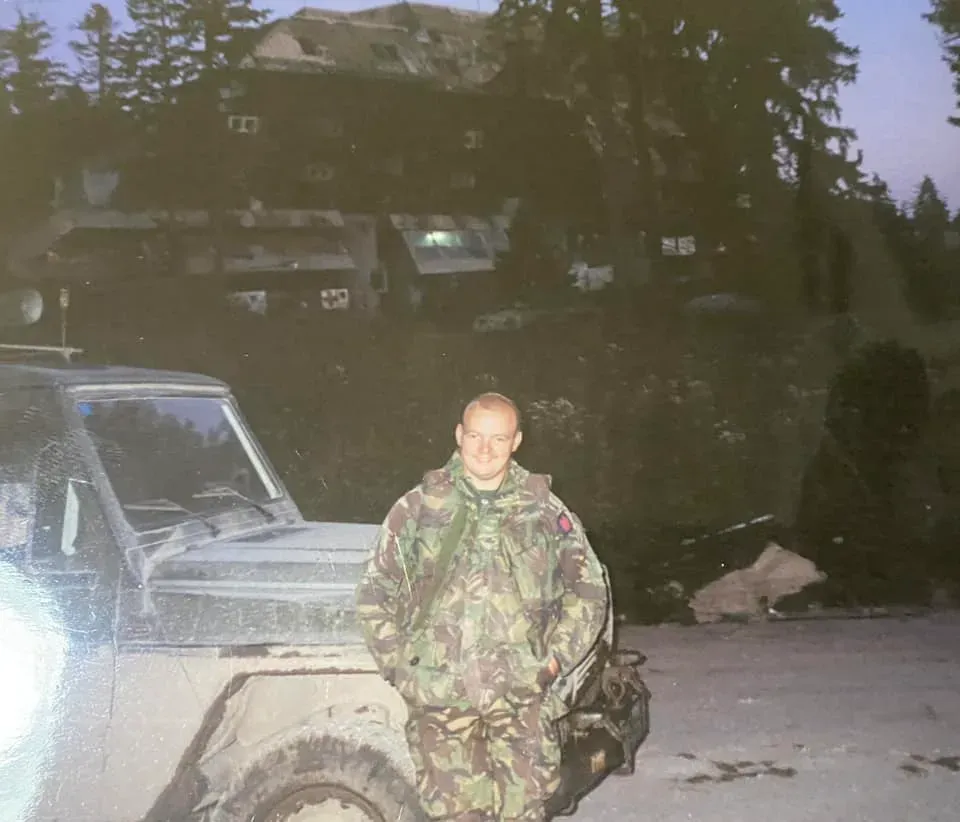
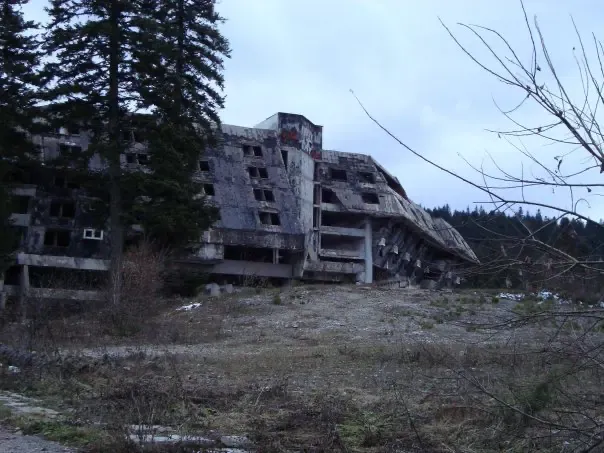
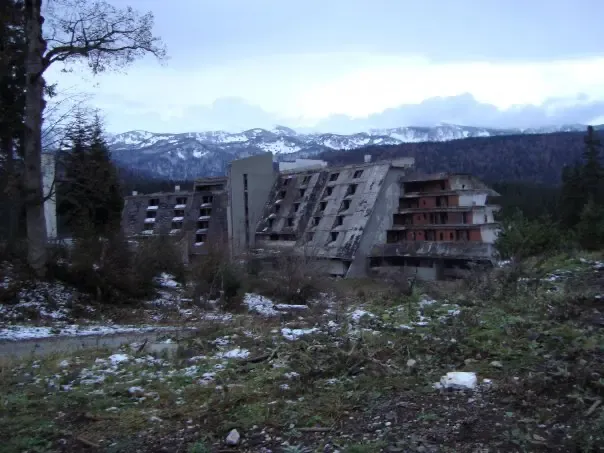
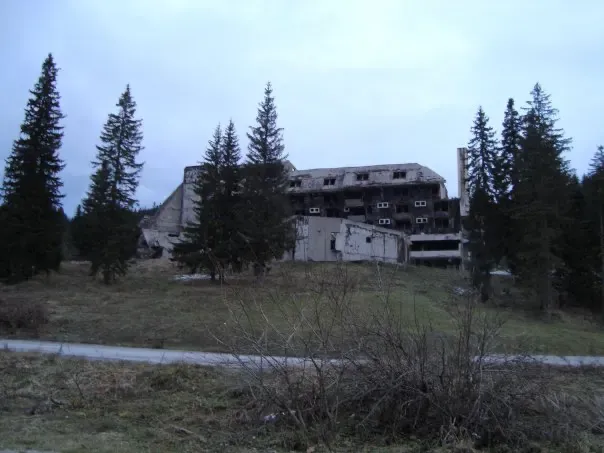
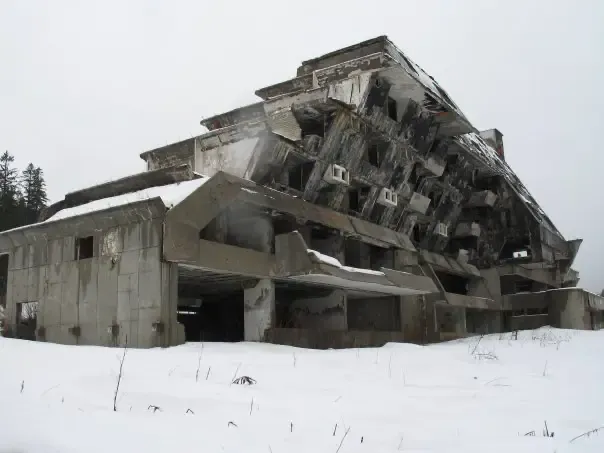
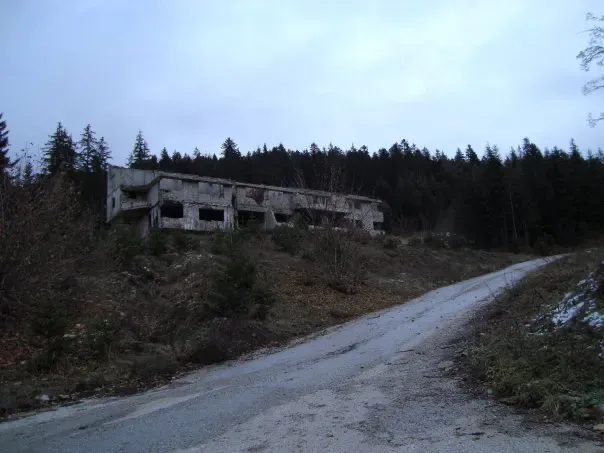
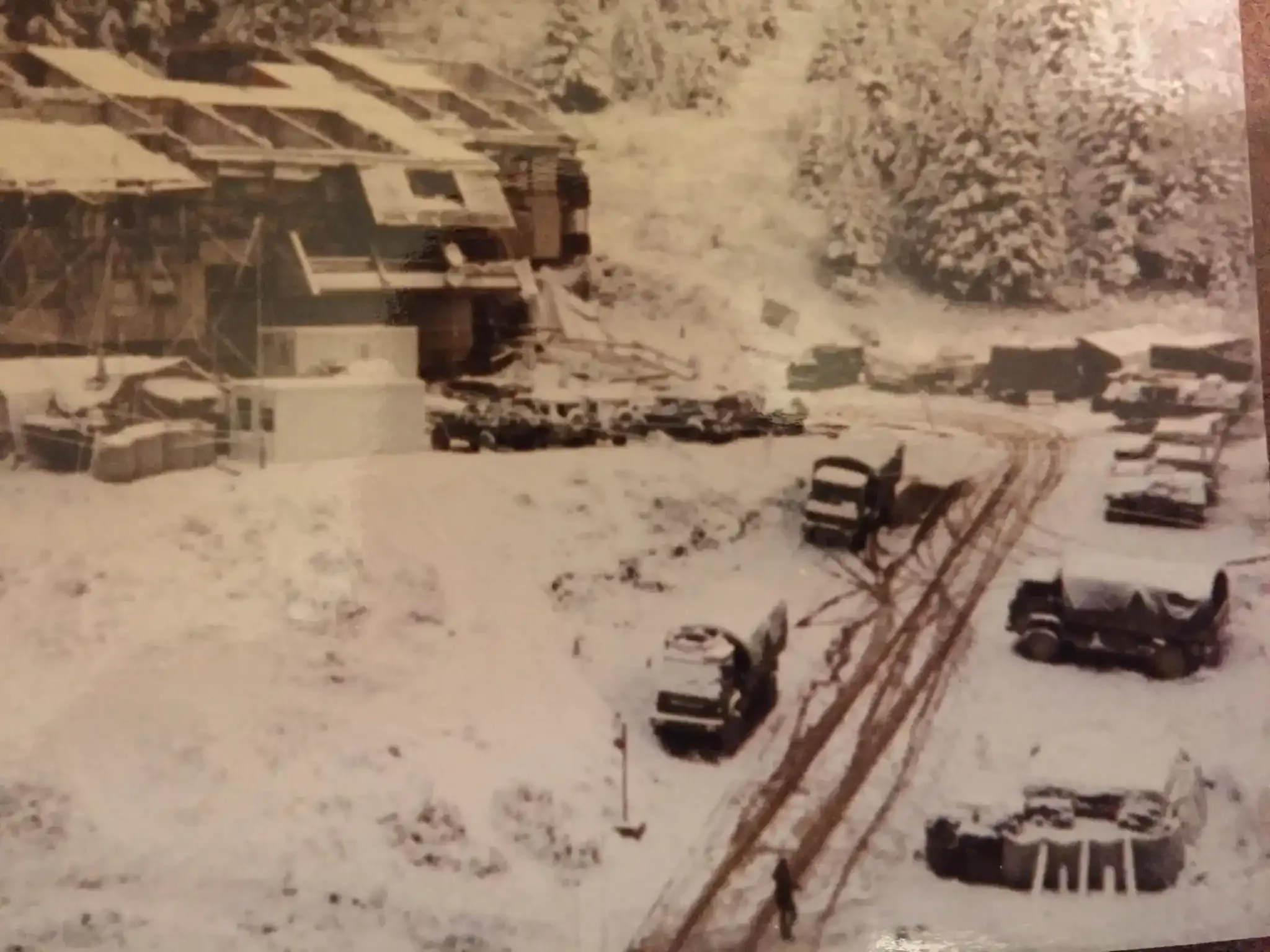
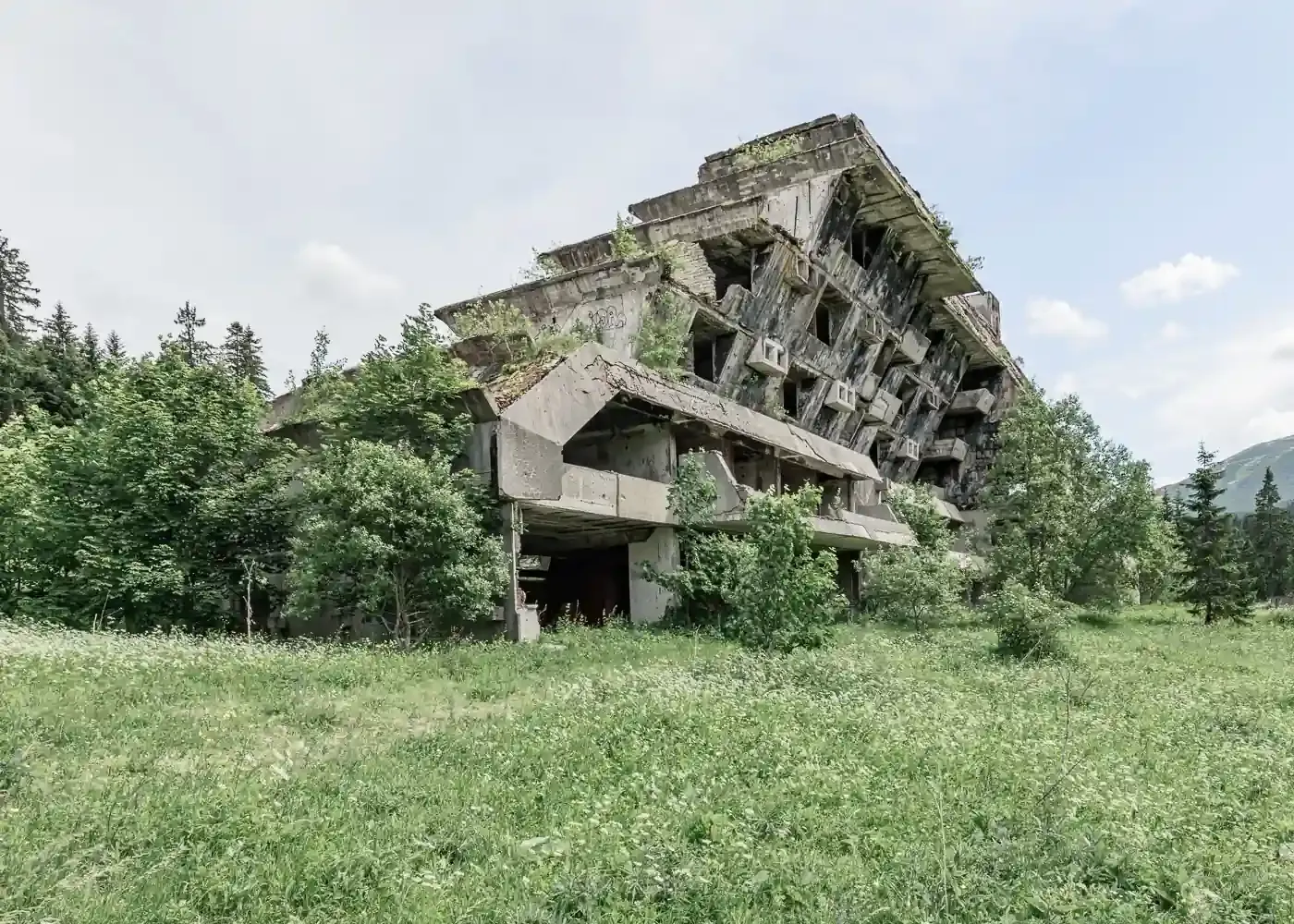
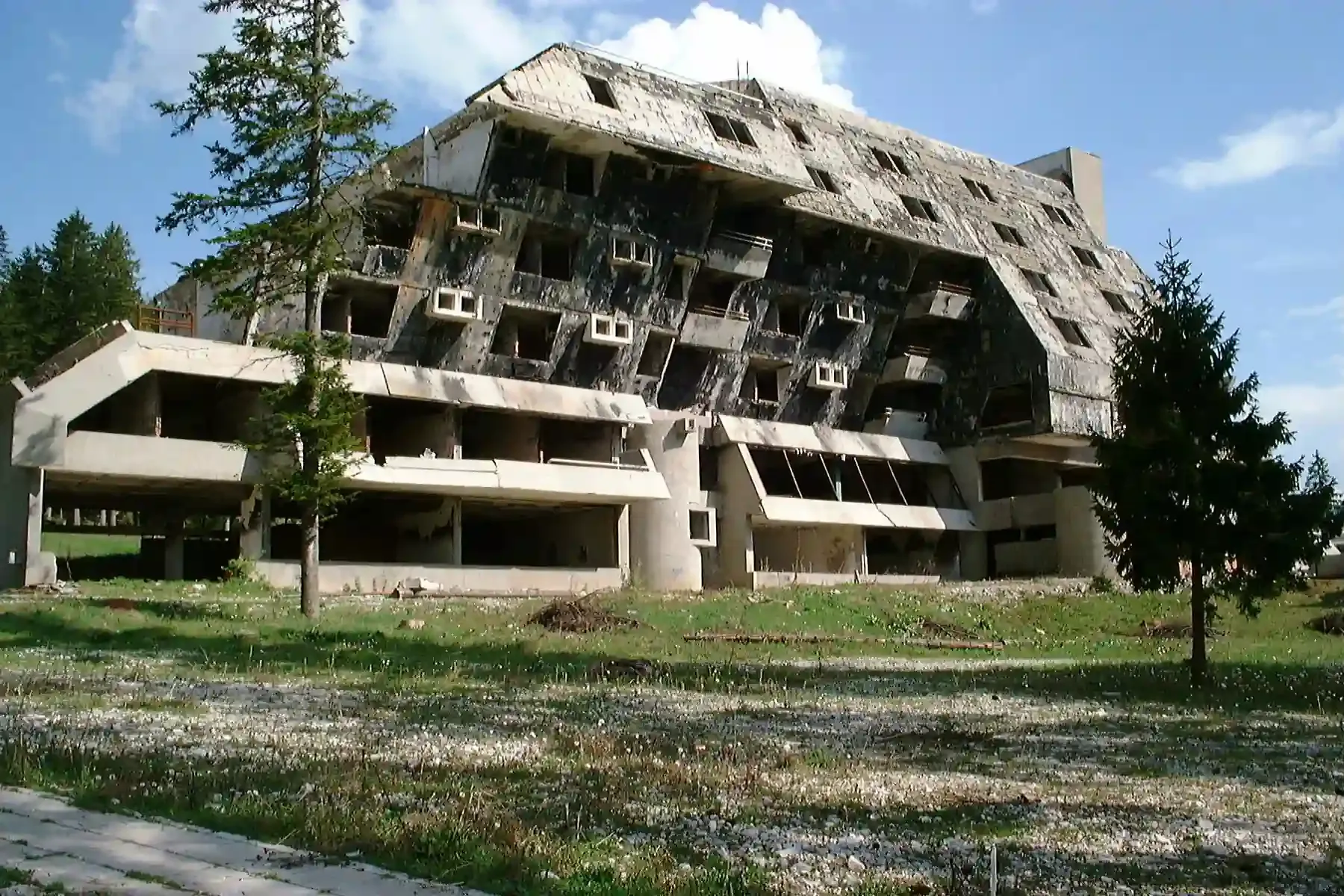
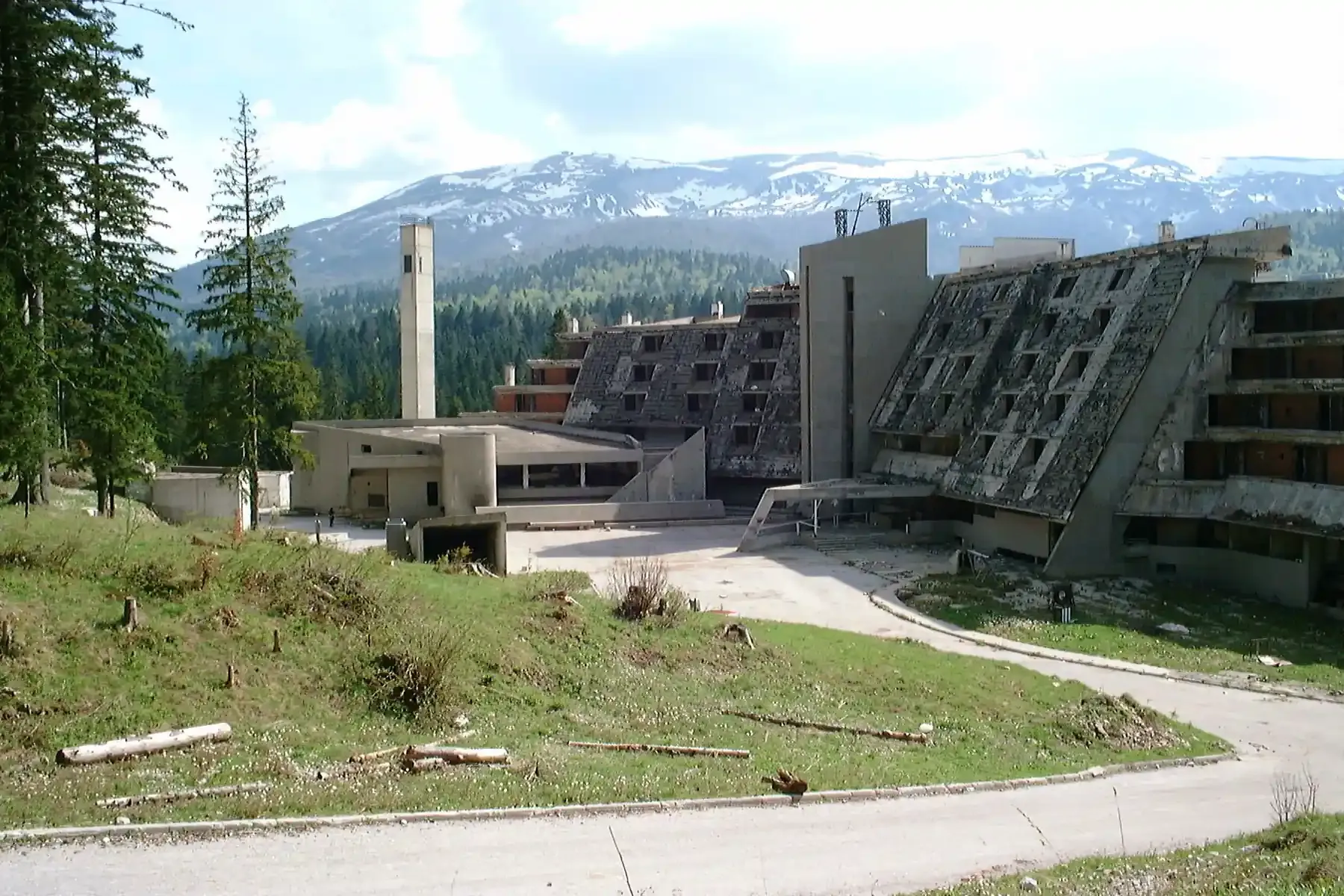
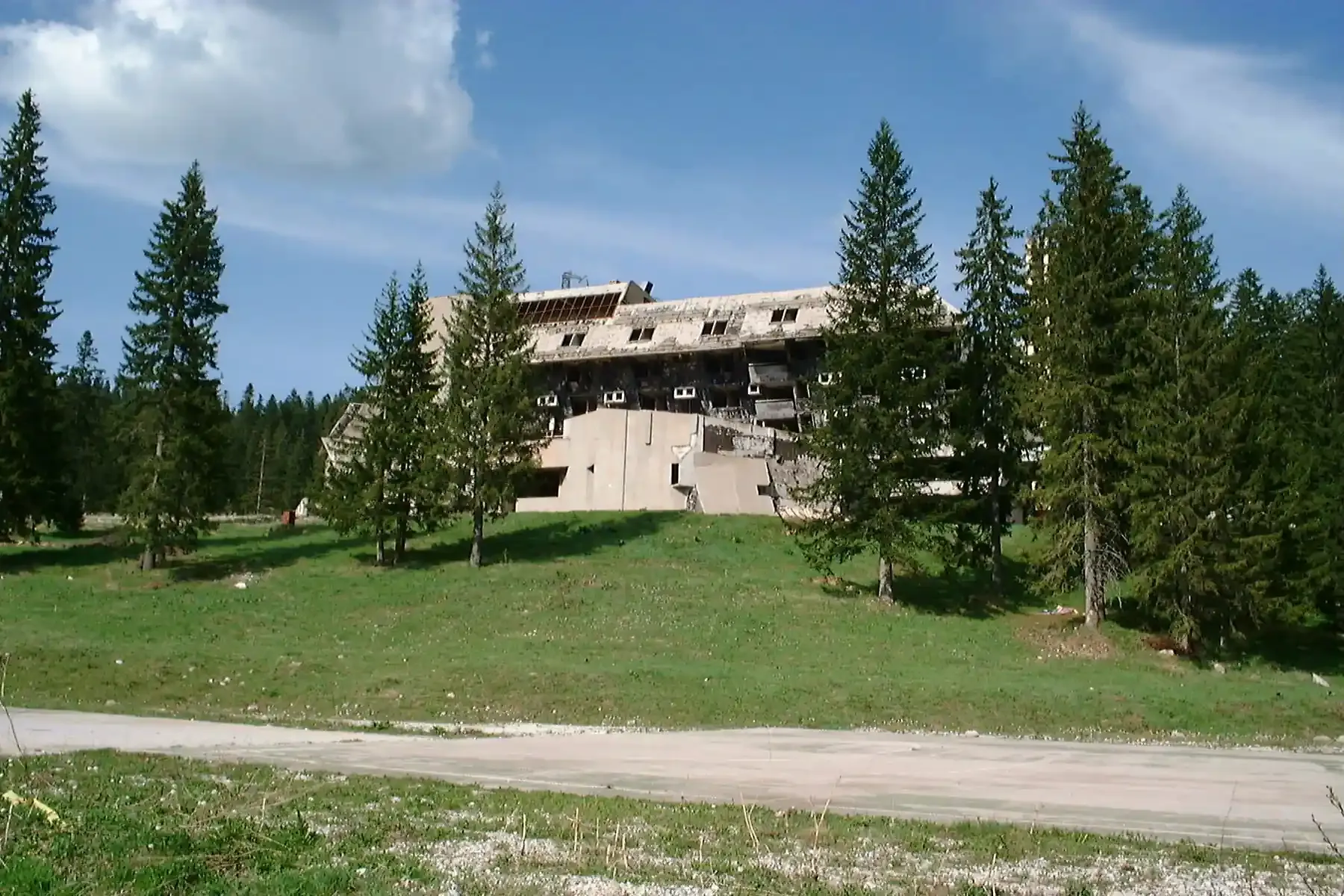
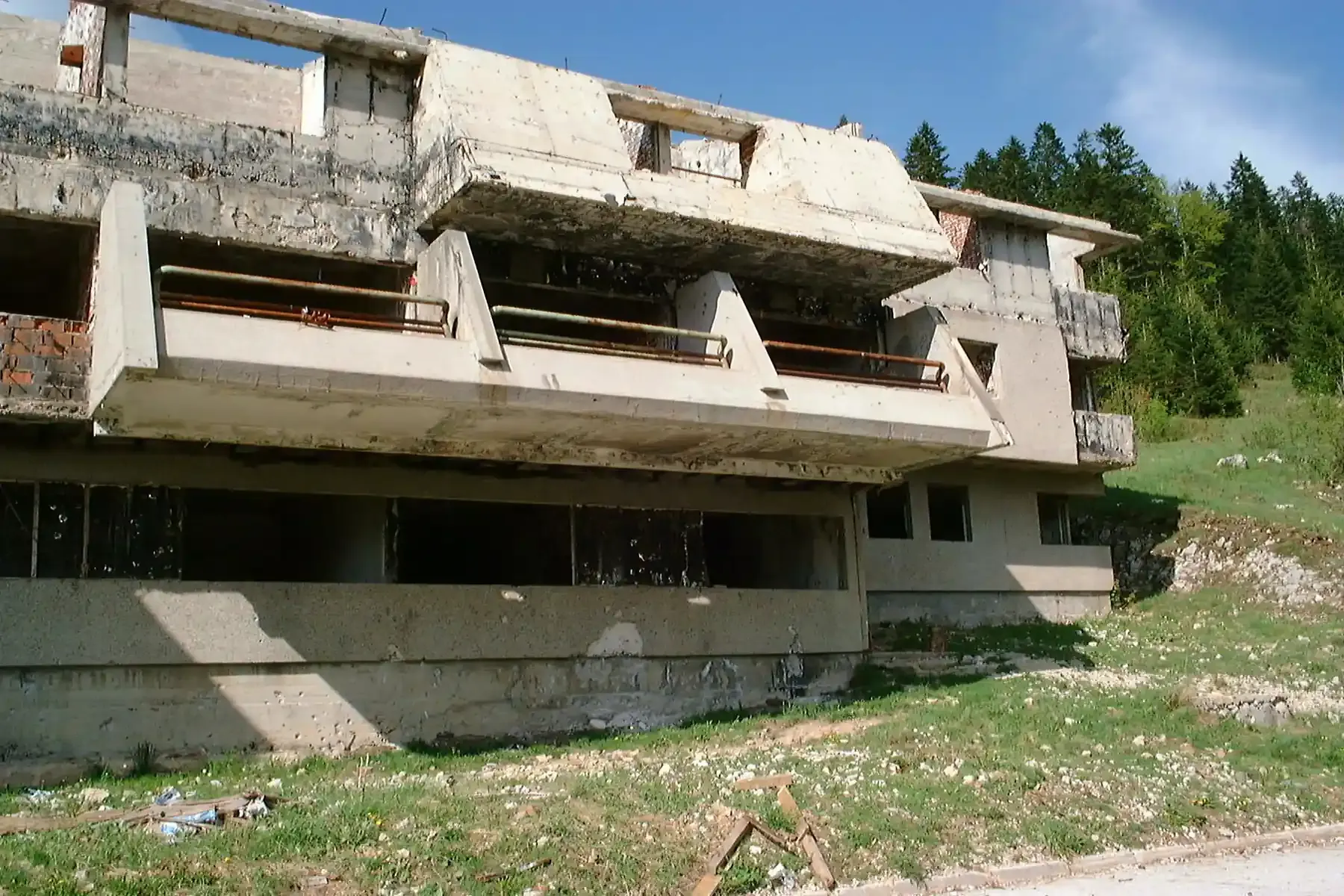
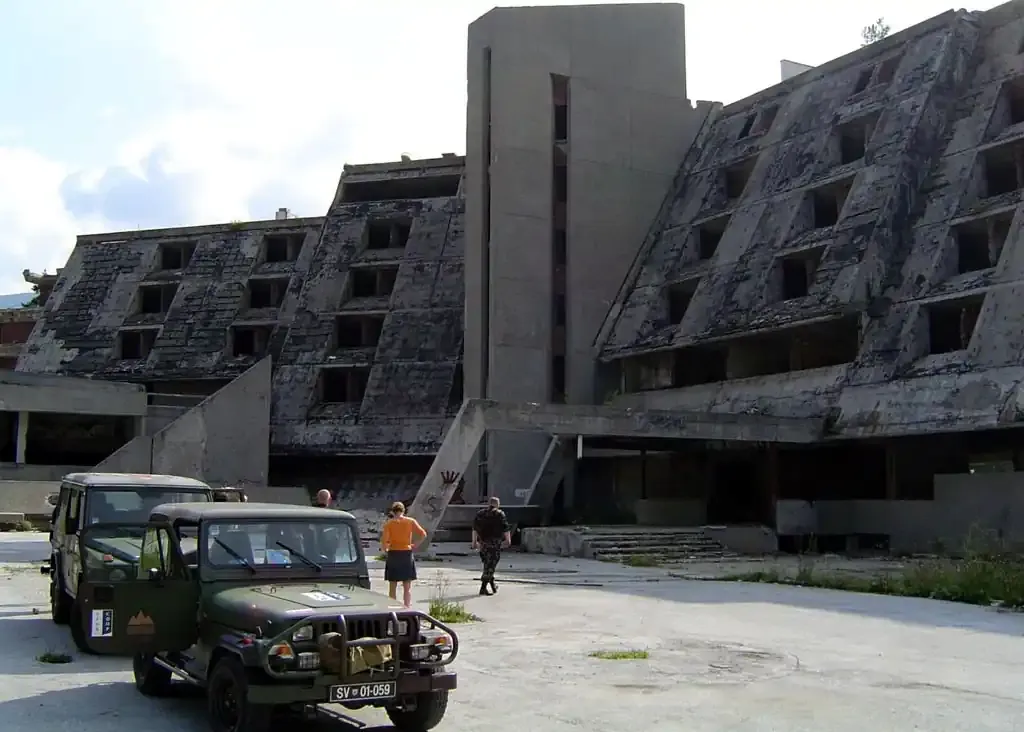
The structure’s decline was sealed in August 1993, when the hotel was gutted by a massive fire, reportedly started during a military retreat. Later in the conflict, the charred concrete ruins served a final functional purpose as a supply base for French UN peacekeepers. By the war's end, the intricate wood-clad lodge was reduced to a hulking, skeletal ruin.
Status today: The ‘urbex’ legacy of the Veliko Polje ruins
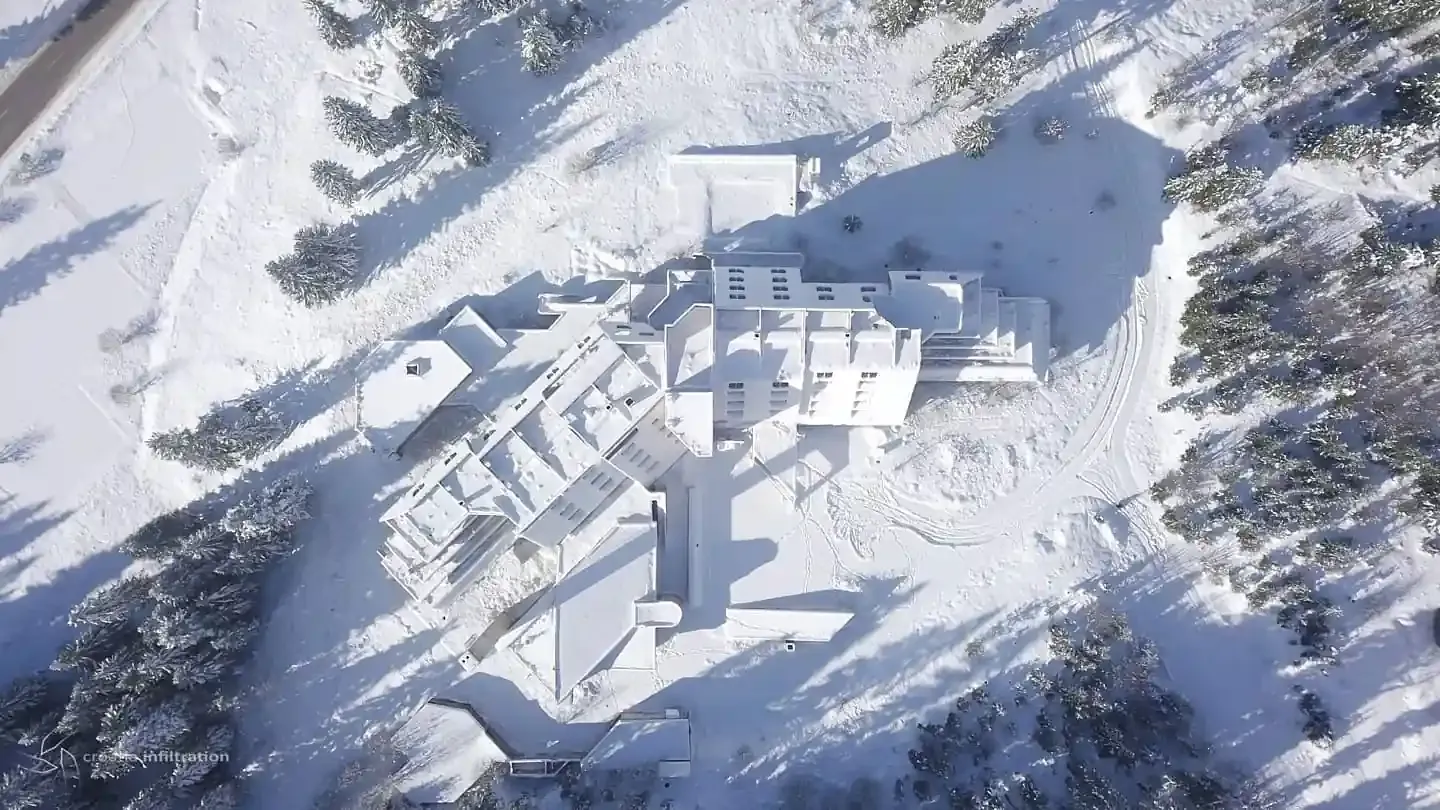
Today, the remains of Olympic Village B stand as a "silent monument to wartime destruction." The wooden cladding and Dinaric-style roofs are long gone, leaving behind a massive concrete shell at coordinates 43º44'36.8"N, 18º16'43.4"E. While the owner, ZOI '84, has made numerous attempts to sell the site to private investors, the building remains in a state of terminal dilapidation.
The ruins have found a new life within the "urbex" (urban exploration) community. For curious onlookers and YouTubers, the site is a primary destination for documenting the "modernist ruins" of the 1984 Games. It remains an integral part of the city’s collective memory, an eerie reminder of how quickly the peak of international unity can descend into conflict.
How to visit: Accessing the remains of Village B
Visitors wishing to see the remains of the village can find them at Veliko Polje on Mt. Igman, approximately 25 km southwest of Sarajevo.
- By Car: The site is accessible via the mountain roads leading from Sarajevo (Krupac or Hadžići) toward Bjelašnica.
- Safety Note: While the area is popular for hiking and summer downhill cycling, the interior of the hotel ruins is structurally unsound and should be approached with extreme caution.
- Nearby Sites: The Igman March monument and the Gorišek brothers' ski jumps at Malo Polje are located within a 4 km radius, allowing for a comprehensive tour of the mountain's 1984 legacy.