
Trebević
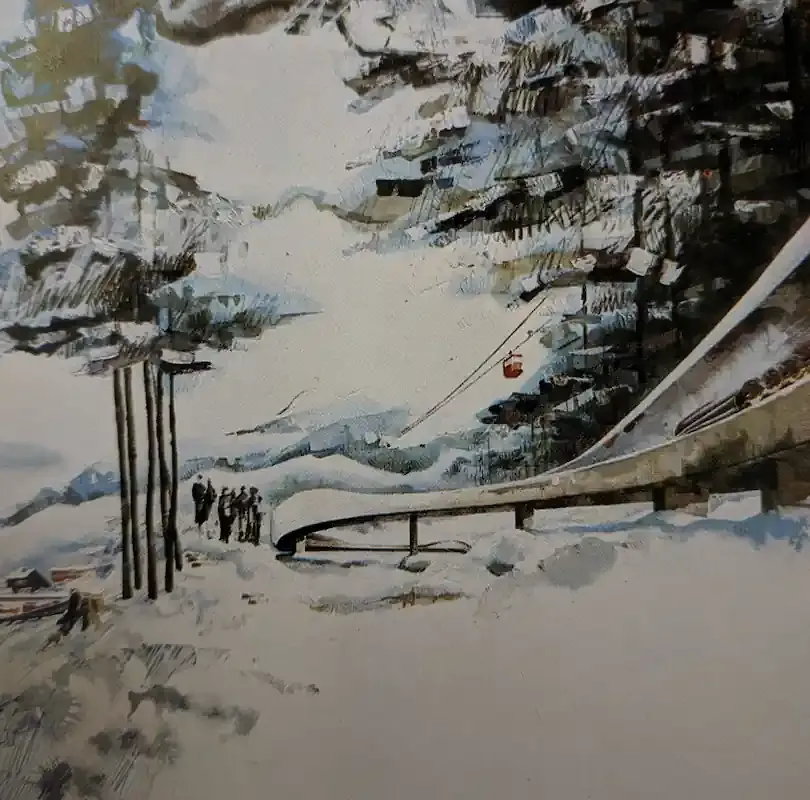
Trebević stands as the "city mountain," overlooking Sarajevo with a proximity that allowed the 1984 Winter Games to remain uniquely compact. Its story is one of dual identity: a beloved recreational escape linked to the heart of the city by a historic ropeway, and the site of the "Sarajevo Model", a technically innovative, high-speed Olympic track carved into the coniferous forest.
Fast Facts
- Location: 6 km (3.7 miles) from Sarajevo city center; 10 km (6.2 miles) from the Olympic Village.
- Olympic Role: Venue for Bobsleigh and Luge competitions.
- 1984 Events: Two-man bobsled, four-man bobsled, men’s singles luge, women’s singles luge, men’s doubles luge.
- Track Type: Combined bobsleigh and luge run (the "Sarajevo Model").
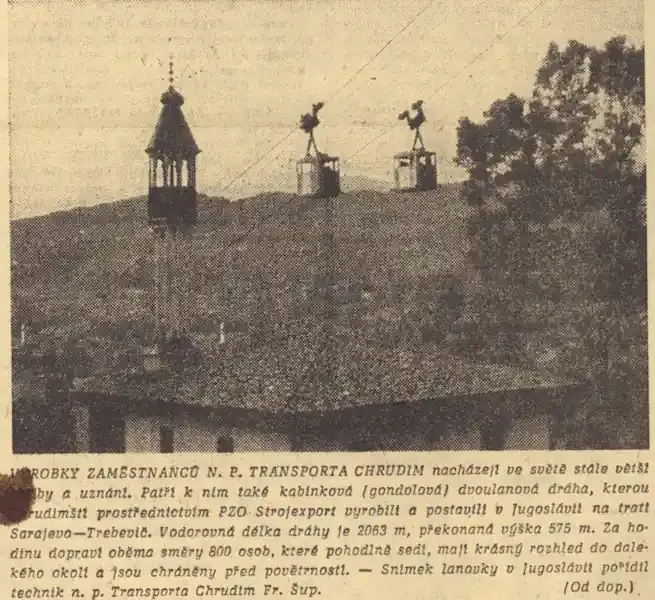
- Ropeway Origins: Designed by Transporta Chrudim (Czechoslovakia); first opened May 3, 1959.
- Ropeway 1959 Specs: 2,064 meters long; 11.5-minute ride; 400 passengers/hour capacity.
- Track Designer: Lead engineer Gorazd Bučar, in cooperation with the German "Deyle" company.
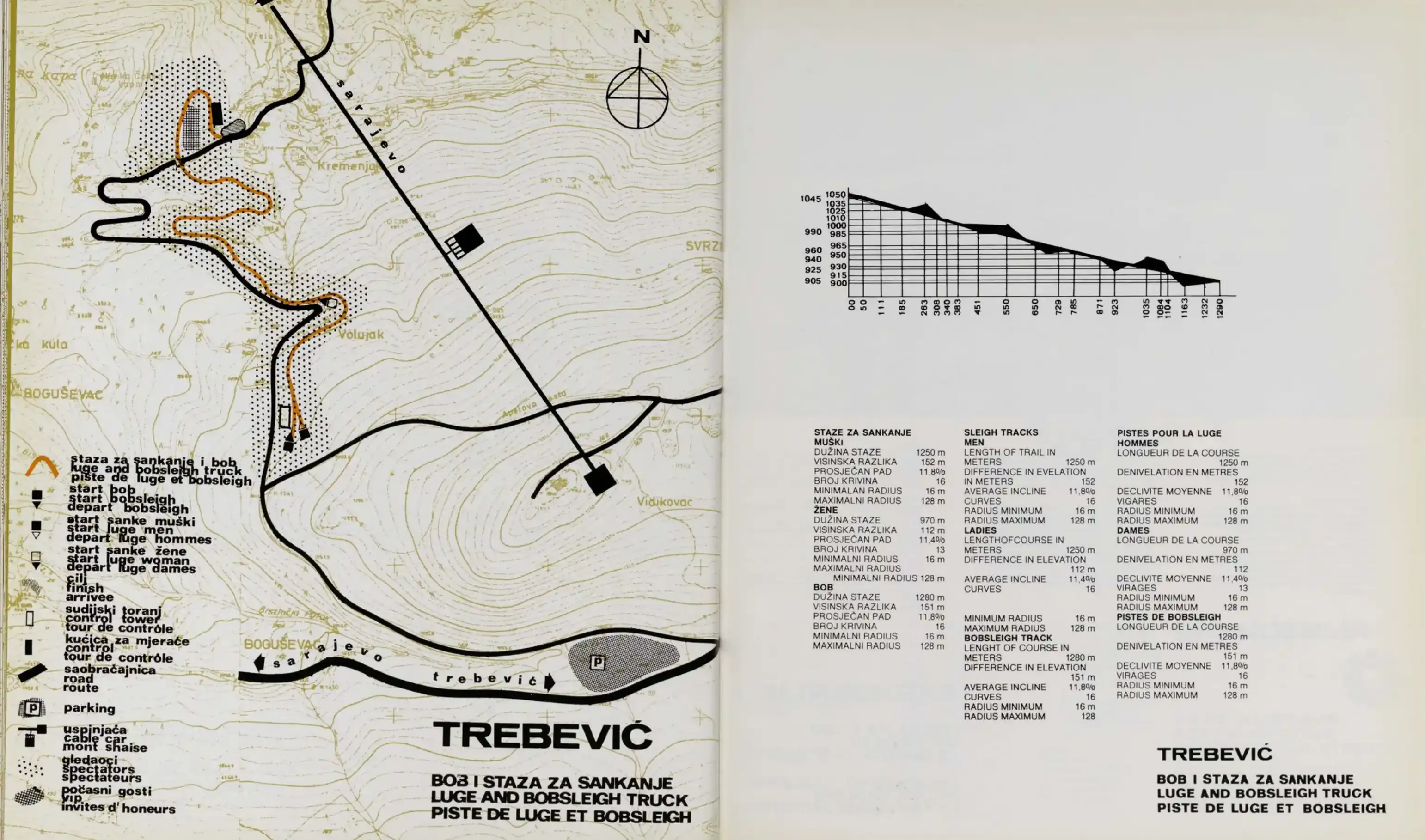
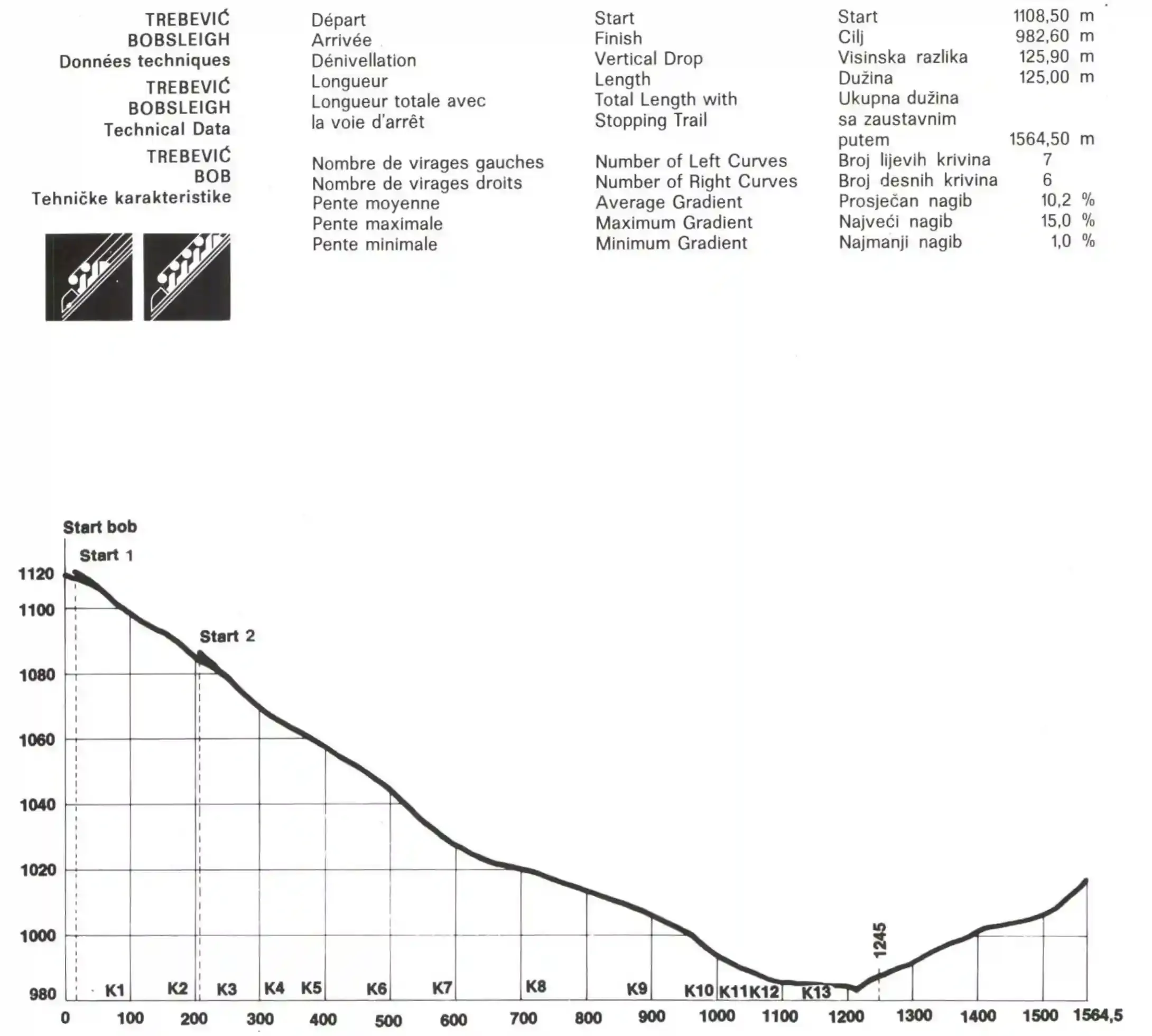
- Track Length: 1,570 meters (5,150 feet) total; 1,266 meters (4,153 feet) for competition.
- Vertical Drop: Start at 1,108.5 m; Finish at 982.6 m.
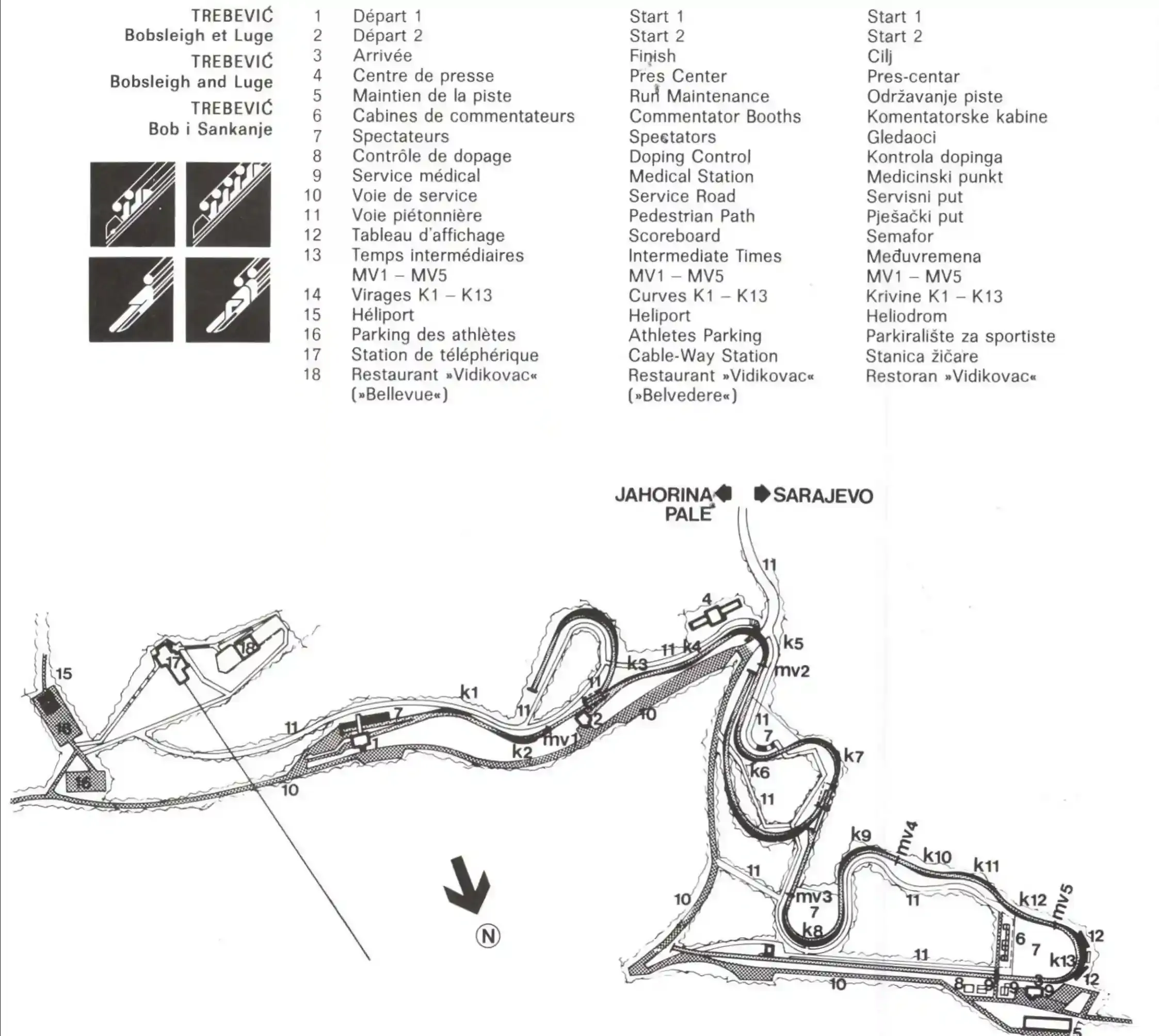
- Turns: 13 curves (6 left, 7 right).
- 1984 Attendance: Over 10,000 spectators for major races.
- Status Today: Ropeway fully operational (Leitner system, 2018); Olympic track remains in a ruined but structurally sound state.
Where Trebević Meets the City: The Venue Footprint
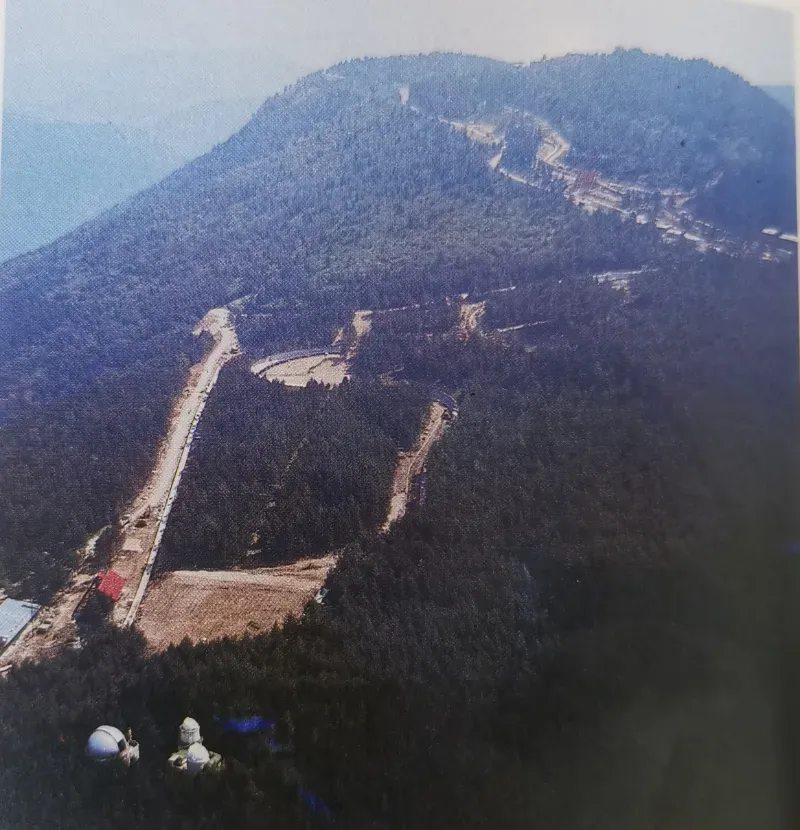
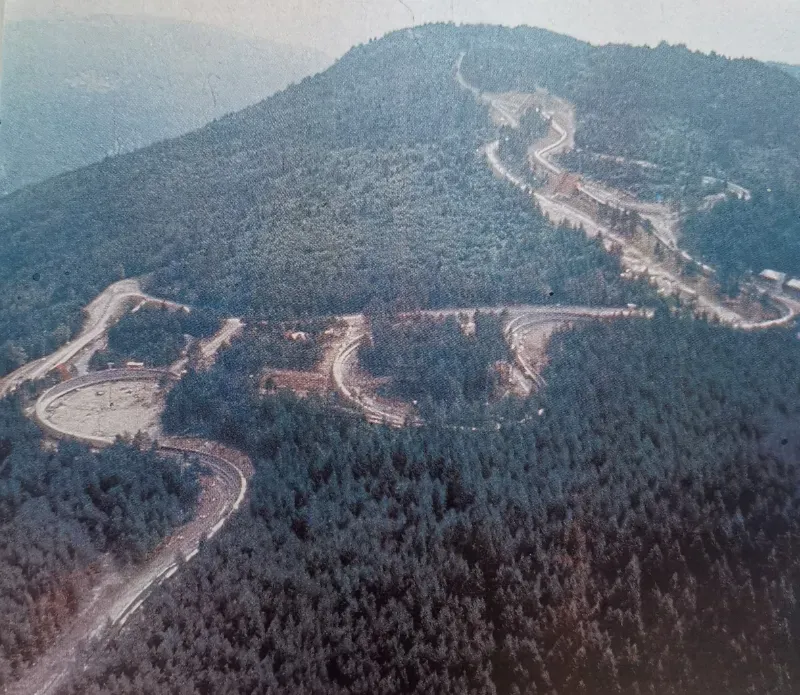
Trebević is Sarajevo’s most immediate mountain neighbor, with slopes that descend directly into the city's oldest neighborhoods. This "city mountain" reaches a peak of 1,629 meters (5,344 feet) and merges naturally with the Jahorina massif to the east. The Olympic venue zone was specifically concentrated on the northern hillsides, an area characterized by thick coniferous forests of spruce and fir.
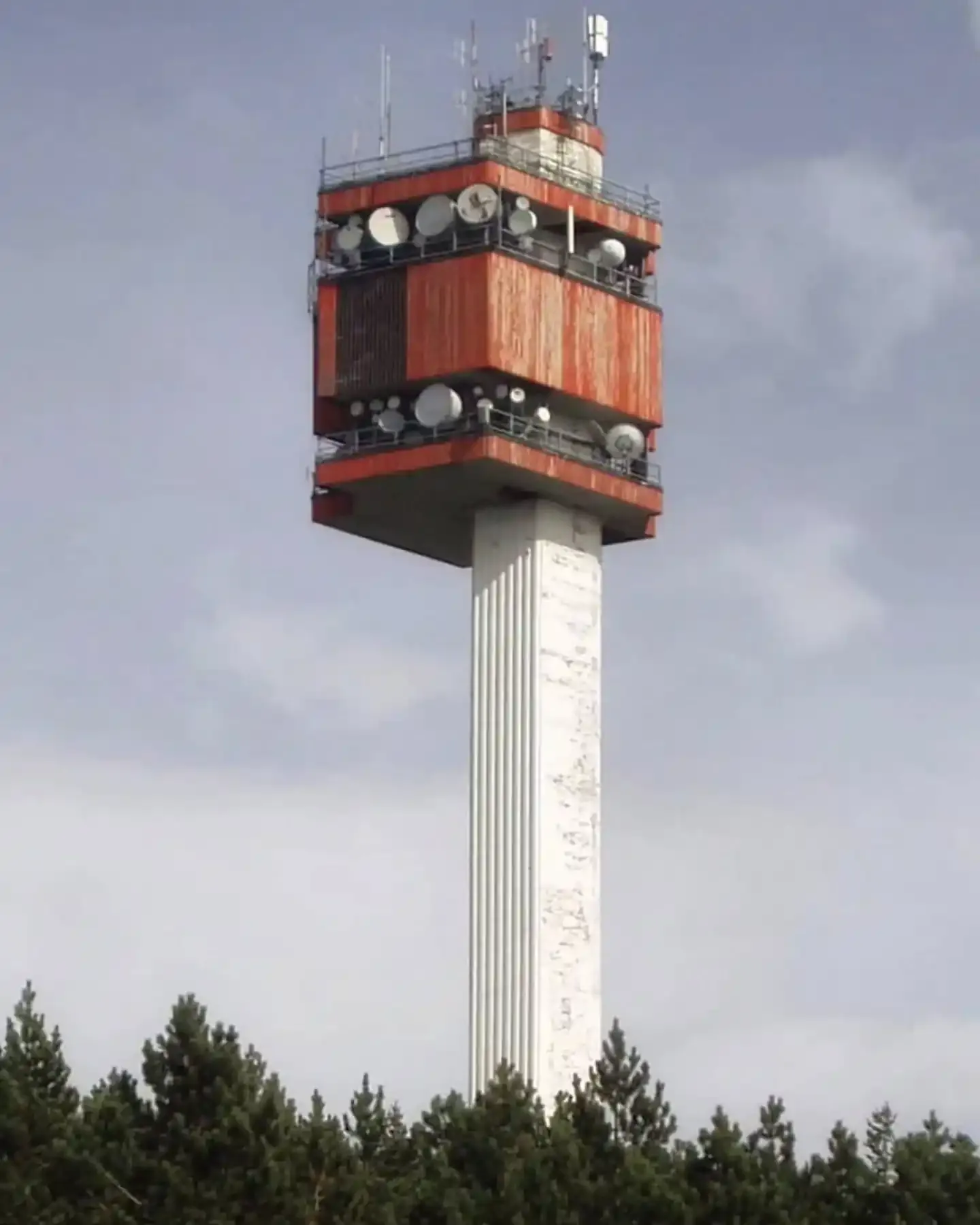
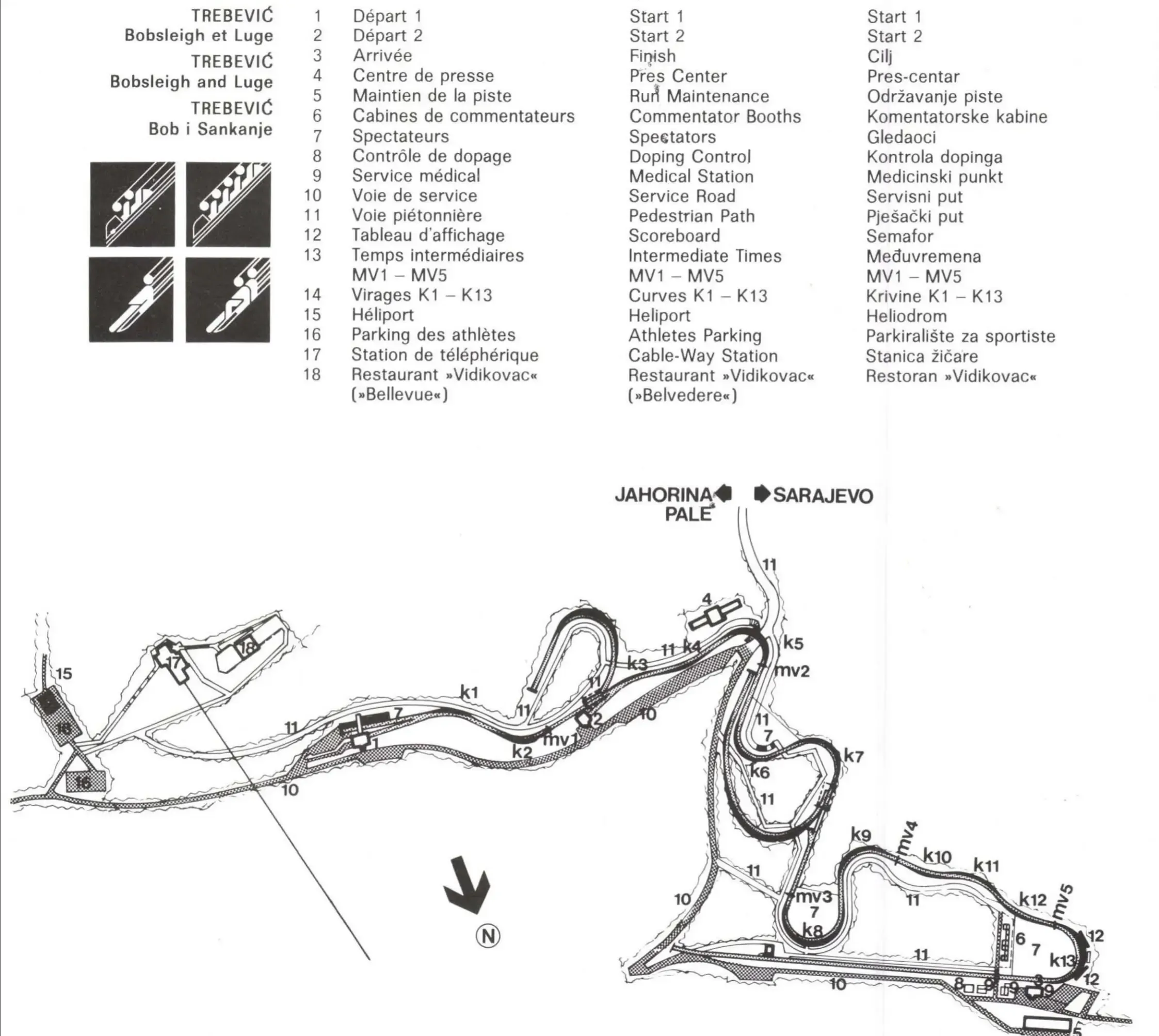
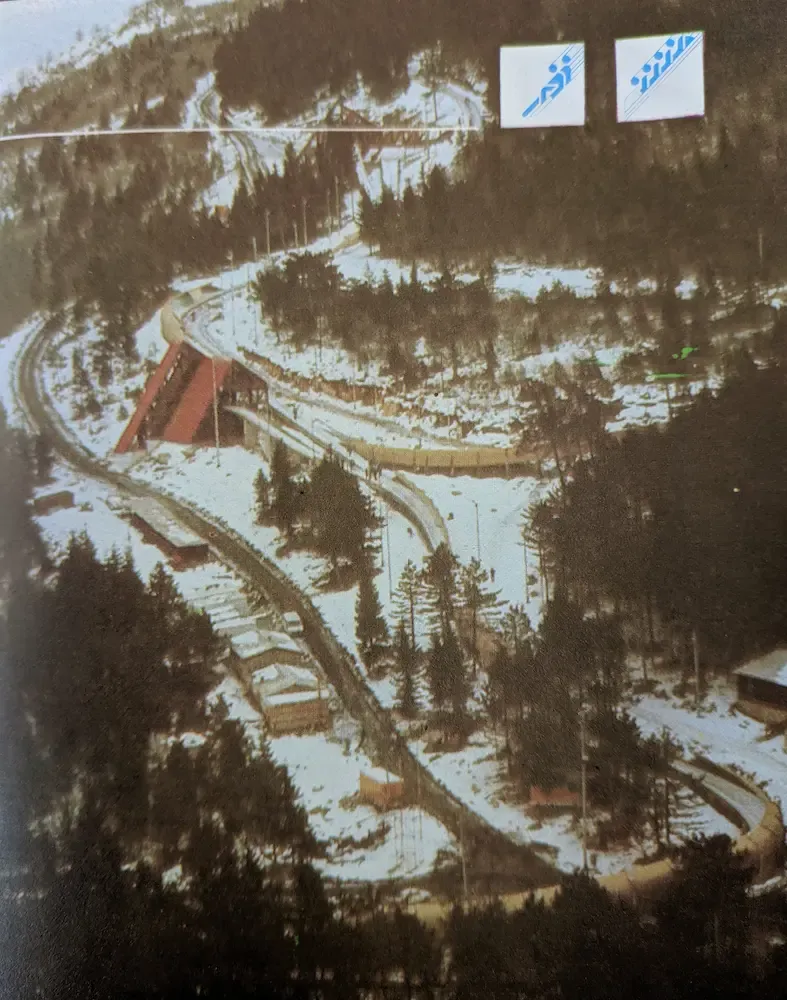
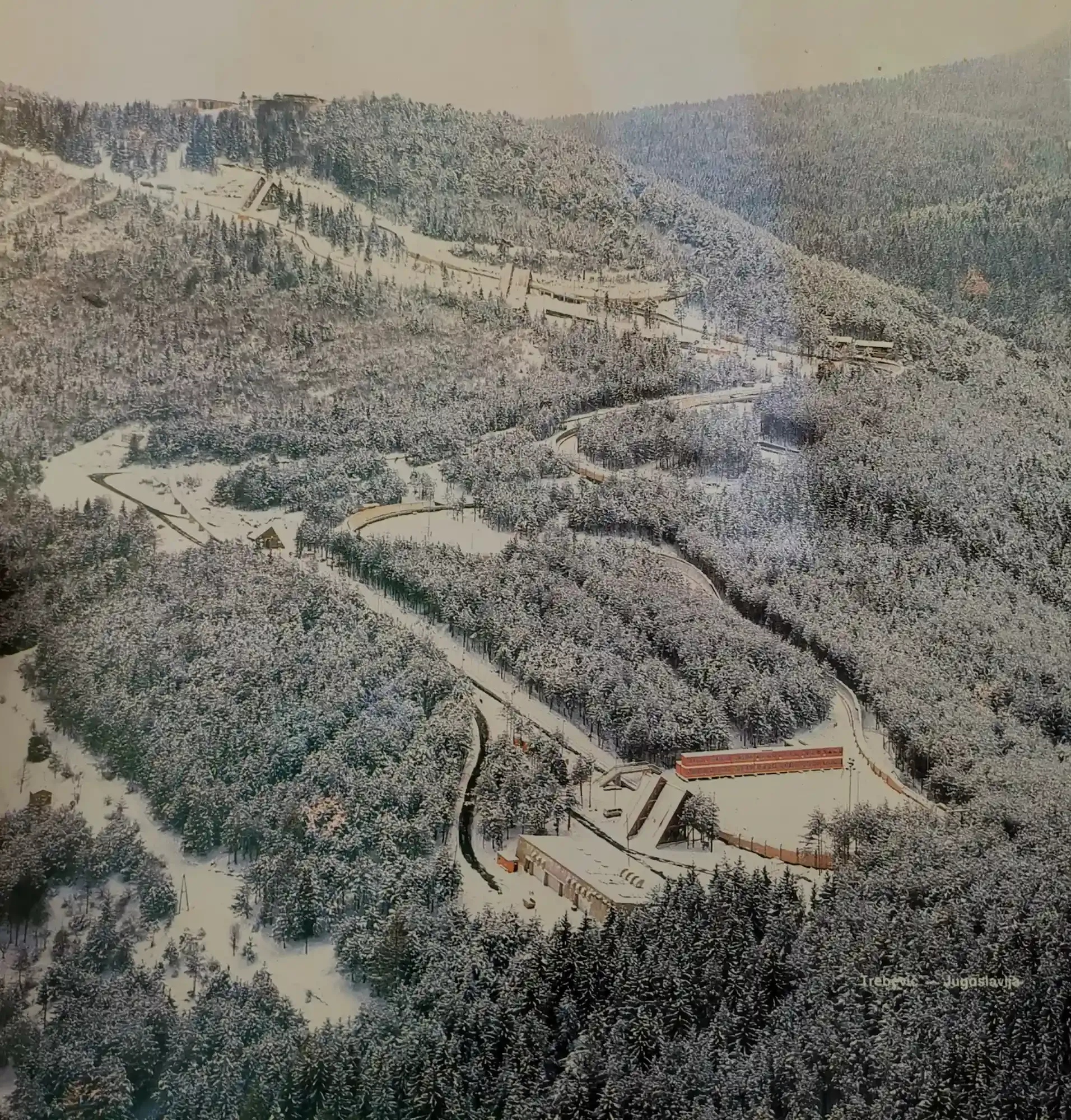
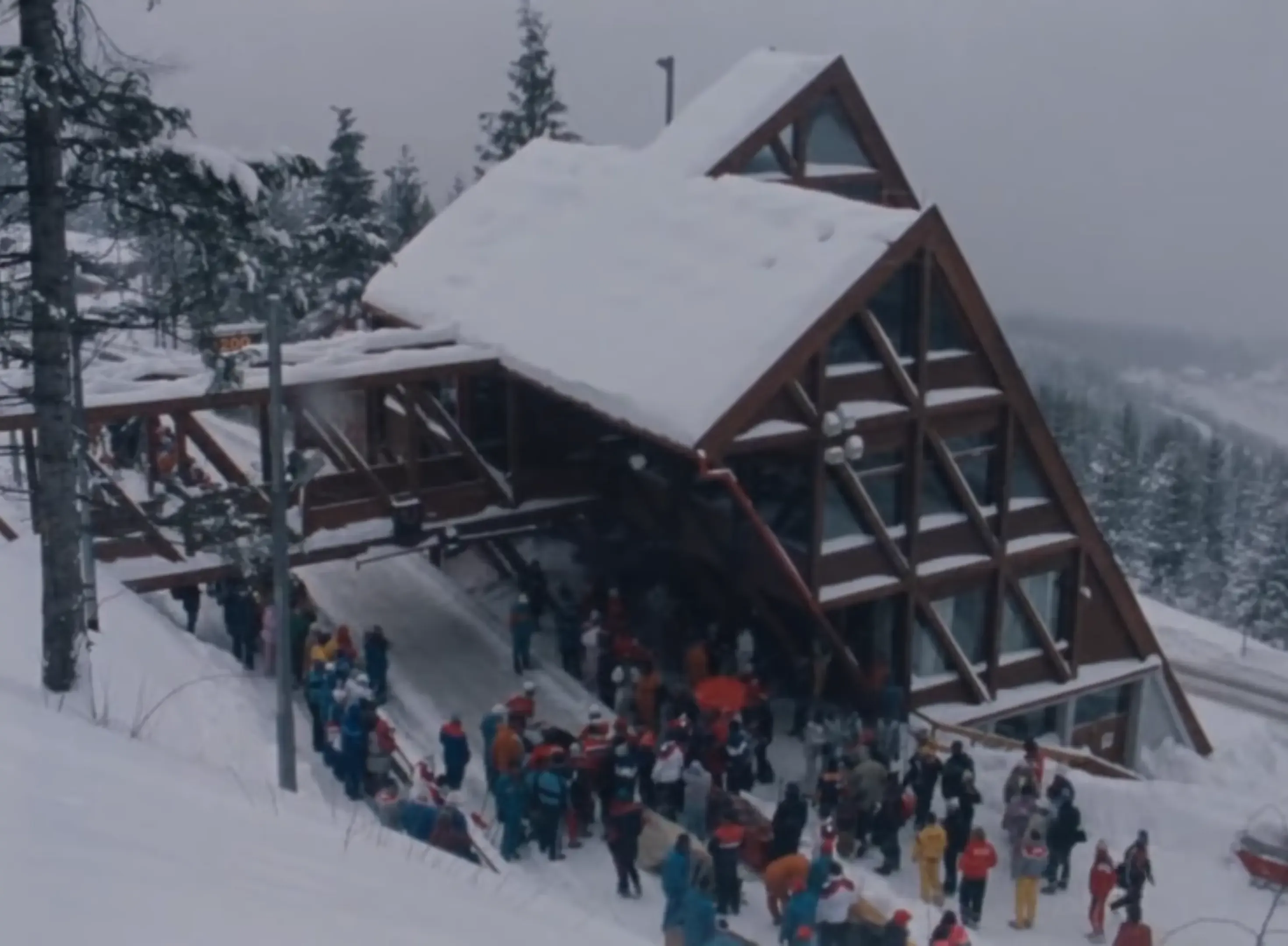
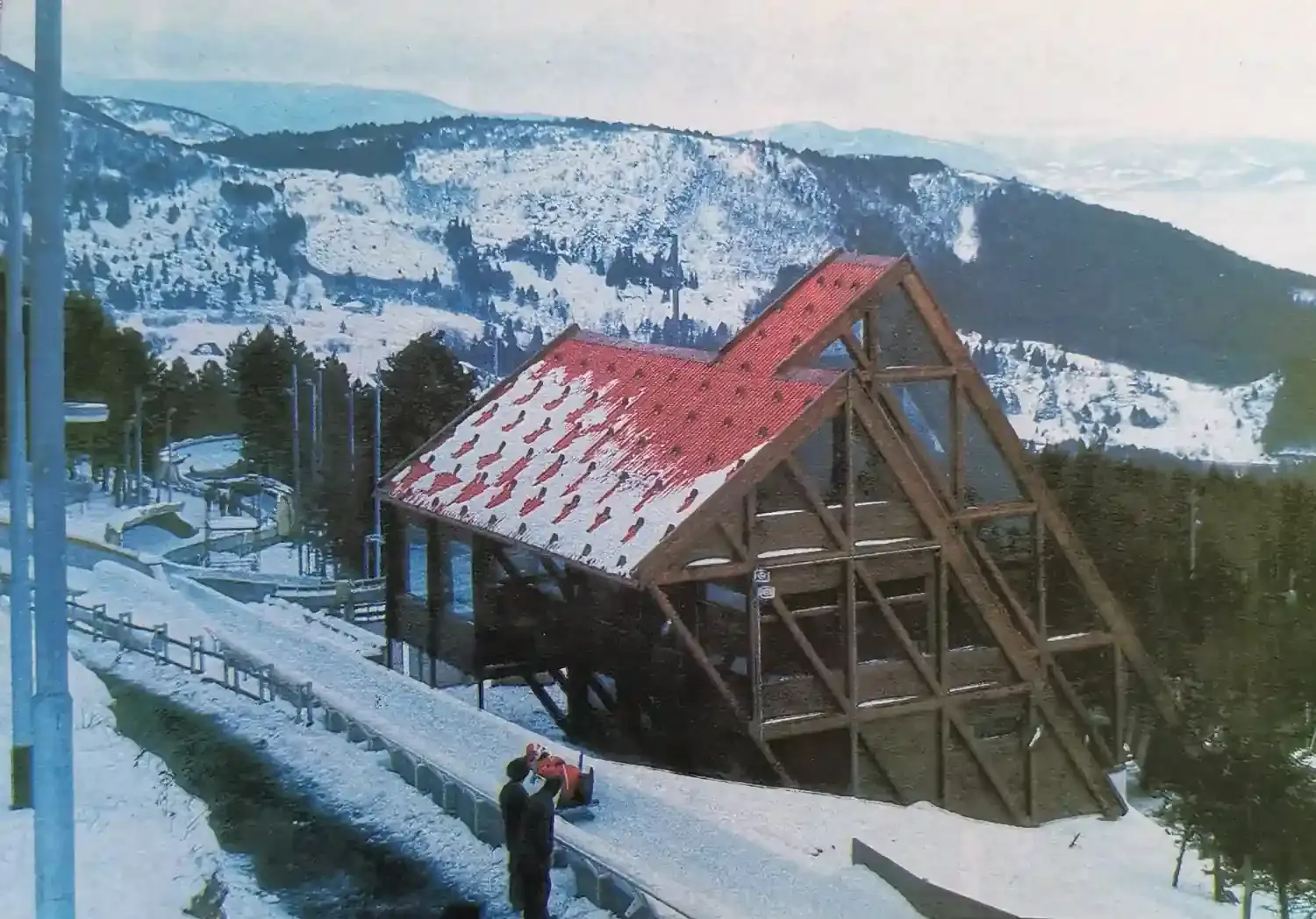
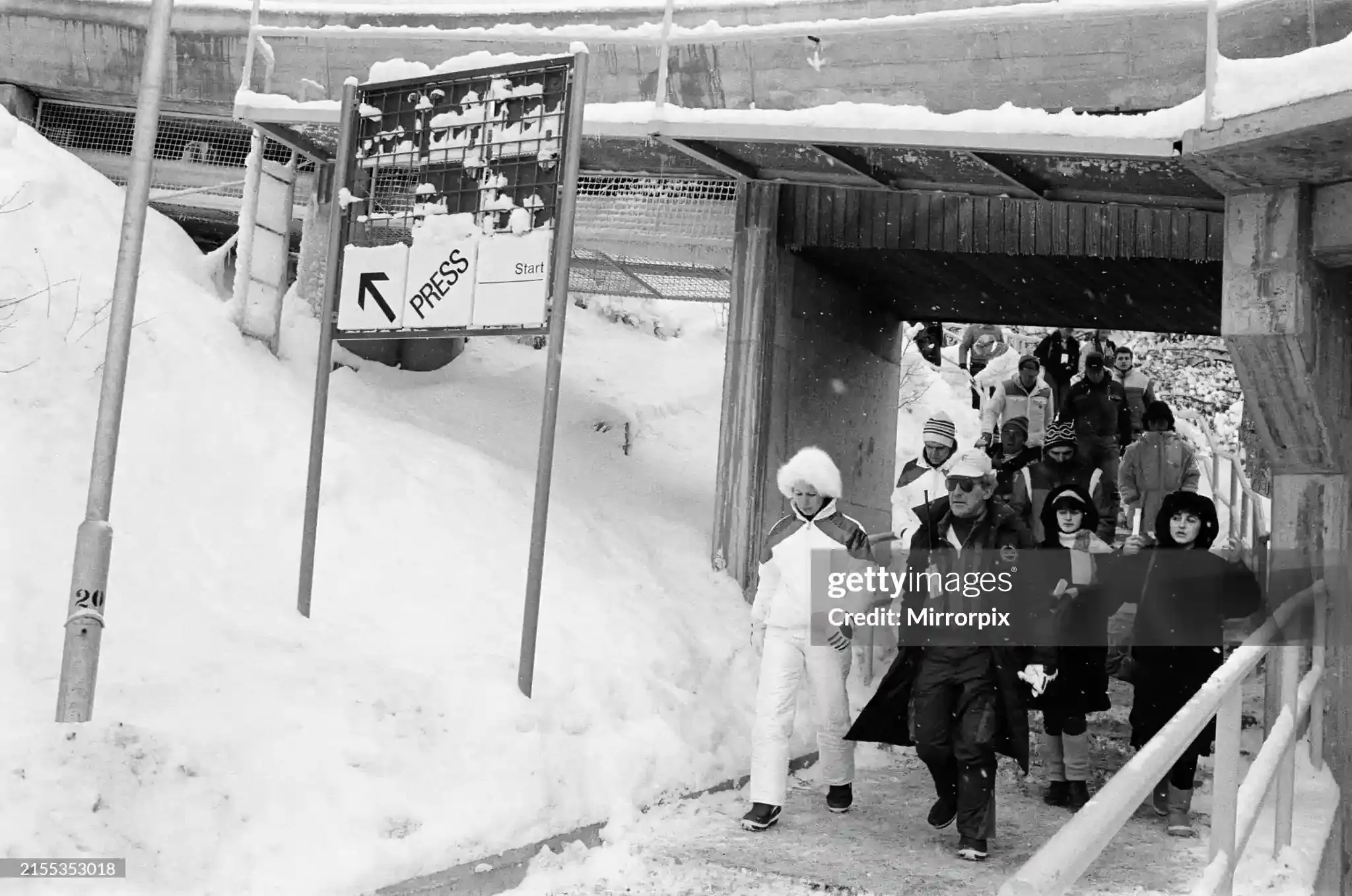
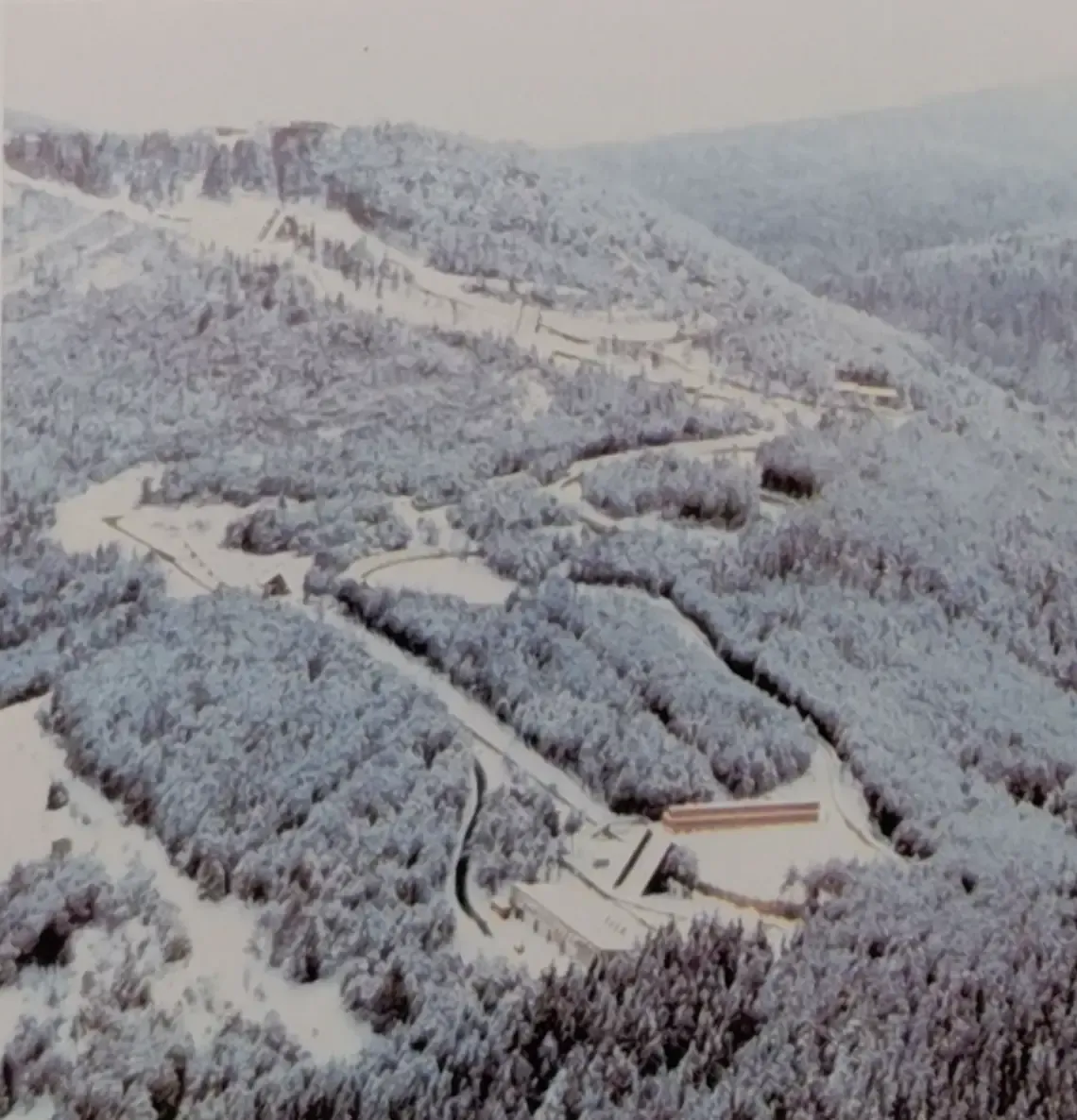
The 1984 venue footprint was defined by three major components: the ropeway corridor, the Olympic track zone, and the leisure areas. The ropeway (or cable railway) provided the primary link, carrying visitors from the neighborhood of Bistrik at 583 meters above sea level to the Vidikovac station at 1,160 meters. The Olympic track itself was situated between 982 and 1,110 meters, integrated into a 51-hectare complex that included the Finish House, multiple start facilities, and a dedicated press center located above Curve 5.
Trebević Before 1984: The People’s Mountain
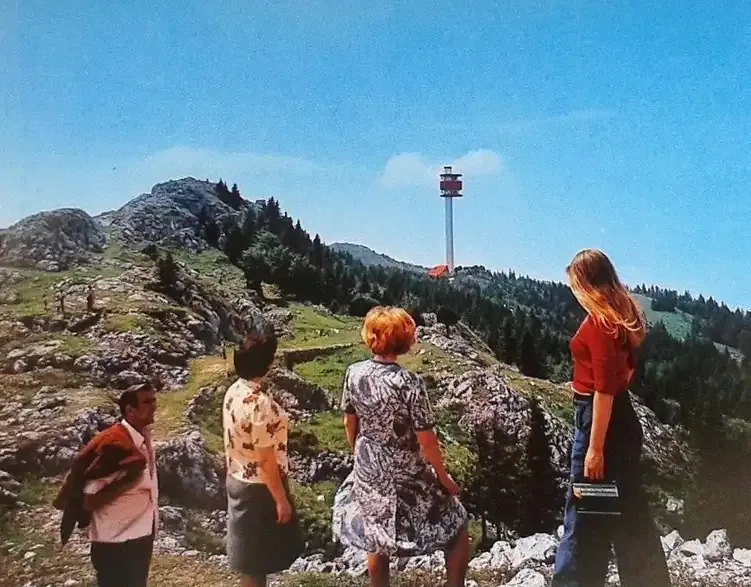
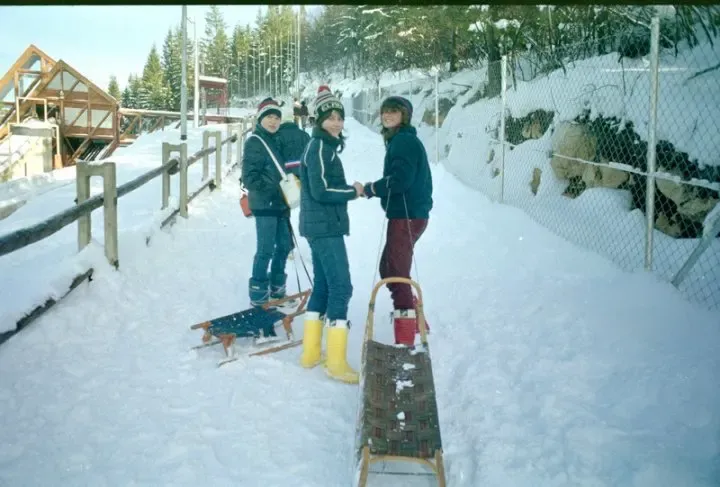
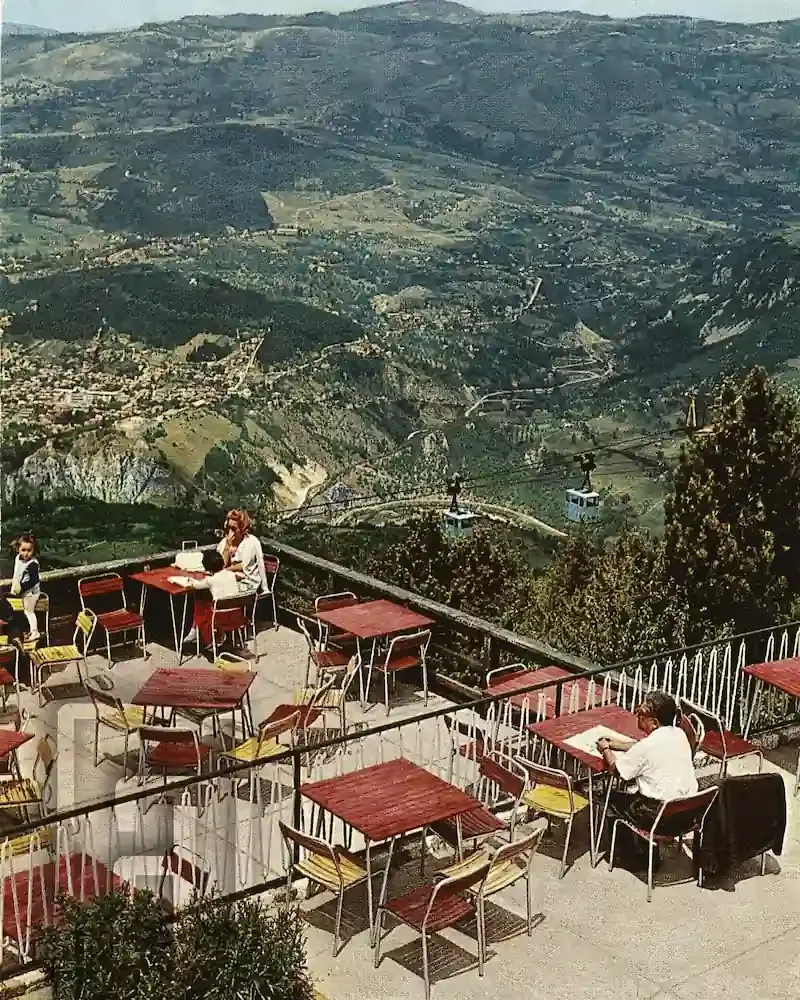
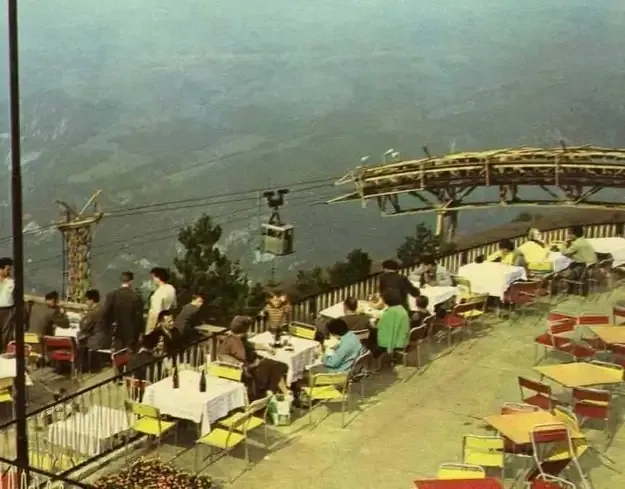
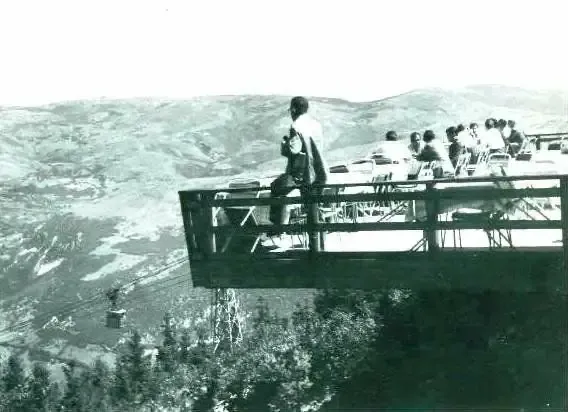
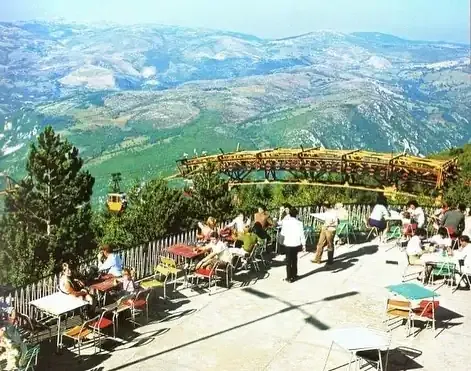
For centuries, Trebević has served as the back garden of Sarajevo. Parts of the city at its foot date back over 500 years, and the mountain has long been the favorite picnic ground for inhabitants seeking an "oasis of clean air." Before the high-tech concrete of the 1980s, the mountain was defined by its "ligure", traditional Bosnian wooden sledges.
This local sledging culture was the spiritual precursor to the Olympic venue. Older generations recall the Trebević road being crowded every winter with people of all ages using these indigenous sleds or early skis. By the time of the Olympic bid, the mountain already hosted eight restaurants and three mountain lodges, firmly establishing it as a site of leisure rather than just a sporting wilderness.
The First Ropeway: Triumph and Tragedy (1959–1989)
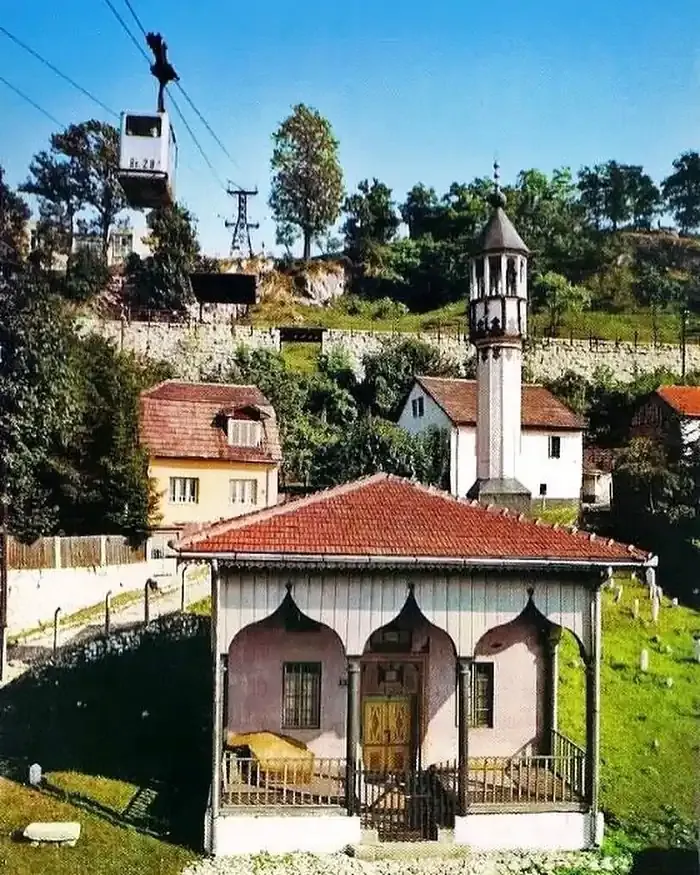
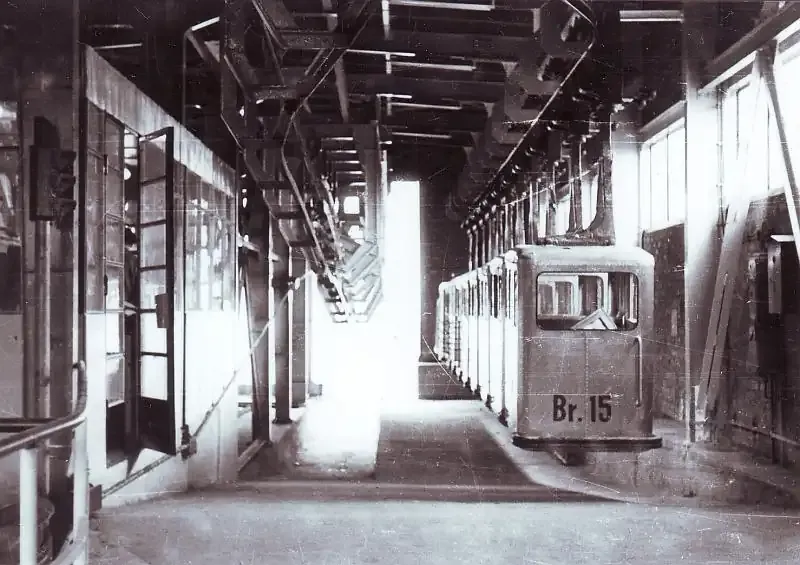
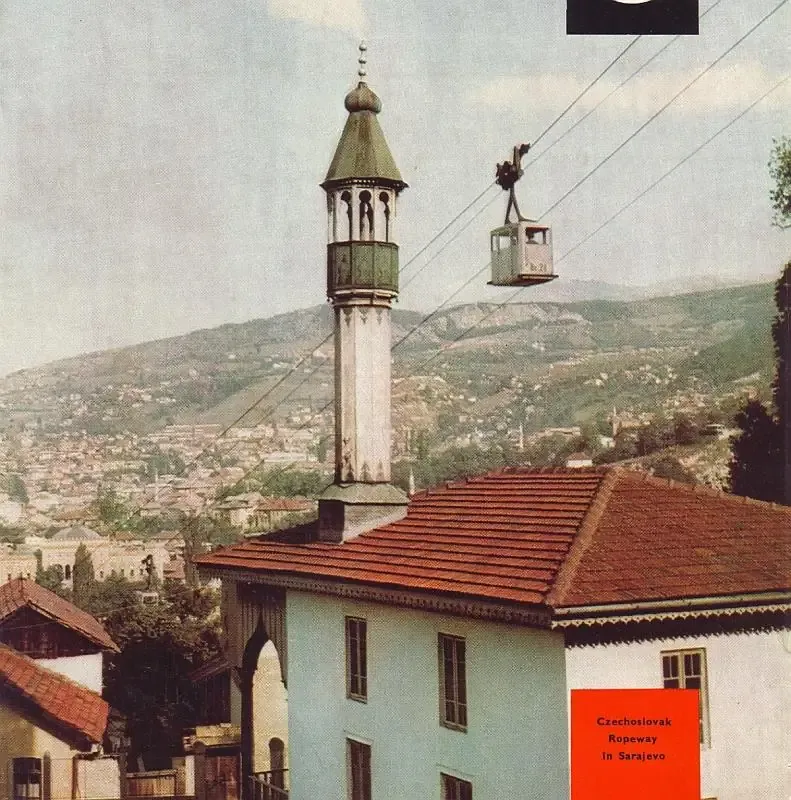
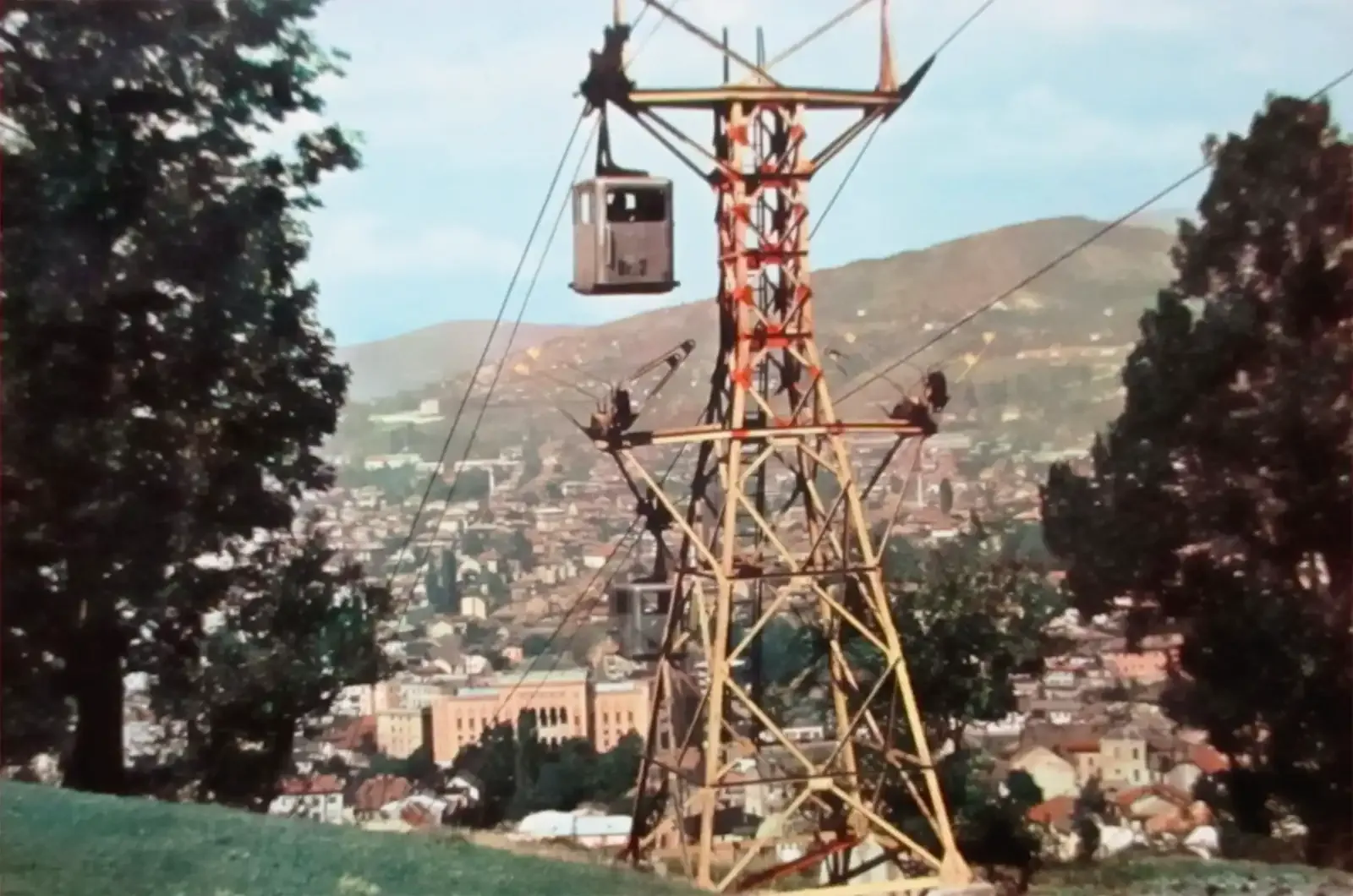
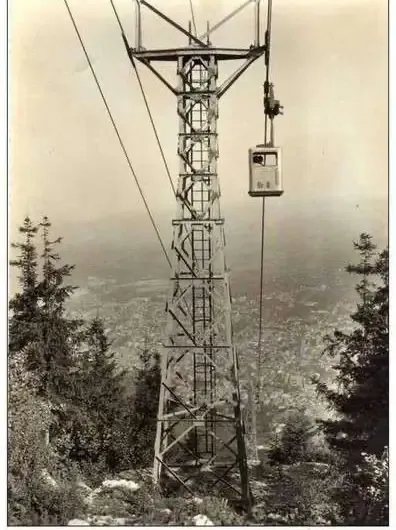
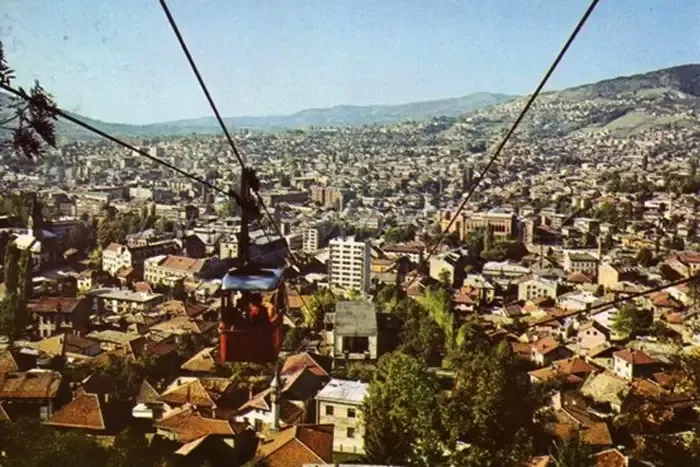
The arrival of the first Trebević cable car was a landmark event for Sarajevo’s modernization, but its birth was marred by technical chaos and personal tragedy. The project was a collaboration between the Yugoslav giant Energoinvest and the Czech firm Transporta Chrudim, with the initial contract signed at the Zagreb Fair in 1957. While the driving machinery was imported from Czechoslovakia, the cabins were built by Impola (Slovenska Bistrica) and other components by Termoelektro (Belgrade) and Jelšingrad (Banja Luka).
The "Fleeing Engineers" and the Opening
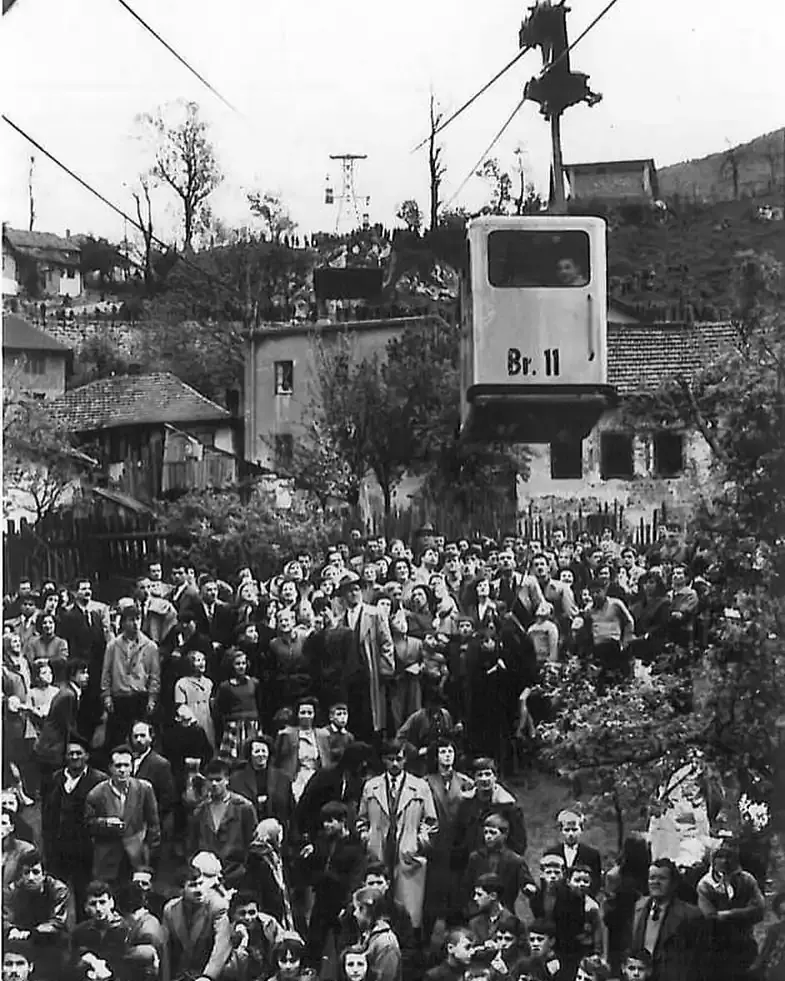
The system was rushed to open in late April 1959 to coincide with political anniversaries. On April 26, 1959, a "soft opening" turned chaotic when thousands of citizens flooded the station. Refusing to disembark at the top, they overloaded the system. A drive disk was damaged, forcing the cable car to limp home at a revision speed of just 0.5 meters per second. The ride took over an hour in the dark, and the atmosphere grew so hostile that the Czech engineering team, led by František Šup, reportedly fled through the back door of the Bistrik station to escape the angry crowd.
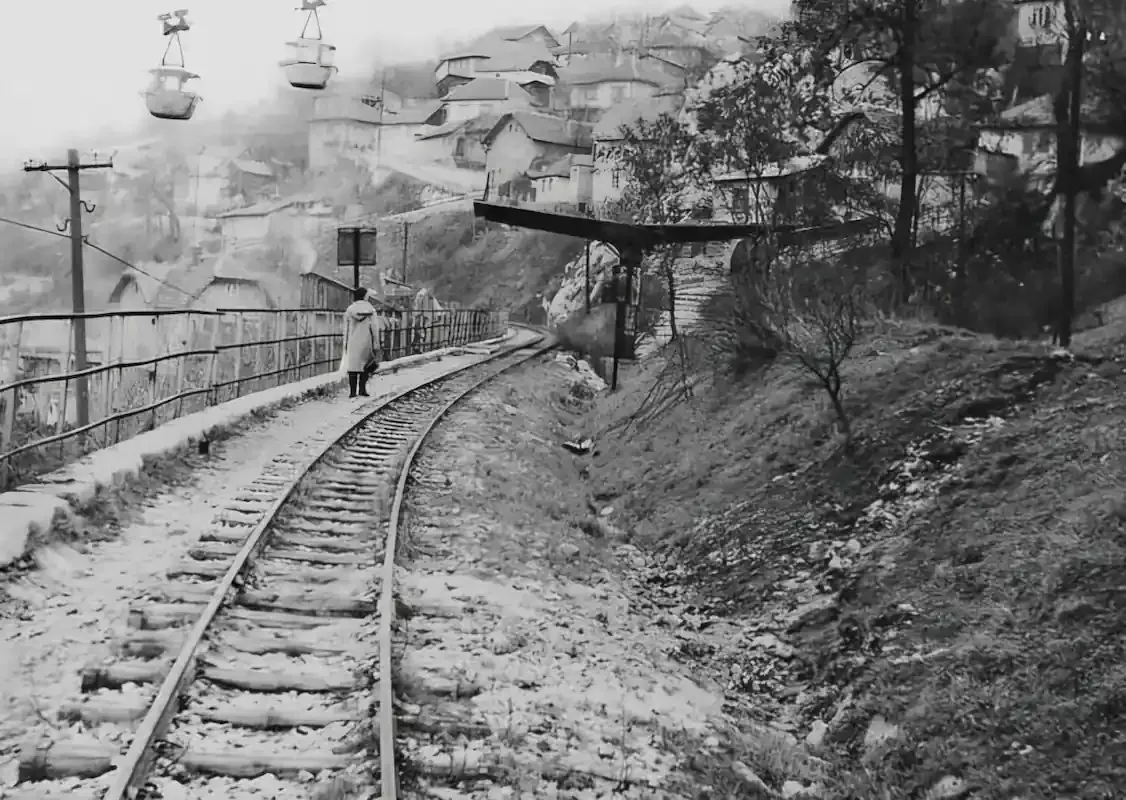
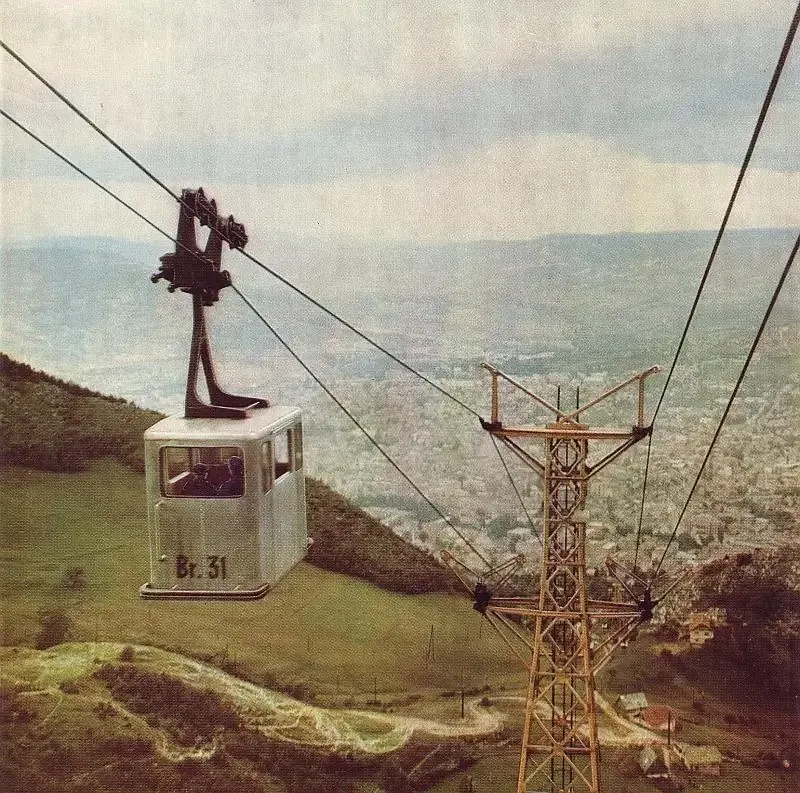
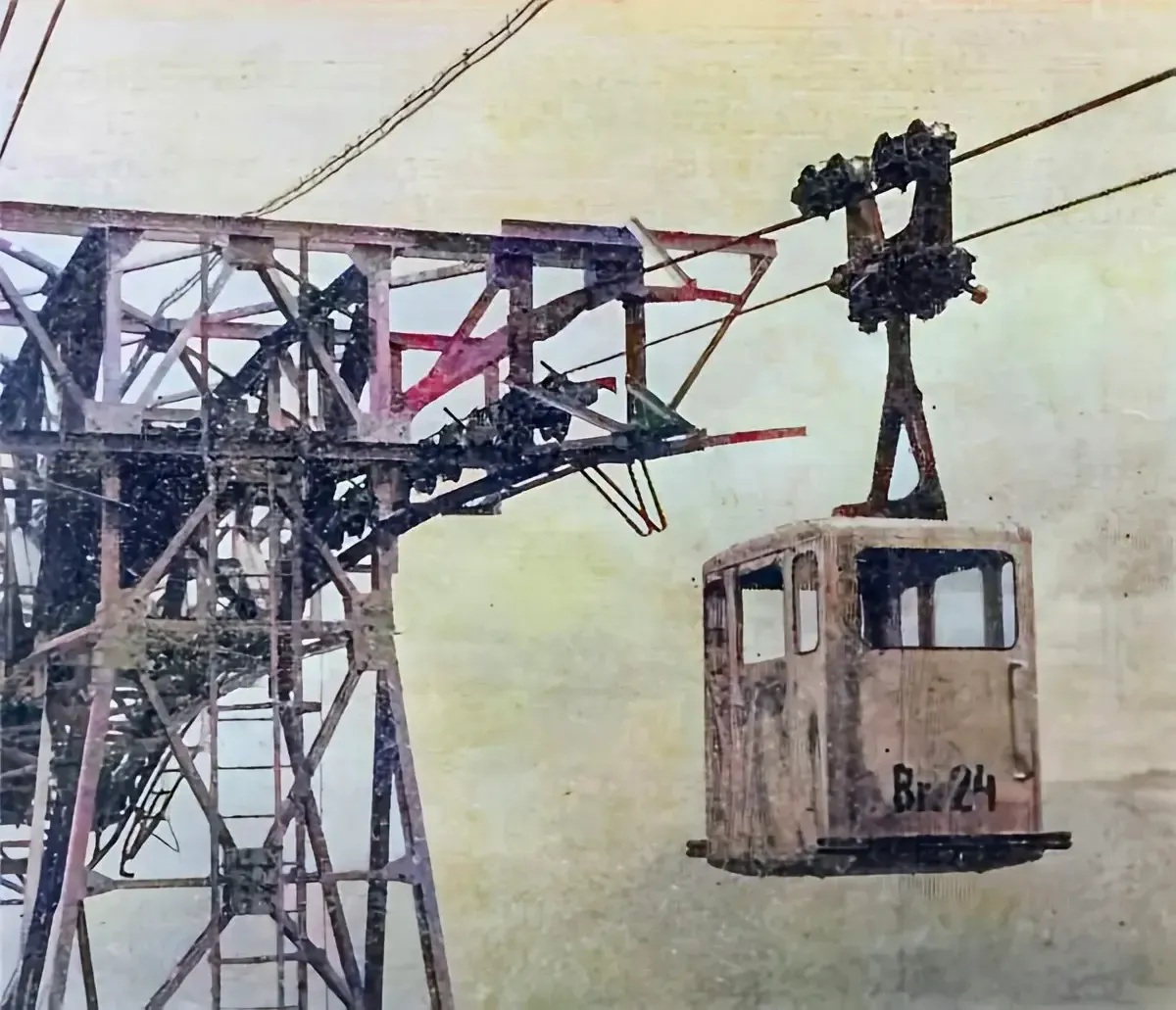
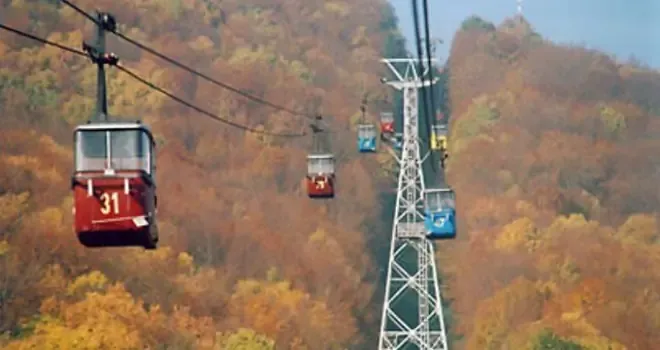
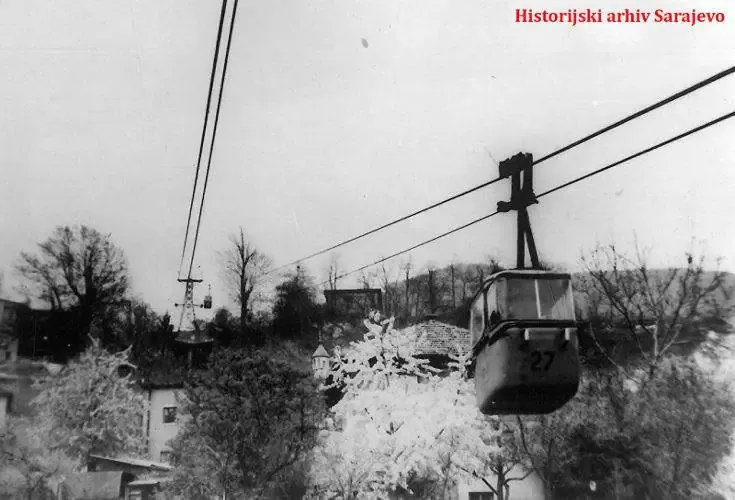
The official opening followed on May 3, 1959, with the first cabin carrying high-ranking officials. The system, utilizing 48 rectangular aluminum cabins by the Austrian firm Swoboda, could transport 400 passengers per hour, connecting the city to the peak in 11.5 minutes.
Early Vandalism and Safety Issues
Despite being a symbol of progress, the ropeway faced immediate issues with public behavior. Just days after opening, the newspaper Oslobođenje reported extensive vandalism:
- Destruction: New movable barriers were destroyed on the first day; pine trees planted around the lower station were trampled; and 13 large glass panes were smashed across both stations.
- Dangerous Behavior: Children threw stones from cabins during the ride, and some passengers even brought air rifles to shoot at passersby below.
- Safety Protocols: Due to the narrow 20cm gap between cabins and pylons, passengers leaning out risked serious injury. In emergencies, passengers were instructed to lower themselves to the ground using a rope and harness stored in the cabin ceiling.
The "Curse" and the Lead Plates
Despite its popularity, the system was plagued by early failures. Cracks appeared in the cabins in September 1959, and later in the ropes in 1961, leading to months-long shutdowns. Investigations revealed incorrect weight calculations. The solution, devised by engineer Dušan Grudon, involved adding a 40 kg lead plate to one side of each cabin to stabilize the mechanism.
The pressure of these failures took a grim toll. Václav Nevrlý, the chief designer and ideator of the system, committed suicide in January 1960, reportedly succumbing to the psychological stress caused by the project's technical struggles.
Tito Left Waiting
The ropeway’s unreliability even affected Yugoslavia’s president. During a 1963 visit, Josip Broz Tito expressed a desire to ride the cable car, only to be told it was out of order. His response became legendary: "Here I am, like all citizens, wanting to take a ride on your cable car, and you do not allow it."
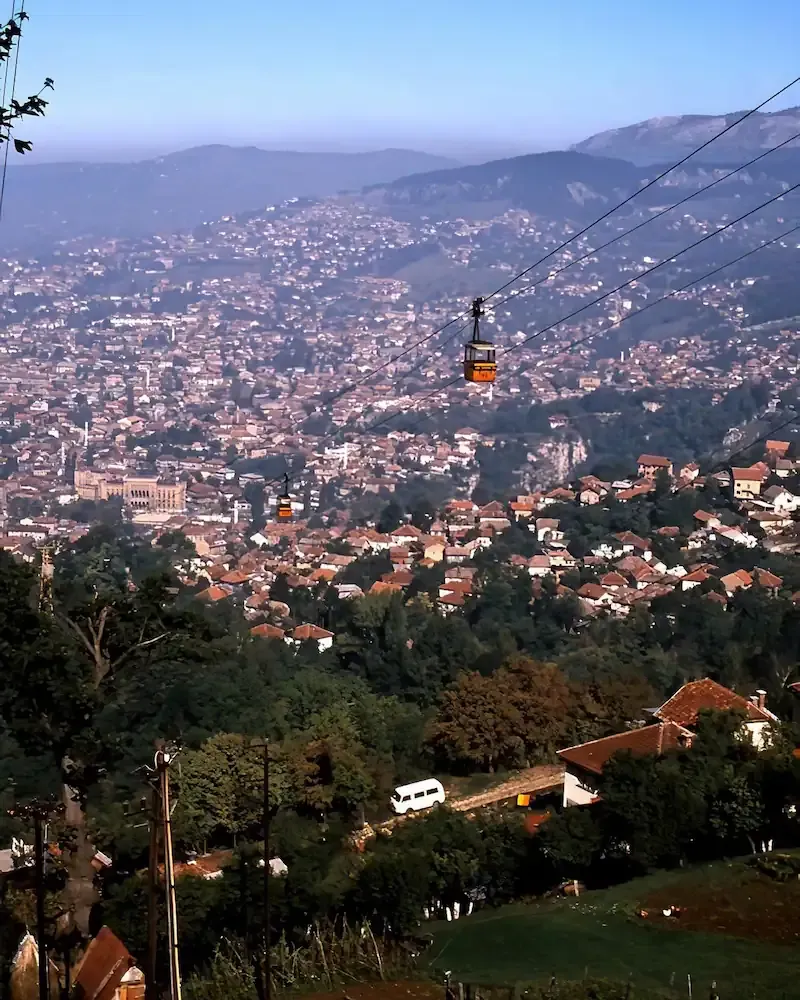
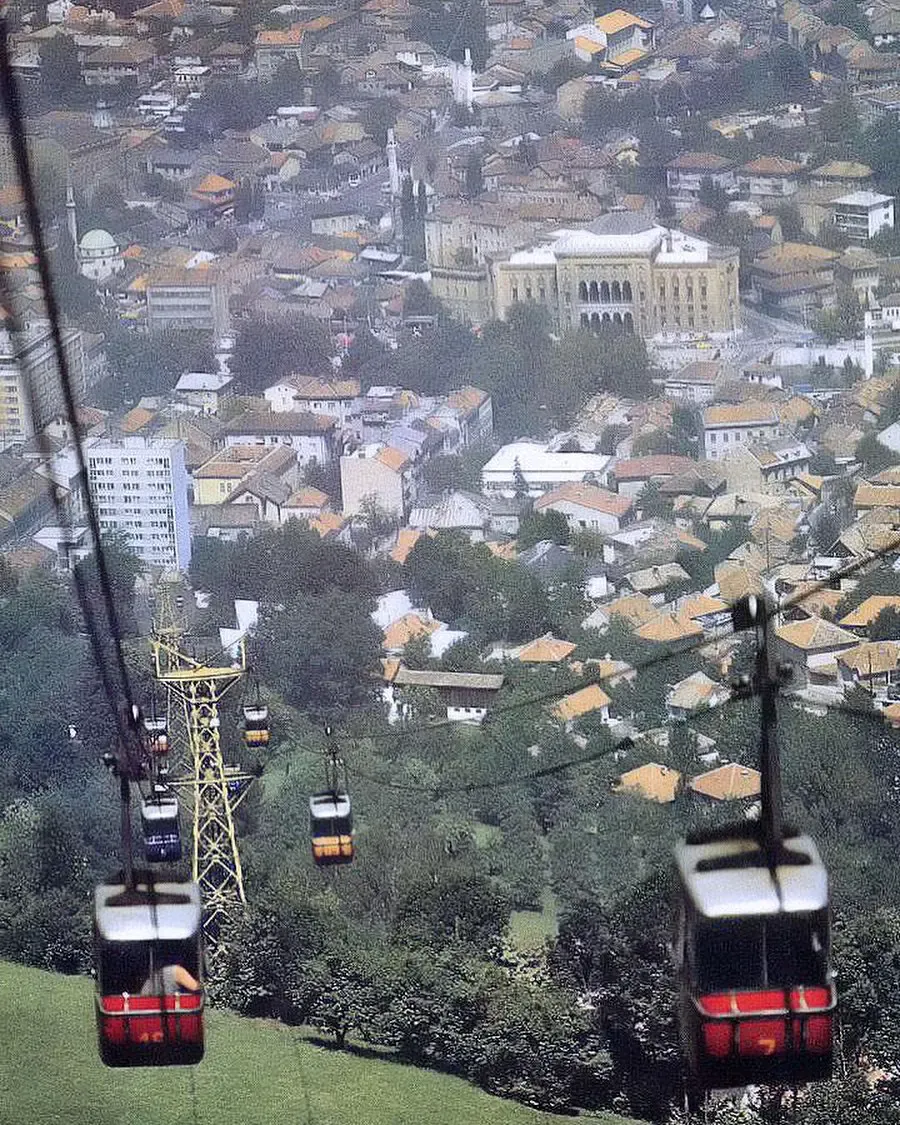
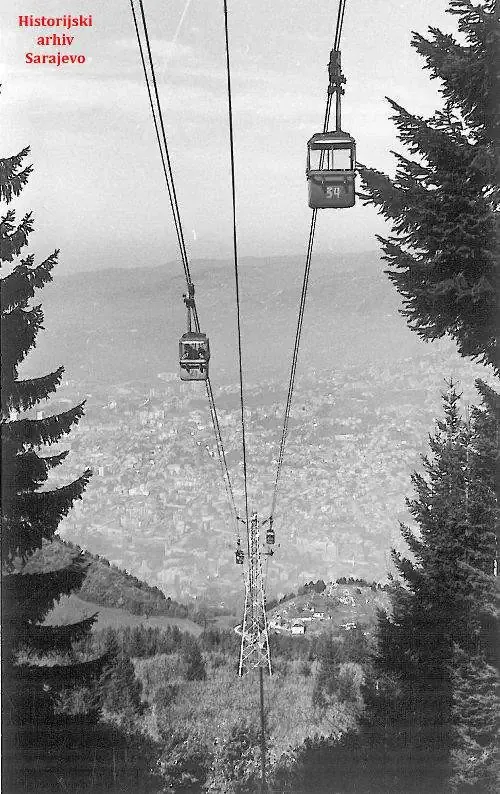
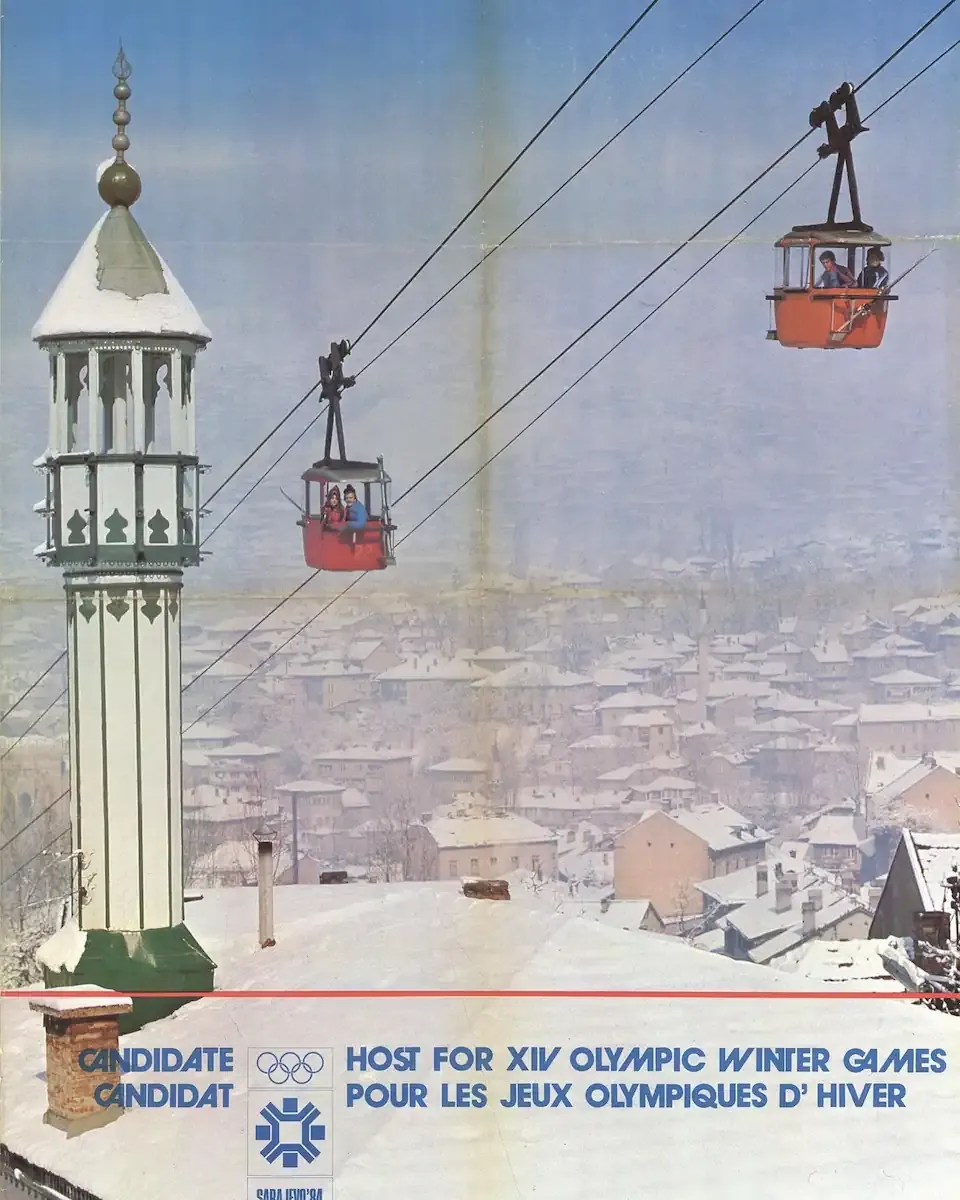
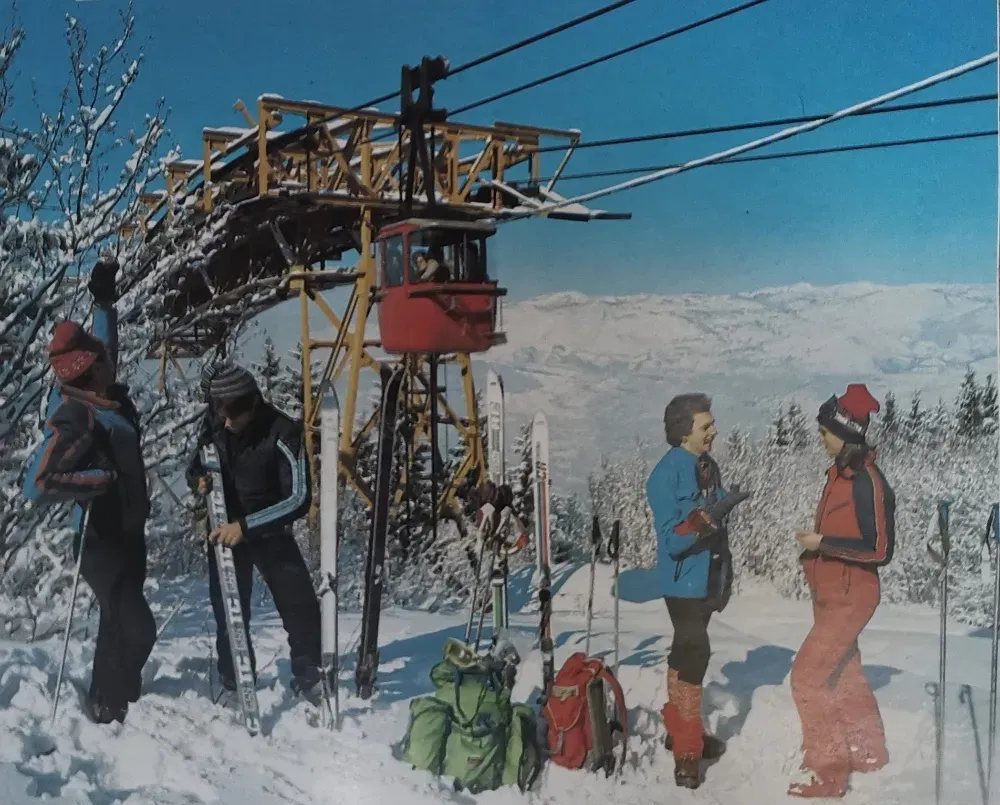
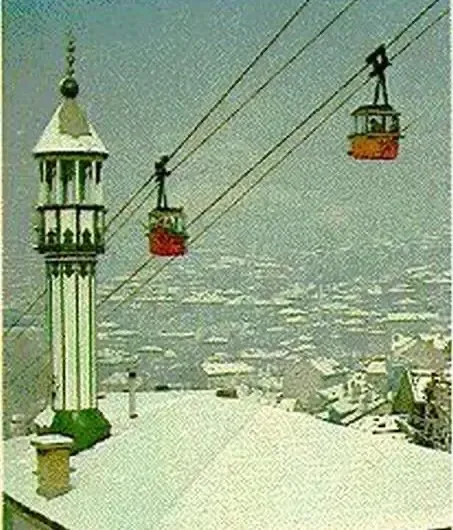
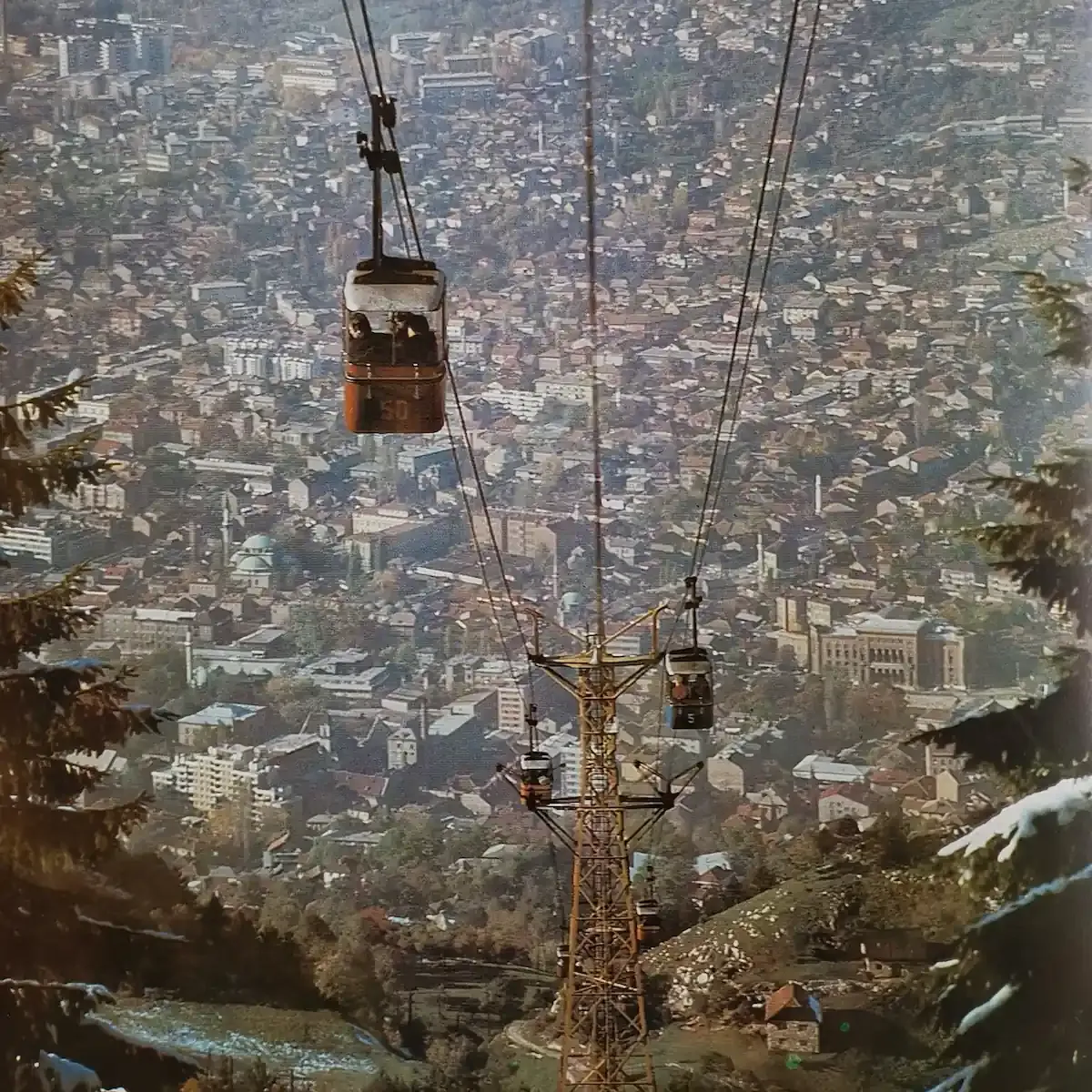
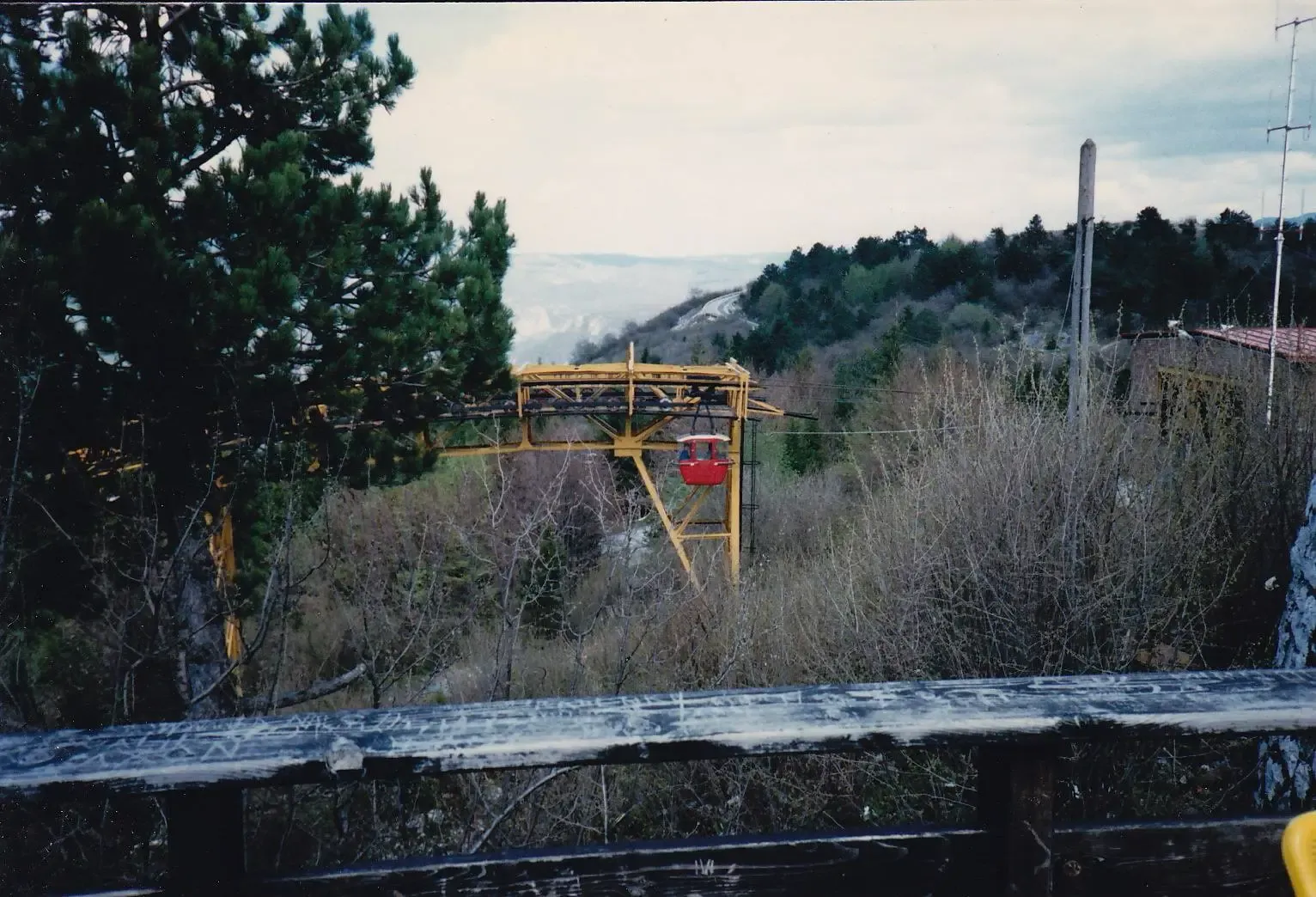
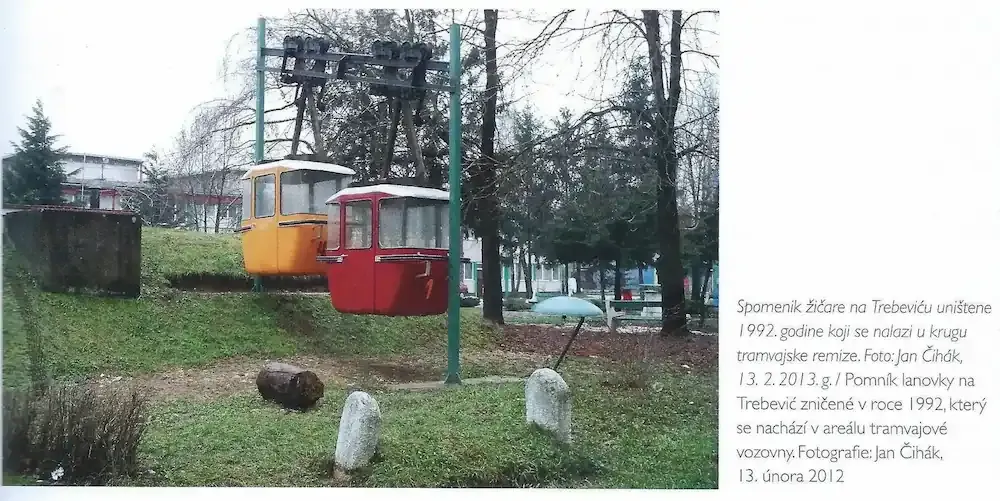
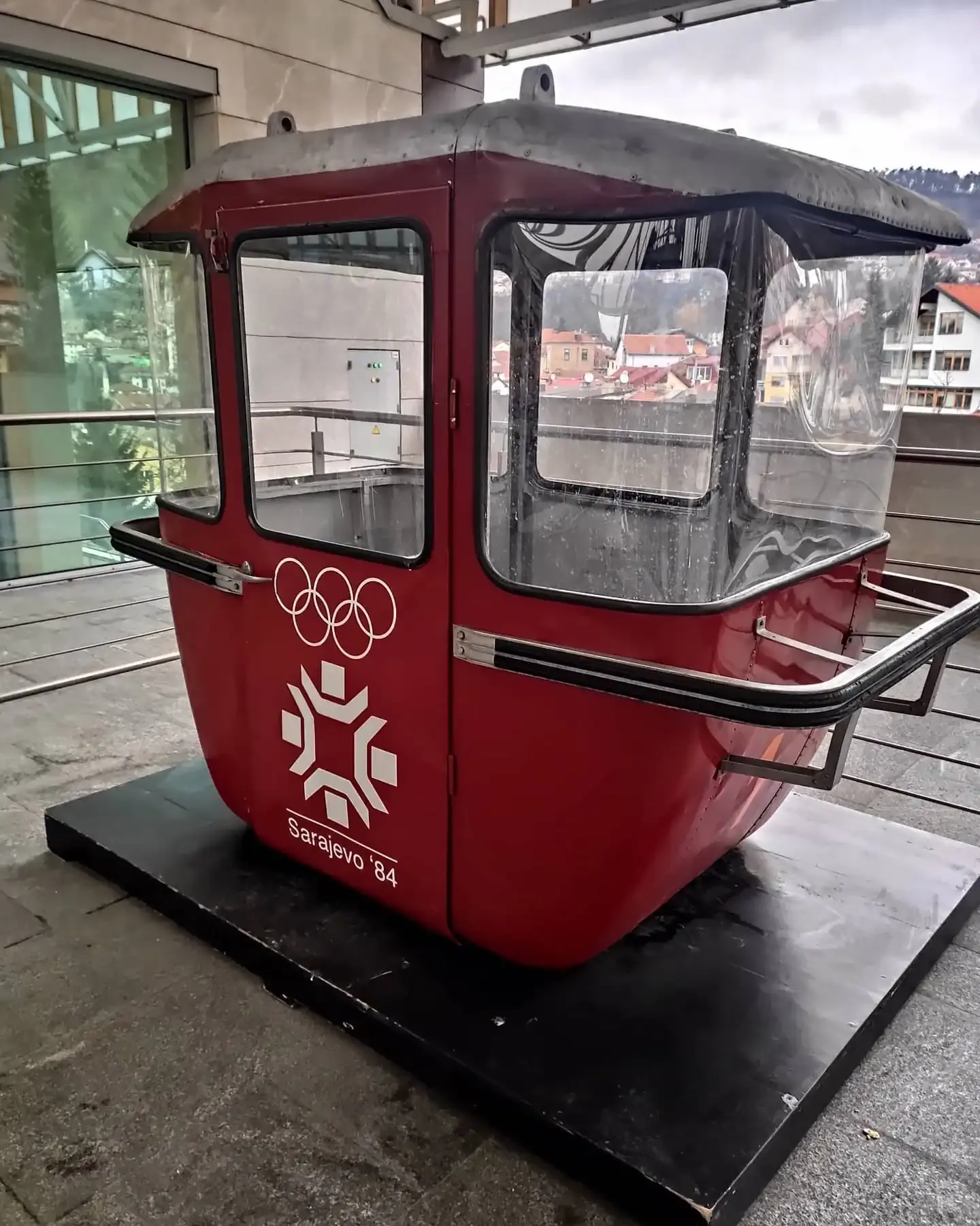
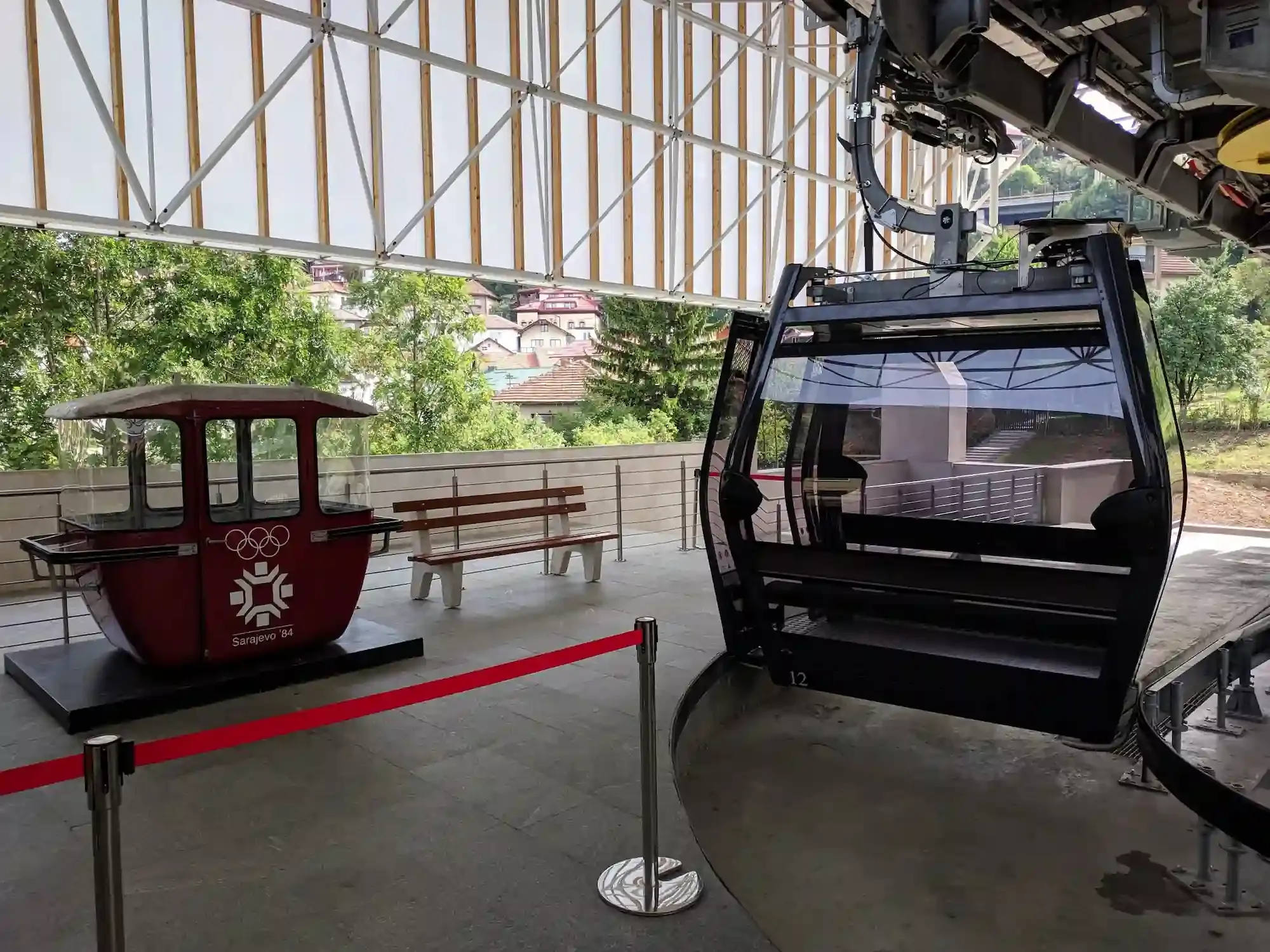
By the 1960s, the original cabins were replaced with rounded, colored cabins (red, yellow, blue, and orange) manufactured by Metalna Maribor. The system received an overhaul for the 1984 Olympics but technical issues persisted. On November 18, 1989, the "ZRMK" Institute from Ljubljana officially banned further operations and repairs due to severe safety concerns.
The Final Years and the First Casualty (1990–1992)
Despite the 1989 safety ban, the shutdown only lasted a few months. The ropeway resumed operations, continuing to carry locals up the mountain for recreation throughout 1990 and 1991.
The historic cable car's definitive end came on March 2, 1992. As barricades went up around the city, armed men surrounded the upper Vidikovac station. Ramo Biber, a 42-year-old ropeway worker who volunteered to guard the facility, was murdered at his post while his colleague narrowly escaped. Recognized as the first victim of the Siege of Sarajevo, Biber's death permanently halted the original ropeway. Today, the upper station of the rebuilt 2018 cable car is named in his honor.
The "Sarajevo Model": Planning a Unified Track
It was a tremendous challenge... to create a single track for both disciplines. — Gorazd Bučar, Chief Engineer of the Trebević Track
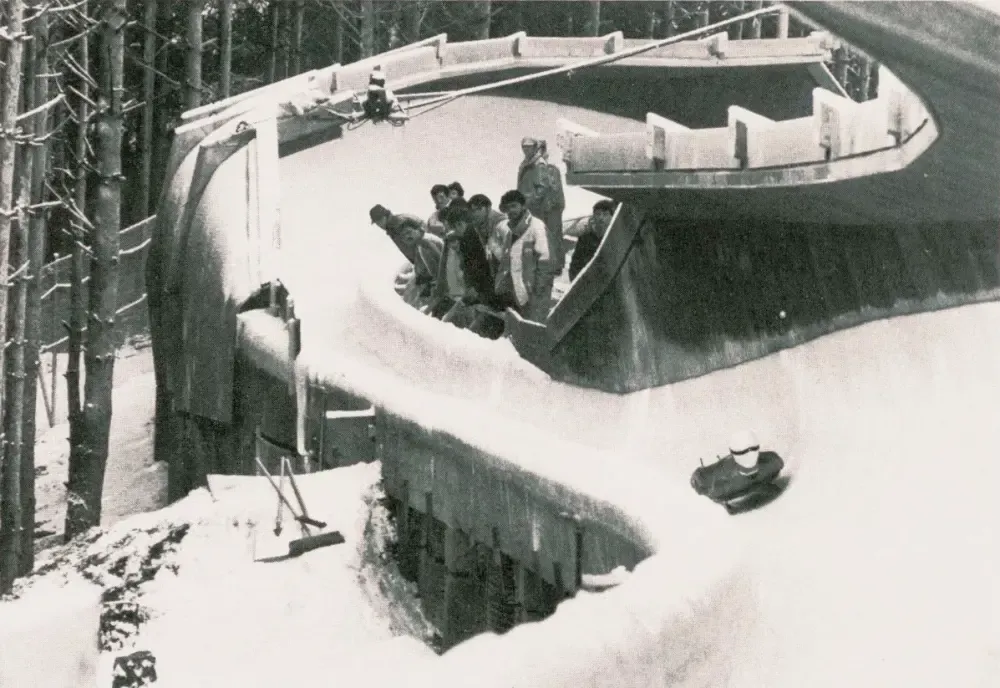
When Sarajevo was awarded the Games in 1977, planners faced a significant hurdle: bobsleigh and luge typically required two separate, expensive facilities. Bobsleigh courses traditionally used wide-radius curves and long straightaways to accommodate heavy sleds, while luge tracks favored tight, curvy, and technical layouts.
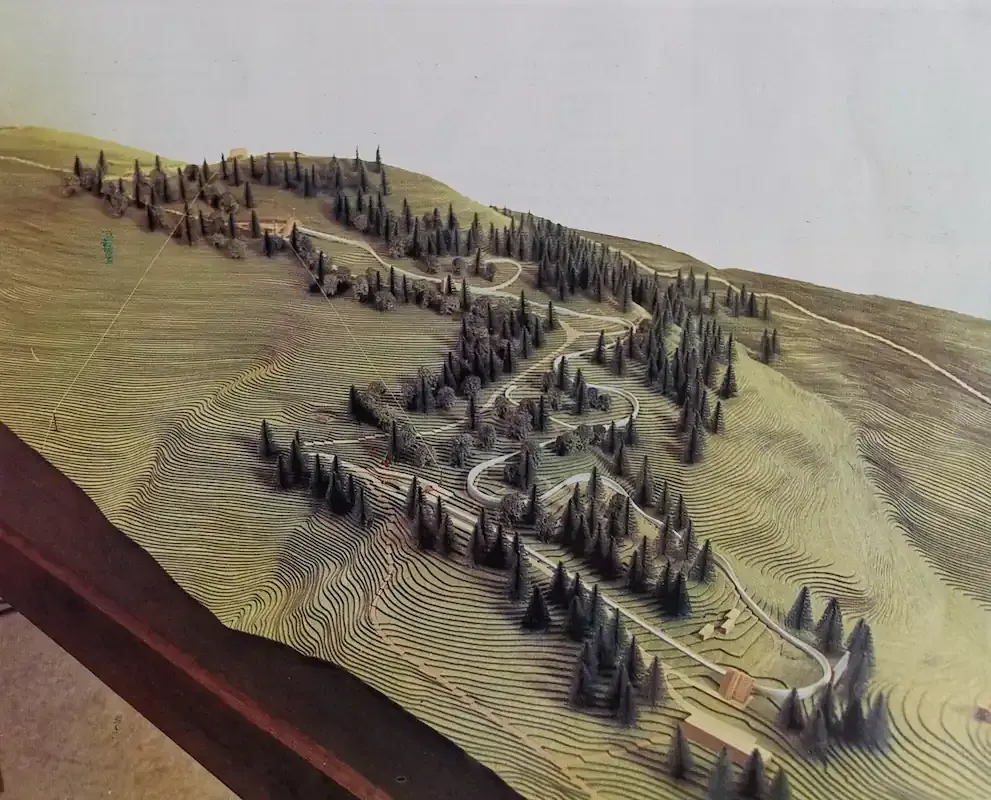
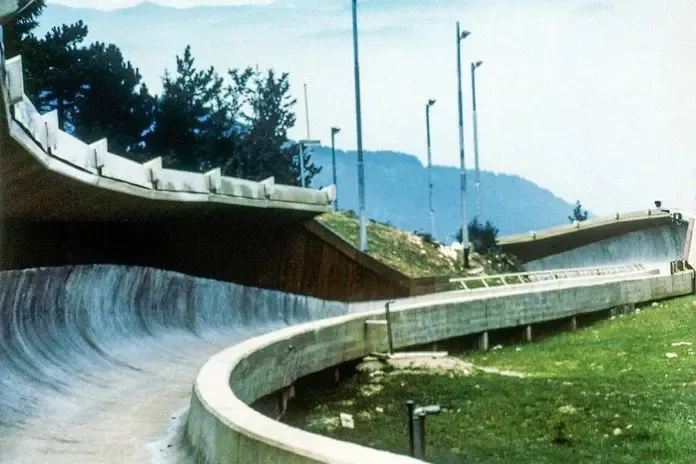
To save costs and minimize the environmental footprint on the mountain, organizers developed the "Sarajevo Model." This innovative design created a single, combined track that could serve both disciplines. To ensure the course remained challenging for both sports, designers from the German Deyle company increased the gradient to 10.3%. Jan Steler, then head of the International Luge Federation, noted that this adjustment made it "the fastest track in the world."
The design also prioritized environmental protection. Working with technical delegates, planners adjusted the track's path specifically to save century-old spruce and fir trees. The resulting facility was praised by federations as a global standard for multi-functional sports architecture.
Building the Track: Concrete Innovation on the Slopes
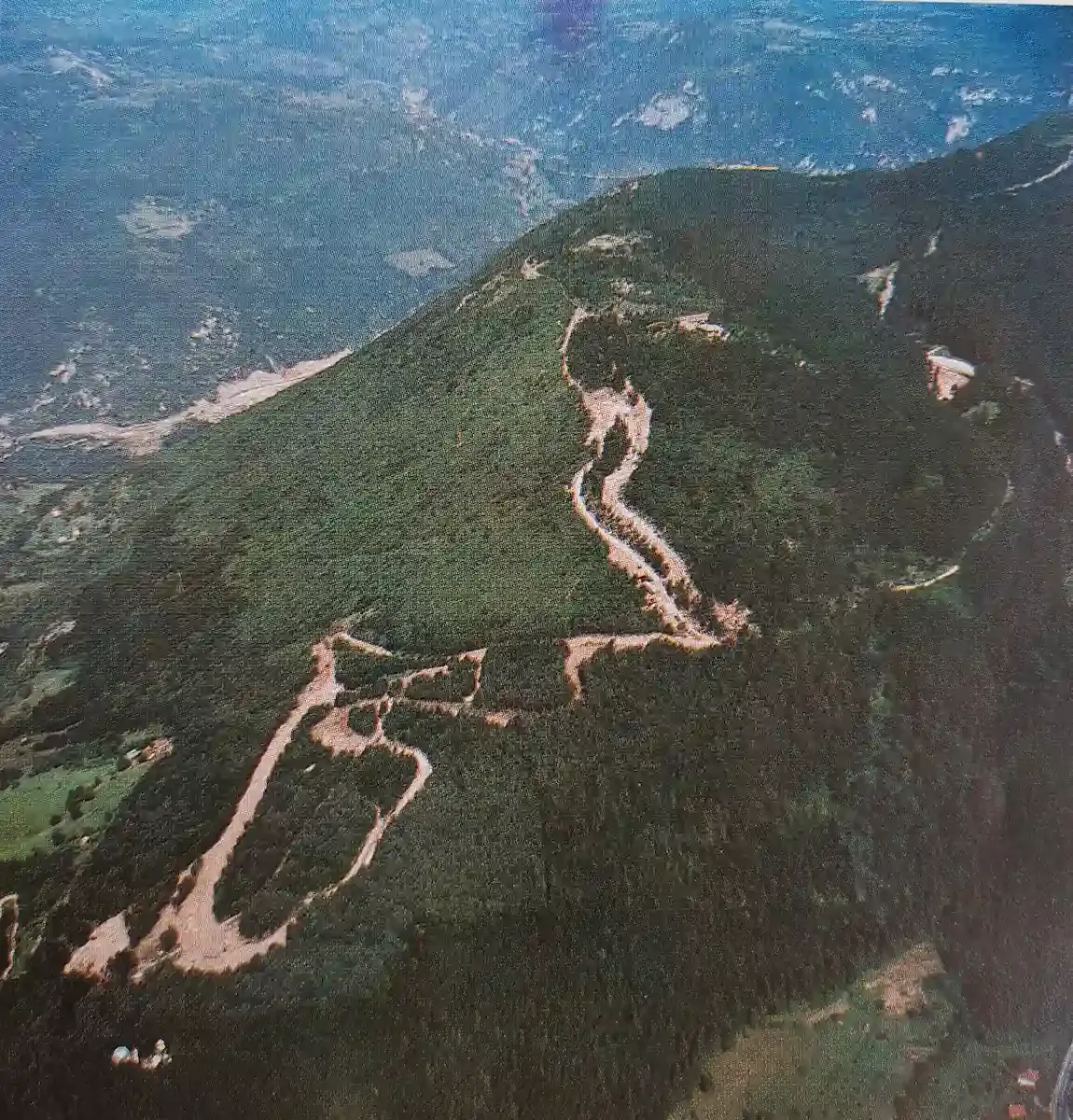
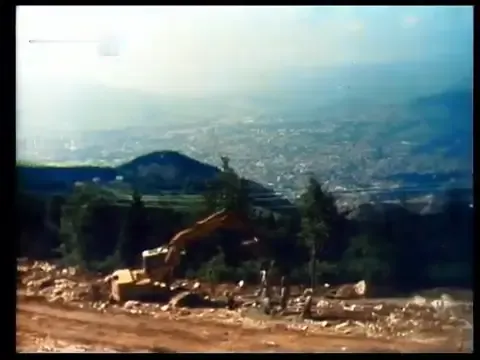
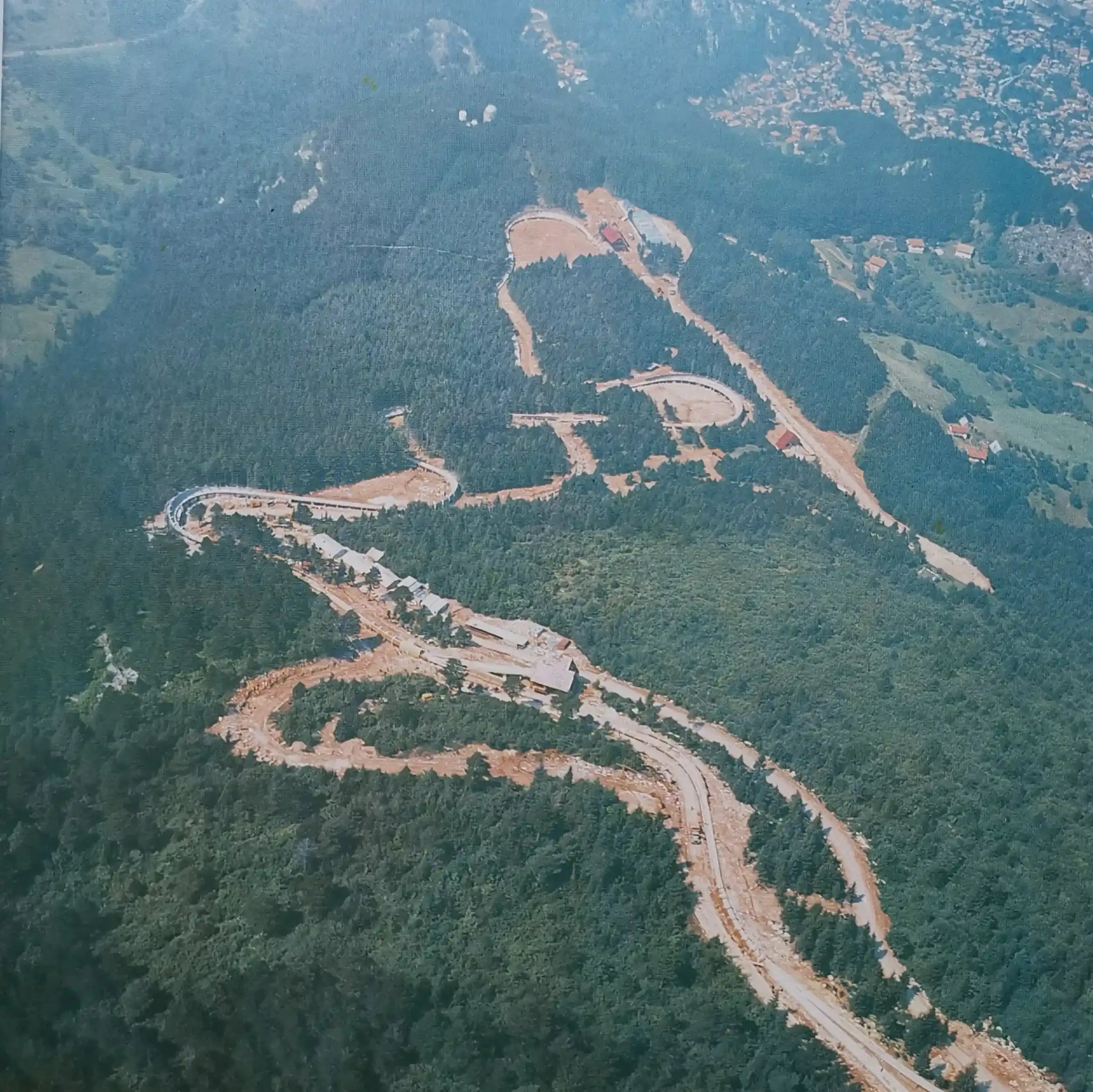
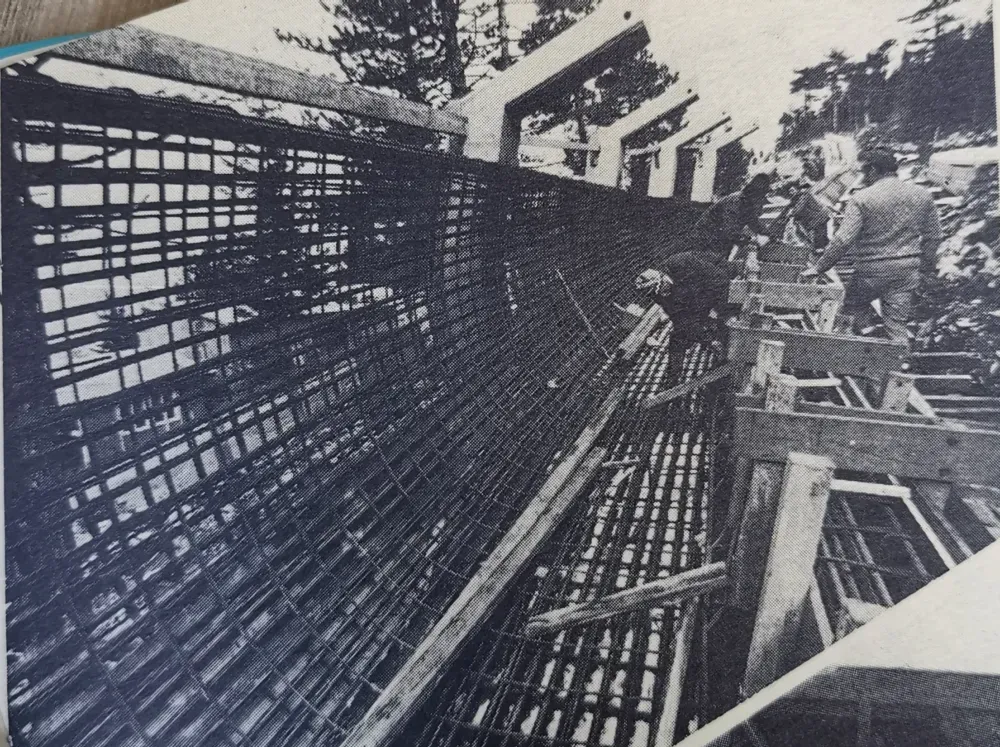
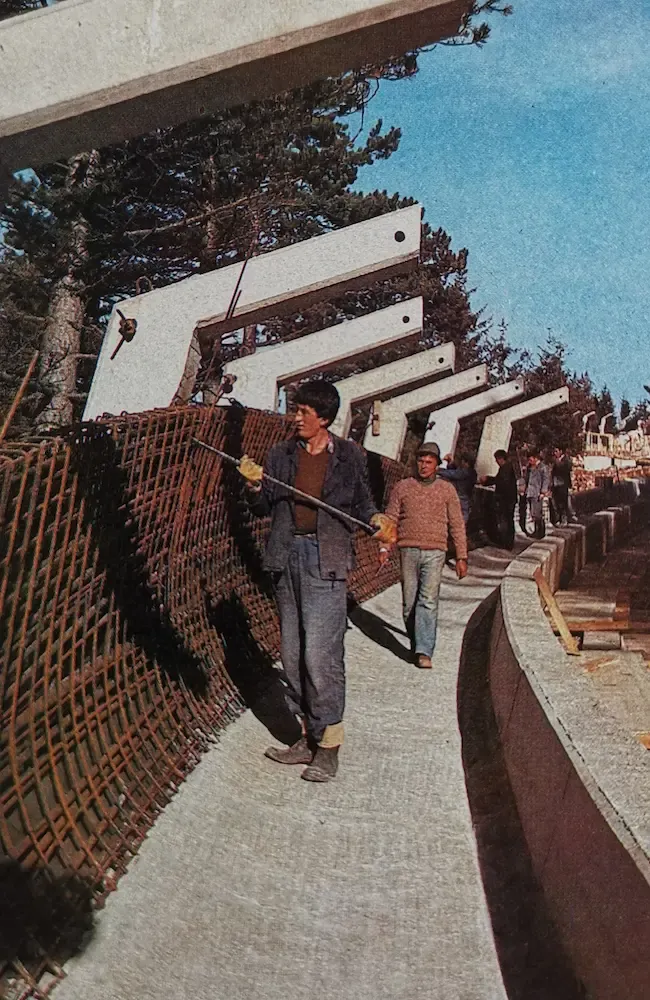
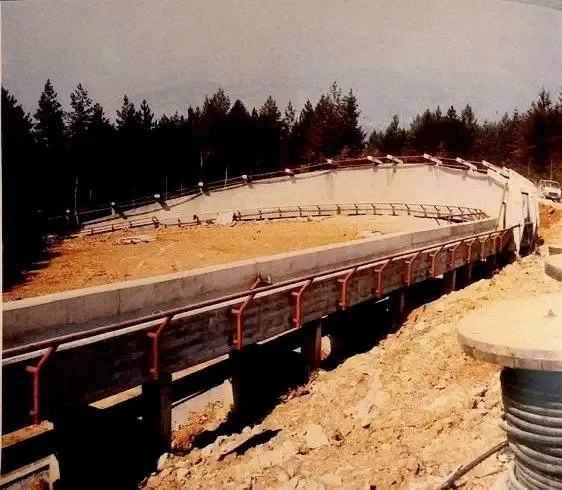
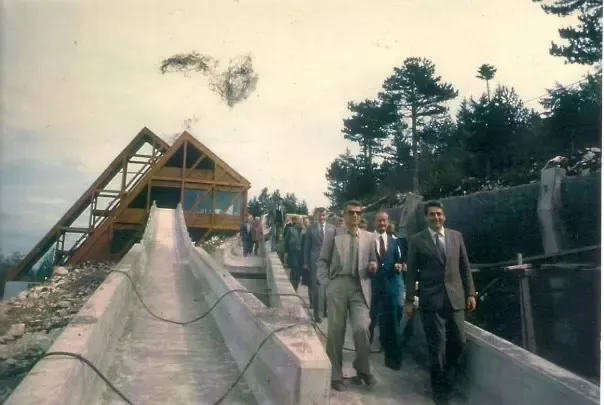
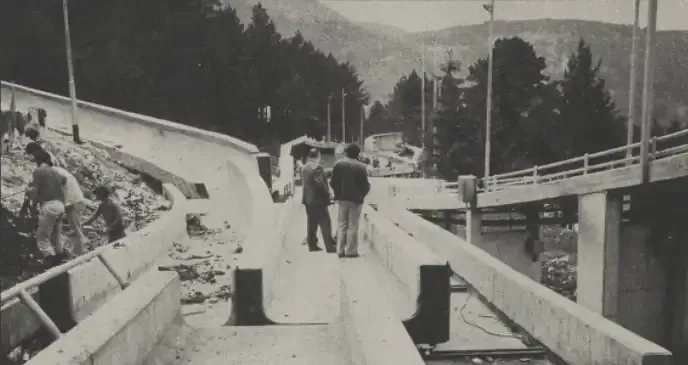
Construction of the Olympic track began in June 1981 and was completed by September 30, 1982. The project was led by Sarajevo engineer Gorazd Bučar, a builder and academic whose name has occasionally been misreported in international media due to a 1984 broadcast mispronunciation.
The construction was a major engineering feat, utilizing several "firsts" for the sport:
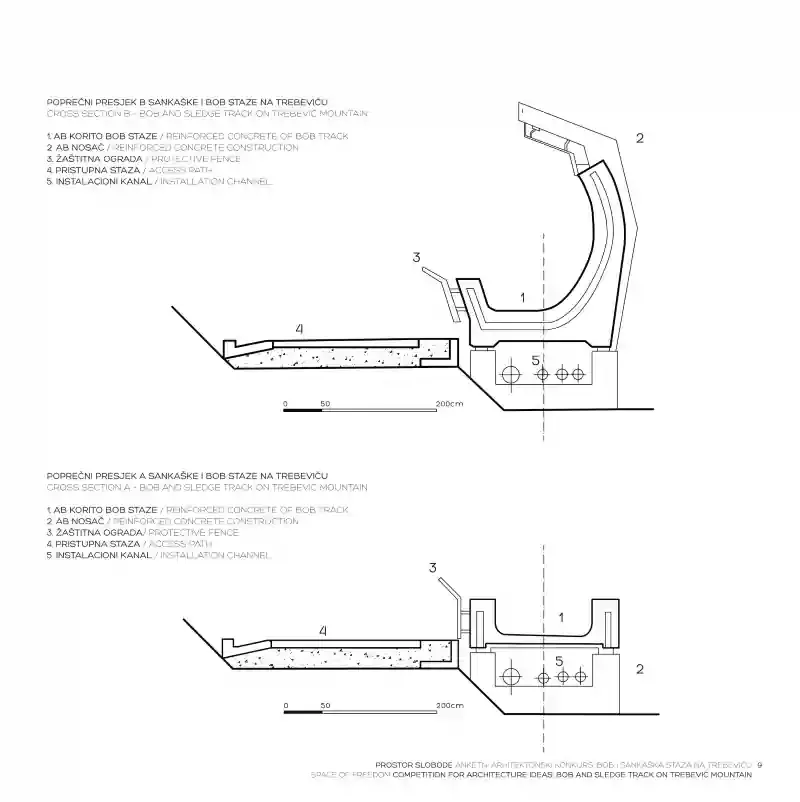
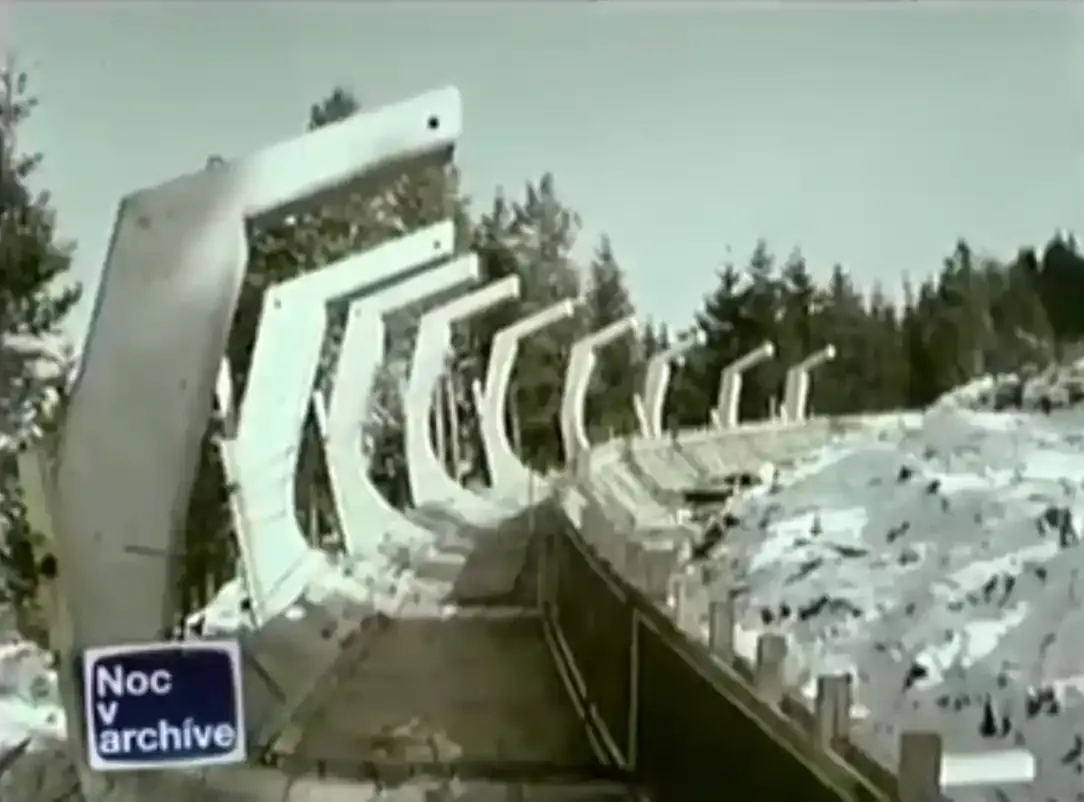
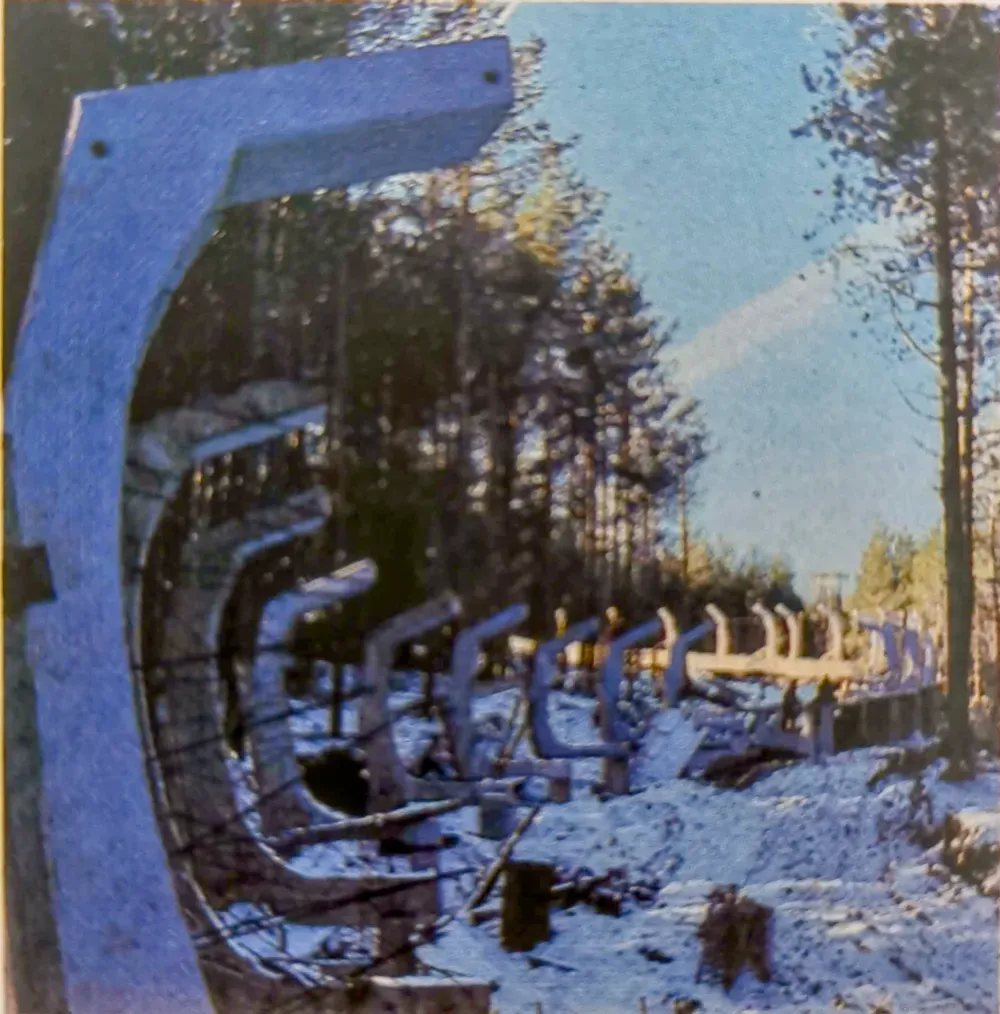
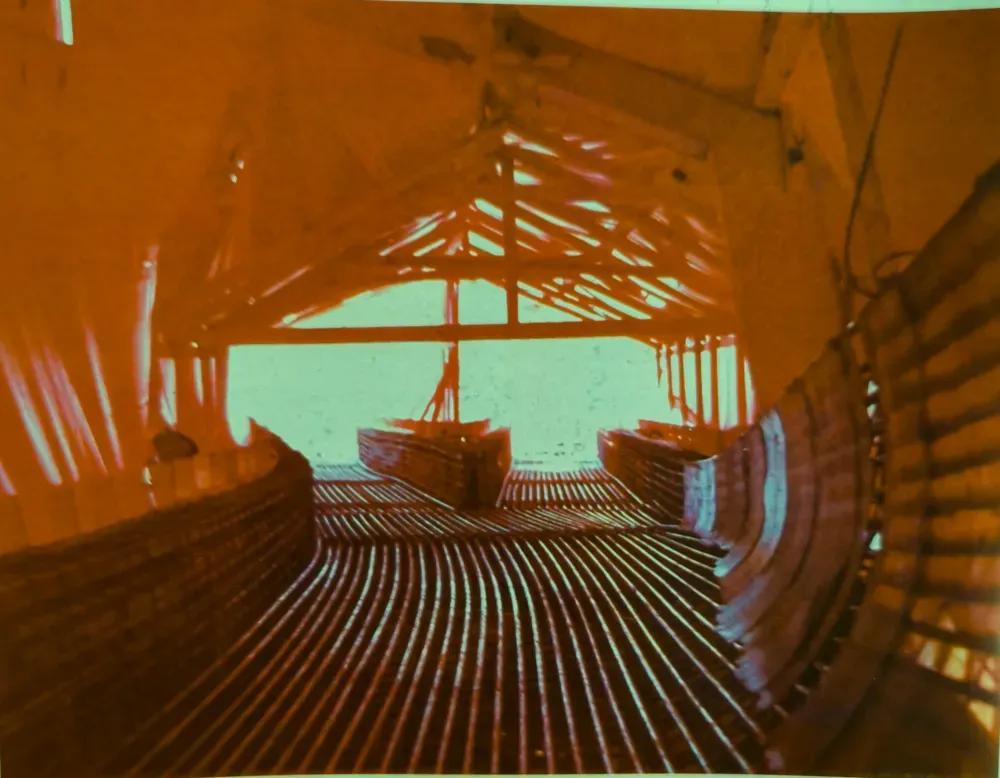
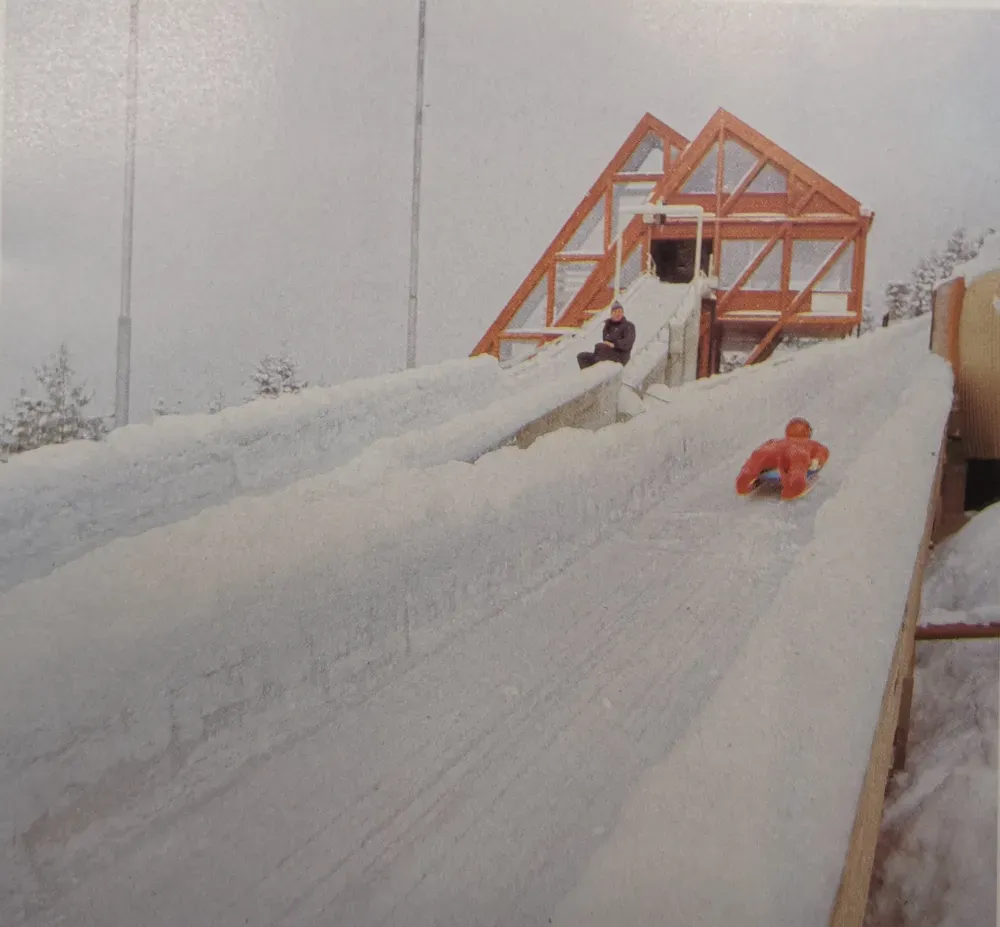
- Shotcrete Method: For the first time on a bobsleigh track, concrete was applied via "shotcrete" (spraying a slurry onto a steel-reinforced structure). This significantly reduced costs compared to traditional poured concrete.
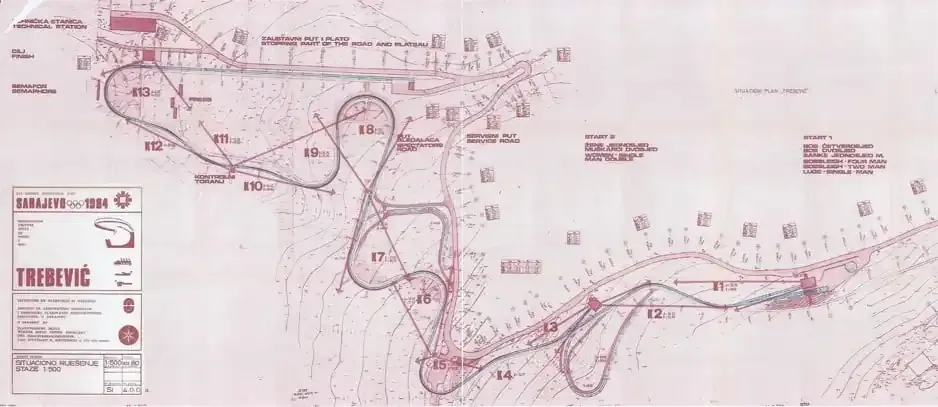
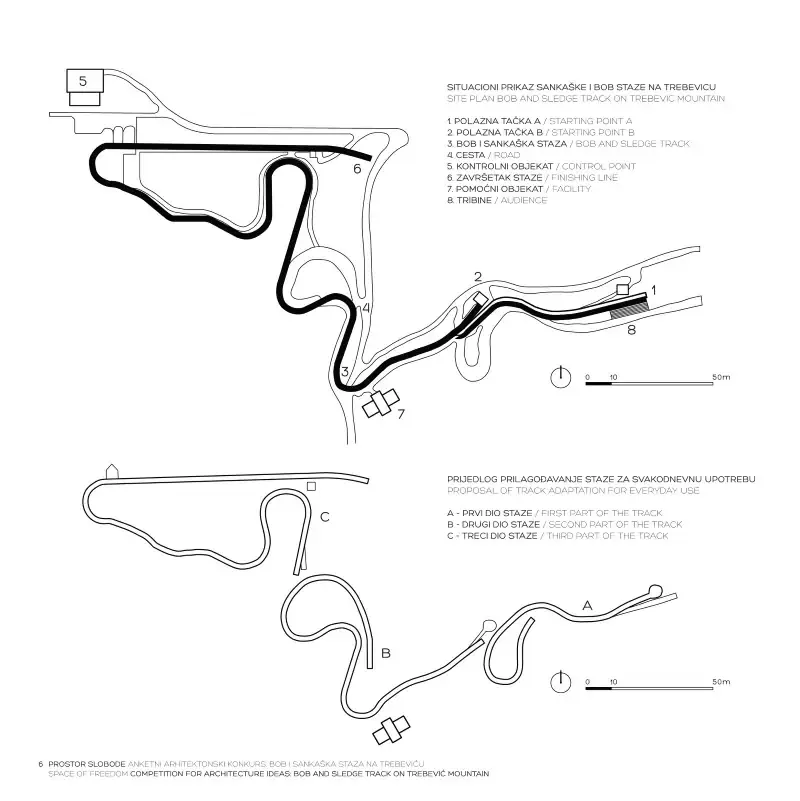
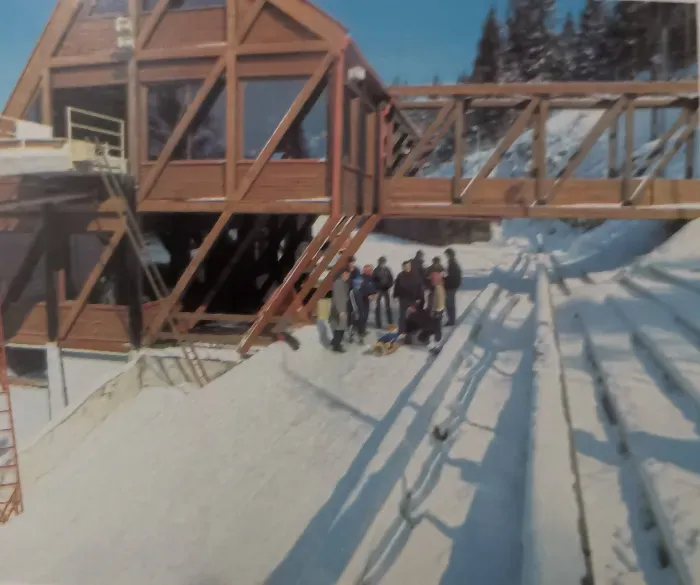
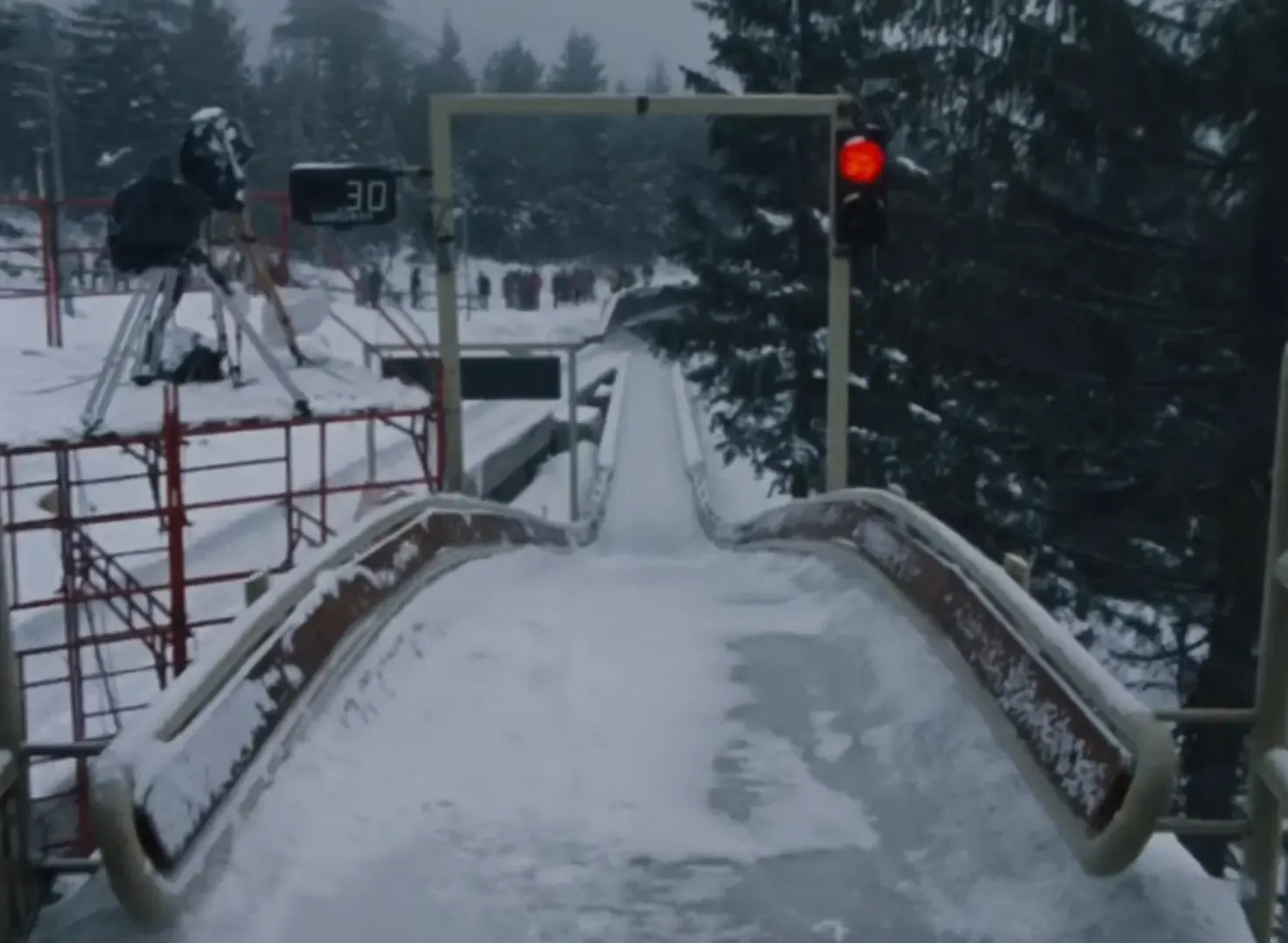
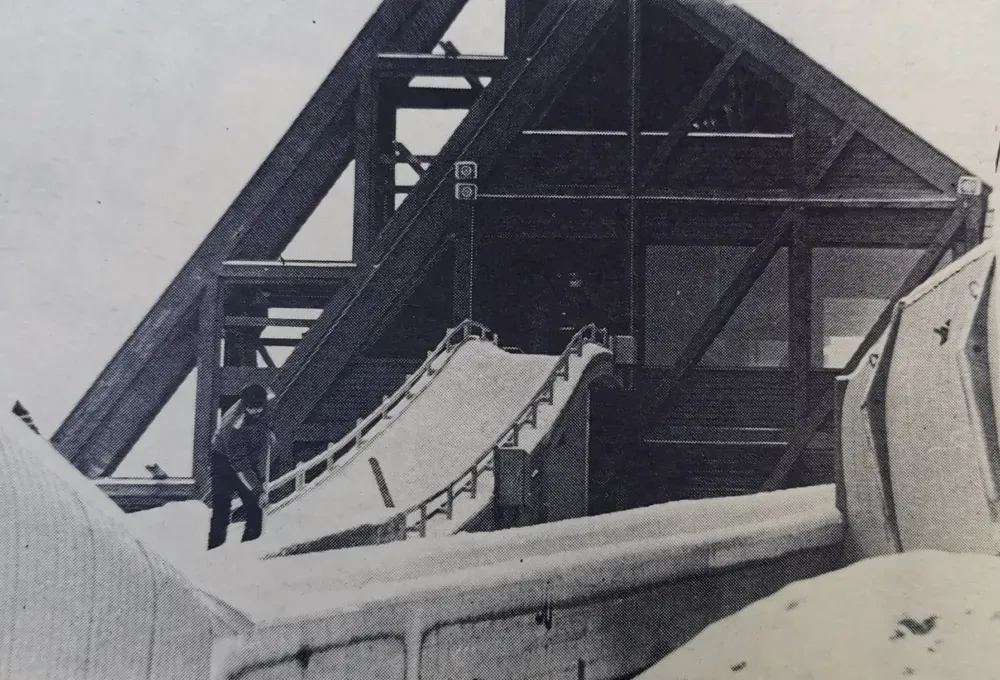
- Modular Design: The track featured a system of shiftable sections that allowed it to be divided into three autonomous parts. This meant three athletes or groups could train simultaneously, tripling the efficiency of the venue.
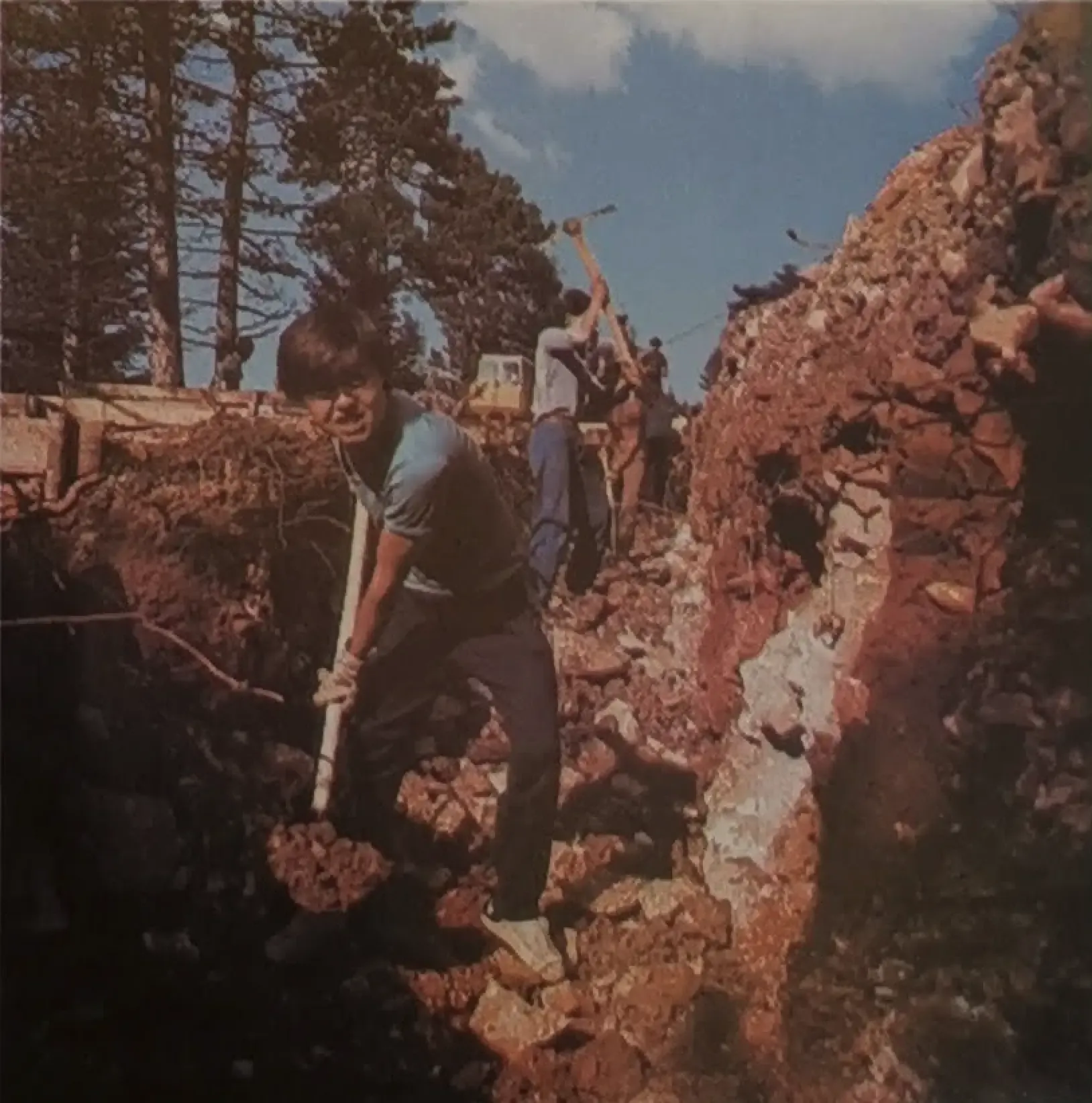
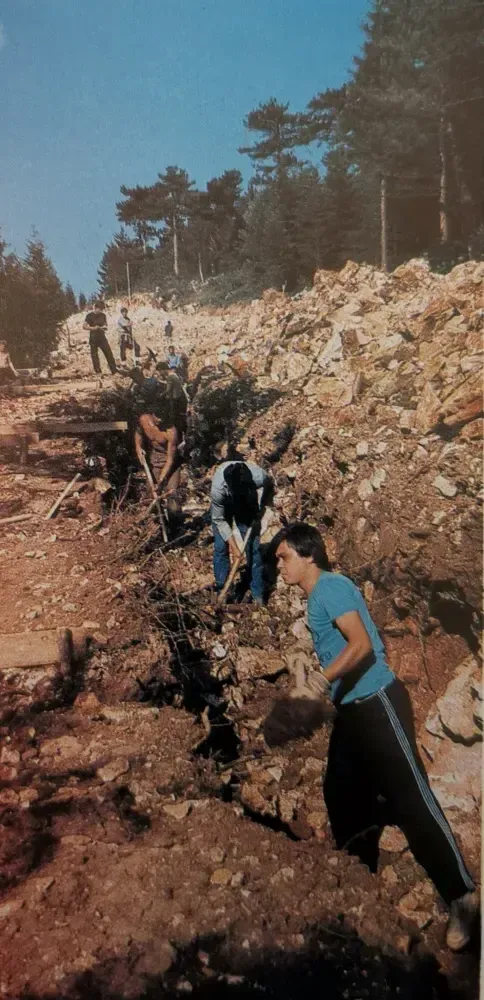
- Youth Participation: The heavy labor of clearing the terrain was supported by Youth Labor Actions (Omladinske radne akcije), where thousands of students from Yugoslavia and abroad volunteered to excavate the site.
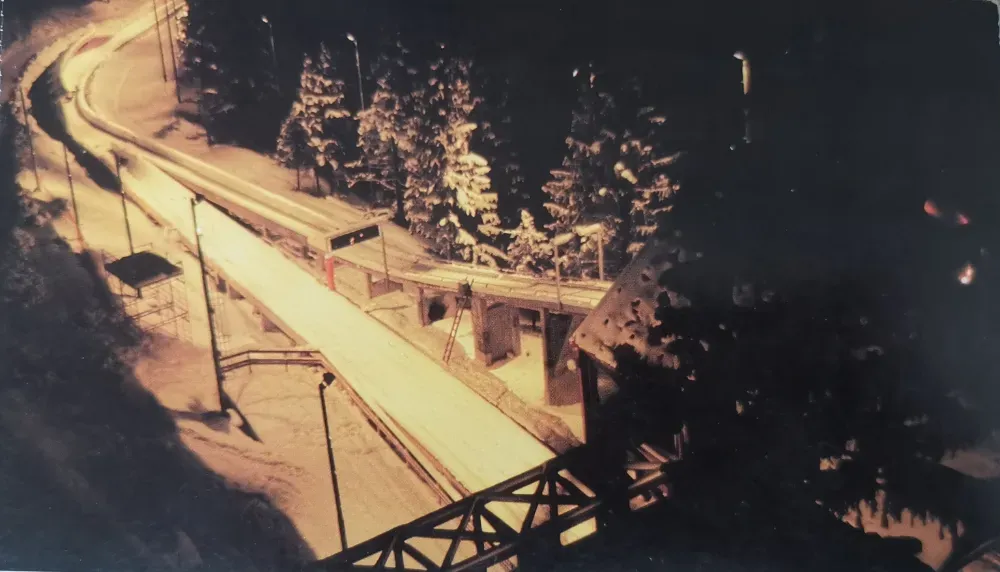
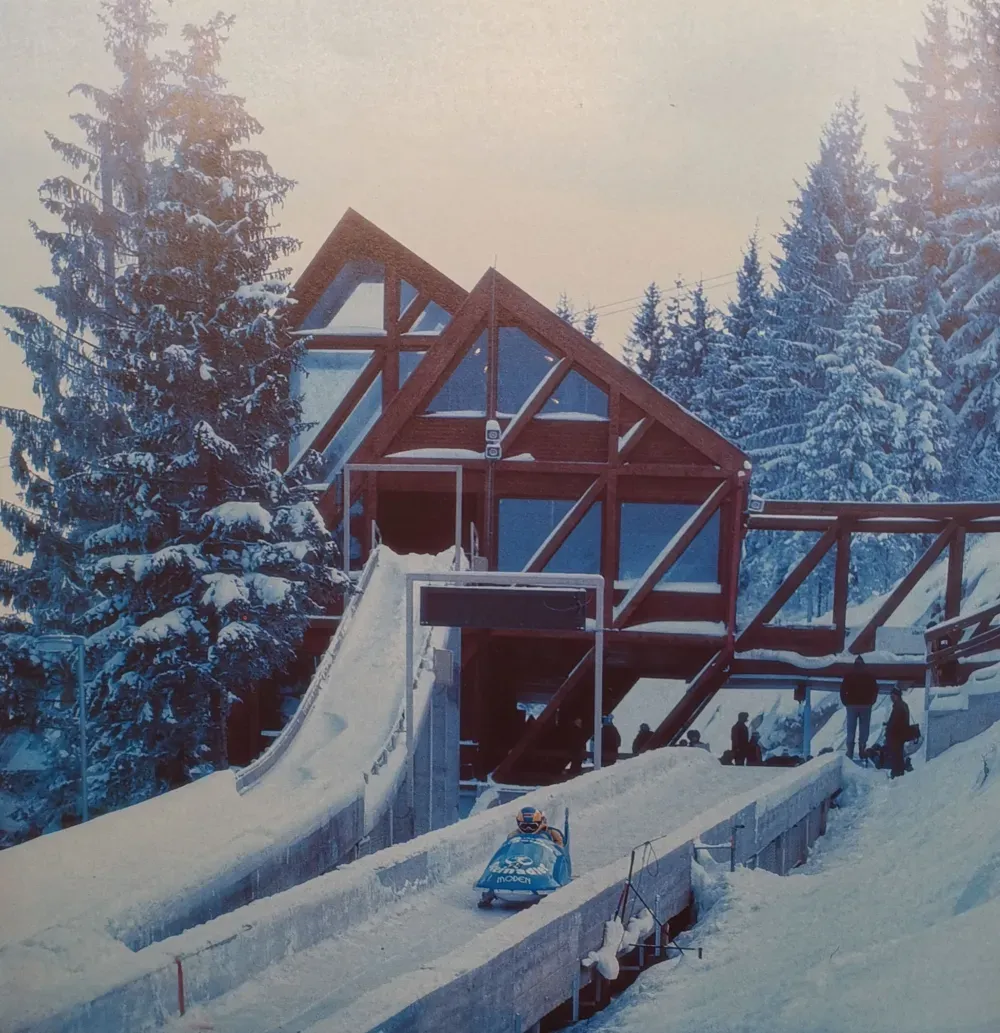
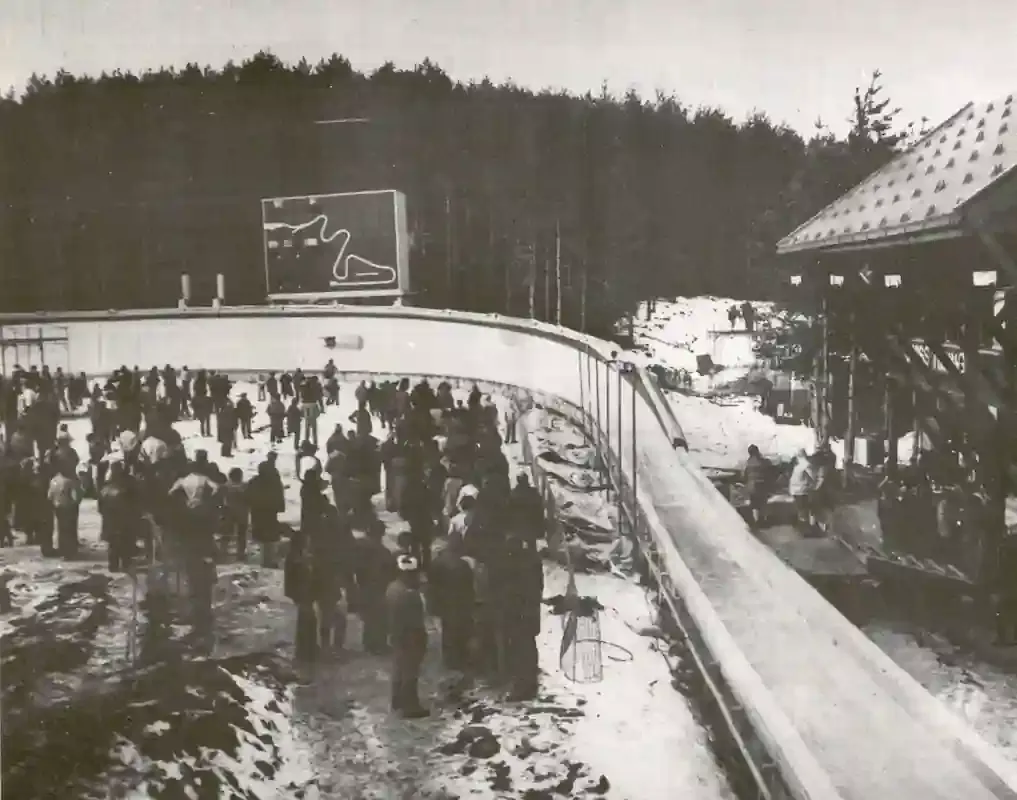
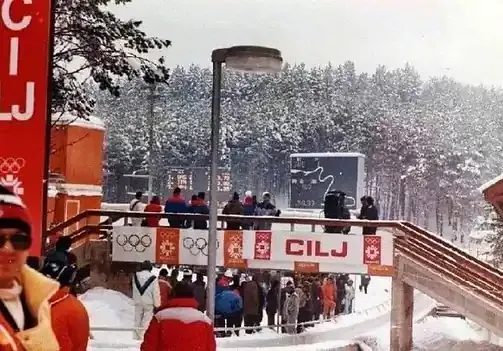
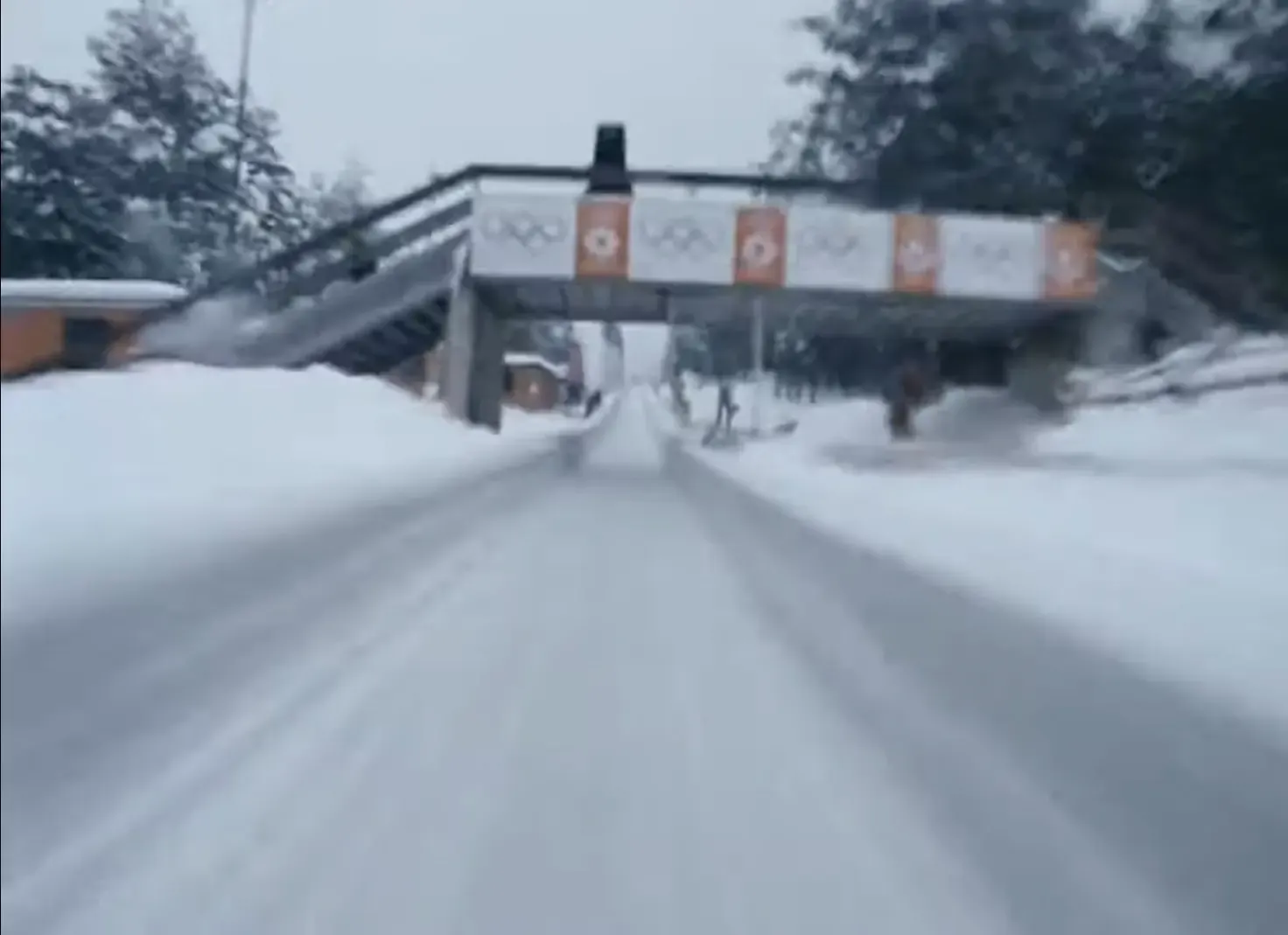
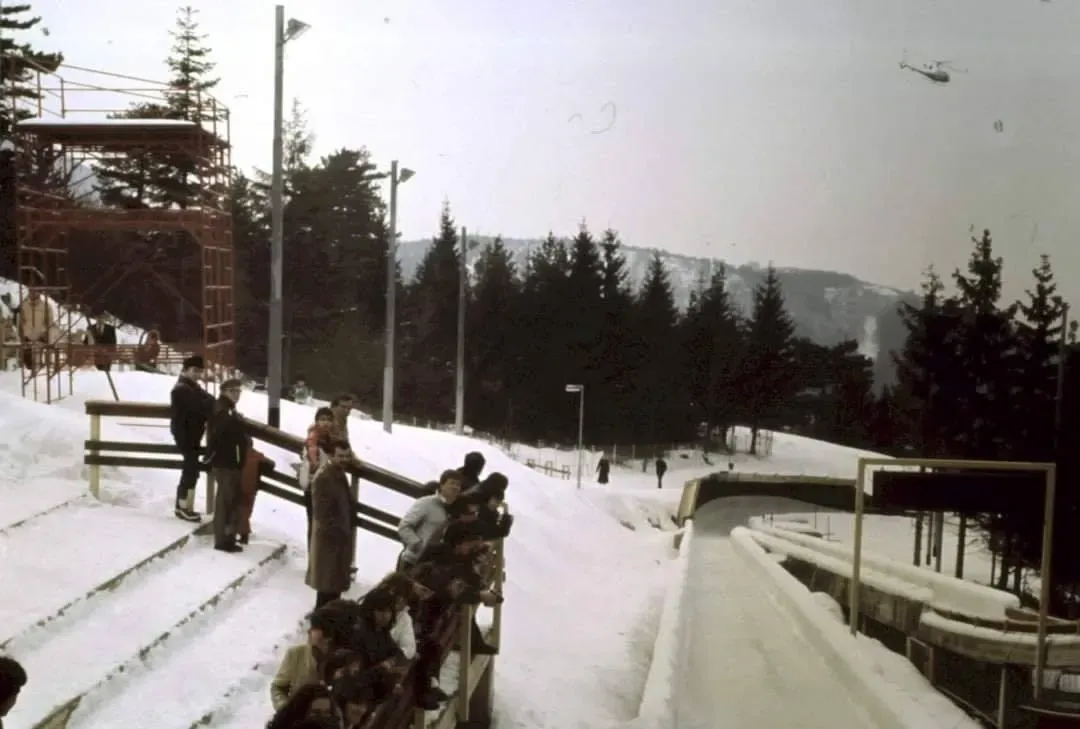
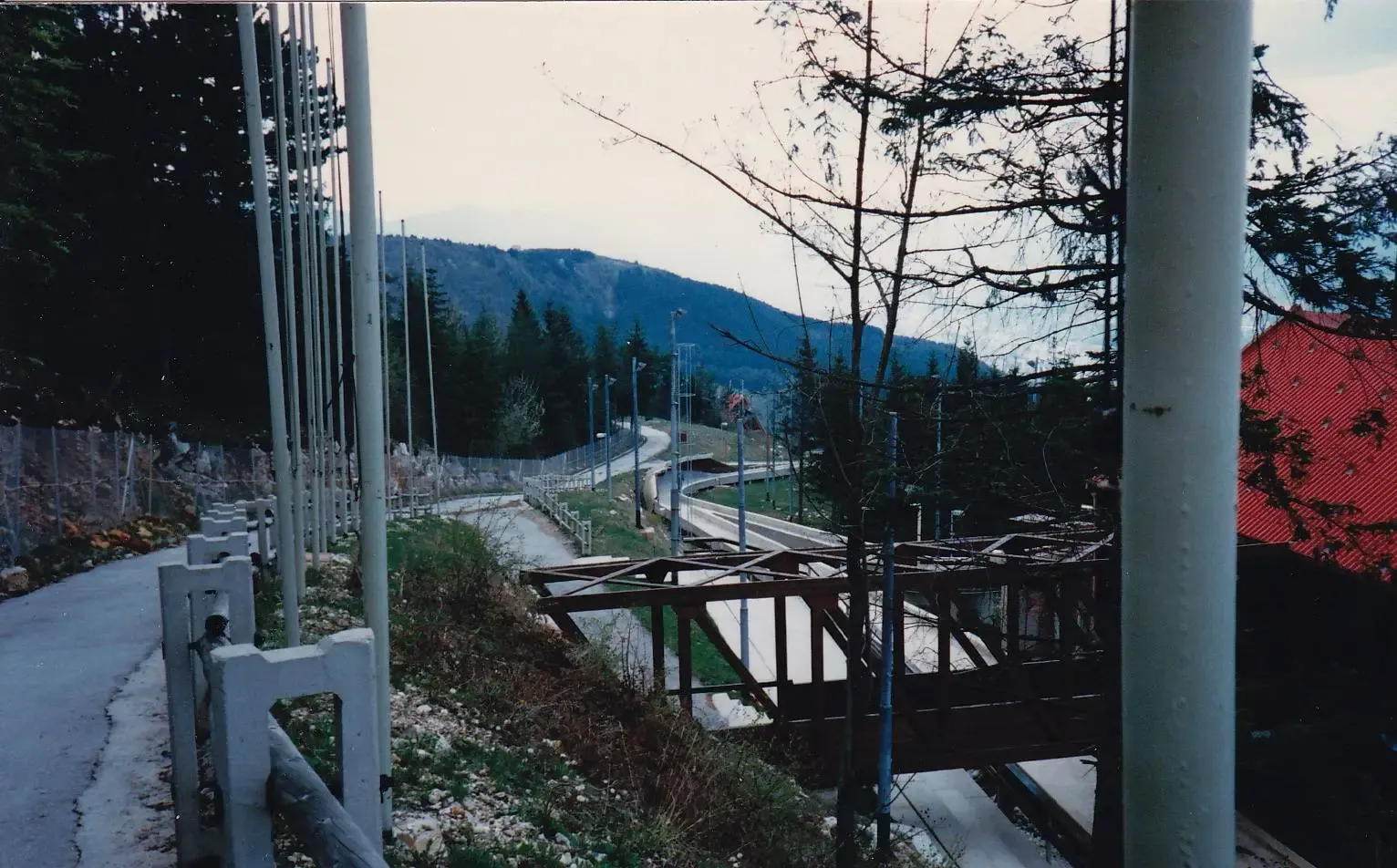
- Spectator Access: Pedestrian trails and multiple bridge crossings were built along the length of the track, allowing the expected 20,000 spectators to get remarkably close to the high-speed action.
By the end of 1982, the track was ready for its final inspections, standing as a "modernist trademark" for the city's surrounding mountains.
Testing the Ice: Pre-Olympic Trials and Track Records
Before the world descended on Sarajevo in 1984, the Trebević track underwent rigorous testing to prove the "Sarajevo Model" worked. The first major test occurred from January 19 to February 20, 1983, when the European Bobsled Championships served as a dress rehearsal.
The trials immediately confirmed the designers' ambitions: it was an extremely fast track. During these events, international experts and athletes praised the technical demands and safety of the concrete trough. However, the speed was not without its risks; the 1983 competitions saw several minor overturns as pilots learned to navigate the specific physics of the new course. These sessions allowed organizers to fine-tune the ice preparation and timing systems, ensuring that everything from the marshal posts to the medical rescue plan was ready for the Olympic flame.
February 1984: Speed, Snow, and Record Crowds
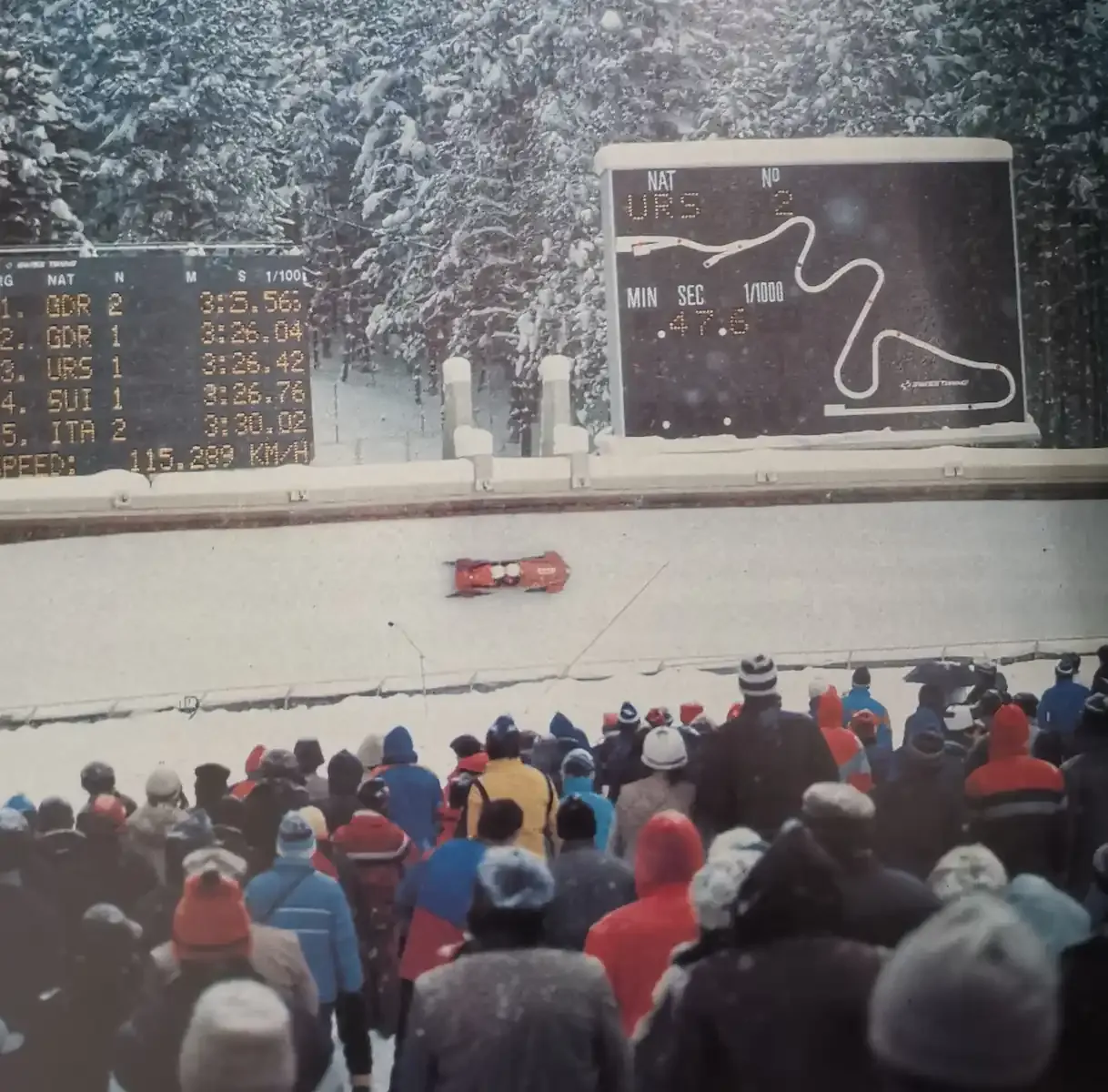
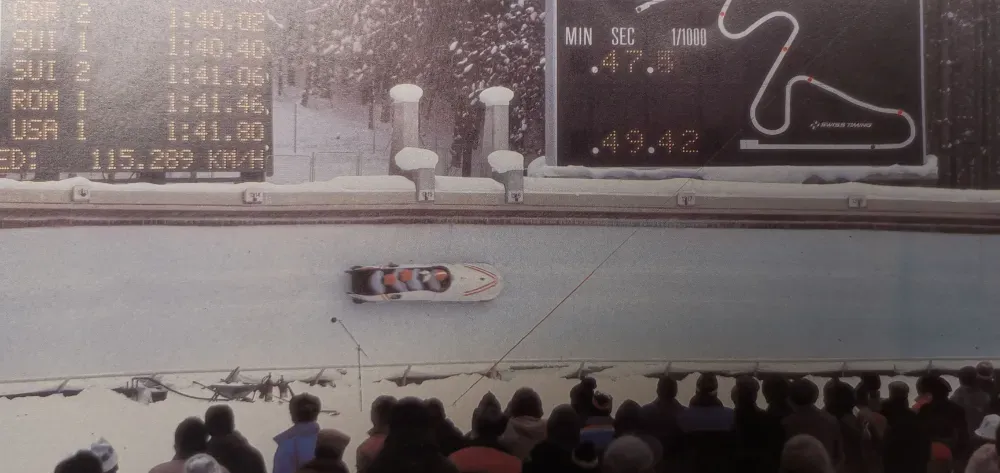
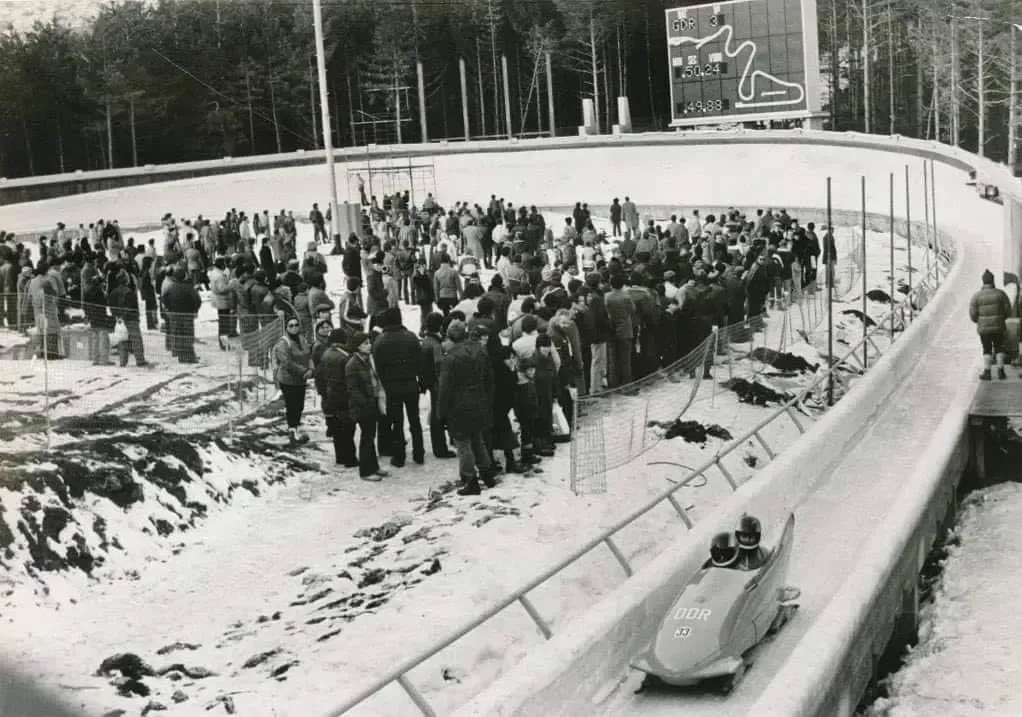
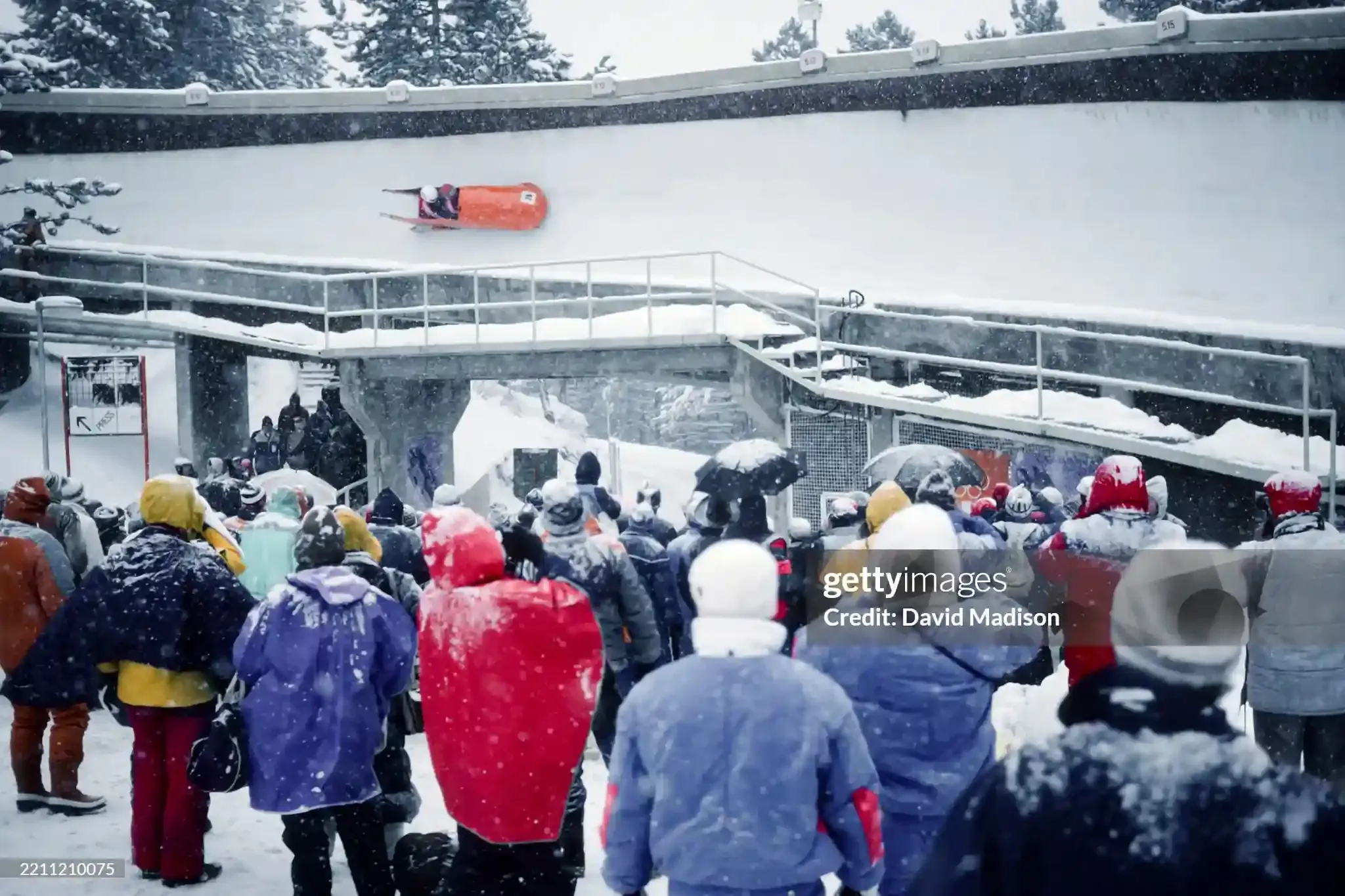
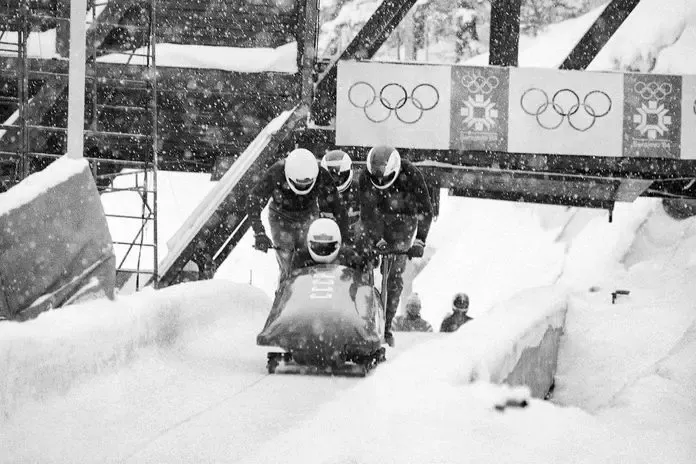
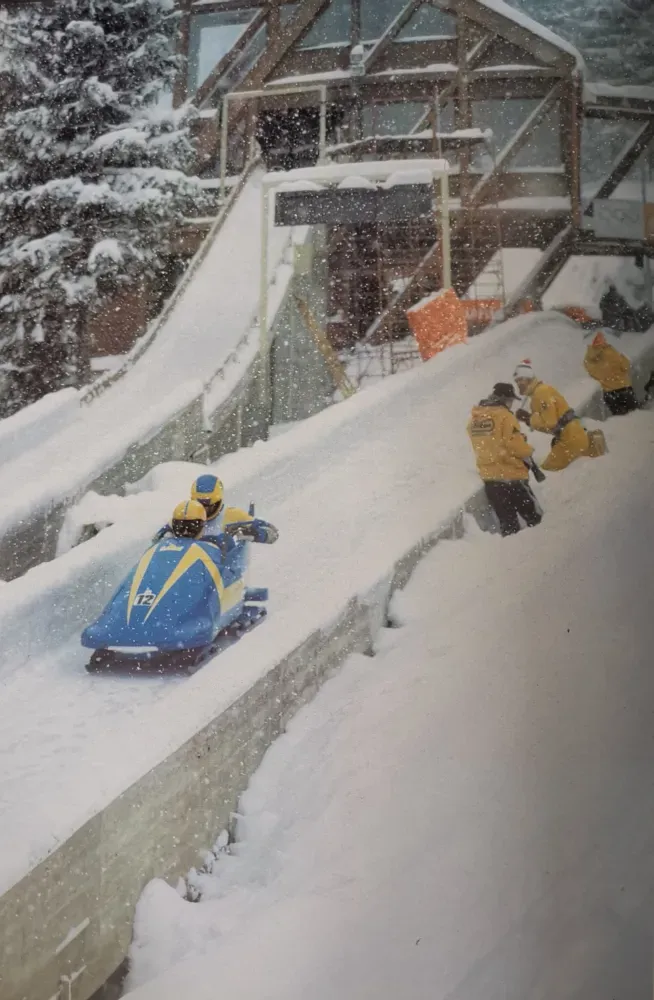
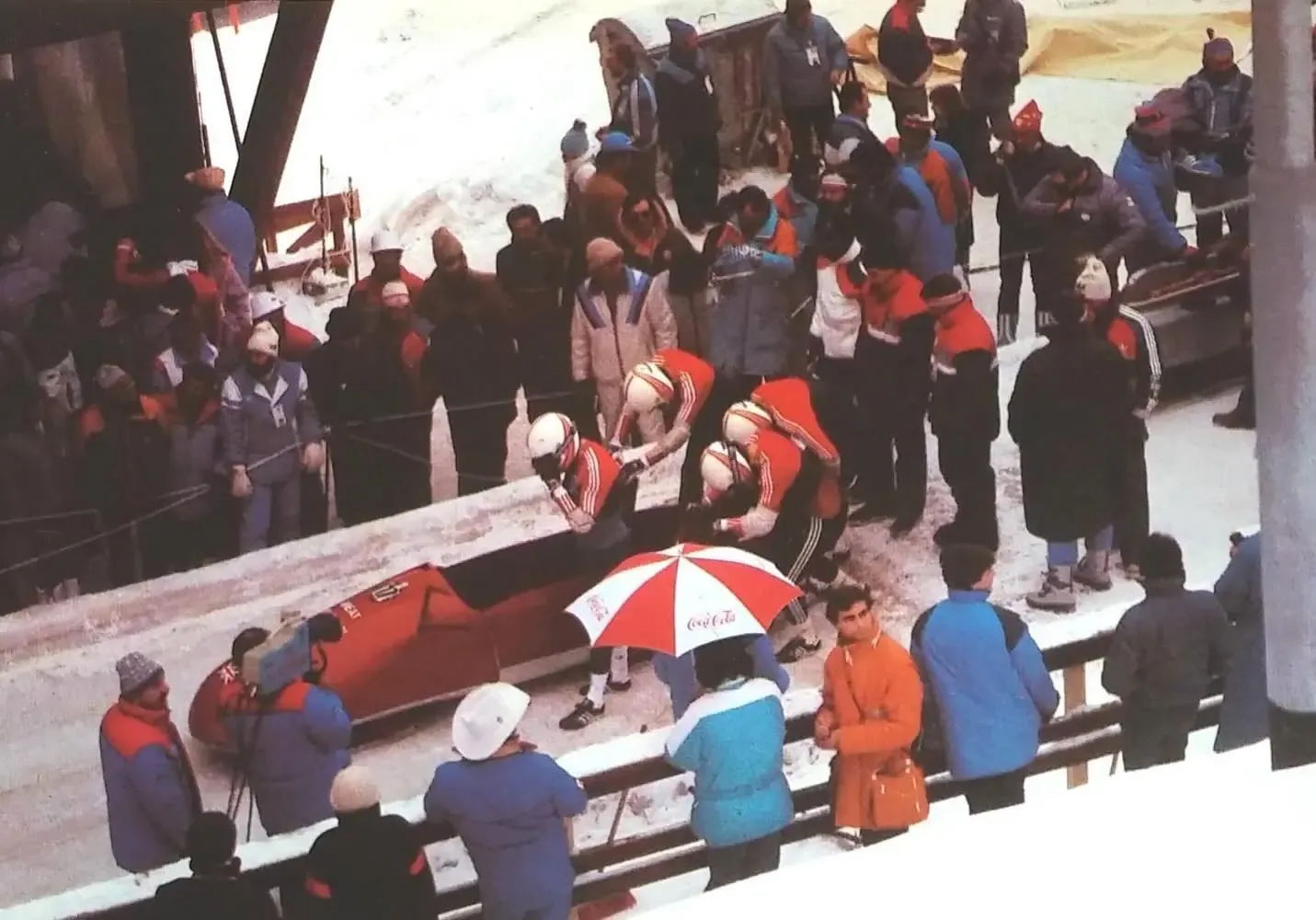
The Olympic competitions on Trebević officially ran from February 9 to February 18, 1984. Despite heavy snow and occasional blizzards that forced postponements on the higher alpine mountains, the Trebević track remained a reliable hub of activity, drawing a combined total of 50,000 spectators (30,000 for bobsleigh and 20,000 for luge) over the course of the Games.
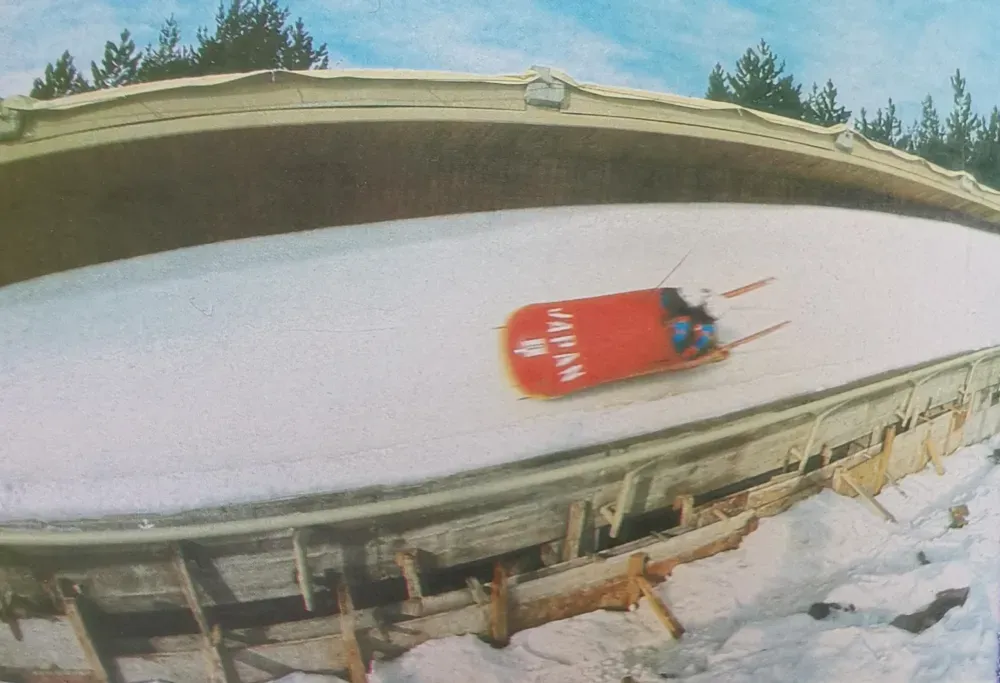
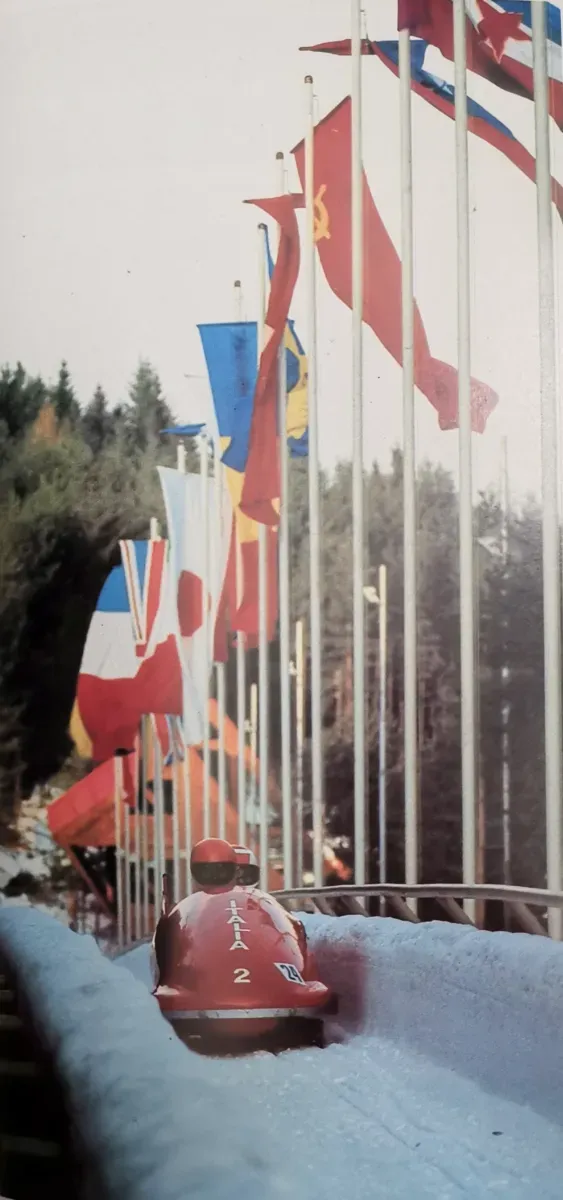
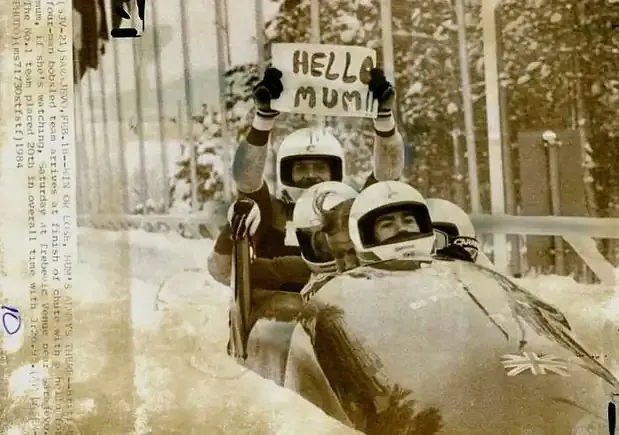
The events marked a major expansion for winter sports, featuring the Olympic debuts of Yugoslavia (in both disciplines), the USSR and Taiwan (in bobsleigh), and Puerto Rico (in luge).
Luge Competitions (Feb 9–15)
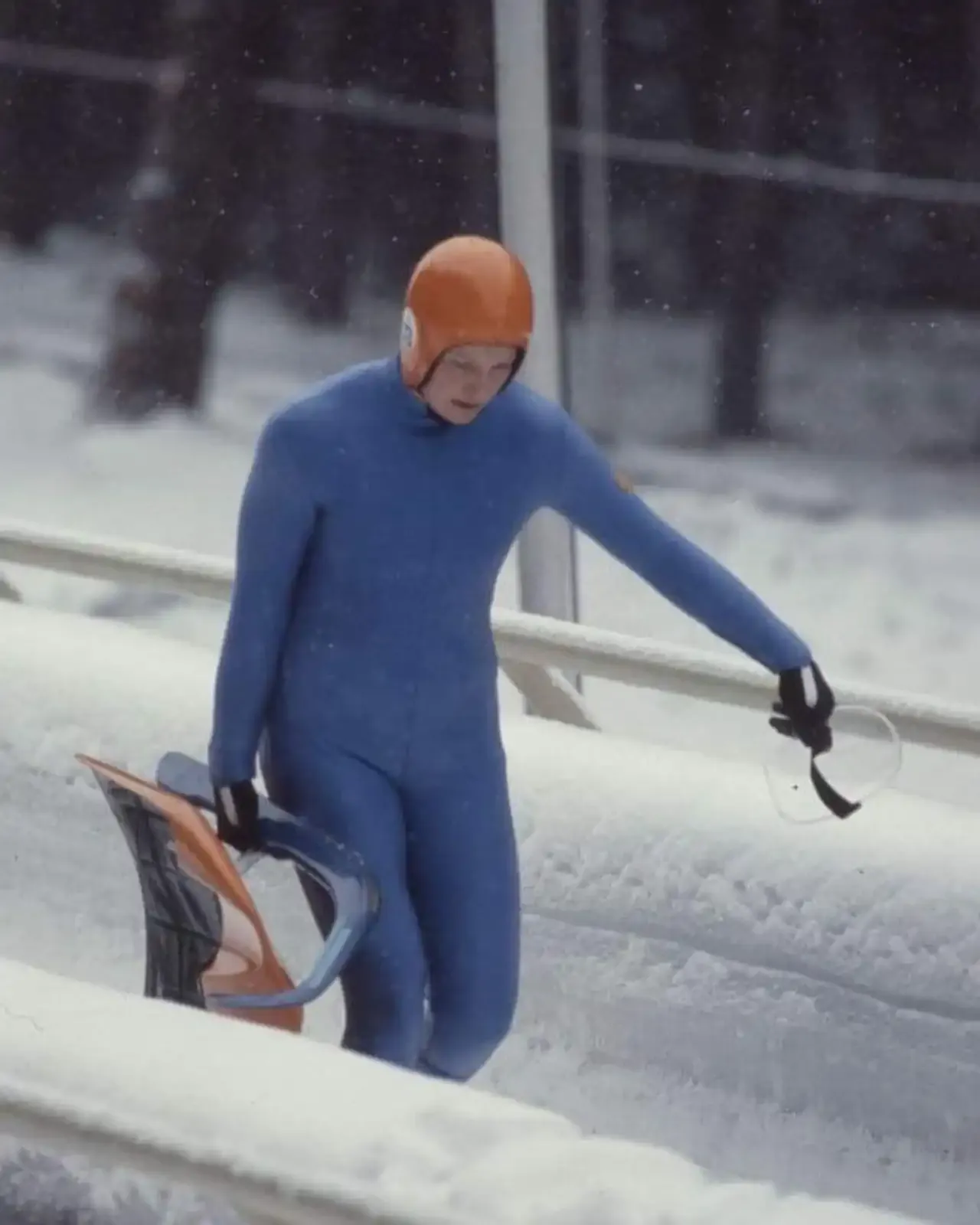
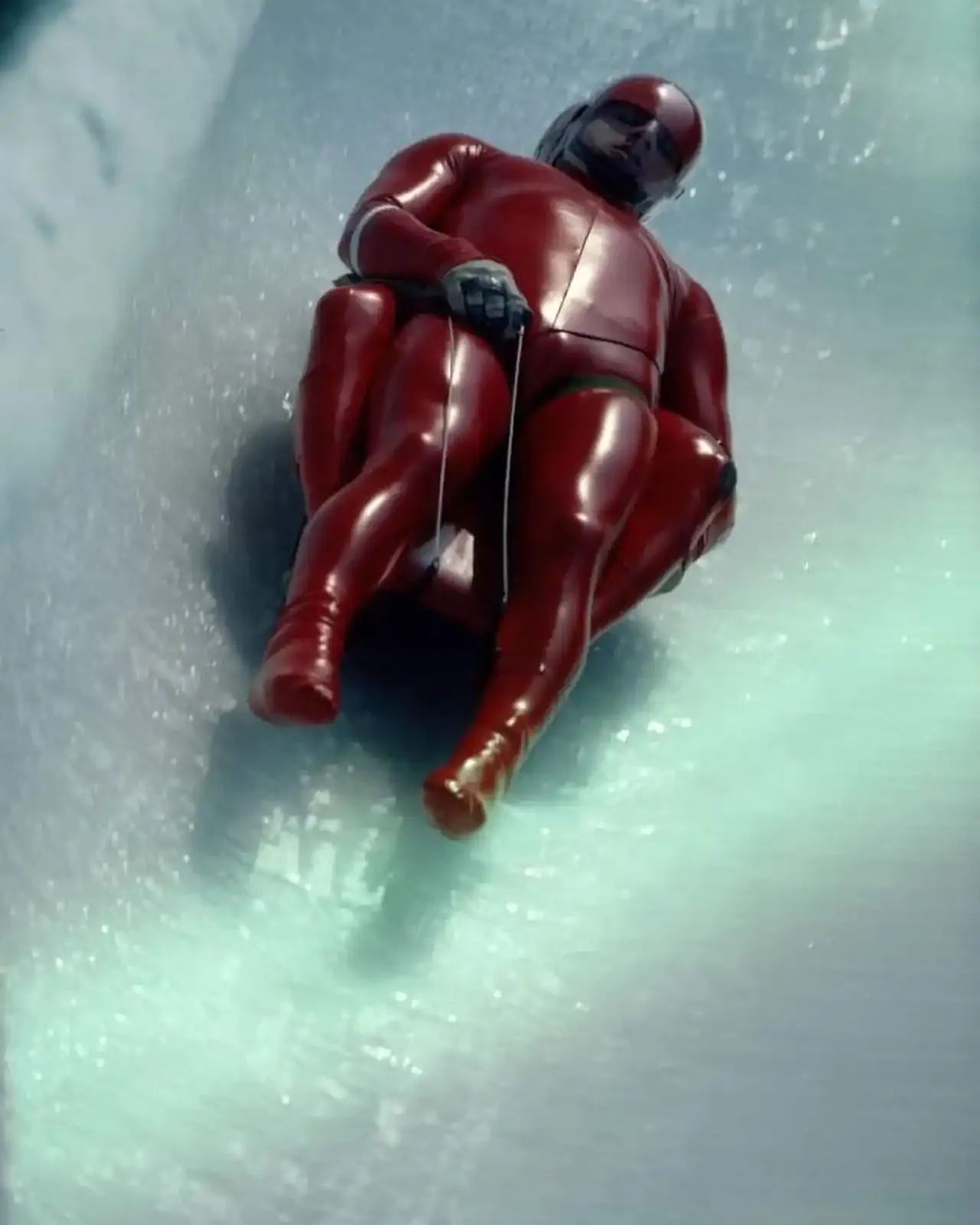
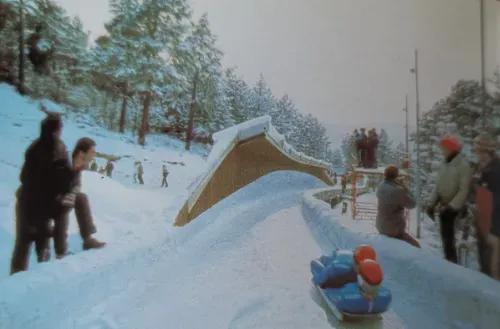
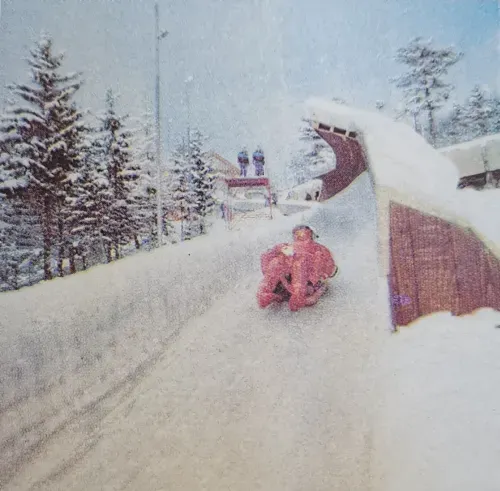
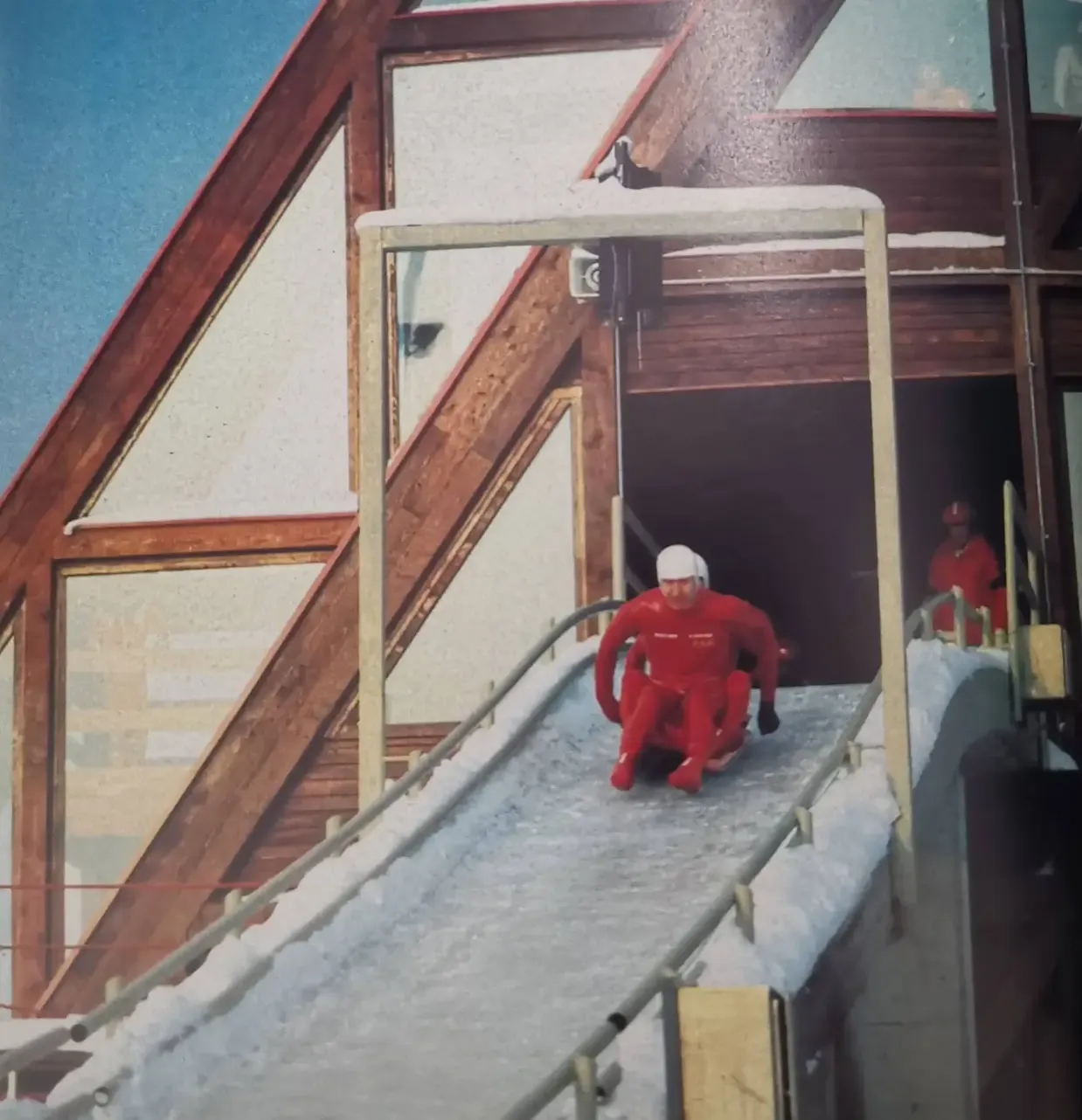
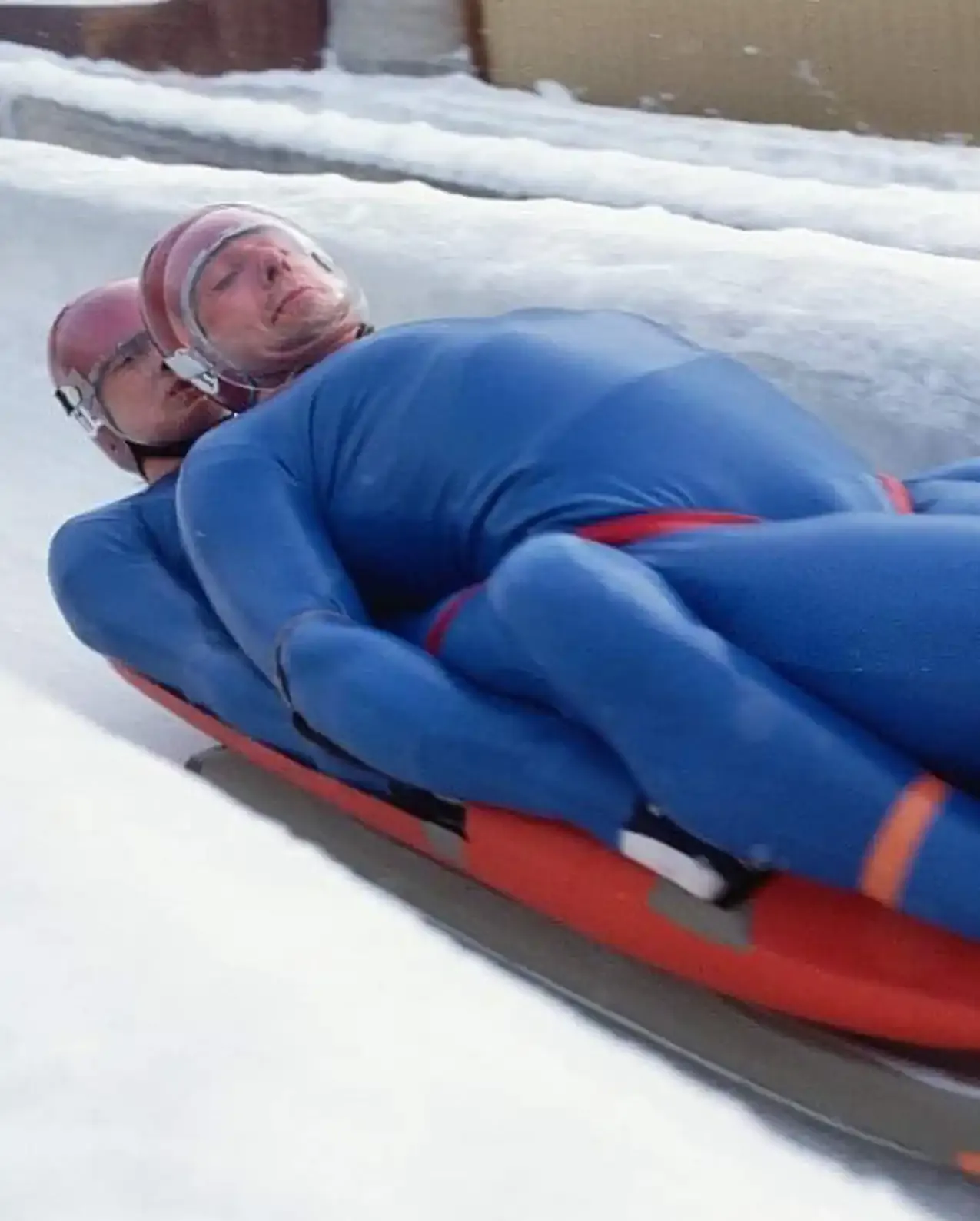
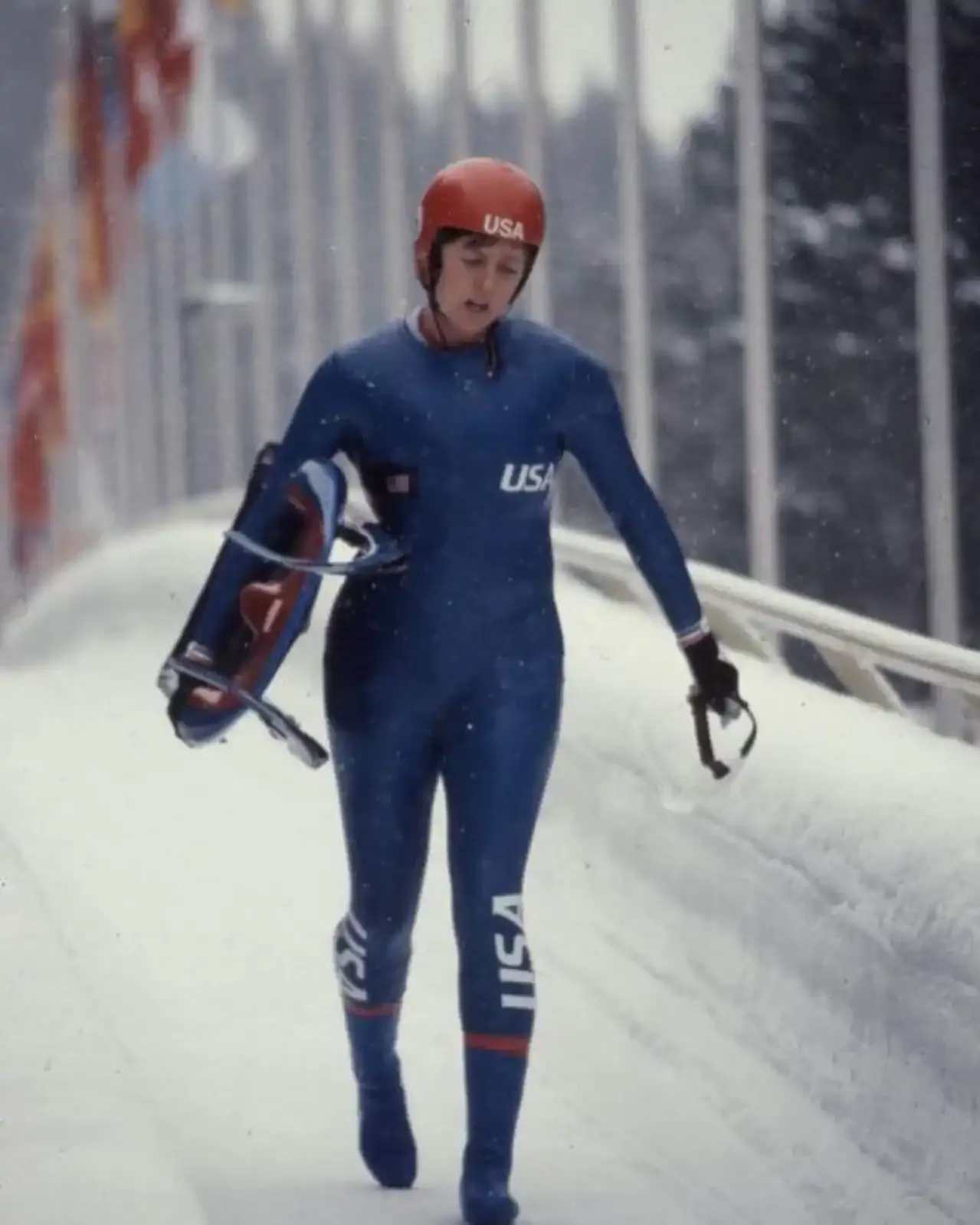
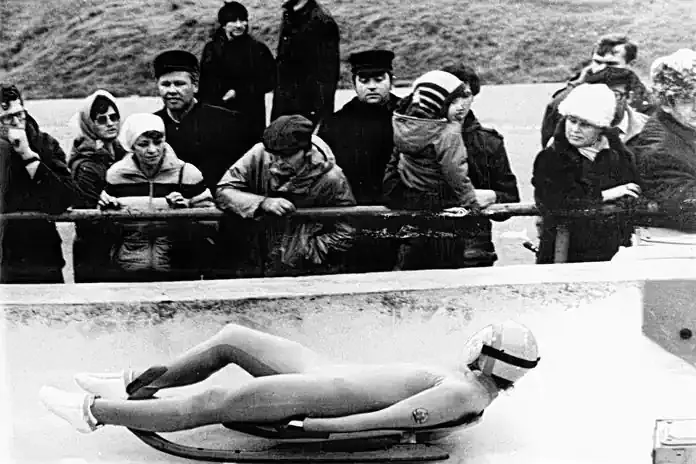
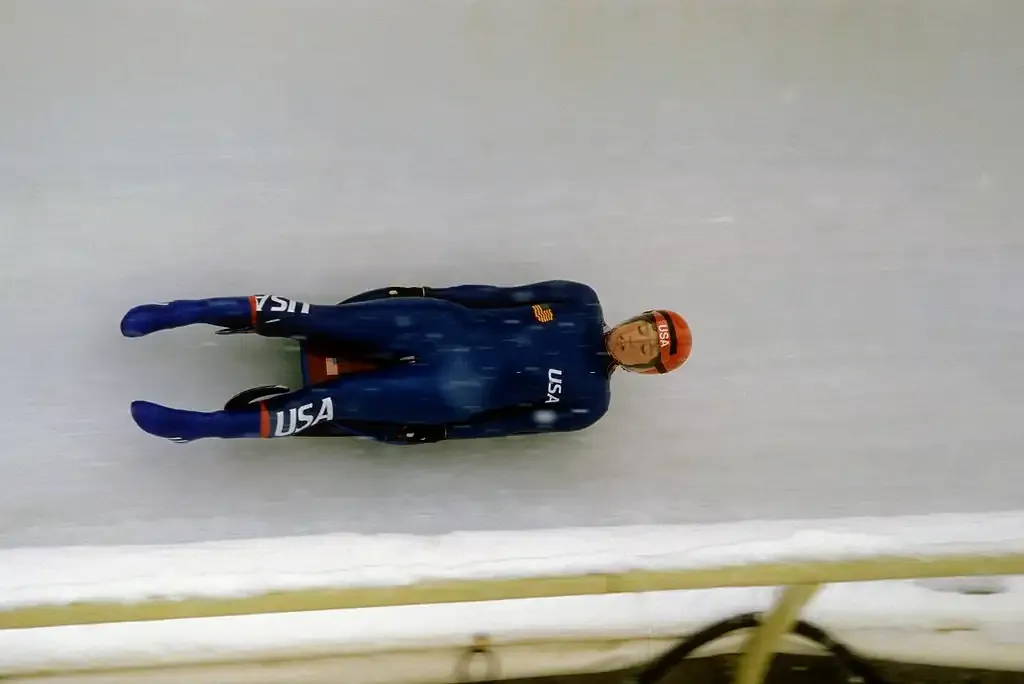
A field of 111 competitors from 16 nations took to the ice. The events were a triumph for East Germany (GDR), whose athletes won four medals, including gold in the women's singles by Steffi Martin. In the men’s singles, Italian favorite Paul Hildgartner lived up to expectations, setting a new track record and taking gold. The doubles event provided a dramatic finale, with the West German pair Stangassinger and Wembacher snatching gold from the Soviet crew by a fraction of a second.
Bobsleigh Competitions (Feb 10–18)
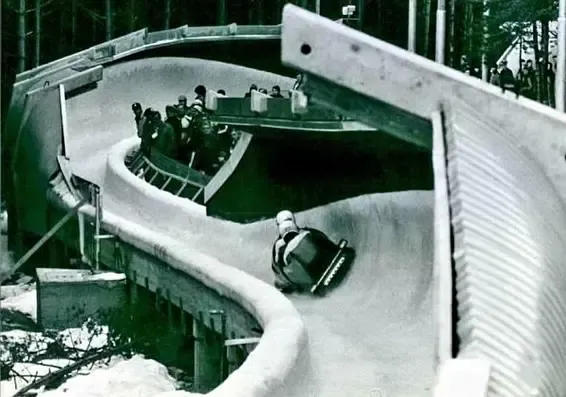
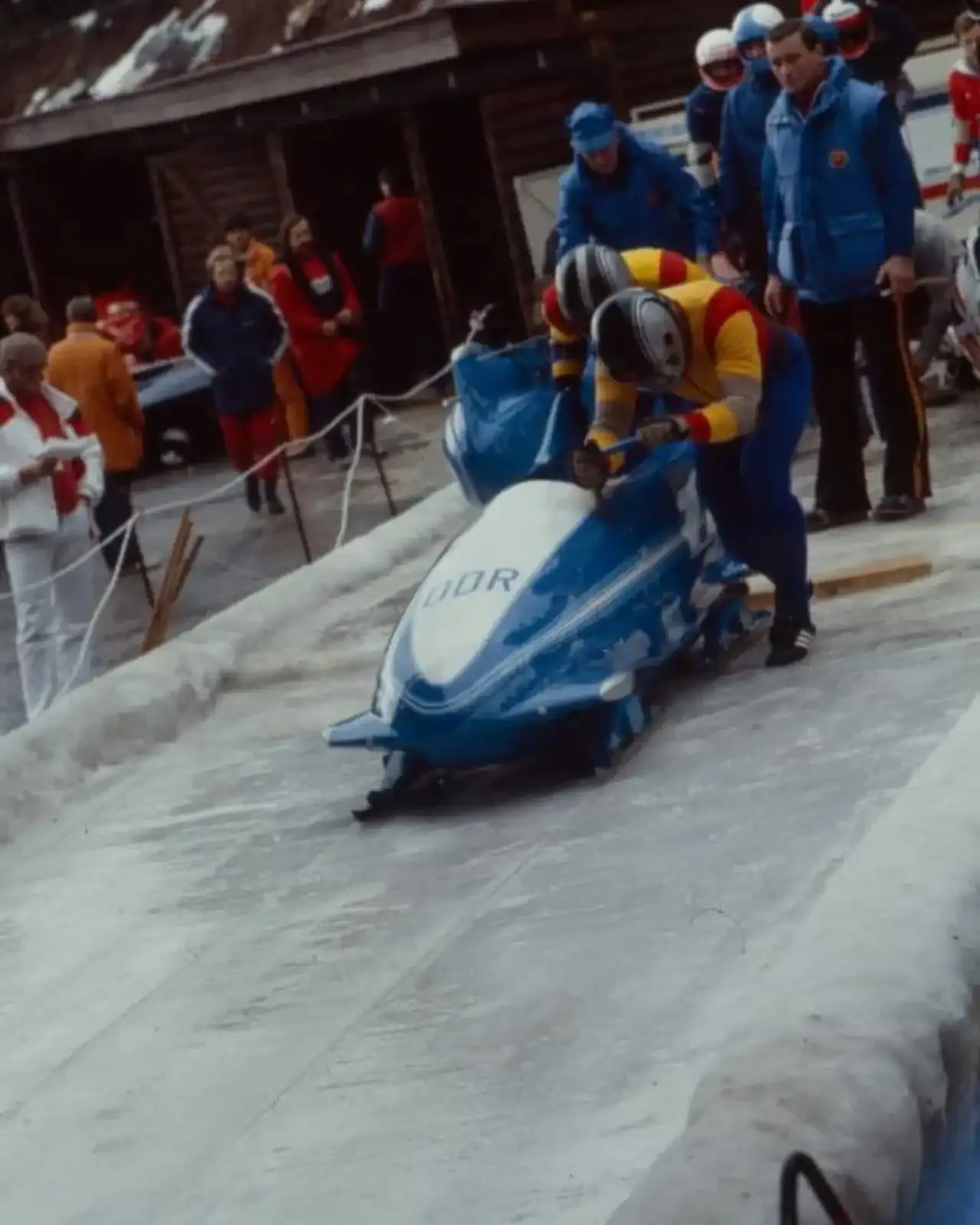
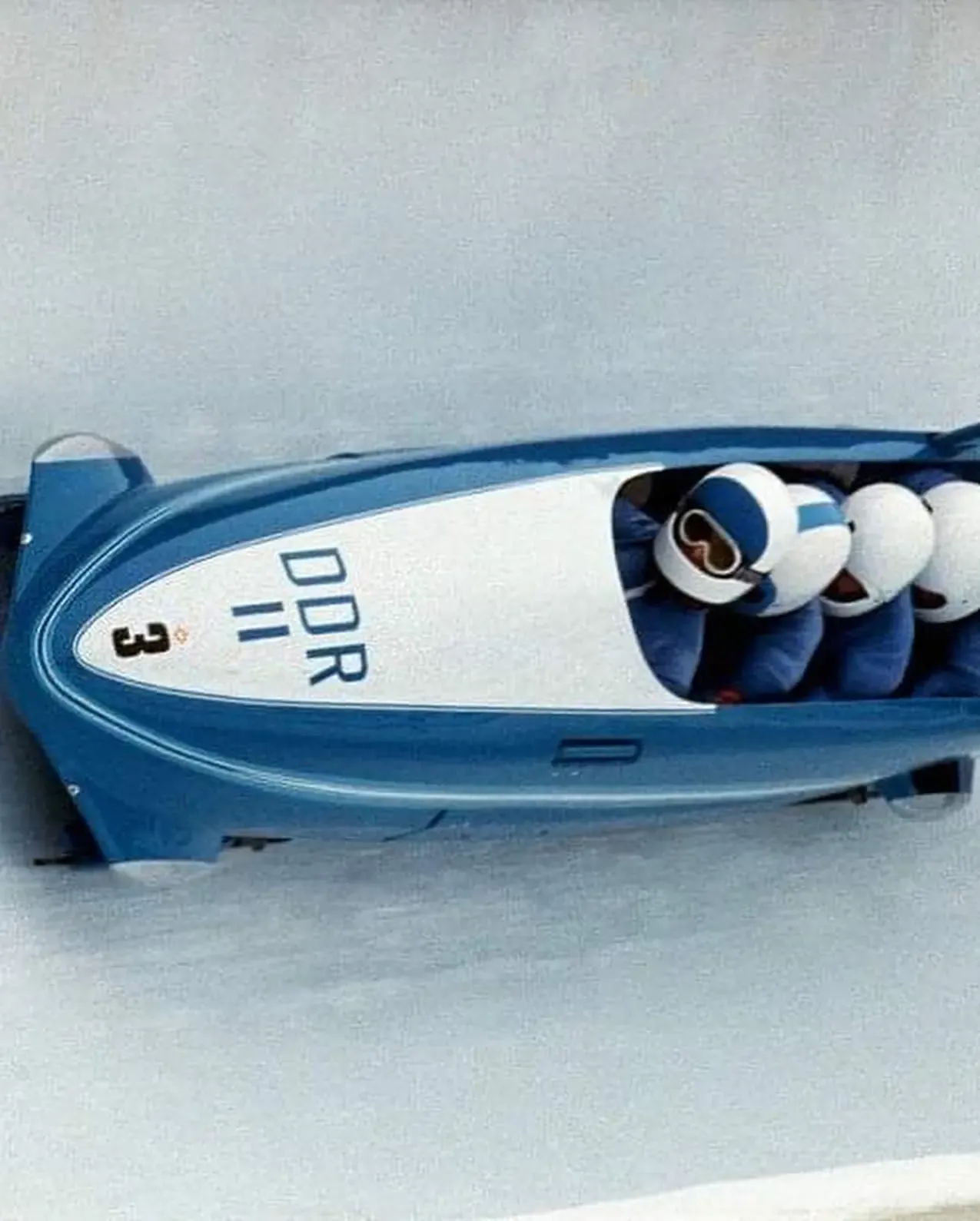
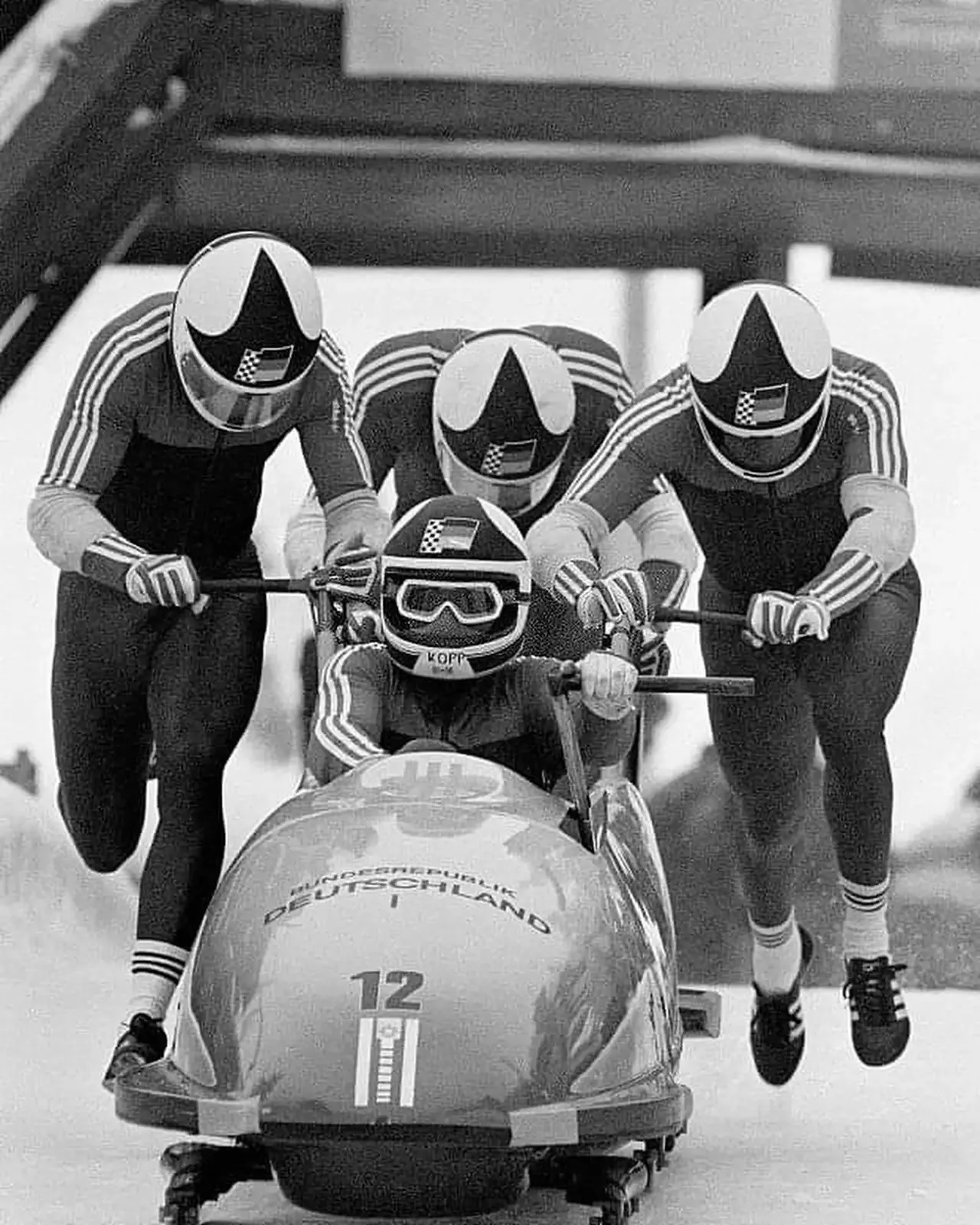
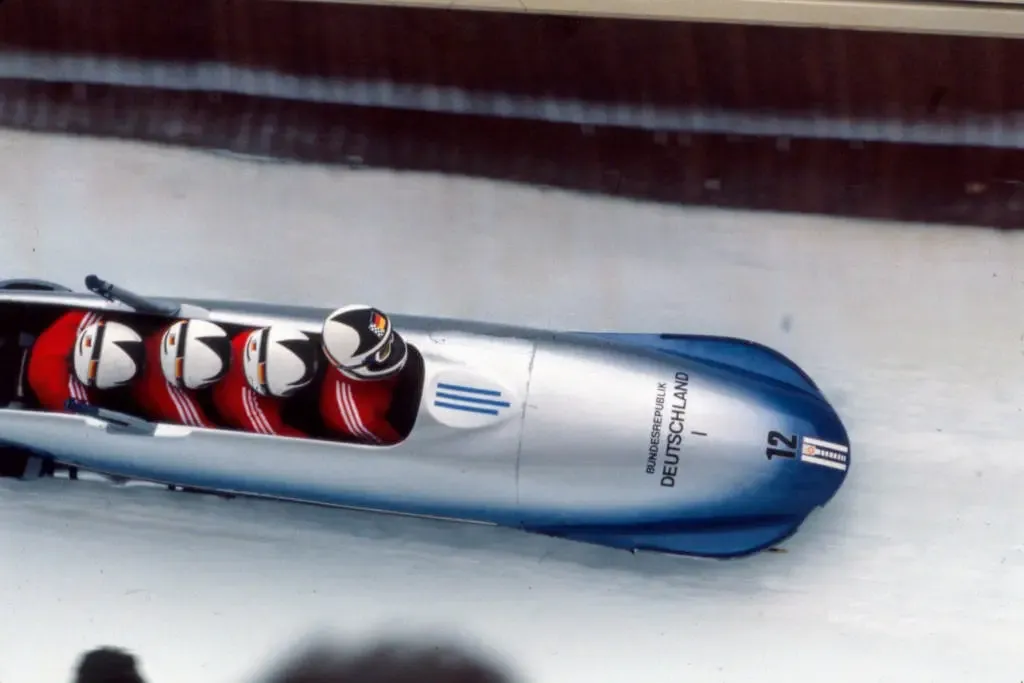
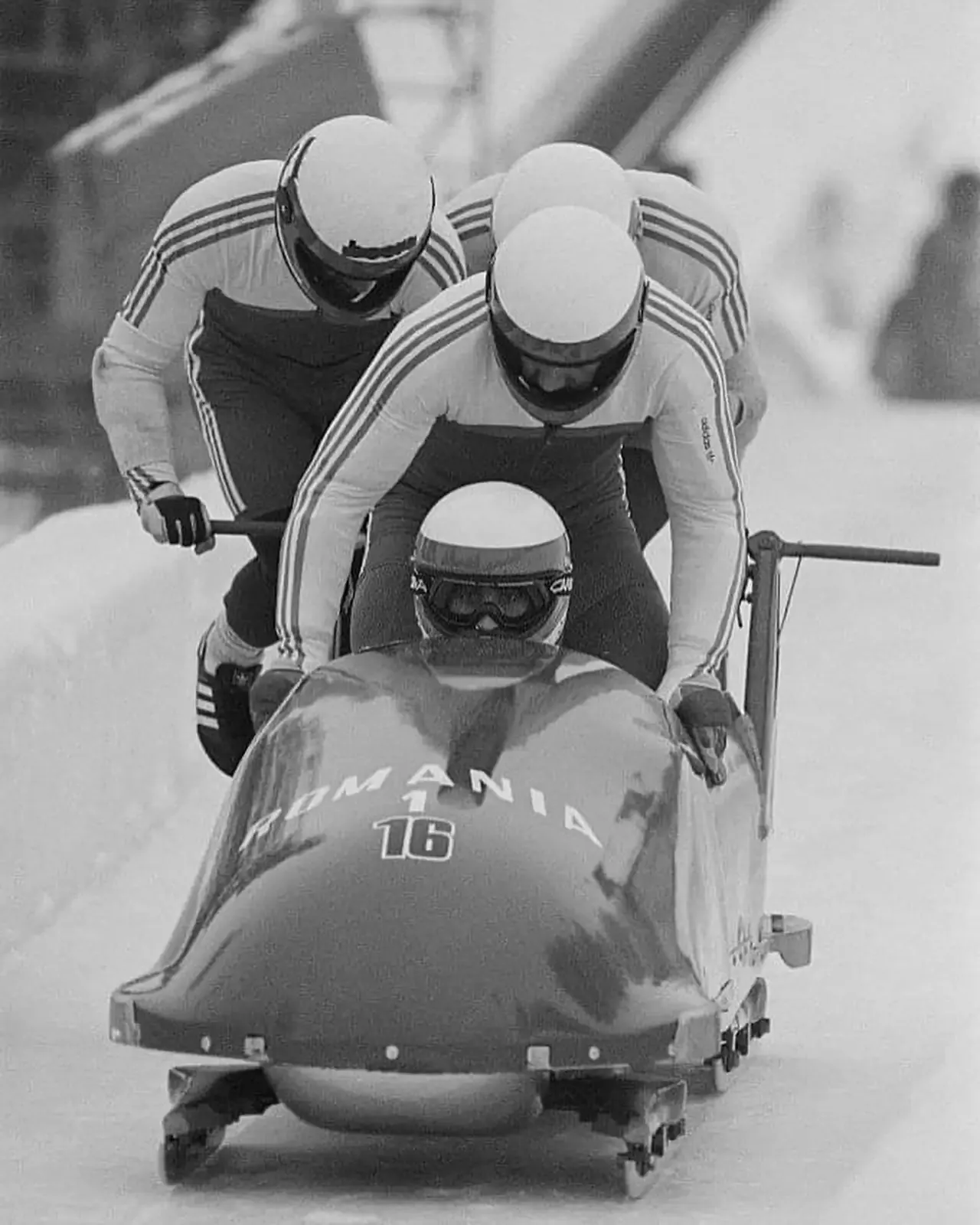
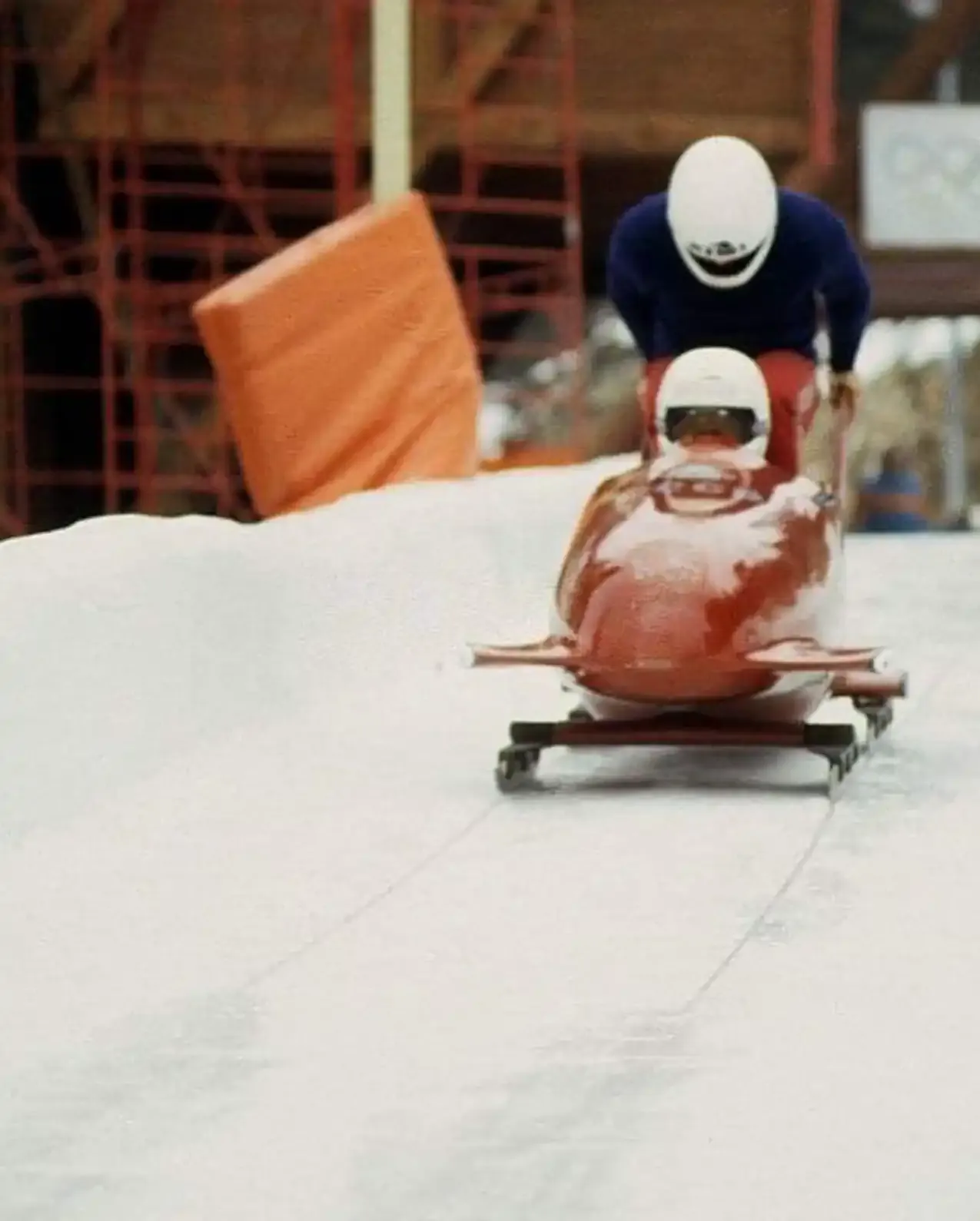
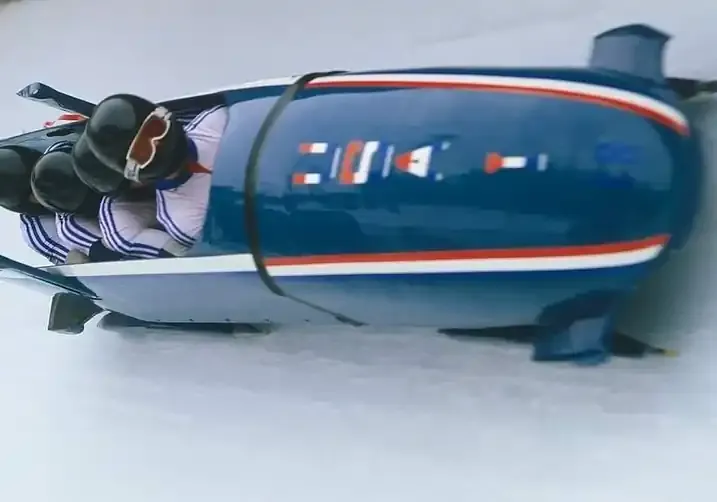
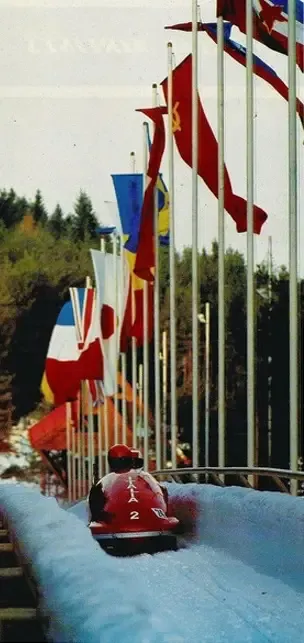
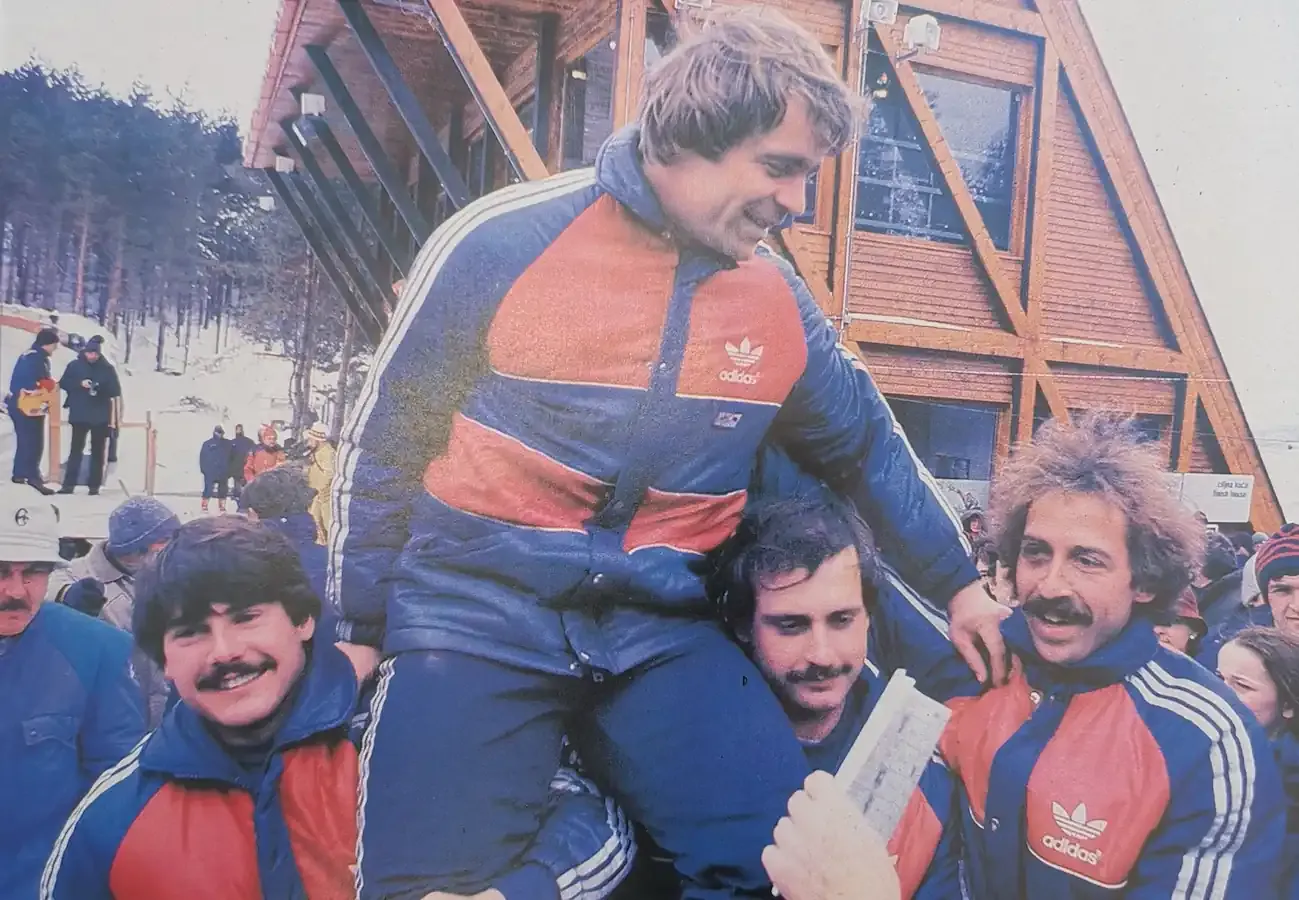
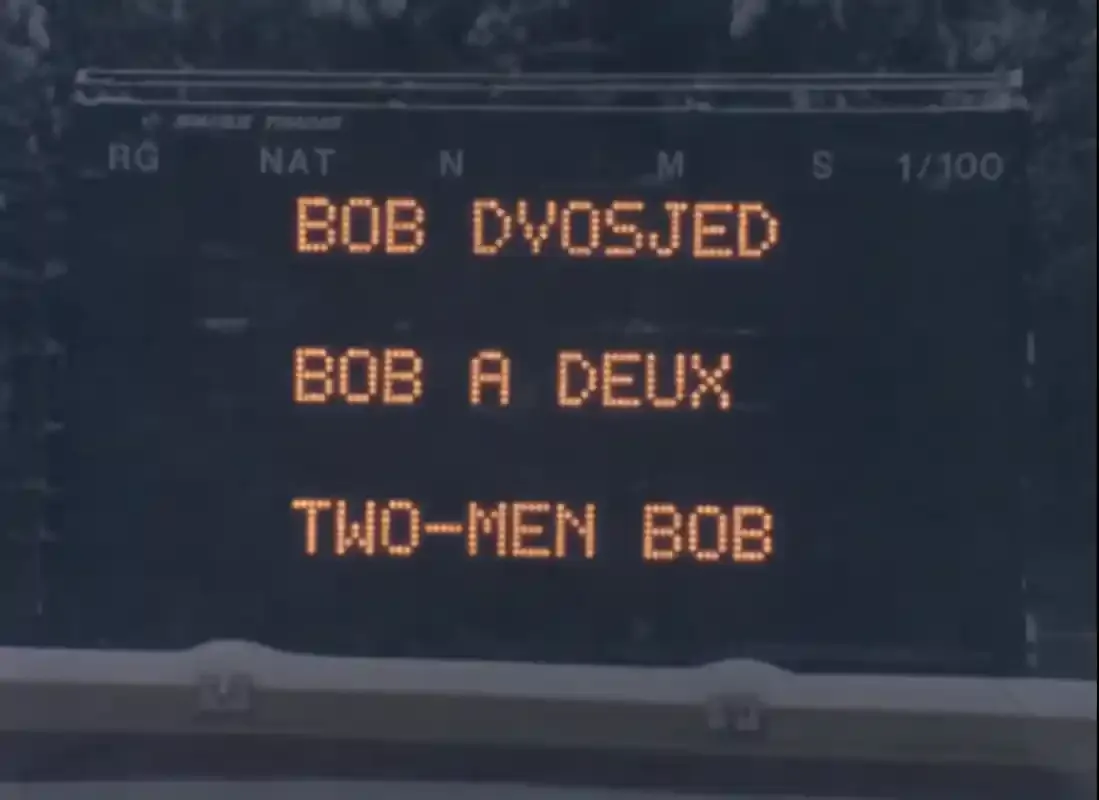
Sixteen nations competed in the two-man and four-man events. The GDR dominated here as well, with the crew of Wolfgang Hoppe and Dietmar Schauerhammer taking gold in both disciplines. In the two-man event, they reached an average speed of 116 km/h (72 mph). Hoppe was hailed by his peers as the "best pilot in the world," leading a team that mastered the technical demands of the "Sarajevo Model" track.
Trebević also became a star-studded destination during the Games. British Princess Anne visited to watch the luge, while American singer John Denver caused a sensation by riding a four-man bobsled down the track with the US team. Even celebrated Swedish skier Ingemar Stenmark visited the site, though when asked if he would ever compete on the ice track, he famously replied: "Not for a million bucks!"
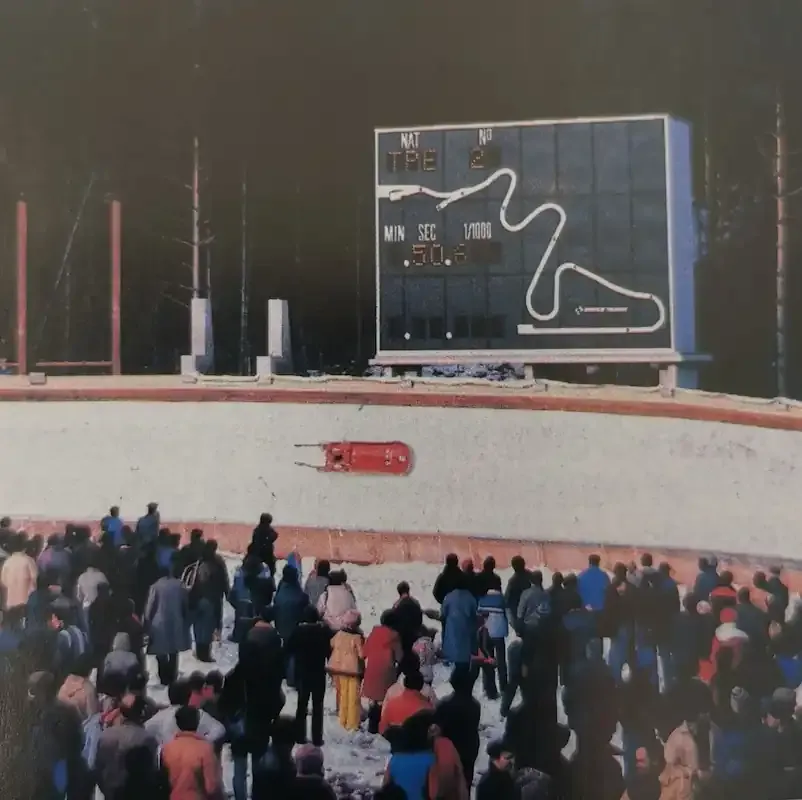
Technical Profile: The 1984 Olympic Setup
By the close of the Games, the Trebević track was regarded as one of the most sophisticated in the world. Its technical configuration was a point of pride for Sarajevo’s engineers.
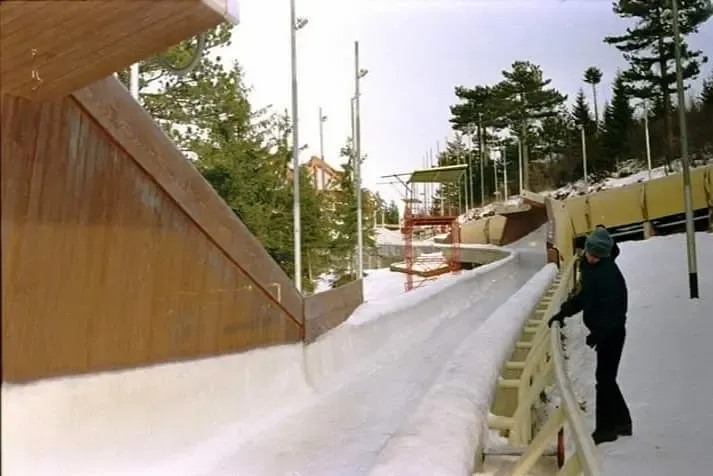
- Total Length: 1,570 meters (5,150 feet) including stop ramps.
- Competition Length: 1,266 meters (4,153 feet) for bobsleigh; 1,210 meters (3,970 feet) for luge.
- Vertical Drop: 125.9 meters (413 feet).
- Curves: 13 technical curves (Figures), with the steepest sections reaching a 15% gradient.
- Refrigeration: An artificial cooling system using a network of pipes embedded in the concrete allowed for a consistent ice surface despite fluctuating temperatures.
- The "Split" System: A unique mechanical undertaking allowed the track to be divided into three sections (376 m, 680 m, and 872 m) for simultaneous use by beginners, youth, or recreational sledders.
- Capacity: Spectator standing zones designed for 20,000 people.
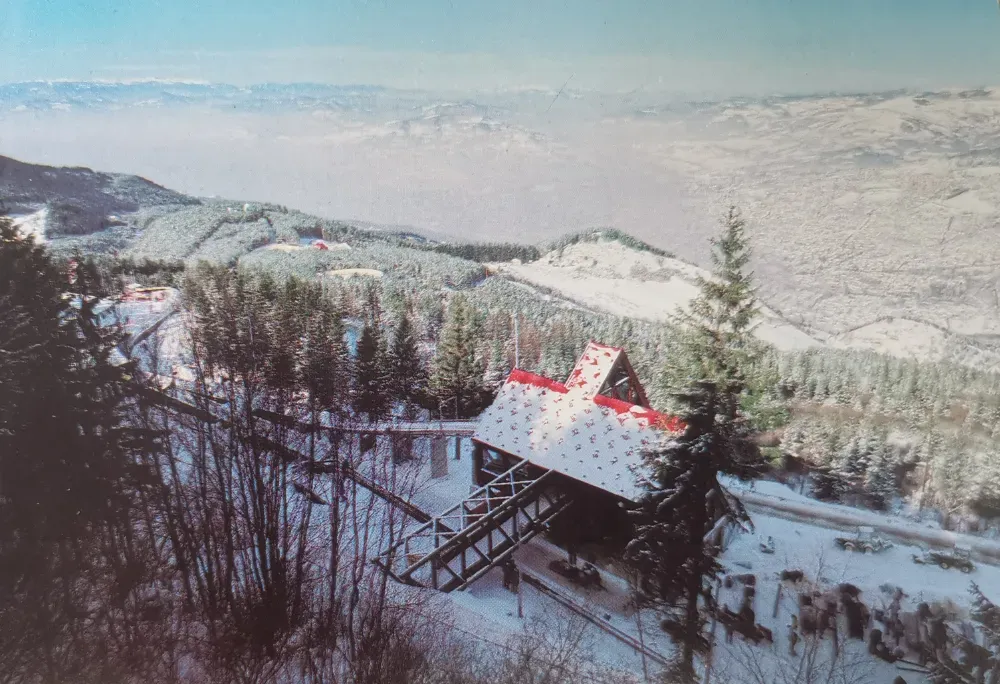
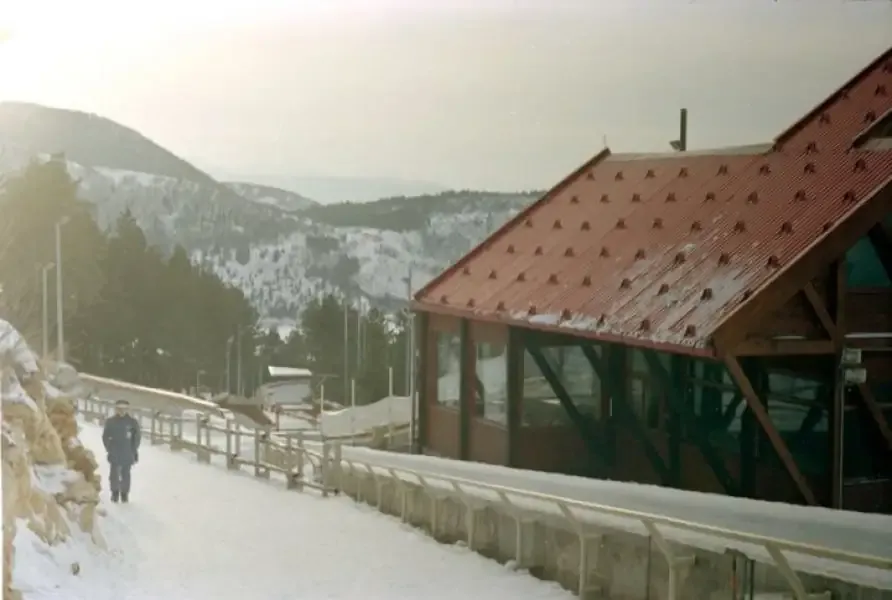
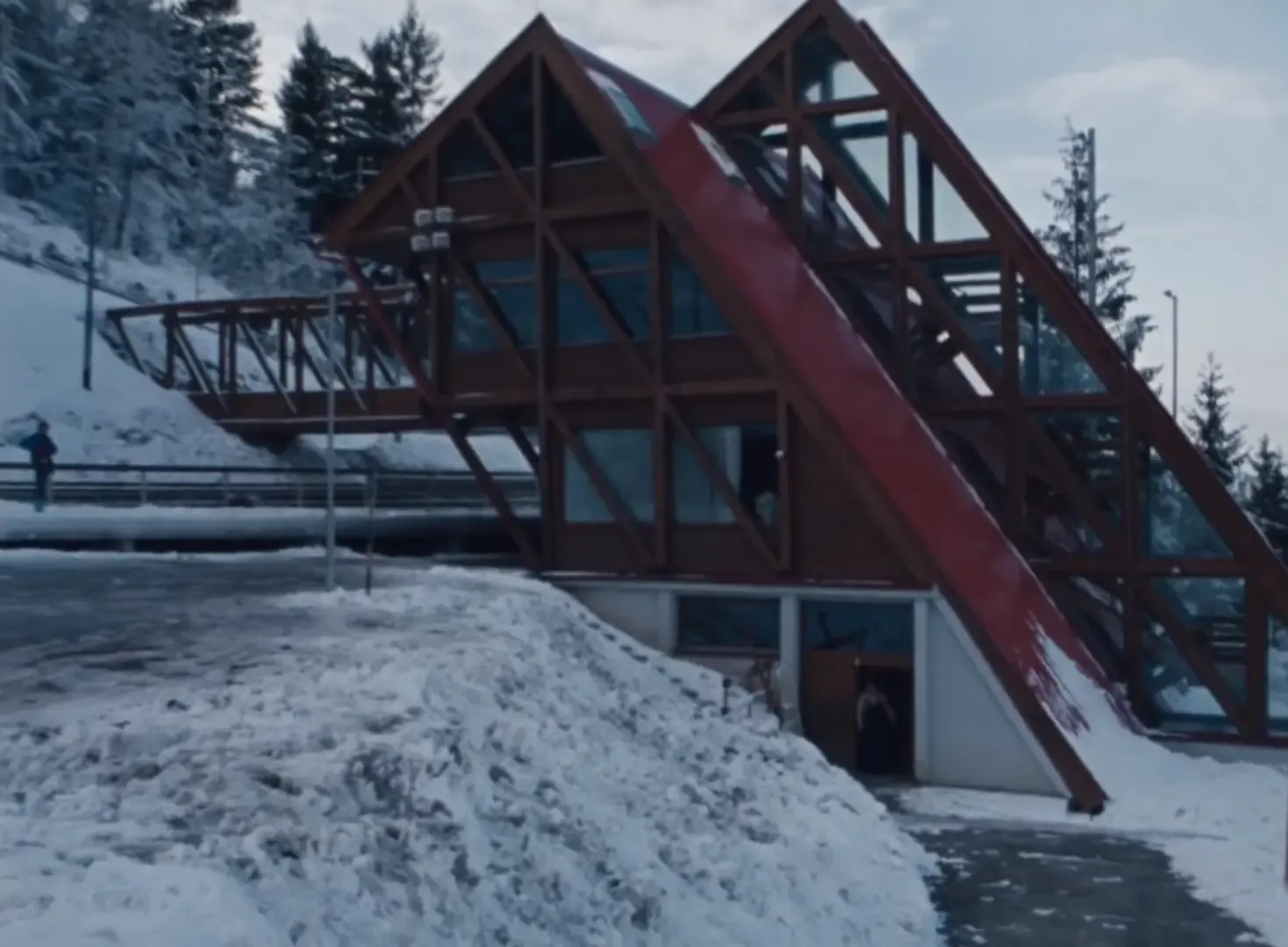
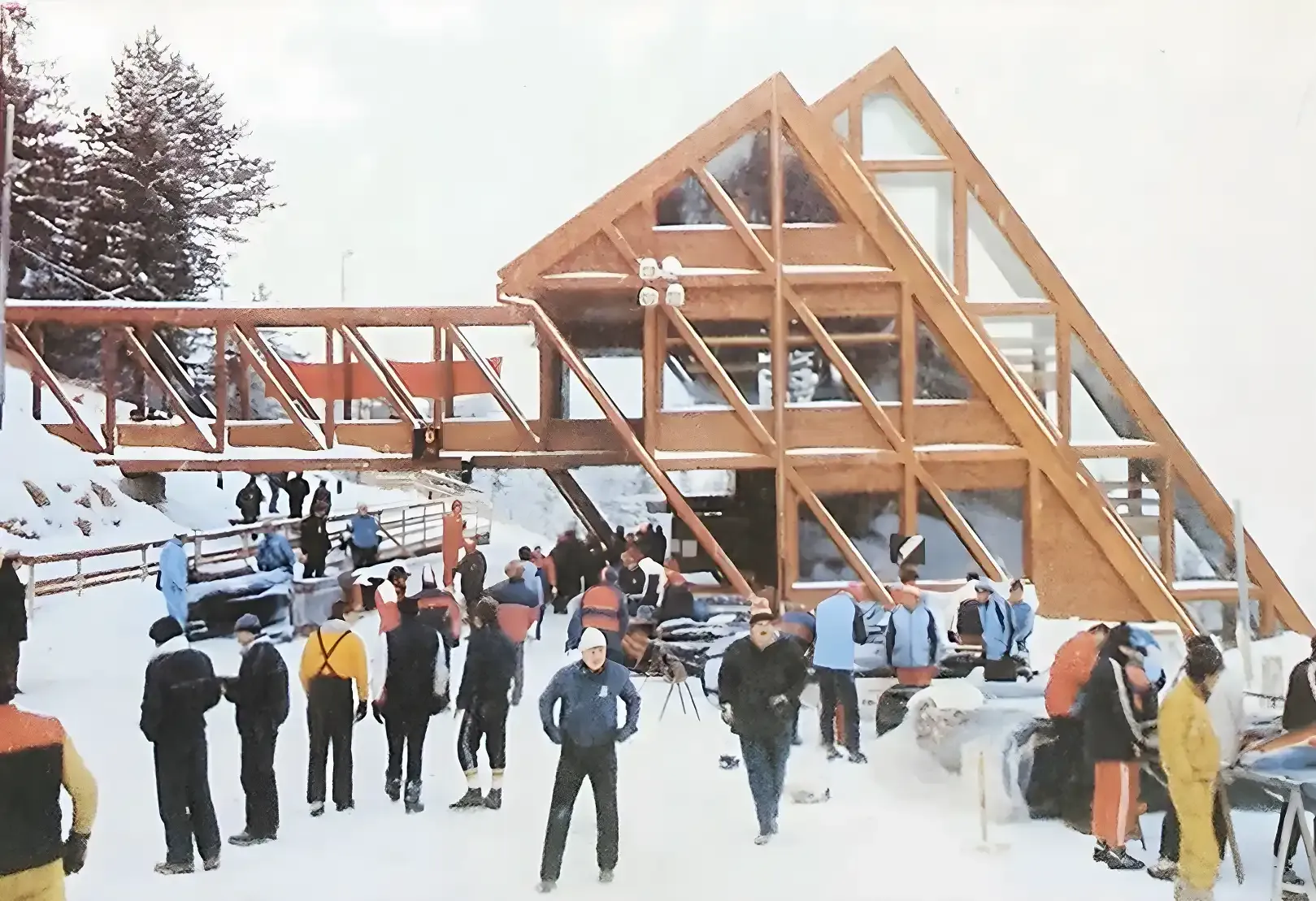
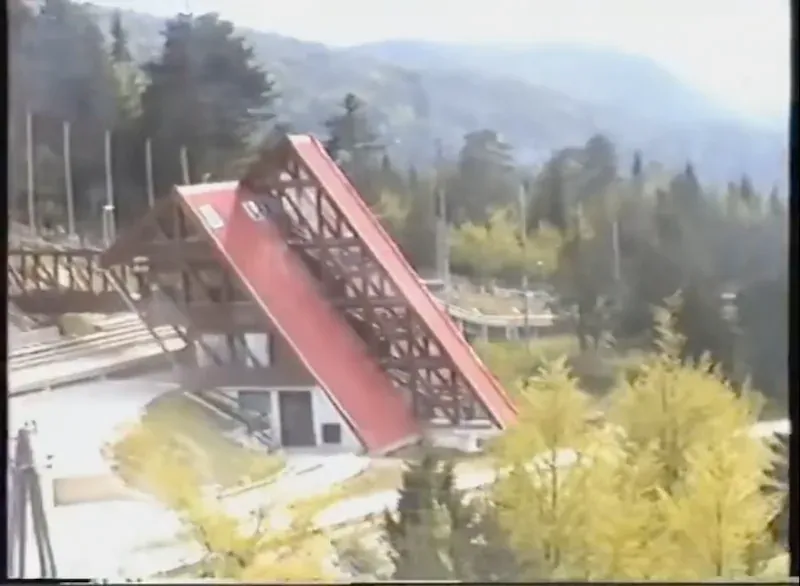
- Support Buildings: Start houses for Bobsleigh and Luge, a Finish House, and a dedicated press center above Curve 5 equipped with 50 desks and telecommunication links.
Major Events: The Track’s Active Decade (1983–1991)
Contrary to the "white elephant" fate of many Olympic venues, Trebević remained a bustling hub for elite winter sports for nearly a decade after the closing ceremony. The track did not go dormant; instead, it became a regular stop on the international circuit.
According to Senad Omamović, president of the Bosnian Luge Federation, the venue hosted up to three World Cup races every year (covering bobsleigh, luge, and skeleton) before the war halted operations. The track was frequently the season opener for the Luge World Cup, hosting the "Sarajevo Cup" in mid-December, a fixture that kept the city on the global sporting map.
| Dates | Event | Discipline |
|---|---|---|
| 1983 Jan 29 – Feb 6 | European Championships (Pre-Olympic Test) | Bobsleigh |
| 1983 Dec 17 – 18 | World Cup (Season Opener) | Luge |
| 1984 Feb 8 – 19 | XIV Winter Olympic Games | Bob & Luge |
| 1984 Dec 15 – 16 | World Cup (Season Opener) | Luge |
| 1985 (Date N/A) | European Championships | Skeleton |
| 1985 Dec 13 – 14 | World Cup (Season Opener) | Luge |
| 1986 Dec 13 – 14 | World Cup (Season Opener) | Luge |
| 1987 (Date N/A) | European Championships | Skeleton |
| 1987 Dec 11 – 12 | World Cup (Season Opener) | Luge |
| 1988 Jan 26 – 31 | European Championships | Bobsleigh |
| 1988 Dec 10 – 11 | World Cup (Season Opener) | Luge |
| 1990 Jan 20 – 21 | World Cup (4th of Season) | Luge |
| 1990 Dec 15 – 16 | World Cup (4th of Season) | Luge |
| ? | World Cup | Bobsleigh |
| ? | World Cup | Bobsleigh |
| ? | World Cup | Bobsleigh |
The "Vučko" Tourist Experience
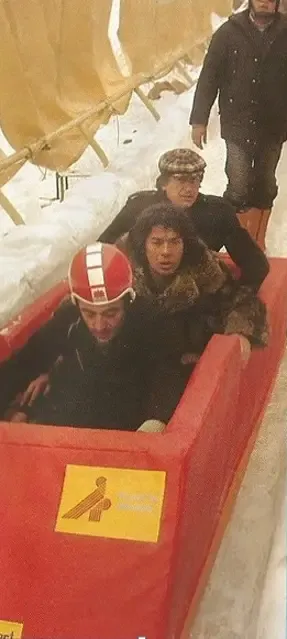
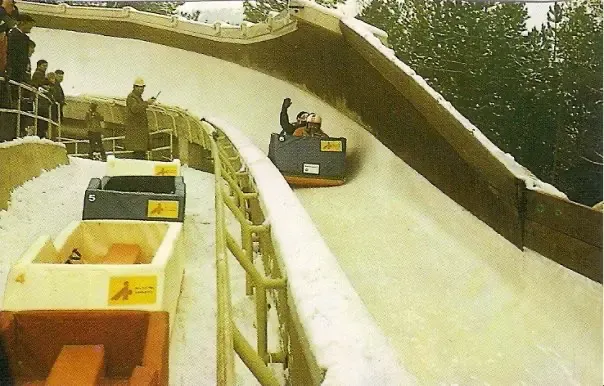
Beyond elite competitions, the Trebević track was a pioneer in commercializing the Olympic legacy. The most popular attraction was the "Vučko" tourist bobsled. These custom-designed, rubberized vehicles could seat six to eight passengers. Far softer and safer than competition sleds, they allowed tourists (and even school children) to experience the thrill of the ice. The rides were a massive hit, often running at night under the track's floodlights, with demand consistently outstripping the number of available sleds.
The Sigulda Connection
The expertise developed in Sarajevo traveled north. The Yugoslav construction company "Graming", based in Sarajevo, was contracted to build the bobsleigh and luge track in Sigulda, Latvia (then Soviet Union). Completed in 1986, the Sigulda track was built with the same "Sarajevo know-how. The engineers even brought the Vučko bobsled to Sigulda, where you can ride it to this day.
The Frontline Years: Damage and Dereliction
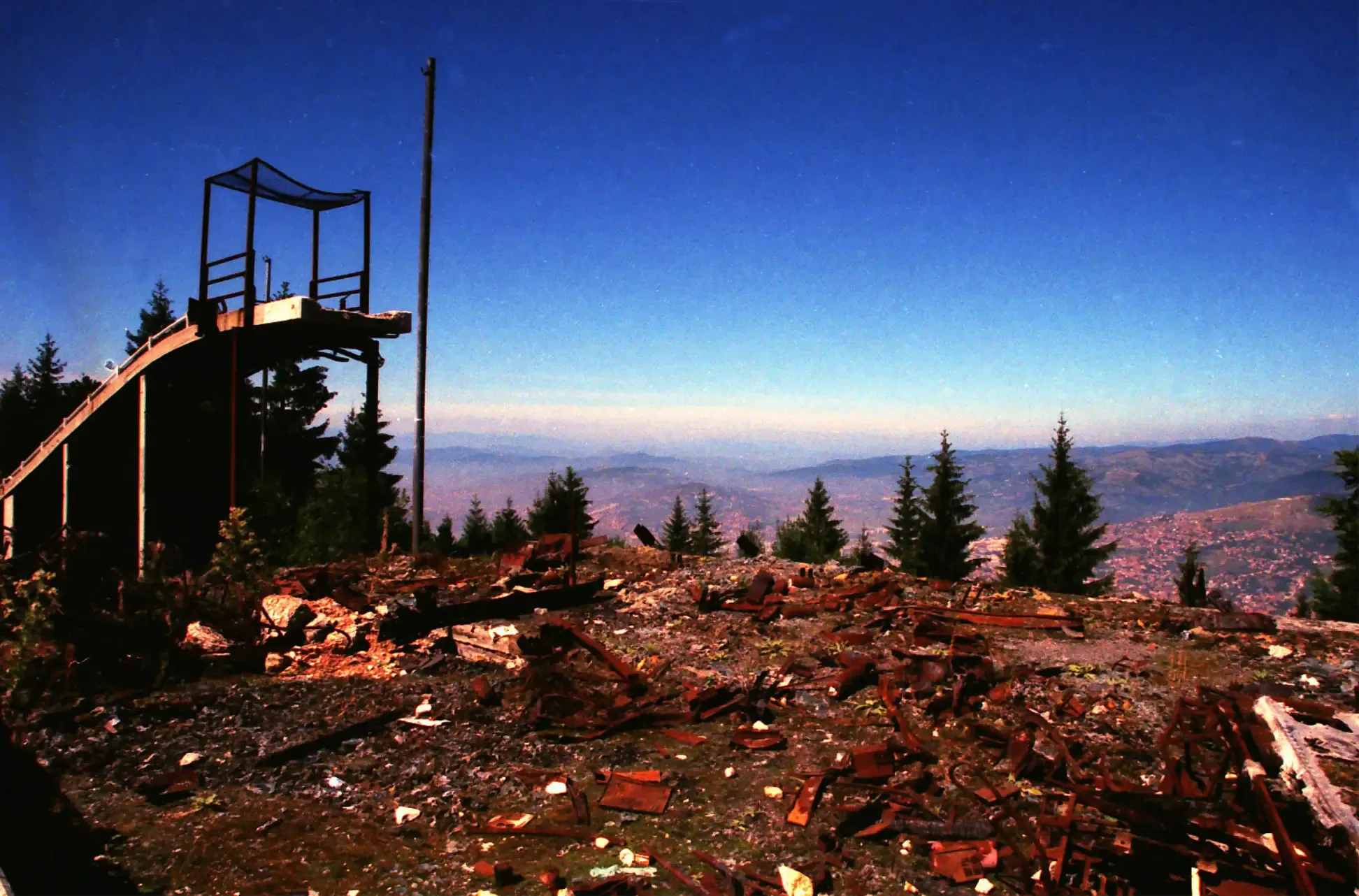
The glory of the 1984 Games was short-lived. Just eight years after the closing ceremony, the mountain that symbolized Olympic unity was transformed into a primary battleground. During the Siege of Sarajevo (1992–1996), Trebević became a strategic asset for Bosnian Serb forces due to its commanding view over the city.
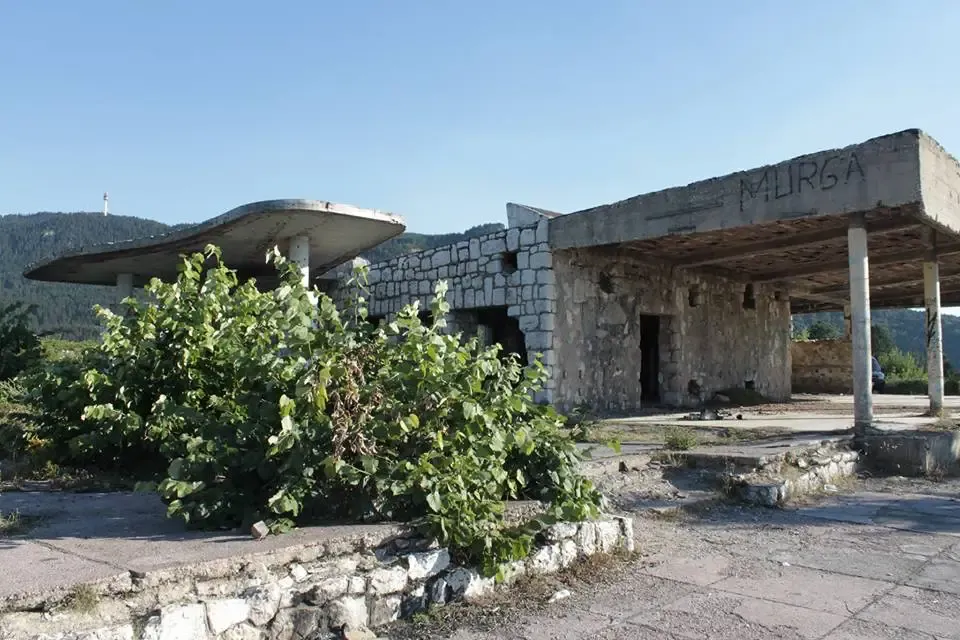
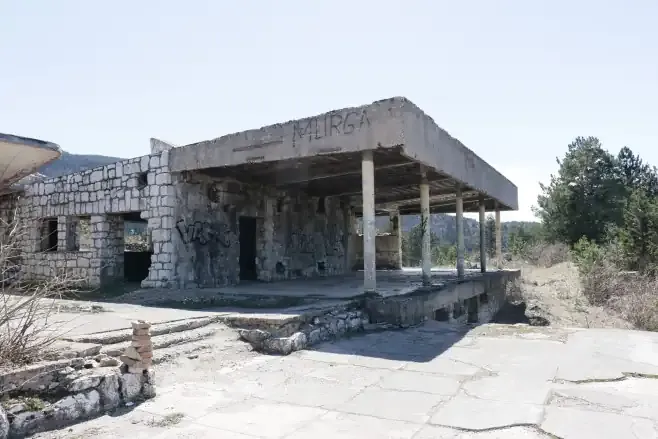
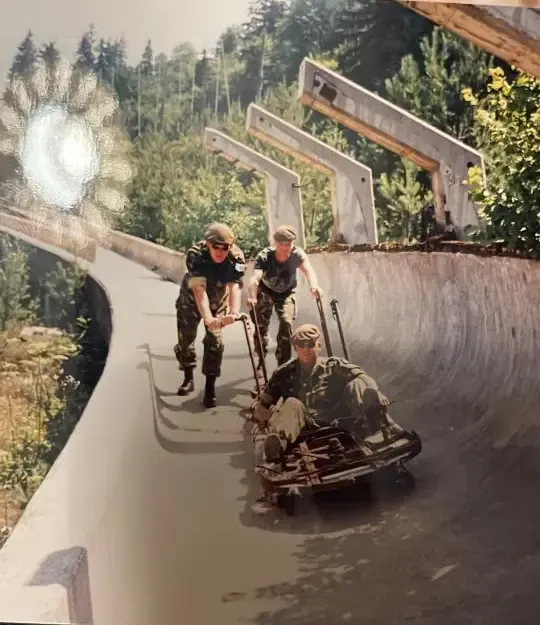
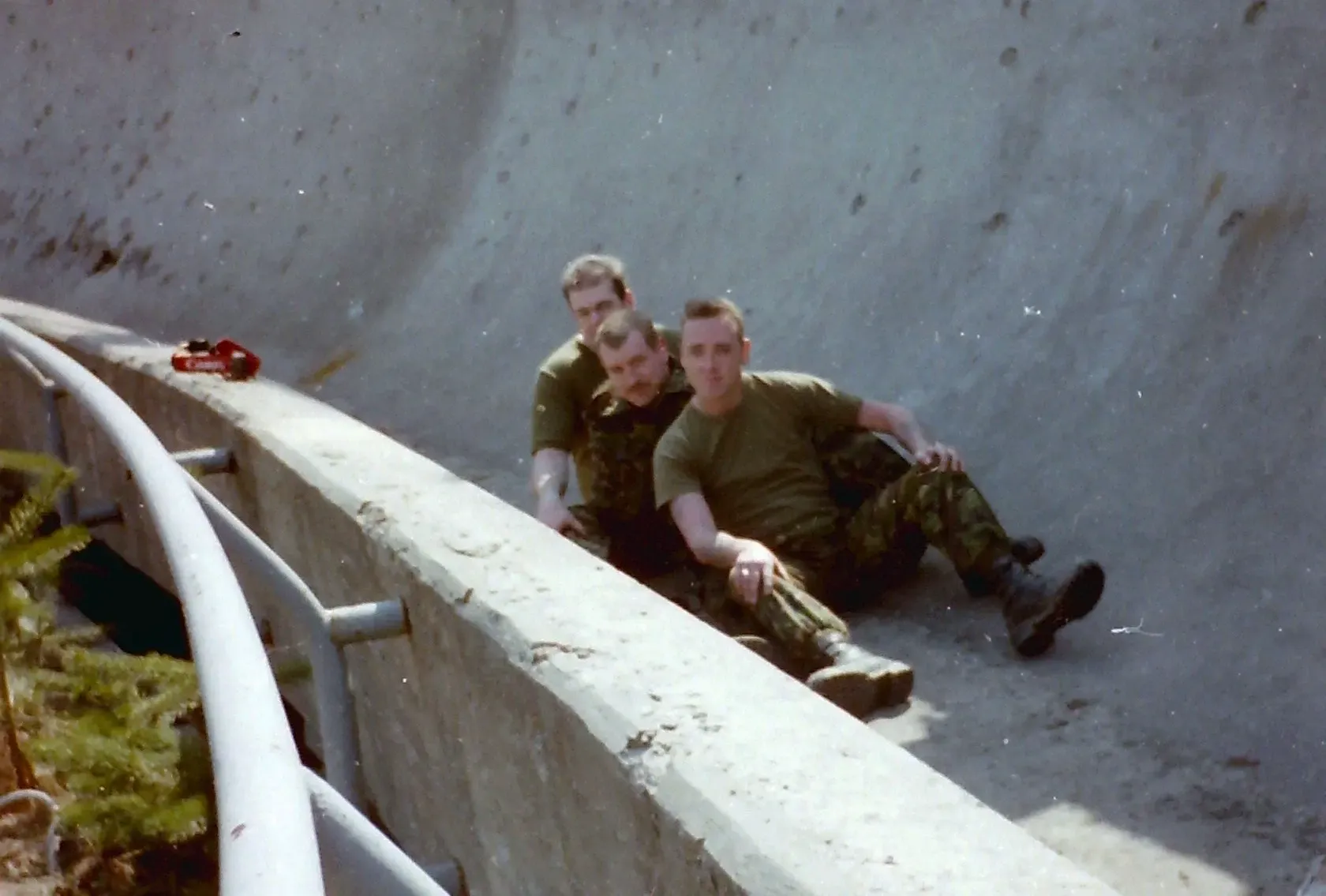
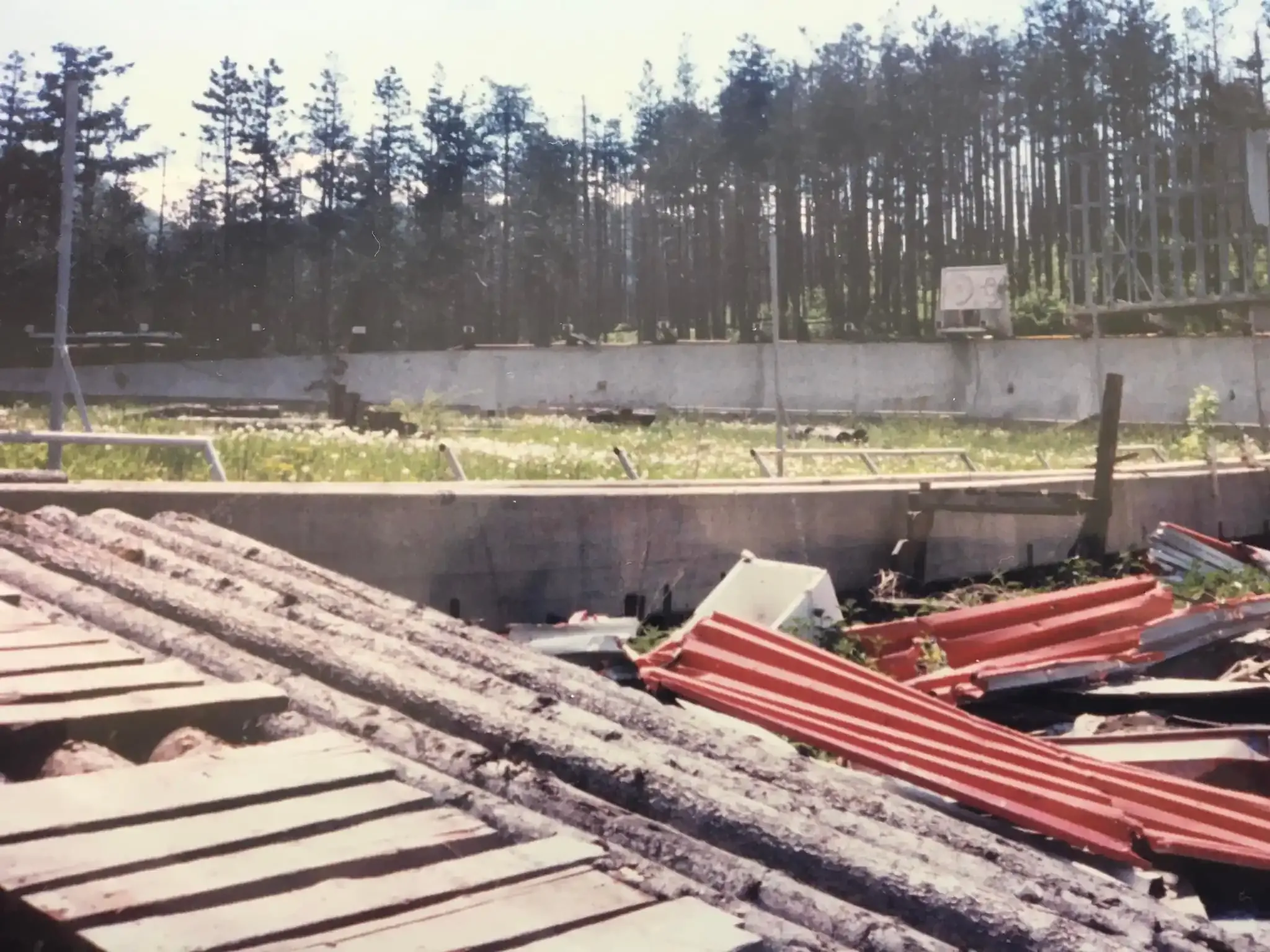
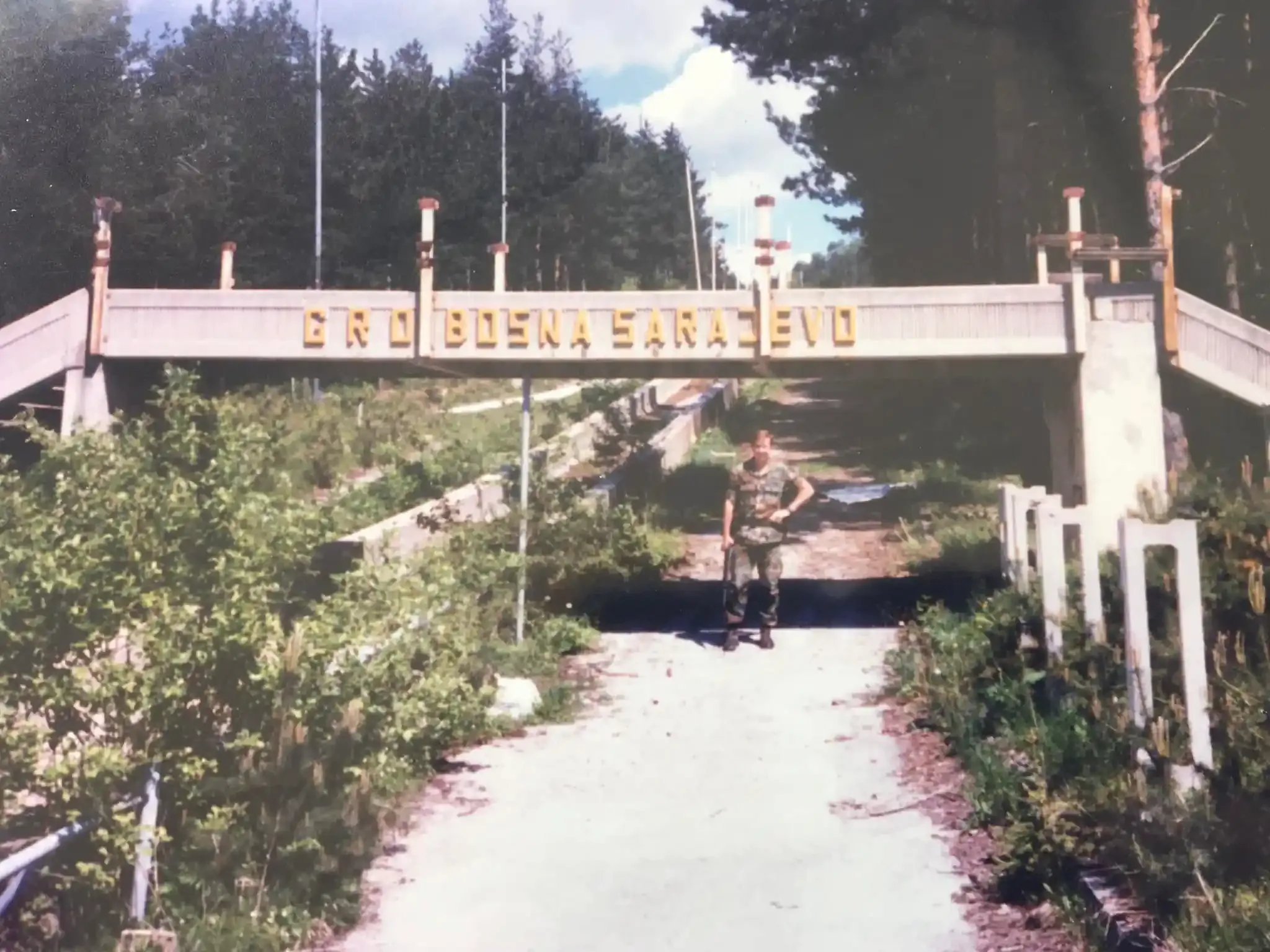
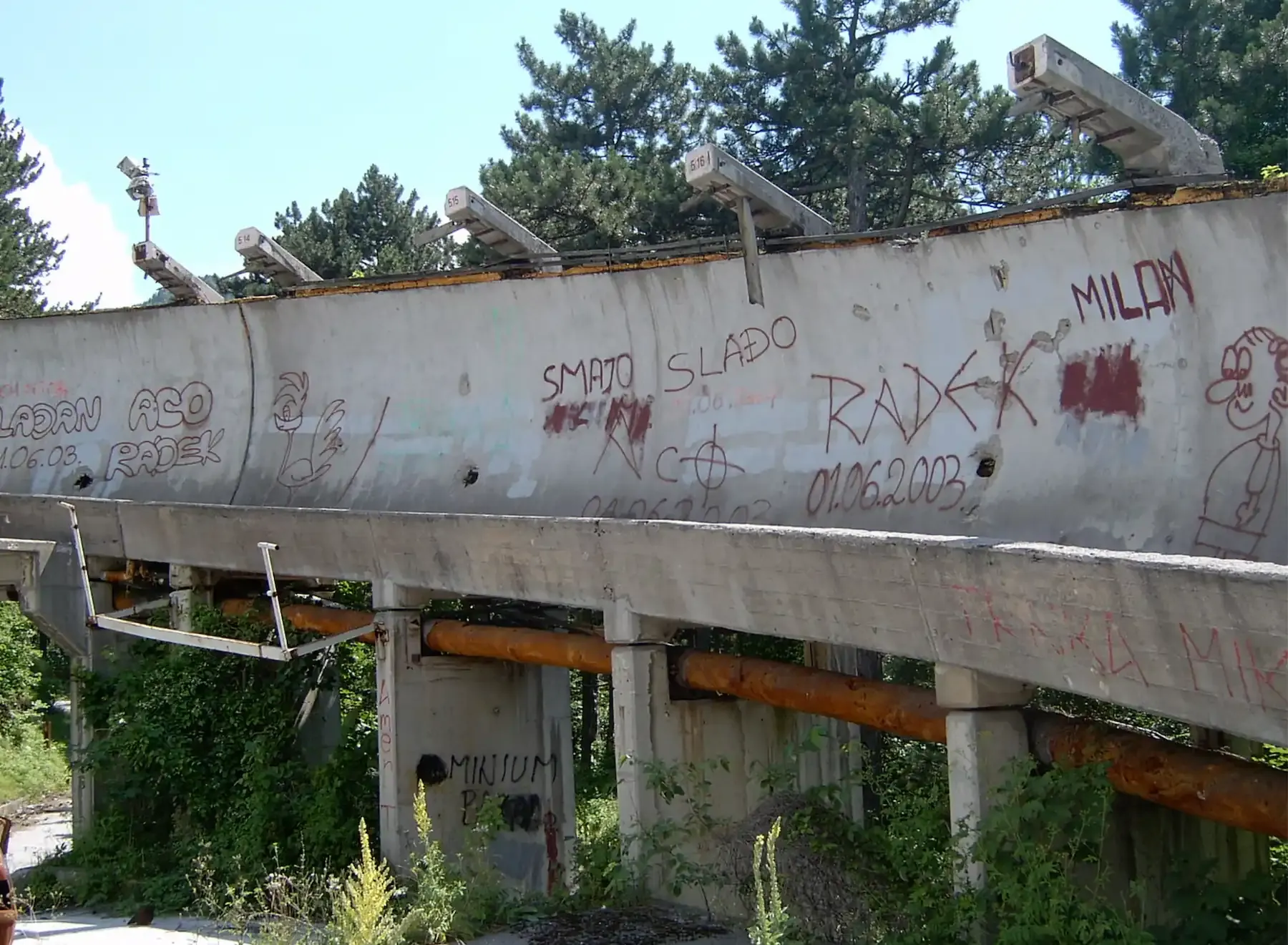
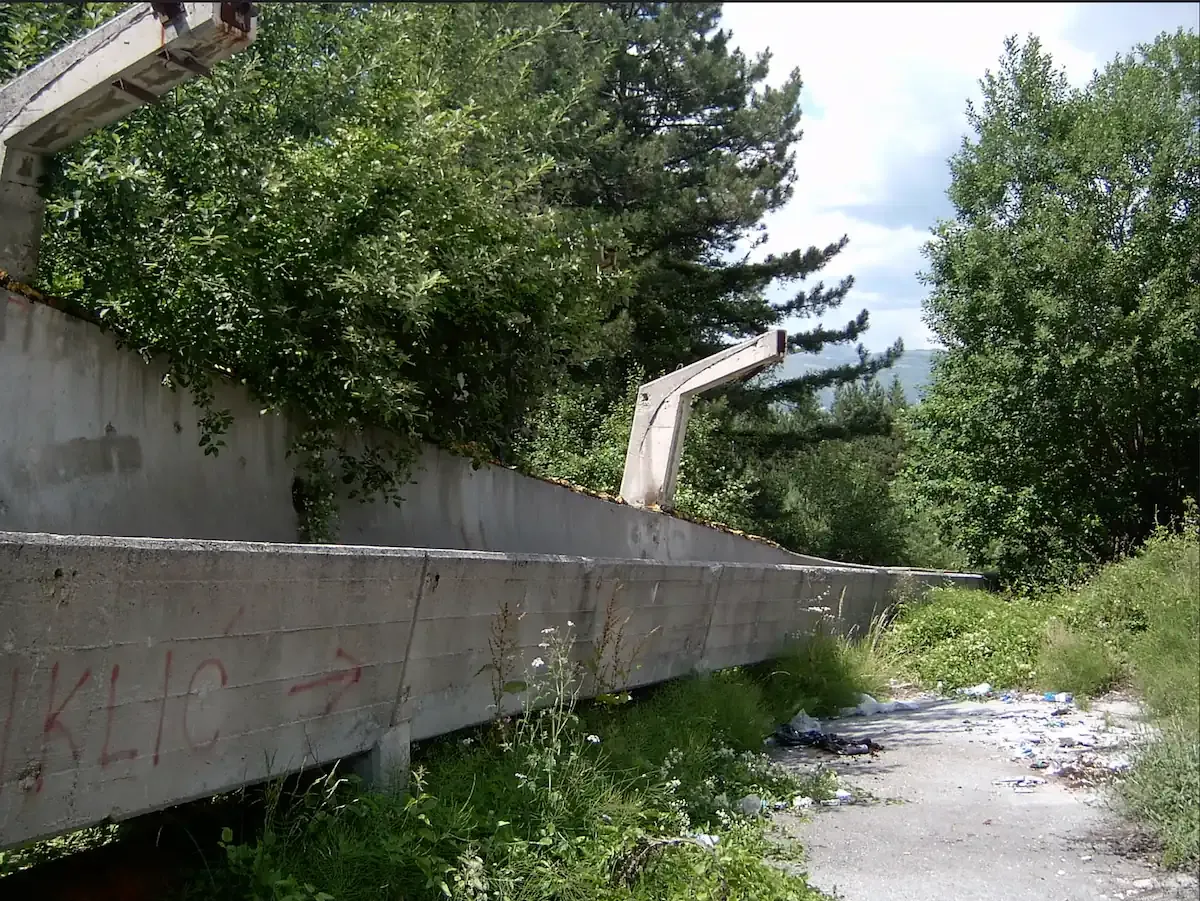
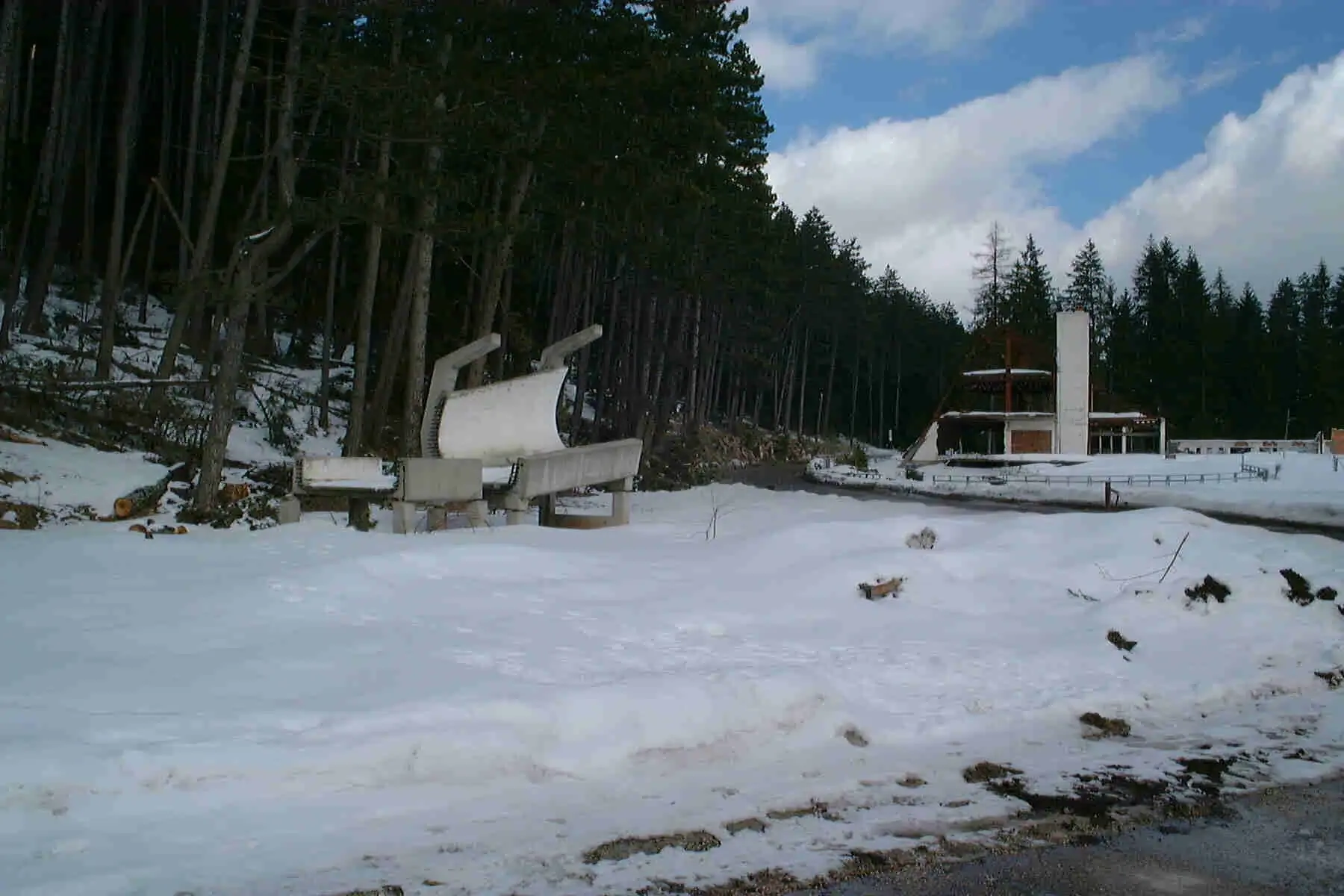
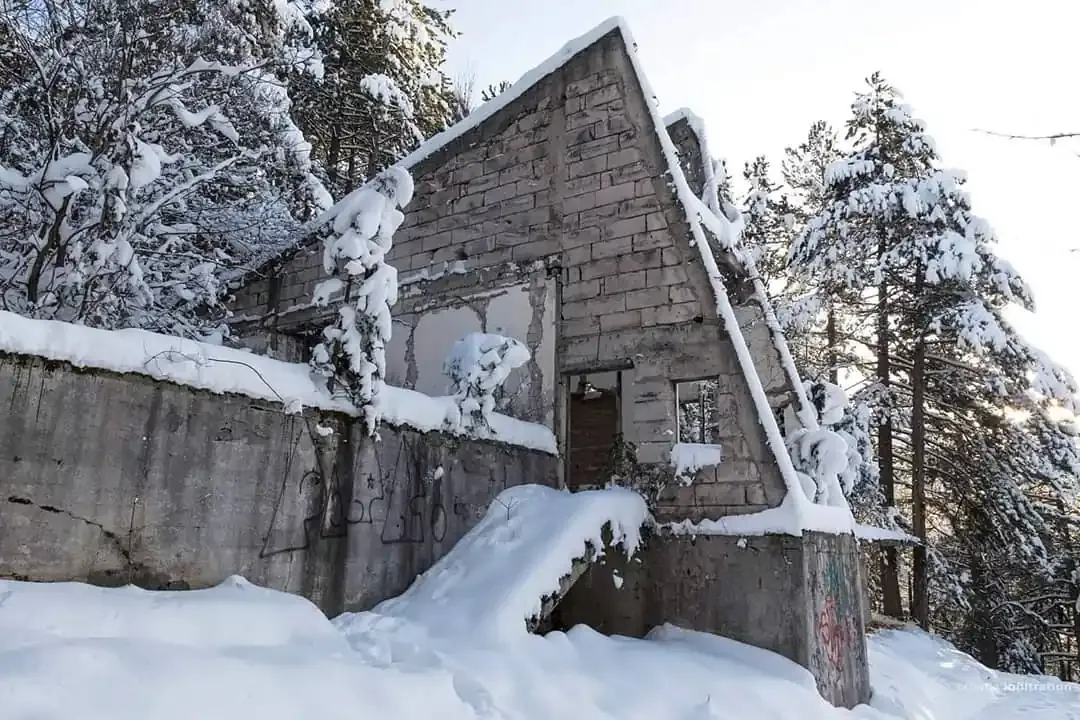
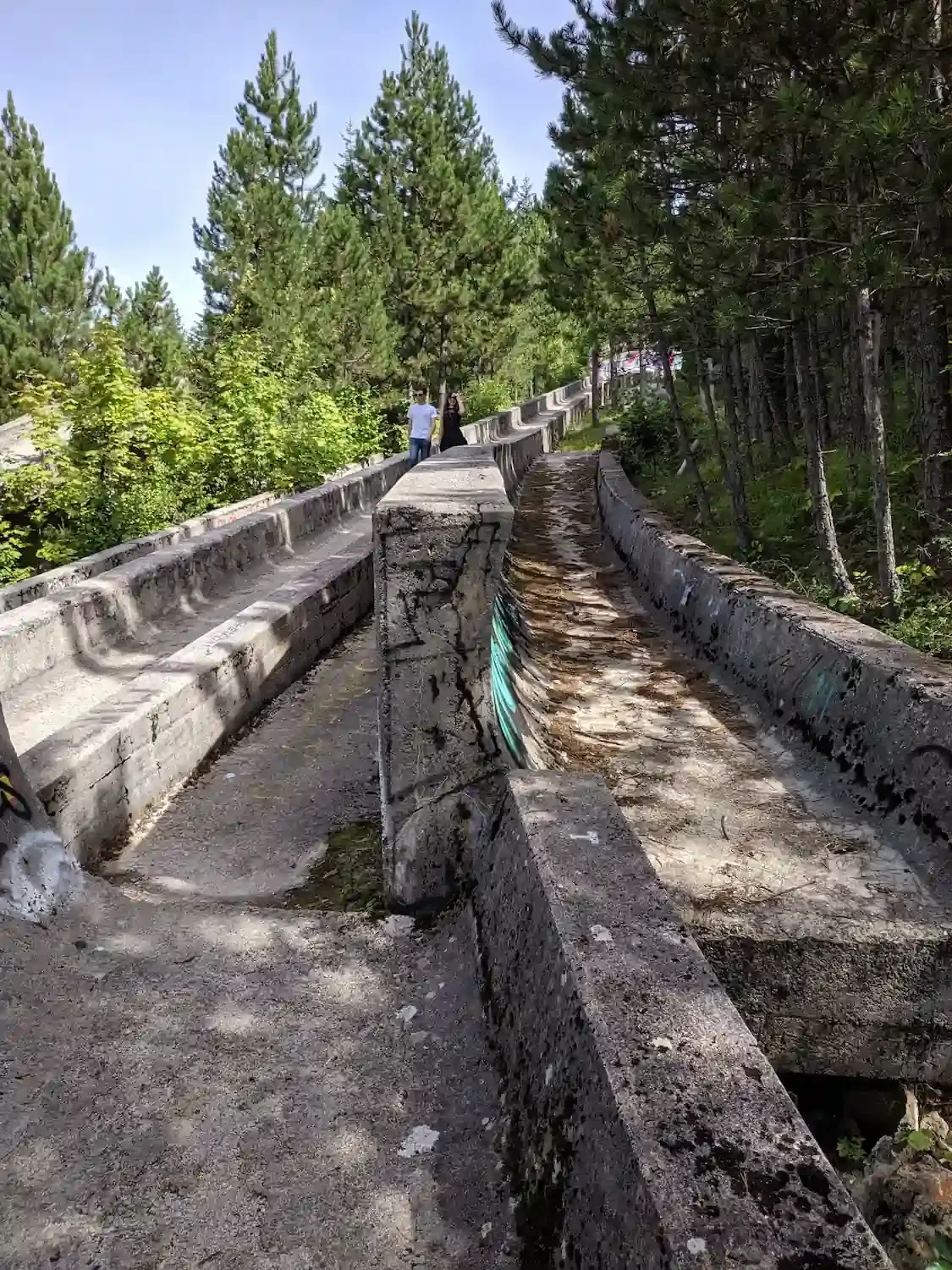
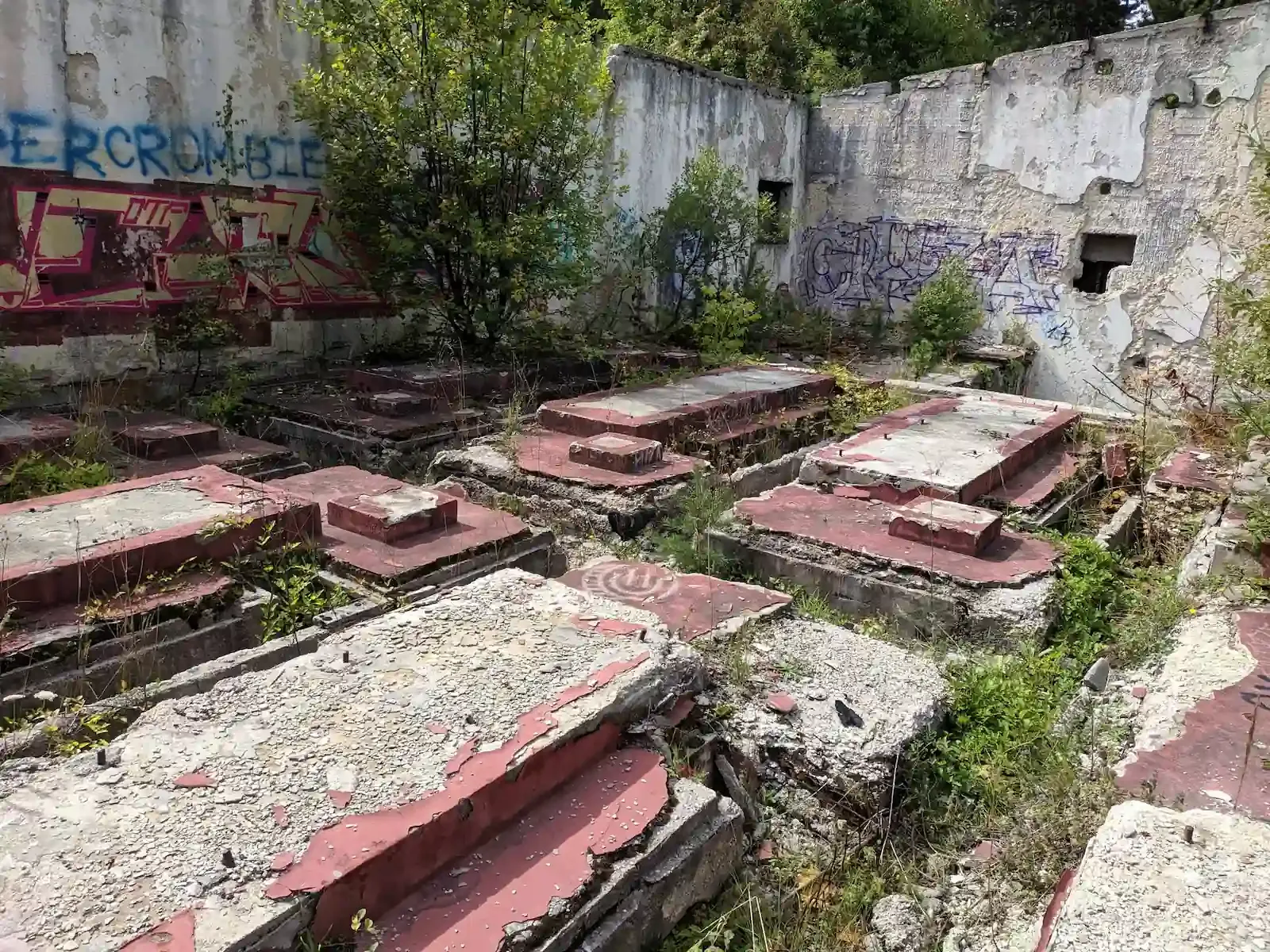
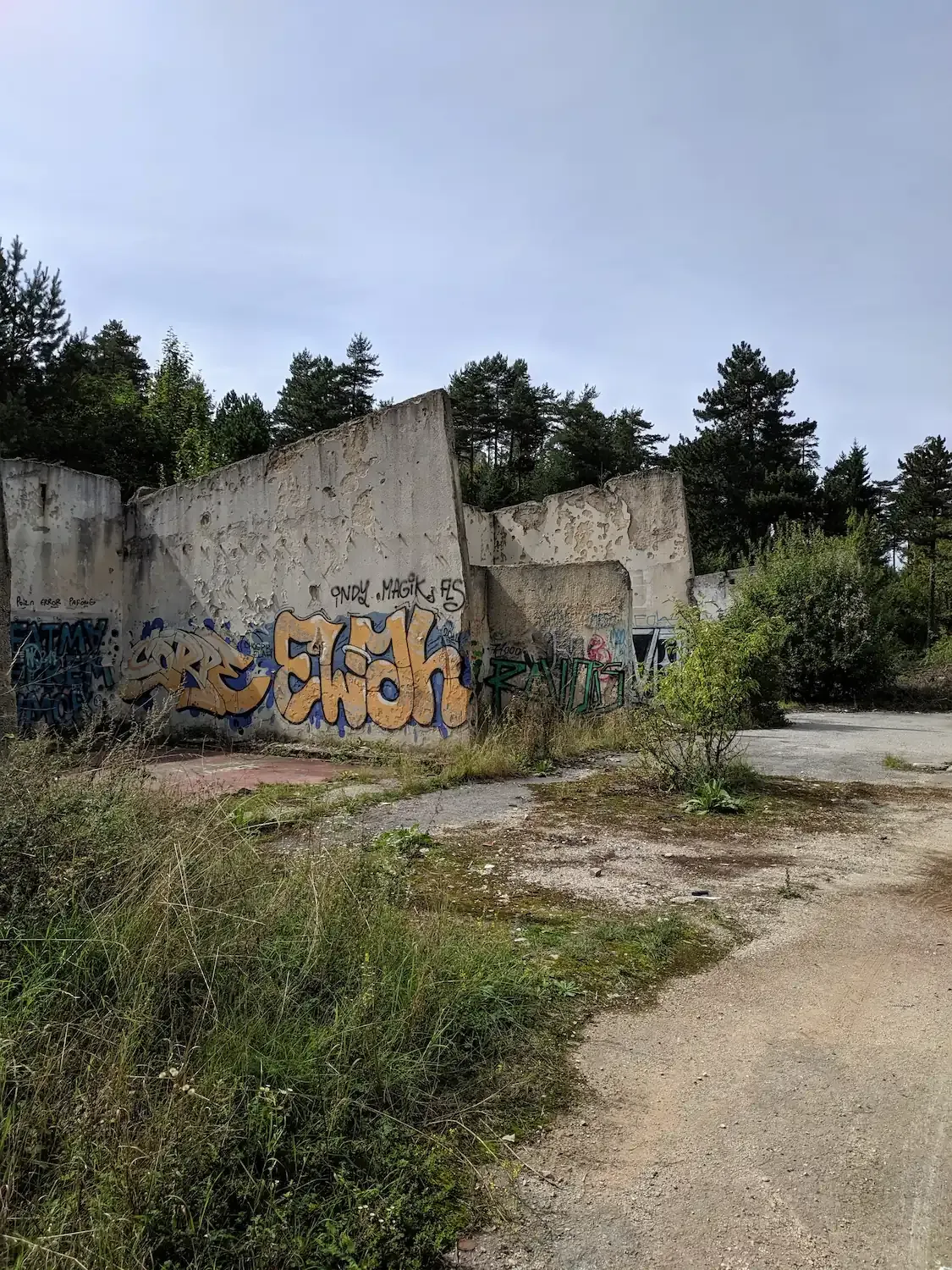
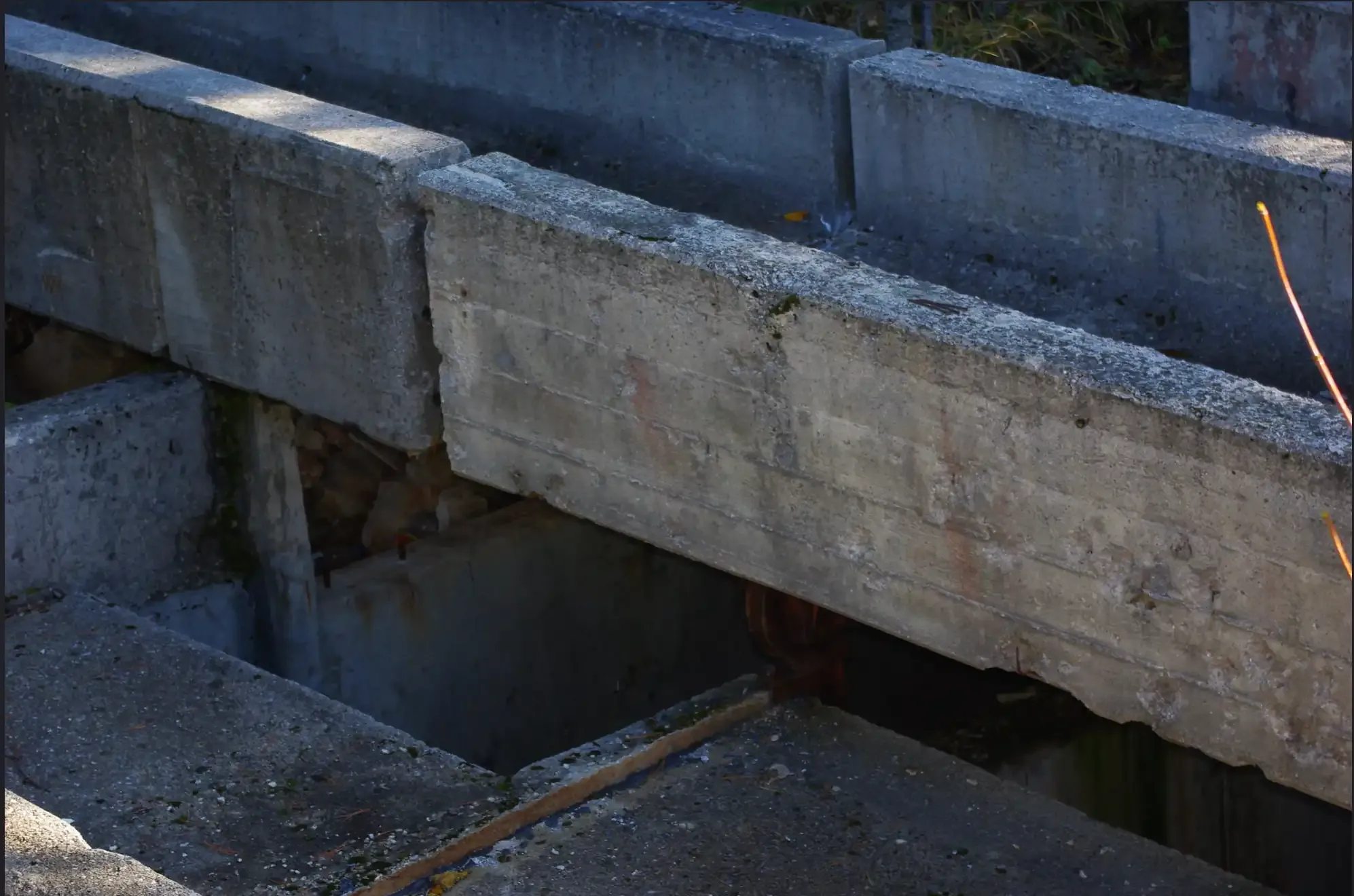
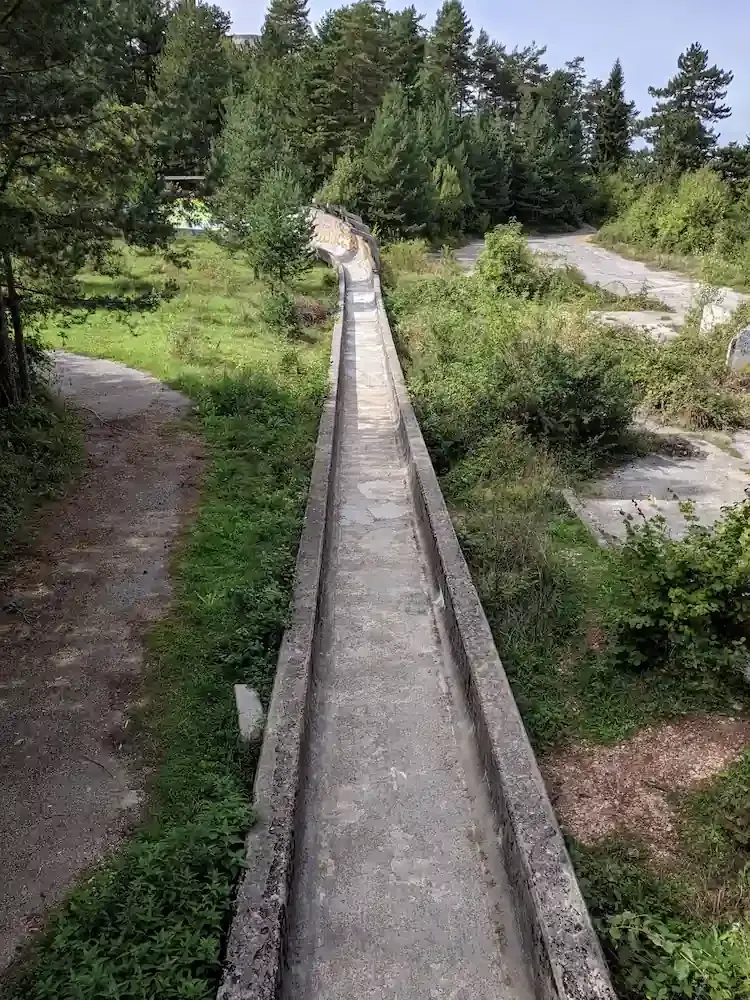
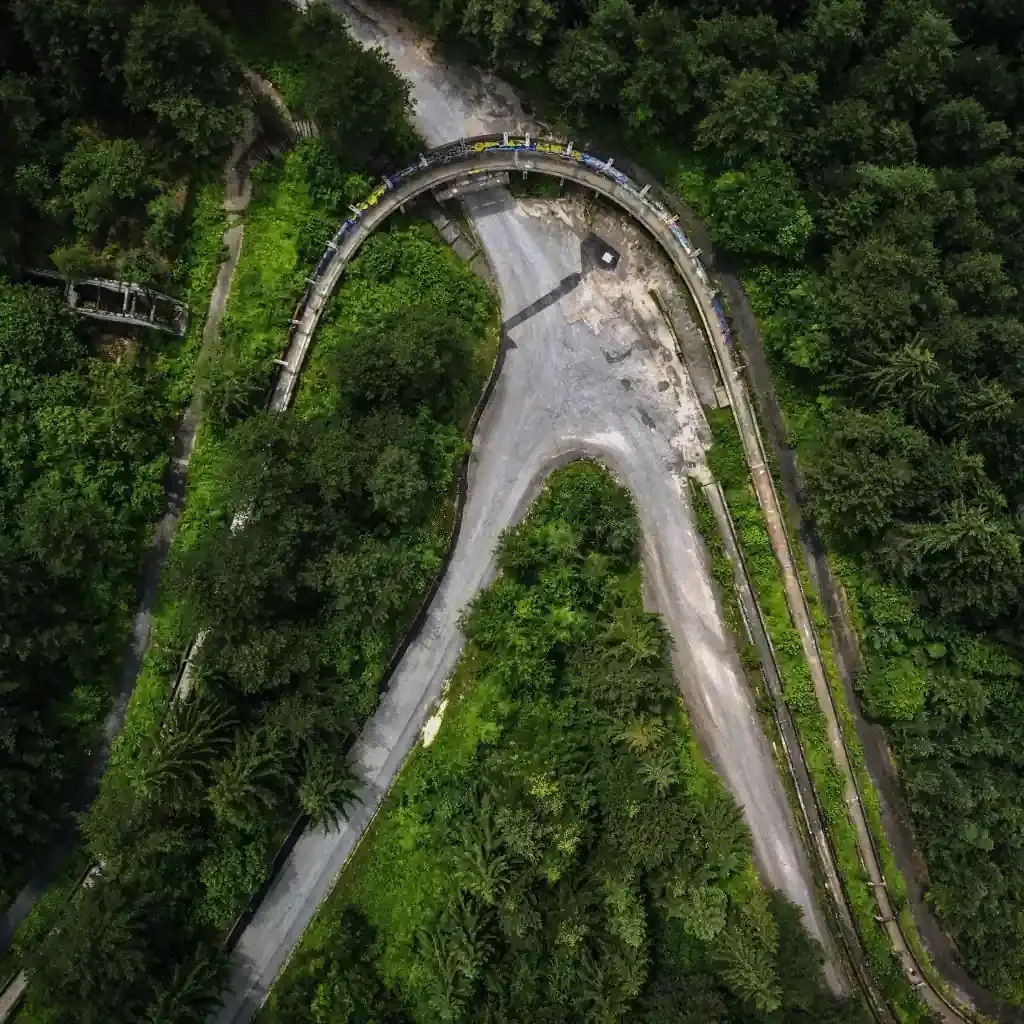
The Olympic track, once a theater of sport, was repurposed for war. It was used as an offensive position and an infantry trench; holes were punched through the concrete curves to serve as firing positions for snipers and artillery. By the end of the conflict, the site was a "moonscape" of destruction. The refrigeration pipes were ripped out, the start houses lay in ruins, and the surrounding forest was littered with landmines and unexploded ordnance.
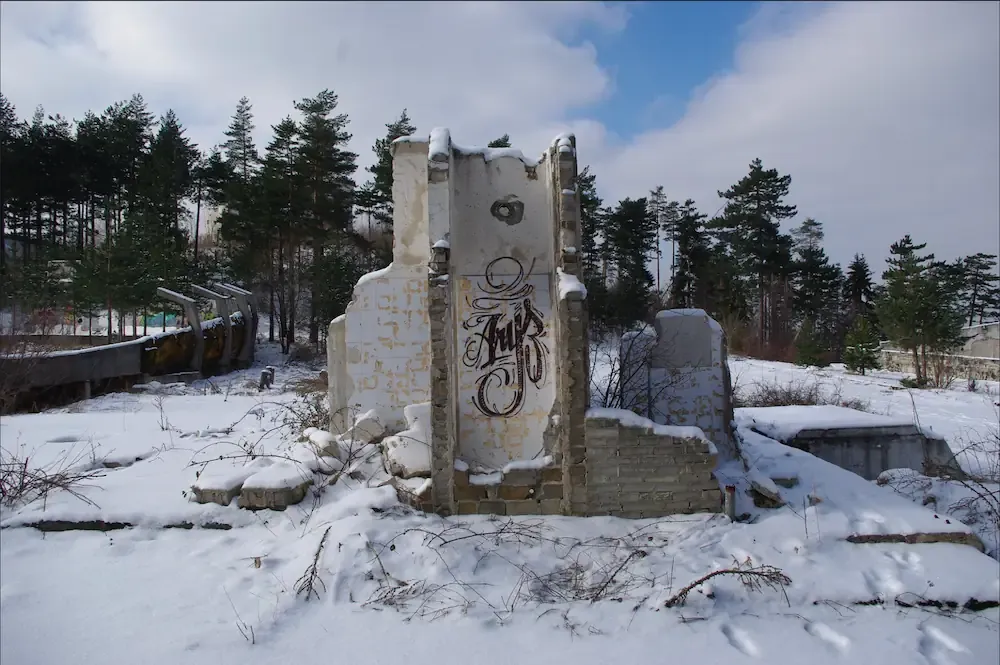
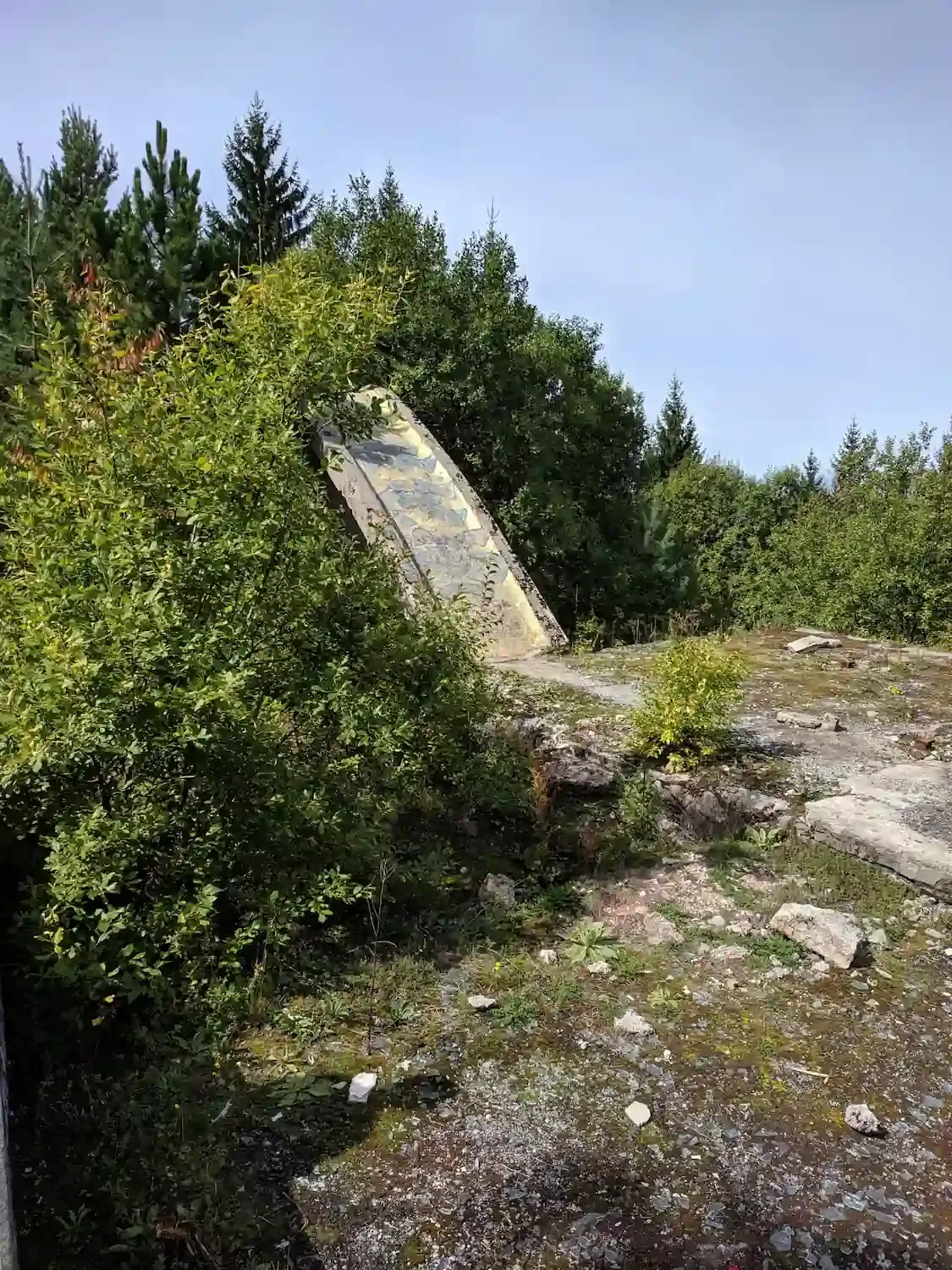
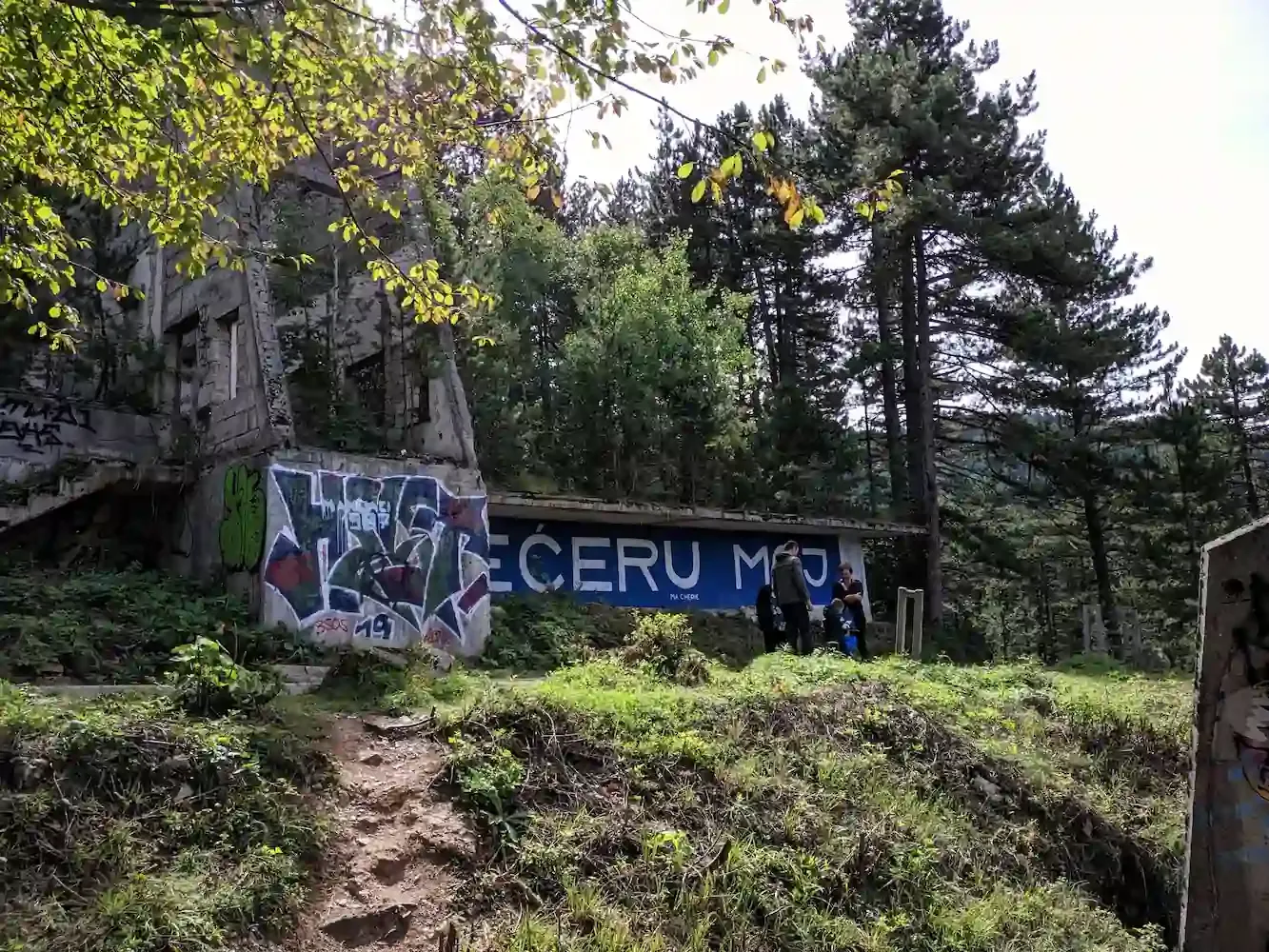
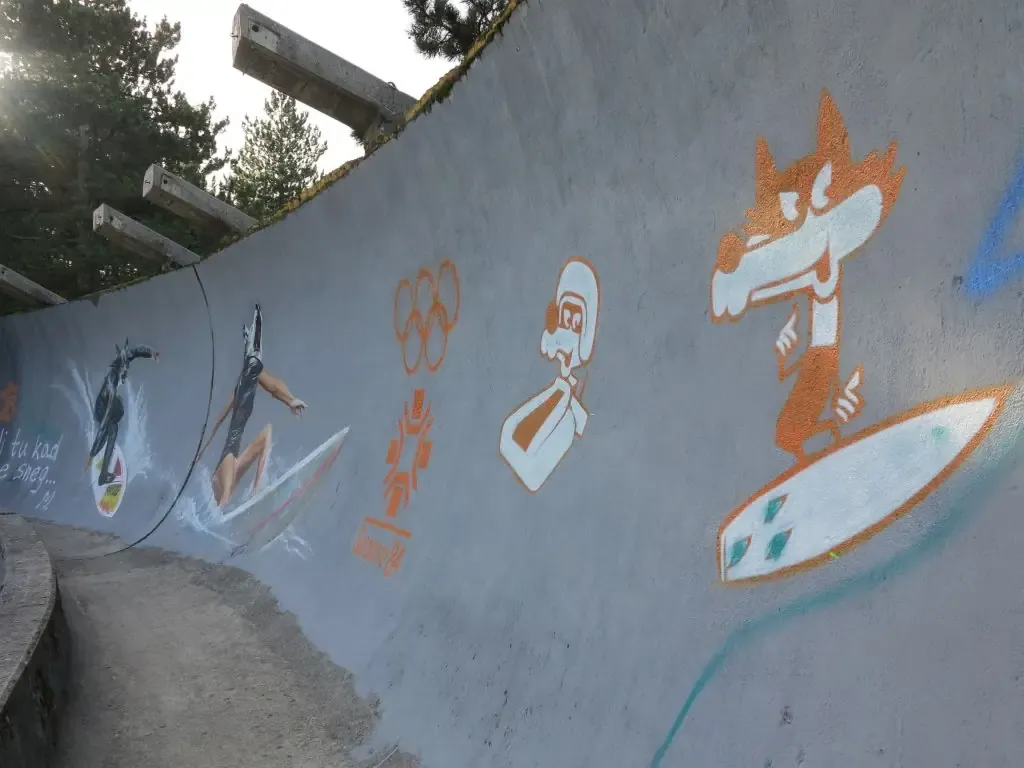
For nearly two decades after the war, the area held a reputation as a "no man's land." The ropeway stations were completely destroyed, leaving the mountain isolated from the citizens who once flocked there. While some Olympic venues like Zetra were rebuilt with international aid in the late 1990s, the bobsleigh track was left to the elements, its concrete trough becoming a canvas for graffiti and a symbol of the war's "post-apocalyptic" legacy.

The 2018 cable car rebirth
The revival of Trebević was neither simple nor direct. For over two decades, the destroyed line remained a scar on the hillside. When momentum finally built, it resulted in a chaotic seven-year saga involving a rejected second-hand system, a withdrawn donation, and a last-minute pivot that finally brought the gondolas back to the skyline.
The "Swiss Solution" Stalls (2011–2015)
The rebuilding effort initially focused on a second-hand solution. On November 16, 2011, a convoy of trucks arrived at the Butmir base carrying a decommissioned cable car system donated by the Swiss town of Grächen. For years, these components sat in storage while city authorities debated whether to install the used equipment or build anew.
By late 2013, Dutch nuclear physicist Edmond Offermann, who had a deep personal connection to the mountain, offered a donation of €3.5 million specifically to install this Swiss system. A memorandum was signed in October 2014, but progress stalled due to bureaucratic gridlock and the complex transfer of jurisdiction from the public transport company GRAS to the City of Sarajevo.
The Crisis and the Pivot (2015–2016)
The project nearly collapsed in the winter of 2015. Authorities finally decided against using the used Swiss equipment in favor of a brand-new system, a decision that complicated the funding agreement. Frustrated by years of delays and missed deadlines, Offermann withdrew his donation on January 25, 2016.
The project seemed dead, but intense negotiations followed. The turning point came in April 2016, when Offermann agreed to return to the project. Simultaneously, the City of Sarajevo began aggressive physical work. Demolition of the ruined arrival station began on April 8, followed by the departure station in June. In a final twist for the "Swiss solution," the City decided on June 29, 2016, to re-donate the unused equipment from Grächen to the municipality of Olovo, clearing the way for a modern installation.
Construction and Opening (2016–2018)
With the site cleared, the project moved at a rapid pace:
- The Contract: On September 8, 2016, a contract was signed with the Italian manufacturer Leitner to build a state-of-the-art system.
- The Preview: Just weeks later, on September 19, the first new gondola was publicly exhibited in front of City Hall (Vijećnica), offering citizens a tangible glimpse of the future.
- The Assembly: Parts began arriving from Italy in September 2017. By November, the first pillars were planted, and the first gondolas were delivered.
- The Test: On January 27, 2018, the first successful test run was completed.
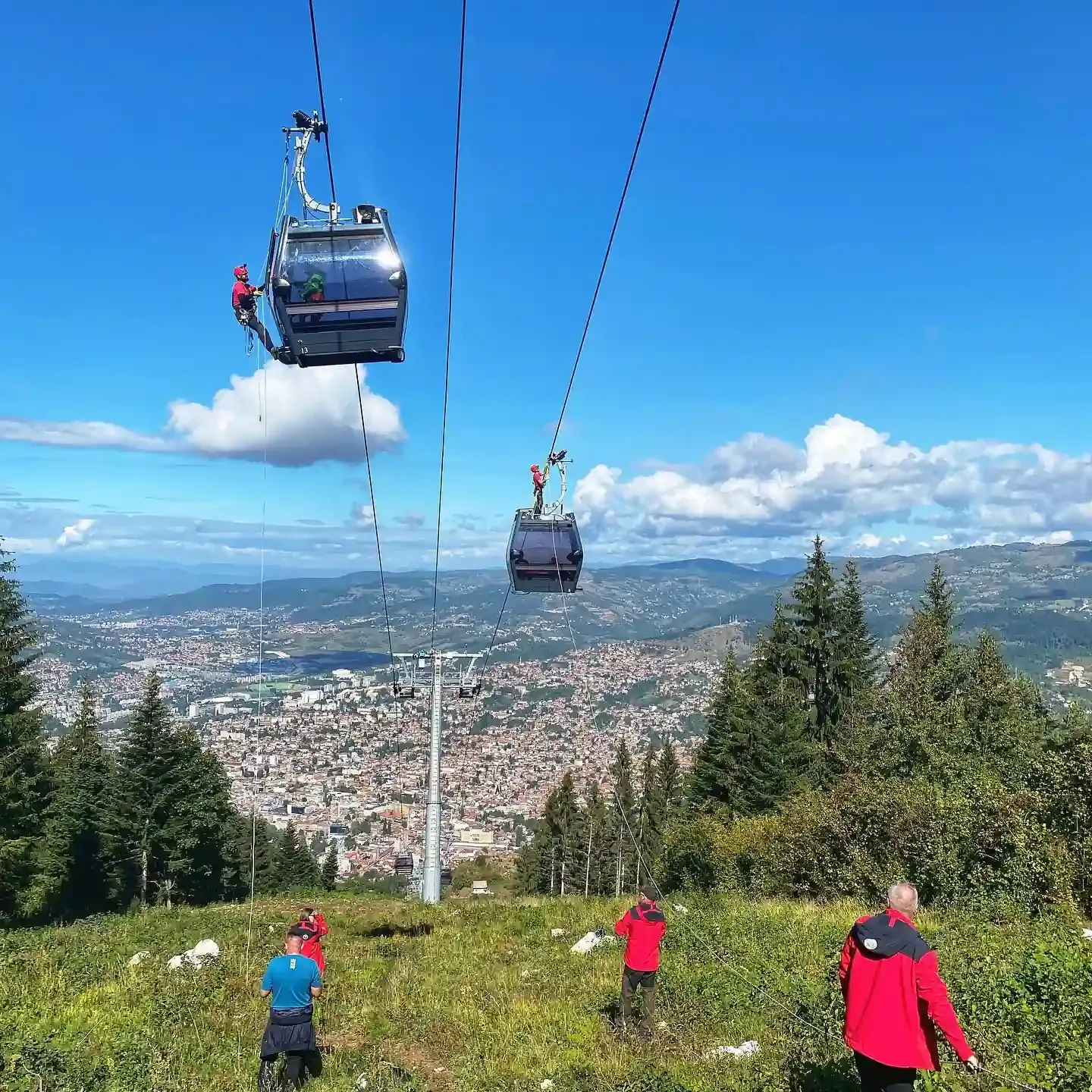
On April 6, 2018 (the Day of the City of Sarajevo) the new Trebević Cable Car was officially opened. The system features 33 cabins (capacity of 10 passengers each) and can carry 1,200 people per hour. The ride from Bistrik to Vidikovac now takes just seven minutes and 15 seconds, restoring the "city mountain" link that had been severed for a quarter of a century.
Trebević Today: A Tale of Two Mountains
Today, Trebević exists in a state of dual identity: a highly profitable tourist engine and a neglected monument to bureaucratic paralysis. While the restored cable car generates millions, the Olympic sites it overlooks (the bobsled track and the Bistrik Observatory) remain largely abandoned by the state, kept alive only by private enthusiasts and the sheer will of Sarajevo’s youth.
The Cable Car: A Commercial Juggernaut
Since reopening in 2018, the Trebević Cable Car has become a massive financial success. Managed by JP Sarajevo, it sold approximately 358,000 tickets in 2022 alone, generating 3.6 million KM. By mid-2025, foreign ticket sales had already brought in over 3.2 million KM in just seven months.
Yet, despite this influx of cash, the Olympic track below remains a "stabilized ruin." The reason is a paralyzing legal gridlock.
The Legal Paradox: A Track That "Doesn't Exist"
Massive investments for reconstruction are impossible because the facility was never properly inscribed in the land registry. Legally, the concrete track is classified as "forest" (šuma) and is owned by the cantonal forestry company "Sarajevske šume," not a sports agency.
This creates a paradox: the structure exists physically but not legally.
- Fragmentation: The City of Sarajevo owns only the Cable Car and its immediate surroundings, not the land beneath the track.
- No Tenders: Without clear paper ownership, ZOI'84 (the legal successor to the Olympic committee) cannot issue tenders for reconstruction.
- Protection: The site lies within a Protected Area, strictly limiting new development.
Glimmers of Life: Private Initiative vs. Institutional Silence
Because the government cannot (or will not) act, the only "good things" happening on the mountain have been driven by non-governmental actors, athletes, and foreign enthusiasts.
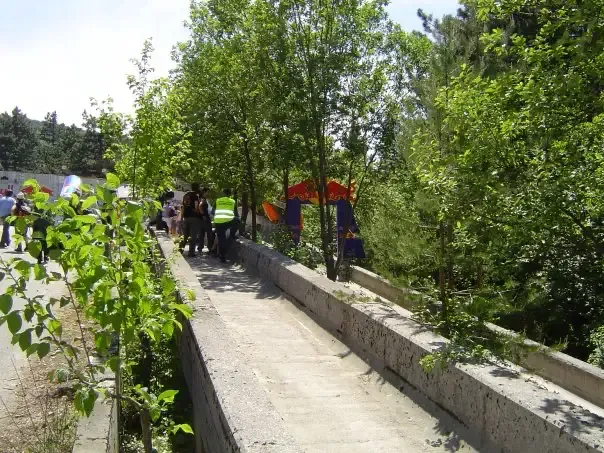
Red Bull Hot Run (2007–2008)
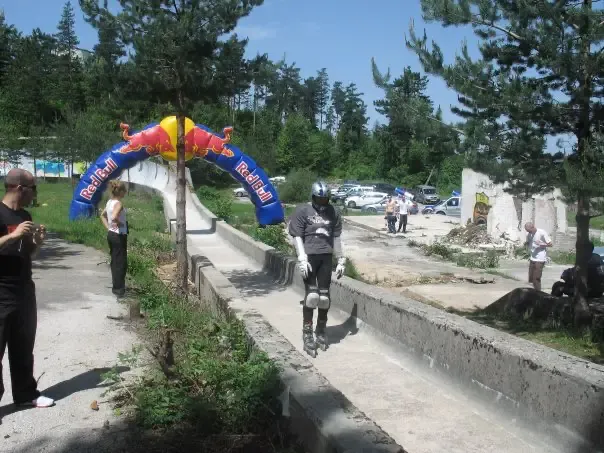
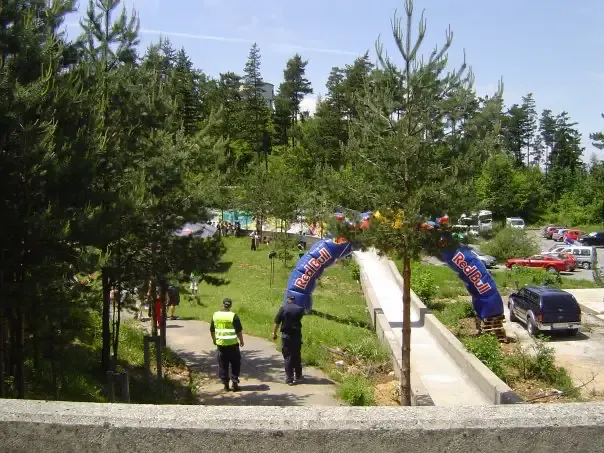
Long before the cable car was rebuilt, the private sector proved the track's viability. After 15 years of silence, Red Bull organized high-speed inline skating races, cleaning the "Trebević snake" and bringing international attention. The 2008 edition included the "Balcan Express" graffiti festival, hinting at the track’s potential as an institutionalized "open-air gallery" like Berlin's East Side Gallery, a concept the city never formally adopted.
The Luge Federation & "The Track" (2015–2025)
The struggle to keep the sport alive is documented in the 2025 film The Track, directed by Ryan Sidhoo. It highlights the 2015 initiative by coach Senad Omanović to manually clear the overgrown run without state support. The film follows young lugers (Mirza, Zlatan, and Hamza) who train on the dry, bullet-riddled concrete, winning the Audience Award at the 2025 Sarajevo Film Festival.
If the track was covered with ice today, I'd take a sled and go right down. — Senad Omanović, Bosnian Luge Athlete
Mirko’s Educational Trail (2025)
The most damning indictment of local neglect is the story of Mirko Tomašek, a Czech national. Shocked that the "open-air museum" lacked basic information, he independently designed and installed educational boards with QR codes along the 1.5km route. In just months, his private initiative provided more historical context to tourists than the local government had in thirty years of peace.
The Bistrik Kula
The Bistrik Kula fortress was originally built during the Austro-Hungarian rule in Bosnia and Herzegovina as part of the defense system of the city of Sarajevo. High above the track, it now remains a dangerous ruin.
After the end of Austro-Hungarian rule, the building was abandoned until 1967, when the facility was given to the University Astronomical Society. The first works on the construction of the Astronomical Observatory (then called "Čolina Kapa") were carried out from 1969 to 1972. The old Austro-Hungarian fortress was reconstructed, and observation domes with diameters of 3.6 and 4.6 meters were erected on it. Between 1975 and 1982, a new four-story building featuring an 8-meter diameter dome was added next to the fortress.
The Astronomical Observatory on Trebević was completely destroyed in the summer of 1992. Today, it is widely recognized that this historical complex must be restored to its authentic appearance. Although the City and Municipality signed an agreement in November 2024 to allocate 200,000 KM for its reconstruction into an astronomy center, as of late 2025, the site remains ravaged and structurally unstable.
How to Visit Trebević
Today, Trebević is more accessible than at any point since 1984. The primary gateway is the Trebević Cable Car departure station in the Bistrik neighborhood, located just across the Miljacka River from the City Hall (Vijećnica). The seven-minute ascent provides a bird’s-eye view of the city’s transition from Ottoman and Austro-Hungarian architecture to the dense Olympic-era settlements.
Once at the Vidikovac upper station, visitors are encouraged to follow the Olympic Story Educational Trail. This initiative has transformed the ruined concrete trough into a "living museum." As you walk down the 1,570-meter track, dedicated information boards and markers explain the technical significance of the curves, the 1984 competition highlights, and the track’s wartime history.