Hotels
The 1984 Winter Games required a massive logistical expansion of Sarajevo's hospitality infrastructure, blending world-class modernist landmarks with thousands of private citizen homes. This network enabled the city to host the "Olympic Family" and international spectators simultaneously, establishing Sarajevo as a modern global destination while fueling a permanent westward urban expansion.
While the bulk of athletes and media personnel were housed in dedicated, newly built residential zones—namely Olympic Village A (Mojmilo), Olympic Village B (Hotel Igman), and the Press Village at Dobrinja, the broader hospitality network relied on a mix of striking new hotel architecture and community-driven boarding. The specialized agency ZOITOURS orchestrated an integrated urban plan that secured roughly 20,000 beds, supported heavily by citizens who offered over 15,000 private beds.
Fast Facts
- Total Visitor Capacity: Approximately 20,000 beds were secured for tourists and spectators
- Official Hotel Count: 9 new hotels were constructed and 5 existing hotels were reconstructed specifically for the Games
- The "Olympic Family": The newly built Holiday Inn served as the primary headquarters for the International Olympic Committee (IOC) and its administrators
- Citizen Hospitality: Residents offered more than 15,000 beds in private apartments and family houses to meet the influx of visitors
- Management Agency: Logistical coordination for visitor stays was handled by the specialized agency ZOITOURS
- Operational Staffing: To maintain international standards, the Holiday Inn alone employed 400 workers during the Olympic period
City Accommodations: From Historic Inns to Modern Hubs
To prepare for the influx of visitors, Sarajevo upgraded its existing hospitality network while commissioning new, bold architectural projects. The city’s 12 existing hotels provided approximately 2,000 beds. This included the historic Hotel Evropa, which celebrated its 100th anniversary just before the Games, and the reconstructed Hotel Bosna. In Ilidža, a lush municipality that is part of the wider Sarajevo area, the reconstructed Hotel Stojčevac provided agreeable accommodation in a splendid natural setting. To meet the protocol requirements of the National Olympic Committees, the newly built Hotel ŽGP (known today as Hotel Grand) was also constructed.
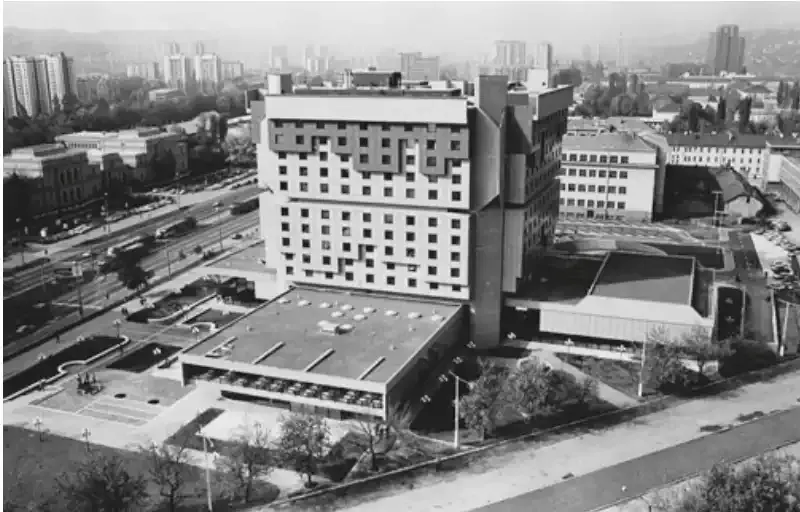
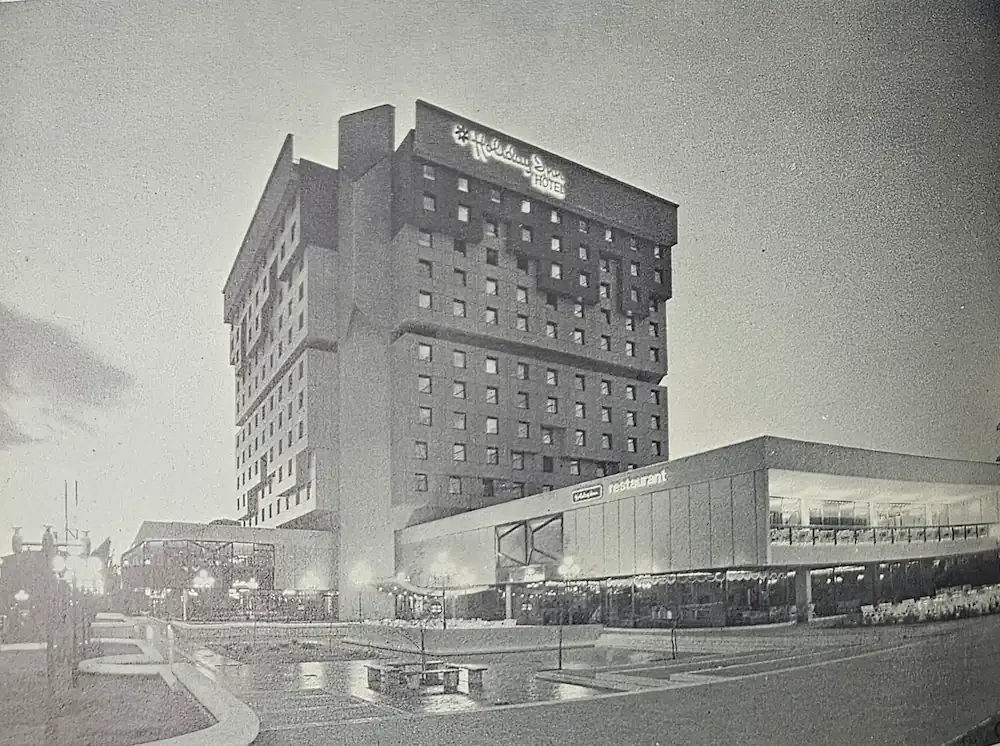
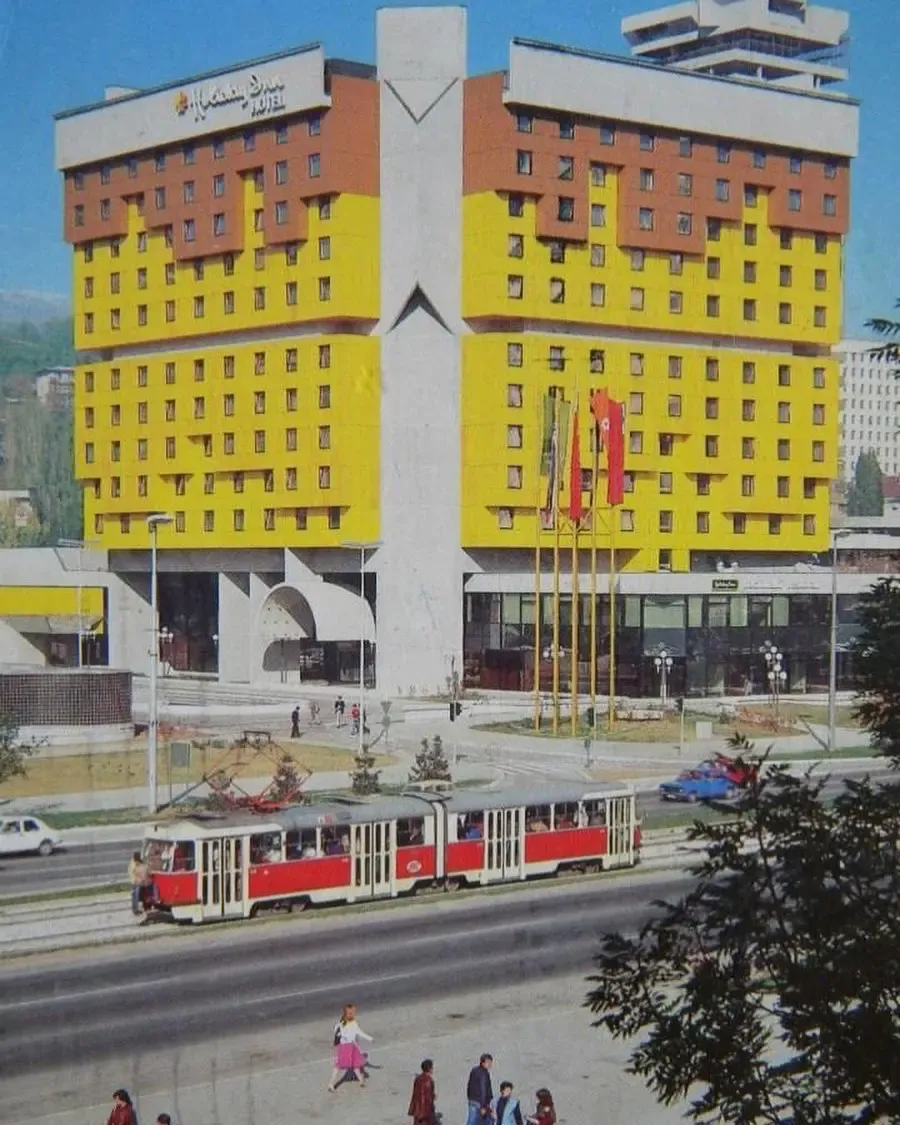
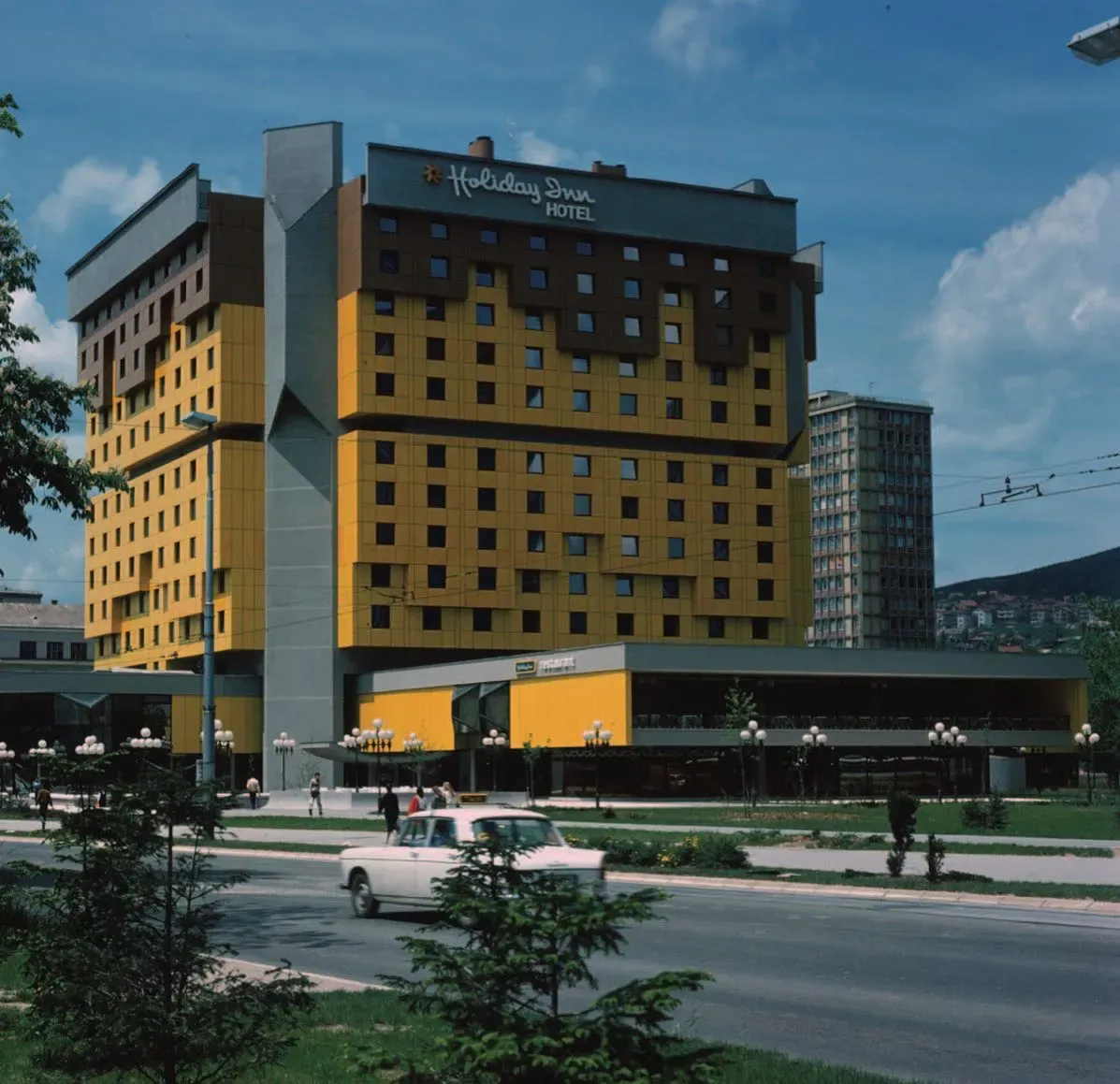
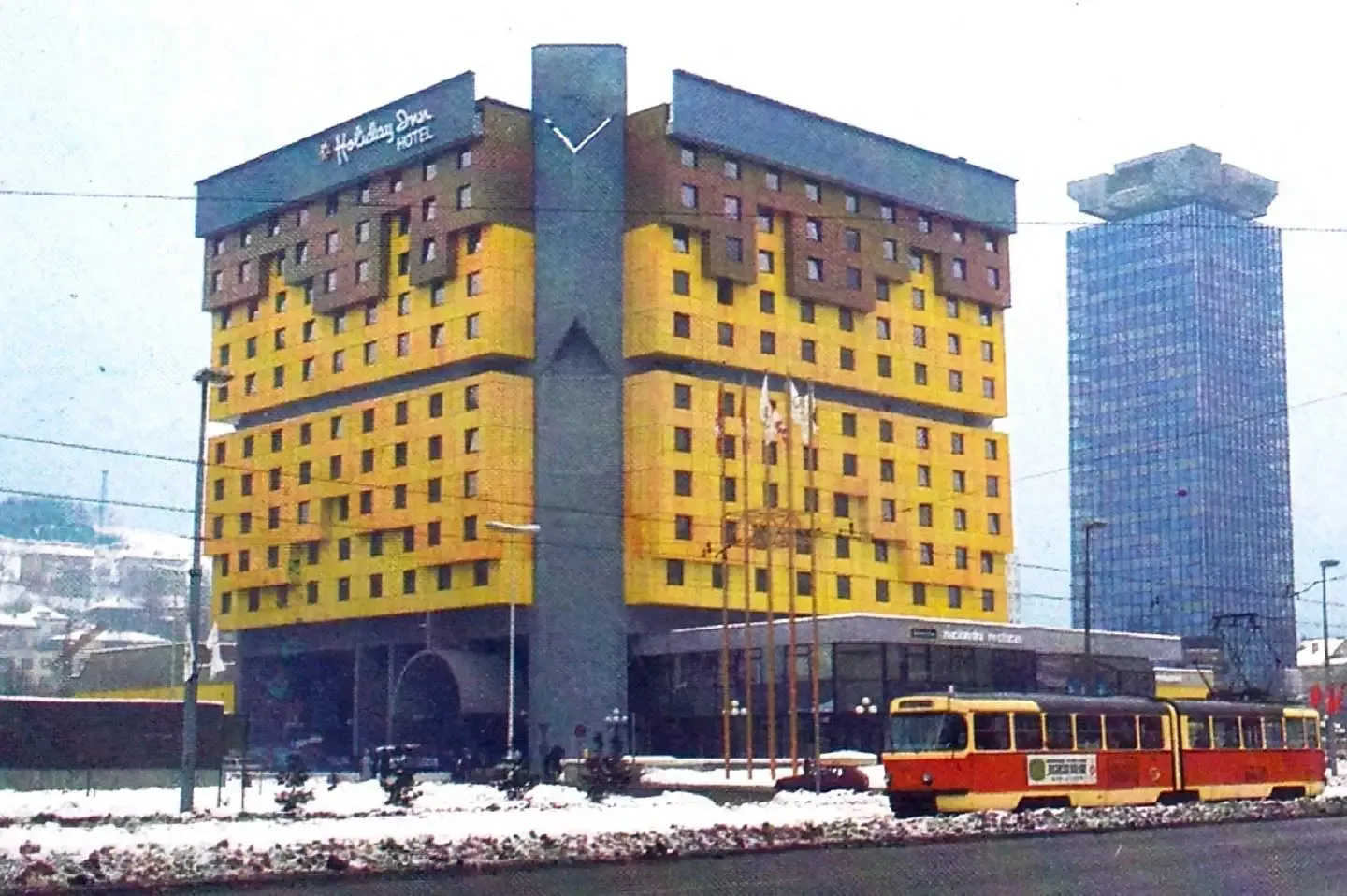
However, the crown jewel of the city's Olympic hospitality was the headquarters for the "Olympic Family": the Holiday Inn Sarajevo.
The Crown Jewel: The Holiday Inn Sarajevo
Every detail had to be perfect... from the reception to the dining room. — Ivan Štraus, Architect of the Holiday Inn
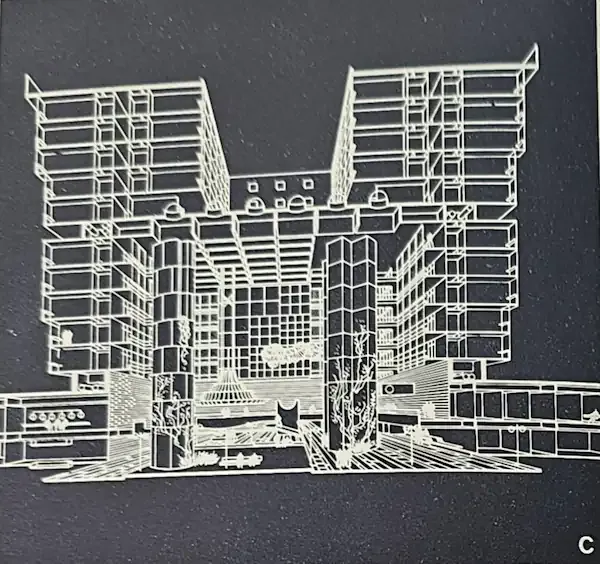
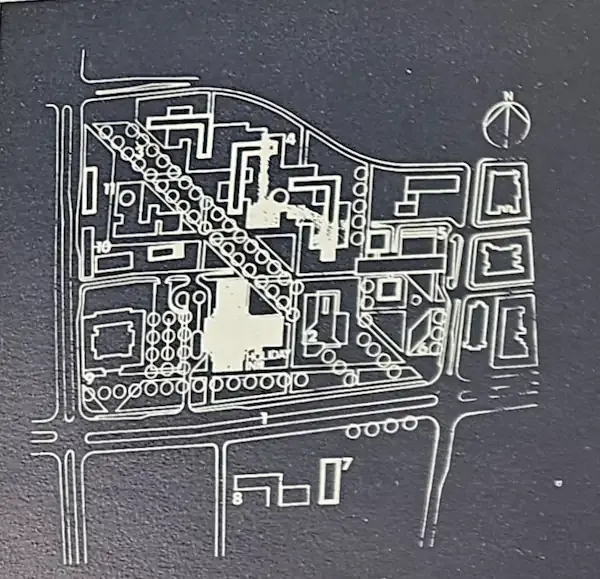
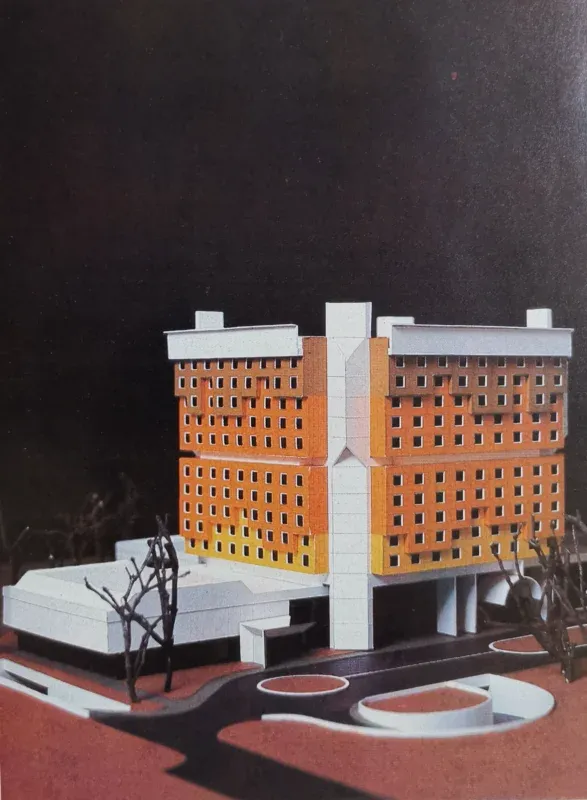
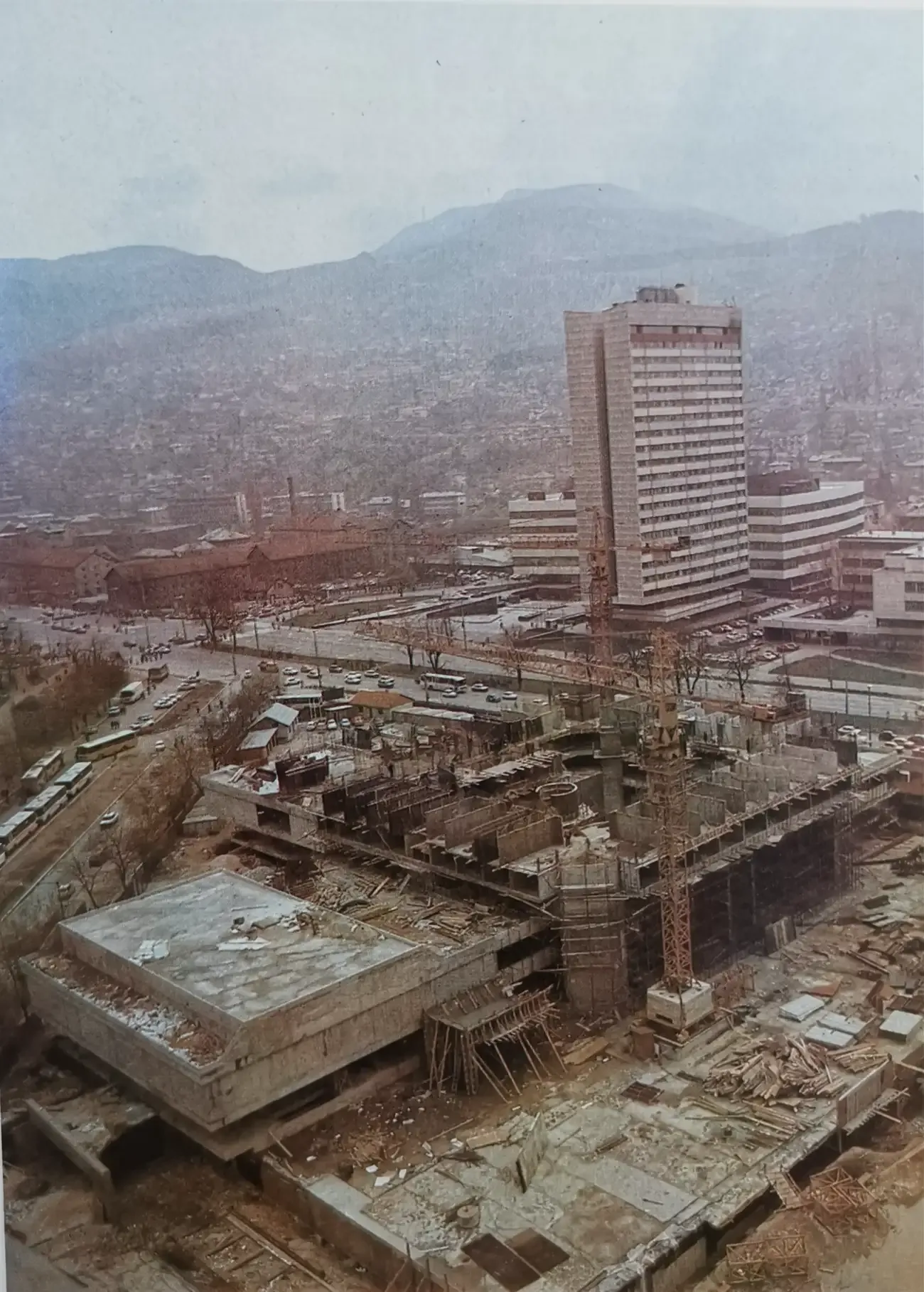
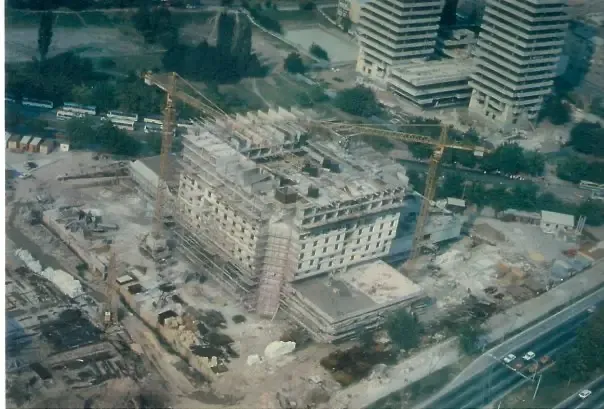
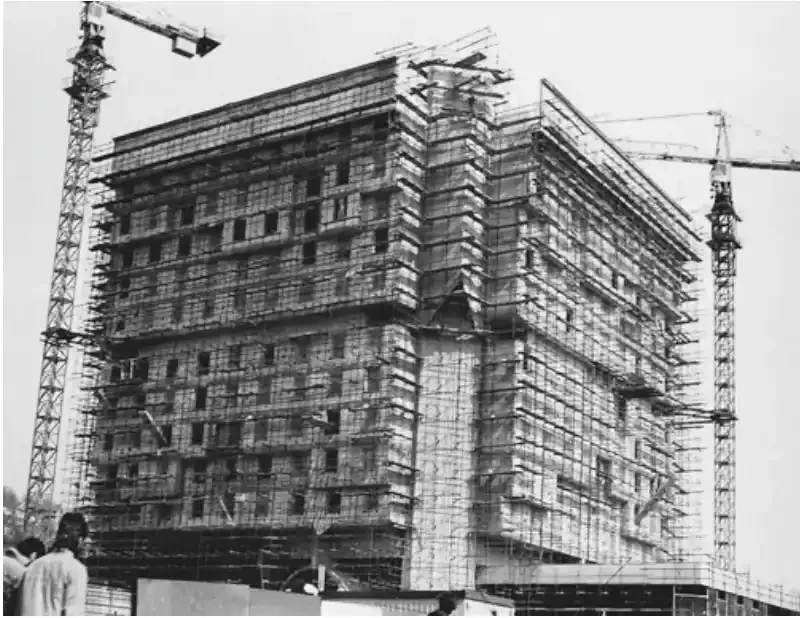
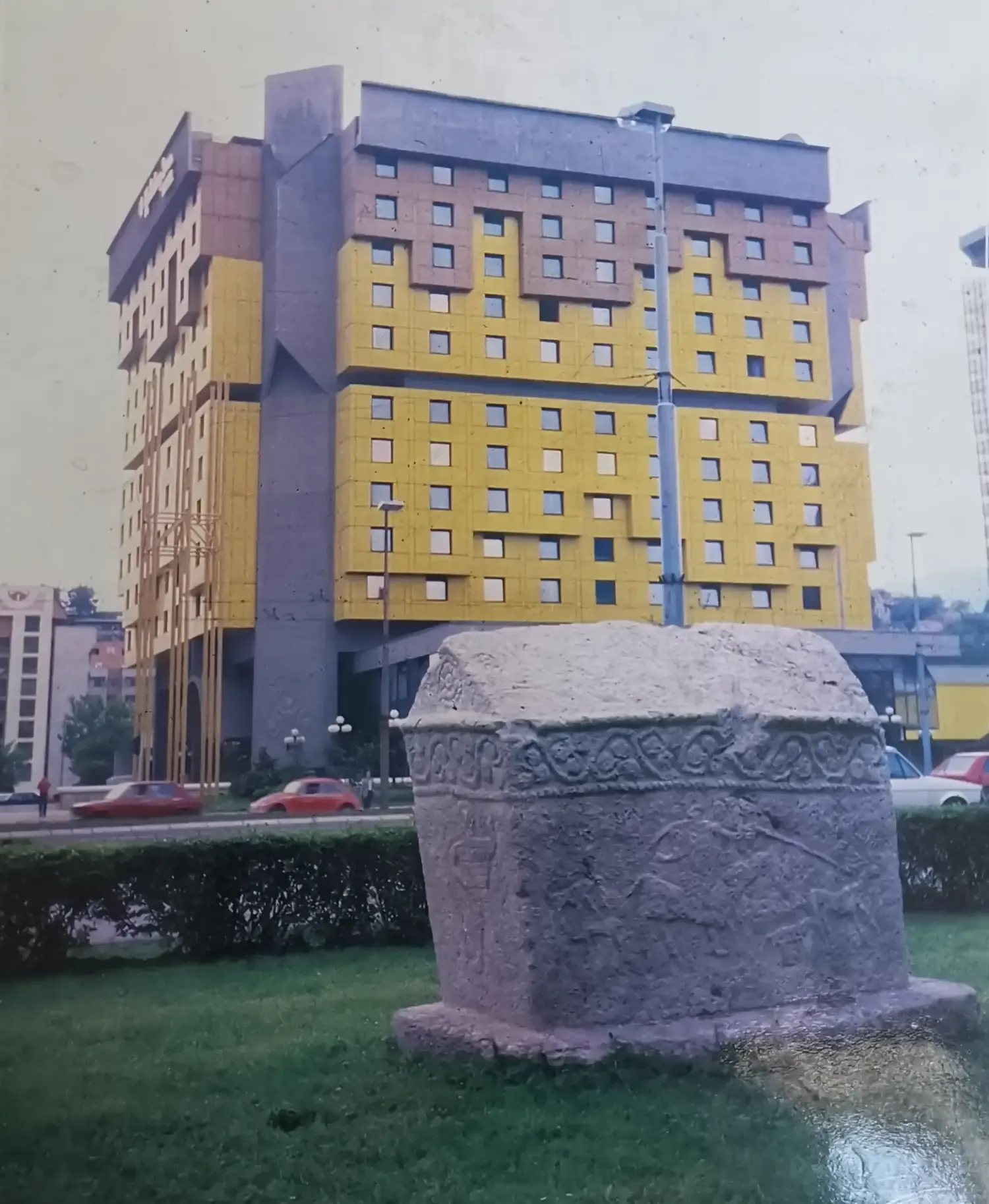
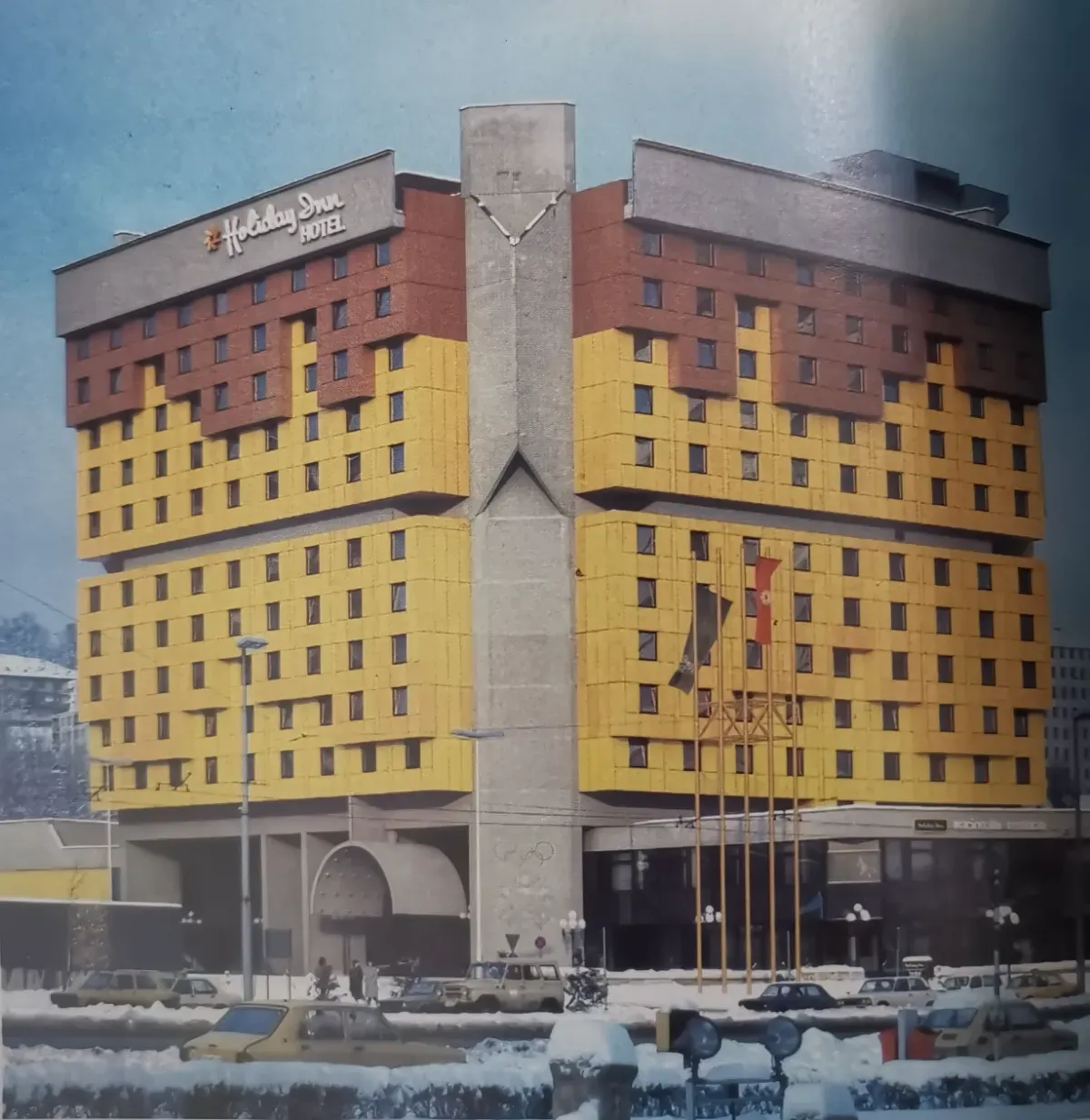
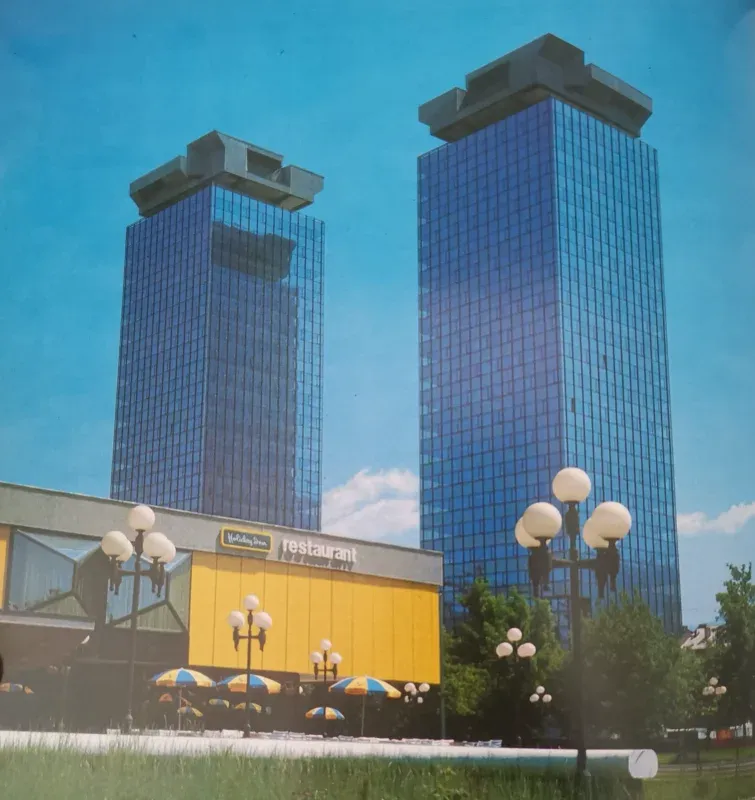
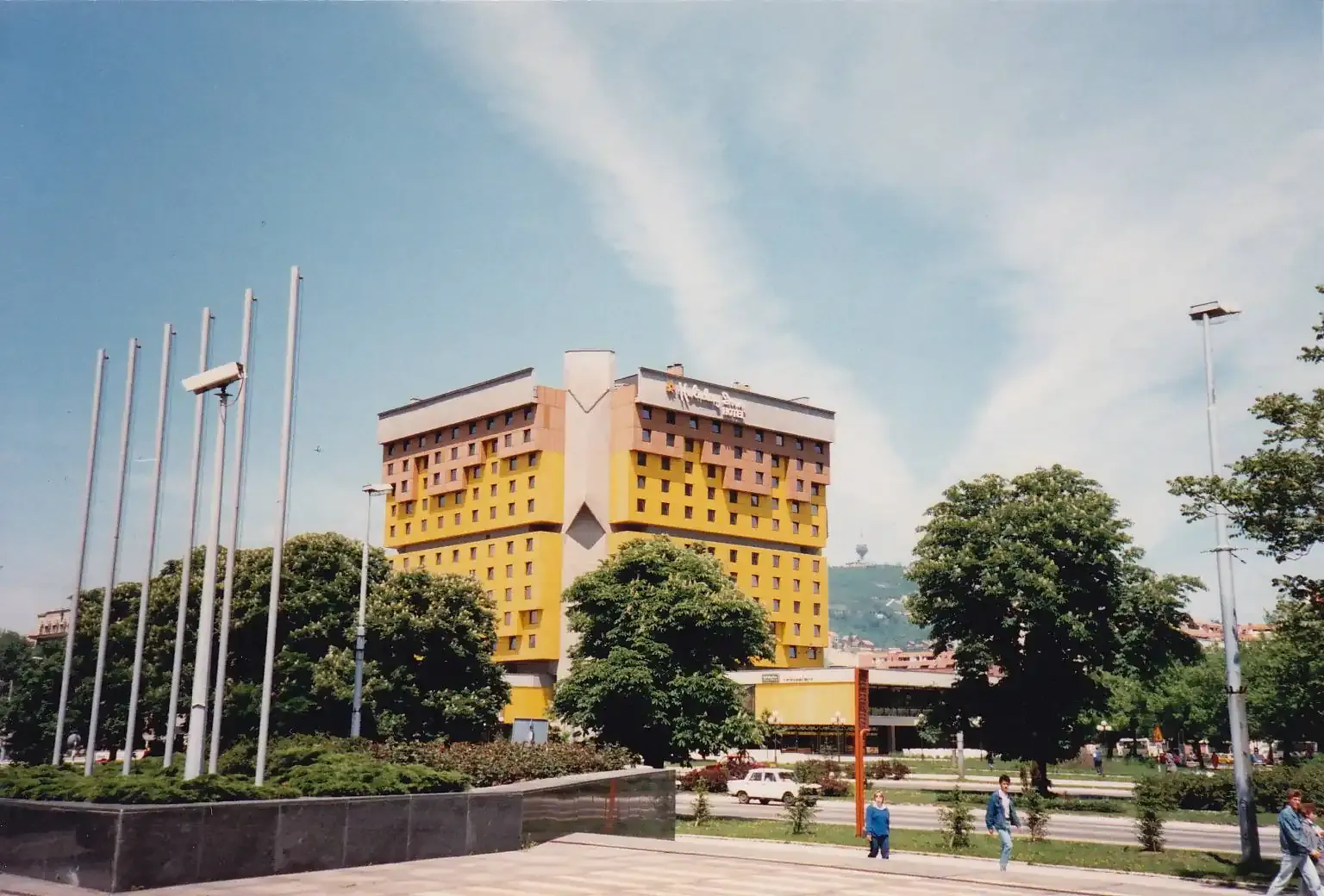
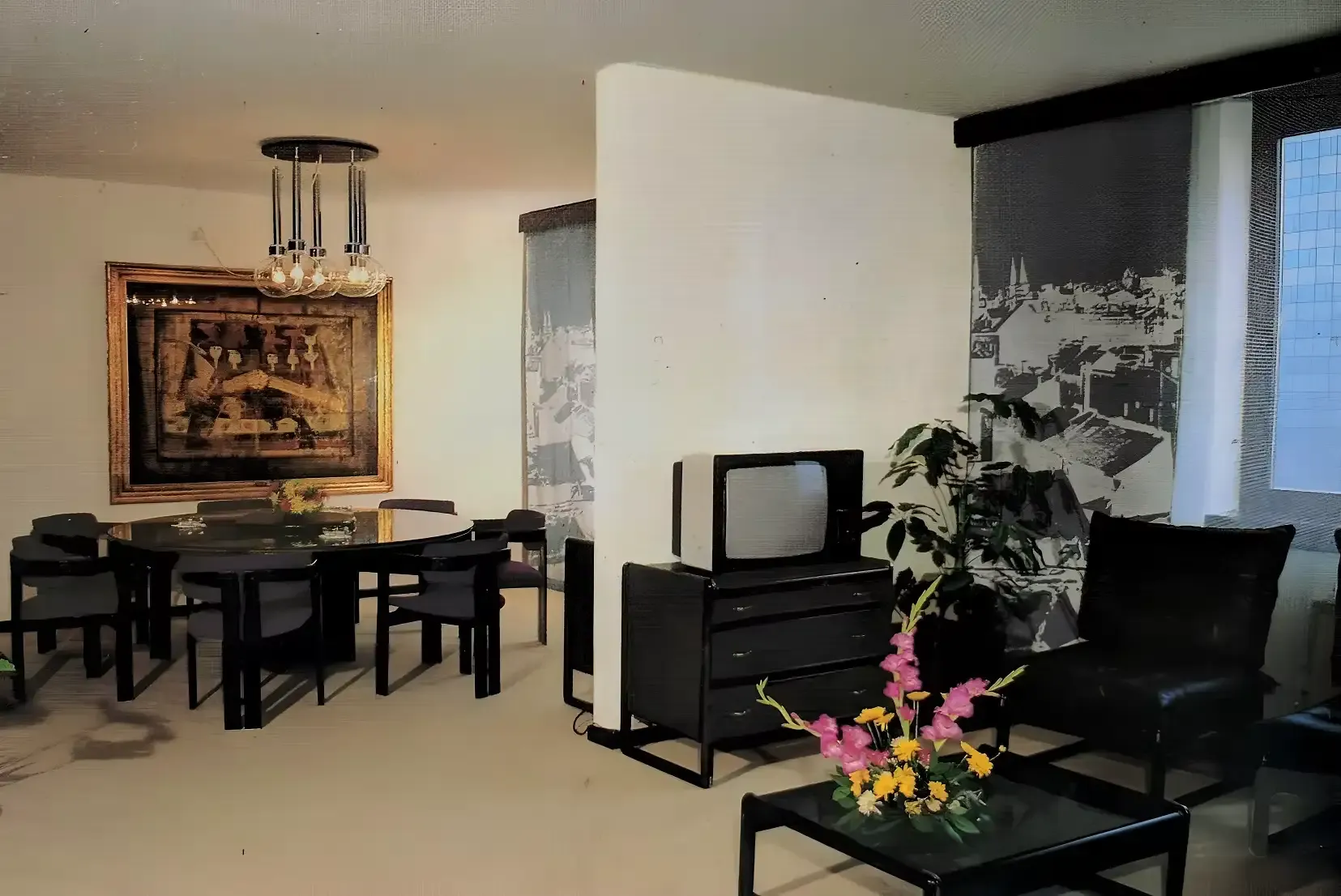
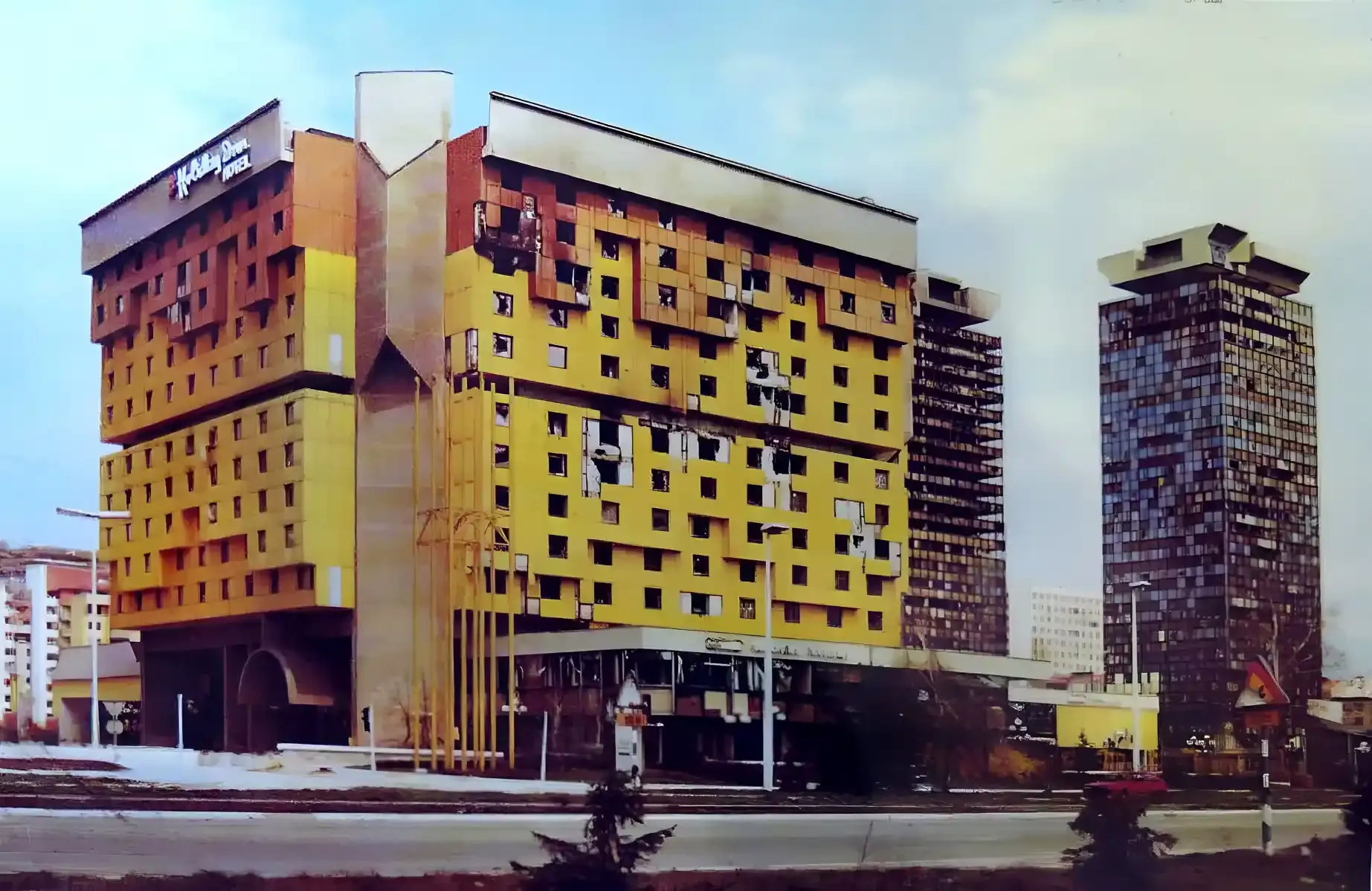
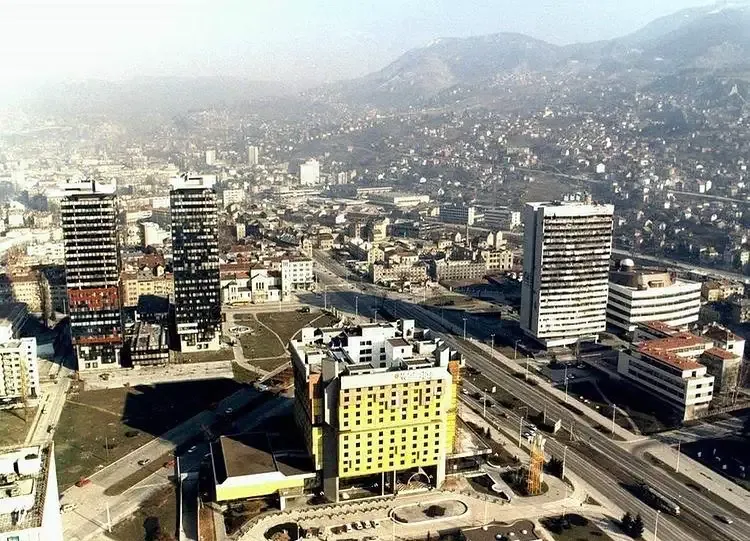
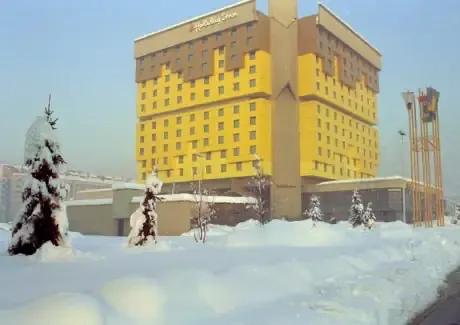
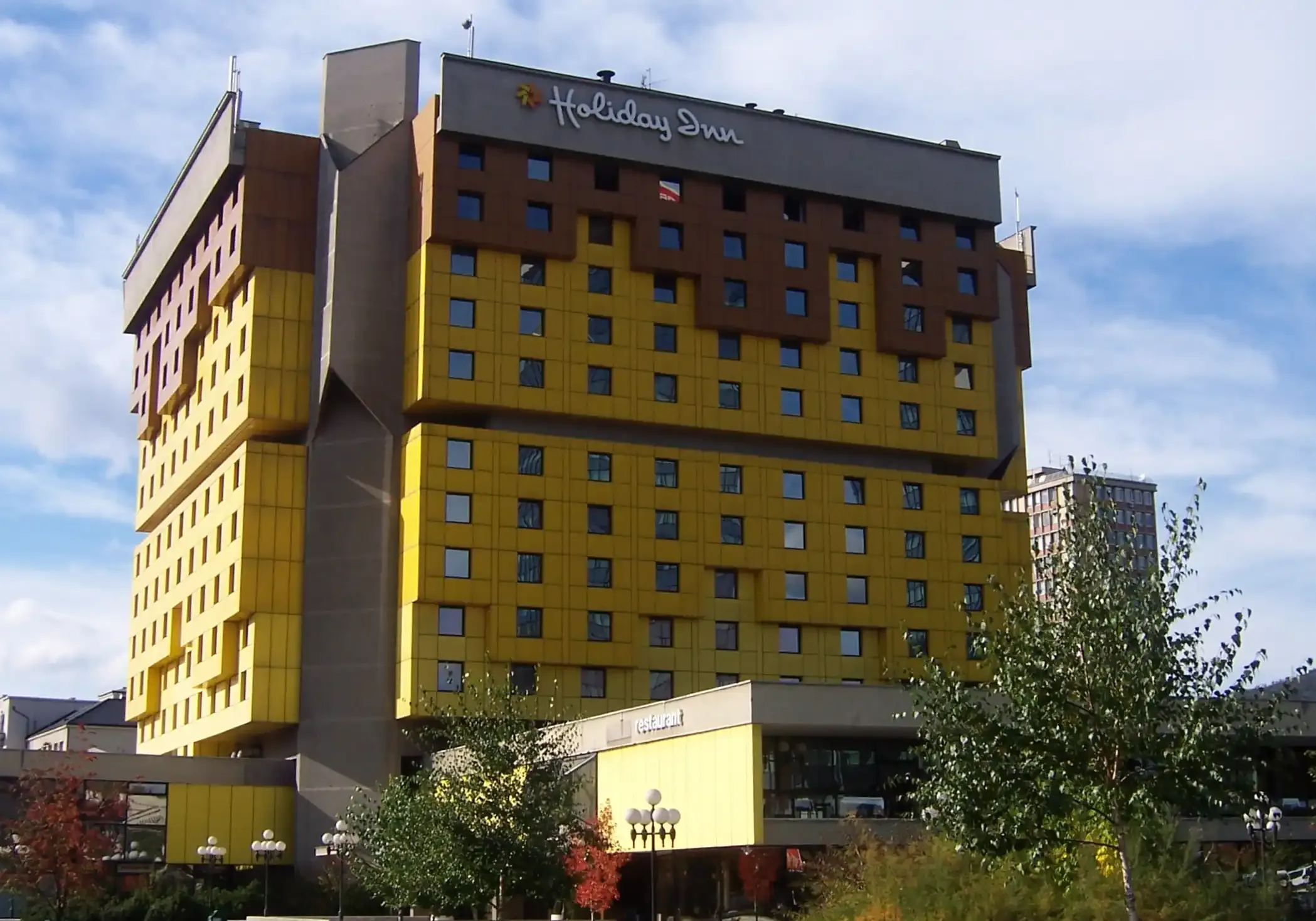
Initially planned as a Hilton for the International Olympic Committee (IOC), organizers ultimately chose the more affordable Holiday Inn brand. Designed by renowned Bosnian architect Ivan Štraus and built between 1981 and 1983 in the Marijin Dvor neighborhood, the 336-room (714-bed) hotel is a striking ten-story cube clad in bright yellow aluminum. The hotel officially opened on October 6, 1983, with IOC President Juan Antonio Samaranch as its first guest. Samaranch occupied the "Presidential Suite" on the fifth floor (room 530), later expressing his delight at the hotel as a prime example of Sarajevo's successful preparations.
The scale model was yellow, but no-one expected that the actual exterior of the hotel would be same colour... The purpose of having a yellow façade was to advertise the building-to make it stand out. Of course, it wouldn't be appropriate to build a yellow hospital, but this is a hotel, a place for leisure-why would it not be yellow? — Ivan Štraus, Architect
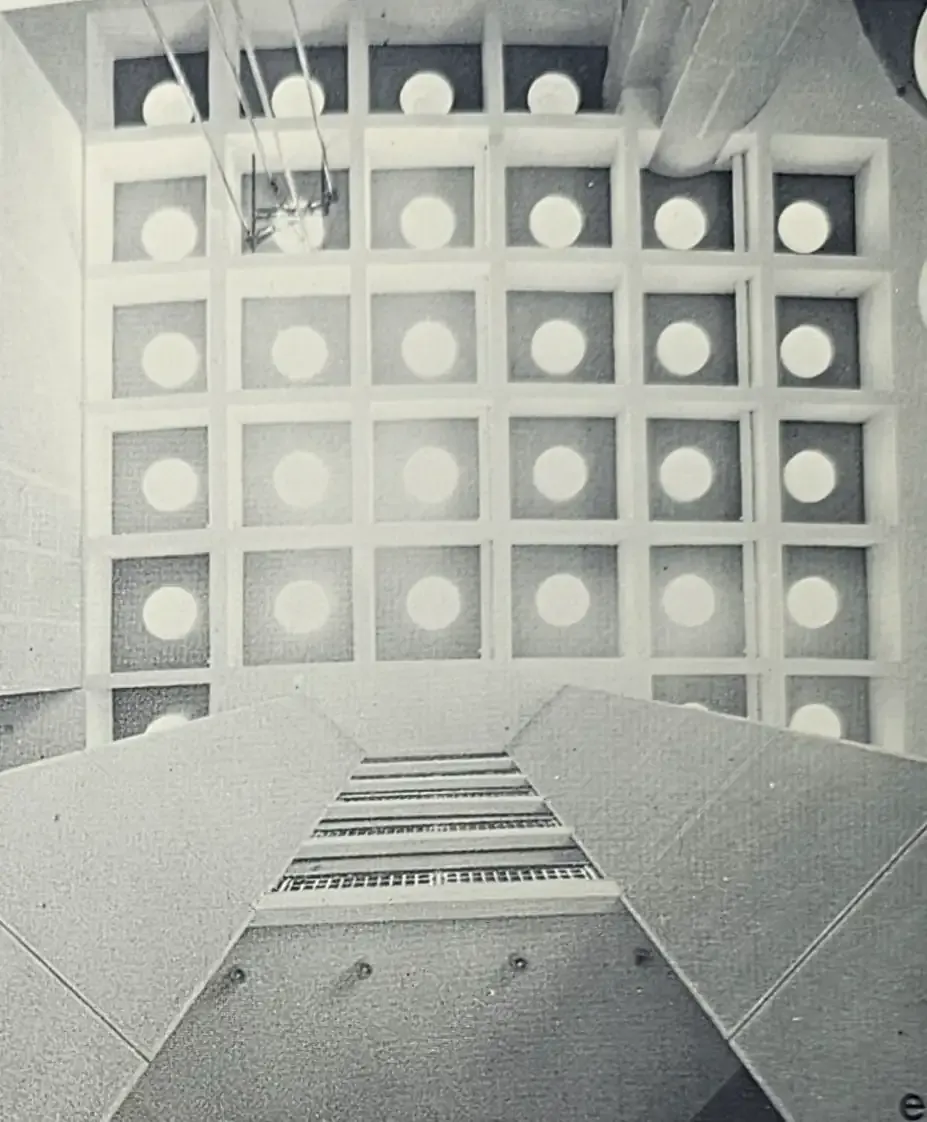
I created an environment which agrees with the locality. I insisted on the sensations produced by the primary sculpture and reproduced them from within using the secondary sculpture, such as the roof of the ceiling structure, light wells, niches, multilevel structures, the fireplace etc. — Ivan Štraus, Architect of the Holiday Inn and other Olympic facilities
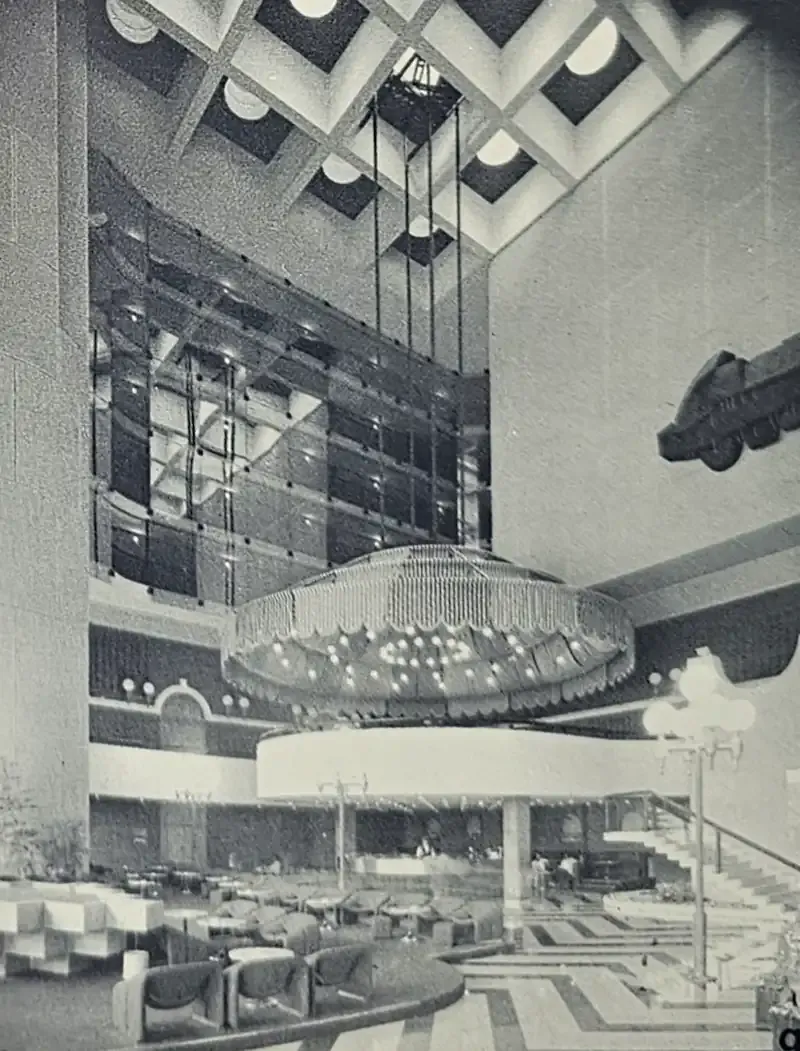
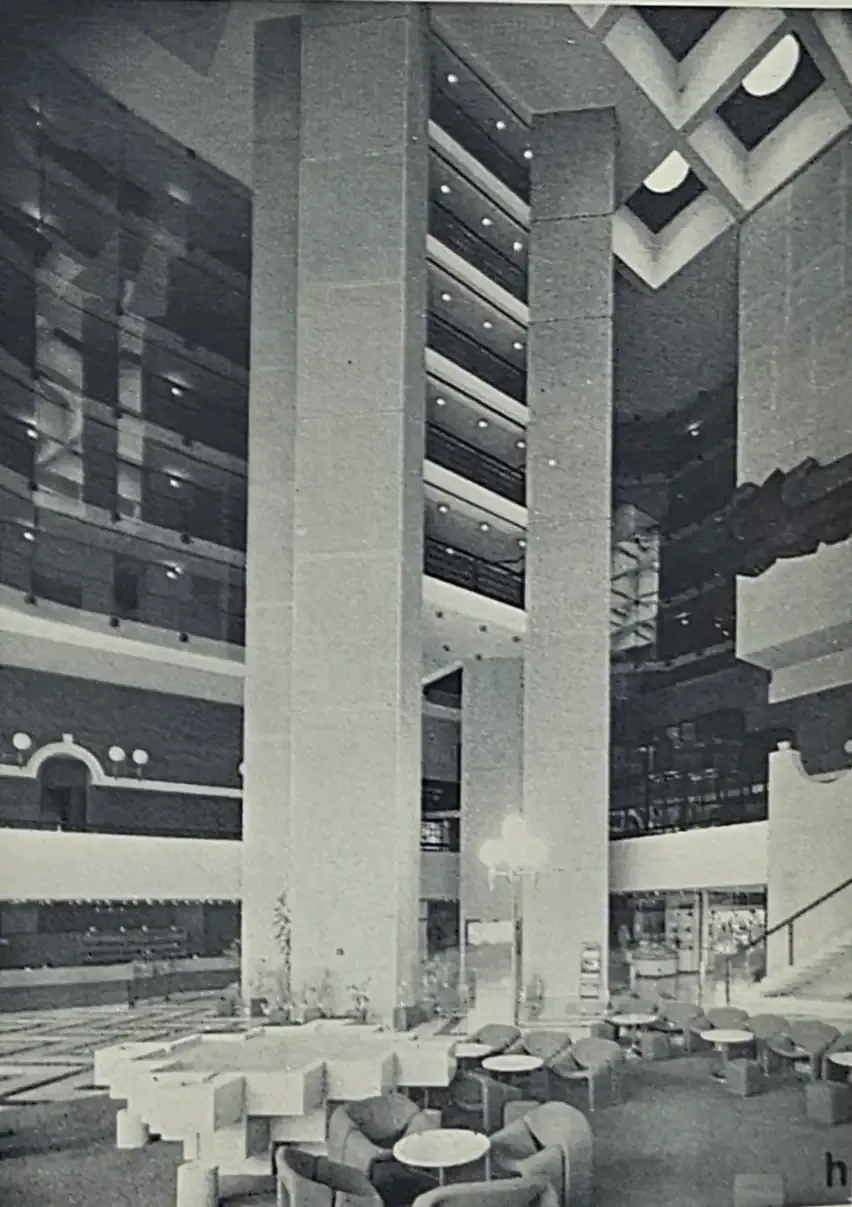
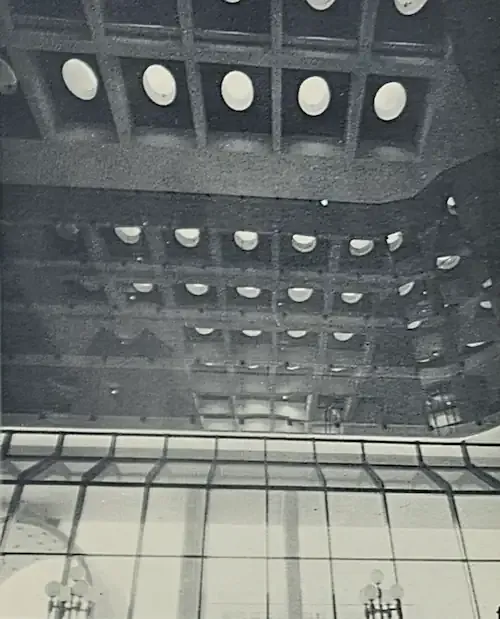
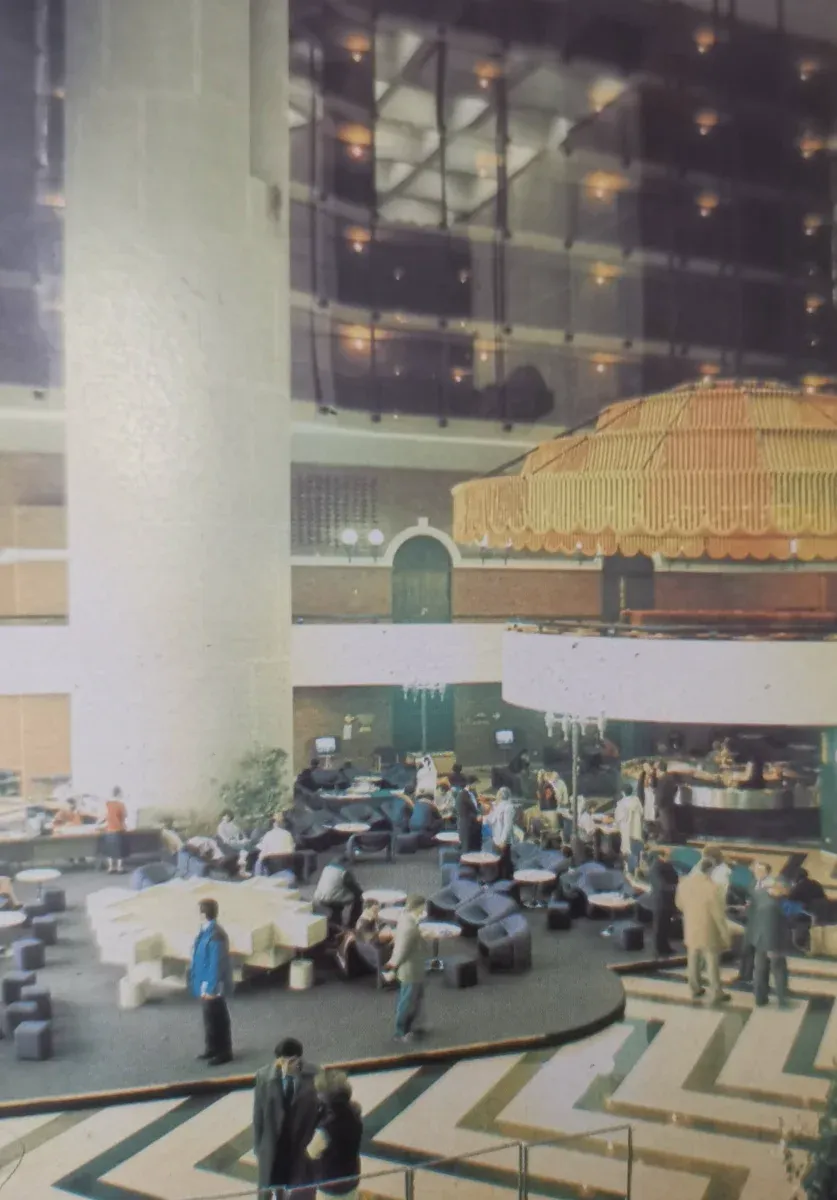
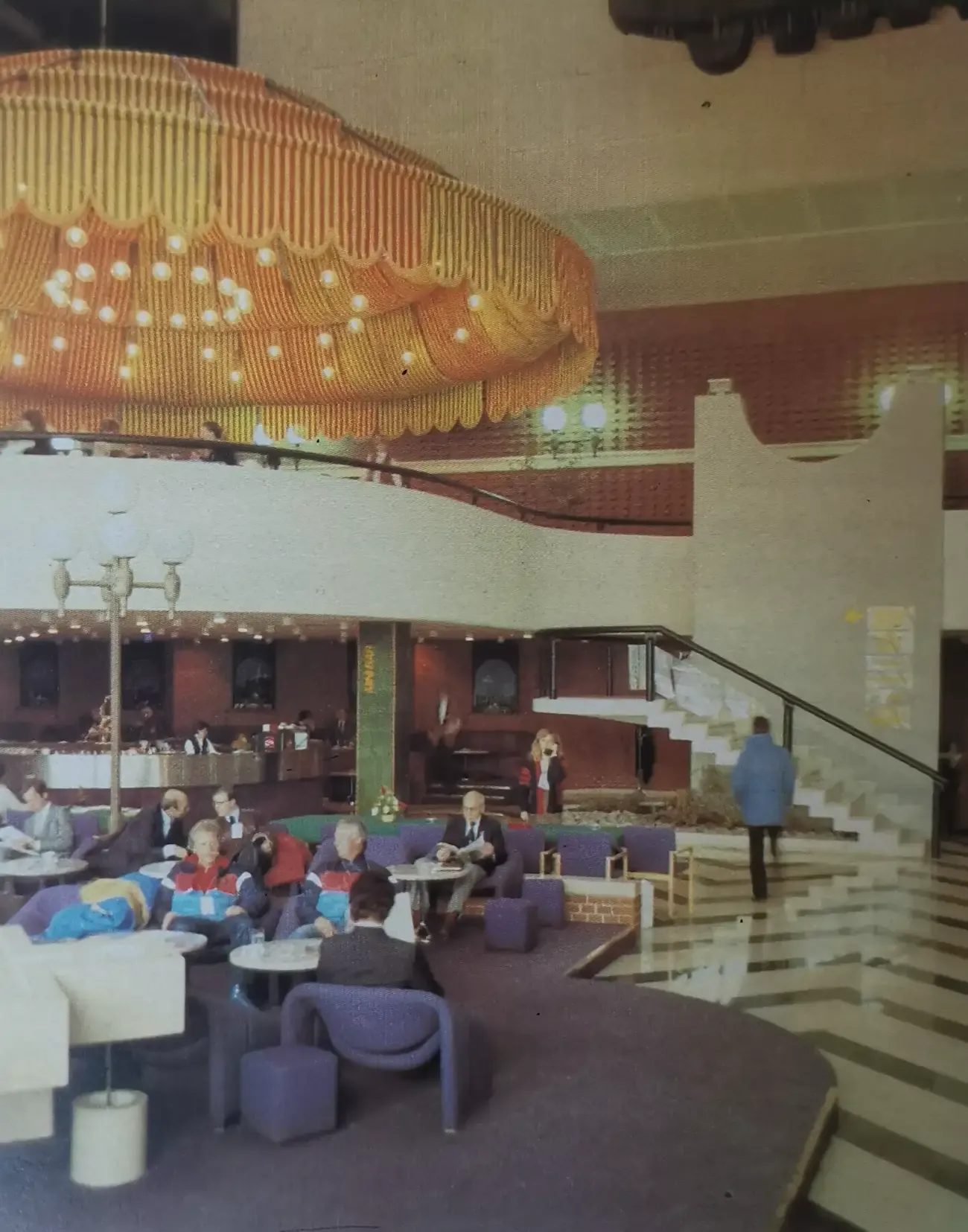
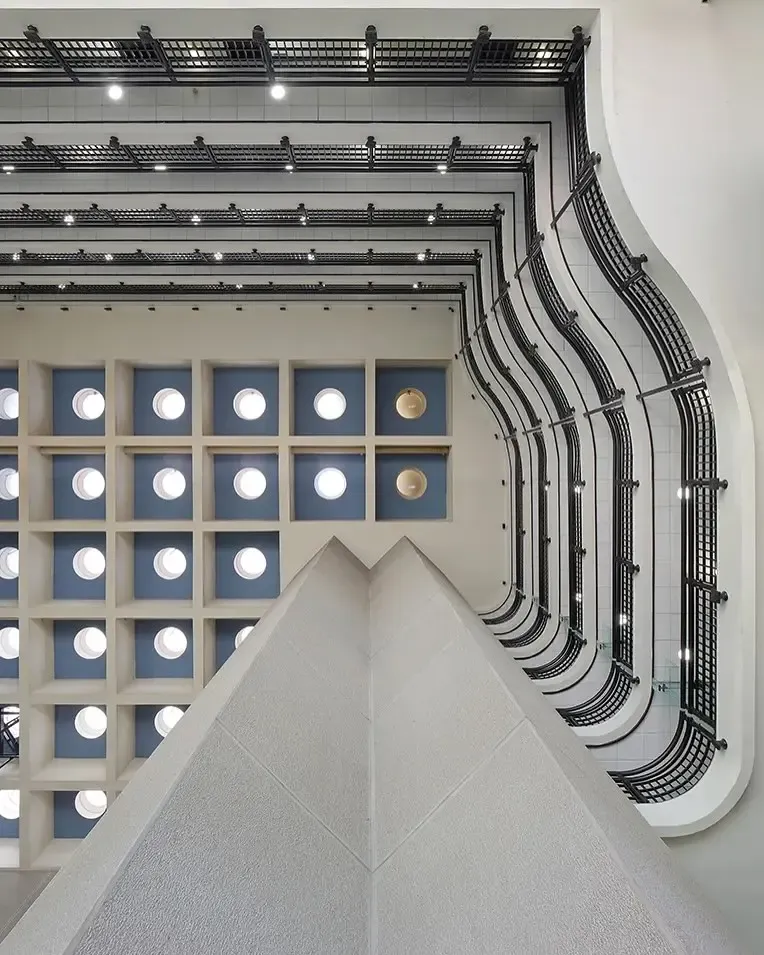
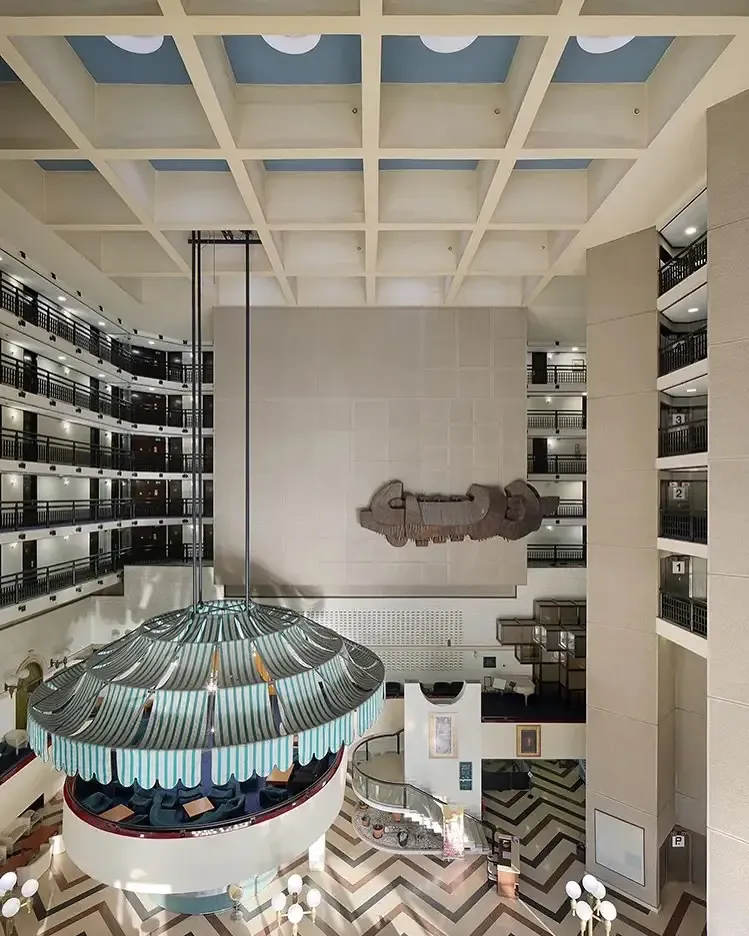
Štraus envisioned the interior as an "indoor city" inspired by Sarajevo's traditional Ottoman-era Morića Han. Inside, a massive yellow "big top" parasol anchors the cavernous atrium, offering a whimsical nod to the site's Austro-Hungarian history as Cirkus plac (Circus Square). The bold aesthetic continues throughout the space with zig-zag marble floors, lurid purple carpets, exposed brick walls, and reflective glass galleries that create an optical illusion of infinite space.
Olympic Operations and Exclusivity
During the 1984 Winter Games, the operation of Sarajevo's hotels transformed into a high-stakes coordination of security and international protocol. Functioning as the epicenter for the "Olympic Family," the Holiday Inn was closed to the general public and reserved entirely for official Olympic delegations and their guests. The facility operated as a command center equipped with:
- 340 rooms and 16 suites (providing between 714 and 760 beds).
- Congress halls and information centers for official proceedings.
- Modern PTT (Post, Telegraph, and Telephone) connections, including international direct dialing—a rarity in Sarajevo at the time that provided a robust technical infrastructure for the press and officials.
To provide seamless, top-level accommodation showcasing Yugoslavia's technical achievements, the hotel maintained a staff of approximately 400 workers. Security was paramount; a specialized checkpoint similar to an airport terminal was established at the entrance to screen all visitors.
The guest list across the city’s top hotels read like a global "who's who" of the era, including royalty such as King Carl XVI Gustaf of Sweden and King Olav V of Norway, as well as political leaders like Premier Peter Lougheed of Alberta (host of the upcoming 1988 Calgary Games) and Amadou-Mahtar M'Bow, Director-General of UNESCO. Celebrities also graced the halls, most notably American actor Kirk Douglas—a personal friend of Tito—who was famously reported to have spent liberally at the Holiday Inn casino.
From Olympic Hub to "War Hotel"
The Holiday Inn was home for so many of us covering the Bosnian War and the siege of Sarajevo throughout the 1990s... It is forever linked with that time and our efforts to report the facts while under fire. — Christiane Amanpour, CNN Correspondent
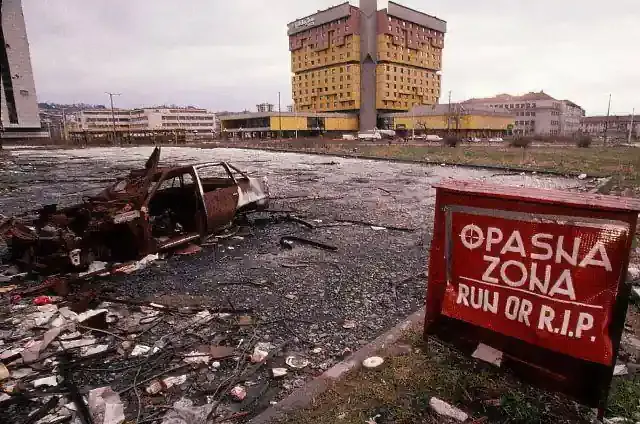
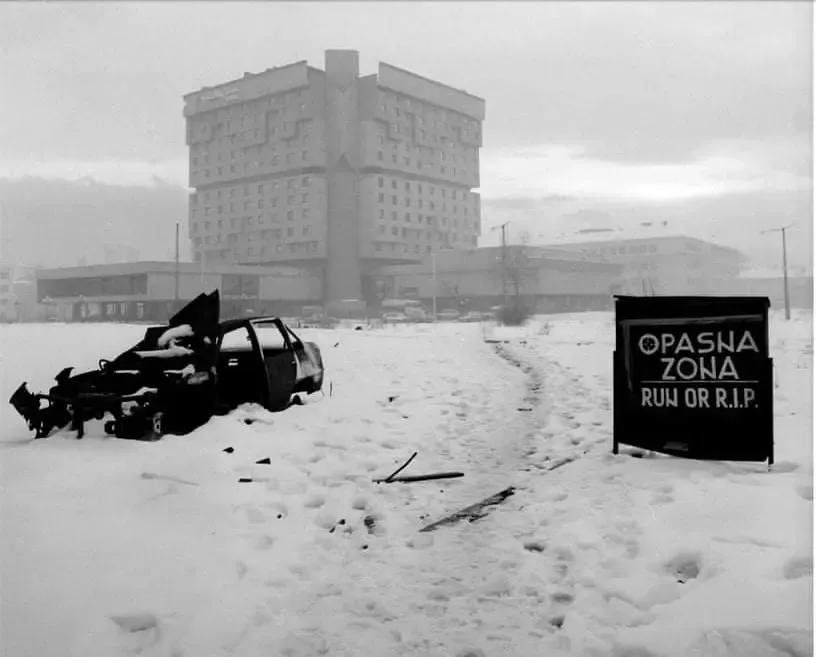
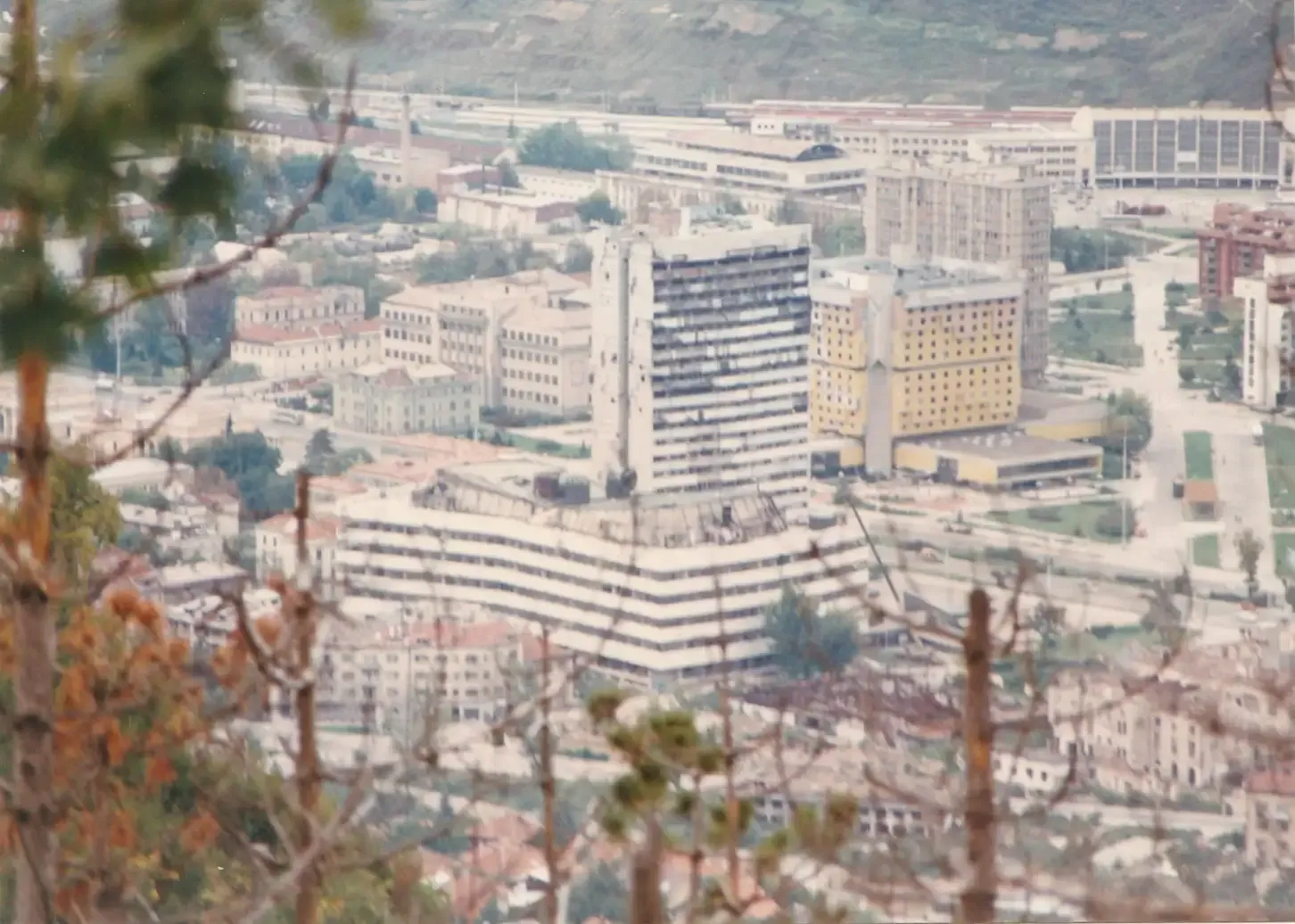
The hotel's festive origins took a dark turn in 1992 when it became the heavily armed headquarters for Radovan Karadžić’s Serbian Democratic Party (SDS). The Bosnian War effectively ignited at its doorstep that April when SDS snipers positioned in the hotel's upper floors opened fire on thousands of unarmed peace demonstrators below, prompting outraged protesters and Bosnian special police to storm the building as the political leadership fled.
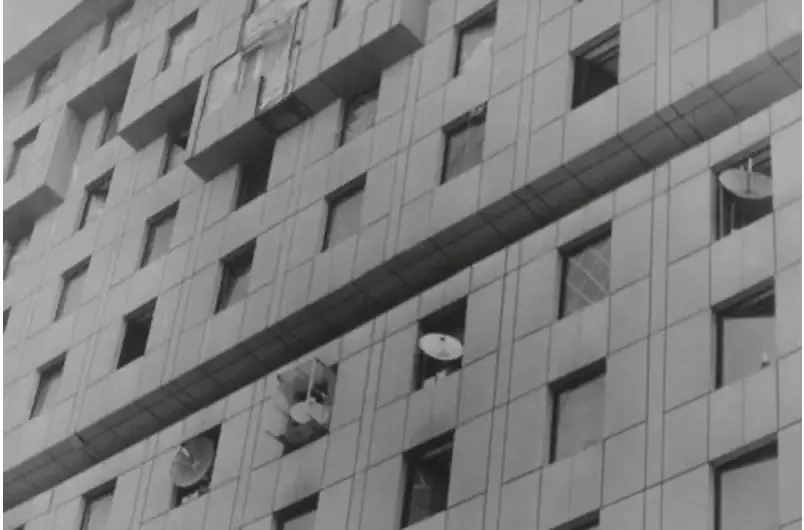
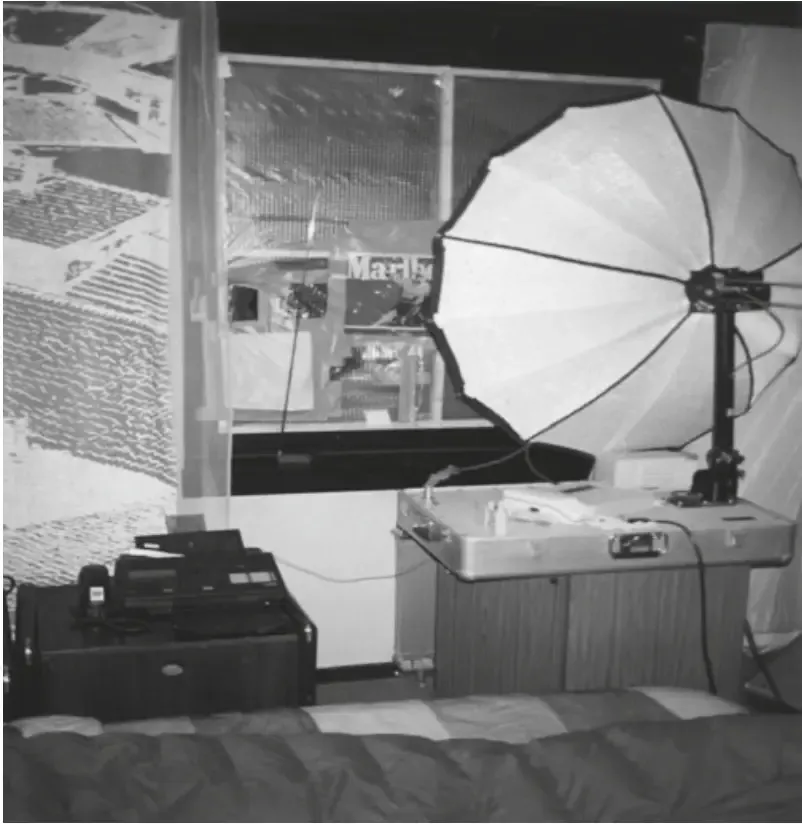
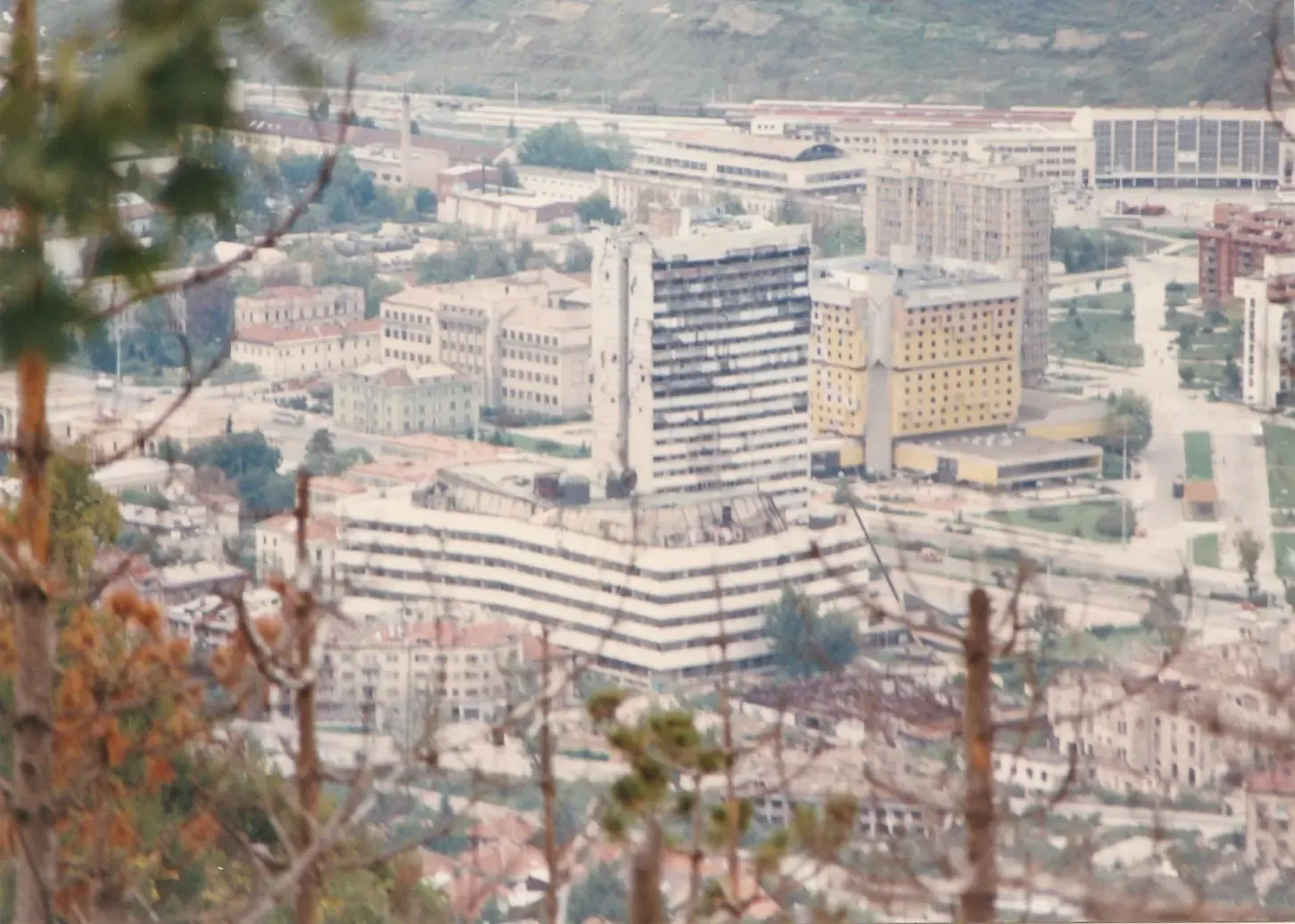
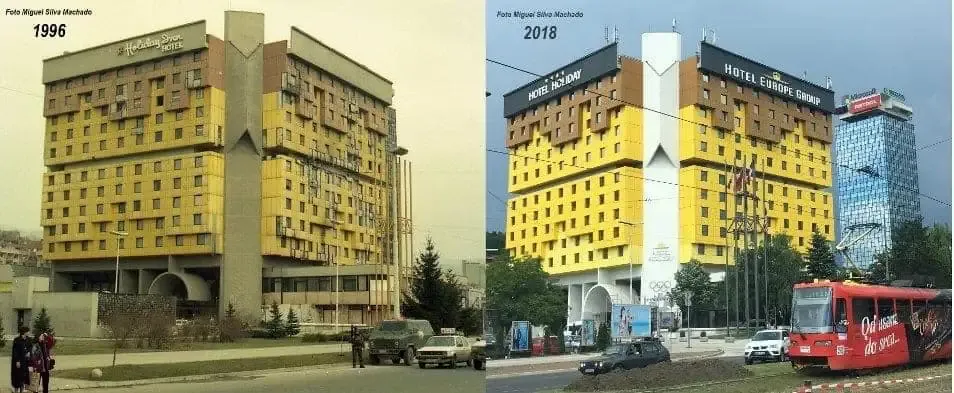
Following the outbreak of violence, the Holiday Inn transformed into Sarajevo's legendary "war hotel," serving as the primary operational base for the international press corps, diplomats, and aid workers. Positioned directly on the frontline of "Sniper’s Alley," the building lost the vast majority of its windows and was relentlessly battered by artillery fire. Yet, within its heavily damaged concrete walls, a dedicated, multi-ethnic staff displayed incredible resilience—dodging sniper fire just to come to work and serving meals in formal tuxedos and bow ties—while management relied on the black market for fuel, water, and food to keep the journalists broadcasting to the world.
After surviving the longest siege in modern history, the hotel faced a tumultuous post-war era of botched privatizations and debt, leading to its closure in 2015. Fortunately, the iconic structure was acquired by the Sarajevo-based Hotel Europe Group, which oversaw an extensive renovation and triumphantly reopened the historic landmark as Hotel Holiday in 2016 and 2017, preserving its bold yellow facade and cultural legacy for a new generation.
The Jahorina Mountain Resorts
High-altitude accommodation was strategically developed to place athletes and officials directly at the point of competition, aiming to transform the Sarajevo region into a year-round tourist destination. Mount Jahorina featured three pivotal, yet drastically different, hotel stories.
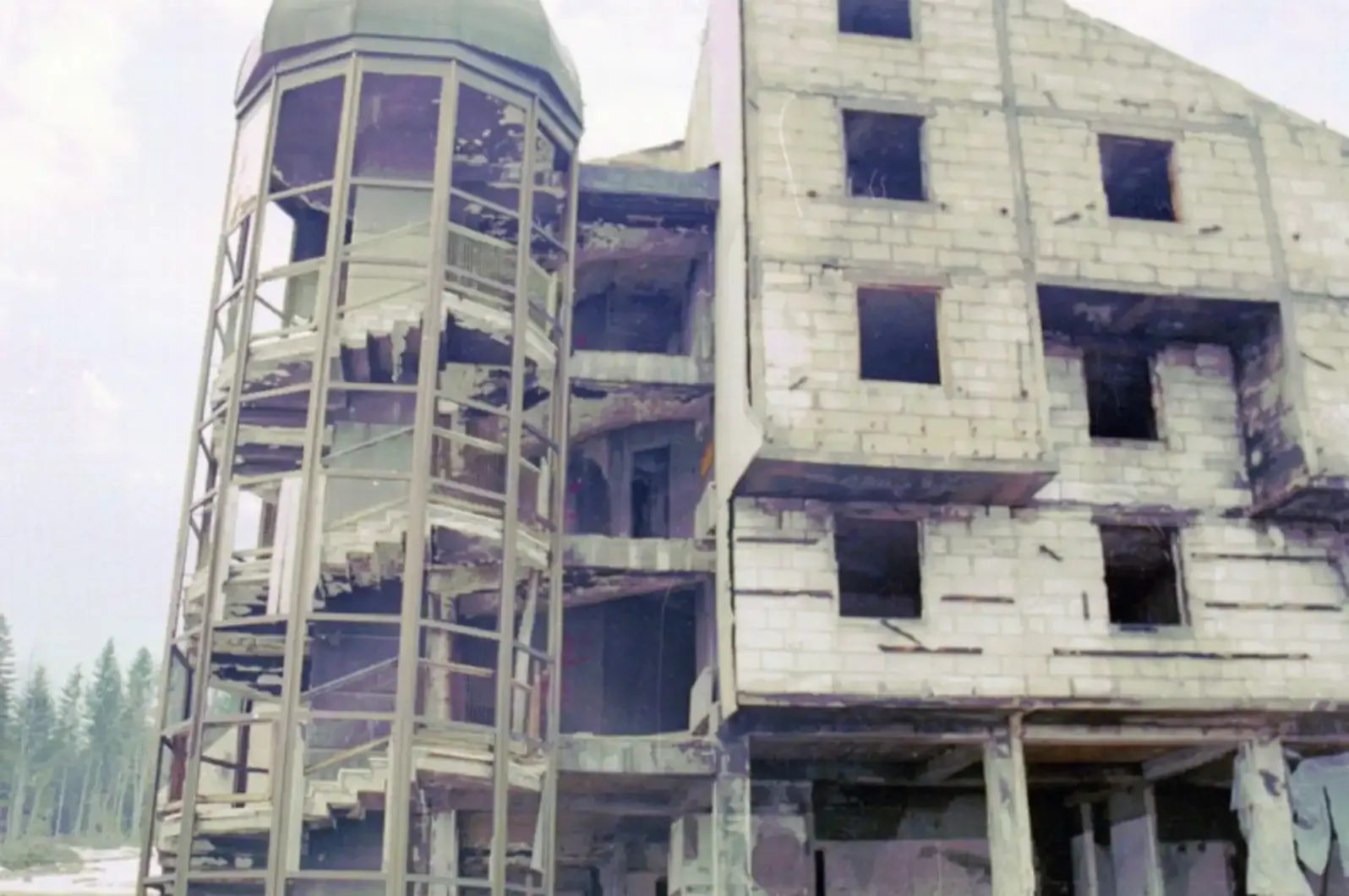
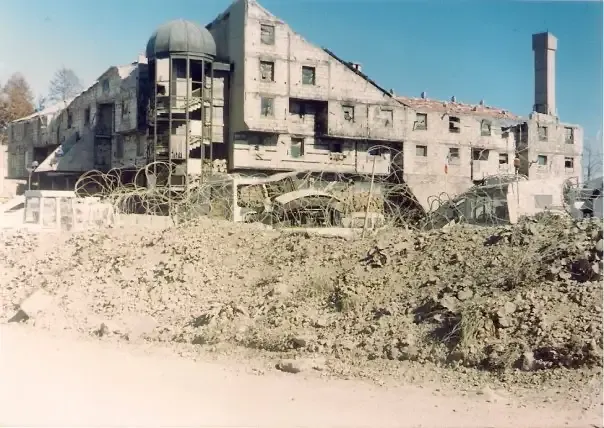
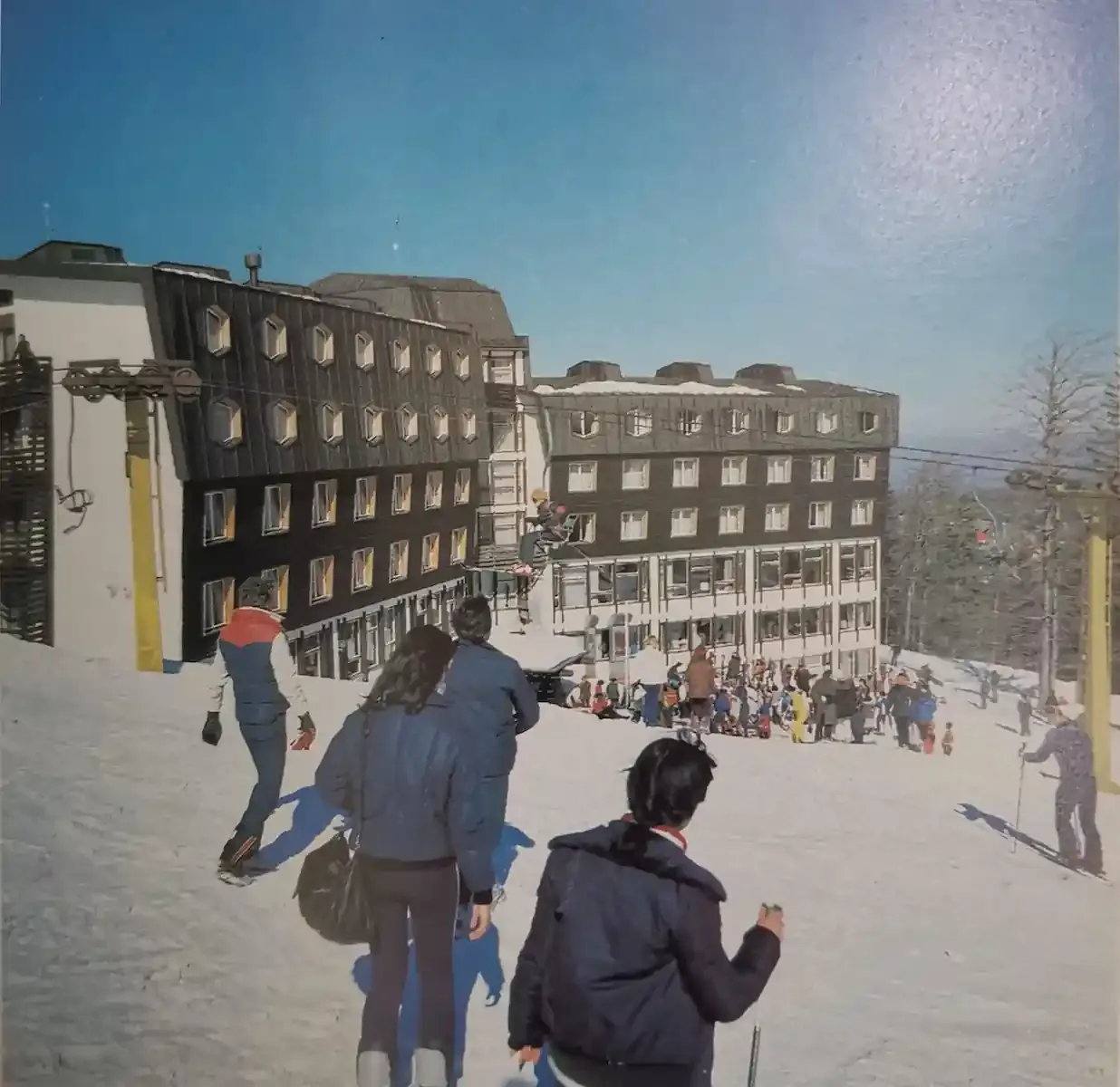
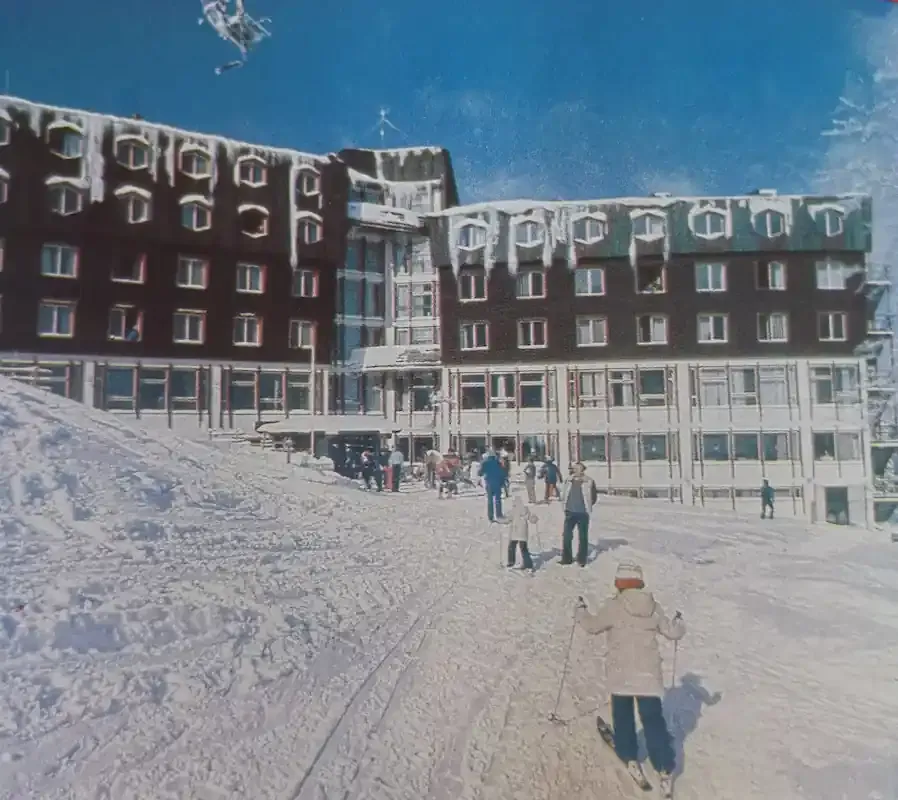
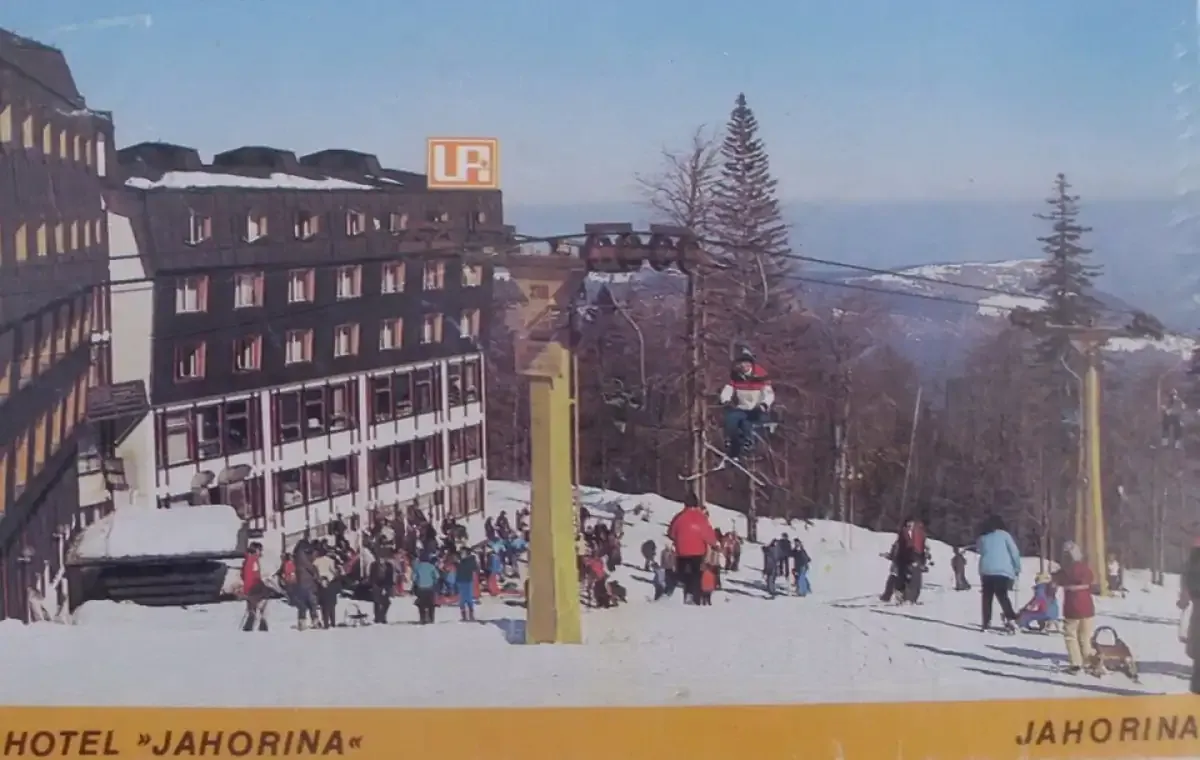
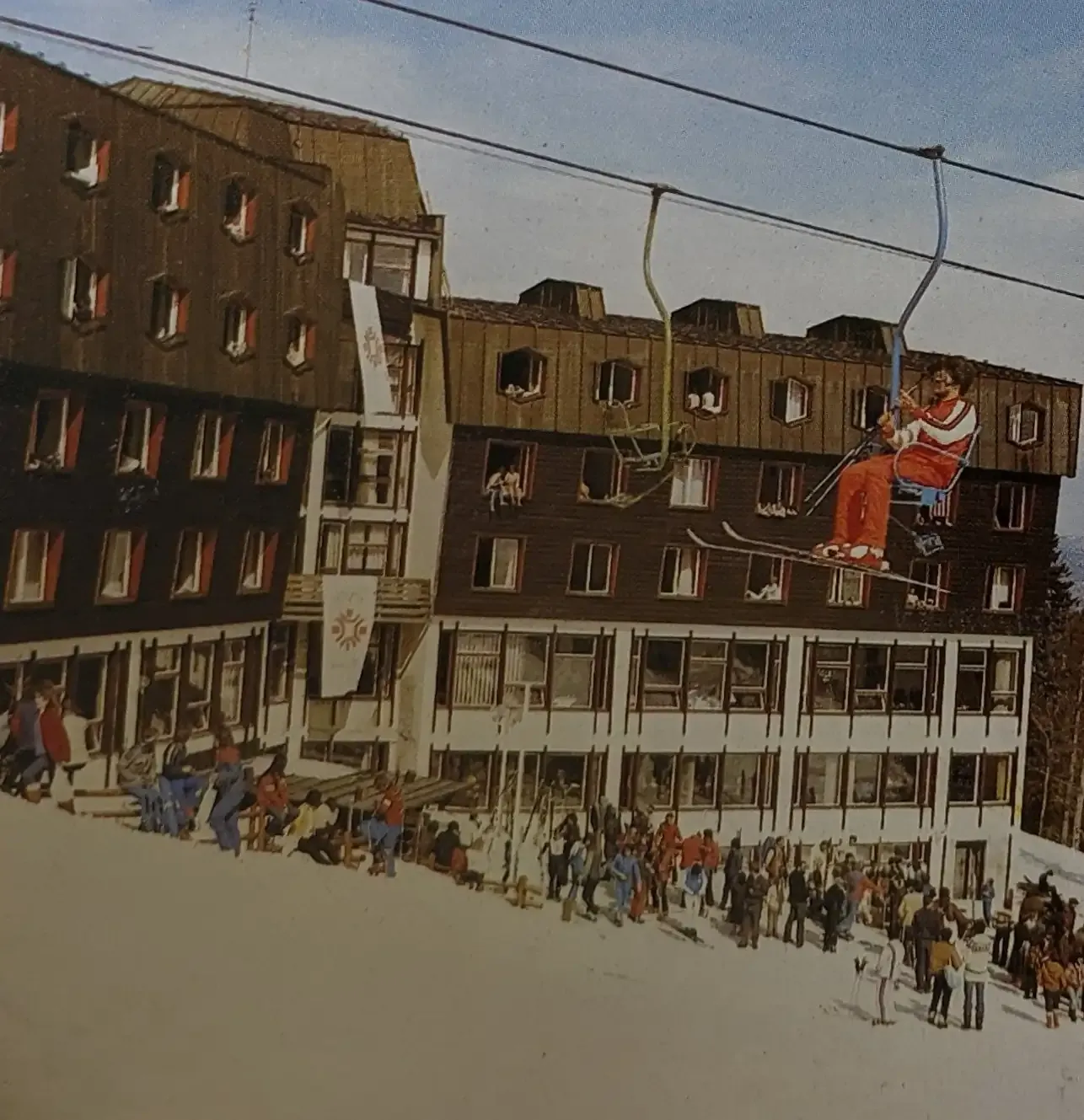
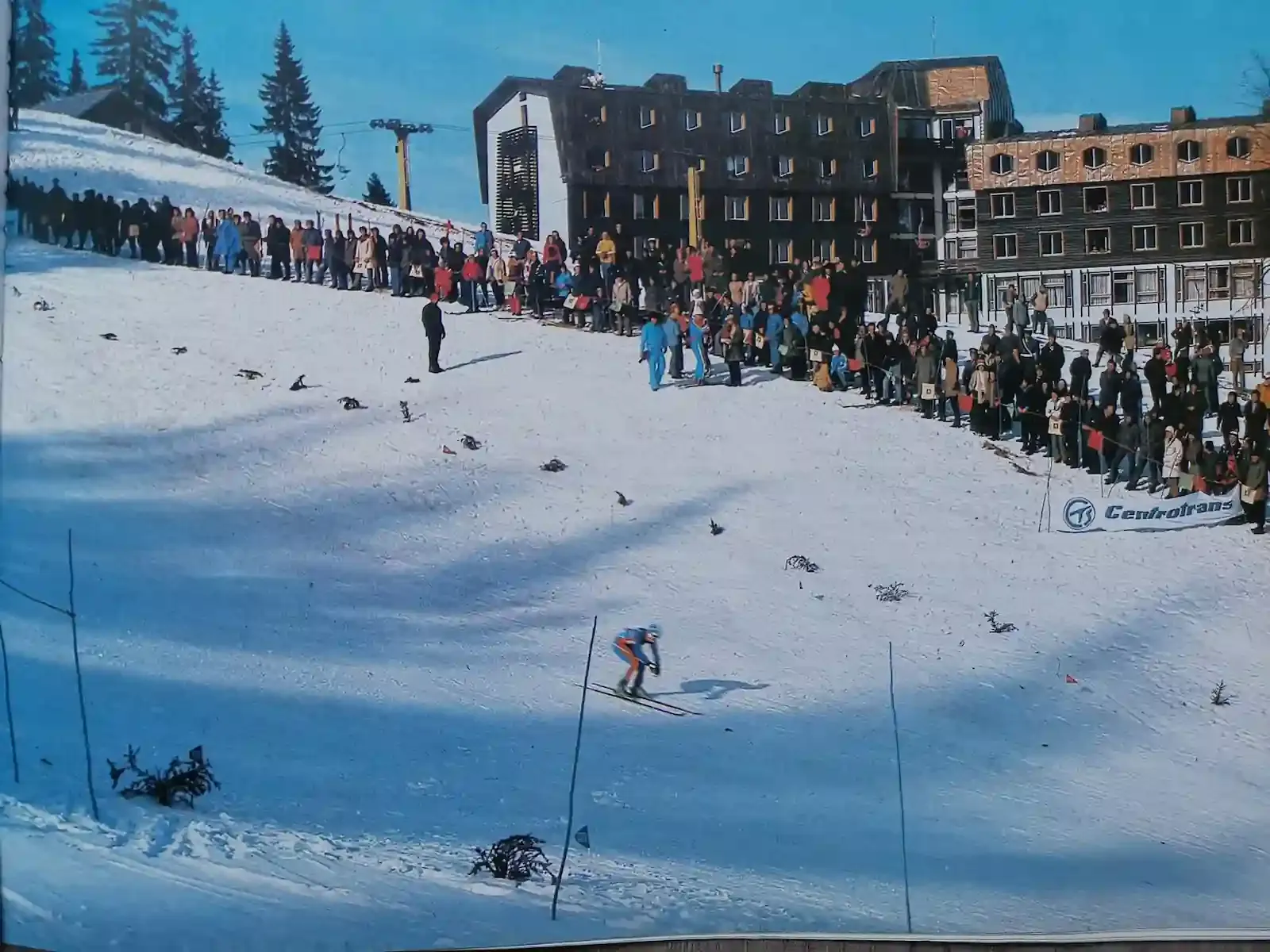
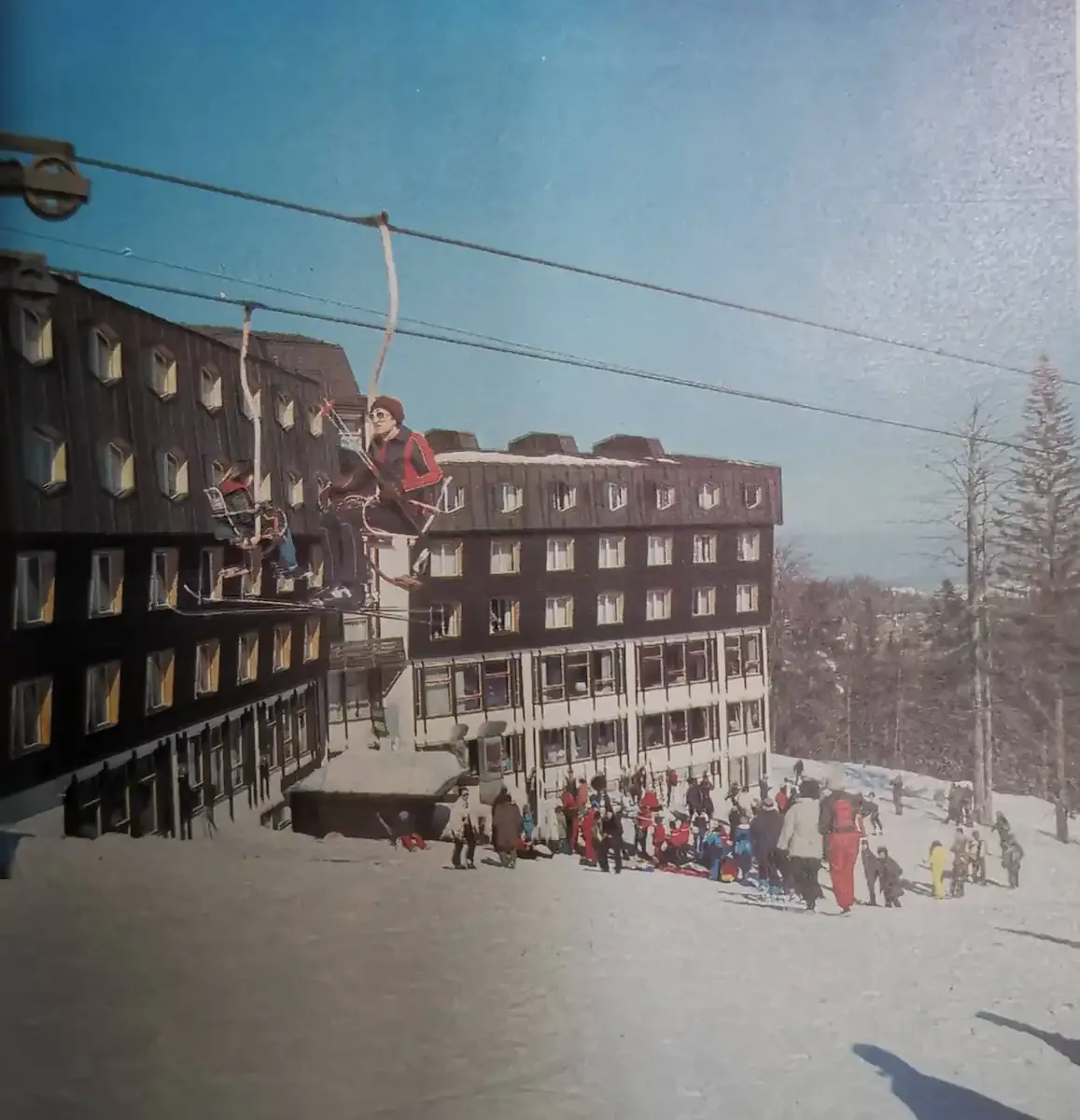
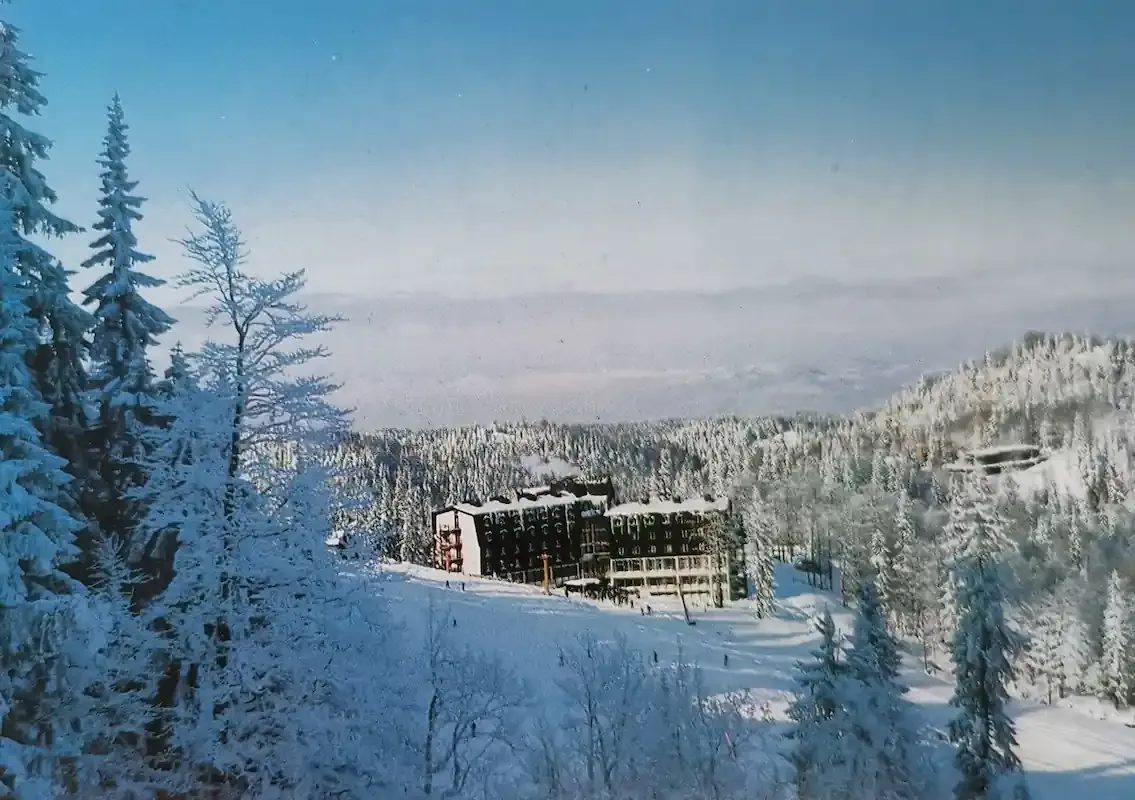
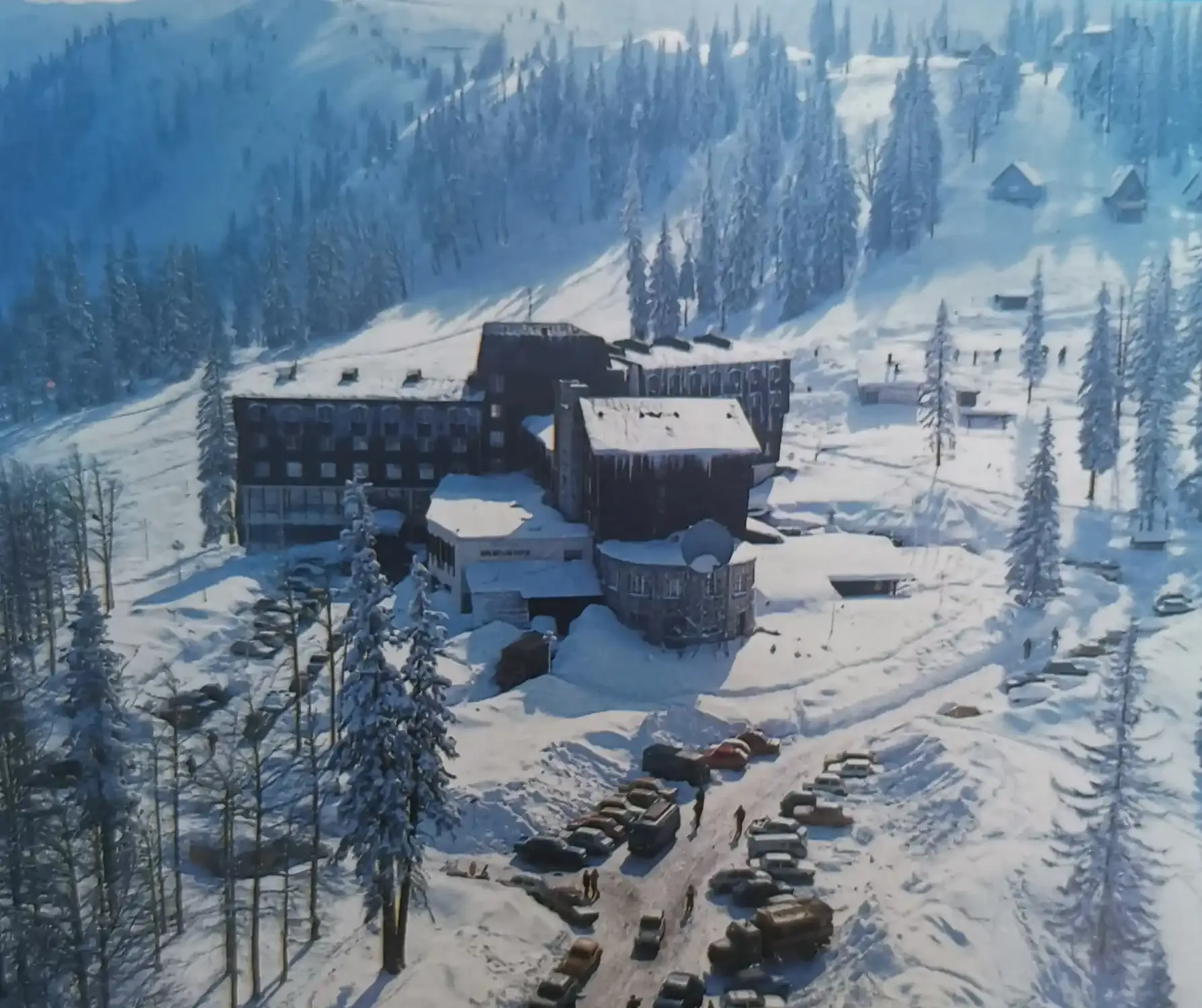
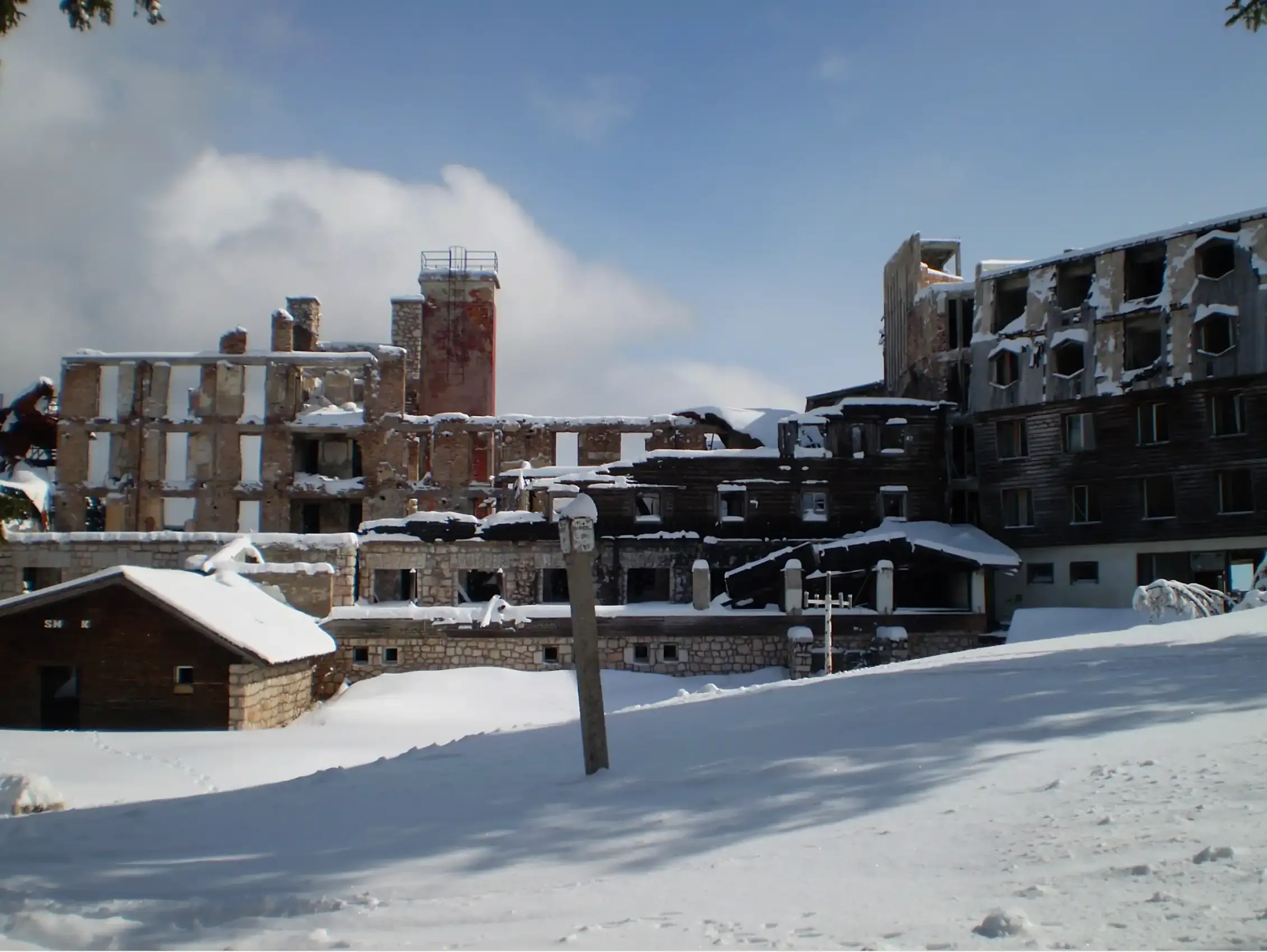
- Hotel Jahorina: Because Jahorina hosted the European and World Cup skiing competitions in 1975, it was already ahead of the curve. The 320-bed Hotel Jahorina, designed by architect Vinko Jurik in 1975, was the largest and most modern facility on the mountain. During the Olympics, it served as the massive Main Press Center, featuring 70 desks, 24 telephone booths, and an extensive telecommunications center. The hotel continued to operate as a primary ski resort hub until the Bosnian War, when it was used to house refugees. It survived the conflict but was destroyed by an accidental fire in September 1995. The burned-out ruins sat next to modern ski lifts for decades, becoming a popular site for urban explorers, until they were demolished in 2020. The site was purchased for €1.8 million by the companies Galens and Pavord, who are currently planning a new €56 million luxury resort.
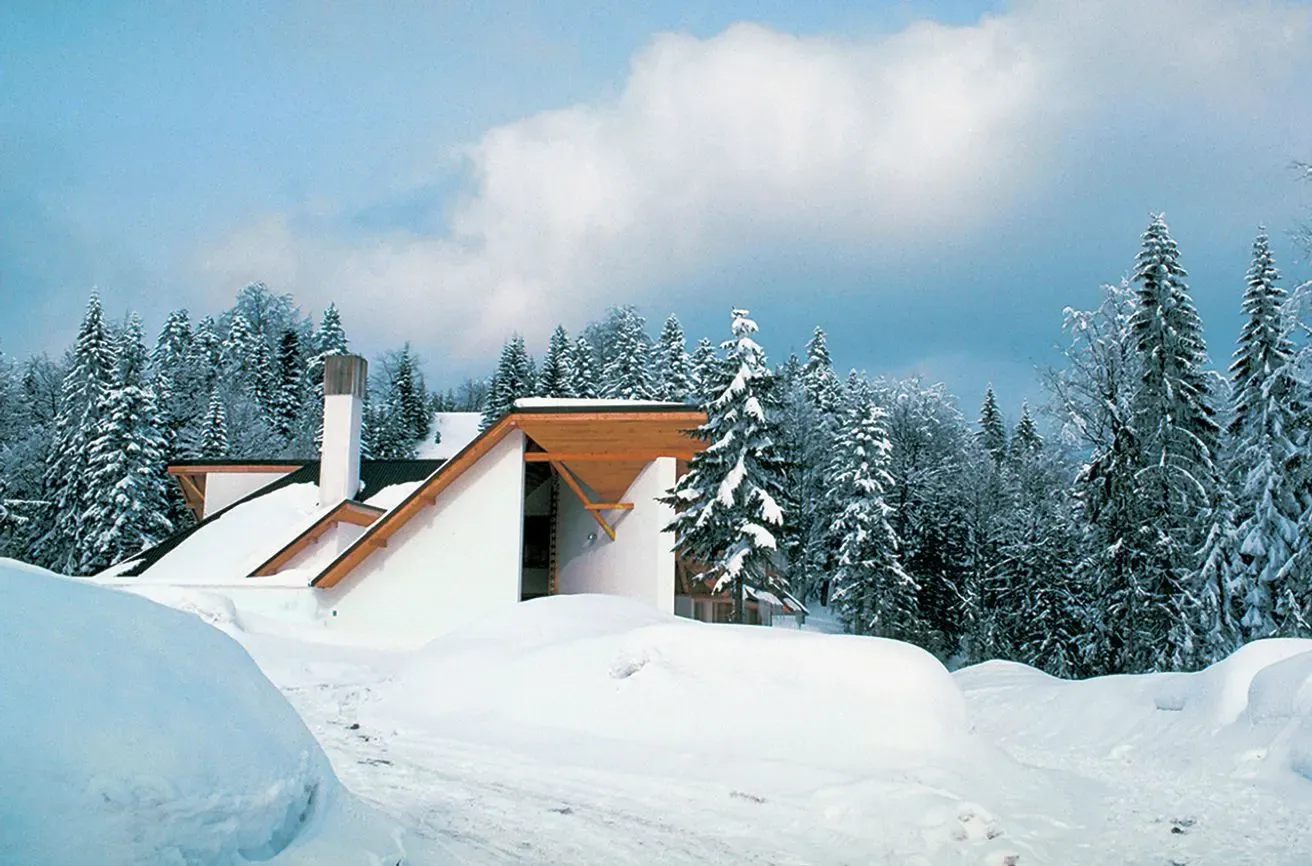
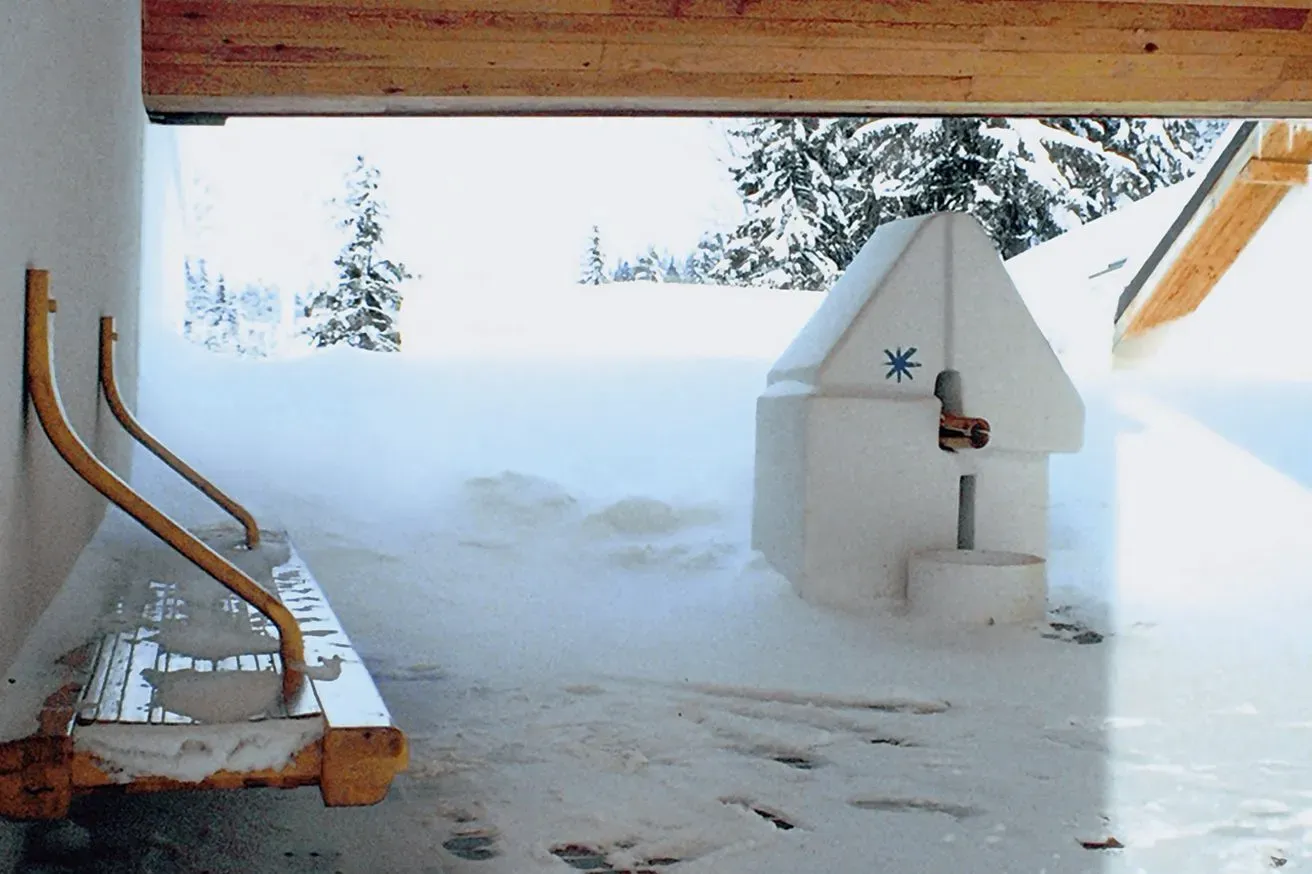
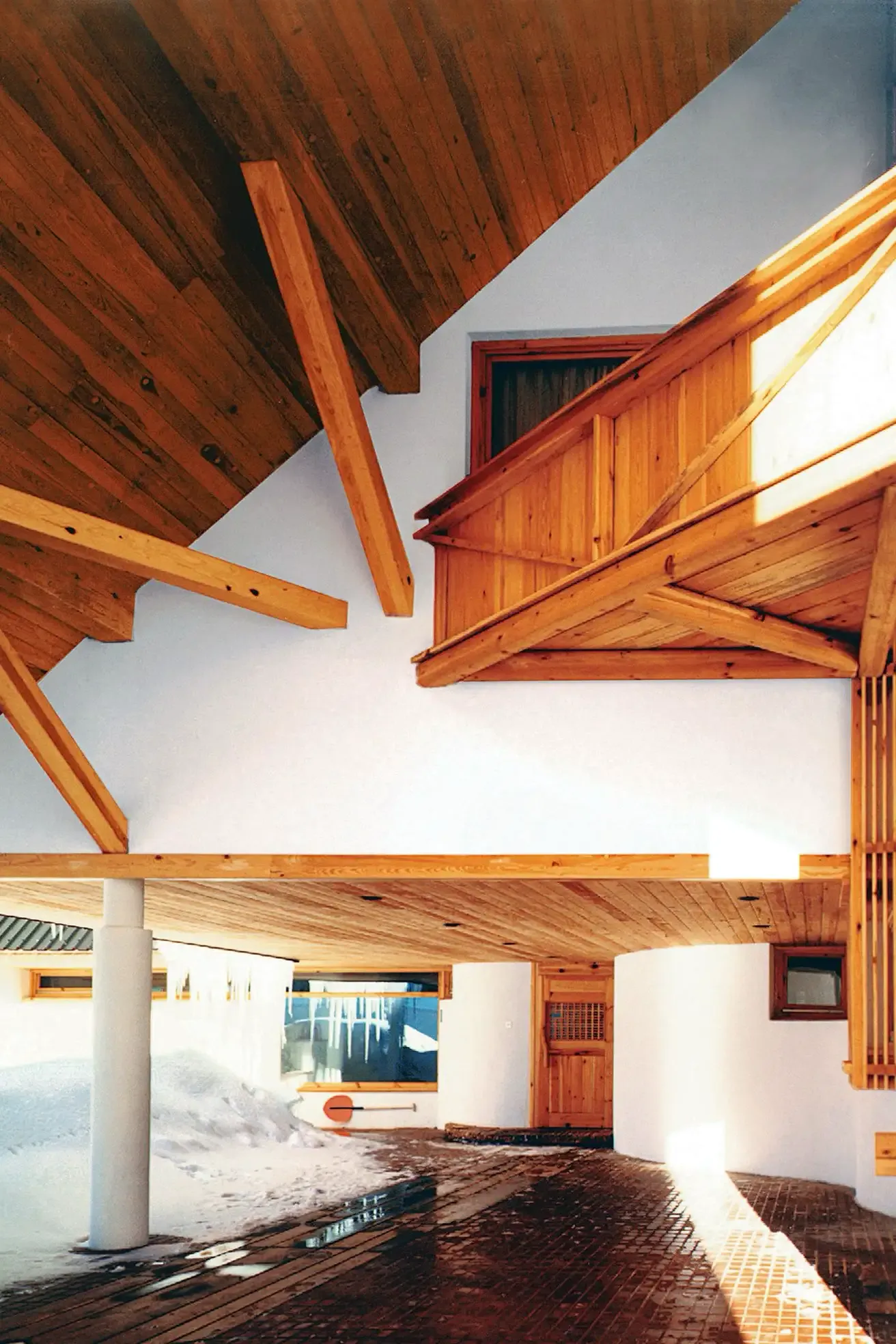
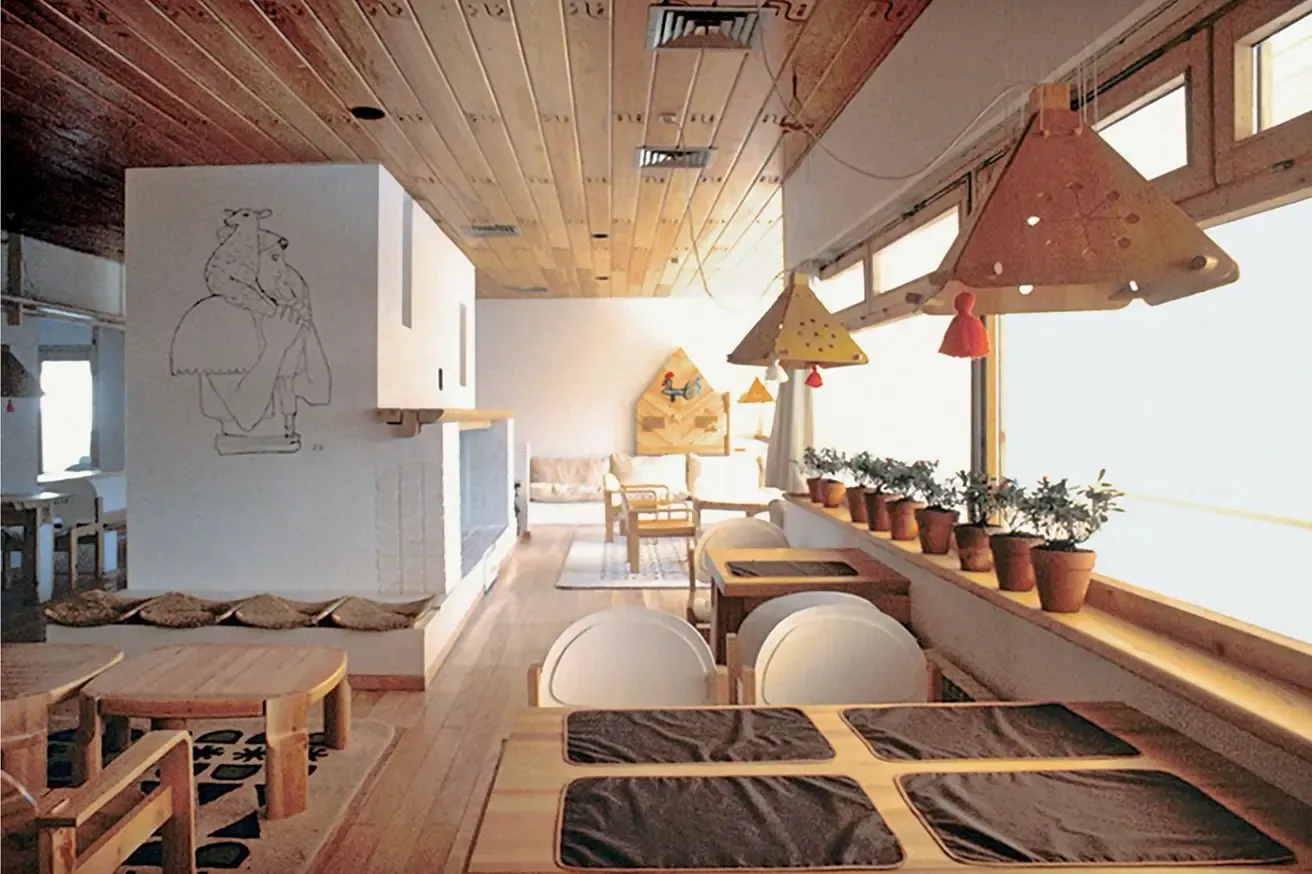
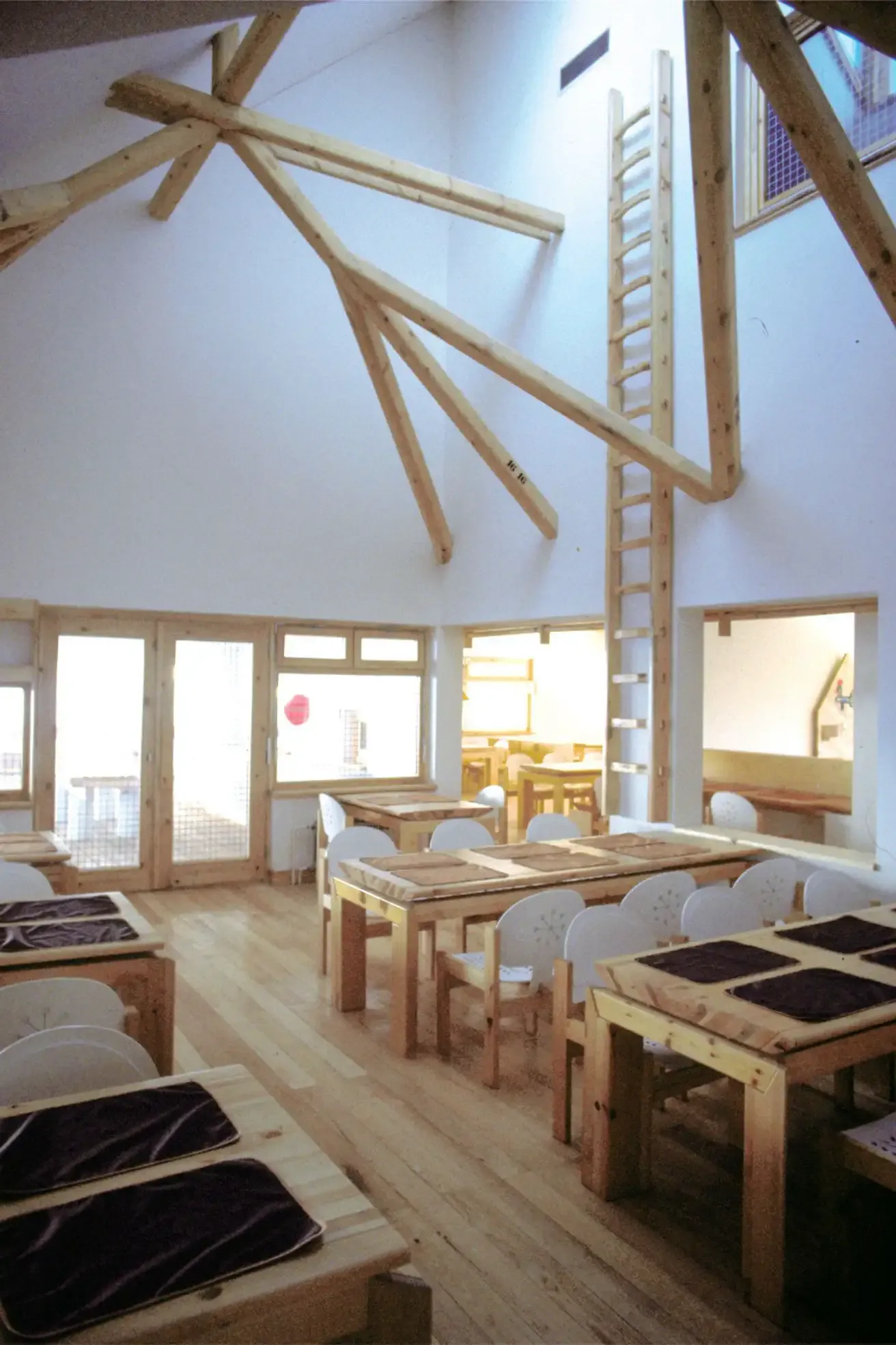
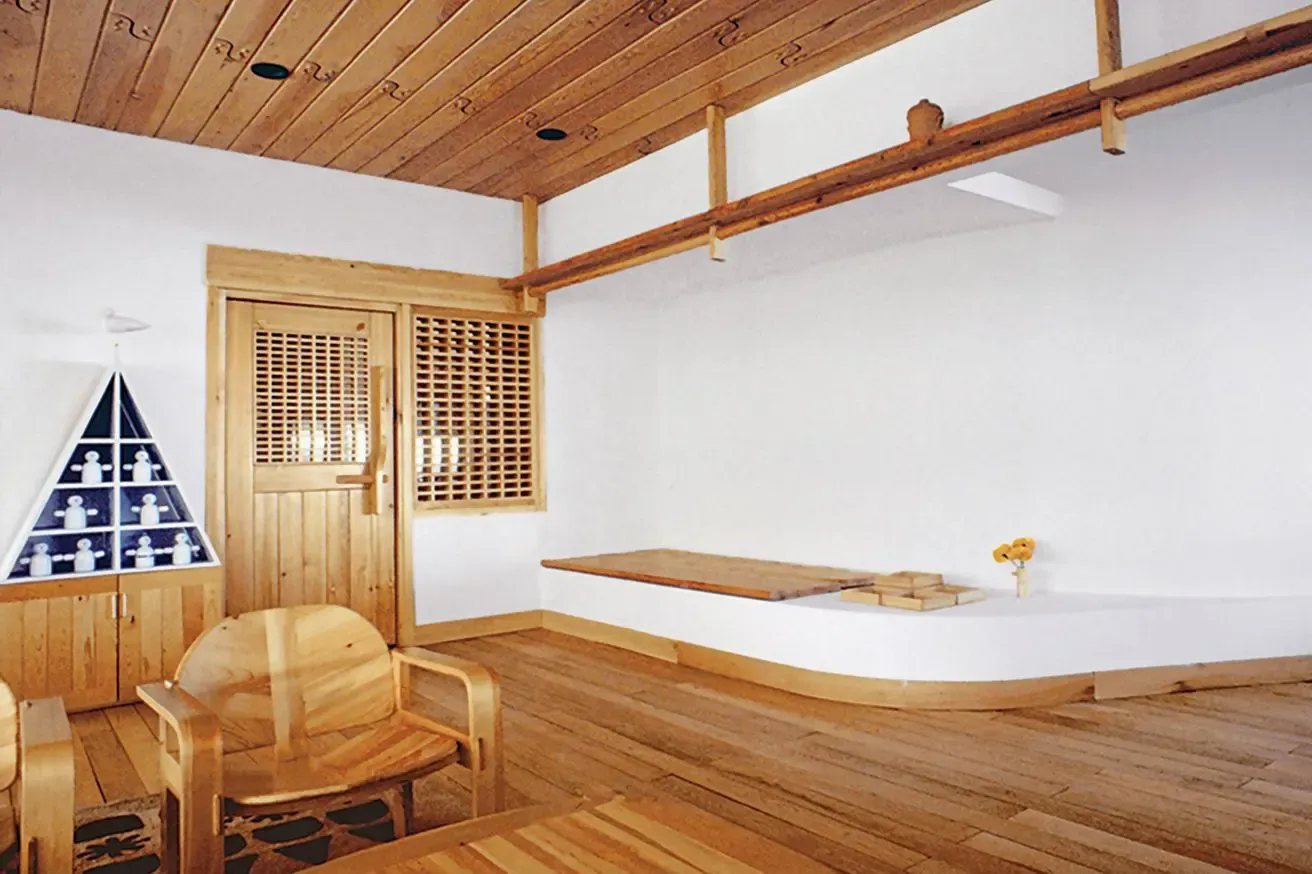
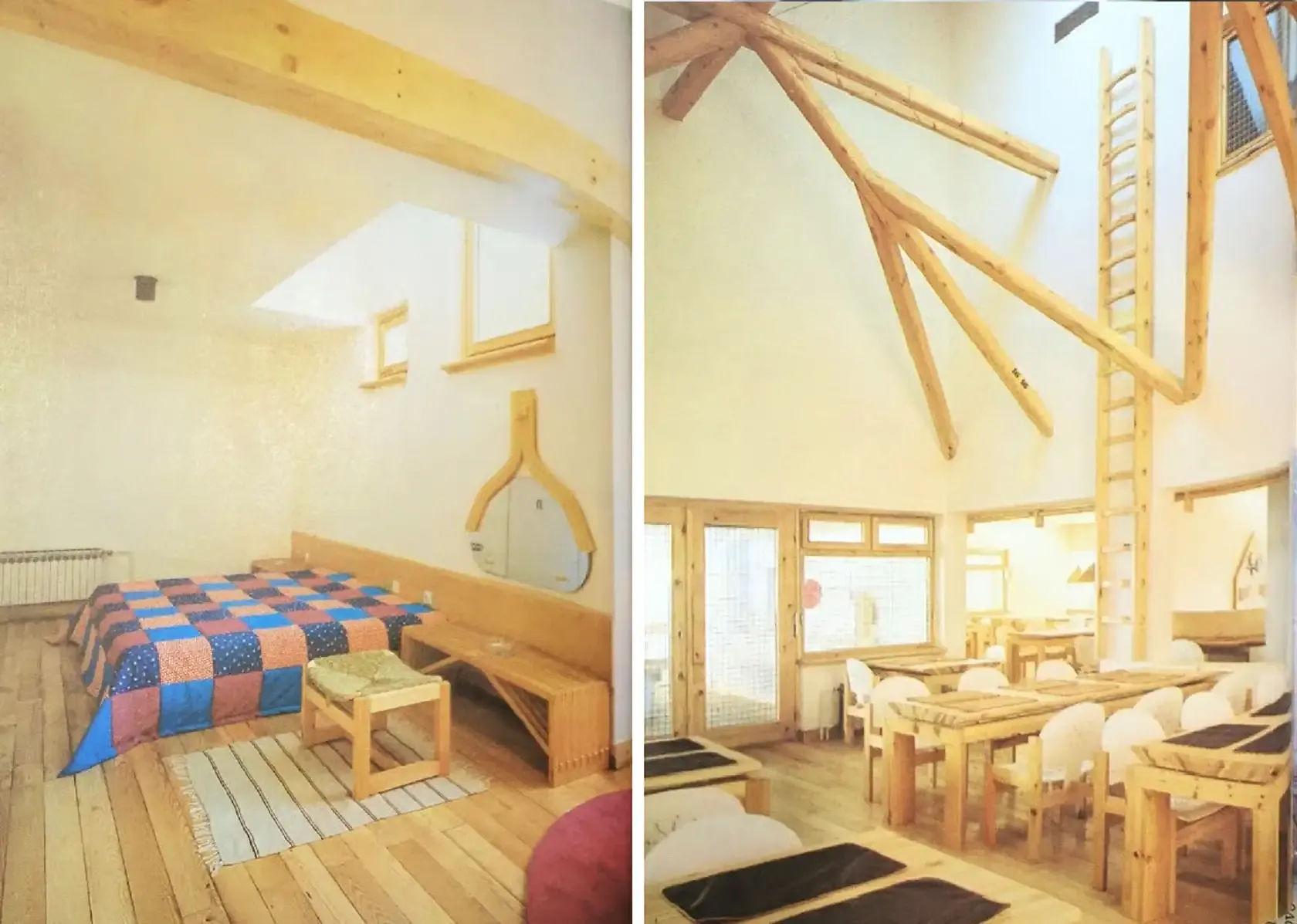
- Hotel Vučko: Completed in 1983 and designed by Zlatko Ugljen, this 25-bed facility operated in part as a resort for workers of the "Feroelektro" company and as luxury housing for high-profile guests. Ugljen utilized his philosophy of "total design," crafting everything from the building structure to the furniture. To blend the hotel with the dense forest, he lowered the steeply pitched roof to just 220 cm above the ground. The interior featured bare, unpainted yellow pine wood offset by cooling white plaster walls. Tragically, this architectural masterpiece was completely destroyed during the Balkan wars in the 1990s.
- Hotel Bistrica: Built in 1984 on the site of the former "Vila Bistrica" (which burned down in 1974), this 4-star, 284-bed hotel offered comprehensive amenities, including a pool, bowling alley, and tavern. Unlike many other Olympic sites, Hotel Bistrica survived the war unscathed due to its location on the Serb-controlled side of the mountain. During the conflict, it was actually used to host parliament meetings for Republika Srpska, including a notable May 1993 vote against a UN peace plan.
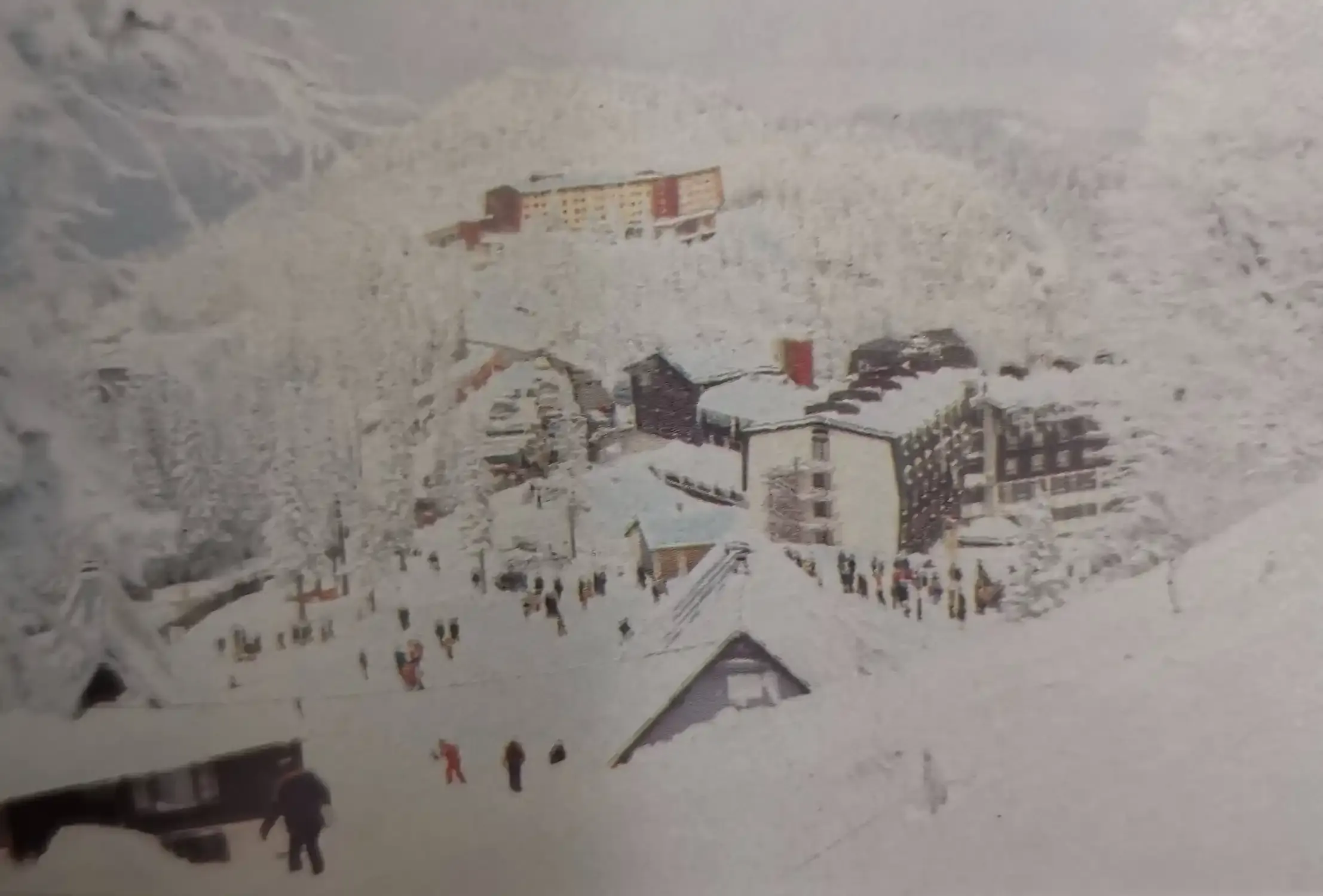
Jahorina's capacity was also supplemented by the newly built Hotel Košuta, while the nearby town of Pale offered the newly built Hotel Koran and Hotel Panorama, along with the reconstructed Hotel Turist.
The Bjelašnica and Igman Lodges
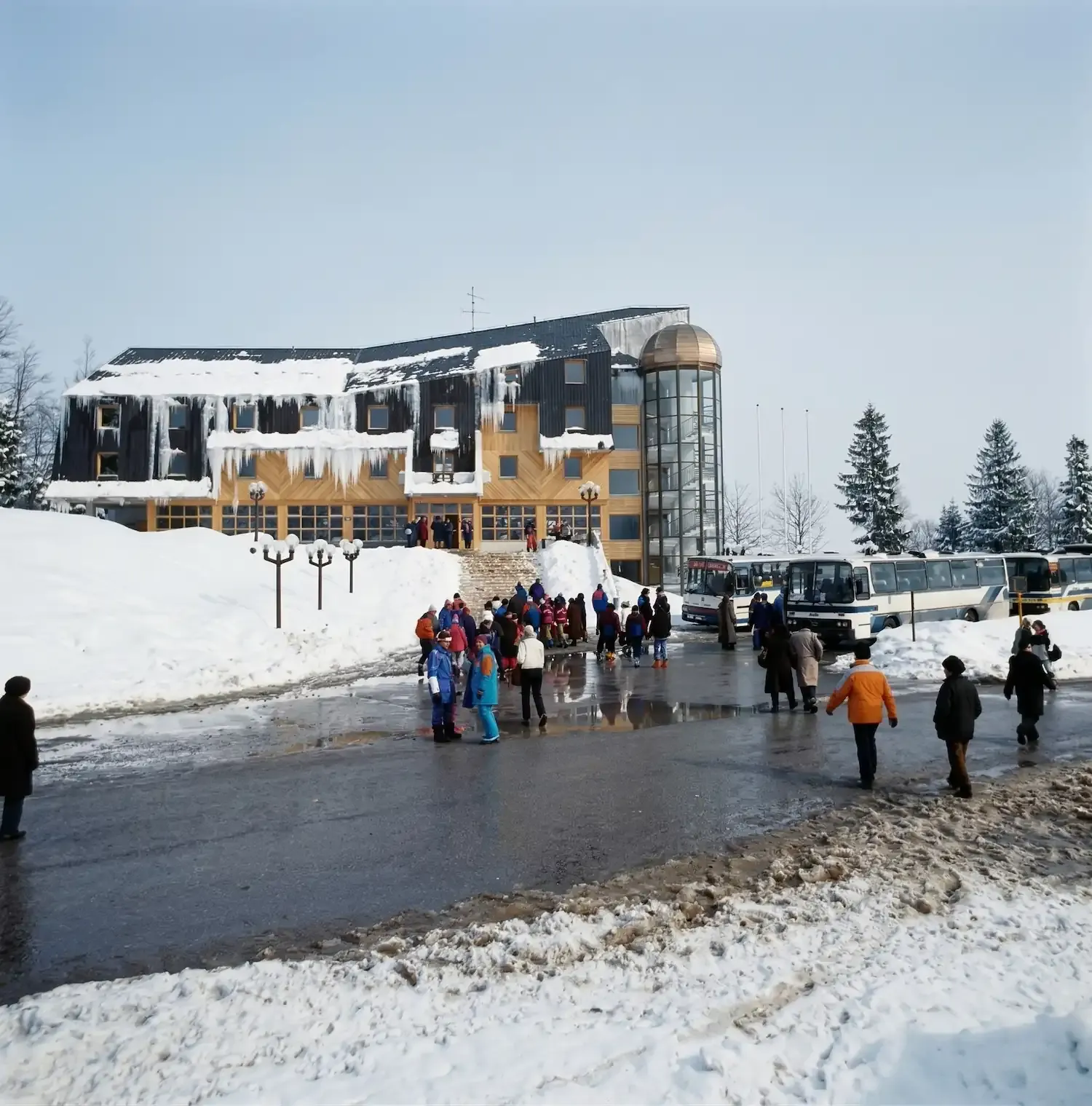
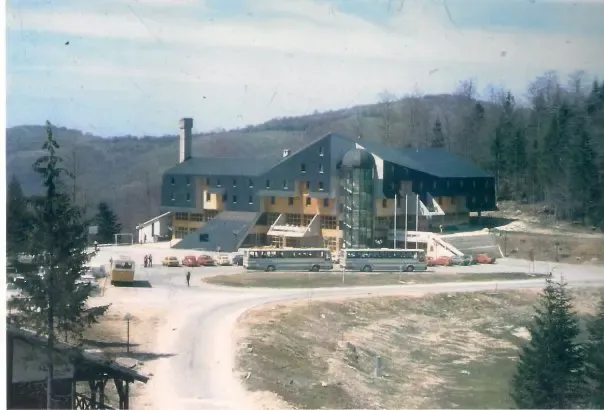
The venues at Mount Bjelašnica and Mount Igman embraced an angular, modernist aesthetic. Olympic capacities at Bjelašnica included Hotel Smuk (120 beds), the MOC Apartment Settlement (312 beds), and inexpensive youth tourism lodgings at Babin Do. Mount Igman featured Hotel Borik (150 beds), Hotel Feri, and Hotel Mrazište.
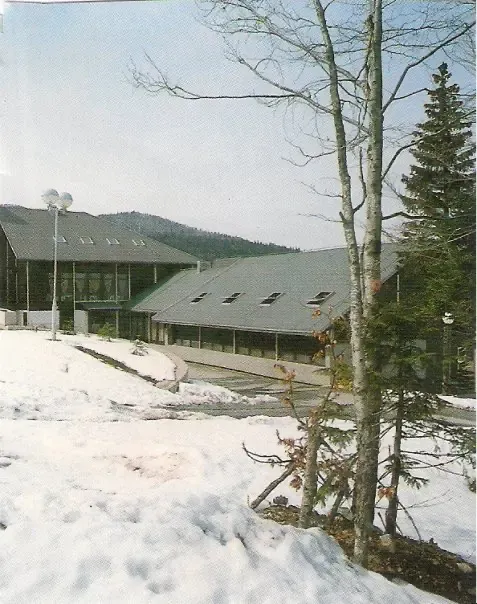
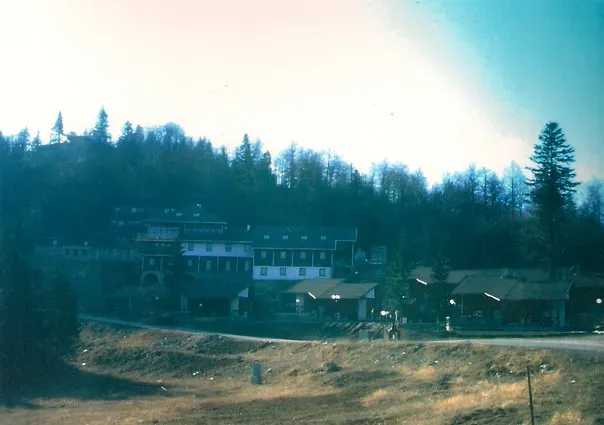
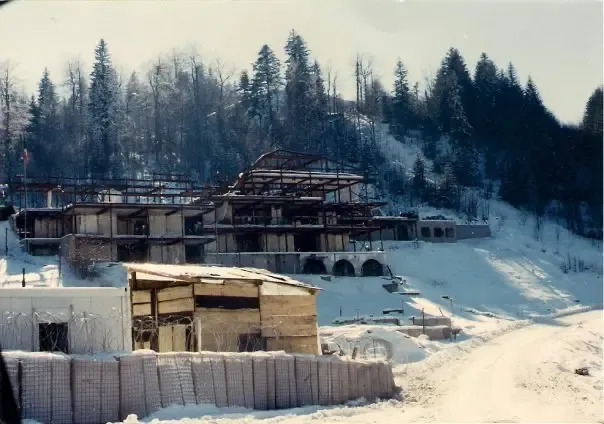
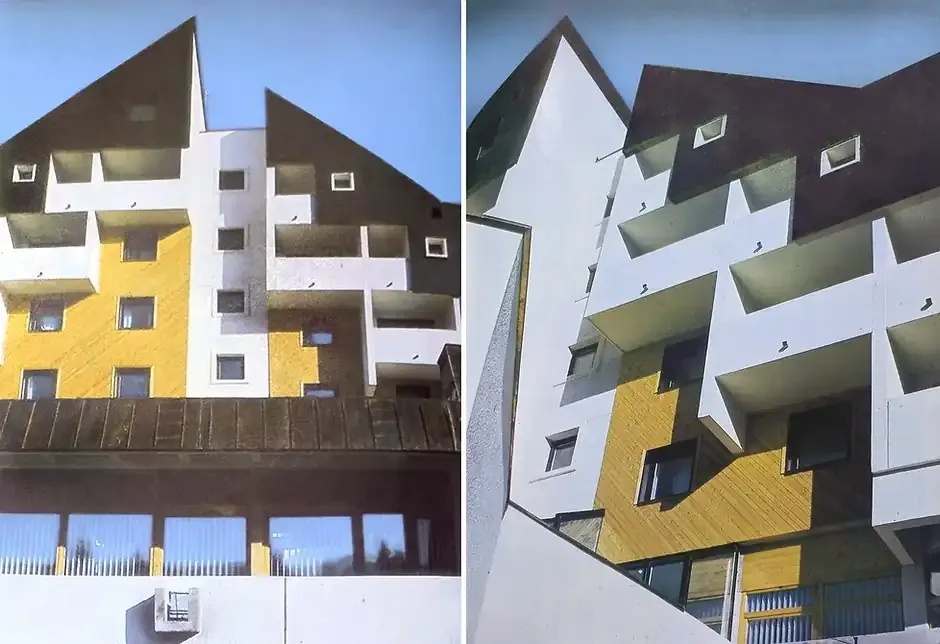
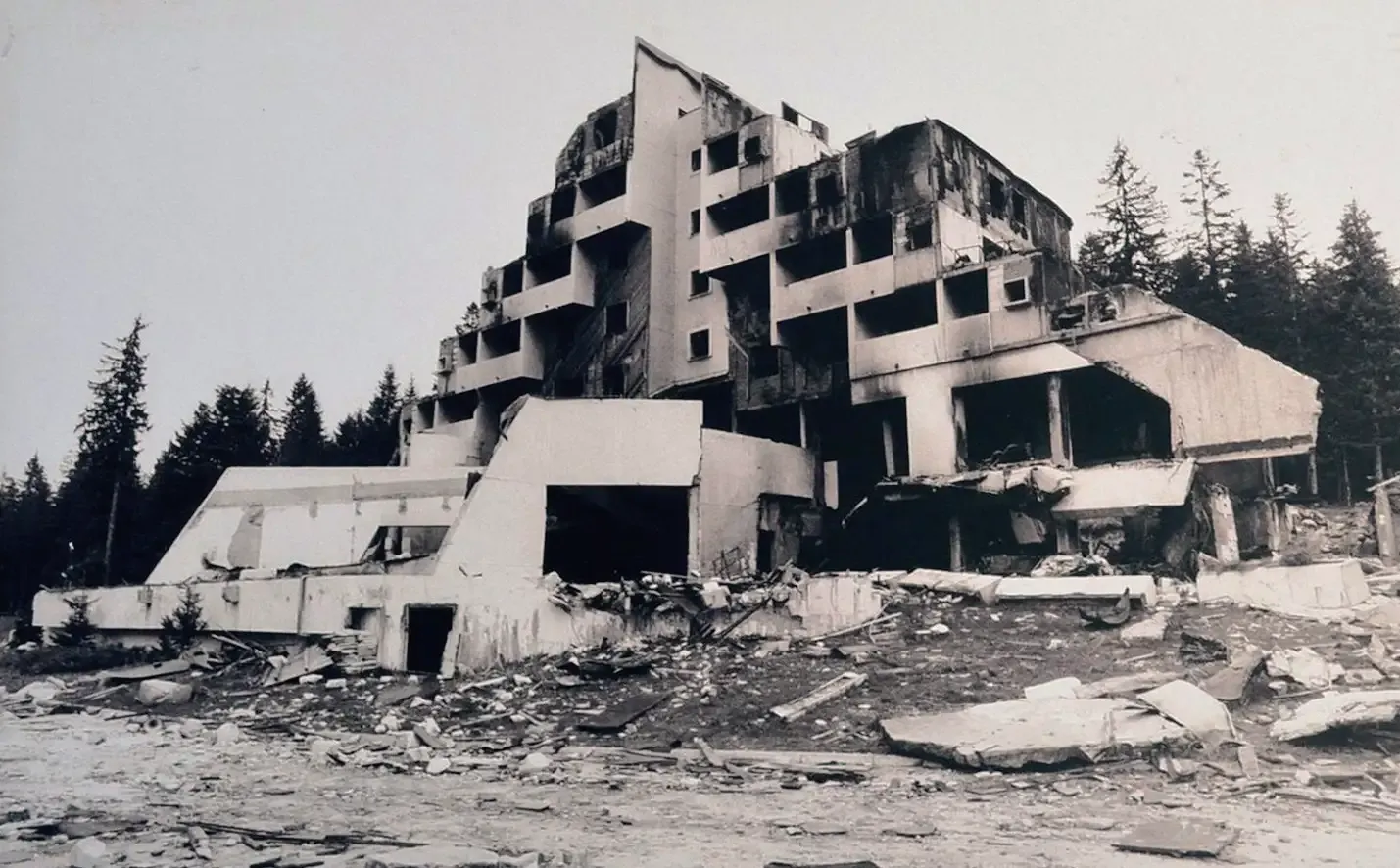
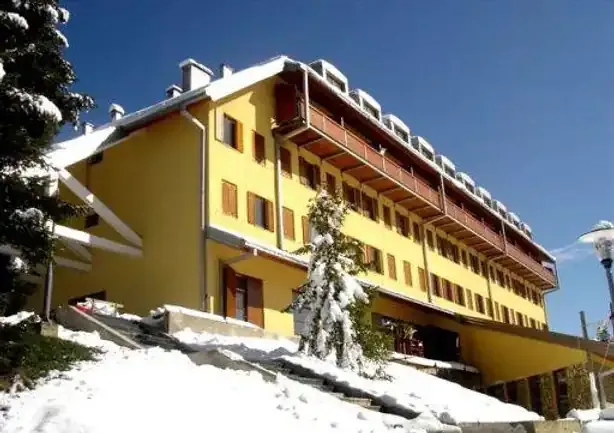
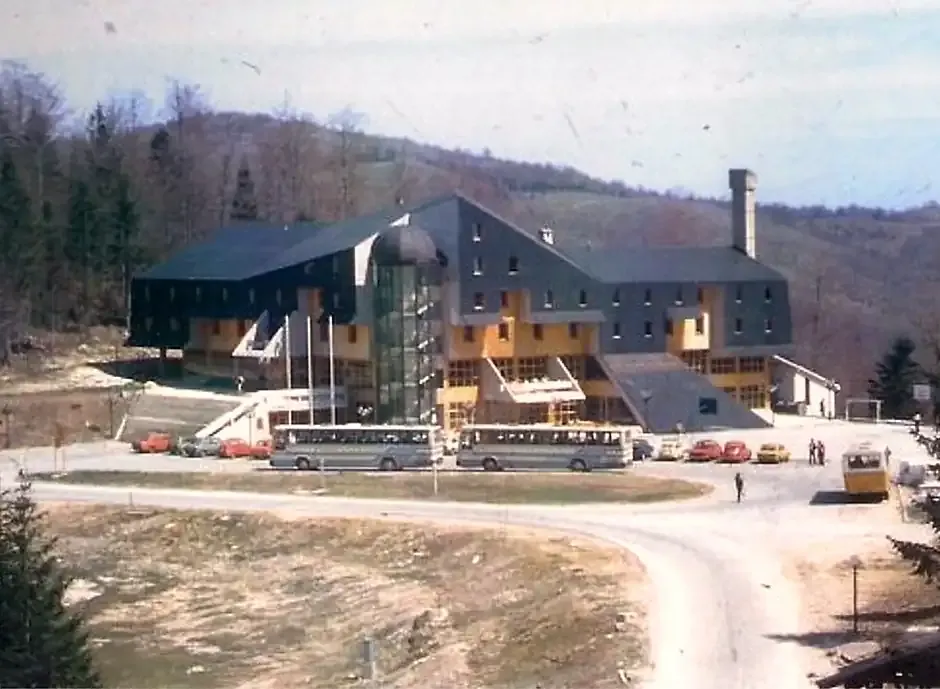
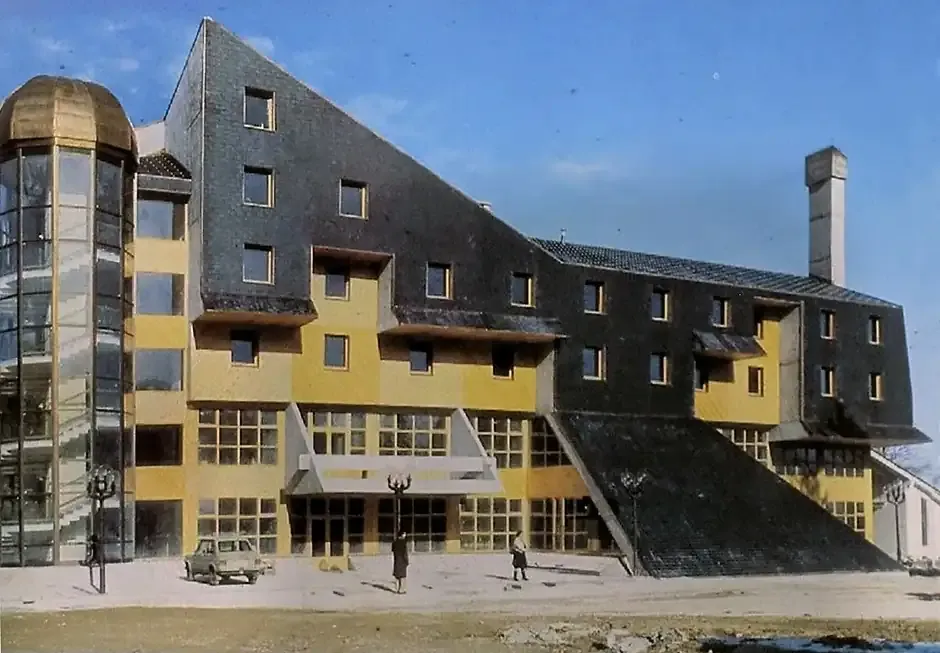
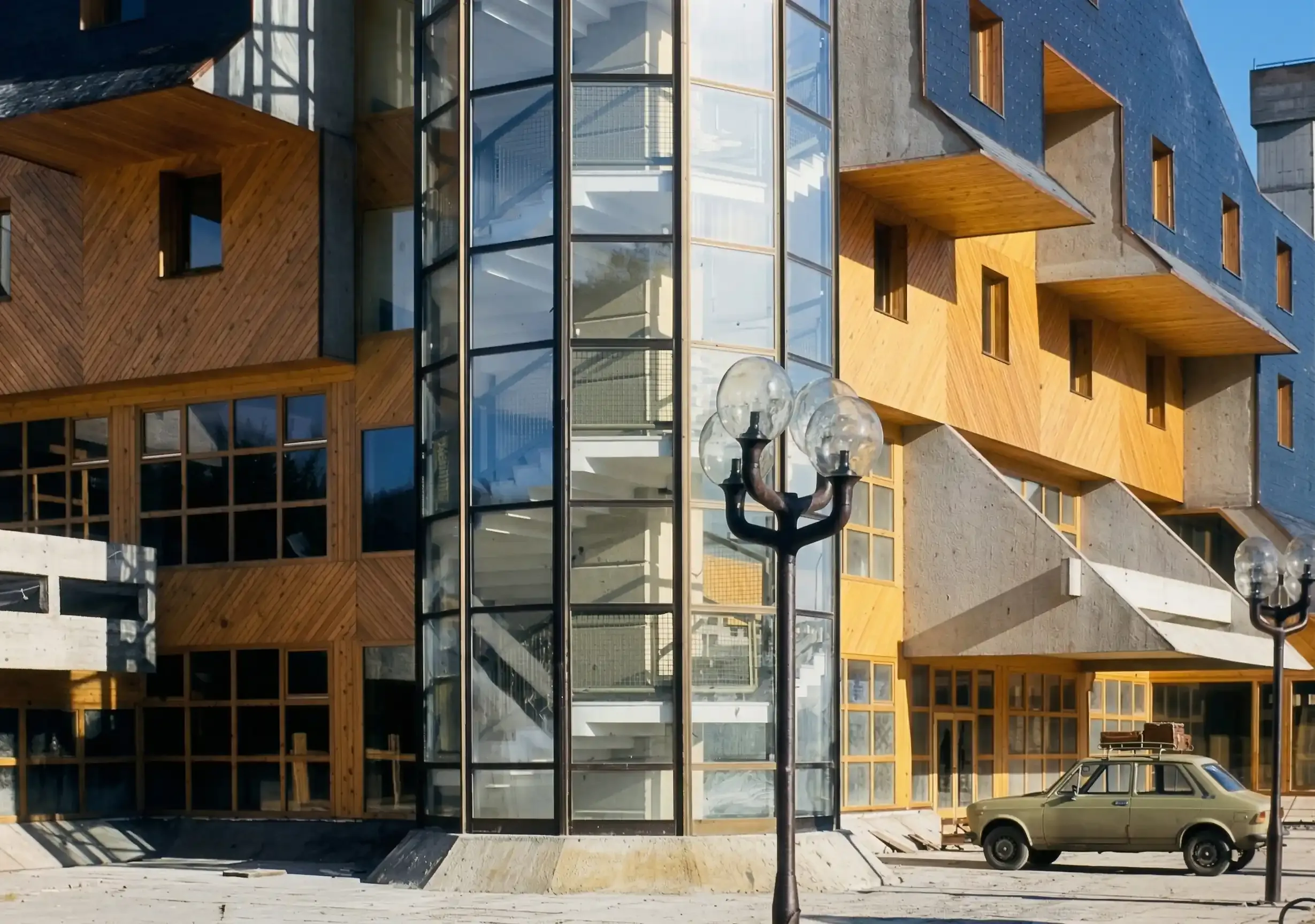
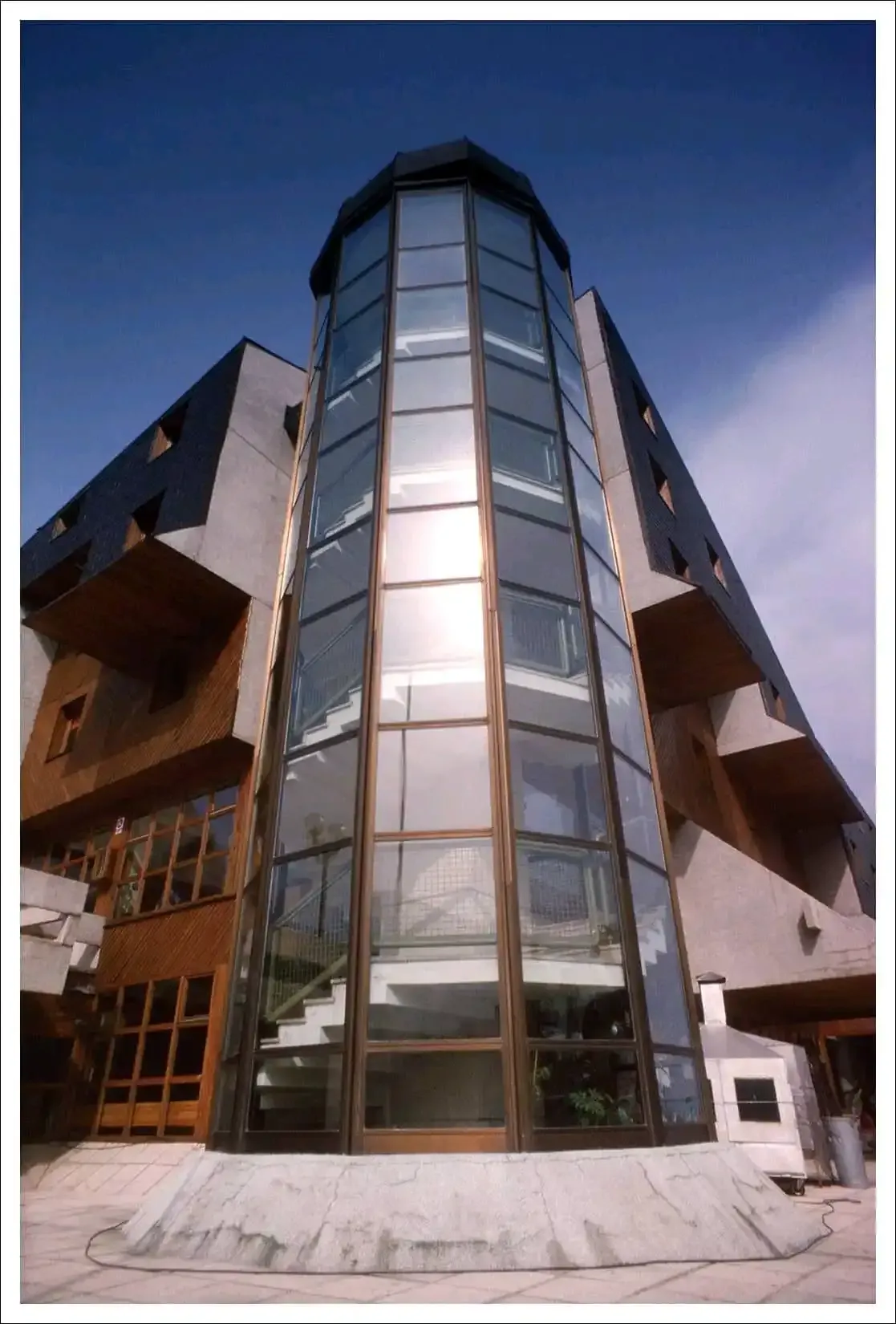
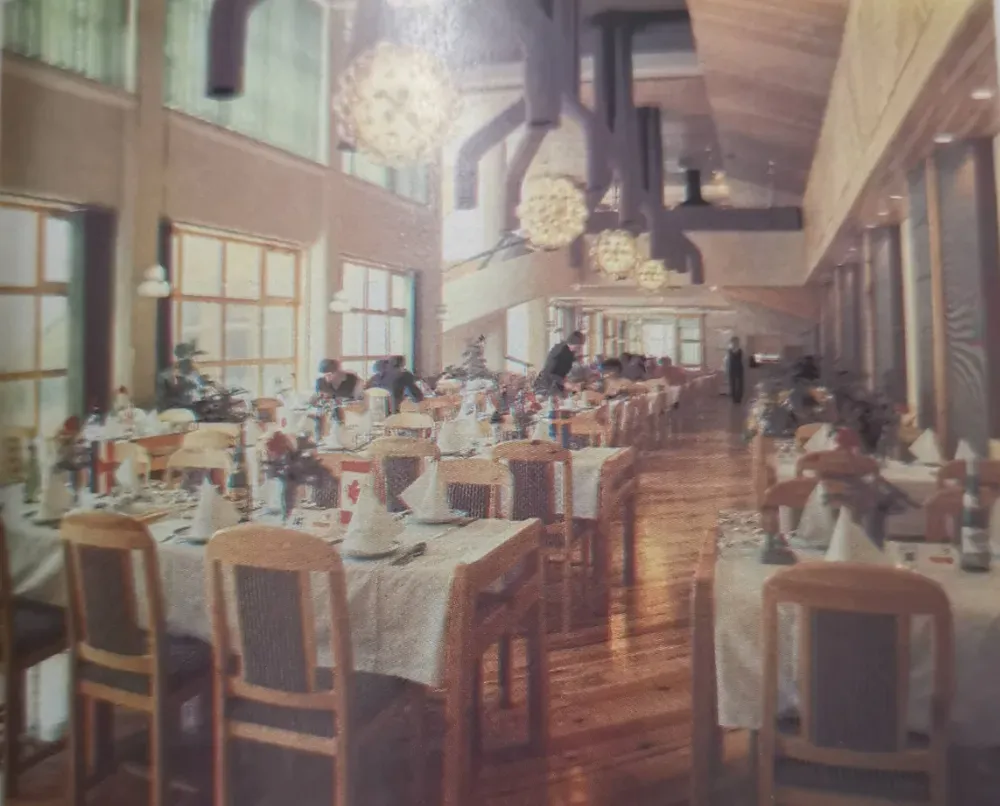
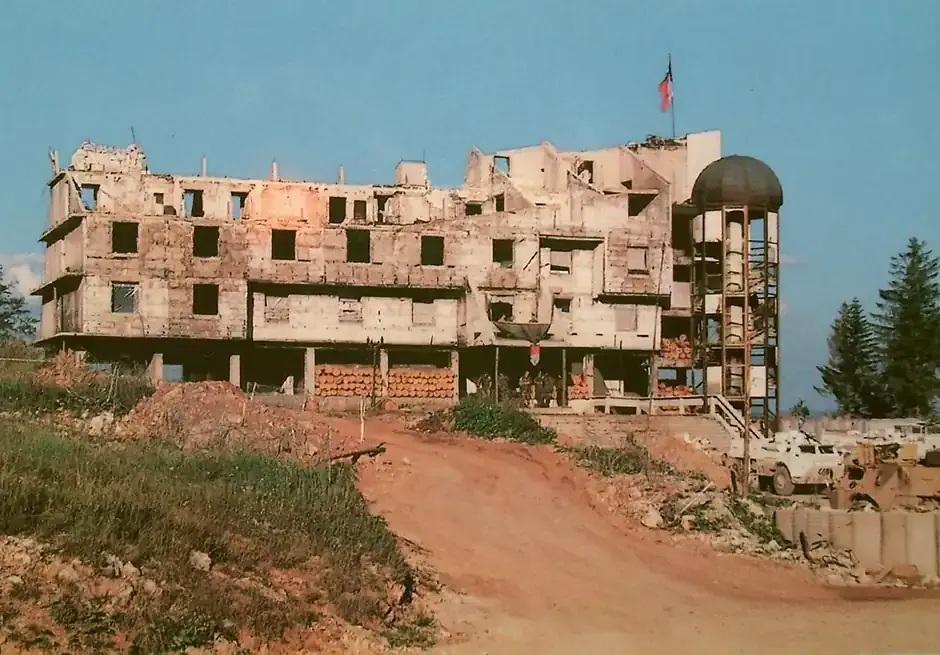
The architectural anchor of the Bjelašnica area was Hotel Famos. Commissioned in 1980 and designed by Zenica-born architects Slobodan and Duška Jovandić, this 186-bed modernist ski lodge was completed in 1983. Its design was dominated by an intricately sloping roofline that transitioned into squared, overhanging cutouts clad in diagonal yellow pine wood, a unifying geometric feature seen across other Olympic sites like Hotel Borik and the Hotel Igman.
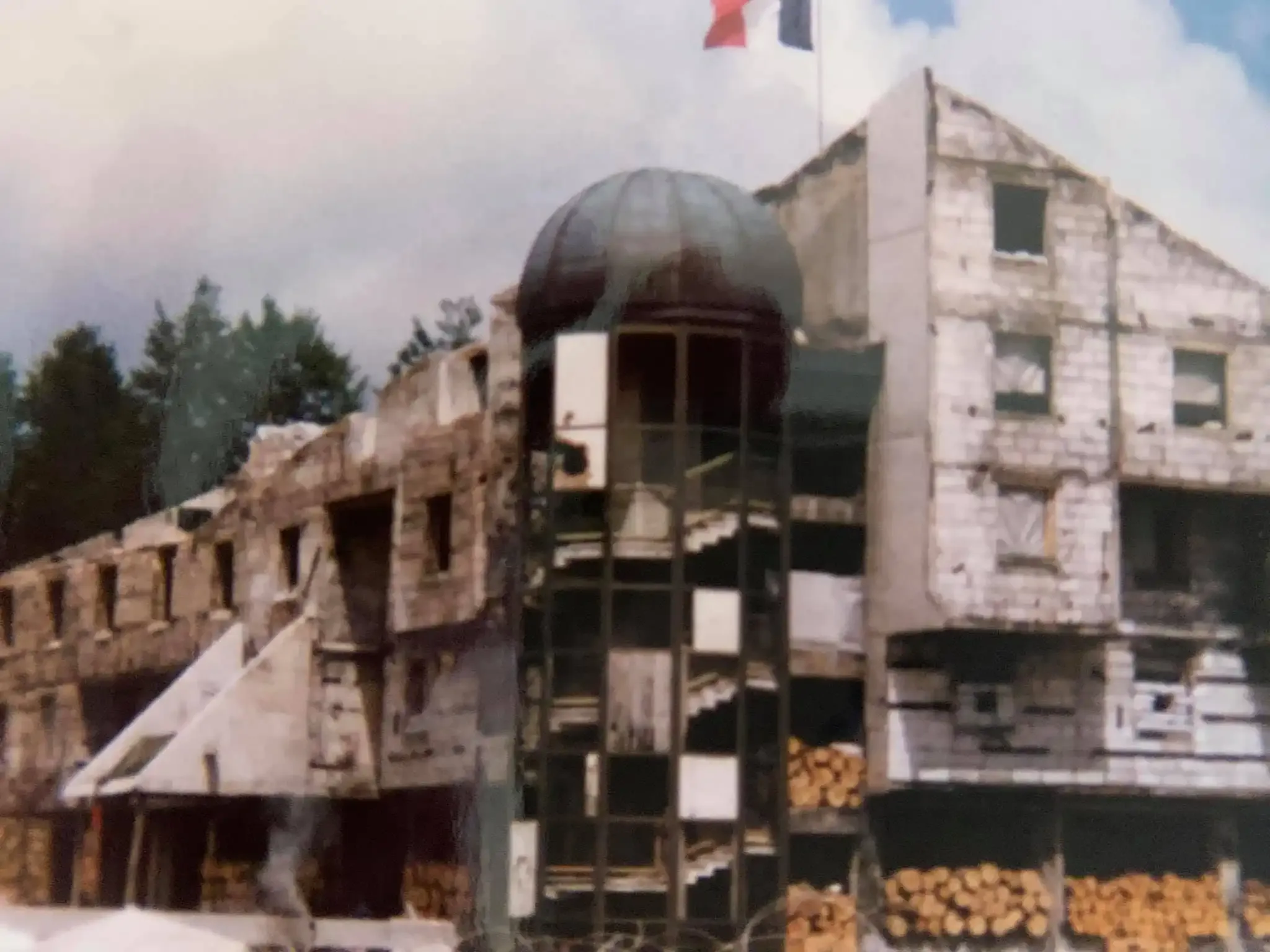
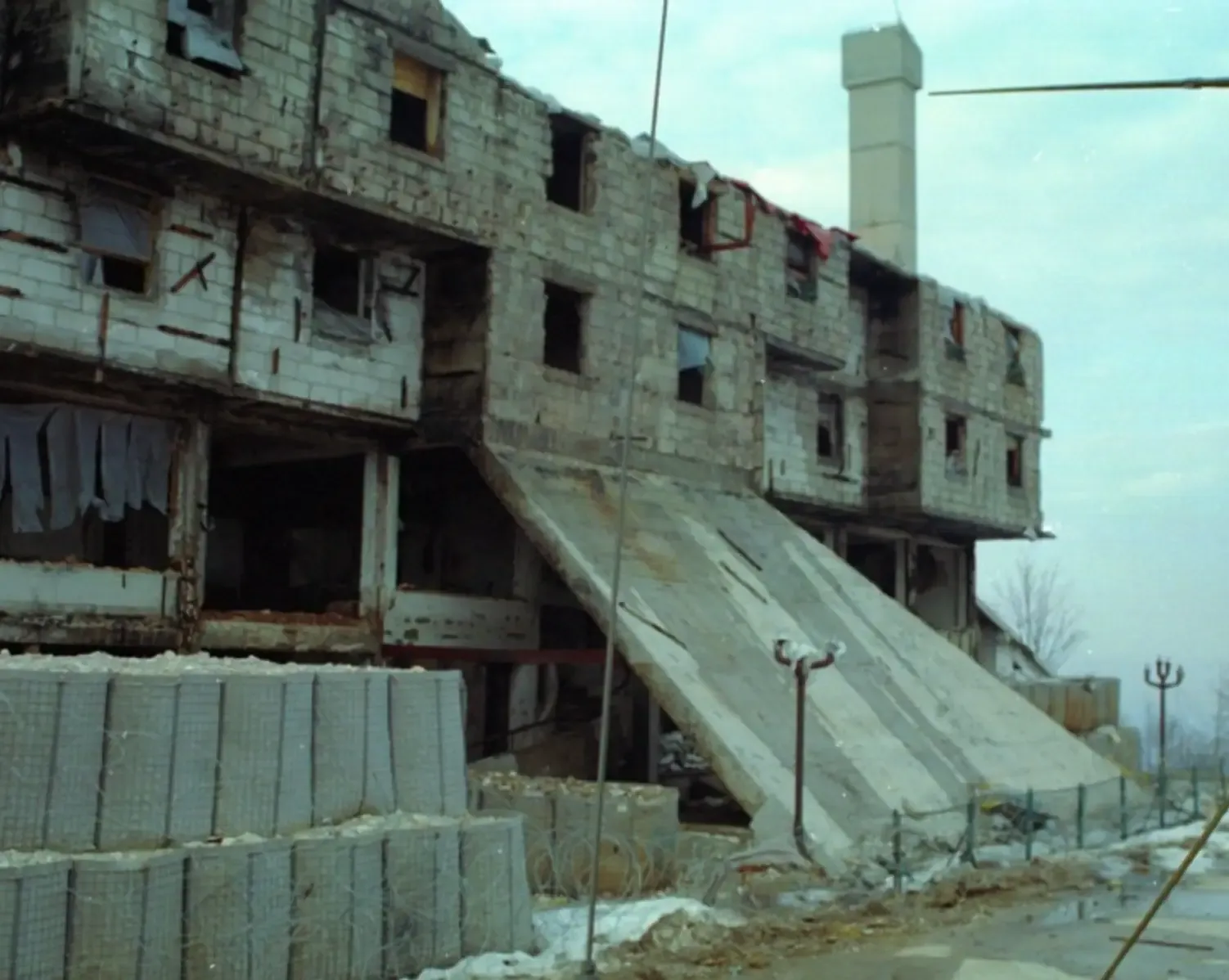
It got severely damaged during the war by the Bosnian Serb forces before serving as UNPROFOR base, subsequently was restored and reopened as Hotel Maršal. The hotel was abruptly closed right before the 2017 winter season without clear rationale, and since then, the property has been left entirely abandoned and deteriorating.